Subscribe
Share
Share
Embed

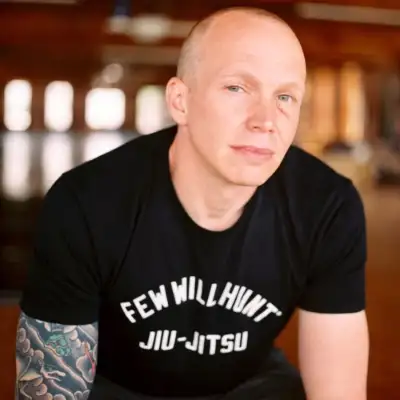
The official podcast of Few Will Hunt, the world’s largest community of hard workers and 100% Made in the USA apparel brand. We’re on a mission to restore the dignity of hard work and help others live The Rules of The Few to strengthen ourselves and strengthen society. No entitlement or excuses are allowed here.
This dark side is generally seen in us ambitious people. In the Eagles. Right? It's in the Eagles. The phrase I use in the book is wild horses.
Craig Ballantyne:You know, you the old phrase is you can lead a horse to water, you can't make it drink. Not the wild horse.
Joey Bowen:Welcome to the Fuel Hunt Show. What's going on, Eagles? Welcome to the Fuel Hunt Show. Today, Drew and I are joined by the world's most disciplined man. Again, again, Craig Ballantyne, a friend, one of the few, and, a repeat guest now on the show, which is like we should we should have brought a gift for you, Craig, for this.
Drew Beech:Our first one. Our first one.
Craig Ballantyne:Well, you guys you guys are doing me a huge favor. You're making amazing T shirts for my event that's coming up. You have for you know, I'm I'm wearing one right now. This is a custom Fuel Hunt T shirt, and I saw that you guys are doing this regularly now. So anybody that runs an event, you know, you got 30 people coming to something.
Craig Ballantyne:I don't know what your minimum is, but, know, just get get these really quality shirts. Like, we have people who see our mastermind members wearing them. We get messages all the time. Where can I get one of these? I'm like, nope.
Craig Ballantyne:You can't get one.
Joey Bowen:Fair.
Craig Ballantyne:So we appreciate you guys.
Drew Beech:The Craig no problem, Craig. But the Craig the Craig mantras are are fire.
Joey Bowen:Are fire. On fire, man. On fire. Yeah. We're doing a lot of work for, you know, major hotel change.
Joey Bowen:You just do schools, obviously, events. Like, it's been great.
Craig Ballantyne:What do you do for the hotel change?
Joey Bowen:So we actually just did so we'll do tees and, you know, shirts, hoodies, things like that. But one of the more exciting projects we just did for Lowe's Hotel, we made boxing gloves, custom boxing gloves, leather 12 ounce boxing gloves for a women's event, leadership event. And we also assisted in like setting up a ring. It was it was pretty cool.
Craig Ballantyne:Wow. That's pretty So so the hotel will come to you and say, hey, this person's having an event. They want some gear, but we they don't know where to get it done?
Joey Bowen:Exactly. Yeah. A lot of our yeah. And most of our business that we do is through referrals. It's Yeah.
Joey Bowen:You know, few people in our community that have our gear love it and say, we want this at our school or at our event. You know?
Craig Ballantyne:Yeah. Listen. It's no joke. These t shirts are quality. They're comfortable.
Craig Ballantyne:And, you know, this there's in terms of buying clothes, there's not much worse when you buy it. You know, you buy a t shirt to get given a t shirt, and it feels like you're putting on a cardboard box, man. Mhmm. Yeah. Like, don't understand.
Craig Ballantyne:What planet are these people coming from? Like, where do they get this cotton or whatever it is? But it's so it's so brutal. Yeah. Was Like, how hard can it be?
Drew Beech:Those heavyweight cotton T shirts, though, are becoming a trend now. Like, the one Joey has on is a heavyweight cotton. Yep. And, like But, obviously, you
Craig Ballantyne:can keep your trend.
Joey Bowen:Yeah.
Craig Ballantyne:You can keep your trend in America. I'm gonna wear real three T shirts up here in Canada.
Joey Bowen:We do it. We do the oversized tees right now. They're they're still soft. They have, like, a nice drape nice drape to them. Not like those ones you get.
Joey Bowen:They feel like you're wearing, a burlap sack. You know what I mean? It's terrible. Terrible. Alright.
Joey Bowen:Well, I appreciate I appreciate the big up, Craig. But we're we are here. We are here to talk about something very important, and that is your new book, The Dark Side of Discipline. I feel like I need to I love the title, but I feel like I need to say it with that type of intonation. Like, I need to
Craig Ballantyne:realize Yeah. Yeah. That's fair. That's fair. That's very fair.
Craig Ballantyne:Like, how else could you possibly
Joey Bowen:Right. Exactly. Exactly. So before we get into the book, why don't you tell the community your definition of discipline? I've said it on the show multiple times before.
Joey Bowen:I think it's probably the most accurate definition of discipline that I've ever heard. So why don't we start there?
Craig Ballantyne:I appreciate that. And, you know, I must have hacked it from, like, EOS. Right? Because EOS, Entrepreneur Operating Systems, has their level 10 meeting, and, you know, maybe that was ingrained in my brain. But eventually, I just came up with this definition of discipline that keeps it simple.
Craig Ballantyne:You have a level 10 problem in your life. First of all, you have to identify the level 10 problem. And then the ultimate definition of discipline in your life is putting a level 10 effort into your level 10 problem. And everything else is just entertainment, and that's that's really it. So, you know, you can use the word opportunity, level 10 opportunity.
Craig Ballantyne:You know, in business, sometimes at a level 10, a part two opportunity comes along. And you gotta take you gotta put a level 10 effort into it to to really leverage it. Now it's it makes sense. People get it, but most people still won't do it because it's it is hard.
Joey Bowen:Yeah. For sure. For sure. What, so elaborate a little bit into how you chose the title of the book and what exactly the dark side of that discipline is.
Craig Ballantyne:Yeah. So there's a phrase that that goes, you can't write the book until you've lived the book. You can't write the book until you've lived the book. And so what that means is everything in the book, you you know, most books are about like, hey. This is a problem.
Craig Ballantyne:Here's how to solve it. Well, I have all had all the problems. So I used to once be undisciplined, you know, a binge shrinker, you know, regular kid who didn't really wanna do too much hard work. And, eventually, I used discipline to become my savior, help me overcome my introverted tendencies. You know, if you if you would have met me when I first met Bea and then met me five years later, you'd be like, man, that guy's a different person.
Craig Ballantyne:And then you meet me five five years later after that, you'd be like, man, that guy's a different person again. And always two point o, three point o, four point o, whatever as as Bedros says. So discipline was my savior. But then there's a very fine line where you can swing the discipline pendulum too far, and all of a sudden, discipline becomes your enemy, and it can put you in a prison. And I started seeing this in the last five years.
Craig Ballantyne:You know, maybe I saw it before COVID, but I really started to write about it and talk about it, you know, when everyone was kinda went through lockdown and all the weirdness and stuff. And people were just going too far. And, you know, there's one way of going too far where the good gets in the way of the great. So you build this like three hour morning routine and it stops you from, you know, writing the book that you've always claimed you wanna write. Okay.
Craig Ballantyne:So the good, the morning routine, there's lots of good stuff in there, but it's getting in the way of the great, this book that is inside of you, deep in your soul. Alright? Now there's a really there's also a really destructive version of it, which I saw in in multiple of my friends. And since I've gone on multiple shows talking about the book, I've heard this from, you know, like Nick Kuz I can't even say his name. You know, Nick Kuzmilatus.
Joey Bowen:Kamalatsu. Yeah.
Craig Ballantyne:Yeah. Kamalatsu. You know, he said the same thing, man. He's like, I wish I had this book five years ago when I was going down the dark side of discipline. Mhmm.
Craig Ballantyne:And this dark side is generally seen in us ambitious people. In the Eagles. Right? It's in the Eagles. The phrase I use in the book is wild horses.
Craig Ballantyne:You know, you the old phrase is you can lead a horse to water, you can't make drink. Not the wild horse. The wild horse, the ambitious horse, you know, you can lead it to water. It will drink all the water, snort all the oats, it will run around until it's exhausted Mhmm. Trying everything because you and I, everybody listening, we want it all.
Craig Ballantyne:We wanna have it all. We wanna do it all. We wanna be the champion of it all and I get it and I love it. But sometimes we take things too far and everything in life, everything good in life can there can be too much of it. And sometimes everything good can kill you.
Craig Ballantyne:You guys know that water can kill you. Right? Mhmm. Like if you drink too much?
Joey Bowen:Of course.
Craig Ballantyne:You can drink too much water. And you know, so water is the thing that keeps us alive. But if you go too far and you drink too much water, you then dilute the sodium in your bloodstream, it messes up the electrical conduction of your heart. You basically have a heart attack. It's crazy.
Craig Ballantyne:Right? And so it's the same with discipline. And I went too far with discipline in my life. You know, when I was when I was really hanging around Bedros between, like, 02/2011, '2 thousand '16, you know, I had an exercise streak of a thousand days, exercising in the, like, the weirdest places, you know, sacrificing social time to go and keep this ex exercise streak going. And for what?
Craig Ballantyne:You know? In the end, I lost out on more than I gained. And fortunately, I didn't lose anything major in my life, but I know people who have actually had their marriages not only affected but ended by going too far with this. You know, they've gone and done all the challenges and they spent half their day doing that and then half their day with their head in their phone running their business. And they've neglected the great, which is their wife and their kids.
Craig Ballantyne:And then it's over. And and you just sit there and you go, oh my god. What did I do? We've all had those moments in our life where we were like, oh my god. What did I just do?
Joey Bowen:I'm in I'm in too deep. Yeah. I'm in
Craig Ballantyne:too deep. Yeah. And so that's the dark side. You know, it's another imagery for it is a is a double edged sword. I actually was playing around.
Craig Ballantyne:I didn't come up with the cover idea. My my publisher, Carrie Oberbrunner, did. He's an amazing dude. But I I wanted to put like a sword on the front. Right?
Craig Ballantyne:Because it's a double edged sword. It can be it can be your lifeline. Right? Like you're an alcoholic, you're overweight. A lot of people listening to this may have been in a situation where discipline was the savior as it was for me.
Craig Ballantyne:But then discipline can cut you back and and that's the thing that I want people to be aware of and then I want people to customize their discipline plans, their systems, their identity, and their standards so it serves them. There's a line in the book I've gotten a lot of feedback about which is, you know, just saying when you're doing all these things, ask yourself, does it serve you? Or are you serving it? And if you're serving it, you've lost your freedom and you're in the discipline prison. If if the habit, the challenge, the ice bath, the working out, the jujitsu, if all of that is serving you, by all means, leverage it.
Craig Ballantyne:But if you're serving it, stop it.
Joey Bowen:For sure. For sure. So let's talk about the process of the book. So this isn't your first book, obviously. I have a staple in my library here at HQ, obviously.
Craig Ballantyne:Love it.
Joey Bowen:Changed my life. So was the process of writing The Dark Side of Discipline any different than your other books?
Craig Ballantyne:Yeah. So there was a couple of things I wanted to do. I wanna keep it shorter than the other ones because I know as a as a person who has 200 unread books in their house, I just do. Yeah. I just buy everything.
Craig Ballantyne:I hear about a book. I buy it. You know, I can probably build a second house out of books.
Drew Beech:Live two bookshelves to the to the left and right. Man, I've I've only read not even half.
Joey Bowen:I I had that problem, then I bought a Kindle, and it made the problem worse. Because now I have $200 of Kindle too. Right? So
Craig Ballantyne:Now it's easier.
Joey Bowen:We got you.
Craig Ballantyne:Right. I just bought Jason I just bought Jason Redmond's new book, and I will read it. But, you know, I don't wanna go into the Kindle dustbin. So so so first of all, the fact is that most people won't read them. Those that do will not get get past the first chapter.
Craig Ballantyne:So some of the things that me and my co author Daniel Woodrum, we thought about here is keep the book as short as possible. I was aiming for 25,000 words. I think Perfect Day is about 40,000. We got to about 26,000. We couldn't cut it anymore.
Craig Ballantyne:The other thing is we jammed. This was advice from a guy named Vern Harnish who who runs a company called Scaling Up, and he has a book called Scaling Up. It's basically his version of EOS. You know, they're they're almost the same. And he said front load the best information in your first chapter.
Craig Ballantyne:So that's where you find the the definition of discipline. I and I on I I write in the book and I say, you could stop reading the book at this point. You've you've got the most important thing. Now, of course, don't. But so so there was that.
Craig Ballantyne:The other thing was I I started writing on January first of twenty twenty four, and I had the middle part of the book because, you know, we sell courses on effortless discipline and all this stuff. So that was obvious. And the first part of the book about the dark side was pretty clear too, but I didn't have an ending for it. So I finished the first draft in March of twenty twenty four and then I sat on it for like four months. It sucked because I just couldn't figure out how to end the book.
Craig Ballantyne:Then my business partner and co author Daniel Woodrum started doing these presentations at our events about raising your identity, raising your standards, and I was like, that's a perfect fit. He put that in to end the book, and so we still kept it short. So I think, you know, if somebody's thinking out there about writing a book, you know, nailing that title, nailing that cover are really, really important for Amazon sales. Just like if you have a YouTube channel, you wanna nail the the cover slide. If you do a bad job on it, nobody's gonna pick it up.
Craig Ballantyne:So Yep. Those things are behind the behind the scenes for getting as many, you know, purchases as possible. I could talk to you all day long about book stuff, but I'll stop there.
Joey Bowen:I did notice that the book was somewhat shorter than your others, but it also felt like the tone of it was much more direct, like, much more concise. Like, you know, the the value was there immediately, and I didn't have to, like, unpack too much of it. Like, you just hit us with it right away. So I I did feel that when I
Craig Ballantyne:I mean, I've I've read my books from time to time, and I'm like, what the heck is and and I'm sure, like, even when like, the the the the real prison sentence of writing a book is when you read the audiobook after you've sent the the book to the publisher.
Joey Bowen:Yeah.
Craig Ballantyne:And and you're reading it and going, why is this in here? Oh my god. There's, you know, there's a this something you find the three errors that still paid made it past nine editors. And and, anyways but I I I did wanna make sure that there was nothing that was gonna be out of time, you know, it's gonna be timeless. And and so there's the hardest work of the book is cutting it down because there's a phrase by Stephen King called kill your darlings.
Craig Ballantyne:Darlings. And this is this is helpful for anybody creating a course as well or even probably for you guys for your shirts is we have the we have these darlings. We have these ideas, these quotes, you know, these, you know, pages and pages of, like, oh, I really love what I wrote here. But if it doesn't help the reader, if the reader's gonna be like, this seems out of place, or if it messes up with the flow, or if it's just like one of the biggest problems I had with this book is I was really repetitive in the first half, and we had to cut and cut. And I probably have, you know, another 10,000 words where Yeah.
Craig Ballantyne:You know, you've got the point from what's in the book. Sure. And but I sounded really funny, you know? And Yeah. Because there was there were just some lines that man, it was so good, but it it didn't belong.
Craig Ballantyne:So you have to kill your darlings. Yeah. You have to kill the things that you think are really cool that will not help the end user. And that's very hard for most people, but that is what makes a book tight. And when the book is tight, you know, people get through it.
Craig Ballantyne:You can get you can probably read it in ninety minutes. You know, the audiobook is two in a bit hours. Like, you'll go and the thing is, now you'll you'll consume it and you'll consume it repeatedly. And when you consume it repeatedly, first of all, it helps you, also helps me.
Drew Beech:It's funny you mentioned that kill Yeah. I was just it's funny that you mentioned kill your darlings because our first meeting with Dee, that was the first message you brought up to us, the first bit of advice. Because I do believe it applies to all areas of life and business because we had our strategy when we started Fuel Hunt was keep everything in stock all the time because everything we create and come up with as far as shirts and rash guards go, we love them. We're we fall in love with with everything we create as as base, man. Yeah.
Drew Beech:As authors or course creators do, but we were basically spending all of our money restocking everything when only half of this stuff was selling. So that's
Craig Ballantyne:And then you forget about it. Like, you know, when I read the book, I I didn't think anything was missing. You know, I've got all the files of the old stuff, and and I've totally forgotten what I've written. So when you do it you you have to have the courage to do it or you have to have an editor who's gonna force you to do it. But when you do that, it makes your message tighter.
Craig Ballantyne:And when your message is tight, it's repeatable. Right? Like, think about all this a lot of this stuff that Begros says. It is repeatable. It is tight.
Craig Ballantyne:And and I've always said that, like, most of the stuff that I write in my books, I send out in a newsletter to my coaching clients first. And that newsletter is like Chris Rock going into a dingy comedy club in New York City and trying the joke for the first time.
Joey Bowen:Mhmm.
Craig Ballantyne:Seeing the crowd's reaction and going, oh, I see. I needed to pause, throw in three more f words, and I'm gonna try that again next week at a different place. Oh, better reaction. I'm gonna try this. Woah.
Craig Ballantyne:Horrible reaction. Back to the original. Okay. This goes in the Netflix special. Now I do that, you know, for 30 more times, and I've got an hour of content that's tight and is gonna get, you know, get me $15,000,000 or whatever it is for a Netflix special.
Joey Bowen:Yeah. And it's your most it's your most valuable stuff. You know? In in, in the perfect day formula, in your book, the perfect day formula, you say one of the things that's always stuck with me, you say action begets action.
Craig Ballantyne:Yeah. Totally.
Joey Bowen:And in in what you just said now, it's funny because I almost feel like consistency begets the consistency. If they if your reader can consistently read that book, right, and take in that message and repeat it over and over, they themselves will get more consistent in applying it to their lives. You know?
Craig Ballantyne:Yeah. And who's gonna share the book more? The person who got through the book.
Joey Bowen:Of course. Yeah. Of course. Yeah. Of course.
Craig Ballantyne:Absolutely.
Joey Bowen:So you said you said a couple things. Drew, thanks for mentioning the kill your darlings thing because I I did wanna shout out be there since that was, like, the first piece of wisdom he ever gave us.
Drew Beech:And then one other thing. Craig Craig, you mentioned, like, how you would go back and read, and you'd be like, what was I thinking, or what was I doing when I was writing this? But I find that the more we write for the people hunt page and the more we write for our blogs, it's important to not let the good be the enemy of the great because no matter how much I toiled over one piece of writing or copy, I go back and read it a year later a month later, and I'm like, what the hell was I writing? Like
Joey Bowen:Yeah.
Drew Beech:So I do think no matter how much you evolve as a writer, it's you're always gonna feel that way. Even someone like you that's written bestsellers. Like Yeah.
Joey Bowen:Yep. Yeah. One of well, actually, two I think two of your rules. In the book, you touch on your 12 rules for life. Right?
Joey Bowen:Yeah. And there's some overlap between your rules and my rules. I think you you write, every morning for sixty minutes. Yep. I do I do the same.
Joey Bowen:And I find what Drew just said. You know what I mean? Like, it helps me get tighter, but still, inevitably, like, I look at stuff that I wrote last year, and I'm like, wow. This could be so much tighter. You know?
Craig Ballantyne:Yeah. But that but that it should be. Right? Like, it it'd be like you looking at your jujitsu a year ago and going, oh my god. What was I thinking trying to do that in that position?
Joey Bowen:And
Craig Ballantyne:and and that's what evolution is supposed to be. I'm, you know, I'm sure you know, I I like to tease Bedros when when I spoke at at, BK Live, the first one. I showed a picture of him from 02/1971 of his first YouTube videos. Right? And he looked like a terrorist, you know, because that's when he shaved his head.
Craig Ballantyne:And, I mean, he looks so much different now, but, you know, we all do those things and we all evolve. And and, you know, you can't regret the past, but you can only learn from it.
Joey Bowen:Yeah. For sure. For sure. Let's get into, my favorite chapter of the book, which is, I believe, harnessing the power of positive people in your Oh
Craig Ballantyne:man, is everything.
Joey Bowen:Yeah, so obviously that speaks to a lot of what we do here at Fuel Hunt. When we started Fuel Hunt it was a community. It was literally about bringing together not just positive people but people of progress, like you said, evolving people together to change society, change the world. So, chapter 13 hit me there. It also hit me because you discuss a bit about, how you quit drinking
Craig Ballantyne:Yep.
Joey Bowen:And accountability. And then you kinda got into, like, finding your tribe and the power of three. So let's, like, dive into 13 a bit. Man. Selfishly, if we could.
Craig Ballantyne:Yeah. Absolutely.
Joey Bowen:And and start maybe let's start with how you quit drinking and, like, how accountability played a role.
Craig Ballantyne:Yeah. Absolutely. So, you know, I was a classic binge drinker. You know? Like, pick any pick any college movie where, you know, people get super drunk and do stupid things, and that was me.
Craig Ballantyne:You know? And and, fortunately, it was all, you know, safe, and I never really got into any trouble from it. But it was a habit that didn't serve me for a long time after I should have quit. And so what did I do? I essentially, in order to quit any bad habit, you must, as James Clear says, you know, put us a ton of friction in the way.
Craig Ballantyne:Make it as hard as possible to do. So removing alcohol from your environment was one of the first things. Fortunately, I was a weekend binge drinker. I didn't have any alcohol in the house, but that's what you would have to do. And then the second thing I did was I eliminated the toxic people from my social circle.
Craig Ballantyne:I still have friends to this day. Well, my friends from back then are still going to the same bars today as I went to when I was 25. I know that they still go, not as frequently, but they still do. And I just couldn't hang around those people. But then there was, you know, there's this trend out there online that I absolutely hate, which is, you know, go dark and cut off all these people.
Craig Ballantyne:And I just hate that because we're meant to be social people. Humans are meant to be social and around good people. So you shouldn't cut everyone out of your life. And I have a I had a lot of good friends who drank, weren't bad people, and I wanted to spend time with them. So all I did was meet those people in new environments that were not drinking.
Craig Ballantyne:You know, hiking. I didn't do jujitsu back then, but that would have been good. But the weight room, playing even playing golf, anything on a Saturday morning where I could connect with people, and then they could go drink and I would find something else to do. And so that elimination was very key. The next thing is better planning and preparation.
Craig Ballantyne:So whenever you leave a bad habit, there's a void. And if you don't fill that void with something else, then you will get sucked back into the void and do the bad habit. So I started, you know, doing those that planning preparation to meet people in good environments. And then finally, the thing that really lifted me up was the connection. When I met people who who also didn't drink, you know, Bedros Bedros never really drank.
Craig Ballantyne:We got drunk once in Miami Two Thousand Nine I think but other than that we never really had more than one drink together and okay so now I'm around this guy who doesn't drink and then we meet other people like Sharon Sravazza no drinking and this guy's super successful he's funny you can hang out with the guy And all that time, as I get away from the drinking, I start to increase and change my identity to a non drinker which then allows me to operate and have fun in drinking environments. So you could put me now back in the toxic environment and I wouldn't drink because my identity is I'm not a drinker. Sure. Therefore, I can be anywhere. I don't need any discipline now to stay away from alcohol.
Drew Beech:Mhmm.
Craig Ballantyne:Because I'm not a drinker. The end.
Joey Bowen:Yeah. You had that you had that identity shift. It's so
Craig Ballantyne:That's great.
Joey Bowen:It's so important to call out that cliche that floats around with, like, cutting off your entire social circle and just like
Craig Ballantyne:I hate it so
Joey Bowen:much. Chainsaw the people in your life. I do too. I feel like it's, like, a really surface level strategy that actually kind of pulls you to the dark side of discipline. It actually makes it harder.
Joey Bowen:It it
Craig Ballantyne:Honestly, I think it's a great recipe for creating school shooters is what it is. Yeah. And and the only people that say it are, like, 25 year olds who you know, they they run these little accounts, and they've never, like, actually lived life. And maybe they have no friends. So, you know Wow.
Craig Ballantyne:But anybody who's anybody who's got a good collection of friends knows that the more people you know, the easier everything in life is.
Joey Bowen:Yeah. Yeah. You have to you have to audit and edit the relationships. And the folks in your circle that don't respond well to that, then maybe there's a more drastic change with them. But most people love you, want the best for you, and are reasonable and can understand, hey.
Joey Bowen:Look. You know, we can go hike, but we're not gonna go to the bar. You know?
Drew Beech:Exactly. I also think when you're hanging out with these people, it's also important to, like, be okay with being weird. You know what I mean? Like, when I started to stop drinking, I remember I was in my old job in sales, and I would just not go to the happy hours. They'd be, oh, like, what are you doing?
Drew Beech:Like, going home to, like, be with your family? I'm like, yeah. That's exactly what I'm doing.
Craig Ballantyne:Like Yeah. Right.
Drew Beech:But when you're in these normal, quote unquote, normal social circles or doing things that are considered normal, like happy hour and drinking, like, you start to want differently or think differently or do differently, you're going to have friction, like you say. Like so being okay with being called weird or perceived as weird is is definitely a a key component.
Craig Ballantyne:It it is key. And so let's reframe that because because people will get that, and they'll understand it. And some of it will be like, yeah, I'm I'm no problem with this. But some of us some people listening will go, yeah, I want that. But but they are like, but I don't wanna be weird.
Craig Ballantyne:Well, here's the thing. You're not being weird. You're running your own race, and you're comfortable in your own skin. So that's the exact same thing as saying that you're weird, but it's a reframe, and it is it is the most powerful thing. I remember when I was a personal trainer twenty five years ago, I trained this guy who was a CEO of a retail company and his brother was a lawyer in Downtown Toronto, which is kinda like New York.
Craig Ballantyne:They had this financial area. So so twenty five years ago, this this lawyer lived in this really rich part of Toronto and then biked downtown to the Financial District to be a lawyer, which was unheard of at the time because twenty five years ago nobody, you know, biked. Right? You know? Now it's probably normal.
Craig Ballantyne:So what is what he said about his brother was he said my brother is so comfortable in his own skin and I want I wanna be that. Me. Me. Me. I wanna be comfortable in my own skin, and I wasn't, you know, I was transitioning, but I didn't I I binge drink with my friends because I wasn't strong enough to be comfortable in my own skin.
Craig Ballantyne:Eventually, I became comfortable and, strong enough to become for my own skin, but that was like one of my goals from day one because it's also a level of freedom. You're a free person where you can think for yourself and act for yourself. You're not weird. You're a free person, which is what everybody wants to be. And then the final thing I will say about this is that for every you know, so that you know, for you, maybe you're there's 10 people in that group, right, that are going to happy hour.
Craig Ballantyne:And every person like you who actually opts out or doesn't partake in the drinking, there's four other people in that group that want to be the same as you but they don't have the courage to do it. Exactly. And what I did is I did that around my friends and over the last twenty years it was you know it's not really happening now because you know people are either there or they're not but when in the first couple years after I started doing that more and more people coming started coming to my my dark side, right, of of Yes. Not I'm not doing that. And now some of my friends are healthier than I am who used to be bigger binge drinkers than I was back then.
Craig Ballantyne:So you need to be that leader, the eagle in the group, and people will come.
Joey Bowen:Abs absolutely. Absolutely. I took a page in January 2024. I took a page out of your book literally and figuratively, and I put out to the community that I was not gonna drink. I was done.
Craig Ballantyne:For Yeah.
Joey Bowen:For a year, I said. So for this So I was still, like, kinda, like, teetering. Right? I was like, yeah. You know?
Joey Bowen:But for this year, I'm not gonna drink. It ended up being a commitment that I've now made for life, right?
Craig Ballantyne:Yeah.
Joey Bowen:Never drinking again. And it is amazing how many people in the community came forward and said, you know what, I'm gonna do this too. You know, they were just waiting in the wings kind of to make that commitment as well as soon as they saw somebody that they knew, trusted, liked making a pledge to be comfortable in his own skin. It's
Craig Ballantyne:so important. Yeah. And and you know what I found with the whole drinking thing is for for probably three years, you know, I was like a a once a month, one to two drinks. Yep. And and I just found it's easier to be a % out than 99% out.
Craig Ballantyne:And I saw I read that quote right when I quit for good. And I was like, it is true because, you know, if you go a long time without drinking like, if you drink, like, once a month. Right? Yeah. And then you have a drink, man, it hits you.
Craig Ballantyne:And you're like, one drink? I used to drink, like, six beers in an hour, and you hit one drink, and your entire day is ruined. Yeah. So it's like, what is the point of this? Like, it's horrible.
Craig Ballantyne:And and you got a whole lot more in the line now, so goodbye to it. And Sure. I am not judging people who drink. If you want to drink and and it serves you and you're okay with it and there is no harm that comes of it, you go on and do it. But if you're like, yeah.
Craig Ballantyne:It doesn't serve me and my aura ring tells me that, I would have a drink once in a while. Obviously, I you know, the only person I really spent time with was her, so I was, like, wasn't really drinking that much. But then I went out with Jason Capital, a friend of Baydros's of mine. You know, I went out with him and his wife, and I took my wife out. We went out for dinner in Newport Beach in November of twenty twenty one right before we moved to Mexico to have our kid, our first kid.
Craig Ballantyne:And I had one drink, and then I had a horrible sleep. It was actually we were staying in, Huntington Beach, and it was during Santa Ana winds Mhmm. Because we went to, like, Beidros' for Thanksgiving a couple days later, and the winds were horrible. So we so I slept horrible because of that. I slept horrible because of the booze.
Craig Ballantyne:The next day, I felt like I had had 12 beers the night before. Yeah. And I was like, this is I'm done. And that was when that was when I just went all in on it. Yeah.
Drew Beech:Yeah. I was gonna because for me, I I'm a little bit younger, but in 2019, I stopped because we I had my my wife and I had our son Young. We were, like, 24, 20 five. It was my best friend's my best friend's wedding, and I came came home that night, and I was, like, throwing up in the sink. And my son was asleep in the bedroom, and I was like, if my son walked out right now and just saw his dad, like, throwing up in the sink, like, what would he think?
Drew Beech:Like, what kind of father am I? So I just after that night, I just stopped. And I doubt that it was a lot easier when you have that those children or a child, they're looking up to you as a as a leader and a and a a role model that might be easier to to let it go.
Craig Ballantyne:Yeah. There's there's a lot of things that you can leverage, right, as reasons why. And, you know, some people will need a little bit more support to it. But being in that community, man, and and saying, you burn the boats. You say, hey, I'm not drinking this month, this year, whatever.
Craig Ballantyne:Like, when you say it, now your integrity kicks in and Mhmm. You're not gonna be the type of person to go back on it, which is why the power of connection is so important. Yeah. And on the flip side, the flip side, what we talk about a lot is you can't get stuck on Lonely Entrepreneur Island or, you know, Lonely High Performer Island, which is what happens in between events. And, you know, we have people come to our events, they get all fired up.
Craig Ballantyne:They're all they're all business owners that come to our events. They get fired up. They see their potential. They see everybody else succeeding, and they get great information. And then they go home and it just like it's just this decay because some of them live in like Eastern Tennessee.
Craig Ballantyne:And I love Tennessee. I'm not I'm not knocking Tennessee. I'm just saying if you live in Eastern Tennessee in a city of twenty, thirty thousand people, there's not a lot of people like you in that town and it's easy to get dragged down. I'm from a town of 20,000, 30 thousand people in Canada where you know it's mostly factories. I worked at factories.
Craig Ballantyne:I know those people. And if I lived in that town, even if I had the biggest house in that town and I knew the two or three other really good entrepreneurs in that town, I'm I'm gonna revert to the to the median. Right? I'm gonna go back to the average pretty quick. So that's why you have to be in the community all the time to keep getting up.
Joey Bowen:That's one of the that's one of the positives of technology and social media nowadays. You know, people drag it through the mud and I've been guilty of doing that sometimes. But you know what? There's a there's a a massive bright side, and that's the fact that you can stay connected with the right people. It is your choice.
Joey Bowen:You can stay connected with the right people online all the time.
Craig Ballantyne:And it is research proven. It's research proven to be as effective as in person. Absolutely. %.
Joey Bowen:Which you mentioned in the book. You know what I mean? And that's what, the Fuwon community has done for so many. Because even if you're in a big city, right, of a hundred thousand people, you can still have that same decay and that same disappointment and feeling. Because your circle or the people you interact with every day aren't on the same path, you know, and don't have the habits that you need or you want.
Joey Bowen:So, you know, being able to turn to a community like Fuel Hunt, or early to rise or, you know, your communities, it's it's crucial nowadays. Crucial.
Craig Ballantyne:Yeah. Absolutely.
Joey Bowen:Let's talk, you you opened chapter 13 with a Jim Rohn quote. He's the GOAT, big Jim Rohn fan, big Jim Rohn fan about, you know, being the average of the five people that you spend the most time with. I agree. I believe towards the end of the chapter, you close the chapter with, power of three. So not really Yeah.
Joey Bowen:Five people that you spend time with, but the power of three. So let's talk about the power of three because I think that that's a really practical tactical tool
Craig Ballantyne:Mhmm.
Joey Bowen:That people can use in their daily lives to stay accountable and replace bad habits with good habits.
Craig Ballantyne:Yeah. So the power of three is is actually just three questions. And we've I actually started building an app. I spent over a hundred thousand dollars trying to build an app to do this, and and it's I have
Joey Bowen:get that.
Craig Ballantyne:Failed. Here's a business lesson. It failed because I did not do the market research. Okay? So I'm not an app you know, interesting enough, I don't use apps.
Craig Ballantyne:Like, my whole goal in life is to have what do I have on my on the front of my phone? I have, like, maybe seven apps on my phone, and I don't wanna add anymore.
Drew Beech:Mhmm.
Craig Ballantyne:So I don't use them. And now I'm gonna go and try and build one. And I didn't do the research behind other accountability apps that are out there, and I foolishly threw away about a hundred grand before I killed the project and said, I'm not bleeding anymore. Mhmm. But the whole thing of the power of three is simply to have three accountability questions.
Craig Ballantyne:And I started doing this with some of my coaching clients probably about six years ago who were really struggling with something. So it could have been as simple as getting up on time. It could have been, you know, writing 500 words. It could have been, you know, doing an amount of outreach or making an amount of videos or maybe some personal habit like drinking or whatever. And we did we keep it simple.
Craig Ballantyne:It's just it's three questions customized to your situation. So let's say Joey has a hard time getting up without snoozing. So we say, Joey, every single day at 08:00 in the morning, you're gonna text me, did I get up on time? Did I hit snooze? And did I get to bed on time?
Craig Ballantyne:If not, why not? So did I get up on time? If not, why not? Did I hit snooze? If not, why not?
Craig Ballantyne:Did I get to bed on time? If not, why not? Because those are, like, the three questions that are critical to this one little goal.
Joey Bowen:Mhmm.
Craig Ballantyne:And it's a direct text or WhatsApp or Instagram message between the coach and the client in our business. And it's the accountability somebody needs. And the but the key is the if not, why not? Because because now it's up to you to go, well, you know what? I didn't get up on time because I didn't get to bed on time, and I didn't get to bed on time because I was watching Netflix.
Craig Ballantyne:Okay. Mhmm. So now we've identified the problem. So now we can reverse engineer. How do we stop watch watching Netflix so much?
Craig Ballantyne:Alright. So let's set up the Opal app on your phone or, you know, that's a really great app to stop you from accessing your phone. Maybe we can we we actually have coaching clients who their assistant goes into their Netflix every Sunday night and changes the password and doesn't send the password back to the person until Friday. Yeah. I've had I've had another client who had, his assistant do the same to their Gmail every morning and then send the password back at 05:00 at night.
Craig Ballantyne:Sometimes you have to go to extreme measures
Drew Beech:Yeah.
Craig Ballantyne:To get control of the thing. Yep. And so this can be used for anything. You know, if if it's like, did you go to the gym or, you know you know, some nutrition, something. Like, whatever it is that the person you know, everyone listening.
Craig Ballantyne:Yep. If there's something you're struggling with, you find someone you deeply do not wanna disappoint. You say, hey. Can I do this little accountability with you? Maybe it's somebody in the community, and you have an accountability partner, and you gotta show up every single day at a certain time and tell them, did I do the thing or did I not do the thing?
Craig Ballantyne:And if I screwed up, why did I screw up? Alright? So now we can then unpack how we don't screw up in the future and this is how you get, you know, the old cliche, 1% better every day. That's it.
Joey Bowen:For sure.
Craig Ballantyne:Over over time, like, you get to the point where it's you're you have perfect scores every day. It's like, okay. It's either time to move on from this or it's time to switch to, like, what's the next level 10 problem we gotta fix?
Joey Bowen:Sure. Sure. Yeah. We do we do on Wednesday evenings, we do small group accountability in Fuel
Craig Ballantyne:Oh, cool.
Joey Bowen:Rise, which is, like, our private community, FuelHunt community. And we ask that question, if not, why not in there? And it is the most powerful question. Without that question, what happens is if you didn't do what you said you were gonna do last week, right, what typically would happen is it would get glossed over because they would say or we would say, you know, well, you did do a lot of other stuff. So let's just like forgive it type of thing.
Joey Bowen:But the if not, why not? Like you said, it helps you follow that thread back to the problem, you know? It like, all the time. That's where that's where that's the root of the whole thing. You know what I mean?
Joey Bowen:So Yep.
Craig Ballantyne:Most of the stuff I do is really just and most of the stuff for success is really just reverse engineering it. You know? First of all, figuring out what you really want and then reverse engineer how to get it. And that's it. The And that's what success is.
Joey Bowen:The craziest the craziest thing, I was a programmer for much of my career. And I started programming when I was young, like, around 11 years old. And the way I learned how to program was by decompiling other software.
Drew Beech:Okay.
Joey Bowen:The first three pieces
Craig Ballantyne:That's taking an engine, taking it apart. Right?
Joey Bowen:Exactly. Reverse engineering. And I I learned that at such a young age. The first piece of software I ever wrote was a virus scanner. I don't know if you remember those from back in the day.
Craig Ballantyne:Oh, yeah. Yeah.
Joey Bowen:McAfee virus Yeah. McAfee. Reverse engineered that, and then I wrote my own. And that skill of of decompiling, understanding, and then creating my own is something that, like, I'm super grateful for because that led that is a lesson that I've applied to life, business, relationships, everything. It's so it's so valuable.
Craig Ballantyne:That's very cool.
Joey Bowen:Alright. Let's we covered chapter 13. Drew, you have any questions? I'm sorry. I I wanted to ask you.
Drew Beech:No, sir.
Joey Bowen:Alright. Okay. I got you. So let's respect your time here, Craig. Let's let's talk about your 12 rules for life.
Joey Bowen:You touch on those in the book. Mhmm. I alluded to them earlier. Two of them really resonate with me at this juncture of my life. Writing, like I mentioned, every morning for sixty minutes, I do that, sometimes longer.
Joey Bowen:And also, probably not a surprise to the community, the second rule you have is writing with honesty and feeling, I think. Yeah. Is is the other one. That also resonates with me because in the beginning of our journey with Fuel Hunt, I was a bit preoccupied by people's opinions in my writing.
Craig Ballantyne:Sure.
Joey Bowen:And now I no longer am. So those two rules resonate, but I'm not gonna ask you to go through all 12 of your rules even though all 12 of them are valuable. Maybe you could pick one or two that were really needle movers for you and your life and share them with the community.
Craig Ballantyne:Yeah. Well, you know, the one thing that I wanna do is, first of all, just explain, like, what the heck, are we talking about here. And so in 02/2011, I went for a run, or or did some intervals or something on Easter Sunday. And as I was running, I thought, you know what? Man, I I operate by a system because a lot of people would always say, oh, what would Craig do in this situation?
Craig Ballantyne:So I thought, well, what is my system? So I came back in, and I remember doing this because my mom came home from church, and I was sitting at the kitchen table visiting her on Easter Sunday. And I was sitting there writing, and I just wrote these 12 statements out, which, again, this is 02/2011, and I don't really look at them. But I looked at them for this book and I was like, oh, yeah, man. I do exactly that.
Craig Ballantyne:And that's that's what I'm looking for here, that everybody has these core values inside of them by which they operate. And it's like your iPhone can do amazing things because it has an operating system. Mhmm. That if this, then that, it can and that's how you call Tokyo. Right?
Craig Ballantyne:And so I put together these 12 rules. And it's and coincidentally, it's, like, right around the time that I think Jordan Peterson wrote his book 12 rules for life or something, but mine I've never read the book, honestly, and I don't know what his rules are, but these are my rules. And they are stuff that should be timeless and not change. So the ones that really stand out to me are like how I want to be. I I wrote an identity statement essentially that I'm a polite and courteous British gentleman.
Craig Ballantyne:I I, you know, I don't get into drama. I don't get into conflict. If I harm somebody, I apologize and and that's it. I can't remember exactly how it goes, but it's it's fairly long. And that was part of my identity shift and change from having the introverted tendencies that I had.
Craig Ballantyne:Know, when I met Beidros, I had a lot of very introverted tendencies. And I don't call myself an introvert because I don't like the label and putting myself in a box. But by watching Bedros, who also admits to introverted tendencies, but Mhmm. I he's a very California cool guy. And, you know, I saw how he treated people that when we we would walk into our mastermind meeting, there'd be, like, 20 people in there and he would greet them all.
Craig Ballantyne:And and meanwhile, just kinda wanna go to my seat and let's get going sort of thing. But that's not what people want. And so eventually, over the years, I just adopted a lot of his behaviors. And then I adopted this identity of, like, this is how I want to be. So what do most people do when they go into an elevator?
Craig Ballantyne:They open up their phone. They look at the floor. When I get into an elevator, as part of this identity is I don't bring out my phone, and I greet every person that comes into the elevator. And it's not super comfortable for me, and it's not super comfortable for the other person in most cases either, unless you're like an old lady, and then they just wanna chat with you for, like, the rest of your life. But so that's, like, one that's really important.
Craig Ballantyne:And there's another one. I think it's seven. There's two parts to seven. And one of the parts says, it will all be over soon, the good and the bad. And, you know, most people have heard that, you know, it'll be over soon, the bad part.
Craig Ballantyne:And so you gotta persevere for it through it. And and listen. I think we all get that. You know? Fetal hunt folks are tough, mentally tough, physically tough, but you also have to flip it and understand that the good will be over soon.
Craig Ballantyne:Yeah. And therefore, you must, you know, hold on to the moments, be present, be grateful. Like, I got three kids under three. You know, eventually, they'll be 30. Yeah.
Craig Ballantyne:And and they won't be I mean, it's a wonderful time, and I and I so I've built my life around spending as much time as possible with them. So it will all be over soon. And for those Fuel Hunt members who are going through a season of life where it's a winter, and I understand I've been there in many ways, understand that spring will come. And for those of you that are going through, like, just the absolute best part of your life, good. Enjoy it.
Craig Ballantyne:Enjoy it. Make the most of it. You know? Life life is life, and, you know, things may or may not change soon, but make the most of what you have right now.
Joey Bowen:Yeah. I don't I don't think people because sometimes it can be scary. They don't want to embrace the impermanence of things, you know, the good. You know what I mean? It it can be scary, but it's a it's a fact of life.
Joey Bowen:Mhmm. We mentioned Jim Rohn earlier, and I believe he has a book, but I know he has a lecture on the seasons. And I encountered that like way early in in my life, in my early twenties, I think it was. And, you know, he spoke about the seasons and, you know, how, you know, winters come and Yep. They go, so do summers, you know, the good times.
Joey Bowen:Yeah. So it's it's very important. I think the first I I think the first half of that that rule is like, I think it's nothing matters maybe.
Craig Ballantyne:You Yeah. Something like that. And and it and it and it really you know, everything matters, but nothing matters in the way that that things will come and go. People will come and go in your life. And, yes, they matter, but what matters the most is that you stay true to yourself.
Joey Bowen:Yeah. We have, obviously, in our community, the rules of the few. We have 11. We're one try of your 12. But we have
Craig Ballantyne:Twelve twelve is a lot. It it really shouldn't have been so many.
Joey Bowen:So well, it's, you know, I think it's, they're yours. You know what I And there's as many as there need to be. But I am moving in that direction, right? So we have 11 rules of the few. And the way that I look at them for the community are really like a guide because I feel like thinking nowadays is a lost art to some degree.
Joey Bowen:Don't think for themselves, they don't think freely. So, they're really the way I look at them is they're a guide and they're a guide for you building your daily choices. At least that's the way when I wrote the rules of the few, I intended them and out of the rules of the few kind of came my three daily choices that I live by and that's kind of like my North Star. Yeah. So and and mine are are pretty simple like as you probably would expect like I'm a fan of being, you know, to the point.
Joey Bowen:So it's create more than you consume. Mhmm. Embrace more than you escape, and love more than you loathe. And they're the three they're the three things that I judge myself by on on a daily basis. When I do my planning for the next day, I say, look, you know, did I do these three things?
Joey Bowen:You know? Did all of my choices and my actions throughout the day reflect these three core choices that I wanna make for, you know, a great life, basically? So, do you find yourself revisiting your rules on a daily basis? And do you feel like they become they definitely drive your choices, but do you see yourself making, like, very common choices day in and day out that keep you going?
Craig Ballantyne:Yeah. And the whole point of the rules is to eliminate the decision fatigue. Right? It's it's kinda like a diet does. You know?
Craig Ballantyne:So a diet you if I'm on a keto diet, I don't have to sit there and think, can I have the donut today or not? No, it's just not on the plan. It's the standard. So much of the effortless discipline systems, the standards, the identity, they're there to take away from the millions of decisions we have to make. Because if we had to make that, you know, all the decisions and not have standards, you'd be exhausted by the time it got around to the really important decisions.
Craig Ballantyne:Mhmm. So for me, you know, it's it's those rules that I haven't revisited in a long time because they are so ingrained in me. And the most important thing is that I make all the decisions around the core values, which is the freedom for my family. And so is this moving my family towards more freedom? Is it making sure that we have freedom?
Craig Ballantyne:And if I take this meeting, is it taking me away from having freedom? Like, you know, because you can meeting yourself into a prison. Yeah. And so so I'm pretty ruthless with I have every Friday, like, in a bit, you know, I'm on West Coast time, so a little bit later this afternoon, I will go through my calendar and cut stuff. And it will require me apologizing to people and saying, I'm sorry.
Craig Ballantyne:I know I committed to this meeting in a couple weeks, but I you know, it just it doesn't fit. I can't do it. And I will do that because I have to you know, I'm like a wild horse. I will say yes to too much stuff, and I have to constantly call the calendar. And I think that's a very important thing for people to do because it gives you more freedom to work on what matters.
Craig Ballantyne:So Yeah. I'm always kinda I'm you know, the rules, the systems, they're all there as a decision filter so that you make the right decisions. And also for when you're not sure to go back, review it, and run it through the filter again.
Joey Bowen:For sure. For sure. When I, in Perfect Day Formula, you talk about meetings. Right? You spend a little bit of time on meetings, and I remember reading that when it came out and trying to spread that in my corporate days.
Joey Bowen:And it was not a popular it was not a popular thought back back in the days with meetings. Less meetings, you know what I mean, was not popular. Not popular.
Craig Ballantyne:Well, not not until you're running your own business then it's gonna be very popular.
Joey Bowen:Yeah, exactly. Exactly.
Craig Ballantyne:But but but back to the writing of the book thing, there was a lot of people who said this is really out of place in this book. And as I look back, they were probably right. But I just that was a darling that probably should have been killed. Yeah. But there were probably a few people that did get a lot from it.
Craig Ballantyne:But in general, that didn't belong in the book and it made it in. So, you know, that's the kind of thing that you look back and go, little out out it's just out of the flow. It's not out of the the the belief. It's just
Joey Bowen:It's just I think you're right. It's out of the flow. It's not that it lacks value. Like, that's what we found when Bea came in and said, look, guys, you gotta kill your darlings. Like, you gotta get rid of these designs and these badges.
Joey Bowen:Like, they meant something to to to people in our community. You know? We still have people to this day, darlings Sure. Killed. They're like, is the, you know, the the fire tea ever coming back?
Joey Bowen:You know, it's my favorite tea. I just just last week, I got a picture of, you know, somebody, held it up on Instagram and sent it over. So there's value in those things.
Craig Ballantyne:Well, you should have bought two of them.
Drew Beech:Yeah. Exactly.
Joey Bowen:We had two colors.
Craig Ballantyne:No. That should be your that should be your new fuel hunt core value. Always buy two.
Joey Bowen:Buy two. Buy two at everything.
Craig Ballantyne:Yeah.
Drew Beech:But We weren't just talking yesterday about the when we release something, we release it once, and that's it. So, I mean, if you're if you're listening to this podcast.
Craig Ballantyne:Right. You gotta buy two.
Joey Bowen:Buy Buy two. What Drew, I think you had something that you wanted to say maybe about meetings.
Drew Beech:It's just interesting to see people that I've looked up to, like Craig and Aaron Hind, who we just had on this show, like, coming up
Craig Ballantyne:Oh, nice.
Drew Beech:In my days, have similar messages and mantras for people, but he I listened to him on a podcast maybe ten years ago when I was working with him in my corporate days. But he said, when you say yes to one thing, you say no to something else.
Craig Ballantyne:Darn right, man.
Drew Beech:So that so applicable to your to your meetings and the meeting strategy, because if you say yes to one meeting, you're saying no to your family, essentially.
Craig Ballantyne:Yep. Yeah. Absolutely.
Joey Bowen:For sure. You know,
Craig Ballantyne:the the one thing I said this one thing to years and years ago when I when Beidros and I were coaching, you know, fitness business owners trying to make it online, I said, every time you read an email newsletter from somebody, you're stealing that time from your kids. Mhmm. And I said this to a guy who had five kids, and he's like, oh, man. You know? Because we do you know, we're reading newsletters from people we'll never meet.
Craig Ballantyne:And Mhmm. You know, you get one newsletter you you only need one newsletter. You're, like, scrolling through and watching Instagram videos. You're you're stealing that time from somebody from somebody that matters more. And, you know, it's it's human nature, you know, and these things are designed to be addictive to us.
Craig Ballantyne:But just understand that if you're doing something, you're taking that time from something else that you could be doing, such as mobility work or, you know, it it you know, it's all the type of stuff that we know we should be doing. So just be be ruthless with your time. That's where you have to be the most ruthless and selfish with anything in your life is with your time. Because if you are ruthless and selfish with your time, you can be a more generous person. Noodle on that one.
Joey Bowen:For sure.
Drew Beech:And that's I I'm a big I don't know where you stand on this, Craig, but I'm a big, do not disturb mode person. And it's very unpopular with family and friends, but it wildly popular with the people I'm spending my time with time because, like, when I'm with my family or I go to jujitsu or I'm out with friends, like, I don't I don't have my phone checking every five seconds. Like, I slept on the mats for the hour or two hours I'm there. I my phone's in the locker room. Like and I think we've gotten so far away from just staying focused or on what we're doing at the time, whether it's spending time with people working.
Drew Beech:It we're easily distracted nowadays.
Craig Ballantyne:Well, absolutely. And so that phone is is a hindrance. It's a double edged sword for sure. I I actually stopped taking my phone when I went to the gym, but my my wife made me take it just said in case I have to get ahold you. But I do leave it in the in the locker room as well, and I cannot believe what people do with their phones in the gym.
Craig Ballantyne:You know, they're they're, you know, doing leg curls and texting at the same time. It's ridiculous. Yeah. And setting and setting their phones up to, you know, film every repetition is ridiculous. It's so far gone that I think soon I'm pretty sure soon gyms will go the other way and say, can't bring your phone in here because it it's ridiculous.
Craig Ballantyne:And, you know, maybe there's a way that they can listen to music another way, but it it just it distracts you from the thing. I don't take my phone out on date night at all even if I wanna film something. I just use my wife's phone if I wanna take a picture of the food or something, and I just I just try and go, you know what? I grew up in the eighties and nineties with no phone, you know, because I'm, you know, I'm almost Beidros's age. I'm almost as old as he is, that old man.
Craig Ballantyne:And I've lived without a phone, and I lived a great life without a phone. So I'm trying to go back as much as possible. That's why I don't have the apps.
Drew Beech:I'm very grateful for technology and such, but I think we've technology ed too far. Like, the landline like, when you didn't wanna answer the phone to just do with your family at home, you just took the the landline off the off the hook, and then you put it up like, no one can get through you. I was like, okay. I mean, no big deal.
Craig Ballantyne:Right. The phone ring, I remember, like, trying to call my friend, my best friend that I've had since I was six years old. I'd let I'd let the phone ring 40 times. Like, maybe he's gonna answer it in the next But his his mom probably unplugged it because Yeah. You know, she was a single mom and worked in a factory and probably didn't want anybody bothering her.
Drew Beech:Yep. And I'm guilty of it too. Like, when I'm in the zone and I'm work I need a response from someone quick, I'm like, I I I sit there. I'm like, okay. Maybe they'll answer the next like, hopefully, they're they're a distracted person and they'll answer me right away.
Joey Bowen:I'm on I'm on your, your path, Craig. Like, I'm doing the app audit. I only have certain apps on my phone. And there's a story that I heard recently about an entrepreneur. I believe maybe tequila, I don't know, billionaire.
Joey Bowen:I'm not sure exactly who it was and I'm not sure if there's anything that you could really learn positive from him other than this. So, this isn't an endorsement, but he does business by landline and fax machine. That's where I'm try that's where I'm trying to get.
Craig Ballantyne:Yeah. There's a there's a guy famous in the marketing world, Dan Kennedy, who who who says he's never had a cell phone.
Drew Beech:And Okay.
Craig Ballantyne:Yeah. He's a big fan. And, you know, he makes people send faxes to him. Now here's the thing. If you are only I actually use this in in a training where I said, with your if your inbox is is full, it's your fault because if that means you probably send a lot of emails that shouldn't be sent.
Craig Ballantyne:And so treat every email that you send as a fax. Think that and before you hit send, you had to actually get up Mhmm. Print out the thing, walk over to a thing, and send it. Would you send this email? In in most cases, you probably wouldn't send the email, especially like a thank you.
Craig Ballantyne:No. You're welcome. Like, you're getting this thank you. You're welcome nine email thread, and it's such a waste of time. Yeah.
Craig Ballantyne:Just stop sending the emails. People forget that they even emailed you. So Yeah. That fax that fax thing can be beneficial mindset.
Drew Beech:Now I'm regretting the thank you email I sent to Linda this morning. So
Craig Ballantyne:Well, hey. It's it's not me. You can send her all the emails you want. That's her job.
Joey Bowen:That's funny. Alright, man. Let's let's bring this in for a landing gear. Drew, do you have a lightning round for Craig?
Drew Beech:If you don't, would agree. Craig, three quick three quick questions, three quick answers. Alright. Favorite quote that you live by?
Craig Ballantyne:I would say this is this is my quote. Everything in life is easier when you know more good people.
Joey Bowen:Amen to that.
Craig Ballantyne:Yeah. I truly live by it.
Drew Beech:Most important part of discipline.
Craig Ballantyne:Systems, man. Systems. Without if you have systems, you don't need discipline.
Drew Beech:And finally, think I know the answer already, but your the best morning routine. You
Craig Ballantyne:get and go to work.
Joey Bowen:Yeah. Yeah. For sure.
Craig Ballantyne:Get up and get up and chase your dreams and jump the tail of the dreams and
Drew Beech:Go do.
Craig Ballantyne:Yeah, man.
Joey Bowen:Go do. Yeah. That's right. Alright, Craig. Where can, where can the community find you and where can the community get your new book, The Dark Side of Discipline?
Craig Ballantyne:Well, wish they could find me at your jiu jitsu tournament, but they won't find me there. They Not yet. Find
Drew Beech:yeah. I was gonna say not yet.
Craig Ballantyne:Yeah. Instagram at real craig ballantine hit me up there. I'm now using LinkedIn, so if anybody loves LinkedIn, they can find me there too. And then the new book is available at darksideofdiscipline.com or go to Amazon. All the formats, the audiobook, ebook, hard copy, and paperback are all available there.
Craig Ballantyne:And we just hit a bestseller status in small business books or something. So Let's go. Yeah. We're climbing the ranks,
Joey Bowen:man. Let's go. Congratulations. Alright. I'll leave the few with a reminder here.
Joey Bowen:Always choose hard work over handouts. Always choose effort over entitlement. Remember, no one owns you. No one owes you. You're one of the few.
Joey Bowen:Now let's hunt.