Subscribe
Share
Share
Embed
The Dad Manual is a fatherhood podcast hosted by Tony Cooper, featuring honest conversations with dads about the real, unfiltered journey of parenthood. This parenting podcast for dads explores everything from the excitement of being a first time dad to navigating the teenage years. As one of the best podcasts for expecting dads and experienced fathers alike, we dive deep into what it actually means to be a modern dad—the struggles, the growth, the mistakes, and the moments that change you forever. Whether you're looking for a new dad podcast or seasoned parenting wisdom, this family podcast delivers the honest guidance you won't find in books.
[Diego Kuri] (0:00 - 0:07)
The moment that I go back to is the moment that I saw Sebastian for the first time.
[Tony Cooper] (0:07 - 0:34)
It's really the little things that we do that seem to make a big difference. I didn't knew about joy before that. I truly believe, Diego, that breaking generational trauma is the greatest legacy we have.
I'm one of my favorite dads, Diego. Diego, will you introduce yourself, please?
[Diego Kuri] (0:34 - 0:39)
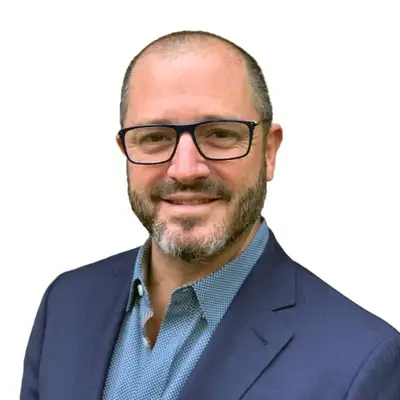
Of course. Hi, my name is Diego Cudi. I am a great dad, and I have some ways to share.
[Tony Cooper] (0:40 - 1:19)
Yes, you are, and I know you will. Thank you so much for having this conversation with me. I think you're definitely somebody who takes being a dad really seriously.
And that's the whole reason behind why I wanted to start this, is that it's just definitely something that I've taken very seriously. I found it to be an incredible honor, and also incredible growth opportunities, and I see you walking a very similar path, albeit way ahead of me, Diego, for sure. So why don't you start by just like, so who are your kids?
[Diego Kuri] (1:20 - 1:57)
Yes, well, first of all, thanks for having me, Tony. I am honored to be one of your guests, and I am also honored to be a father. It's something that I always wanted.
Right now, I have two beautiful kids, two beautiful boys, Sebastian, who is six, and Nicolas, who turns four next week. One of them was born in Mexico, and the other one was born in Miami, so it's fun to see how different it is living in both worlds, both countries.
[Tony Cooper] (1:58 - 2:12)
And so you're Mexican, they're mother's Colombian, right? That's right. Catalina's Colombian.
And they're growing up in the United States, in Miami. And do they have accents? Do they speak in American accent?
[Diego Kuri] (2:13 - 3:12)
No, they have very weird accents, to be honest, because, as you know, you grew in Miami. And you know how this is a very Latin-infused community. So you will hear some words from different parts of Latin America, and even from Spain, because that's the type of friends they have.
The best friends are from Argentina, or from Venezuela, or from the United States, or from the US, in Miami. So yes, they have this very eccentric accents. Their English is amazing.
It gets better each day, and they start forgetting words in Spanish, which... And they're worried bilingual. It's fun.
[Tony Cooper] (3:13 - 3:49)
Definitely. Okay, that's awesome. So six and four great ages.
I thought the ages from three to seven were such fun ages, because I found just their personalities. They just became who they were. They get out of diapers, and they can take responsibility for things, and they want to.
They want to learn and grow. So what's this phase like with Nicholas and Sebastian?
[Diego Kuri] (3:49 - 5:42)
I think it is a fun stage. I felt that I received my freedom back in some sort of way, because when Nicholas, I think once, three and a half, you can stop being in alert mode all day. Okay, he can be by himself.
Nothing's going to break. He can start swimming by himself. So that gives you a little bit more time back to you.
Also, it's fun to see how they get along very well, most of the time. Some of the time they have these massive gladiator battles where you don't know what's going to happen, but most of them, they get along very well. They have similar interests.
They start to understand. You can start speaking to them as grownups for certain subjects, and they can grasp those subjects better than they did before. And yes, you start seeing a little bit about their personality.
And I am liking what I'm seeing, but I am also feeling a little bit afraid of what I'm seeing, because I have a strong personality, and I see that both of them have a very strong personality set. I start feeling a little bit more of compassion and empathy for my own parents. And so, okay, that's what they had to deal with.
It must be tougher than I thought.
[Tony Cooper] (5:43 - 6:21)
Even though it's only a couple of years apart, the development between four and six is a lot. They're really different in terms of development, but how different are they just in terms of their personality, like the beings that were born into this world? How different are they?
And one of the interesting theories that I have, which has any basis or not, but it seems like the first born winds up being a lot more like the dad, and the second born is more like the mom. I don't know if any of that's true with you guys.
[Diego Kuri] (6:21 - 6:54)
So, in my situation, physically, yes, but in the personality side, I feel that Sebastian is very similar to Catalina, and Colas is more similar to me, which sometimes creates a little bit of friction because I see how similar we are, and it mirrors you as nothing else.
[Tony Cooper] (6:55 - 6:59)
So, you and Catalina aren't married, right? I know you guys are divorced.
[Diego Kuri] (6:59 - 7:17)
No, we got divorced two and a half years ago. We are doing co-parenting. They spend two weeks a month, 50% of the time with me, and 50% of the time with her, and we share.
[Tony Cooper] (7:17 - 7:33)
So, Sebastian is more like Catalina? Catalina, yeah. He feels more like you.
Do you see the conflict between them mirroring the conflict that you and she had? Is it similar in any sort of way?
[Diego Kuri] (7:34 - 8:02)
So, you can see some conflict mirroring between Catalina and Sebastian, between Sebastian and Nico, and then with Nico and myself. And there's a very small conflict between me and Sebastian, and between Nico and Catalina, which is also kind of interesting. It's encouraging.
[Tony Cooper] (8:03 - 8:09)
When your boys were born, what did becoming a dad mean to you?
[Diego Kuri] (8:09 - 9:14)
It meant everything. When I learned about Sebastian, about Catalina being pregnant with Sebastian, August 2nd of 2018, my life changed. That day, like I...
Yeah, the second that I found out, I was, let's put it in a very friendly way. I was very mature, still having fun at night, still partying, still... Yeah, I would say very unconscious.
And that news changed my life in a good way because it was a life-changing event that from one day to another, my whole personality... I don't have my personality, but my eyes have changed. Like, okay, now I'm going to be a dad.
Now I need to be the best version of myself from that set up.
[Tony Cooper] (9:14 - 9:32)
What happened, Nico? You found out you were becoming a dad and then you decided, I need to be the best version of myself. What changed?
I mean, I get that you're about to be a dad, but what do you think is the thing that drove you to want to be a better version of yourself?
[Diego Kuri] (9:32 - 10:32)
That I was going to be responsible for another human being and that I always seem as preaching by example or that the best way that you can show your kids how to lead these by being a good example of certain values or certain ways of behaving or family in certain situations. So I believe that that was like the... When I learned, I thought that I had to be the best version of myself because now, more than ever, I was going to be an example for everything.
A role model for how to live a life in some sort of way, no?
[Tony Cooper] (10:33 - 10:48)
So, yeah, what did you tackle first? When you did an analysis of yourself and said, oh, man, shit, I'm going to be an example now, what were some things you went, I don't want to be like that anymore or I need to be more like this? What came up to you, you think?
[Diego Kuri] (10:49 - 11:48)
I had some trouble handling alcohol. My relationship with alcohol, so that was like the first thing that I, let's say, fixed or worked on. And yeah, I said, okay, from now on, I am controlling this part of my life and this part of my life, I'm not controlling my existence.
Was that easy to do? To be honest, it was very easy. Because, I mean, it was like, my priorities changed from one way to another and I wouldn't think of bigger or more important priority than being a father, than having a kid, yeah.
So yeah, it was like nothing matter more than this and it still does nothing matter more, nothing matters more.
[Tony Cooper] (11:48 - 11:58)
What was it about your relationship with alcohol that you thought would not be appropriate for you as a dad? Like, what was it about the change?
[Diego Kuri] (12:00 - 12:50)
Yeah, alcoholism runs through my family, mostly on my dad's side and even though I was never violent or anything like that, I still couldn't control it and the blackouts and the handovers and now that I am sober for two and a half years, I notice that I use alcohol as a mask for certain things in my life and just cover it with a drink or with night out and yeah.
[Tony Cooper] (12:51 - 13:02)
Yeah. When you became a dad, what did that mean to you? So I know that the lady got pregnant and then you started thinking differently and then your child's born.
What did that mean to you?
[Diego Kuri] (13:03 - 14:01)
The moment that I go back to is the moment that I saw Sebastian for the first time. For me, I didn't know about Joy before that. Like, I don't have a higher example of Joy and I think Joy is one of the best feelings in the world.
So I remember I just saw him and he was such a beautiful baby. I don't know if I shared pictures with you. I think I shared pictures with half of the world.
But he was like, oh man, I remember he was born at 11.50 p.m. I was there because he was a C-section and they gave this message to me and it was just like, wow, such a beautiful moment that I will cherish for the rest of my life.
[Tony Cooper] (14:01 - 14:06)
What shaped your ideas about fatherhood?
[Diego Kuri] (14:06 - 15:09)
My ideas are still being shaped. Each new milestone, they are being shaped and they are being transformed and the relationship with my kids, they are teaching me a lot of these, they are creating new ideas and nothing is defined yet. I try to adapt and I try to work on myself.
That's something that I think I spend a lot of time and energy on and it's working on myself and getting to know myself better, getting to know my shadows better and when they appear on situations with the kids, I tell them, okay, I learned this and I don't want, even though I'm doing this, I don't want for you to learn them. They start asking questions like, where did you learn that? Where do you think that happened?
[Tony Cooper] (15:09 - 15:14)
I have the same question. Where did you learn them?
[Diego Kuri] (15:16 - 15:47)
I think they go generation by generation and they are taught by their own parents, from their own shadows, from their own grandparents and until you make them conscious, I think there's going to be inevitable to be trans-pacific to your own kids. So those exercises have helped me be aware of where do I got them from and why I want to share them.
[Tony Cooper] (15:48 - 16:08)
What are one or two that you showed up, that you realize, yeah, this is generational trauma. This is passed on to me from my dad. It was passed on to him from his dad, et cetera.
What were they or what was one or example and how did you identify it and then how did you shift it?
[Diego Kuri] (16:08 - 17:47)
This happened recently and I noticed that even though I am very peaceful, most of the time I can have this burst of explosiveness on certain controlling issues and this has happened perhaps the last four or five months and I'm having these active conversations with the kids where they're having less and they're happening, and it's nothing violent in physically, but in words, perhaps I would shout. I'm someone that's like, hey, imagine if the TV is going to fall down and you're worried, you're afraid, he's going to get into access, you just shout.
And they got scared at first, like, hey. And now it's like, dad, you're raising your voice and I don't like that. And I say, I am so sorry.
And when they raise their voice, I get to tell them the same. And even though they're very small, they're still super young, we hold each other accountable on that subject and we have reduced the amount of exclusive shouting, let's say, in the house.
[Tony Cooper] (17:47 - 17:56)
So your six-year-old is your external conscience, your voice that will say, dad, you're raising your voice and I don't like it.
[Diego Kuri] (17:57 - 18:28)
Yeah. Wow. And it's a very humbling moment and it brings a little bit of guilt, to be honest, because you don't want, they are the ones that you, the person that you love the most and you don't want to hurt them.
So I do explain that it's not because of them but because of my faults, that I want for them to be honest.
[Tony Cooper] (18:30 - 18:36)
Was that in your own upbringing with your dad, was that a common to be yelled at like that?
[Diego Kuri] (18:36 - 18:49)
Yeah, on more of my mom's side, yeah. In your mom? Yeah.
I know that on her side, from her dad. So I don't know where to come from.
[Tony Cooper] (18:51 - 19:26)
Yeah. So here you are fathering in a way that you were parented and then you get the feedback that like, I don't like it. And I know from me, like I know that feeling like when I didn't like it either and like to find yourself in the position of the one delivering that thing that you didn't like, like that's quite, that's a real, I think it's a real unique experience of parenting that you just really don't get in any other part of your life.
So like what, you know, one of that feeling, like what's that like for you?
[Diego Kuri] (19:27 - 20:21)
First of all, it's like the most important customer feedback that you can get, right? That's that review, getting a one-star review from that time, you don't want it. So it opens the door for more deeper conversations and being more humble and being more vulnerable to your kids.
So yeah, I know that particularly Sebastian knows that his dad is not very perfect and that he's human and that we're learning to do this as we go. So I try to be as transparent as possible with them.
[Tony Cooper] (20:24 - 21:00)
Well, it sounds also like by being transparent like that and taking responsibility for your uppers. It's like you're developing their emotional intelligence at a really early age for a child to be able to have a feeling and instead of like having a feeling and then having a breakdown about the feeling that Sebastian's having a feeling and then converting it into language is it makes me feel this way. I don't like it.
And then giving you feedback. That's incredible emotional intelligence for an adult. But for a six-year-old, that seems extraordinary.
[Diego Kuri] (21:01 - 22:08)
Now that you mentioned, yes. I mean, that has been like a... I would never say that that was intentional.
That has been just like something natural from, you know, having mistakes and then trying to fix the mistakes or doing the best that you can on those. I do think that they are very independent, very emotional, intelligent human beings. And I think that even though they will have some things to work on, but those two tools can be essential for their success in life, success being just happening on, being an emotional, stable individual.
[Tony Cooper] (22:10 - 22:40)
And I would say, Diego, that clearly has to be a direct result of the emotional intelligence development that you've worked on and that you've worked out so that you could show up in a way. And in a lot of the ways, they say that kids are mirrors. They just mirror us back to ourselves.
So in what other ways have they been mirrors for you? Have they taught you things about yourself?
[Diego Kuri] (22:41 - 23:27)
The presence that a toddler has in everything that they do, it reminds me... Yeah, it's like there's no urgency or no control on the time. Like, hey, they don't need to go anywhere.
They can't be just present without thinking about next steps. And also parents are like, okay, what am I going to do next? Okay, then I need to take them to a park.
And my kids will have the time of their life by just jumping in and out of the pool 350 times on a Tuesday afternoon.
[Tony Cooper] (23:29 - 23:30)
Again, again, again.
[Diego Kuri] (23:33 - 23:59)
And yeah, they are full of energy. And I like that they are full of... They have so much energy.
They have great hearts. I can see how they are socially, like with friends, they're always sharing and they're always these great kids. But yeah, I think presence with whatever they do.
[Tony Cooper] (24:00 - 24:04)
So the mirror back to you is that you're often not present. Is that what you're saying?
[Diego Kuri] (24:06 - 24:47)
Or that I want to be more present perhaps. Like, try to emulate what they are doing, what they can do. Also, that this period of time goes fast.
I know it seems a little bit cliche, but I do have it very... Every difficult moment or every moment where I'm perhaps a little bit more tired, I will remember that this is happening so fast and it's moving so fast. So I try to cherish even the days where you might be able to be more tired.
[Tony Cooper] (24:48 - 25:24)
Well, especially at this age, they are changing very quickly. They're growing in leaps and bounds. So I think you and I have talked about this, but my theory is that it goes by really quickly when you're not paying attention, when you're not present.
Because it is very true that you're like, when did he start doing that? You just go, I don't even remember when that started. But clearly, look at what he's doing right now.
So, yeah, have you found that the more present you are, the less you feel like it's going really fast?
[Diego Kuri] (25:27 - 26:18)
Yeah. Also, what's one of the gifts of being divorced, you don't have a better choice. At least for two weeks a month, it's new with them.
Yeah, and I will dedicate those two weeks fully to spending time with them, playing with them, going out, learning how to ride a bike. And yeah, I usually don't have regrets in my life and I would not allow myself for this to be like something that I would regret in 20 years. That's something that I know that I don't want to make that mistake.
[Tony Cooper] (26:20 - 27:08)
I mean, I remember when my kids were really little, we didn't really have any support. So, man, if I could get, I mean, I'm talking about really little, but time really moved in very, very small increments of time. A minute felt like a very long time, especially when I needed a break.
And when I could get literally five minutes of just not having to be responsible for a kid, it was just like water to a thirsty person. And so, I always wondered about the living situation you're in where you have a very long break in between when you're being a dad. So, what's that break like and how does it impact the way you parent?
[Diego Kuri] (27:09 - 29:08)
It's funny because, you know, I don't have any support on the time that I have with the kids and coming from Latin America where support is, you know, you have all your family members. Everybody wants, like everybody tries to help, but also you can hire a nanny for a fraction of what costs an hour here. So, this is something that can be a little bit, let's say, more hands-on in the US.
But I think it's a gift. If you really spend your time on it, it's a gift. Again, by having the kids 50% of the time, I allow myself to get some rest on the week that they don't spend time with me.
Monday to Friday, I will have my routine where I will wake up, I will meditate, I will go to the gym, I will spend time on the work, I will try to go to the ocean every now and then. But even though they are not, like, officially with me, I will go and see them and spend time with them either on the weekends or during the week because I enjoy spending time with our kids. I enjoy having them see them play soccer or play sports and play.
I sometimes just need those five minutes. If I have that hour for myself or two hours for myself, that's all that I need.
[Tony Cooper] (29:09 - 29:36)
Yeah, and I'm imagining after a week when you haven't seen them, you get to reset all of your systems and then you're just like, wow, I can't wait to see them again. I noticed that when I would travel for work and come home, the way we would interact was so different than if I were just there all week long. There's something about that separation that creates.
What's that like when you guys come back together?
[Diego Kuri] (29:36 - 30:00)
It's a lot of excitement from seeing your kids running to give you a hug. It's the best feeling in the world. I remember when my dad went on his business trips and he came back, I did that with him as well.
I think that's the best three seconds of any week for everyone, I would say.
[Tony Cooper] (30:02 - 30:06)
What was your relationship with your dad growing up?
[Diego Kuri] (30:07 - 31:04)
I think that we had a good relationship with him. On the weekends, he was very present. We did everything together.
He played soccer every Saturday, so he took my brother and I, my older brother and I, to his games. We saw him. He was a great father figure and always he spoiled us with a lot of nice moments as a family.
Even when I was 15, 16, I spent a lot of time with him.
[Tony Cooper] (31:06 - 31:17)
In becoming a dad, what ways do you aspire to be like him? In what ways do you hope to not be like him?
[Diego Kuri] (31:18 - 32:57)
I aspire to give my kids the type of life that my dad gave us. The trips can make families tired and they can help. I remember playing board games.
On the business perspective, it's like an off-site. It makes the team, it makes the culture. It creates memories that make you stronger together.
I aspire to give them that, to share that with them. I aspire to be not only a person's father but someone that they can trust. It doesn't matter if they made a mistake, I want for them to be.
I want for myself to be their first call. I got kicked off so many times from school and I remember that I was like, oh man, I'm going to get so grounded. I want for them to know that they can give me a call.
On that front, I would prefer for them to consider myself as a friend or as a trusted relationship dad, someone that's going to punish them or a child or something like that. I'm not fond of thinking very relaxed and I understand.
[Tony Cooper] (32:58 - 33:18)
If you're not going to get upset or punish them, what is your focus? If the goal is to build trust with your kids, how are you showing up in a way, especially kids of your age right now? What have you found is a good way to build trust with them?
[Diego Kuri] (33:19 - 34:27)
I ask them a lot of questions. I don't judge them from the answer. I don't try to control the answers.
Sometimes kids just say whatever, sometimes they're mad. I will not judge them. I am already a particular Sebastian.
I tend to share with him that he should question everything from what teachers say and what he learns in school. And from that? I do tell him that I don't own the truth and as you can see, I also make mistakes.
So question everything and at the end of the day, you need to know what you feel it's from. And that's how I go back to your question. That's how I want to be different from my upbringing.
[Tony Cooper] (34:27 - 35:28)
Yeah, that's great. It's really good, Diego. Trust is everything.
I mean, you can really be a real human and have your strengths and your flaws and your kids will accept all of it. But if they don't trust you, they're like... Like how you're saying that, it really does feel like that is a huge gift a dad could give their kid is to a male figure, a role model in your life, is someone who is trustworthy.
That has to impact how they see themselves and how they want to grow up. Can you think of any moments, maybe it's easier for you because they're younger, but what's a moment that you feel really proud of? Like almost surprised yourself on how well you showed up for your kids.
[Diego Kuri] (35:29 - 36:20)
I feel that when my kids are around me, they get more... They're more secure. They're more sure about themselves.
They doubt that they'll suit less. And they will immediately smile. And that's something that I can't die at.
It's all that I really want. They will know that dad is there and that everyone is okay. But I got their back.
And I think that is the feeling that I want them to have for the rest of their life.
[Tony Cooper] (36:21 - 36:24)
Yeah, that they know that you're there for them.
[Diego Kuri] (36:25 - 36:33)
That they know that I'm there for them and that whatever they're doing, they will have my support.
[Tony Cooper] (36:34 - 36:38)
What about moments that you regret or that you're ashamed of?
[Diego Kuri] (36:39 - 36:55)
Yeah, I think mainly the ones that I shared on the reactiveness of certain situations where I immediately regret it. And I am not shy and I'm not afraid of saying I'm sorry. I don't say that I'm perfect.
[Tony Cooper] (36:55 - 37:32)
Yeah, I think we as parents, we can overvalue big things. Whereas I think it's really the little things that we do that seem to make a big difference. There's an Italian author called Umberto Eco who said, what we become as men is based on what our fathers taught us when they weren't trying to teach us anything.
And so if you just think about your parenting, what are the little things, what do you think you're teaching your kids when you're not trying to teach them anything?
[Diego Kuri] (37:33 - 38:53)
I think they see the discipline that I try to have in my life. I think they've seen how I treat their mom and the relationship that I have with Catalina and the respect that I have for her and for her family. And for when you go to a restaurant and you say thank you to the server, some small detail like that, I think they will, I don't know if they see them now, but that's some of the things that I know that they will see.
Just treating people with respect, being grateful. And this is sometimes, I do try to spend some time on that, but I also live a very, let's say, spiritual life. So they will see some candles that are lit in my house and they know that those are that stuff that they will bring their footballs around it.
They will be spending on trying to turn it off, like I've blown it. They just know that's the things that keeps that sanity.
[Tony Cooper] (38:55 - 39:35)
When you mentioned about the joy that you experienced at the birth of your children, I also remember at this age that just, they were so, my kids were so funny. Like not trying to be funny, not like telling a joke, just like they're just, I was just laughing all the time and I was just thinking about the joy of their birth versus like the joy that you feel now. And like, does that joy that you feel like that, the first time, like you said, it's like you had never felt joy before.
It was like that level of it. Do you feel like that continues and does it deepen or change? What's that been like?
[Diego Kuri] (39:35 - 40:58)
It deepens. There's another moment, sorry. I remember, it was a couple of years ago, but Inicola was taking his nap and Sebastian was playing around.
And I was just like by my desk writing some stuff and I start hearing Sebastian laugh uncontrollably. I didn't stand up and he went ahead and then I just like close my eyes and heard his laugh. Like he laughed like for three minutes and it was an amazing moment.
That was like such an amazing moment. I have two kids that are considered class clowns and I am proud of that. I was one of them.
And I think that they're just like happy, you know, happy kids that they like to make a fool of themselves. They don't take everything so seriously. And for me that's perfect.
I don't compare them to other kids, but I like for them to be this authentic and this funny to be around with. Right now it's the fart joke stage which can be limited.
[Tony Cooper] (40:59 - 41:06)
You say it like it's ever going to end, but with boys, that's it. That's the funniest thing for the rest of their lives, right?
[Diego Kuri] (41:07 - 41:15)
Yeah, I don't know if, yeah, I am a pro fight stage fan.
[Tony Cooper] (41:15 - 41:21)
I mean it's fart, the pee-pee, the poo-poo, like man, that is. It's comedy cold, yeah.
[Diego Kuri] (41:23 - 41:27)
Comedy cold, but I mean they laugh. They do.
[Tony Cooper] (41:28 - 42:18)
One of the other theories that I've been playing around with is this as parents, like what's the ability we have to actually influence and impact our kids? And then what do we do with it? So if there's a debate between nature and nurture, right?
So nature, they are who they are. This is how they came into the world. This is who they're going to become.
It's already inside of them. It's in their DNA or the epigenetics, whatever it might be, versus nurture, versus the ability we have to be able to impact them, change them, shift their mind or forge them or form them a particular way. What would you guess is, now that your kids have been around long enough, how much is nature and how much is nurture?
[Diego Kuri] (42:19 - 43:58)
Like for my controlling parents, I would say nurture. But from my experience, when you do the inner work, you see that most of it is nature. So I think it's a mix.
I think it's a mix. What I can say is that I would like to nurture them. Like with good values.
Good values, good habits, healthy habits. That's something that I would like to nurture them with. Flexibility on the thought, being open-minded, being also decisive.
So you need to share your results of your theory with me. Nature is so strong on us. I think when we get growing older and we're doing the inner work and we see the importance of nature and not to oppress outside and not to want to control it is essential for our development, for a mission in the world.
So yeah, I don't want to control that. I want to guide it, help them. Yeah, be more self-powered, but not control it.
But I think the values that we can share can...
[Tony Cooper] (43:59 - 44:08)
What are some of the other hopes you have for your kids as they grow into young adults, into adults? What are the hopes you have for them?
[Diego Kuri] (44:09 - 45:19)
I don't know if when your kids were young you thought about the future that much. I haven't spent too much time on the future, to be honest. Of course, I would love for them to be happy, but I also want for them to discover the world, to go, to travel, to explore, to that sense of adventure that I think is so important and that the world is an amazing place and such a huge place.
Sometimes we stay in the same six blocks for so long and I think that's limited. I have one hope is for them to raise their limits, society, cultural limits, for them to discover themselves. That's my main hope.
[Tony Cooper] (45:20 - 45:45)
Have you ever thought about, what we talked about earlier, about just how generational trauma gets passed down and you had talked about this sort of outburst or rage or uncontrollable anger or whatever it is, reactionary, right? What are some other things that you just believe have been part of your lineage that you as a dad get to break and not pass on to your kids?
[Diego Kuri] (45:46 - 47:13)
Well, the outcome of parts, I think that's one. At least on my side, I've done a lot of work around anxiety but I think that I've been working on regulating myself better and grounding myself more, that I share with them. When we are living here in Miami, we are so immersed with nature.
So like if we are in a park or we are on the beach, just fill the sand on your feet. Yeah, anxiety at all, this burst also. My relationship with food is something that I'm working on and working with and my relationship with work, with money, is something that I also think it's going to be very different from the previous generations or the new ones.
relationship with romantic partners, with women, I think that's also going to be something that's going to go first with bad wooden chains. Yeah, I mean...
[Tony Cooper] (47:13 - 47:35)
That's a good gift. It's a huge gift to be able to work on all those things because unconsciously you probably will just have them all on. So that you've become aware of them, that you're consciously working on shifting them and breaking that.
I truly believe, Diego, that breaking generational trauma is the greatest legacy we can leave to the planet.
[Diego Kuri] (47:37 - 47:51)
I believe so too, Tony. I think it's the only way to move forward and talk to a better place, you know, and the way to do it with our own kids.
[Tony Cooper] (47:53 - 48:08)
So, fast forward 40 years, I'm interviewing your kids and I'm asking them about their dad. What do you hope that they would say about you?
[Diego Kuri] (48:09 - 49:08)
I really hope that they always knew that their dad loved them no matter what and that I was always there for them. I have my flaws like we all do, but that I was there for them since day one. They're the best gifts and the best thing that has ever happened to me and I repeat it to them often.
I assure it to them, yeah. And I will do it until the end of my life. Repeat to them how much I love them and how much I cherish having them in my life.
[Tony Cooper] (49:08 - 49:41)
Those are some really fucking lucky kids, Diego. I hope so. Wow.
You made me all teary. That's beautiful. All right.
Last question. Last question and then, you know, I appreciate. I appreciate you so much and so thank you for this.
So, knowing that what you and I are looking to do is speak into the lives of brand new fathers who are just starting this journey. What advice would you give to a brand new father?
[Diego Kuri] (49:44 - 50:58)
We and I particularly as men, we need to start working on ourselves as service as possible. What does that mean? It might start with therapy.
It might start with coaching. It might start with meditation practice. But anything that can help you be more aware about how you are built on the shadow and the light side, I think, I mean, my brother had his first kid four months ago and that's the advice that I gave to him.
Don't wait until your kid is 15, angry at you, doesn't want to spend, forget a weekend, but have lunch with you. Like, don't wait until you go to therapy before. And at least that's what I think that helped me start the process.
[Tony Cooper] (50:59 - 51:43)
Beautiful. Thanks so much, Diego. My pleasure, Tony.
Thank you for having me. You bet. Love you, brother.
Thanks so much for listening to this episode of the Dad Manual Podcast. If you liked it, please leave us a rating or subscribe to our YouTube channel. If you really liked it, please share it with the dad you love.
I'm looking to grow a community of fathers who are ready to change the world and they need your help to do that. And if you've got questions or topics you want me to explore, email them to me at thedadmanual at gmail.com. I would love to answer your questions on our next episode.
Until next time, I'm Tony Cooper and this is the Dad Manual Podcast.