Subscribe
Share
Share
Embed
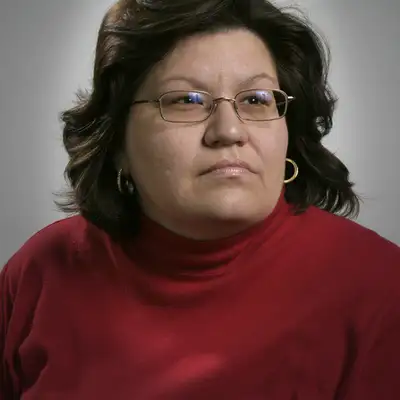
The Road To Your Name Podcast series grew out of a program started by Aboriginal Legal Services (ALS) in 2016 that helped people going through the justice system and their families to strengthen and deepen their cultural connections. Host, Lisa VanEvery, examines many aspects of Haudenosaunee culture and teachings with a wide range of guests.
Season 8, Episode 3
Guest: Dr. Jean Dryden
===
lisa: Greetings everyone. Welcome to our Yoha:te ne kahsen:na, The Road to Your Name podcast, focusing on Haudenosaunee cultural topics recorded on Haudenosaunee territory
lisa: These podcasts are produced by Aboriginal Legal Services with the technical assistance of True Seed Media. My name is Lisa VanEvery from the Mohawk Nation and the Wolf Clan. I'm the coordinator of the Yoha:te ne kahsen:na, The Road to Name program, and the host of the podcast
lisa: This is the Yoha:te ne kahsen:na: The Road to Your Name podcast series
lisa: This episode of the podcast, our guest is Dr. Jean Dryden. Jean is an internationally recognized expert on copyright and archival material. She holds a Master of Laws degree specializing in intellectual property. Jean is the author of Demystifying Copyright. Welcome to the Yoha:ten ne kahsen:na Road Your Name podcast, Jean.
Jean: Thank you very much, Lisa, for this opportunity.
lisa: So let's dive right in. What is copyright?
Jean: copyright is, it's an ingenious but imperfect system that attempts to balance two competing goals. On the one hand, copyright law gives creators exclusive rights to control uses of their works and, one hopes, to be compensated for these uses, but only for a certain length of time.
Jean: Copyright eventually expires. On the other hand, the copyright law also includes users' rights that permit access to copyright-protected works for particular purposes so that others can build on what's gone before to create new works It's a public policy issue that reg- requires the right balance.
Jean: As you can imagine, everybody likes balance, but exactly f- finding precisely where the, the best balance is, a matter of ongoing dispute.
lisa: Oh, it sounds kinda complicated to me.
Jean: Yes, copyright has that reputation.
lisa: Yeah, but I know there's a Canadian Copyright Act, right?
Jean: Yes.
lisa: And when did we, when did Canada get a Canadian Copyright Act?
Jean: we, when, before we became a nation in 1867, we had, we of course were a colony, we used the British Copyright Act. And after confederation, we had variations on the British copyright law. But it wasn't until 1921 that we had our own Copyright Act, again, based pretty much on the British law. But, I count 1921 as the start of, Canada's Copyright Act.
lisa: Oh, okay. So it's been around a while, and, probably, been changed a lot and added to a lot probably, right?
Jean: Yes. it of course has been added to, to deal with new technologies and new ways of dissemination of copyrighted material. And I guess over time it's, society has changed in the sense that the world was divided into creators and publishers of copyrighted material, and consumers of copyright material.
Jean: That was the rest of us. We read the books, we went to the plays, we listened to the symphonies. But with now- Everybody is both a creator and a consumer of copyright materials, so it's become a lot more complicated, m- ma- largely in response to evolving and developing technologies.
lisa: Which brings me to my next question, because now we live in a, an age of social media, and, we've been living with social media a while, but, what now we're living with artificial intelligence, which is kinda new, but not really, new to us, So how has copyright law been affected by these things, the social media and artificial intelligence?
Jean: as you say, social media's been around for longer than artificial intelligence, and social media complicated the copyright situation by providing more content, both from, the traditional creators as well as the rest of us with, different platforms available, like our Facebook pages, web pages, Instagram.
Jean: So there's lots more content and more platforms, more means of dissemination to try to manage. However, over time, the, Copyright Act has been amended to accommodate social media by providing provisions that ensure that it isn't a copyright infringement, for example, to put your wedding photos on your Facebook page, things like that are very hard to police and don't really, damage the market for the, the original in, in a significant way.
Jean: in fact, Canada's notable for having, a provision called the user-generated content provision, which in fact makes it not an infringement for a user to do a mashup, for example, for non-commercial purposes. I would say the act has coped rather well with social media. But AI, my goodness, AI has upset the copyright apple cart quite considerably, and quite frankly, we're not sure what to do with as a matter of public policy.
Jean: Now, we all... AI has a whole bunch of issues, about the harms that can be done, but narrowing just to talk about the implications for copyright, there's three issues. One is- Traditionally, in order for a work to be protected by copyright, it had to be created by a human being. But what if it's created by a machine, by an algorithm?
Jean: Does that mean it's protected? the outputs of AI are even protected by copyright at all. If it's not a human, not created by a human, then it's not protected. But we don't know what... that's a question. Does... where's the line? And where's the line between AI-assisted works and the human input?
Jean: That's one question. Question two is, should the owners of the copyright in the works that are being used to train large language models, should they be compensated somehow for the use of their works to go into the training? And if so, how? And then the third question is, if there's copyright infringement along the line somewhere, who's responsible?
Jean: Who's liable? Is it the developer of the algorithm? Is it the person who gave the prompts? Is it the organization that created the product of the AI? Those are three questions to which I do not have answers, and not many other people do either. Solutions are going to come through legislation, amendments to the Copyright Act, and they'll also come through the courts.
Jean: But in fact, relatively few countries have actually passed legislation to address these issues. Canada is not one of them. Canada has been-- has undertaken, a number of public consultations, and as you probably know, we have a minister of AI, Evan Solomon, and he's been working hard to try and come up with a, a- an appropriately balanced public policy solution in the form of legislation to address these issues.
Jean: because as AI is just changing and developing and expanding at a, a, ferocious pace. so I understand. I am not a confidant of the minister of AI, but I understand that legislation might be introduced as early as, early in 2026. No guarantees, but there's some urgency to get this settled.
Jean: But right now, we don't know what to do. We're asking other people what they're doing, and they're saying, I don't know. What are you doing?" So
lisa: do you think Canada is at the forefront globally on this issue?
Jean: I really couldn't say. I think they're wise to do some consulting instead of, jumping into legislation right off the bat.
Jean: but I, it all depends on what- comes out in the legislation, and I'm not quite sure what it's going to look like at this stage. We'll see when something's introduced in Parliament. And as I mentioned, the other place where clarity will come is through the courts. There's a whole bunch of court cases that are proceeding in many countries, most, most notably in the US, because they are such a litigious society.
Jean: in Canada, there's a few cases, and as it takes time to work its way through the courts, and I'm, I'm pretty sure that they'll all be appealed. once they hit the t- the trial division, I bet they'll be appealed to the appeal, level, and I bet a lot of them will go to the Supreme Court.
Jean: that doesn't happen overnight. So the court, the court solution is, slow. But on the other hand, I think we will also be able to learn something from the litigation going on, particularly in the US. Now, US law is, of course, not binding in Canada, but at least we'll see where the courts are going.
lisa: So is there a case that maybe we would all be familiar with that is now before the, courts?
Jean: I'm not sure that... a lot of people don't live and breathe copyright the way that I do. but there is a case where the publishers are suing, I think it's OpenAI. I've forgotten the name of the defendant, but anyway, for, using their material, scraping their material off their websites to train large language models.
Jean: So that, that's a big case. Not a lot of people may not be a- aware of it, but, the publishers, the newspapers and the broadcasters are... They, want to be compensated for, the, the use of their works. We'll see what the court says.
lisa: yeah, I'm sure with AI even there's gonna be even more, things going through the courts.
Jean: Oh, yes.
lisa: Yeah, because how do you really identify a creator when you're dealing with AI?
Jean: that's precisely the point. The developers and the trainers of the large language models are copying tons of stuff. In the output, it isn't detectable, any particular, contributor or any particular author's work is not detectable.
Jean: So many people are arguing that it's not infringement- It is fair dealing. there's a, a, a user's right in the Copyright Act that says it is okay to copy material for research, and the, proponents of that, view would argue that this is research, and it's not affecting the market for the original works because you can't even see what they are in a huge...
Jean: if there's lots and lots of training data. So that's where some of the arguments are going, but of course the rights holders, they want to be paid. So we w- we will see.
lisa: Okay. So with AI and not being able to identify a particular creator, that kind of issue, it's akin to indigenous traditional knowledge where that's the same thing.
lisa: The knowledges can be communal. So is there a way for indigenous nations to protect the copyright in their stories, their songs collectively, or does copyright always have to belong to a person or a corporation?
Jean: Lisa, that's a brilliant connection between AI and indigenous copyright. And within the framework of, the current Canadian, settler copyright law, copyright can belong to an individual or several individuals jointly or an organization, like the individual's employer, but it really depends on the ownership rules in the Copyright Act, which can be complicated and which don't exactly provide for community ownership.
Jean: And this is just one of the, the disconnects between settler copyright and indigenous practices. And, an even greater disconnect are the, the term rules that determine when copyright expires. Term rules, the duration of copyright are, is based on the life of a single author, and 70 years after that author dies, the copyright expires.
Jean: But where a story or a song has been passed through generations, undoubtedly the original author died way more than 70 years ago and the copyright has expired. So technically, the work can be used by anyone without permission or payment because the copyright's expired. But that's not how indigenous people see it.
Jean: With communal ownership, it remains a living work, and that's a, a huge disconnect.
lisa: So I guess maybe the solution could be that indigenous nations need to address this in their own communities, and how they wanna handle it. And, should they all come up with their own protocols, could that fit into the Canadian Copyright Act?
Jean: yes, and and, the other, another disconnect is that there's no one size fits all. There are different protocols and traditions within different First Nations, and that they have to be respected, of course. Now, some countries have developed a separate law, separate from their, the Copyright Act, to deal with traditional knowledge and traditional cultural expressions.
Jean: So I'm, actually I'm... My personal view is that would be a better way to go, rather than trying to shove traditional knowledge and traditional cultural expressions from many different nations into, the existing Copyright Act.
lisa: Yeah. Yeah, that sounds better. Yeah, and I think that individual nations, they would be able to come up with their own protocol relatively easily because that's their knowledge.
Jean: yes, and they're also-- yeah, one of, one of the ways that I think a special law for indigenous traditional knowledge is that there could be different levels of protection. there are some stories and some cultural expressions, for example, that can only be listened to or participated in by women and some only by men.
Jean: and the values, instead of just seeing how much money your, creation is worth, I think there need to be other factors instead of financial e- economic value only. Cultural and spiritual values need to be somehow incorporated into the special law. and right now, believe me, there's no accommodation whatsoever for cultural or spiritual values within the Copyright Act.
lisa: Yeah, for sure, because, with indigenous knowledge, it's so connected to, spirituality. let, me ask a, a more specific question on a, specific scenario. What happens if an individual, whether they're indigenous or non-indigenous, if an individual asserts copyright on a traditional story or a song?
Jean: that would depend on the situation. It would depend on, the work, the song or the story in which the individual wants to claim copyright, whether or not there are other claimants to the copyright Whether those other claimants are even aware that somebody has claimed copyright to their work, and what, if anything, they decide to do about it.
Jean: so it's really hard to say without a specific example. Possibly nothing would happen. there would be no pushback, no copyright challenge. But there could be, depending on what the nature of the work that's in which copyright's being claimed.
lisa: I recall, I don't know how many years ago this was, but when we first started to see sampling in music.
lisa: When we would see sampling of an old song in a new song, like a... It mostly happened in rap music, I think. I remember hearing that and thinking, "Oh, they used somebody else's song. I wonder if they got permission to do that." And they would have to have permission to do that, right?
Jean: legally, yes.
Jean: But there developed some guidelines about how much of a song they could use, like how many seconds and things like that, r- rather than try and enforce and monitor every second. That's really impossible to enforce. So there developed some, some industry guidelines, and also the provision the, that I mentioned earlier, the user-generated content provision, also allows that to happen, under certain conditions.
Jean: it has to be for non-commercial purposes, and, they have to be borrowing or extracting from a legally acquired copy, and they have to acknowledge the source. there's rules like that. But Canada just passed that in 2012. it's quite recent, and I think it's worked fairly well So there, just given the difficulty of monitoring and enforcing micro uses, the, the industry has evolved a bit and the legislation has as well.
Jean: But yes, that would be an interesting situation, and I, would love some case law that would, clarify it for us so a court could rule, but I'm not aware of any case that involves that particular scenario.
lisa: okay. And here's another scenario. What would happen if a person takes a traditional story or song and then makes it more contemporary, like changes it, or something like turning a children's story with illustrations, or records a version of a song with a new musical arrangement?
lisa: So I guess taking an original and changing it somehow.
Jean: some of the same issues arise because in, in the case we just talked about, if a, an individual asserts copyright in a traditional story, doesn't change it, the-- that infringes the exclusive right of the copyright owner to reproduce a work.
Jean: Adapting a traditional work, as, as you say, of turning a song into a story or something like that, or, may adapting it for children, that infringes another exclusive right of the copyright holder to, adapt a work into something else. So again, it would depend on the copyright status of the work that individual wants to adapt.
Jean: What exactly they want to do with it, identifying the rights holder and obtaining permission, if possible. And if they can't identify the rights holder, then obviously who are you gonna ask? Or the rights holder may not answer. So then, what is the person's tolerance for risk? Are they prepared to go ahead and do it anyway and thinking that the risk is low?
Jean: Those are the factors that would be taken into account. And again, maybe nothing's going to happen.
lisa: So I guess really what people should do that are creating new works all the time, everyday people are creating new works.
Jean: Yes.
lisa: How do they legitimize their copyright? say they painted a, a painting and, what would they do next to make sure it's copyright?
Jean: Okay. in Canadian law, actually in copyright laws around the world, a work is protected by copyright the minute it's created. You don't have to register it or anything like that. However, you can register your work with the Canadian Intellectual Property Office in Ottawa, and if you... Th- they don't check it to make sure that, the work is really original and that you haven't copied.
Jean: y- it, it is assumed that you have the copyright to this work, and once you've registered your work, should there be a legal challenge, should you have to go to court, registering your work means you can start from square three instead of square one. It is assumed that you own the copyright, and it's up to the plaintiff to prove that you don't own the copyright.
Jean: And another thing that I advise is mark your work with the copyright symbol, like that little C in a circle, your name, and the date, the year. And then that makes it clear who is the copyright owner and who people should contact if they want to do something with it, and it just makes it easier for them to know to wh- to whom they should apply for permission.
lisa: okay. And if it's, say a, like a piece of pottery or something or of, you can maybe take a photograph of it and, put the copyright, symbol on it and mail it to yourself. Is that what people still do?
Jean: No. That, it's possible to do that. You m- you mail it to yourself by registered mail and then you don't open it, and that proves it hasn't been tampered with.
Jean: that's c- it's possible, but it's a clunky way to do it, and it's it's-
lisa: Is that too old school, Jean?
Jean: it's, it's almost like a folklore, copyright folklore. Oh, yeah. and, yeah. it, and it works better for, like a, for textual material than for an object like, like a sculpture or a piece of pottery.
Jean: that it would be easier to challenge a photograph. I... it's cleaner to just register the darn thing. although that's gonna cost a bit of, money, but still it's,
lisa: How much does it cost, Jean?
Jean: I th- I think it's around $65 or so last time I looked.
lisa: Oh, and if you're always creating, that could get expensive.
Jean: yes, it could.
lisa: what are some issues that indigenous artists should be aware of when copyrighting their works?
Jean: I think marking your work with the copyright symbol m- means that there's less excuse for somebody saying, "Oh, I didn't know who owned it." And particularly for works that you think might be challenged, the registration is important.
Jean: And- If you're copying or adapting another work, be careful. Even though you might think the work's in the public domain, that may not be the case. So I guess what I'm saying is be more familiar with the Copyright Act. Just understand a little better how it works, and I'm not saying that you actually have to read the statute.
Jean: That's, probably ab- above and beyond most people's tolerance. but there's a, a book called, Canadian Copyright: A Citizen's Guide by Laura Murray and Samuel Trosow, T-R-O-S-O-W, and it's a very readable and a very pro-user of copyright book that I find very useful. now I am a creator, but I'm far more...
Jean: With my background, I'm far more of a... On the access side rather than the control side, so it happens to fit my particular perspective, that for creators who do want more control, that may not be quite the interpretation that they're happiest with. But, it would still give you the, a, a, good overview of the act and how it works.
lisa: Oh, okay. Canadian Copyright: A Citizen's Guide.
Jean: Yeah. Second edition.
lisa: And your book, the book that you wrote, Demystifying Copyright, what- what's that about?
Jean: Oh, that's mainly for researchers in libraries and archives in Canada. It's a much, much smaller book, and it's also a good overview of copyright.
Jean: it's only 70 pages or so, but unfortunately it is out of print, and it needs to be updated, and I haven't got around to doing that yet. However, even though some of, a few of the rules have changed since it was, since the second edition was written, but nonetheless a lot of the, the core basic information, remains, the same.
Jean: So it, it would be available at, at some libraries, and, would probably, certainly would be a shorter read than- Oh, yeah ... the Murray and Trosow book.
lisa: Okay. And I know you mentioned public domain, and I've heard, that term before. I'm sure our listeners have heard that term public domain.
lisa: can you explain that? What... Like Happy Birthday, for instance, is that in public domain?
Jean: it is now. as a result of numerous court cases in the US, they finally came to the right decision and decided that, yes, it is now in the public domain, and you... it is not a copyright infringement to sing Happy Birthday.
lisa: We were, before that, we're all breaking the law, right?
Jean: yeah, like really. But public domain, within the context of copyright, it has a particular meaning. it means, material is in the public domain after the copyright has expired, or in some cases, it was never protected by copyright in the first place.
Jean: And when something is in the public domain copyright-wise, it means that it's free for everyone to use, free for the public to use without permission of the author or the copyright owner, and without having to pay royalties. So whereas in, in more common parliaments, public domain has a broader meaning that means, something that everybody knows or everybody has access to.
Jean: But copyright, the public domain in, the context of copyright means, works that were never protected by copyright or, in which the copyright has expired.
lisa: Okay. for instance, say you've written a song, you have the copyright to a song, you're still living, and if someone uses this song, do they need your, written permission, or can they use it and just send you some ro- a royalty or something?
Jean: they, need, they really do need your permission in advance. And how would you know how much to send?
lisa: Yeah, that's true.
Jean: Now, it, would depend on what the use is, but if you were using it in public, like background music in a restaurant or something like that, there are organizations called collective societies, and they serve as the middle entity between creators of copyright material and users of copyright material.
Jean: So particularly if you were using, playing the song in public, as I say, at the grocery store or at your gym class or whatever, you could apply to the particular collective society that handles public performance of music. They already have a price list of what it costs for that, for your particular use.
Jean: So you would apply to them and say, "I wanna do this for such and such a length of time, and it's, these three songs or whatever," and they would tell you, "Okay, the price for that is X dollars." You'd pay them the money. They pass, they take some off the top for their expenses. They pass the rest on to the, the copyright owner.
Jean: So that makes the whole thing more efficient, so it's like one-stop shopping rather than trying, a bunch of users trying to track down a bunch of rights holders. But not everything is covered by a collective society. It's a little bit complicated.
lisa: And so is that how music works today? if you subscribe to a music, platform like Amazon Music for instance, you subscribe, and you get any music you want at any time you want.
lisa: How are those, artists getting paid?
Jean: Amazon Music would've, negotiated licenses with the artists and paid them money, and so Amazon has the permission, and the, the p- the permission to, stream the music to its subscribers. And the rights holders, the artists, they've got money.
Jean: They've been compensated for that, the right to disseminate their music. The subscribers are paying for it,
lisa: So do they still... Do they just get a one-time fee, or do they get, per download of people who downlo- who stream it?
Jean: That would depend on the license.
lisa: Oh, yeah.
Jean: Whether it was a blanket fee or whether it was a per, per use, as you say, per, download or per streaming.
Jean: That would be something they could, that could be negotiated
lisa: I guess download is so outdated. Technology is racing past me-
Jean: yeah ...
lisa: so, much. I still use the old terminology.
Jean: so do I.
lisa: Yeah. I think it's so funny. Yeah. copyright, you've just educated me so much on copyright there, but I know there's so much more, right?
lisa: It's very complex.
Jean: Yes. in the past I've taught a 12-week course at the University of Toronto, so it's very hard to distill 12 weeks' worth into an hour.
lisa: And is this part of, law school? When people go to law school, do they learn this kind of law?
Jean: not necessarily. it would be an elective.
Jean: within law school, there are certain core courses that everybody has to take, but intellectual property is an elective, so it's possible to get through law school without ever having taken a course on intellectual property. But if you don't, aren't interested in practicing that kind of law, if you're more interested in tax law or criminal law, then you probably don't need to know much about intellectual property.
Jean: It would be a choice if that's your... if you wanted to work in entertainment law, boy, you sure would have to know something
lisa: about copyright. Oh, yeah. so really you'd get a little bit of education about it in law school, but then you'd have to... Where would you get most of your education, in the courtroom?
Jean: depends on which side of the court case you'd be in. You wouldn't certainly be acting as a lawyer in a court case if you didn't know the, subject area of the lawsuit really, well. If you were a party, like the plaintiff or the defendant, then you would probably have to rely on your lawyer for the detailed knowledge, of copyright, 'cause it's pretty hard to, work up on your own.
Jean: I've been, working in this area for more than 25 years, and I am not, I hasten to add, I am not a lawyer, but, and I'm, my particular area of, focus has been libraries and archives rather than entertainment law or anything like that. But I've learned an awful lot In, through reading law cases, r- through, studying the law itself, and through practical experience of how copyright actually plays out on the ground in libraries and archives in particular.
lisa: So copyright through libraries and archives, is it l- all laid out, there's not too much question goes on, not too many court cases originate in libraries and archives?
Jean: that is true. There are, In fact, I can only think of one that I'm aware of in, that relates to libraries and archives in Canada, actually, but, there have been some cases involving universities, that indirectly involve the library about, copying, how much can be copied legally, how much fits within the user's right called fair dealing, and how much needs to be paid, how, how much copying exceeds the limits of what's called fair dealing.
Jean: So there have been some cases, involving, particularly involving York University over the past, really it's taken a decade. These are cases that have gone right to the Supreme Court. and the findings have been consistently in favor of the user's right- fair dealing.
lisa: that's interesting.
lisa: so with copyright for the average person, or the, artist, should they be thinking about this all the time?
Jean: if they're creating to make a living, then yes, they do need to be quite knowledgeable about it. But lots of people create because they love creating.
Jean: they're amateur artists or amateur poets or, amateur short story writers. If they're not, Intending to publish, for example, or if they're not, if that's n- not the way they've, they have to make a living, then, there's less concern about copyright, than somebody who's f- whose job it is to create and, disseminate.
lisa: I guess it's more prevalent or could be more prevalent in the music industry, 'cause there's only so many musical notes, aren't there?
Jean: That's right, and you can't copyright the musical notes. It's the, the compositions that you create using those, those notes.
lisa: And sometimes you'll hear a song, and you'll, say, "Oh, that, that reminds me of this other song."
Jean: Yeah.
lisa: I think that happens all the time.
Jean: Yeah. There's, yes, let's just leave it at that. There's, S- sometimes it's hard to be- Yeah ... completely novel and done something that's absolutely never been done before.
lisa: Yeah, for sure. I think the most interesting thing about copyright is, and will be in the future, AI.
lisa: So we just have to keep an eye on that, Jean?
Jean: Yes. Yes. I'm, very interested to see what's going to happen because it's not, an easy solution to, a complicated and fast-moving problem.
lisa: Yeah, we've never really, as a, as, as humanity, we've never really experienced something so fast-moving such as AI.
Jean: Yeah.
lisa: we'll have to do, part two of this conversation as we get further along.
Jean: Yes, it'll be interesting to see what the legislation says once, when, it's introduced into parliament.
lisa: Oh, can't wait. Okay. Now, we have been talking with Dr. Jean Dryden, and, we've been talking about all of, everything copyright today.
lisa: And I just wanna say, nia:weh, thank you, Jean, for joining us on the podcast, and, it's been such a, such an, interesting talk with you today.
Jean: thank you, Lisa, for the opportunity. It's... I always enjoy talking about copyright and, hope that I've been helpful in educating people out there, about it a little bit more.
Jean: Thanks.
lisa: Yeah. Okay. Onakiwa:hi. That means see you later in Mohawk.
lisa: Nia:weh, thank you for listening to this episode of the Yoha:te ne kahsen:na: The Road to Your Name podcast, which has been produced by Aboriginal Legal Services and hosted by me, Lisa VanEvery. There are 10 podcast episodes in each season. Let's meet again on the next episode. If you would like to learn more about our organization, Aboriginal Legal Services, and the programs and services we provide, please visit us at our website, www.aboriginallegal.ca.
lisa: And if you feel inclined and would like to make a donation, you can click on the word Donate located at the top of the homepage of our website.
lisa: You can also visit us on Facebook at Road To Your Name. This has been the Yoha:te ne kahsen:na: The Road To Your Name Podcast