Subscribe
Share
Share
Embed
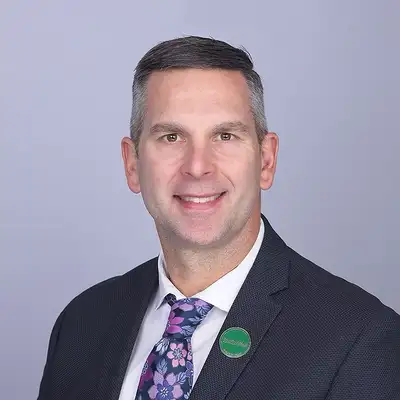
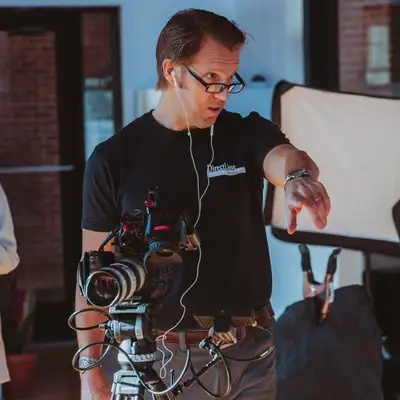

Eric Feeney talks with #friends! Eric is the founder of the nonprofit organization Friends of Feeney. Their mission is to help children and families who need assistance after heartbreak and tragedy. www.friendsoffeeney.com
I'm tapping. I'm going to start tapping.
Even though I'm anxious.
I still love and accept myself.
All right.
Even though I'm nervous.
I still love and accept myself.
Even though I'm worried.
I still love and accept myself.
This is tapping.
What's what technique is this?
So this is called EFT,
motion of freedom technique
tapping and right now
we're just starting with part one.
It's a nine point protocol.
So you always start with the karate chop
right here.
Chop kind of letting the nerves know
that we're coming
in, that there's going to be
some stimulation, some connection.
You kind of start to feel the breath
a little bit a little deeper.
Now it's working.
Yeah. You feel it right away.
Right now we move to point one.
If you want to just follow me.
So we go over here.
Normally you would add a phrase to it.
So even though I'm so anxious,
I don't know what I'm going to do
about all of this.
You're really stating what you're feeling.
All this inside.
It's so hard. It's so heavy.
I can never get rid of it.
Oh, my God, I've been dealing with this.
Follow me so long, I don't know
if it's ever going to get better.
I'm getting really, really tired of it.
Oh my God, I just don't know.
Every time I think
I'm getting better. Not.
And I'm overwhelmed
and it just doesn't go away.
And I don't like this feeling.
I don't like this feeling I'm going
to feel all the time when I have anxiety.
It doesn't feel good
and I want to feel good.
And this doesn't like me, doesn't
let me feel good.
And so I'm going to try to change this up
a little bit just by what I'm doing.
And then I move up to the head.
So this is a nine point.
And normally what we would do is
we would keep going, kind of identifying
the negative feelings
you're having. Right.
Until eventually there's a click
and you release it.
Right.
So each of these points
is connected to an organ in the body
that houses different emotions.
So when you read the client you're kind of
noticing where they're staying stuck on.
So if we're doing the collarbone
that might be like liver bladder
or that might give me some information
around, okay,
some grief
that's now moved through. Right.
So it's kind of like the connection
between all of it
and know we keep going around.
But now with the positive kind
of affirmations, I like what I'm doing.
This feels really good to me. Same points.
It feels really good to feel good
and that I know how to get myself here.
I like feeling good with what I'm doing
and this right now makes me happy
that I'm committed to myself.
Because taking care of myself
is the most important thing,
and I like knowing that this helps me feel
good,
and feeling good
is what it's all about. Wow.
And that would be the end of a stretch.
And what was that cycle called?
That is just round one is a it's EFT,
you know, tapping protocol.
And there is a subjective kind
of depending on what we're dealing with.
The, the, you know, the weight
of the issue, who we're talking with.
And that we can spend, you know, good
30, 40 minutes just on the negative script
and we can just maybe stay with one word
for like rounds and rounds.
And the idea is that it does open up
the emotions.
You will cry, you might scream,
you might take some deep breaths.
You know, you might do whatever,
depending on what we're touching.
But it really brings immediate relief.
This evidence base at this point,
a lot of research that shows us
that this really does work
for and diety for stress and depression.
Now, how hard should I tap?
Was I tapping too hard or just, you know,
now you don't want to bang, right?
The nice gentle. Tap.
Yeah.
I mean, I kind of push this in time
to the point that the systems know.
So even imagining
sometimes you're doing it,
I do feel like it
can it can make a difference.
But in terms of actually doing it,
you don't need to go hard.
It can be the tap
or it can be acupressure,
which is another kind of way of moving.
And this is also connected
to like acupuncture.
So acupuncture we're working
with different you know with. Yeah.
So the acupuncture line
like like will connect to something.
Exactly like if.
You can if you hit if your foot hurts
you put an acupuncture here or something,
something crazy.
Exactly the opposite.
Yes. Yes.
You mentioned collarbone, maybe liver.
Where would the eye the cheekbones be?
Where would that lead to?
This is connected to the stomach meridian.
Okay, so that's another aspect is we have
like 3000 acupuncture points in the body.
And then we have these energetic meridians
called the meridians.
So kind of like I compare them to veins.
And so when we're working with healing
like energy healing, if you're having
stomach issues, for example, we would work
with this meridian that begins here.
It actually like follows
all the way through every single meridian
has this really unique,
you know, kind of aspect to it
into the thighs, out
through the knee, out
to, you know, your big toes.
Right. So you would learn that protocol.
We do the energy work.
We clear through that.
And that would then help you with stomach
as little as simple as well.
Yeah.
What a wonderful way to start our podcast.
That was great.
I'm here with my good friend
Jenny. Lady. Hey, how are you doing?
I'm doing well.
Thank you. Happy to be. Here.
Very excited to be talking with you.
You are a psychotherapist? Yes.
If you couldn't tell.
What do you think?
Well, I don't know.
We start with I, I own it.
Yeah, I love it, I love it.
Well, my name is Eric Feeney, founder
and president of Friends of Fini.
Friends of Feeney's, a nonprofit.
We help children and families that need
assistance after heartbreak or tragedy.
And I use this podcast.
Fini talks with friends,
and I talk to wonderful people
that are doing great things.
And Jenny,
you do wonderful things, helping families
and people
that are going through some trauma
or have some things they need to talk
about how long you've been doing that.
So I've been a psychotherapist
for about 20 years,
and I've been in private practice
for 15 years.
Early on in my career, I was working at
Wheeler Clinic that a nonprofit.
It was very, you know,
learned a lot of great experiences.
I knew early on that I needed my own space
to fly and do it my way.
And so, like, my early 20s,
I left and I started my chiropractic this.
And I've done that for 15 years now.
And then we evolved into the Enlightenment
Counseling Center,
which we can talk about in a little bit.
And that became more.
But administration helping
other therapists with their own case loads
and building up and helping them,
you know, feel empowered
and clinically savvy
to to do the work as well.
Yeah. I'm so excited to talk to you.
What what month are we in today?
This is mental maze
mental health awareness. Yes.
We're here to talk about our mental health
today.
Mental health is very important.
It's everything.
Right now. What grade do I teach?
Third, third grade.
So pretend
you're talking to a third grader.
How would you explain mental
health to a third grader?
Mental health, I mean,
I there's just such a connection between
emotional health and mental health, right?
So it would just be more of
like teaching them
that they have this ability to take care
of themselves and how they feel
and how they, you know, support themselves
in their self-talk and their
and their thoughts.
And that it's, you know, something
that they can really learn how to be.
Well, and when they're not feeling well,
how they can still express
that and get the support that they need
so that they can feel a little better.
Excellent job. Excellent pass.
That's an A+.
Third graders.
They would understand that.
Kind I think so yeah.
And you worked
at, enlightenment counseling centers.
Enlightenment Counseling center.
Ktvb.com
is your website? Beautiful website.
Thank you.
You have, like,
pretty flowers and pictures
and explains everything that you do. Yes.
Who does your website?
So we actually just hired,
a family friend who has her own business,
a younger guy who is just kicking butt
with everything very well,
you know, connected to the group
practices, mental health aspects.
So already came in prepared.
And, you know, kind of really got
to understand my niche, the niche of what
we're trying to do, what we're about
and then created kind of based on that.
Yeah, I like it. Yeah.
I think you and you're working
with your good friend Nicole.
It's my girl Nicole.
We've been colleagues,
for over 20 years. Wow.
And I think I was telling you
before we actually started off
in the 998 Farmington Avenue right
across from Luna Pizza.
So this is so cool to be here because
we've come here and have lunch with them.
And we shared a
small little basement office,
we've split it in half.
I was pregnant with Kingsley, my son,
which we'll talk about.
She was pregnant as well.
We're like, let's experiment with
private practice and see how this goes.
And within I think five months,
I was like, this is for me.
I know it is.
And I worked really hard for a good year.
Full time jobs, two full time jobs.
Got the case load up, you know,
and then eventually left.
Wheeler. Yeah.
And, yeah.
So then we were together,
and then we've evolved
into a bigger space, subleasing that.
And then we realized,
you know, like our energies,
our missions are sticking to
the community.
People want to work with us
or anyone that they know
that we know that we can recommend.
So the business was born. That's amazing.
Yeah.
Right across the street
because Luna Pizza's 999 Farmington.
I know, and. You're at 9.98.
Yes. Suite 207. Yeah.
Phone number 78607293284.
Email address.
So we can do EC assistance 2021 at gmail.
That's like,
for the administrative person.
I can answer those questions.
Very cool, very cool.
No, I feel no.
May mental health is very important.
I feel exercise
helps me with my mental health.
Health? How do you feel about that?
Exercise is key.
Do you suggest everyone get out and move?
I mean, it is medicine for sure.
It's it's not just,
an integrative approach, which is what I,
you know, kind of focus on, but it's from
a physical standpoint, obviously, too.
Right?
Letting alone like the mind and your
emotions, but the health that it brings is
just so, you know, unsurmountable
it affects you in so many different ways.
So in my clinical work,
you know, I'm
working with people who have depression,
who have anxiety with a hard time
maybe leaving their home sometimes.
So movement is beyond exercise,
but it's more about moving the body.
We're not looking to really sweat right
now. It's not.
It's just about breaking patterns,
moving the body, taken in the sunlight,
taken in the fresh air.
So it begins like that, right?
And then it can evolve into so much more.
I'm a yoga practitioner.
I'm very much into hiking and,
you know, really
like long, long walks
and these kind of things.
So you can, you know, evolve
and find your own kind of niche.
But without a doubt, moving
the body is, is needed to be.
Well, what would be some other keys
to having a good mental health exercise?
Moving.
Yeah.
So I mean again this talking about it,
this integrative approach is beautiful
because it really helps me.
What's that term for integrative.
Integrative is a psychotherapist
that is, you know,
licensed clinician trained in all the kind
of traditional psychotherapies.
Gotcha.
But also trained in complementary
and alternative medicine.
So that becomes like the meditation,
like the breath work,
like the somatic movement,
which is really working
with the body and movement,
and even like pain or distress in the body
as a way to access emotions and access
maybe even traumas.
Okay.
And so it's an eclectic approach,
you know, to really understand,
how a person is functioning
and then where they can also be, you know,
kind of hurting or suffering.
So, yeah, so depending on that,
you know, you can use,
I do a lot of visualization and imagery,
for example,
as a powerful tool to begin your day
kind of seeing yourself happy.
Content, happy, saying hello to everybody
with with use a lot with who are bullied.
Do a lot of work of like imagine yourself,
you know, walking in.
How do you handle a situation?
Who's around you?
How are you feeling? Right.
So just one little example of like imagery
as a as a tool.
Breathwork is another one
that's a huge piece of what I do for real
is really focusing on teaching
about breath regulation, not getting.
So there's a lot in the breathwork
world now.
There's so many techniques
and different modalities,
but just the the basic diaphragmatic
breathing is what I start with.
And this is just a very specific breath
that we know is connected
to the central nervous system.
Mental health
is not only emotional and physical,
but it's physiological.
When we suffer from our mental health.
And so that's one aspect
that as an integrative therapist
I'm very focused on
is your central nervous system,
and the gut health to other kind of
outside the boxes aspects
that get affected by distress emotional
or or mental psychological.
So treating those as well.
So depending on what we're kind of when.
I hear gut health is that the food that
you intake and drinks that you intake or.
So gut health is the health
of your microbiome, which is your stomach.
Right.
So we understand that, neuro
there's a lot of neurotransmitters
that live in our bellies.
So when we have depression or anxiety,
it's like 80% are living in this
in the gut, and people don't understand.
It's not meant they're not in the brain.
They live here.
So elaborate.
Go on.
Stress is interesting.
Like, intricate kind of thing
because it's.
But nothing to do with the food
that you eat.
Well, yeah, the food, the food. Yeah.
So I look at it as your, your gut health
is like a garden and you have soil
and then we have good bacteria
and bad bacteria.
That's the normal human.
When we have too much to stress,
we live in chronic anxiety.
Our gut health
gets really dysregulated. Right.
So we have a lot more bad bacteria.
We tend to then crave sugar and dairy.
So that's where the connection
and those types of foods actually feed.
The bad bacteria make us sicker and make
us more anxious, make us more depressed.
Got this like, kind of like thing
that you're stuck in the yeah.
You when someone's at work
and you're like, I'm having a rough day,
I need chocolate.
Is that but. That cravings, cravings.
You know, the idea of like, yeah,
but I mean and cocoa
a good chocolate is actually good for you.
I would recommend like if you get like
the clean stuff, it actually is good.
Yeah.
But it's more like, no, it's like
the person would be suffering with it.
They have chronic anxiety.
Let's say they have issues with digestion,
whether it's, you know,
one or the other.
They have issues with flatulence.
They have with,
you know, uploading, loading.
So there's like physical symptoms
that, dysregulation in your belly.
And then then based on that, you will eat
based on how you're feeling anxious.
You'll eat food, or.
It will affect how you eat
and what you eat as well. Yup, yup.
And to actually heal that is this is where
like the integrative approach again,
I work with naturopathic doctors
very closely with functional doctors
with acupuncture is
and and like massage therapist,
trauma focused massage therapist
because everything is like complementary.
It's all connected.
And I understand that. Right.
So it's like not only am I integrative
in what I'm bringing, but also working
within the community of healers
and knowing
mind, body, spirit who can do what
and kind of all working as a.
Partner and collaborate.
You send some partner collaborate.
These are how they're doing. Wow.
I have clients that want
to get off medication, for example,
and it's been pretty successful
where I've worked with my doctors,
you know, that I have great relationships
with and we've helped a lot of clients
come off medication, moving
to natural supplements
to still manage depression or anxiety.
A lot of times the medications themselves
are exasperating symptoms
or creating other symptoms.
And so a lot of the patients come
in, they don't know where to start.
It's like, well,
I've been on these meds for 20 years.
I have so many different meds,
I feel like crap, what is going on right.
So it's so again, that integrative
approach is, is having that lens.
And rather than just talking about
how you're feeling today.
Right. It's like, no, right.
Where is the feeling in your body?
Let's connect with that.
Let's let it express itself. Right.
Let's maybe bring in some imagery
to bring some soothing to that.
Let's maybe do a little body work
to ground your body move, you know?
Right. So yeah.
And then let's do some breathwork,
a meditation where we end the session,
you're calm and then, you know, so,
like the session itself is medicine.
I always tell my clients like therapy.
The session is the medicine.
You know, in so many different ways.
I saw that.
And you, you do sessions
you can pay per session.
I saw it on the website.
I think that's great.
Do you have an introductory
like a first time lesson?
Session?
Session?
I usually do like a ten, 15 minute phone
conversation consultation where they are.
Yeah. Now, is that free?
It's for free. Okay. Yep.
So if you're listening.
Yeah. Check it out.
We gave we'll share the website
and the email again.
But, if you're thinking, you know.
Yeah.
No, I'm talking about it.
And I feel like already that tapping
I still feel it a little bit
in my forehead.
I have I clench my jaw sometimes.
Exactly where would I tap if I clench jaw?
So I mean,
the human is very intuitively guided,
you know, and we get headaches sometimes.
And when I,
when I'm doing my energy medicine class
and we're talking about learning
all these points in the forehead,
and they're like these technical terms
and I'm like,
yeah, she's like, how often do we see
humans when they're stressed out, do this?
It's it's an innate
knowingness that that we're now
just reminding you guys, hey,
there's actually acupuncture points here
that you're touching by just doing this.
So with the mouth I do a lot of massaging,
a lot of work, you know, helping
the client identify where they hold
their stress is like that baseline.
The first month is really like,
how are you presenting with everything?
And then using the body as a way to,
also relax the anxiety.
Right.
So we'll start practices
where we'll do I'll do a whole regimen.
We write it down five minute massage here.
Then we're going to do some
lymphatic work.
We're going to move some,
you know, the lymph some kind of this.
Is all in one session.
This can be one session.
All of it. Visualize depending on we.
Get it all in.
Wow. Depending on what's going on.
That creates the term integrative.
Yes. Gotcha.
I'm with you now. Yep.
This is great. I'm learning a lot.
I've known you for quite some time.
Yeah.
And I'm so excited that we finally get
to chat to my good friend Jenny.
What are some.
All right,
so you are a cycle therapist? Yes.
Let me shout out some sponsors first.
So we're here at Luna Pizza.
Yes. 999 Farmington Ave.
We got,
Parkville management,
golf law group.
Sally and Bob's the fix the float
cheating agency,
West Hartford lock. Yeah.
So with West Hartford Lock,
what are three keys
that make you a great psychotherapist?
Three keys are my genuine,
love and passion for this work.
It shows. Yeah.
The respect that I have for humans.
I truly have worked at so many different
people.
Hundreds,
I want to say thousands of humans.
And, I just respect diversity.
I just, you know, respect, uniqueness.
I've been exposed to
so much, through my work, and I've heard
pretty much everything
you can imagine, good and bad,
that can happen to human lives.
And so bringing that,
you know what I mean?
Like just holding space for everybody.
So able to do that without judgment. And.
Love for
people, love for your job and love for.
Love for the third one.
And passion.
Passion for you
and the gifts. I have.
Nice gifts.
No, I don't know. Speaking of gifts, yes.
Oh, well. Well,
first we get in how we know each other.
So. Yeah, you are the room parent.
I was. For my third. Grade. Yeah.
So Kinsley, shout out to my guy Kinsley,
I miss you.
Oh, I remember you.
You stand out.
Your phenomenal student,
classmate and friend.
He he cared for others.
He cared about his classwork.
He cleared about other kids classwork.
He just enough.
So whatever you're doing
as a psychotherapist and a parent.
Congratulations. I'm.
Thank you.
You know, be very proud because
Kinsley know the kid can be box the kid.
Drum the kid can be a. Can
be a reporter.
Right. Break dance.
No pinky break dances, plays
basketball, play soccer.
Oh, and loves his video games, of course.
So it's a balance that we keep.
A great kids.
Great kid. Yeah.
So you were the room parent.
And so I get gifts at the end of the year.
Do you remember what gift you gave?
You gave me.
We gave you guys with the tree. Right.
We got gift certificates. Okay.
But you personally gave me a gift too.
Oh. What was. It?
It was like a salt rock that you plug
in. Yeah.
That's right, the Himalayan salt rock.
Yes. My daughter uses it to this day.
That's awesome.
I had it down by an office
I got by my computer.
But I guess that's not the place for it.
You want it in your bedroom near your bed?
It wouldn't be bad by a computer either,
because it does neutralize
all those energies.
Okay, like I have a whole bunch
of little things near my phone and stuff
that are like these, like
stones, the copper in it to try to like,
you know, kind of work with the infrared
and all the different kind of thing.
So you could use it in that way.
But wherever you're called to use it, it's
going to work.
Okay.
So you're big into the energy.
And do you do singing bowls a lot? Yep.
So I do.
I have like five crystal balls
at the office.
Big ones, all different.
Quartz is frequencies
I have about six different Tibetan bowls.
Do you hit it and say, hey, breathe
until you can't hear it anymore?
Or do you do.
I use an intuitive.
So a part of me to
me is I'm very intuitive.
So, you know, I have all these tools
that I can work with and identify
and whatever calls me.
So, I do have them organized
by like the chakra that we work with.
So each chakra,
these are like energy centers
that the human, you know,
has, has a different frequency.
And so these crystal balls
are all different frequencies.
So the a the dino, the
oh you hit a certain.
Way, it'll. Affect the ideas and.
Someone's body.
Working on somebody's body part.
Yeah, yeah.
Now what do you say to a skeptic.
So I'm not. Scared. No,
I hear you, I believe.
But what have you say? Someone like.
Come on, are you serious?
I rub here
and it affects, a body part down here,
or I hit a sound
and it affects your your your stomach.
What would you say to someone?
I would say
you have to experience it first.
Because it's don't want to go to shrines,
you know,
also, I'm not here
to convince anybody of anything.
Okay?
Honestly, at this point in my life,
my career, I'm very clear about what
I'm providing.
And I'm here for the world.
And whoever wants this, great.
I'm not trying to step outside of it
or rationalize.
Good answer. I love that. Answer.
Yeah, that's the truth. Yeah.
Also, you set up a booth at Johnny SCG.
Yeah, two years in a row.
Yeah. No, look, four is it four?
We've been next to each other for years
the whole time.
Oh yeah. Pretty much. Okay.
Yeah. Like at least three, four years.
Oh, nice. Yeah. Sorry. No it's okay.
No, no. Yeah. Yeah.
I definitely have seen you.
Yes I don't know. That's
all right. My bad.
It was more than two.
I think so, yeah. We've been doing it
like five years now.
Oh nice. Yeah.
You had, you had your singing bowl.
You had a lot of things out. Yes.
So I like to shuffle.
Is purple a certain color
for a certain reason?
Purple is like one of the branding colors.
But I would also say
it's connected to the third eye.
So there is a connection to.
I've a purple shirt
on to the opening of the Third
Eye, the, amethyst stone,
which are very healing.
So yeah, there's definitely
and it's just a color I resonate with.
Like I have certain colors and numbers
that I connect with that mean
certain things to me
that I express myself through.
So it's a wonderful color, I love it.
Yeah. Well, you pointed out the shirt,
so I might as well give it.
Yeah, I got to give my guy a shout out.
That's right. This is Parker
Parker's posse.
Parker's from Bristol. A little guy,
has diagnosed with arthritis,
but he raised.
And we walked at the Hartford
Athletic Stadium for arthritis.
Five k Parker,
one and raised the most money.
So shout out to my guy Parker.
He's a great person and a great friend.
His mom, Mary, and his dad, Paul,
they call him his last name is
positive. Santo a messenger. Yep.
So there's Paul one and two.
Mary Paul and Parker Pope. Sweet.
So shout out to Parker purple.
And he raised the most.
So congratulations again.
He was on with Renee Tenino.
He's a great kid. Great kid.
And I was really honored
to be a part of it.
We're on the back.
It says parents, friends. It's brand new.
School.
Yeah, I see them super cool friends.
That I can't get out of.
Mount Southington and friends and family,
but, Yeah, Mount Southington.
Yeah, they work at Mount.
So I'll do it again. But.
Got it.
Boom.
Yeah. That rock light is.
That was very cool.
So thank you again for that gift.
Yeah.
Thank you for being our room parents.
You and Karina did a great job.
Thank you.
Is Kinsley still cool with Christian?
Yes. Yeah.
Yep. Is Kinsley still cool with Gus? Yes.
Oh my God, yeah, that's the crew grow.
I want to say Gus and Christian.
Did I have them in second grade?
I had a couple kids I moved up with.
Maybe they were Christian.
Who knows?
It's been a while.
Yeah, I looped with five kids.
Okay. Second grade to third.
Kinsley was not one of them.
No, no, no,
you were his first male teacher.
Because, yes.
I was his best. Best male teacher.
Tell Mr. Dicks that.
He, No, he had a great time with you
in that classroom.
Really? It was really.
He's a great. Kid.
It's easy to have a good time
with good kids, right?
Yeah. Yeah.
Kind good. Kid, good kid. Yeah.
Oh, and then Kinsley dad,
once at drop off, was wearing
an American Dream Team hat USA hat.
I'm like, oh, that's that's an awesome
first day of school.
I said that last day of school.
You know what I got as a gift? What?
The hat you did.
Oh my guy Mike.
Thank you. Awesome.
Oh, so you. Guys hooked it up.
So thank you so much.
She's going to it's going to it's
going to get a lot of hats
and a lot of sneakers.
My dad he's a collector. Yeah. So.
Oh yeah I complimented his J's too. Yeah.
Jordans. Yeah. Mike.
Nice hat, nice sneakers.
He wears, like a size 15 or something too.
Yeah, because I'm a size 11,
and I was like, maybe.
You're like, no. I'm not going. To work.
What are some.
So I had some questions.
I looked on mine.
Body medicine and energy medicine.
Yeah.
Can you compare and contrast those two?
Yeah. So it seems like a.
Those are two of the main modalities
that I'm trained
in, in terms of complementary
and alternative medicine.
And my body medicine is really
any techniques that are either kind of
being used from the body to help the mind
or to use the mind to help the body
or techniques that support
both the physical and the mental.
Right.
So, meditation can be a mind body
technique, right?
I do a lot of meditation using the body
to induce a deep relaxation.
Right.
Or again, using the imagery
to relax the body so you know, different.
The tapping is another example of that.
What about okay.
Yeah.
So spirituality.
Spirituality. Yeah.
So you praying to a god or something else.
So with the mind body though
I want to just talk about like I know
biofeedback is another kind of practice.
I don't know if you're familiar with it,
which is so freaking incredible.
It's an older model.
It's been around like for PTSD,
the vets, you know, from many, many,
kind of, times ago.
And it's very, very powerful,
and a technique for,
you know, working with PTSD
and these kind of things, so I can that's
I feel like that's a whole world
speaking about how that works,
but it's really
like working with the brain waves
or muscle tension, your heart rates.
And through imagery and breathwork
meditations, really learning
how to calm your brainwaves down
to different levels,
really working with the muscle tension
to help relax and and diety.
So it's super, super cool.
And there's a lot
within that Eden energy medicine.
I come up. Sorry. Yeah. Go for it.
So now
let's go.
It's one of my faves. Gymnast.
You're still being a gymnast?
Not anymore. I you keep. Track.
Awesome. Come say hi to the camera.
Come on. Say hi.
Right here.
Hello, son. Are you.
Do you like me? We're doing a pod.
This is. Jenny's
one of my students parents.
So psychotherapist
may is mental health month.
Yeah, yeah, yeah, which is awesome.
Yeah, it's called
Feeney Talks with friends on YouTube.
This is episode 137.
You're going to be on there? Yes.
You know, no. It's great.
What grade are you in there? I was, okay.
Yeah, I went to your gymnastics thing
and you came in first place.
It was amazing. That's awesome. All right.
Love that. I want to keep you up.
So great to see you.
Nice to meet you.
Take care. Okay. Oh, yeah.
I love that.
Yeah, that was great.
I've seen old clients though. Yeah.
If this out of me.
So I'm like I can't say hi to them.
They have this anime.
True.
That's a little I know one of the many.
Yeah, yeah, yeah.
Who's this guy?
I don't know this guy. I'm like hey you.
Oh no. She. Oh that's tastic.
So add that in.
So what's Kinsley in now?
Seventh grade. He's sixth grade,
sixth grade, sixth grade.
And then going through
all those nice changes.
But he's doing good.
He's got. The mustache. Yeah.
Oh yeah. It's coming
in. Is he talking like this? You know.
Yeah. Well, what's for dinner?
Did try to get in my bed last night.
I was like, you are way too big.
I'm like, get out of here, okay.
We can't sleep like this anymore.
Oh my God.
He's like, come on. I'm like, not go.
So anyways, yeah.
So the eat the eat an energy medicine is
another, you know, kind of training.
It's really working with like nine
energetic bodies of the human
that's like beyond. It's
not in the textbooks.
It's stuff
that like it's just so hard to explain,
but it's also working
with Chinese medicine and,
you know, just a mixing
of a whole bunch of different things.
So that is another technique where again,
we do the tapping, we do the acupuncture,
we do a lot of like more like moving the
body, shaking it, sweeping energies away.
Oh yeah. So we
we must live in the same neighborhood.
But when I see you walk. Yes.
You're reaching up.
Yes. You're going,
you're doing arm movements.
You're not just walking.
No. So is that something
that you're talking about?
So I do qigong.
Qigong is a practice. It's like.
Qigong.
Qigong Kee yong gong a g o energy
Q you g like there's like technical
way of doing it.
Just like depending on the language.
I think you're speaking. Gotcha.
But I think it's technical as Q
you Gyeonggi could be wrong.
Can't remember now.
But yeah, so that's just like again,
a lot of like, You do a lot of.
Physical.
Everything's very smooth
and fluid with your.
Moves, right?
Like everything like yoga. Right.
Can you do walking yoga.
Is that what you're doing? Yes,
I do that as well. Yeah, that's a thing.
Yeah.
You didn't just make it up.
No walking yoga or sitting yoga.
So we do a lot of like chair
yoga is a big one right now for people.
Can't move too much. I can bend heavier.
That might be.
But literally you can do a nice 30 minute
session of yoga on a chair.
So I'm trained in that also like
aromatherapy is another big one
that I use or plant medicine
I have like the best essential oils.
I feel aroma that just came in and out.
Like, well, that's an aroma.
It's a good one.
Depending on what's going on.
But you know, so yeah, so doing
so I tailor like my oils in the office
every day.
I kind of intuitively make blends
on what I'm feeling,
but other oils that I have are working
on different parts of the brain.
So, like, I'm pretty research in that.
And I know kind of the clients,
the press. I'll pull one out special.
Let's let's start with this.
Let's shake up a little bit
and then or at the end to ground back in
after a stressful session.
So I use that in so many different ways.
But that's super impactful
and sustainable, right.
So a lot of the work that I do is it's
really cool because yes, at the beginning
the practitioner needs to facilitate,
and I very much use it in clinical ways.
But I teach my clients everything
so they leave or they,
you know, start to create this.
What I literally I have them do in
their homes is like this huge board
mind body spirit practices.
So when I wake up, how am I feeling?
I teach them how to check in, checking
in everything, assessing their energy,
and then, okay, I'm feeling this, I'm
going to do this, this imagery,
okay, I'm feeling this.
I'm going to go do this body
work. I'm feeling this.
So they they if this do that,
they have this organized system
of all these techniques that we use
because there really are so many.
Do you ever see the
ones where it's like take ten
deep breaths, look in the mirror, say,
I love you, drink some water
or read a book, do some push ups.
I've I done that one.
How's that one sound?
I saw it on Instagram.
I think I do mirror work.
So again me as a clinician
how I do things is very different.
It's much more tailored.
It's much harder,
you know clinically focused.
So I'm all about the mirror work.
Yeah I think look. In the mirror and say.
Mirror.
It's never that easy.
Who, depending who we're talking to
that could actually backlash you.
If you tell a person to look in the mirror
and their self-talk is so dark and deep,
and then it could lead to,
I don't want to be.
I mean, I'm saying it's, dependent
who are working with,
you know what I'm saying?
But a client mirror work is a very,
you know, sensitive technique.
It's not for everybody.
So I think maybe when you see
these TikToks and these, they generalize
these techniques, that's the difference
between somebody doing an TikTok versus
a practitioner who's trained and knows
when to use these certain technique.
Interesting.
Yeah.
I'm glad you said that
because I could be found as Joe Schmo
and it might not work the way it should.
No, because he has no background,
no training.
He's just some guy on YouTube
telling, right?
Tell yourself you love.
I love myself is going to be a great day.
I think there's a time
and a place for that,
but I just not everyone's going to be
see that, understand
that, be able to do that.
It's so it's it's depending on where you
are truly with yourself and you're like
self-awareness and you're healing
and you're where, you know what I mean?
Like your, your, your current state.
That would dictate kind of like
if that could be beneficial or not,
but it's. All. Intersubjective.
Yeah.
What would you say?
I it's a tough question, but what would
what would be your first advice
for someone
that has anxiety or depression.
That tough.
Recognize that you have
it and name it, name it, name it.
Name it one or the other,
or give it a name like Charlie or Bob.
No, no, like not name it like, give it a
name, but like know that you have anxiety.
I have a lot of clients that have been
functioning in these energies,
in these ways for so long
that they will often say, this is me.
And I'm like, this isn't you.
This is the condition
that that you think is you.
You're you're like deeply in in there,
but that's not you.
So a lot of people have just get so used
to this state of being
frazzled, worried, stressed out you know.
Yeah. And that's their
that's the baseline.
So when I say like name
it it seems simple.
But you know a lot of people
don't even know this is like their norm.
So coming to therapy and validating
know you have a diagnosis.
This is what this is,
is that alone is a life changer
because it's like oh my God, really?
I never even knew that this isn't normal.
This isn't all supposed to be.
I'm not supposed to be acting this way.
So a lot of times we just accept
it's just yeah, the naming it
and the acceptance is another aspect
that I have clients that still 1
to 2 years, three years cannot accept it.
And when I see that
in that their conditions. Right.
And that could be any medical condition
because at the end of the day,
we're dealt with whatever we're dealt with
and not everything's going to go away.
But learning to live with things in peace
and happiness is what we can do.
Those are our choices.
So the accepting of it, for some people
with a lot of trauma
who've been judged their whole,
you know, their whole lives, the,
it's it's this kind of like,
what's the word like,
defensiveness of like, I'm not going to
keep changing who I am, I don't I
the whole the world always told me I'm
not good enough,
and now I have to accept this.
And,
you know, so it's within that context.
And, like I hear you that we're kind of,
you know, bundling this
into all the negative
you've heard about you your whole life,
and you're here,
and that's why you don't love yourself.
And you have such a negative,
you know, self script.
But in this case, this is a condition
that was read that resulted from trauma,
her abuse in your life and the mind.
You know, I mean, God created
a whole new script based on what you heard
that was very not healthy.
So it's like helping people see, you know,
you're not
we're not blaming you like,
this is nobody's fault.
This happened
because you're like a sponge.
Humans are.
We just absorb, absorb, absorb, absorb.
And when you have parents
that are fighting all the time,
that are not happy,
that are miserable, that maybe sometimes
don't even connect with you,
which is sadly that a lot
that exists, you know, that becomes
like your own script and that becomes
like your own self-perception.
Right?
So it's it's powerful
to help them empower them by
naming it, but also knowing that there's
so much more behind this.
But we have to know
that this is a deep layer that's not you,
and you have to know this, you know.
And then does it a certain age,
you know, affect mental health different
like younger or older when you get like
old or older this mental health affects
you differently.
Obviously I don't know
I don't know if it affects you differently
because I
mean, depression is depression, right?
But I mean, in terms of the
the typical common kind of symptoms.
Yeah, I think the more life you have them
and the longer you live in that pathology
and more hurtful
experiences happen because you are living
from not feeling worthy enough.
So you're an unhealthy relationship,
you're miserable,
you don't have a relationship
with your kids,
you don't go after your career,
you're not happy.
So you can see the older
person has more layers of pain, trauma
that's still rooted from the same thing
that they are, you know, depression.
So it gets more it's more complex,
many more layers
to kind of unravel from,
but healing is possible.
And I think that's a big piece
of what I want to say.
Like why I'm so passionate about
this is like healing can happen to anyone.
And they are the.
Age, no matter what age,
no, it's a subjective word healing.
It really is.
I don't see it as a black and white word,
you know what I mean?
I think healing can be knowing your
condition, knowing how to keep it at bay,
knowing how to tend to it,
knowing how to prevent it.
But you still may have symptoms
and that's
healing, you know, I mean, for
some people who are minerals,
very stress variables
just had maybe one situation happened.
Every good support system,
more protective factors.
They will be able to move through things
faster or eliminate symptomology.
So when a client's like
how long am I going to be like this?
I'm like, tell me,
like I can, I can tell you within
six months you're going to be here.
Within a year you'll be here.
Within a couple years you'll be here.
So my treatment is usually 2 to 3 years.
So it's very long term
deep, deep, deep work.
But it's life changing.
They don't have to come back to therapy.
A lot of my clients come after 15,
20 years of therapy,
you know, and just have not been able
to move through.
And then I, you know, they come in with me
and it's like, it's a life changer.
Nice. Yeah.
All right.
You heard it here first. 998
enlightened counsel setting
our integrative psychotherapy.
Jenny and Nicole.
Yeah.
So, Nicole, my motto is be a good friend.
Hold the door.
Pick up trash. It's not yours.
Give compliments. Be charitable.
Smile, smile I love smiling.
What makes Nicole a good friend?
What makes Nicole a good friend is her
support. Unconditional support.
She knows me.
She knows my energies.
She knows my passion.
She trusts me and believes in me and
really gives me a lot of space to create.
She has her, you know, role within
the practice, which she's very happy with.
So we're both very balanced
and happy in what we're doing.
So that's great.
Like, I feel, you know, just support
and openness and honesty of it.
Yeah. Nicole, you're a good friend. Yeah.
What minute are we.
So we could send this to Nicole.
Then at 39.
What about someone that's like, oh, you're
depressed, you got to get out and move.
You got to get out and exercise.
But that person that's depressed is like,
I can't I'm like stuck, I can't move.
Or when someone
it's so easy for the outsider to say,
hey, you got to move, you got to move.
What, what where's the challenge?
Where's the where's the suggestion
or advice for that situation.
Compassion.
Is the first step understanding
that it's not by choice
and, and really you know, holding space
for how hard that must be
that you can't move your body, you know,
and that if you could, you would.
Yeah.
So I always tell people like oh you're I'm
like, you don't people don't understand.
I just like there's so much
depth in everything.
It's not of a person
just refusing to be lazy like I.
I hate that
because that's there's such a story there.
It's not
I don't want to be lazy, you know?
I mean, it's there's so many other
variables and factors that go into that.
So compassion, validation of what they've
been feeling with how hard that must be.
And then,
you know, through that connection again,
if I was a therapist, it's
that would create that space
and they start to open up
about what's going on.
And it's, there's
so many different stories and things that,
you know, you wouldn't even imagine, like,
oh, I don't have clothes to fit in.
I don't have clothes anymore.
I have one client, one client
that has this condition.
Now she sweats just walking
from the stairs to the elevator,
you know, I mean,
so she's super embarrassed.
You know, I have other people
that don't have a space to walk
because they live in, like,
huge buildings.
And there's, you know,
I mean, so there's just so many scenarios.
And humans, some humans are so,
you know, easy to judge and be like,
that's bad, that's good.
And I'm like,
you guys don't even know shit.
You know what I mean?
There's so much else going on.
So validation. Yeah.
How would someone that's struggling
with aging like getting older is tough on
some people have, you know,
do you have clients
that struggle with that or does that lead
to anxiety and depression?
And what suggestions and advice
do you have for someone like that?
Yeah, I mean, I have
one of my new clients is in her early 60s
and she's looking at retirement
and, you know, she wants to travel.
She's gained a lot of weight in the last,
you know,
whatever amount of, of months or years.
And so she is depressed, right.
And she obviously, you know, wants to
and she's focusing on the aging.
And I'm helping her read,
you know, change that picture because
it's not the aging, it's the body's
still strong and doing its thing.
Right.
It's the decisions of choices that
we're making because of the idea of aging.
So you then you start to build
and you really it's
not about the aging, it's
the energy connected to the idea of aging.
So once we explain that,
which again, is very central nervous, the.
Idea.
Of aging, that makes it scary.
Yeah.
But so it's more up here than yes here.
Yes, yes. Interesting.
And I mean,
I do believe that the body is made to last
and can I often
will say I want to die healthy.
That's what I say about myself,
because I don't think I need disease
to, you know, equate getting older.
I want to die healthy
because the system is made to support us
for some amount of time.
And it has this beautiful, automatic way
of taking care of itself
and being so horrible.
This avatar, I call it sometimes, really.
And so yeah, so aging doesn't equal that.
Not in my mind.
It doesn't, you know,
but there's a lot of other aspects.
So as a therapist, we can't change
the reality of things like your aging.
Yeah.
But it's really helping them,
you know, reframe
reframing is everything in therapy.
And a lot of my clients be like,
what you just said, just this,
is that reframing is like,
oh, she never saw that perspective.
Yeah. And then that just gets them
into a whole different understanding.
It's a different, you know, angle.
It gives them more power to do new things.
It's just so, so amazing.
So aging is part of life.
You know, all of us,
I mean, I'm getting I'm getting older and
and I see it, I'm just like,
oh, it's so beautiful.
Like, I mean, what do you get to do?
Okay. For like, interesting. Yeah.
I got the receding hairline going.
I got the gray hair going.
Oh. Me too.
The gray hair got. The comb over.
Oh, I have my aging things happening too.
What about.
Oh, so I.
Just so humbling I love it I think. Yes.
And I'm telling all the third
graders because this is the first time
they take Spanish and I'm, like,
learning Spanish or learning
another language is like a superpower.
Totally.
What would you say to students
that are learning a new language,
or how does this help you in your field?
Because I know you're bilingual.
I am, yeah, right. Yeah. Yeah.
Well,
I love the superpower that just the term
they use superpower
because I'm all about that.
Like, what are the superpowers
that we don't have,
whether it's foods
that are superpower foods
or aspects of ourself of like deciding
and choosing that's a superpower.
Like to decide is power, right?
So anyways, I played with that word
a lot. Superpower. Yeah.
But in this case you're asking me
about what being bilingual.
Oh, bilingual. Yeah.
So I.
Think you advertise that on your website
to bilingual.
Psychotherapist. Oh, yeah. Yeah.
I mean, Spanish was my first language,
not English.
So I speak to them very fluently.
My parents did a really good job
at maintaining
that Colombian energy in our home
our whole lives.
The customs, the language, the everything.
So I really have felt like this beautiful
balance of Colombian and American energy.
I've been saying this my whole life.
So and, you
know, any other language
just gives you more access to more people,
more community, more ways of viewing life
and seeing life, which is powerful
because there's just so much outside
of where we are.
And client Spanish clients
love working with a,
you know, like originally Spanish
clinician because and a lot of them,
I do work with a lot of women right now
who will say, no one understands, like,
for example, the Spanish mother,
like a Spanish woman.
Yeah, literally.
You know what
I mean? I've already planned.
She's like, I need a woman
that can understand the the Colombian.
I'm like, I'm cool.
I'm like, yes,
I do understand the Colombian mother.
So that alone was what she needed
for engagement.
Didn't care about my experience.
She's like, are you Spanish?
And do you know what is Beatriz mother?
I'm like, I do, so that alone is great.
So that just connection
is, you know, just allows more people
to come in to work with me,
to work with our therapist for Latinos to
and to get really good support,
you know, clinically savvy support.
So, yeah, it's a great,
Shout out to our third grade teacher,
Monica.
Senora, mama bear. She's Colombian.
She's there.
You talk to her about that, right?
We did talk over the years.
Yeah, when she was there.
She's all this way. Yeah.
She teaches all the kids
and she does a wonderful job there.
She's kids are so engaged and excited.
Oh, they really are.
So I love that. Yeah. That's great.
I wish my daughters just took a test
that honored
their certified bilingual.
Oh, my. Oh.
It's by, literate too. By literate.
Wow. Like it.
So there's a certification now
in high school.
Yeah. They took like an hour test.
They had to record a voice.
They had to read.
Wow. Really intense.
It was like 2 or 3 hours,
but good for them.
I'm very proud of them.
So I actually went to school in Spain.
This is fine.
In college, I did a summer abroad
and I went to an actual university,
you know,
all in Spanish, University of Alicante,
which is like right north west
by the ocean.
Mediterranean.
Freaking amazing that I remember
taking lit courses and history courses
and all this stuff and like,
so I got a minor in Spanish that I guess.
Yeah. Nice.
Yeah, yeah, it's a good, good thing.
So now and then, have you
how often do you go to Colombia?
When we were younger we would go
more often as we became adults.
You know, it was a lot of other trips
kind of happening.
So I went two years ago and prior to
that had been like five years.
So, you know, my aunts come here too.
So they kind of rather come here
because all the sisters are here.
So it's just kind of where we travel
different parts of each other. Different.
How many family members
do you have a brother?
I have a brother and a sister.
Where? All your part?
Yeah. Oh, wow. Where are your part?
We were Connor.
Connor. Right. So the three of us were.
We're pretty well known in West Hartford
because we're all year far.
And we were fun people,
if you know what I mean. Yeah.
So I got some questions for you.
Oh, okay. Who's your favorite niece?
Oh, really?
I have to answer that I can.
Who's your favorite?
Oh, wait. What's your favorite thing is.
Oh well let's see.
This was written by someone too.
Oh, I'll tell you later.
Okay. Someone out walk. It. Oh.
Who's your what was your favorite thing
as a therapist?
My favorite thing as a therapist.
I mean,
I do love seeing parents, children
heal and, like, say,
they love each other after, like,
a lot of stress and trauma
and to really feel.
Oh, so you do parent child. Do you do.
I also do. Marriage?
I don't do fam couples work right now.
I've done it all.
I mean, right now I definitely do women's
mental health, primarily, parent work,
you know, with the moms that I'm working
with, maybe have the kids come in and do
some family work with them, or husbands
come in to support their wives? Yep.
Depending on what we have going on. Yeah.
Do you have kids?
Yep. So I have Mr.
Kingsley Gallagher, who
we just talked about. Where are you from?
So I was born in Hartford and in the South
End, and I moved to West Hartford
in my freshman year of high school.
Who's your favorite sibling?
Oh, really? I can't.
You got to answer both.
No, I know I can. Again.
What's your favorite food
that your mom cooks?
Sun. Gaucho.
Oh, okay.
So San.
Gotcha. Is a typical Colombian place.
Just like a hearty soup
with corn and plantain
and Jukun chicken or beef and carrots.
Just like this nice, chicken broth.
Where can you get it? Around here?
Franklin.
I mean, there's a couple,
a Colombian restaurant.
So it's a typical plate.
Cinco, cinco.
Cinco.
I should interview.
Oh, your mom, her mom.
Why are you a therapist?
That a question?
This might have been written
by your eldest niece.
Oh, no. Way.
Am I correct this year?
Oldest. She's my oldest.
Oh, she. She's the one.
The one today. Oh, that's so cute.
She came in for a sticker. Yeah.
And I'm like, hey, I know she knew.
She goes, I'm. You're interviewing
my aunt.
I'm like, write down some questions.
That's a good. Job on your questions.
Who's my favorite? Awesome.
That's your first question I love it.
Oh I love her.
And sibling was a good call to brag.
She's like my. Dad.
That's so cute I love that.
Yeah.
No it's a great family
I have a great family.
Yeah. Great family. Great kids. Yeah.
They're great kids too.
Yeah I missed the boat on Ella.
And who's the youngest Maya.
Maya. Maya is going to be fourth
grade now.
Next year she's are coming.
She's coming
in. She's in third going is she.
Yeah. Or second. Not going to third.
Yeah. She's in second grade.
She's so bright and such a sparkle
I'm like.
Yeah on second.
So maybe fingers crossed Maya.
Oh yeah. The trouble. Get me.
You know, be great.
No. Great. Ella.
Ella. Great questions.
Oh, that's so cute I love her.
You love humans.
I love you also love dogs.
Oh, where am I going with that?
Oh. The dog.
Yes. The Berkeley,
the famous day that was.
My dog is a labradoodle, and he's
still here on this earth because of Jenny.
And I want to thank you.
Not only were you a great room parent.
Oh, I'm a great psychotherapist.
No, great at yoga.
But you saved my dog's life.
Oh, he must have escaped out of the house.
And he was on New Britain Avenue,
running back and forth.
Stop traffic.
My daughters are crying.
You're in the street like this.
Like what's going on?
Yes, that's like my emergency doctor
kind of thing.
I just come in in crisis and I.
Can someone call me crying or something?
I drove down,
I left school early. That's right.
I remember you coming this way.
Coming down.
I'm like, you want to go for a ride?
And you open the door. Berkeley.
Wonderful ride. And he hops right in.
You saved the day.
So my wife thinks you.
Oh, I thank you, of course.
No, there is no other choice. I had to.
I mean, jeez, someone has to help out.
I changed, I changes everything.
Oh, you have a wonderful Instagram.
Let's talk about your Instagram
and your first post.
I want to talk about two.
Well is it Instagram Facebook
I mean so we have so that's the thing.
So I have the Enlightenment
Counseling Center right.
That was obviously
doing the promotion for it.
But then I also have kept
my private practice separate from there.
So I treat them
as two different businesses.
Oh you know so that's
yeah that's enlightenment.
Yep yep yep.
So I thought it was very interesting.
Yeah. You must have just posted
from earlier.
All the events you're. Doing.
Today. Yes. Yeah.
This was from Saturday
because. It's the bottom one.
I thought three myths about
fear. Therapy debunked.
Number one,
you need to hit rock bottom
before you go to therapy.
True or false? False.
It will wake you up, though
when you hit rock bottom.
But don't wait.
But whatever you need to go through,
you need to go through.
But yes. Two way that.
Do you remember what two is?
No. Therapists just tell you what to do.
You know how much I'm going on my brain.
Therapists just tell you what to do.
True or false.
If they do turn around.
It's not all about giving answers.
Now your therapist partners with you.
Yeah, I mean, I help
you come to your own answers.
I'm not telling you anything. I love it.
Three talking about it
will just make it worse.
Sometimes I think that that's
where the somatic work or the energy
work comes in, because talking
sometimes is to charge with emotion.
So what I would do is either
tapping technique like we did.
Yeah. If they come in.
Oh right.
So I'm not going to talk at that point.
I'm going to relax their system.
So validate how they're feeling.
Look at me.
Keep them engaged okay. Follow me
now let's go. Let's start doing this.
They don't even need me
to know what I'm doing.
They don't need to understand that.
I know that it's calming the system down.
Then maybe we can check in.
I just want to sit down.
All right, you sit down.
You know, I have, like, different stones
they can hold on to or have an oil.
They can decide
so they can ground a little more.
How are you feeling now?
Oh, a little better.
So. Well, what do you want to talk about.
You know,
so that's the beauty of this approach.
It's like,
you know, I can even imagine like.
Something different. Every time.
And you're like, okay, tell me about it.
I have to read the energy, you know,
and these, these a lot of these do Reiki.
I do Reiki as well. I do Reiki.
Well I'm certified in Reiki.
I haven't done much
because I've kind of had a challenge
with, knowing because it's like a very,
you know, kind of physical
where you can touch the client.
Sometimes you can be outside,
they're feeling a little bit.
So I just haven't like really crossed
that line yet between like, you know,
the mental health client ethics of that
and kind of figuring out all that.
But but I very much work with the energies
I got trained in and certified.
So I received,
you know, all the, the energies
from the skies
to be able to provide the support.
Nice. So, yeah. So I do all that.
Is there anything you think I
missed
that you'd like to share or talk about?
You're doing great work,
and I'm so honored to talk with you today.
Being Mental Health Awareness Month, where
in May, it's mental health is important
every month, but it does
stand out and get it's recognition.
Do you know I may.
I don't know why I may
I'm sure there's a reason why.
I. Know.
Memorial Day.
Well, I learned more of these months.
Now it's more like the,
you know, the marketing kind of stuff
in these last years.
It's not like
I like work my work around these months,
but I mean, so
it's like they all have
meaning and reasons.
But either way, it's an opportunity
to highlight.
Right.
And I think, you know, awareness
is the word that I like live for.
Right.
Awareness of yourself, awareness
of how you feel, awareness
of what you're doing, awareness
of how you're being with others.
Like a lot of people don't even know
what's going on with themselves.
So I start off sessions with everybody.
This might be something,
you know, to start getting a baseline.
So putting an alarm on or something,
depending on the environment,
the work stuff, weekends
we go more with it.
But I'm like, okay, set an alarm.
And every three hours,
if you're in a school, your teacher,
this goes off and you take a minute or two
and you do a check in.
Where's my breath right now?
How is my body feeling?
What do I need right now?
You can see where's my breath right now?
How is my body feeling?
What am I needing?
So imagine just until that becomes
automatic, you know,
and of course looking balanced.
But so say kids, go to lunch.
In my classroom.
I'm by myself. Mother. Eat lunch.
I ask myself that question. Yes.
Where am I at right now?
Where's my breath right now?
Hold my breath. Where's my breath?
How am I feeling?
And what do I need?
Yes. Wow,
those three questions. That's it.
I'm going to try it.
Do it I, I'm going to challenge
everyone listening.
Yeah. Do those three. Ask yourself
those three questions.
How's my body feeling?
How's my breath. What do I need right now.
All right.
I challenge my listeners
to write handwritten notes
and take very cold showers.
But now we're going to do
where's my breath.
Well how am I feeling. What do I need.
What do I need.
Yeah I love it.
You're here to hear comment
and and let us know how you feeling
with those three important questions.
Yeah.
And that's really good with anxiety
because we're trying to kind of,
interrupt the patterning a bit.
And with anxiety
breathwork is the number one for me.
Right.
So a lot of times we have short breath.
We have an idea of short breath.
I just feel it.
Oh yeah.
You're panting and nervous.
So you considered long so deep.
Once I get better. Yeah.
And do the nose for for hold it and out
through the mouth for five.
To see.
I know I do that in my classroom.
I hit the singing bowl.
Sorry, I hit one. Stop what you're doing.
Two eyes on me. Three. Big breath.
And we all take a collective breath
as a class, I love it.
And then sometimes we do five
deep breaths because these kids, like,
you know, the huffing in the.
But just that alone, like, it's already
a little brighter in here it is
after you take a deep breath,
you feel a little more relaxed.
The shoulders are feeling better again.
It's brighter.
The brain feels like clearer.
More clarity, a little.
Yeah, yeah.
And breathwork.
I was going to say again,
it's a whole chapter on its own.
It's a whole world. Right. But like, it's
interesting doing the biofeedback.
So I was actually receiving biofeedback,
which is I talked about it earlier
on kind of coming out of my own stuff,
my own stress response, my own anxieties.
And then the last couple of years,
I was like, you know,
I think it's time for me to receive
a little bit of what I give to the world.
So I, you know, started my therapy again
with my own therapist,
and I started doing biofeedback,
just really going strong.
And I know that I could handle both.
And with the biofeedback, it's,
you know, you're you're you're connected.
Your brain's being measured on a computer,
your heart rate, your body temperature,
your muscle tension,
and you're seeing the data
on the computer.
And you can see how you're manipulating
the different parts of the physiology
through different practices.
So the AI, for me, based on my breath
and what was going on with me,
we identified the five by five breath,
which was exactly what I needed
based on my symptoms.
For some people, the diaphragm breath.
So, you know, breathing in for
for belly out, hold it.
Breath out for 5 billion.
It could be a very good technique
from somebody else.
There's a nostril breathing.
Oh breathe in one of the other.
Yeah I do that I do that.
So now so but all of these have different,
you know, techniques to feed.
Exactly, exactly.
So it's not I'm saying
it's a world on its own.
So how precise. It could be.
They see the point to be general
to start with.
Anybody just education on breath.
But I'm saying it could go so deep.
And that's why there's breath for,
you know, facilitators that just do that
because it's such a.
Wow. Technique. Yeah. Wow.
Any closing remarks before?
Because I got a gift from my last guest.
My last podcast was Ben Fuchs,
financial advisor.
So if you're looking for financial advice,
Ben Fuchs is your man.
And if you need anything
printed brochures, signage,
golf balls.
You'll see cricket press on Park Road.
My friend Greg.
Stress balls. He'll do stress balls. Okay.
Cricket press.
Just one family business of the year
by the by the, Business Journal.
So awesome. But closing remarks first or.
Closing remarks, I think it's, you know,
the message that healing is possible
at any stage, any level of life.
You know, it doesn't mean it's easy or.
You know what I mean?
It's a process. It's a journey.
But you can come to peace with life and
being the now, because life is just now.
The eternal now is what I say
it is just now.
So just to bring that hope to people,
you know, obviously we're around as well.
We are here. We have our office right
across the street.
We're on 660 Prospect Avenue
and it's called therapy rods.
A whole bunch of therapists
been there for about five years.
We do have openings in both offices.
We take all insurances.
We have opening for adolescents for,
you know,
women's issues, Perry,
postpartum, couples and families as well.
So, you know, give us a call,
check out the website,
and we would love to connect with you
guys.
Jenny, thank you so much for being here.
Again, Mental Health Month in May.
So I'm glad we got this
podcast in is very important topic.
Yeah. I love your family.
Kinsley is amazing.
Tell him I said hi. You're the man.
And where am I?
How am I breathing?
What do I need?
Let's remember that take away.
It's a huge take away today in breathing.
And the tapping. Right?
Oh, I gotta get the kid from Cody.
Yeah.
So. No. Great.
And I also got some work here.
Ted, talk on butterflies.
Oh. Air by Kinsley.
Monopoly. Compare and contrast. Monopoly.
And. Sorry.
Oh, you wrote about the Medal of Honor.
Oh, just amazing work
that was on the Google Drive.
I want to share that with you.
Oh, I can can you take this course?
Please do.
Oh, he's going to love it.
Let going do a little unboxing.
Anyone do your box. Let's do the.
Unboxing from Cricket press. Beautiful.
Let's see what we got here.
Got all this.
I'm going to unbox this from cricket.
I'm very excited to see what it is. So.
You got to get the crinkle one.
Crinkle crinkle crinkle crinkle crinkle.
Listen to the.
Sounds good.
Yeah. You could you you hit the dialog.
I'll check it out
here.
The plastic coming out of the box.
The covers coming off.
What is it?
Oh, that is gorgeous cricket press.
Oh, wait. Hold on. And then.
Oh, amazing.
That is beautiful. That looks really nice.
Thank you. Greg I really appreciate that.
Thank you. Cricket, I could I should.
Are you doing the the.
Oh yeah.
Not much better.
Forgot.
Yeah. Good little nails.
Not ready for.
Baggy.
Wasn't good? No.
All right.
Thank you for allowing me to do that.
Went on for another hour. Yeah, right.
For sure I think. Greg.
Awesome. Jenny.
Yes. Wonderful challenge.
Thank you so much.
Don't forget to check in with yourself.
What are you feeling?
What do you. Need and what do you need?
How's your breath? Yeah, we.
Were going to say be a good friend.
One, two.
Three.
Be a good. Friend. Always and forever.
Yeah, that's a wrap.