Subscribe
Share
Share
Embed
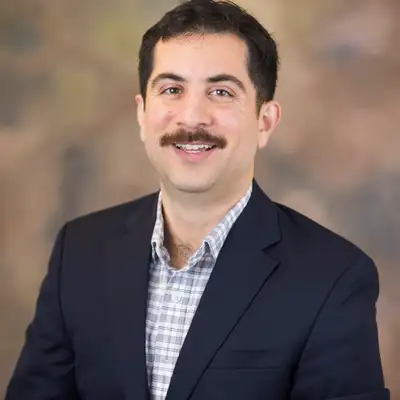
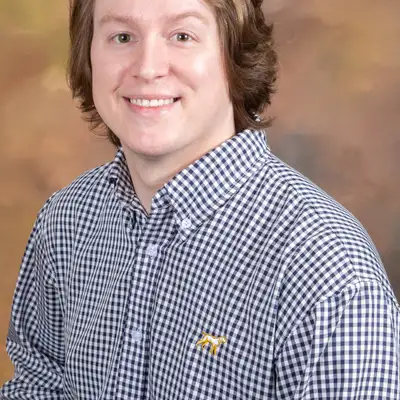
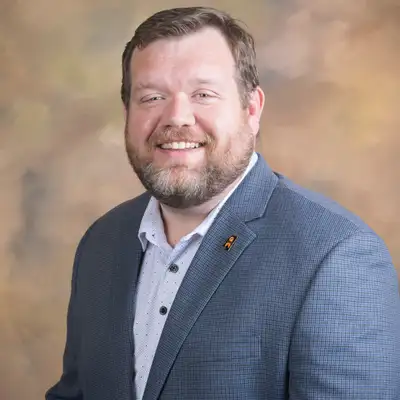
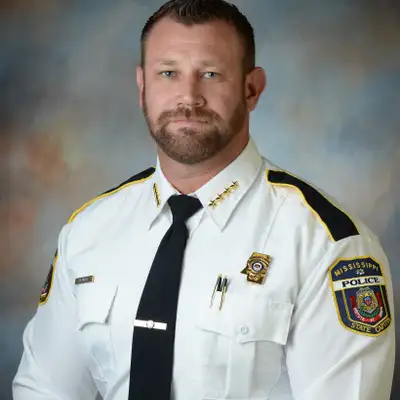
Tune in to The Extra Mile presented by the Mississippi Department of Transportation. Co-hosts Paul Katool and Will Craft take listeners inside the world of transportation infrastructure in Mississippi.
MDOT presents
the Extra Mile podcast.
Welcome in to another edition of the Extra Mile
podcast presented by the Mississippi
Department of Transportation.
I'm Paul Katool and as always, joined by my co-host Will Craft.
And today's episode,
if you live in the Jackson
metro area is very important to you,
will be very important to you.
But really,
Jackson impacts the whole state,
so hopefully everybody tunes in today's
guest.
With that in mind is Capitol
Police Chief Bo Luckey.
Chief Luckey. Thanks.
Thank you so much for making time
in your busy schedule
to come and talk to us today.
Absolutely.
Thank you all for having me on.
I appreciate this opportunity.
Of course.
And hey, listen,
we love softballs for our new guests.
So kind of tell us, you know,
where you're from, where you grew up.
And then I know you've had a lot
of different career opportunities,
but kind of maybe highlight
some of the ones that you had
before joining the Capitol Police
and leading them.
Okay. Yeah.
So I was born and raised in Brandon,
Mississippi, about, what,
15, 20 minutes from here?
Still lived there today.
As a matter of fact, I've been married
for 20 years, got three children.
My kids go to Brandon school
just started there in the Brandon schools.
I've got a my oldest
is going to be a senior this year.
So you know, we're going
through the motions
of having a senior in our first one
that's flying the coop.
My son, he's 14, he's in ninth grade.
And then my youngest, she's nine,
she's in fourth grade.
So a little bit about my family life.
And you know
we spend a lot of our time on the road
just like every other parent,
whenever we're not at work.
Outside of that,
you know, I've been in law enforcement
now for 21 years, 21.5 years now.
I started in February of 2005
and started my first law enforcement
full time job at Brandon
Police Department,
and I was there until 2008,
when I left and went to law school
and went to law school
at Mississippi College School of Law
while I was in law school.
That's whenever
we found out that we were going to be
having our first child, our oldest child.
So unemployment
didn't look so good at that point.
So I went back to work
at Brandon PD in 2009.
So I only took about 3 or 4 months off,
went back to work at Brandon PD
and stayed there for another three years.
When I graduated law school, went to work
for the Mississippi Attorney General's
office,
and worked there from 2011 under Jim Hood
until Madame A.G.
Lynn Fitch came in in 2020.
I left the AG's office in 2022,
and the reason why I left
there was to take this role at Capitol
Police as chief of Capitol Police.
So that's pretty much me in a nutshell.
It's like, yeah.
And certainly, you know, I would say
I imagine all those other roles
contributed heavily,
you know, to the comfort
and experience level
that you have now to do that job.
But I would say
I mentioned the other thing you just said,
you know, you've got a senior coming up
and the other side of the coin, I probably
talk too much about my kids on this show,
but so my oldest just turned five.
So we're doing first week of school.
So we're on the literal other end of it.
But I see all the people
posting those pictures now.
It's like their kids first day of school
and it's their kids seniors picture,
you know, and they're graduating.
And we just took the,
you know, the left side of that photo.
So, well, once you get to where I'm at,
it's the the last first day of school.
Yeah.
You know, it's
all everything is the last first.
Sure.
And of course, you know,
she's wanting to go to Mississippi State.
So, you know, her mother is struggling
with it a little bit more than I am.
But but we're all having a tough time
knowing that she's she's growing up.
She's getting more independent and getting
ready to move off to Mississippi State.
And no doubt she'll be successful there.
The most bittersweet thing I've done this
far in my life, being a parent, for sure.
Watch them
get older. Such a bittersweet thing.
Well, look,
I mean, those things included, I'm sure.
But talk a little bit about all those
being a father, having kids
and all the years of law enforcement
service you mentioned.
Right. And then becoming chief of police.
Yeah.
I mean, it's
you know, it's really a tough career path.
And, you know, fortunately, my wife,
you know, like I said, we've been to go
20 years actually,
we've been together 24 years.
I've been married for 20.
You know, she's been my rock.
And in a lot of situations, I mean,
she handles a lot when I'm not at home.
And this, this career is,
is very demanding of your time,
especially nowadays.
But yeah, it's very important
in law enforcement.
And we preach that to a lot of the people
coming into law enforcement
that you've really got to have
that solid foundation at home.
You got to have that
support system at home,
not just for when you get home
to have somebody that you can trust
and rely on event to and talk about issues
because, I mean, this is a heavy career.
I mean, there's a lot
it carries a lot mentally and physically,
but also somebody that can pick up
that slack when you're not there
because there's so, so many times
whenever you know,
your spouse is expected
to basically operate like a single parent,
you know, and having three kids,
that's been tough.
But, you know, I've been blessed
to have a great career so far.
You know, I've worked with
some really great administrations, worked
for some really great leaders,
some really great chiefs,
and they were able to teach me along
the way,
really how to step into this position
I'm in now because be honest with,
you know, it's kind of I never expected
to be the chief of Capitol Police.
That wasn't ever on my radar.
As you know, one of my one of my milestone
events in life
was to be the chief of Capitol Police.
You know, it actually came by coincidence
or just kind of happened
that I was talking to a friend of mine
who was the he was the head of legal
at DPS in 2022,
and I had called him about something
completely unrelated to Capitol Police.
It was something to do
with a friend of mine
who's a state trooper who was asking
some questions about some things,
and I said, well,
I got a good friend, you know,
let me let me kind of bend his ear
for a minute on it.
Well, when I got done talking to him,
he said, man,
I thought you were calling about something
else. I said, what's that?
He said, I thought you were calling.
We just posted an opening
for the chief of Capitol Police,
and I kind of laughed, you know,
because in 2011 to that point.
So for the last 11 years, at that point,
you know, Capitol
Police had been just a security force
at State properties.
You know, that's really all they do.
All they did was, you know,
when you walk into a state building,
that's your greeted by Capitol
Police officer
sitting on a desk, and he's smiles
and you walk through them
and they tell you where to go.
And that was it, you know.
And when he said that to me,
I said, man, you know me better than that.
That's not I'm
not ready to sit behind a desk.
I'm not ready to to kind of basically
have like a retirement gig already.
You know, I still got time left.
He said, no, no, no,
we are actually just took in Capitol
Police
under the Department of Public Safety,
and we're looking at revamping
and rebuilding Capitol Police
into something that can be more beneficial
to the state and more beneficial
to the city of Jackson
in a law enforcement effort, in a way,
to help with the violent criminal activity
that's going on in the city of Jackson
that we're seeing and all the crime
across the board in the city of Jackson.
So when he said that, you know,
he mentioned that the reason
why he thought of me is, you know,
we had worked together for several years
at the AG's office, and he knew
that I was the type of person that,
you know, I'm going to try to find ways
to make things work.
I'm going to try to find ways
to make things better.
And he knows that kind of my philosophy
is whenever I do
something, I don't want to just do it
good enough.
I want to make it the model.
I want it to be
something that people look at and say,
we want to do something just like that.
And, you know, that's
one of the things I've been blessed over
my career is to have a lot,
like I said, a lot of good people to
help me along the way and really teach me
the way that I police today.
And, you know, I sat down
and talked to you about my wife,
talked to talk to about my wife,
about the situation and the opportunity.
And of course, she
she was not a fan of the idea.
So I'm happy to say
she's finally started back
talking to me again
after four and a half years.
But but no, it was one of those things
where, you know, she she looked at me,
she said, you know,
why would you even think about doing this
when you've got such a great job
at the AG's office? And she's right.
You know, I had a I had a
I had a great job at the AG's office.
I was I was loving life.
I was part of the human trafficking task
force going all over the state, you know,
really making a difference and really
doing something that I really believed in.
And, you know, I told her, I said,
you know, look, this is my opportunity to
actually do something, go to an agency
that needs, you know, somebody like myself
who's going to really push,
push it further and progress the agency.
And at the time, you know,
I had 21 years, never not 21, I'm sorry,
17 years.
And, you know, and I'm looking at possibly
being able to retire in 25 years.
So I'm like, you know,
I'd love to the opportunity in my career
to kind of leave my mark on something
to be able to say that I walked in and,
you know, I was a part of that.
I was I was a part
of what makes that agency really great.
And I was able to get in
and do it from the ground up.
But also, you know, over the years,
being somebody
who lived in the city of Brandon,
you know, I would get off work and go home
and sit down on my couch
and the news would be on.
And, you know, I would see all the things
going on in the city of Jackson,
you know, and I would get frustrated
and say,
you know,
why are they not just doing this?
Like, why, why are we not doing this
to fix the issues?
So when this came up in,
the more I thought about it,
I said, you know, this is my opportunity
to get off up off the couch and stop
yelling at the TV and, and,
you know, put my words to action
and actually do something.
And that's what we've been doing
for the last four years.
You know, I came in and,
you know, I said, hey, look, this is
this is kind of what the commissioner,
the Department of Public Safety, my boss,
Shawn Tyndall, that's who I've answered
directly to for the last four years.
You know, I came in, I said, this is
this is the vision that he has.
This is what he wants to see happen.
And this is what I want to see happen.
This is what the governor
won't see happen.
This is what the state of Mississippi
needs to happen.
And that's what we've done.
And it's been it's been an uphill battle.
But I tell you, I'm
so blessed to have such a great team.
It's they've made my life so much easier.
You know, I'm proud to stand up here
and represent Capitol Police
and all the great things
that they do on a daily basis.
It's really been a blessing.
That's that's excellent.
And I was going to work it in
at some point, but I do as a Jacksonian,
as a Belhaven resident,
I want to express my extreme appreciation,
everything that you guys do,
because I feel a lot safer out there and
and you guys do a really good job.
So with that in mind,
let's dive kind of like a little bit more
into what the Capitol Police does.
So let's kind of start.
How many employees are there.
Do you have a leadership team.
What kind of divisions
are consist of the Capitol Police?
Absolutely.
So so when I started in 2022,
we had 63 police officers,
sworn police officers.
I was number 64, I believe.
Now we're sitting at approximately 147
give or training.
Now, like I said prior to 22,
the majority of the focus
was on the buildings and security
and the buildings.
We still have that side of the house.
We call that our security side.
We still have that as a priority as well.
But now our focus is also shifted
towards the streets, and we have
what's known as the seaside or
the Capital Complex Improvement District,
which covers about approximately
28mi² of the city, give or take.
Now we have our security side
that still focuses on the building,
and there's probably around
40 sworn law enforcement
officers on that side of the on that side
of the House, on the security side.
And they still handle
they still manage about statewide 19,
I believe, 19 buildings on a daily basis,
one of which is in Biloxi,
the Bolton Building in Biloxi,
and another one is in Hattiesburg.
So a lot of people don't realize Capitol
Police actually, as we actually have
jurisdiction at those two state buildings
that are not in the seaside,
that are not here.
So we actually have two officers
assigned to a building
in Hattiesburg and two officers
assigned to another building on the coast
at the Bolton Building.
And then the majority of our law
enforcement presence is here in Jackson.
Now, on the enforcement side of the house,
we have it
built out a lot
like your typical police department.
We have a patrol division that consists
of 40 sworn uniformed officers.
Those are the ones that are on patrol
and black and white vehicle
in uniform, patrolling the streets,
answering calls for service.
Those are the ones that if you call 911
they're coming,
or if you get in a wreck or whatever,
whatever the case may be.
We have, I believe,
six officers in our traffic division.
What they do is primarily
they focus on working accidents.
They they focus primarily on that,
but they also handle escort details
and traffic details.
So like for example, with school
starting back,
sometimes there's some traffic points
where we help children
cross the street to get to bus stops
and things of that nature.
We also have
a lot of details at the fairgrounds,
so you might see our traffic officers
out there working the intersections
there to make sure that traffic doesn't
back up too badly
on the onto the interstate
and things like that, but primarily
their work in traffic accidents.
And what that does is
the amount of traffic accidents
we have in the city of Jackson is crazy.
I mean, we have a lot of them,
and it frees up our patrol officers
to answer those calls for service
that are not traffic related.
Well, so whenever you have
something going on at your house
where you need an officer there right now,
they're not stuck working a wreck
somewhere on the other side of town.
They're available in gray to come.
We also have an investigative division
we've got about,
I think, 14 officers assigned
to that, investigators assigned to that.
They're broken down into three
main divisions.
You have a violent crime
or homicide division.
You have a traffic,
not traffic. I'm sorry.
Property crime division.
And then we have a division that focuses
solely on
crimes
involving vehicles, auto burglaries.
And out of this,
that's a that's a big thing around here.
Property crimes,
auto burglaries, auto thefts.
Those are some key areas
where we really saw
we had to put a lot of focus towards.
So we've got an investigative division
that focuses on those
three main elements here.
Then within our investigative division
we also have a forensics investigation.
So our crime scene investigators
and what we've started doing is
we have one of the best in the state,
if not the best in the state
that leads that division.
Lieutenant Robert Watts.
He's he's got more certifications
than I could ever list
and that I could ever understand,
probably.
But he is literally
one of the best in the state,
if not the best in the state.
And we've gotten it now
to where we're getting
civilian employees or civilian applicants
out of southern and places like that
that have forensics degrees,
because that's what's required
for the civilians out of that.
So we're actually starting
to build up a non sworn element there
that's really been helpful.
And they have been amazing. We've got
we've got four civilian personnel
in our crime scene investigations unit.
And they have just been a huge addition
to the to what we're doing.
They come in.
They do everything
from evidence collection to making sure
the evidence is stored properly.
They go out to the scene, do all the
photograph and all the measurements.
I mean, you name it,
they do it and it's amazing what they do.
We also have a new component.
We have an Intel analyst.
She works with this full time now.
And what she does
is she focuses on looking at all
of our calls for service
and mapping out where everything is.
So what that helps us do.
You know, there's
something known as incident led policing.
In other words,
every since the beginning of time,
budgets have been an issue
for law enforcement.
We've never had full staff.
We've never had enough
money, never had enough resources.
So we have to really rely on the
the information that we have, the data
we have in order to strategically place
our resources and our manpower
to be able to be more effective.
And because of that, we're able to say,
you know, thankfully, our response time,
if you call and you need us there,
if somebody is breaking in your house,
you know, something to that effect
where you need somebody now.
Now, on one emergency call,
our average response time is 4.2 minutes.
And that's that's very impressive.
Even, you know, it's I just can't say
enough about how impressive that is.
I mean, I started my career in Brandon
Police Department.
That's
it's like Mayberry compared to Jackson.
And I mean, I don't know that
we were getting the calls in four minutes,
you know, and over here, our team,
our patrol officers,
they're answering upwards of 200
plus calls for service a day.
I mean, it's amazing.
They're running from call to call to call,
and we're still seeing
our response times are staying around
4.2 minutes 4.5 minutes.
And that's that's impressive.
And we've got so we've got
that we've got the investigative division.
Then we've also have
a dignitary protection division that.
So the Mississippi
Bureau of Investigation, they handle the
legislatively set dignitaries
like the governor,
the lieutenant governor,
speaker of the House.
The attorney general now has a detail.
So they handle those details
that are legislatively set.
What we do is we pick up the slack
and we help out whenever they need a fill
in, whenever they need some assistance
with an event or something like that, our
dignitary protection
will step in and help.
Also, you know,
we have dignitaries coming into the state
of Mississippi from all over.
So there's a lot of times
where we're asked to go
pick them up from airports
and bring them to the capital,
things of that nature.
So we have a group that does that.
We have a
we have a
division known as we call our flex
division.
Now our flex division is a street crime
suppression group.
They focus on the main elements
of violent criminal activity.
So their primary responsibility
is going to be dealing with
guns, drugs,
stolen vehicles, fugitives of justice.
I mean, that's therefore
that's what they're out there doing,
because what we're seeing
is a lot of the violent criminal activity
that we're seeing in the city of Jackson
and really across the nation right now,
the vessel for the
for that transportation, for that violent
criminal activity of stolen vehicles.
We're seeing a lot of stolen vehicles
being utilized
in homicides, carjackings,
auto theft, auto burglaries.
We're seeing a lot of that being used.
So we've got that group out there
that they're really trying to target.
A lot of the fumes of what you see
are a lot of the elements
behind what you see in the violent
criminal activity, which we all know.
Guns and drugs plays a big part
of a lot of criminal violent activity.
So they're really focusing on that.
They work hand in hand
with the Mississippi
Mississippi Bureau of Narcotics
just about, you know, well, not just about
they work daily with them.
So they they've been a really
a huge push in being able for patrol
to answer the calls for service
whenever the citizens need us.
But then they're out there proactively
just looking for what they're looking for.
And it's really been amazing.
It's really it's really been great.
But what they also do is
when the State Fair comes into town,
whenever we have the folk Festival,
whenever we have Saint Patrick's Day
parade and things like that,
they break off of their detail
of doing their day to day activity,
and they handle the security operations
of those large scale events.
Okay, so they're not just out there
beating the streets every night,
getting the worst of the worst.
They're also at the fair
making sure that security posts
are covered, making sure
that all the security plans are followed.
They're out there, you know,
making sure that everybody feels safe
and feels protected.
And that's one of the great things
about Capitol Police.
Now, being under the Department of Public
Safety
is the amount of resources
that we have at our disposal.
Now, being under the Department of Public
Safety is just it's it's amazing.
Last Saint Patrick's Day parade, you know,
of course, we had the Saint Patrick's Day
parade last year, not this past one,
but the one last year
where we had the shooting that occurred.
Eight people were injured.
One was one
was unfortunately lost their life.
We stepped in this year and we had 216
uniformed officers at that parade.
And out of that 216,
142 of those officers
came from Department of Public Safety.
So the great thing about Capitol Police,
the great thing about
being a part of Department of Public
Safety is we're all one big family.
And the Mississippi Highway Patrol,
the Mississippi Bureau of Narcotics,
Mississippi Bureau of Investigations,
commercial Transportation
enforcement divisions,
we all work and homeland security.
We all work hand in hand every day.
I mean, it's Homeland security
is coming in and doing risk assessments
and and revising our security plans
and our buildings.
They're constantly
upgrading all that stuff for us.
We've got, like I said, NBN working
daily with our flex divisions
and out there on the streets
where we're assisting
them, we've got Mississippi
Highway Patrol,
they've got officers that come in here
and they get out there
and they roll with us at night
and they're like, hey, look,
we want to be a part of the action will be
part of the the progress too.
So maybe they jump in with us at night
and they roll with us at night on patrol.
They and then Mississippi
Bureau of Investigations,
any time that we need them to step in
and help us out with an investigation,
they're always ready to do so.
I mean, it's just really
the amount of resources that we have
at our fingertips at Capitol Police,
just from being a part of the farming
of public safety has been truly amazing.
And that's why the fair has been
so successful for the last four years.
I mean, we ever since I came in and
we really started taking lead on the fair
with the Department of Agriculture,
Commissioner Gibson's group.
They do an outstanding job
of laying out the security plan itself.
Amazing.
They've done an amazing job every year.
And where we step in as we fill those
spots, we they have an outstanding plan.
We provide the manpower
and we help fill those spots.
We help plug those gaps and plug
those holes.
And, you know, every year
the fair has been more and more successful
when it comes to security.
We last year we didn't have any incidents.
We had a couple little fights
in the midway.
That was it just year. Yeah.
I mean it was it was boring.
You know, it's for us it was boring.
But, you know,
it used to prior to Capitol Police
being what it is today, prior to the model
that we've, that we've produced over there
and what we've done,
you know, you have some vehicles
stolen out of the parking lot.
You'd have some people
bringing guns in there.
You would
you would have some things going on that,
you know, that was making people
not want to come back to the state fair.
And that's a shame because, you know,
we talked about this.
I'm blessed to to have a great career.
And, you know, my wife also.
And, you know,
we take vacations and stuff.
But for some people, the state fair
is the only vacation they get.
Yeah.
And you know, and it's so sad
when you think about how
bad it can get to where you know,
somebody is missing out
on their only vacation,
they get out of the year.
So, you know, we've come in
and we've done everything we can
to try to secure the area on a day to day
daily basis.
But also we really put a lot of influence
on these special events,
on the Dixie National, on the fair,
any kind of events that go on
at the convention center
anywhere around here,
we really try to put a special emphasis
on that, because we want to show
the state of Mississippi and everybody,
even outside the state of Mississippi,
you can come to Jackson
and have a good time.
You can come come back to Jackson and
come back to Saint Patrick's Day parade.
Come back to the state Fair.
You're going to feel safe.
You're going to see that
we've got this under control.
And so far it's been successful.
Crazy. Agree?
Yeah.
No, I mean we
we see the work as evidenced
by lots of the things you just mentioned.
State fair specifically.
That's something as you just mentioned
growing up, it was it was like a big deal.
It's kind of one of the things
we looked forward to every year
and getting to come to that.
And so now again
mentioning my kids once more,
drew
getting to take them, same experience.
And yeah, the comfort of all right,
we're going to be safe.
You know, I'm not trying to go
to a super crazy environment here.
Just want to go get some candy.
You know, maybe do a fair swap. Right.
Nothing too crazy.
And then I circle back just a bit here.
As you mentioned,
one of your groups helps with like,
the school areas and the things,
you know, maybe traffic points.
Shout out to those folks.
I know that may not be,
you know, the reason that everybody goes
to through law enforcement to training.
But good grief,
we we appreciate the work out there.
As I'm dealing with the drop off
the school, there's no way we could manage
without that officer out there.
And then the fact that they're out there
from about 630 to 8
and it's middle of summer, you know,
maybe the sun's not at high noon yet,
but it's not cool and friendly.
That's right, that's right.
Everybody
trying to get to work and past them.
So look, I know again
may not be the highlight of your careers
in law enforcement.
We so appreciate those of you out there.
And then last thing I want to mention here
before we segway to the next one,
everything you just said
is really over the last four years,
it feels like a decade
or more is worth of initiatives
and revitalization and work
that you guys are doing over there.
So I mean, I guess
kudos shout out to to the work.
Not only is it a lot,
a whole lot of change and improvements,
but it's a pretty short amount of time,
I would say.
Yeah, for all for all that's worth,
we're pretty proud of the job
you guys are doing over there. Paul.
And what do you have a story?
Was that recently?
Yeah. Yeah, it's kind of funny.
So we'll give you some boots
on the ground.
Your officers are doing so.
Yeah.
So I live around
Belhaven like I mentioned, and I was just,
you know, walking around.
I had a hoodie on.
I probably looked pretty sketch.
I was going for a run.
It was about 8:00 at night.
And I get
I get stopped by a Capitol Police officer
and I'm like, oh my goodness.
You know,
they probably think I'm going to like rob
someone's home or something like that.
And window rolls down. Nice woman.
Officer rolls down the window and says,
do you live in this neighborhood?
I'm like, oh, they think I just came
in here to, you know, cause some problems.
Of course, she said, I say, yes,
I live right there, pointed out,
you know, my residence.
And she says, that's great.
I just wanted to give you this little card
with some information
on the Capitol Police and a phone number,
and please call us whenever you know
you have any issues.
And I was like, I love this. That's great.
I'm not in any trouble.
So to shout out whoever that was,
they didn't they did a great job,
I'll tell you that.
And that's the thing,
I get so many compliments everywhere I go,
because obviously
one of the biggest parts of my job
now is going around
doing things
like this, meeting with you all,
having speaking engagements
with the community, things like that.
And I get so many compliments
of how professional
the officers are,
how how courteous they are.
Because, you know, this is,
like I said, it's a tough line of work.
And, you know, I try to tell people,
you think about what a police officer
does on a daily basis,
and it's pretty much
our job is dealing with you at your worst,
because no matter what is going on
in the situation, you've either
we've either pulled you over, you've
either had a wreck,
neither one of those two incidents
you're happy about, right?
You're the victim of a crime,
or you've committed a crime
and you're getting arrested.
So literally grilled about either
one of those, right? Right.
So I mean, you know,
all the normal interactions
of law enforcement with the citizens
in the communities that they represent.
You know,
if it was just on the enforcement level,
it was just on us doing our job.
They would all be negative interactions,
pretty much.
Because, you know,
like I said, every one of those things
I just listed, you're not in a good mood.
You're either a victim or you're a suspect
in all those situations.
So a lot of times officers,
they carry a lot of weight on them
from dealing with everybody's worst day.
And it's so great to hear that
the officers are interacting
with the community
outside of just enforcement efforts.
And that's really what it's all about.
You have to do that.
You have to get the community behind you.
We have to have citizens
and residents behind us
who are willing to pick up the phone
and call us and trust
that we're going to do our job
and willing to give us information.
And that's what it's all about,
is building that, that,
that relationship with community.
But I want to hit on something
you said real quick.
You talk about the, the, the growth
and how fast it was.
Yeah, it blows my mind when I sit back
and think about how far we've come
and four years it's, you know,
we we came in with this attitude of,
hey, we're going to make this happen.
We're going to do it,
we're going to hit it hard.
But really to look back
from where we started, where we are today,
you know, I mentioned we had 63
police officers and we're at 147 now.
We had like 3 or 4 dispatchers
and we're at 12 to 15 now.
We're still hiring
and we're still hiring police officers.
We had 19 police cars
and only like three of those
were unmarked for investigative purposes.
Now we have a fleet of over 150.
I think, you know,
whenever we first started hiring officers,
some of them were hitting the streets
without body or without vest.
And the ones that had vest,
we were having a bar
it from the Mississippi Trolls
surplus supply that was outdated.
So officers some officers were walking
around with outdated vests still work.
But you know, that's really
when we got the ball rolling on this.
We were we were really
I mean, we didn't have anything.
We didn't have any computers. Hardly.
We didn't have any laptops.
We didn't have a lot of the stuff
that Have to take the job.
We're all in the building yet.
No, we were in the wolf building
and we didn't have the building
and the Woolfolk Annex.
And I tell you, I credit
my one of my assistant chiefs,
major Mark Millar, man, what he has done
with the procurement process
to get us to where we are today.
I mean, nobody else could have done it.
I mean, he he's phenomenal.
And man, he's he's his life is budget
you know.
Which is great for me because that's
one thing I don't have to worry about.
I see him but and then again,
Assistant Chief Sam Shanks,
he's over our enforcement side.
He's done
a phenomenal job of making sure
the troops that we have get out there,
and they have what they need to succeed.
And man, I tell you, it's
I can't say enough great things
about the team that I have that
I work with, because you're exactly right.
I mean, it's
not just from the outsider standpoint,
but even from an insider standpoint,
somebody in law enforcement,
I look at it, I'm like,
how in the world did we do this?
I mean, I'm
proud of us. I'm proud of what we've done.
But man, this is amazing.
And it's really been impressive,
the growth and the efficiency
that we've gained in that growth
in such a short time.
Again, to you know, well
to beat this horse absolutely to death.
We we definitely appreciate all the work
and the intense focus on all the goals
that you wanted to accomplish.
It is everybody can show up on day one
with all the intensity
and the checklist of things
that we're going to do, but to keep it
and four years later have results.
That's a different level.
You know,
that's a different level of commitment.
You actually hit
a lot of these sort of follow
ups that we did want to talk about.
But one specifically,
we did briefly mention the 28, 28 miles.
Yeah, 28mi².
Yeah.
The actual jurisdiction,
our footprint of you guys in Jackson. So.
All right, so on the east side
of the jurisdiction, it's the Pearl River.
Okay.
So from High Street,
following along the Pearl River
up to canton, Mark exit.
Okay. On the on the east side of 55.
Now on the west side of 55,
we go up to Northside Drive.
So Canton Mart here,
55 or North side here.
And then we go west we go
I just usually I just say Ellis Avenue.
That's the easiest way to say
it is Ellis Avenue.
And then all the way down to Raymond Road
as our southern border
just on the other side of I-20.
Now, with that being said,
when we expanded jurisdiction during House
Bill 1020, there was also a Senate bill
that was passed as well.
They gave us secondary jurisdiction
over the entire city.
Okay.
So what that means is
our officers are not actively patrolling
outside of the kid that that
original footprint I just mentioned.
But we are able to step out into the city
and still do enforcement efforts.
So what that helps us out with
is a lot of the criminal activity
that we're investigating within.
The kid could be coming from outside,
the kid coming from
the other parts of Jackson.
So we have the ability now
to take that investigation a step further
and go into those areas as well.
Now, also with House Bill 1020,
there was a court that was created
for Capitol Police to use.
Now, it's
not just for Capitol Police to use, it's
for anybody to use within the kid.
So the Attorney General's office, Hinds
County, whoever wanted to use
it could use the CC court
for misdemeanor offenses within the kid.
And the judges can also sign
felony warrants and hold preliminary
hearings for felony cases there.
But once it gets to a felony,
it goes up to the circuit court.
But that
kid court, what that has also done
is instead of us
bringing all of our enforcement actions
to the Justice court and flooding
their system, that has already flooded
with all the other agencies
working through that system,
we now have a much more efficient way
of handling our enforcement actions
within the kid.
Now, anything we do outside of the kid,
we have to take to the other courts,
because the court only handles
within those that 28mi².
But what it has done
is a lot of our business owners,
you know, they
they kind of complained in the beginning
when I first got here, that look, in order
for us to sign charges on somebody
for a misdemeanor offense,
like shoplifting or something like that,
we've got to go to the justice court
and we're going to sit there for three
hours, you know, and as a business owner,
as a manager of a business or,
you know, the person in charge
of doing something like that,
we don't have that kind of time.
So what we've been able to do now
is, is shorten
the amount of inconvenience
that our business owners and our citizens
are facing when having to sign charges on
somebody for misdemeanor activity.
Because in the state of Mississippi,
in order
for an officer to arrest somebody
for a misdemeanor act, it has to happen.
It has to happen in their presence.
They have to witness it directly.
So anything that happens,
it's a misdemeanor.
We have to have an affluent to go sign
charges.
Well, that was a deterrent
whenever it took 3 or 4 hours.
Sure.
But our court system, they are amazing.
Our judges down there at the court,
my hat's off to them.
They they do an outstanding job
and and what we're actually doing also,
you know, we we have an issue with
overcrowding at the Hinds County Jail.
There's last time
I believe I talked to him,
I think he said he had some somewhere
around 960 inmates there.
And I mean, those are mostly felony
pretrial detainees.
They haven't even going to trial yet.
In a perfect world, they would go to trial
and fall off of his books
and go into the penitentiary,
CMC or wherever
through Mississippi
Department of Corrections custody.
But unfortunately,
there's such a backlog on these cases
that he's having a house them.
And then, of course,
the criminal activity hasn't stopped.
So he's just piling
more and more on over there.
So there's been an issue
with trying to find a level of deterrence
for misdemeanor activities
because he just, you know,
unfortunately, Sheriff Jones,
I mean, he just can't take it right
on a very slim case to case basis.
He can take a misdemeanor here and there,
but for the most part,
he's got to have all of his beds
for these more violent offenders.
So what I've been seeing happen in
our court is the judges down there,
they will recognize
when they have a repeat offender.
That's for example,
we have some people that are out there
spray painting businesses, spray painting
sidewalks, causing
vandalism type cars,
misdemeanor vandalism type things.
But there are nuisance
and they're doing it constantly.
Our judges, they're starting
to recognize these repeat offenders
that are a nuisance to their communities,
and they're starting to sentence them to
time in jail.
So while we may not be able to put them in
jail on the front end awaiting trial,
they're getting sentenced to two weeks
or a month in jail.
So they're they're creating
another layer of deterrence
by they're not just giving them a fine
and letting them walk out the door.
They're saying, hey, look,
I'm tired. I'm tired of dealing with you.
The community is tired of dealing
with you.
You've been in front of me,
you know, 5 or 6 times
you're going to be sentenced to Hinds
County Detention Center for a month,
two months, three months, whatever it is.
Up to six months, you know,
for misdemeanor offenses, actually
up to a year.
But some misdemeanor offenses,
say up to six months.
So the judge is down
there at the Seaside court.
They're doing an outstanding job
of not only getting their cases handled
efficiently and effectively,
but they're also doing an outstanding job
of looking at cases on a case by case
basis
and being able to identify
where there's some problems and some gaps,
and they're filling in on those gaps
and they're making some things happen,
hopefully.
I know at some point, right.
Those folks that come back.
Right, I think Governor Barbour used
to always say there's two people you're,
you know, there's two people in jail,
I guess there's people you're mad at
and there's the people you're afraid of.
You know,
some of those misdemeanors, vandalism.
You almost want to be like, look,
this is the third time.
Stop.
You know, maybe you need 60 days in.
Exactly. Just don't do that. Exactly.
Especially I feel like,
you know, there are other, other ways
to channel that artistic creativity.
You know, we'll have a art contest
and that's it.
That's a great mural out there.
Oh, hilarious. Yeah.
I don't even know where I was going with
that.
It's just some of that is just
wow that you have repeat things on that.
But I understand
we appreciate the judges.
I won't give anybody my name. Shout out.
I'm certain I'd miss some.
But all the folks down there
in the court
system,
we appreciate that to another chief does.
Oh, yeah, 100%.
Hey, listen,
I think we've taken a lot of your time,
but I did just have one more question
for you.
A couple of fun items.
So anecdotally, you know, I've lived here
since 2016 and I remember hearing about,
you know, carjackings,
all this crazy stuff happening.
I really haven't heard much
as far as crime, just,
you know, talking with my friends.
So that's anecdotally speaking.
But is there any data to kind of support
that that, you know,
crime has gone down
since the Capitol Police have taken over.
So typically when you start talking
about trying to compare data sets, you got
to look at
you want to look at a
set of data that covers the course
of like two years, to be able to show
that there's
some kind of maintained atmosphere
that you're working
on, a controlled environment per say.
The thing is, with with us
expanding so much, you know, last year
we just took on an additional 4 or 5mi²
when we took on
Canton Mart Palm Bridges,
that area north of Northside Drive.
So we have yet to really have a stretch
of two years where we haven't expanded.
You know, House Bill 1020
expanded us by 24mi² or almost 24mi².
Six expanded its two 24mi².
And then this last expansion that happened
last year expanded us another 4 or 5mi².
So we've we've yet to have a stable,
controlled environment
where we can actually sit back
and say what has and hasn't done its job.
But also, you know, I caution people
that whenever we're looking at data, also,
you know, you with Capitol Police,
you have a very proactive
and very proactive law enforcement agency.
So whenever, whenever we came
and started doing what we started
doing, you had people,
not criminals,
but I mean, people who just
they didn't stop at red lights.
They didn't stop it stop signs.
They didn't, you know,
they didn't really pay that much attention
to the traffic laws and things like that.
Well, we come in and we're like, no,
you know, it's kind of like raising kids.
It starts at the at the little things.
If you're not enforcing the small things,
you can't expect them
not to do the big things.
Those things grow the snowball effect.
And, you know, you're just you've got
to enforce everything across the board.
So what you see in 22, really September
1st of 22 is when we really got out there
and started hitting the streets.
And even then
we weren't really full force.
But once we really got out there
and started showing a presence
in the enforcement area on the streets in
22, you started seeing the stats go up
and you know,
if you're just looking at stats,
you're like, wow,
there's a lot more criminal activity.
No no no no no.
We're enforcing a lot more laws.
We're catching a lot more criminal.
We're
recording a lot more criminal activity
because we're enforcing a lot more.
So, you know, I always caution people
that when they look at stats, keep that in
mind too, is, you know, what was going on
prior to Capitol Police coming in.
And, you know, if, if
and if the numbers go up drastically,
why did they go?
Well, that's why they went up drastically
because Capitol Police came in
and started being a proactive
police department,
started really enforcing the laws,
the state statutes.
So you started seeing an uptick
in the recording of all that's going on.
So what I'm saying.
So now what we want
now is from 20 to to current,
we want a constant environment
that's the same side of control
sort of environment
to where we can look at the data and say,
what's going up, what's going down now?
And one thing I can say,
and what I tell people
a lot is if you really want to
just step outside and look, you know,
that's really the biggest thing.
What does it feel like?
Does it feel different?
Does it feel safer?
And over overwhelmingly,
the answer to that usually is yes.
It feels so much safer.
Do we still have criminal activity?
Yes we do.
We still have criminal activity
that happens every city, right?
Every city does.
But one thing I can say
is, you know, on a day to day basis,
I believe the citizens of Jackson,
the visitors that come to Jackson,
the individuals
that work in the city of Jackson,
I think overall, they feel
they have a higher perception of safety
now than they did four years ago.
And that's rightfully so.
I mean, we're here.
I mean,
every time you turn around, you're going
to see a Capitol Police car somewhere.
Every time you turn around, you're going
to see a Capitol Police officer somewhere.
And, you know, I think here soon.
Maybe we might have an answer to stats
and all that and data.
We certainly are working towards that.
Like I said, I have an Intel endless
now that's handling that.
But we don't.
Until we really get
that kind of nailed down.
We don't really talk a whole lot
about that just because it's
something that's changing constantly.
And one of the things
and I'll real briefly,
one of the handicaps that we had when
I started at Capitol Police was our report
management system.
It was an old, antiquated, legendary
system that really didn't do a whole lot.
So we had to keep a lot of our stats
manually.
And when you have a system
that it's like it kind of pull stats,
but then it kind of doesn't,
and then you're keeping stats manually
and these don't match with these.
It's like,
well, I'm not going to tell anybody
about either one of them
because I don't, you know, I can't have
they don't they don't
they don't work together properly.
So now we've got a new report management
system.
We've got a new CAD system
that we just rolled out in June.
And it's supposed
to be really state of the art.
Yeah, right.
We just we're still learning it,
but it's supposed to be state of the art.
Go in there and push a button
and it can roll out all these stats,
all this data and all these analytics.
And it's supposed to be the
the Cadillac of system.
So we're hoping that
we're about to get more heavily involved
in the intelligence side
and the data side to be able to
release more stats to the public
so that we can show you
the results of what we're doing,
because we all feel it, we all see it.
But it's good to have numbers to show it,
and that's what we're working towards.
Definitely. That's amazing
answer. Loved all the context.
Sorry in no, I love that.
I love this stuff.
I mean you could literally we could do
a podcast for two days on a lot of stuff.
Sure. No.
And I mean, look, we'll get you back over
here, let you keep telling us all
the good news as time goes on and things
move forward, because this is great.
I mean, again,
we're very much in support of the mission
over there and thankful, appreciative.
Again, we are those people
you specifically just talked about.
We're here every day
in this area eating lunch,
you know, hanging out with friends,
dropping off kids at school.
My my other two are at daycare next door,
you know, and I see Capitol Police
all the time.
So big fans of the work. Absolutely.
Well look man, we'll round out here
with you our last two fun questions.
Our our regular listeners
going to be familiar with these,
but if you're just tuning in
for the first time,
a favorite concert
maybe that you've ever been to?
We've had some some sure
enough, great answers over the years.
Yeah, but anything that sticks out to you.
So, you know, I'm a big country music fan
and I'd like to say Jason Aldean.
Yeah, Morgan Wallen,
I've been to all those.
But you know what?
I got to be honest.
Kid Rock in. Sure.
He came to the Colosseum.
Me and my wife,
it was years ago, and me and my wife
went to see kid Rock at the same.
And he he put on a show is a good show.
Yeah. So I'm going to I'm
about to go with kid Rock.
My wife would be
she would say I'm wrong and she would say
Jason Aldean or Morgan Wallen.
My daughter would definitely say
Morgan Wallen, but I'm gonna say kid Rock.
Hey, look,
I support the kid Rock notion there.
I've been to a concert.
They're absolutely blast, for sure.
I might have to side with your
with your spouse on the.
It was one of my favorites
growing up my whole life.
Oh yeah, that wide open album.
We listen to the whole thing last night,
so it comes full circle
when we get to talking about the music
and food, man, every single time.
I'm sure you guys past
Jackson, Mississippi.
Oh, absolutely.
Yeah.
Get you hyped up?
No, of course I do myself. Love that.
So anyway,
the second part of the fun question.
So food I know you obviously get in mover
move around on the highways,
the streets around Jackson.
So when you're trying
to get a good bite to eat,
what's what's a good place or
maybe a few spots that stick out to you?
Well, you know, it's not going to be
a very accurate answer right now
because I skipped lunch today,
so I'm so hungry right now.
Everything sounds great.
You know, my go to whenever I'm in town,
whenever I'm here,
my go to is always Ichiban.
I love I love a good Chinese buffet.
I just that's always my go to.
I can't help it.
You know, people that know me there, like,
if they want to sit down and talk to me,
they're like, hey, it's your bond today.
Yeah.
Of course we start missing Drew and David.
We assume that's
where they are. Exactly, exactly.
So I mean, that's always my go to.
But now a good steak, little man.
You can't beat a good steak either.
I love Chaplin Kesler
from those areas man.
Steaks. Steaks one of my favorite meals.
But if it's lunchtime
and you want to get up with me
and you invite me to go to escape
on, chances are I'm going to say,
I'll see you there. Oh,
I'm running right there. I love it.
I think I have my gift card
sitting on my desk right now.
Oh. Pretty sure.
There you go. Home runs.
I give two solid answers right there.
Fantastic. Absolutely.
Well, chief,
we took up a lot of your time, but, like,
seriously,
I learned so much about what you guys do.
You're the right man for the job.
And if I wasn't already convinced.
So, so proud and and happy to live in
Jackson where, you know,
you guys are keeping us safe.
So thank you so much for all that.
You and your team.
No thank you.
Thank you both.
I appreciate the opportunity to be here.
And like I said,
I appreciate any opportunity
I get to get before the public,
the community
and talk about the great work
that Capital Police is doing,
because, you know, I'm just the guy
that gets to be the face of Capitol
Police.
The the hard work comes from my team
that they're out there every day.
They've got a passion to serve.
And and they do it in a way
that is just above and beyond.
Well thank you, thank you,
thank you to our viewers, listeners,
listeners out there.
Next time you see a capital police
officer, please say thank you.
Say hello.
All right.
We'll go ahead and wrap things up there.
Thank you to our listeners, our viewers,
for tuning in to the Extra Mile podcast
you can watch and listen to by visiting
The Mile.
Follow us on social media
at Mississippi Dot is the handle.
We want to thank our editor, our producer
over there in the corner, Drew Hall.
Thank you for everything
you do behind the scenes.
Remember, drive
smart out there on Mississippi highways.