Subscribe
Share
Share
Embed
What’s Up, Wake covers the people, places, restaurants, and events of Wake County, North Carolina. Through conversations with local personalities from business owners to town staff and influencers to volunteers, we’ll take a closer look at what makes Wake County an outstanding place to live. Presented by Cherokee Media Group, the publishers of local lifestyle magazines Cary Magazine, Wake Living, and Main & Broad, What’s Up, Wake covers news and happenings in Raleigh, Cary, Morrisville, Apex, Holly Springs, Fuquay-Varina, and Wake Forest.
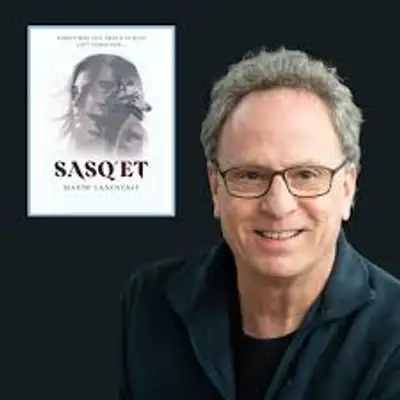
54 Whats Up Wake - Maxim Langstaff
===
[00:00:00] There are some guests who simply don't fit into one box such as today's, so I will try my best to give a little background before our chat. I think the easiest way to sum him up into one word would be storyteller.
Melissa: And boy does he have some tales to tell. Maxim Langstaff has spent decades working behind the scenes with some of the most iconic names in the music [00:01:00] world, collaborating with legends like John Denver and producer George Martin, known for his work with the Beatles, Hepping.
helping bring unforgettable stories to life on screen and beyond. He's a Grammy and Emmy nominated writer, producer, and author whose creative and editorial work has reached millions of people worldwide. Now he's turning the page to a new chapter, quite literally with his debut novel Sket. It's a story that blends his lifelong passion for nature, humanity, and myth as we follow the sweeping adventure of a young woman who discovers she's not who she thought she was.
As she seeks answers to century old folklore. We're going to talk about his journey from producing world-class documentaries to writing fiction, the real life experiences that inspired this book, and what it means to tell stories that connect us to something bigger than ourselves.
Please welcome Maxim Langstaff. Hi. Hi.
Maxim Langstaff: How are you?
Melissa: I'm sorry that the intro was so long, but you [00:02:00] have lived quite a life.
Maxim Langstaff: Uh uh. We all have a story.
Melissa: Yes. And I, I will say, I, I've met you a few times before because you have been working on the audio book here in the studio with Joe, my producer,
Maxim Langstaff: so forever it seems like forever and ever.
I
Melissa: think it, it probably does because let me show this book. This is a massive look. I can't, can hardly pick it up. It is a massive undertaking. I can't imagine how long it took you to write it. Nonetheless, read the audio and it's beautiful too.
So before we get into talking about Sket, I'd be remiss if I don't start with Sir George Martin and John Denver, not to mention a mile long list of icons from the likes of Elton John and Brian Wilson to BB King and run DMC.
How did you meet these legends and get involved with music and documentaries?
Maxim Langstaff: I grew up in a very [00:03:00] musical family and um, so music was always sort of central to family life for us. So for me, music is, is, is an art form. It's very powerful because it's the only unmediated art form. So it's the one thing that everyone has access to.
You don't have to even be trained to make music, you can just make music. All it requires is time. So I came from a background that has a great sort of passion for music , , in the entertainment industry, um, you're only as good as your last project.
So you're always building your career from the thing you just did before. It's a very sort of cutthroat business in many respects. And, um my work with John Denver led me to George Martin. He saw my work with John Denver and he was invited me to come work with him. And I didn't believe it at the time.
A friend somebody he knew reached out to me and gave me his phone number. I thought it was a joke and I put the phone number, I think on my, my refrigerator and I left it there for three months. I didn't call it, 'cause I thought this is the silliest thing. Why George Martin? I mean, this is the [00:04:00] man in the back of a Beatle record.
I mean, yeah. You know, is he real? You know, it was so, you know, it was, but these artists that you work with and what you have to do when you're working with the artists of the, the ilk that I've been fortunate enough to work with is you have to suspend, um, you know, your, your, your, your judgment in the sense that you have to just suspend the, your fandom and you have to operate from a place that's, um.
'cause you're really working as a colleague and it's, it's hard to do at first. And I was worried with all these, a lot of these people I work with, because a lot of them are my heroes. I mean, I grew up with them. They, they're not like, sort of historical figures to me.
Melissa: And people that you already have a sense of who you think they'll be.
Maxim Langstaff: Exactly. And the questions are they. And um, you know, when you go in, as you know from your profession, when you go in to do an interview with somebody, you sort of know the answer that is gonna come. From that person, you, you rarely ask a question where you have no idea what they're gonna say. It's a very dangerous place to go.
So I had a very good sense of, I had to do a lot of research around all these people I worked [00:05:00] with. And so that when I got in there and working with them, um, they had a sense that I respected them and appreciated them, knew them. And they, I had recruited all these different artists to come work on my projects.
I wasn't working on their projects. And the second thing I did when working with them was I didn't, A lot of these music artists that, first of all, they're just people and you realize that very quickly. They're, they're just like you and me, and we're the ones who make them icons. We're the ones who turn them into these sort of heroes.
I'm as guilty as anybody, but that's on us. And when you're actually working with them and you're working in a space or in the studio or whatever you're doing, you're filming and we're recording a song. Um, they're just. The, the wonderful quality that comes out is, is there themselves, and whether it's Herbie Hancock or John Denver or Elton John, I mean, they're just, they're magical people.
They really are, and they have a particular skill, and they're very good at what they do. So that's what they do, but they spend most of their careers answering [00:06:00] questions with the press related to their latest album release or their biggest, newest hits song or something. Nobody ever asks them about them or works with them on that level.
And I did, and that, that really made a big difference. But, um, I would, I'm often asked about, you know, George Martin and the Beatles, and, and it's, it's a, it's a bubble. When you work with artists on this level, it's a bubble. Um, it's amazing These people can navigate the world, given there's always the external perception of them.
And then there's what they're really like and what they really need and what they really want, what their creative inspirations are. And, um, we all operate on the outside world with sort of the pop culture Rolling Stone magazine version of. Who they are and what they're all about. And it's mostly completely myth.
Melissa: And so with George Martin, who is the guy behind Sergeant Pepper, what were you, what were you doing? Were you trying to make a documentary about the making of the album itself?
Maxim Langstaff: A film had been made years earlier called The [00:07:00] Making of Sergeant Pepper, and it got, you know, a minor release and there was a period of time in the, in the 1980s when the Beatles were not sort of, um, people had sort of pushed them behind and there wasn't a huge profile on them going on at the time.
And, um. George asked me if this is how our relationship started, if I would be interested in working with him on taking this. Film, cutting it up and turning it into a sort of a live, live action thing where he would perform a live on stage and, and, and communicate with the audience, talk to the audience.
And then we would cut to, the lights would go down and we'd cut to footage with him in the studio at Abbey Road with Paul, or with George or with somebody. And they'd break down each song and they would talk about their creative process. Why did they write that song? Um, what's, what, what's really happening?
As George used to say, which was quite wonderful. He said, you know, the truth is way more interesting than the myth. And it is, and some of the,
Melissa: especially with the Beatles, I mean, I, I think all of us have heard about some of the makings of the, of their songs. Right. And the writing [00:08:00] process. And it is fascinating.
Maxim Langstaff: It is fascinating. Everybody also thinks that they were the best at what they did.
Melissa: Yeah.
Maxim Langstaff: On some level you could say they were, however, they weren't the best musicians in the world. They'd be the first to say, so they may not be the best songwriters in the world. I think they'd be the first to say, so George would too.
Um, but there was a certain kind of alchemy. But when they first showed up at the studio, they'd been turned down by every record company in the world. They were not very good. I mean, really not very good. Even George thought they were not very good and he'd never see them again after one song. And the, again, the story about how they got signed and what took place is very personal, actually.
It's not at all what people think. So there's, there's, there was all that. But what we did is we developed this, this. Making a Sargent Pepper and it was very, very successful and we took it around the world and for years and then we started to do other things together. And so I worked with him for 16 or 17 years.
Melissa: Wow, that's a very long time. I didn't think you were gonna say that.
Maxim Langstaff: Okay. Well it was interesting 'cause people often say, you know when you work with an [00:09:00] artist like George Martin or you work with somebody like John Denver, I mean, their entire, they're walking industries, their entire industries in and of themselves.
I mean, you could spend your whole life working with that one person. And there's so many projects and there's so many things to do and so many opportunities and things that you wanna develop. Um, and we were, I was well on my way with John on that when he unfortunately was killed. So, um it, it's, these, these people are, are huge.
They're, they're entire industries. Elton John is a, you know, he, he's, he's not just a guy going around playing the piano and, and, and writing songs and going to the studio, making albums. It's a huge business. It's very busy. Paul McCartney my God, I mean, look at all the projects that he's got going on at all, at all the, all the time on stairs.
Yeah.
Melissa: You're talking about people who have had. Some serious longevity,
Maxim Langstaff: right? And they talk about team teams of PR people and marketing people and sales people and all these, all these people who are out there who are sort of. Making them, helping him cover the landscape. And um, so the, the, the, [00:10:00] there's the business side and then there's the creative side of working with these people.
And it's, it's a, it's a very, very, it's a funny business because it's a very small business and, um it's business. It's sort of falling apart now, unfortunately, the music industry. Most of the big arts forms today are film is having trouble, television's having trouble, and certainly the, the book industry is having trouble, um, because it increasingly in the pop culture environment that we're in with AI and, and all the social media, it's much, much harder to reach people.
I mean, technically, you know, the whole idea of social media was that you can reach everybody in the world. You could reach buildings, but you can't really, I mean, reaching everybody is like reaching nobody. So how do you do that? How do you actually reach somebody who might be interested or might not even know they're interested, but then all of a sudden they find they could be interested?
It's, it's a much more challenging environment because there's no filters anymore. Everything, you know, everyone can make a record in their bedroom. Everybody, oh, I'm gonna write a book. Everyone's gonna write a book. So, of course, the book [00:11:00] publishers are overwhelmed. So they need to, they, they need to keep people away from them because, you know, if you get, if you're, if you're a, a publisher and say you're a, um an agent or something like that, I think they get over a thousand books submitted a year, the typical agent, and they, they're only able to handle 10 or 15.
What happens? So the systems that we have are today are overwhelmed, and so it's very, very hard. There's never been more talent in the world than there is today. Never. Certainly in music among other things and writers, but they can't get arrested. They can't, they, the best of the best is not bubbling to the top anymore because it gets lost and buried in the.
The unfiltered mass. Yeah. It's too
Melissa: much.
Maxim Langstaff: Too much. Yeah. And we can't, we, we as, as, as viewers and listeners and audience members and readers can't follow. We we're not sure what to read. We're not sure what to listen.
Melissa: Did. Yeah. We're inundated, but we're also, our, our attention span has shortened so significantly too.
Right. So it's, yeah. It's all a perfect storm, it sounds like.
Maxim Langstaff: So I should have written a two page book, not 500
Melissa: Facebook. It would've [00:12:00] made your life a lot easier, I'm sure Maxim. It would, yes. Okay. I wanna talk about John Denver before we start talking about sket. You worked with John Denver on the Wildlife Concert, which had a strong environmental message.
Do you see a connection between that experience and the themes that you did start exploring in Sket?
Maxim Langstaff: Yes, I do.
Melissa: and where did your love of conservation and, and nature come into play to begin with? Have you always I've been mindful,
Maxim Langstaff: I've, yeah. I've always, I've always been drawn to nature and. As a child growing up, I spent a lot of time alone and a lot of time in the woods.
Melissa: Where did you grow up by the way?
Maxim Langstaff: I grew up in, in New England. Okay. Um, and so Connecticut, Vermont Maine. Um, and I spent a lot of time in the wilderness and did a lot of wilderness camping. So that was always sort of a big part of my ethos and things that I loved. And, um. That's all embedded in the book.
People say, well, this book of fiction, I'm like, well, I don't know what fiction is. I don't know. Fiction, non-fiction. You know, I don't know any such thing as fiction. 'cause you can't write about [00:13:00] what you don't know. Yeah,
Melissa: you can't. Yeah. The lines are definitely blurred
Maxim Langstaff: and blurred. But for the consumer, obviously it's fiction.
Um, John Denver, I saw him do, do a concert in New Hampshire. And actually I described that concert in the book, um, sort of fictionalized slightly, not really. And, and, um I was. Just profoundly it changed my life. I remember driving home through the musk egg in the wilderness back. I was living near outside of Portland, Maine, thinking the world needs to hear this or see this.
And it took me about 12 years. But, um, that was the birth of the Wildlife concert. I was offered a position at the Wildlife Conservation Society, and it wasn't really my field of expertise or, or interest I thought. Then when I started to meet some of the people at the society and I meet some of these extraordinary scientists and the extraordinary work they were doing, I thought, I can't say no.
So I became a part of the Wildlife Conservation Society and worked with 'em for a number of years. Part of what we were trying to do is to, to nationalize what a lot of people thought was [00:14:00] a sort of eastern regional institution. And it's ironic because it's the largest conservation organization in the world.
They've probably done more than anybody. But, so I brought. I thought, well, wouldn't this be great to get to get John to a concert with John and theme it and, and make it so it's a benefit to the Wildlife Conservation Society, so this people can get, he can use John's platform to, you know bring up the Wildlife Conservation societies.
, And so we did that and, and it was very, you know, people thought it would be successful, but it was, it would blew the doors off the industry and became the most successful I think music program in cable history to that point in time. Wow. And there was, and we spawned multiple platinum CD sets.
And it was, it was amazing. I mean, even I was shocked. John certainly was shocked and, and, um, 'cause he hadn't had a, you know, his profile had sort of waned because, you know, in the 1970s he was. It was a period of time who was the biggest selling artist in the world. And as John used to say to me, there's only one place to go when [00:15:00] you're at the top.
And you need to realize that when you get there. And there's a certain quality of humility that he had, which was very powerful. But so, um, and, and for John, um, it was important to me he, his, his authenticity. Which is very, very counter to the way the music industry operates, which is a much more cynical sort of thing.
And, you know, anything new is better than anything old, which is unfortunate because if you've never heard whatever the music is, it's new. So that's part of its magic. So, um, this was a, a huge thing and, and, um I guess it got to the attention of George Martin and he saw it and he and um.
Everything went from, from that, that point forward. And then I, I was developing some other projects and, and things. A lot of the, the project I did, for example, sound breaking, which was originally called on record, the soundtrack of our lives. And, um, came from sitting with George at airports and, and listening to him tell stories about things.
I'd ask him questions. [00:16:00] We'd just be waiting to make the next transfer or something. Just things began to click for me, and I suddenly realized that the Beatles story had never really been told. It's been the Beatles have been essay ad nauseum forever, and everybody has, every story, knows everything about everybody.
You know what Paul McCartney drinks for breakfast. I mean, we know all the details about their personal lives and everything about, but, but why? Why The Beatles? Why at that time? It's never really been told. It's only been told in the context of the 1960s or in the context of rock and roll. Um, and, and, um, so I was intrigued by um, 'cause George Martin's background is so much more than just the Beatles, but he was one of the Beatles.
He was really the fifth Beatle. He played keyboards on most of their records. He did all their arrangements. He produced all their records except part of one. And, um it's, um. It, it's, and so, you know what, what, what else was he doing and, and what did he bring to the table? When you look at some of the great, great artists, George John Denver, B one too Billy Joel would [00:17:00] be another one.
Um, they were all produced by Gus Dungeon for Elton John by really, really brilliant musicians. They weren't technicians. These guys, these guys came outta Julliard. These guys were prodigies in their own right. So the role they played as arrangers and producers for, um, these are other artists. I mean, I don't, you know, as, as George loves to say, Eleanor Rigby is a wonderful pop tune.
It's just fantastic. But what makes it sore? It's the string arrangement. Well, who did the string arrangement? George did, you know, yesterday has a string quartet in it. Who came up with that. Um, and there's some great stories around that. But, um, so it's,
Melissa: it's just like a movie. You know, the, the movie can come together, but if the editor screws it up in, in the room at the end, it, the movie's a totally different
Maxim Langstaff: outcome.
Melissa: That's
Maxim Langstaff: right.
Melissa: Yeah.
Maxim Langstaff: It's interesting you say that. 'cause I always think that. Hollywood movies are really an editor's medium.
Melissa: Yeah.
Maxim Langstaff: The theater's an actor's medium.
Melissa: Mm-hmm.
Maxim Langstaff: Why these actors are getting paid so much money? I'm not quite sure I understand. Because really the [00:18:00] editors should be getting paid their fortunes because
Melissa: they can make or break
Maxim Langstaff: it, make, make or break it.
Mm-hmm. And music, music, a lot of people would say, and I would agree with this, music is about 70% of a film. If you look at films, the music is so important, and yet we don't really pay attention to it. But it, it, it guides, it carries the whole tone. It guides
Melissa: us
Maxim Langstaff: emotionally.
Melissa: Yeah,
Maxim Langstaff: yeah, yeah.
[00:19:00] Okay. So clearly you are used to.
Melissa: Being a pro at telling other people's stories. So what made you then decide that you wanted to tell your own, and, and what sparked the idea for Sket?
Maxim Langstaff: Okay. Um, that pretty easy and I, I, my answer will probably be of highly unconventional and disappointing, but I didn't decide to write this book. There was no moment where I made a decision, oh, I'm gonna write a book.
Um, the book came out of a series of essays that I'd been writing. I was living in a cabin in Northern Maine. I had no running water and I had an outhouse and a dog, and I was by myself and I just started writing and I didn't know what I was writing or why I was writing it. And the prologue of the book, [00:20:00] in fact, um, was the first thing I wrote.
Um, and it was not part of connected to this book at all. I didn't write it as a part of, oh, this is gonna be a prologue to a book. I. Made it the prologue after the fact. So the, the, the, um, um, a lot of the book came, began. It didn't come together in a linear fashion. Oh, I'm gonna start here. I'm gonna, it, I had these sparks of creative, um.
Impulse and I just went with it. I, I'm a big believer and John used to say the same thing. Um, this stuff comes through you on some level. It's not something that you if you think you're in control of the whole process and, and this is your ambition and it comes from a place of ambition, it's probably not gonna be very good.
Because the key to, I think, good creative expression is allowing something to come in. And that sort of quality of allowing this, and obviously I was in an environment where I had no distractions and so it just came in. It's very powerful stuff. And I don't mean to get all weird on everybody, but it, it, it's what it is.
And what happened was, I
Melissa: think it's, well, I [00:21:00] think it's very poignant because we are living in a world that we are so distracted constantly. Right. That we are not letting ourselves daydream.
Maxim Langstaff: Right.
Melissa: Um, be creative. We don't let our, our, our children are never bored.
Maxim Langstaff: Right. We need to stop. I, I, I feel like, um. I, I, for me, I had to, I had to be in a place where I could stop trying.
Melissa: Yeah.
Maxim Langstaff: Stop trying. Just live and it will come. You have to have faith and trust. And then I took my dog, Kim, who's a big star in the book. Yeah. He's a real dog. Um, we went across the country together in a car a, you know, it's sort of like, John Steinbeck's travels with Charlie book where he took his dog across the country.
Wonderful book. And so I took chemo and I went across the country. We, and, um, through the course of that journey, I was riding in hotel rooms in different times. And when we were camping out in the Rocky Mountains and places like that, um, a little bit more kept coming to me. Kept coming to me.
Finally, I was in California and I was doing other stuff, as they say, [00:22:00] getting increasingly distracted as they say. And um, I was walking with him in the Santa Monica Mountains, the dog and I were in the, and this line came to me outta nowhere and the line was right here. It's, it's the tagline of the book.
Sometimes the truth is Best Left unknown. And when that happened. All of a sudden I saw the whole book, just like I saw the whole thing. And so for me, at that point, my job was to use my craft and my skill and my training and my background to capture it. I mean, I saw myself as someone who's just trying to capture a, a narrative.
And that's how it unfolded. And when you're writing a book, um, you know, you start, I'm gonna, I'm gonna write this and, or I'm, I'm starting, you start writing, you think you're going. A certain direction. And the next thing you know, it's like the Wizard of Oz, the, the, you know, with the, the scarecrow, you know, all of a sudden they go to the left instead, you know, down a different path.
Mm-hmm. It's, it's, um, you find yourself going in a completely different direction that you didn't anticipate, you didn't know. And it's wonderful. This sort of, the, the book, the [00:23:00] journey, the narrative takes you with a writer. Someplace you had never known, never expected, never imagined you could ever write about that.
And things start coming out off of your fingers or whatever it is that you couldn't, like, you look at it later and go, did I say, wow, where did that, how did I come
Melissa: up
Maxim Langstaff: with that? How did I come up with that? And it's so exciting 'cause it's not an ego place at all. It's no ego involved. It's all, um, for me it's all just gratitude.
Um, so, so
Melissa: without giving too much away. How, how would you summarize the story of
Maxim Langstaff: Sket? Scot is a, is a journey of a woman, and that was very important to me. I wanted it to be a, a woman's journey. Um, I have more faith in women's journeys than men's journeys. Men's journeys are very
Melissa: wonder why?
Maxim Langstaff: Well, right, right.
I was raised in a very strong matriarchy and the women were, and remain always in charge, and I'm grateful for that. And I always say to people as a joke, you know, what's the key to a successful marriage? If you're a guy, one, no, you're not in charge. And two, be [00:24:00] grateful about it. You know for women it's a little harder because of course that means that if in doubt, blame her.
Um, so there, there's, you know, it's, it's, it's, there's a payoff either way, but I, I think, um, so that was very important to me, a woman. The second thing, um, that was the book is really not about, I shouldn't say this, but I will. It's really not about. Bigfoot or Sasquatch. It's, it's really not what the book is about it, but the Sasquatch is really is a, is a device that I'm using in order to um, express something much bigger than that
Melissa: and really guide her adventure,
Maxim Langstaff: guiding her adventure and her self-discovery about how all the assumptions she had about her life.
And her, her relationship to the world and nature and the natural environment had were being forced upon her to change. They had to change, and the growth that she got from that process is very powerful. I think what interested me and sort of intrigue intriguing things from me, and I have not [00:25:00] resolved this at all, is it?
So if you're gonna use Susette or Sasquatch or whatever you want, as as a device. You gotta know something about it. So I started to do some homework and the more I got into it, and I tried to be very thoughtful about it, and I tried to find real scientific information as opposed to all the pop culture nonsense that's out there.
Um, stuff began to show up. That was like how come nobody's talking about this? This is, and it actually, in the process of writing the book, I changed my perspective on Sasquatch. Um, and I'm, um, less certain about my certainty today. So what happened in the book and I finally realized that I have a whole nother sort of responsibility here, which is nobody has ever written a book or any document that takes, um, someone who might be interested or be curious about it through the entire, um, story spiritually, [00:26:00] intellectually, um, commercially in terms of, you know, how it, how it's, you know, pop culture, all that kind of stuff. And, and um you know, human beings operate from belief. We don't operate from fact. We never have. And this is part of why we live in the world we live in today. You know, we accumulate lots of beliefs and then we aggregate them together and then turn them into fact because there's just such a high volume.
Um, there's a lot of belief around Bigfoot and Sasquatch, and I think, about 40% of the American people, among others, um, adults in this country either believe this creature exists or would like to believe it exists, which is an astonishing number to me. But what, what never gets processed in this sort of dialectic that takes place in pop culture is the scientific.
Elements, the basis of of, of this. And so to me it's like, well, is Sasquatch real? Because we need it to be, and we make this thing up and becomes what it has to be for us. There's an element of that. You think of a teddy bear, you know? [00:27:00] Um, is it a real bear? No, it's a teddy bear. And it changes the entire nature of a bear.
When you think about it. You give a child a teddy bear, you're not giving them anything that's connected to a bear. Yeah. So we have this whole thing we go on, and so we then call it Bigfoot and it's, we have this whole thing and it's, you know, movies and TV and all this kind of stuff, but there's something else going on here and it's interesting.
And the question is, is this something being driven by human need? Therefore, that's the really intriguing point. What is that need? Why is it we do this? Why a hairy, large giant man? And then the second thing is, if it's not need and if there's actually some real biological basis for this creature, what is it?
And I just didn't realize that nobody has ever aggregated all this stuff or aggregated all the questions and what the book does, it doesn't give you any answers. Well, maybe a little, but it, it aggregates probably the largest. Volume of questions around this sort of enigma then, then that exists anywhere.
So, and is, and, and so I'm safe [00:28:00] because it's a book of fiction, but the science in here is not fictional at all. So it's more like, um, you think about something like Michael Crichton's, Jurassic Park. That's the book of fiction, but the science behind Jurassic Park is not fictional at all.
Melissa: Yeah, that's actually a very good parallel.
Yeah.
Maxim Langstaff: What, what he's talking about and what you could, what you can do and be extracting the DNA from, from that, that rock, um, is plausible as, as, as in this book. So I think there's, it would be sort of similar to that. I mean, he gets into the science of that, but it is a book of fiction. You're taking real characters, real historical characters and some, some that you've created and you're putting them on a journey that's, um.
Sort of, oh, it's sort of a what if, which is what Jurassic Park was. It's a what if book
Melissa: and, and the name Sket is the Native American word for Sasquatch. Is that right?
Maxim Langstaff: Right. Well, this is fascinating because this is one of the things that I discovered. Um, there's not one name for this creature. There's, I think [00:29:00] 44 0 different.
Names for this creature in different Native American language groups. People don't realize that, that there are more Native American cultures in North America. There were than all the cultures throughout the rest of the world at one time, and they were obviously all wiped out, and they all had their own language groups, their own own perspective, and they all had a word for this creature.
Now their word for the creature is different, but their description of the creature is identical. So. You have to start believing that humanity is completely, totally delusional. And there's an argument to be made for that. But I, you know, and then you look at all the, all the names of this creature that specifically in the Pacific Northwest, and they all have a different name.
And these are Indian tribes that live fairly close to each other. Um, skat is a name that came from the St. Ailes Shahala people in a section of the Pacific Northwest. And it is their name that they use Sust. And, um, that's how they, they pronounced it and all. It was picked up by a, a [00:30:00] journalist, um, in the 1920s, I believe, who anglicized the name to Sasquatch and it became Sasquatch.
Hmm. The name Bigfoot didn't appear until the late 1950s, and it was just a, whoops, here we go in a tiny little local newspaper trying to increase their readership. And so they called it Bigfoot. Um, and so the whole Bigfoot thing is a is, and I talk about this in the book, there's a difference between Bigfoot and Sasquatch.
There's the difference, and one is more of a pop culture created western white man, sort of, um, fun thing. And the other is something else.
Melissa: Okay, so perhaps it's because I, I know your history with making documentaries and, and putting things on screen. This to me feels like it is meant to be. A movie or a series or something.
So tell me if, do you have plans that maybe you're hoping to see this on screen one day?
Maxim Langstaff: Well, it's interesting you asked the question [00:31:00] because in my, in my extreme naivete, I, when I started it and I finally had that moment when it sort of all came together, I thought, oh, this would be a great movie. So I thought, I'll sit down and I'll write a screenplay and I'll, it'll be done in a month or so.
I'll get it, you know, out put together.
Melissa: Easy peasy,
Maxim Langstaff: easy peasy screenplay.
Melissa: That's all.
Maxim Langstaff: Yeah, I got into it after about. Two months. I thought, I, this isn't working. This isn't working at all. It requires a, a wholly different level of dimension in terms of bringing out these characters and creating them, et cetera.
Yeah, so my original vision for this, and I did structure it in that way so that it would be easy to adapt into a film because I think that today what, why did, why do you care, max? Why did you do that? Well, because I think most kids and young people and people today consume, they don't read as much. They consume mostly visually.
So how could I write a book? It, you know, that's what I wanted to do. And then make it so that it could be translated into a form that could perhaps reach a larger audience. Because I think that the message in the book, if there's a message, the, the sort of [00:32:00] ethos of the book, what the book is all about, um, there's, there's some value in people.
Considering some of the questions that come up in the book. And so I wanted to reach as lo obviously as large an audience as possible. So, um, yes, it's been, it's, it, it has been developed already. There's a screenplay and there's a, and so there's conversations that are pending, um, to, to, to, to look, explore this possibility.
Um, I think it would make a great. Series. Um, I agree. So I'm so glad that you noticed that. 'cause I think the book is written in a very cinematic style and, great creative work has to express the universal through the particular. And that's really the model universal through the particular, so you tell your particular story, but it has to speak to more than just your own little. World and to the extent to which it translates on a universal level, I think is the extent to which what you've written could matter on some level, whatever that means.
So, um, with that, that's a sort of a craft thing. You learn very [00:33:00] early on in, in whatever form you're operating a film, television, music, or whatever. Um, you know, as John used to say, I used to say to John, you know, how do you know you've written a really great song? And he said, when it becomes yours. That's the definition of a great song.
If it's just my song and I love my song, and it's, it's, it's really important to me. Oh, that's good. You know, I, I like to sing in the shower too, but the, but the bottom line is, um, does it become somebody else's? So and once you've written something creatively or, or creative, something, whether it's film, music, television, to me it's all just various language forms of the same thing.
Um, storytelling. Um, you give it away, it's no longer yours. And to the extent to which. You give it away is the extent to which it has any life. Um, the fact that it, it doesn't matter that I wrote it anymore. It doesn't matter where it came from on some level. I mean, I can tell you all kinds of stories about it and I talk about it being fiction or nonfiction and the whole idea of you can't write about what you don't know.
I, I tried very hard. [00:34:00] I did didn't try. I did it, um, to evoke. Places and people I knew and had, had some interaction with, so that, for example, there's a, there's a chapter in the book where John Denver is, is, is. Talking and present. I think, I believe I've captured him in a way that nobody really has in, in the literary form.
The way he talked, the way he expressed himself, how he, how he was. And I think that mattered a lot to me. Some of the other historical characters, whether it was Brook Astor or some of these others, um, who I had an opportunity at the Wildlife Conservation Society, for example, to work with, you know, deeply influenced my, my some of the, the New York Times stuff.
Um, yeah, so it's, it's is it fiction as a writer? You don't even think about that, that way the story is fictional. It's a what if story, sort of like Jurassic Park, but the, the actual, um, characters in this book. Um, I mean, we have some real historical characters in the book, like Teddy Roosevelt. Um, [00:35:00] so I just, you know, did a lot of research on Teddy and did homework.
What was he like? What was his personality like? How did he conduct himself? So when he shows up in a particular scene. I'm trying to capture some sense of what he could have been like.
Melissa: Well, I like that you were able to weave parts of your own past and your own history and, and people that you've really met and, and throughout your life and as a storyteller into this whole story of, of Sket.
I, I want to end, first of all, before I forget, because I feel like I always forget this. Tell everybody when the book officially comes out. Where we can find it. I'm assuming Amazon, Barnes and Noble, all the regular bookstores,
Maxim Langstaff: you can really get it anywhere. I mean, you just have to request it, I think for the most part.
Mm-hmm. You can get it on Amazon. I think it's, it's, it's available now for presales. Mm-hmm. So that means you buy it now and then it comes out on April 7th. April 7th, yes. They send the book out. So Barnes and Noble, any independent bookstore can, can get it if you want. Mm-hmm. And, and [00:36:00] um, obviously Amazon, the 800 pound gorilla.
Um, but, um, so yeah, it's available. It comes out officially on April 7th.
Melissa: And the audiobook comes out, then as well,
Maxim Langstaff: the audiobook comes
Melissa: out. Are you done with the audio book yet?
Maxim Langstaff: The audiobook is done. Um, it comes out as soon as the, you know, all the machinations, the machinery of the industry sort of gets uploaded through computer systems and different That hint,
Melissa: hint, Joe.
We're waiting on you buddy.
Maxim Langstaff: Right. So, so yes, the audiobook is done. It will be coming out in some. Near approximate
Melissa: timeframe. I'm a big audiobook, um, fan. I'm a, I'm always on the go, or, you know, always busy. So I, I put on an audiobook and I, um, you know, that's how I consume reading quote these days. Um, so I'm very excited about the audiobook.
I want to end with a what's up, roundup, lightning round series of questions before we go. So I'm gonna throw some zingers your way. What was the first concert you attended?
Maxim Langstaff: Livingston Taylor, James Taylor's brother. [00:37:00]
Melissa: Oh, okay. Never even heard of him. And now we, now we know he has
Maxim Langstaff: his brother. And that was, that was a, that was as a 13-year-old.
Yeah. I attended concerts when I was much, much younger as a little boy, but probably the concert that most affected me, the performance that most affected me and affected my life really did was John Langstaff, who was also in the book.
Melissa: Related to you
Maxim Langstaff: or he is related to me.
Melissa: Okay.
Maxim Langstaff: Very profound artist.
I think the Washington Post said at one point that he may be the greatest barone of the 20th century.
Melissa: Wow.
Maxim Langstaff: Um, I mean, that was just a momentary review. Momentary review, mind you. But he was a man who wanted to people to understand. There's a long story around it, but it was classically trained at Julliard and then Curtis.
But he was a man who wanted he fell in love with the folk music, I mean, the real deal, the stuff in the, in the North Carolina. Steep Appalachian mountains, and he felt that this music needed to be heard by more than just the local people. This was really powerful music. And so if you apply a professionally trained musician and music artists and singers to these songs, [00:38:00] how do they translate?
So he spent a lot of his career doing that, and books have been written by him and, and, but I remember seeing him as a 5-year-old in a concert and just it just. Changed my life in a weird way, the way John did years later.
Melissa: Speaking of John, what is your favorite John Denver song?
Maxim Langstaff: Oh, that's, that's, that's like asking somebody your favorite food or your favorite movie.
Yep. That's not fair. Gotta do it. Favorite John Denver song. Have to
Melissa: name one.
Maxim Langstaff: Um, my favorite John Denver song would be um, God, very, very difficult. I'd say probably because I produced this version of it. The one version that I produced I liked is called, I'm Sorry.
Melissa: Okay. It is like naming a favorite child.
It's, it is difficult to do when there's so many good ones. If you were to make a documentary with an artist you've never worked with before, and that's a slim Pickens at this point, because you've worked with so many, who would it be? Who.
Maxim Langstaff: Um, [00:39:00] if I could work with an artist now that I, I haven't worked with that I would, I sort of think about gee, I wish I had worked with that artist.
It would be Paul Simon.
Melissa: Oh, good one. Very good one. I would, I would love to watch that.
Maxim Langstaff: I'm not sure that Paul Simon isn't the I don't like to use the word greatest, but isn't the most, powerful songwriter of the second half of the 20th century. I mean the man's material and the man's songs, both as Simon and Garfunkel and himself, solo.
It's just the range quality of the songs. The lyrics is as close to poetry as you can get into a lyric, and there aren't very many, um, people who can write that quality. I say a female artist who I would like to work with. I worked with her a little bit, but I'd like to work with them or I think she's maybe one of the best, if not.
One of the most powerful songwriters today would be Mary Chapin Carpenter.
Melissa: Okay.
Maxim Langstaff: And I mean, she talks from a woman's perspective. A lot of women's songwriters speak from a [00:40:00] generic perspective, um, because women's voices have never been given, um, the respect that it, that needs. But she talks from a woman's perspective.
It's a woman's worldview, and we need more of that in the world today. And it's very powerful stuff. And like Paul, her lyrics are almost poetry. Um, and um, it's not, 'cause it can't be, there's a whole conversation around that, but it's as good as you can get.
Melissa: And finally, if Sas Kat does become a TV show or a movie, who would you want to see in the cast?
Maxim Langstaff: Wow, that's a very good question. Um, um, there's a lot of people who could play a lot of interesting parts. I don't really have any it's funny, we have cast lists that we've sort of put together and thought through. Um it's hard to say. Um, one of the people who I thought would be quite, I was quite intrigued by her performance in the movie 18, was it 1883 with the to Sheridan?
Melissa: Yeah. All the Sheridan shows have
Maxim Langstaff: become
Melissa: huge.
Maxim Langstaff: Yeah. One huge. The one, [00:41:00] the young girl who goes with her parents, I think it's um, Tim McGraw and Faith Hiller were the her parents.
So getting to answer your question, Isabel May as an artist as an example that she intrigues me in her performance in 1883, the Sheridan series. Um, she does a lot of narration. There's a lot of narration in my book, as you know, from the journal entries and things like that.
So she's an, she's an artist who I, I think could perform, could perform, excuse me. She's, she's an actress who I think could, could, could deliver this. The lead lady. Yeah. She's an actress who could deliver. The narrative of Mallory in the book, um, quite wonderfully in terms of men, male actors the lead male there's so many.
Um, it, it I, um, it'd be very hard to sort of pick one and it depends upon how, you know, the chemistry works between them and how that all works out. So I don't really have any one in mind specifically. There's a number I think could be terrific. Um, I think that, [00:42:00] the important role and the important voice that came through in this book, and it was very important to me in writing it, is that it's from a, to the extent to which there is a perspective, it's from a woman's perspective, it's not, um, in terms of the interactions and things of that nature as well.
And the other thing that I think is exciting to me personally is, um, chemo the dog. A lot of people have dogs in movies and films and in books and they're really window dressing. They just show up as a sort of, oh, the dog, you know? Um, for me, I wanted to a large extent, I was sort of thinking about MAs Sartan, the wonderful writer.
Um. Who many people don't know, um, but she often had an animal in her books and the animal was a real character in the book, plays a real part in the book, is a part of moving the story forward and very important to them. And the relationship between Mallory and her dog Kim, who was a real dog, um, was very important to me.
So I wrote. The dog into the book as a real character in the book, as a part of her [00:43:00] emotional journey and how that takes place. And I think that's a little bit unusual. I always think about Huns book lad, laded Dog, things like that. It's where you yearly climb into the life and the psyche of a dog.
And you realize in the course of the book that Mallory, how much Mallory learns from her dog. She learns as much and has more wisdom. She learns from her dog than she does from any person.
Melissa: I'm so excited that this book is coming out. I, I know you've worked so hard on it. I've kind of seen a little bit of the behind the scenes process which has been quite fun to watch, and I'm excited for you and I'll that you have coming up.
Maxim Langstaff: Thank you. Thank you.
Melissa: I'm, thank you for being
Maxim Langstaff: here. Yeah, I'm, I'm excited too. It's, it's fun to, to, to stretch your wings and, and try doing something new and going in a different direction. I've been writing my whole life, but it never crossed my mind to actually write something that was. Cogent, you know, for myself and what I wanted to write and what I wanted to say.
So it's a very personal journey and it's very exciting. And now, now my job is to [00:44:00] give it away.
Melissa: Well, congratulations and, and good luck and best wishes for everything you have coming up.
Maxim Langstaff: Thank you.
Melissa: Thank you for being here.
Maxim Langstaff: You. Thank you.