Subscribe
Share
Share
Embed
Passionate about modern feminist issues? Want to learn more about how today's political, academic, and cultural leaders strive for a future of universal equality and justice?
Join NOW in a podcast dedicated to intersectional feminist discussions in American society with leaders in entertainment, sports, politics, and science. From conversations on constitutional equality, to economic justice and reproductive rights, listeners will find new ways to learn, engage, and get empowered.
Listen for new episodes released every other Wednesday.
Bethany Brookshire [00:00:05]:
Hello, everyone, and welcome to Feminism now, the podcast from the National Organization for Women. I'm senior producer Bethany Brookshire. Many people living in female bodies have had interactions with the medical system that don't seem quite right. Maybe they dismiss our pain or tell us it's all in our head. Maybe we've been told our problems are all about our waistline or told to pursue treatments that we can't afford. Black women in particular are likely to face these health disparities. We've talked before on the show about how women of color experience higher rates of maternal mortality. But black women also have higher general mortality rates and have higher rates of some chronic diseases, such as cardiovascular disease and blood disorders. This is not an issue of biology, but one of inequality. Today Now's National President, Christian F. Nunes, speaks with Dr. Sharon Thompson, the medical director and board vice chair of the Black Women's Health Imperative about Black women's health and how policy changes and addressing inequalities in care can help all of us. And while we're here, we would love to hear your thoughts. Maybe you've had your own off putting brush with the medical system. Contact us at feminismnow@now.org and now let's get to the interview.
Christian F. Nunes [00:01:22]:
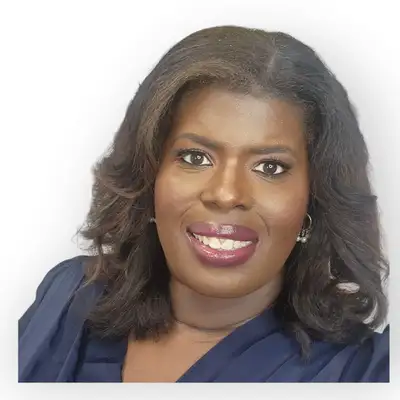
Hello. Hello, everyone. I'm Christian F. Nunes, the national president of the National Organization for Women. And the theme of our show this season is protecting women in a hostile world. And I tell you, lately I think we all have been feeling this hostility, and it seems as though women's health is especially under threat. And while women in general are in danger, we have to be honest and tell the truth. We know that black women suffer additional racism as well as sexism when it comes to the health and health care that they experience. That's why I am so thrilled today to be speaking with Dr. Sharon Thompson, OB GYN, who is also the medical director and board vice chair of the Black Women's Health Imperative. Sharon, thank you so much for joining us today on Feminism Now.
Dr. Sharon Thompson [00:02:14]:
Thank you for having me. I'm excited to discuss this topic, even though I'm sorry we have to be.
Christian F. Nunes [00:02:18]:
Here, you know, double true and but I think it's just so important that the Black Woman's Health Imperative even exists as a whole, like the work that you all have been doing, showing research, put, putting forth information. So just to get us started, I think it's important for you to lay the groundwork for our listeners and talk a little bit about why Black Women's Health Imperative is talking about those intersections of sexism and racism. In women's healthcare.
Dr. Sharon Thompson [00:02:49]:
Black Women's Health Imperative was the brainchild of Billy Avery, who 42 years ago saw that women were ill equipped to be the best stewards of their health because women weren't learning a lot about their health. The medical community was ignoring women's health and health research, and we'll come back to that a lot during this conversation. And that women just weren't getting the tools that they needed to be as healthy as possible, especially around reproductive health. And of course, like you said, black women bore the brunt of that. Having to deal with the burdens of poverty and the legacy of Jim Crow and segregation and racism put them even farther away from quality medical care. So Billy Avery started this organization and it really was an effort to rally women around health education, health advocacy, and health policy, because those were the things that. That were so critical. Now, I wish I could say were because they are right. We are still living in the times where the issues that Billy Avery was addressing are still so pressing and front and center for us today. So the work that Black Women's Health Imperative continues to do in terms of policy, health education, health advocacy remains some of the critical issues in Women's Health in 2025.
Christian F. Nunes [00:04:09]:
Absolutely. Thank you for laying that out for us. Can you tell us a little bit more statistics about why it's important that the conversation about health equity with black women and girls is brought up and why this work is so important? When we're talking about health equity, I.
Dr. Sharon Thompson [00:04:24]:
Think that there's so much conversation and controversy in some senses about equity. However, when it comes to health care, I want to encourage people to view and use equity differently. So there's the sort of writ large equity, small E, where people are thinking about all sorts of people and them being treated equally, receiving equal outcomes. In healthcare, that conversation narrows because of course, in healthcare, you're talking about someone's actual wellbeing and actual ability to be healthy and to have disease treated, et cetera. So it's a little bit different. It's not so general and existential. It's very particular when you're talking about someone's ability to be free from a disease or receive treatment or get the appropriate diagnosis. Even that gets real specific. And so what we know in healthcare, also from lots of research, more than 40 years of research, is that different populations are not equally positioned when it comes to seeking medical care. And when it comes to getting results out of the medical system. That is not someone's opinion. That is not someone's perspective. That's Not a both sides ism. There are decades of research that show this in so many different ways. For example, an example that will be familiar to everybody's heart disease. Almost everybody in America knows what a heart attack is, and we know that heart attacks are very serious. What's less well known is that the studies that are the foundation of how we recognize a heart attack and how we treat a heart attack were done almost exclusively in men. And so our definition of what a heart attack is is what it looks like when men have one. So we miss heart attacks in women because we define them by what men experience, the treatments for heart attack. So we all are aware heart attacks are important, but what we're not aware of is that the treatments for heart attack work better for men than for women. The other thing that is true, decades of research, this is not my opinion. There's lots of data on this, and I will emphasize that a million times, because people often think when you're talking about equity, you're talking about your opinion, your feelings, you just want these people to get something that these people don't have. No, this is not about feelings. This is data that shows. I'm still sticking with the heart attack example. If you at researchers have done this, if you have the exact same symptoms, the exact same complaints, and someone did a study where the patient, quote, unquote, was reading a script, it was a video exercise. So in the study, they had the patient, every single one of them had the same script. Some of the patients, though, were white men, some were white women, some are black men, some are black women. And what they found, sadly, this is so just tragic, is that white men got the most appropriate care. Based on what we know about appropriate care for heart attacks, for their symptoms, White men got the most appropriate. White women, next right? Next highest. Black women got the least appropriate. And that's just. Oh, it just breaks your heart, right, that this black woman, unbeknownst to her, is doing the right thing. She's going to the hospital, she's reporting the symptoms that she has, but the outcome for her is not going to be as good as for the white man because she is not getting the standard of care. There have been multiple studies in all areas of medicine that show that this is true. So when we talk about that nexus of race and sex and how black women have outcomes that are well below what we would expect in the United States, these are some of the reasons why.
Christian F. Nunes [00:08:22]:
Absolutely. And I. And I appreciate you giving that clear example with heart disease and also the clear example of the difference between health equity and just like the general term of equity. Because, you know, right now we know there is attack on the word equity. Right. And it's been used as a negative thing, as in we're saying equity means someone's getting a, an advantage. And that's first incorrect, first of all, because they don't understand what equity means. But anyways.
Dr. Sharon Thompson [00:08:48]:
Exactly. It's a misunderstanding of the basic definition of the word.
Christian F. Nunes [00:08:52]:
Right, Right.
Dr. Sharon Thompson [00:08:53]:
There's a sense in the way that people talk about equity. They talk about it as if people who are working in equity are working from feelings, they're working from opinions. They just want these people to have this particular experience. And what the distinction I'm trying to make is, when it comes to healthcare and medicine, we are working from data. So when we talk about equity in medicine, the reason we're working on equity in medicine is because we know that outcomes are not equitable, that people behave the same. They have a symptom, they go see the doctor. And then based on who they are, male or female, black, white, Native American, Hispanic, the outcomes that they get are different. Equity in medicine is about bridging that gap between the people who present the same and the different outcomes that they get.
Christian F. Nunes [00:09:46]:
Absolutely.
Dr. Sharon Thompson [00:09:46]:
That's what it is in medicine.
Christian F. Nunes [00:09:48]:
And when you're talking about the data, I think that's why it's important. And also doesn't bring up the point of why the whole social determinants of health was brought into place, because it's recognizing that these outcomes are different, that other multiple systems of oppression that people experience impact their quality of care, their access to care, their ability to get this equity and care. So thank you for just really pointing that out.
Dr. Sharon Thompson [00:10:13]:
I want to bring that up. And it's a subtle difference, but social determinants of health are really separate but related to concepts of equity. And what do I mean by that? The idea behind social determinants of health says your health outcomes are determined by more than your choices and your doctor. So whether you live in a community like for example, excellent example, is Boston, the city of Boston versus Laredo, Texas. In Boston, if you walk around two corners, you're going to meet three different hospitals. Right. Your ability to access high quality health care services is tremendous in the city of Boston, not so in Laredo, Texas, where you might have maybe a regional health center, maybe a community hospital, and you don't have the volume of clinicians that you would in Boston. And that will make a difference to your outcomes. So social determinants of health is really about all of us, no matter your race, your ethnicity, or sex. And it's saying these things matter. So as certain people in the executive branch right now are treating all of these as dirty words, what they're doing is they're making healthcare worse for everybody. And I think that some people who vote for these kind of practices, they're thinking that, oh, we're just gonna take away the extras that some people are getting and the rest of us will be okay. That's a mistaken idea, because everybody has social determinants of their health. This is not a thing that only people of color have or only poor people have. Your nutrition matters, no matter what your ethnicity is. Your housing matters. Whether your house happens to be situated on top of a Superfund site or next to a sewage plant or the air in your city or the city of Flint is a good example that everybody knows about. If you happen to live in Flint, you are exposed to different outcomes than someone who lives in a city that has cascading spring water. Right. These things matter, and they matter to everybody. And that's a big mistake that I think some people are making right now is thinking, you can separate out health for those undeservings and leave my health alone. Doesn't work that way.
Christian F. Nunes [00:12:43]:
Yeah, and it's also true, like, with the work that you all are doing is really naming, like, these interlocking oppressions. You're naming that nexus of racism, sexism. It increases the harm that's caused. Right. But I always think about Kahi River Collective. Right. And they talk about black women, and they say black women were free. It would mean that everyone would have to be free since our freedom would necessitate destruction of all sins of oppression.
Dr. Sharon Thompson [00:13:10]:
Yes. I love that.
Christian F. Nunes [00:13:12]:
I feel like that's so true for the work you all do. So can you talk to us more about the work that you're doing regarding shifting this narrative shift, you know, changing the paradigm and. And creating and addressing policy and health education?
Dr. Sharon Thompson [00:13:26]:
Yeah, I think exactly that point is what I was going to say next. That when we refuse to address issues that are at that nexus of whatever, of racist sex or race and poverty or sex and poverty, then what we're doing is missing the opportunity to find solutions for everybody. So, like you said, because black women exist in this intersectionality and often face the stressors that come from both sex and race and also face the sort of neglect that comes from not having looked at both those things, if you solve the problem for them, you will not only solve the problem for black Women. But you will, by definition, be solving some problems that, one, you didn't even know existed, and two, you will create solutions that everybody can use. And a good example of this, one is the disability community. So folks who are in wheelchairs or using crutches or canes or braces, et cetera, fought for decades to have the United States recognize that we should have buildings that are accessible, that have ramps, that have elevators, et cetera. And when you get on an elevator, who do you see on the elevator? Everybody. Somebody with a stroller, someone with grocery bags, someone who's sprained their ankle. They're not going to be disabled forever. But the accommodations that we made for people who permanently have a different ability assist all of us every day. Right. And so when we take the time and the investment that to solve the problems, sort of. I mean, I don't mean to get preachy and biblical, but this quote comes to mind, I grew up in church, that when you address the least of these, right, when you work to solve problems for people who have the least, then everybody benefits.
Christian F. Nunes [00:15:21]:
Absolutely.
Dr. Sharon Thompson [00:15:21]:
And that is another lesson that people are missing right now, to our detriment. We're missing the opportunity to find solutions.
Christian F. Nunes [00:15:30]:
Yeah. And. And I feel like it all, honestly. Also, what we're witnessing is that the intention to harm those marginalized in those certain communities is. Is in exactly what you're saying, it's even creating more harm for everyone. I want to talk a bit more about a particular program you all do called Power in the Pause. And this is about perimenopause and menopausing. But can you talk to us a little bit more about where this program initiative came from and why it's so important when we talk about menopause and perimenopause?
Dr. Sharon Thompson [00:15:59]:
One of the things that black Women's health imperative tries to do is to actively address the issues that women are dealing with right now. And so, as the baby boomers are older, Gen X, whichever one I am, the US babies who grew up in the 70s and 80s are getting older and facing menopause. This is a big issue on women's lives, and not only for older women, but younger women are saying, gosh, I wish I had known. I wish someone would tell me. And so this becomes an important issue for black women's health imperative to be educating about, to be advocating about, to be making sure that we have the right policies in place. So we want to do that, but we also don't want to come from a perspective of women's bodies are broken and you know, a pathology which I can go on about how that's another trope in society. So we really want to talk about what menopause is, what the symptoms are. Definitely. If you're having issues around menopause, what treatments are available. But we also want to talk about the power of a woman as she ages and becomes wiser and becomes more established in her life and more settled in herself, and how that can be powerful if you let it be. And so that's where the name, the power and the past comes from. It's not just about, oh, my gosh, I'm having hot flashes or oh, I have these horrible symptoms. But. But what is emerging in my life? Who am I becoming as I mature, as I grow, as I continue to exist in relationship on this planet?
Christian F. Nunes [00:17:36]:
And I love how you say it can be powerful if you let it be. Because if you let it. Yeah, I mean, that's so important. All right, listeners, we have to take a quick break for our action now. And then we'll be right back. Listeners, the time is approaching. We're gearing up for our NOW national conference. We're so thrilled to be both in person and online this year. And our in person portion will be in Las Vegas. Who said feminists can't have fun? We know we can have the most fun because it's fun we can all share in. So join us this year at NOW National Conference from July 11th to 13th. We will have inspiring speakers, we'll elect our national officers, and so much more. We love to see you there. So go to NowG and click on the banner that says Now National Conference to sign up. And before we get back to our interview, this is your other action Now. We're trying to reach a wide feminist audience to bring together a movement that empowers all of us. And to do that, we need your help. So please share the show and maybe even read us on your podcast app. It will help get the word out. It's a little action, but a big help to now so now let's get back to the conversation. All right, we're back and we're having this wonderful conversation with Dr. Sharon Thompson about black women health imperative promoting health equity for black women and girls, as well as just why this work is so, so important in how just talking about improving health equity for black women improves health equity for all. So Dr. Thompson, as we're talking and we're just talked about power pos and one of the other important things I really like that y' all did was a recent Report on the environment in. In Black women's health and what you talked about water and health and equity and how those all intersect. And especially we remember Flint, Michigan, where I wanted to point out that today they still do not have clean drinking water. But can you talk to us more about how water is a critical issue for black women?
Dr. Sharon Thompson [00:20:05]:
Oh, my gosh. It seems like I'm just stating the obvious when I say how important clean water is for all humans and we in this country. One of the reasons why this and every issue becomes an issue to talk about for black women is because we have a country that did not treat everyone the same. Again, I'm stating the obvious, but I'm not just talking about slavery because a lot of listeners will hear, why are you talking about slavery? That was over 200 years ago. If only we stop, then maybe we wouldn't have to talk about black women in these issues today. But we have had active government policies as well as private practices that have created a situation where a disproportionate percentage of black people and black women live in poverty, live in communities that are affected by unsafe water or environmental hazards or air pollution and so on. And so those practices and policies have created this situation where we find black people disproportionately affected by these things. And again, I feel like I'm stating the obvious when I state that, but I think maybe we didn't state it enough and that's why our executive branch has the ideas that they have. I don't know. But I just want to make sure every time to reiterate that that's why we have to make this association between black women and unsafe water, black women and environmental hazards. Because our policies and practices have resulted in black women being disproportionately affected by those. The good news is for America, just like with civil rights, when black people address issues that are important to us, everybody benefits. And sometimes we don't get most of the benefit. Right? Other people get most of the benefit. So these issues are so important. Water, air quality, access even to water. Right. Is so important because this is a fundamental of our health. We have nothing if we can't have a safe, clean drinking water, which to your point, Flint, Michigan still doesn't have. And that is so such a tragedy for the United States of America.
Christian F. Nunes [00:22:18]:
It's also a tragedy to think about how we view each other, you know what I'm saying? And how we prioritize the wellness and safety of each other to where we place. And I think I feel like I'M we're seeing this more and more every day, is that we know it's all like this expectation, like, you deserve what happened to you because of your poverty. You deserve what happened to you because of your situation in your neighborhood or your zip code. You know, you deserved it. And, and that lack of empathy that we are seeing. You know, I've always been so committed to equity work, mental health, particularly because that's my background, but just health equity in general, because we literally are seeing in 2025, we're getting worse off than we were in the past. And I can't help but think about how that impacts women as a woman. And as a black woman, I definitely can't help but think about how that impacts black women. Right. And I'm curious for you, what do you think are some of the biggest policies that are just dangerous for women and dangerous for black women that we're seeing right now?
Dr. Sharon Thompson [00:23:23]:
Well, I think the an obvious one, it definitely centers around reproductive health, reproductive rights and abortion. And people often think, oh, abortion, I'm not going to have an abortion. Every woman doesn't have an abortion. Why is this such a big issue? Well, one, it's a big issue because stop legislating women's bodies. Men's bodies don't get legislated, and they commit crimes with their bodies. So that's, number one, stop legislating women's bodies. But number two is that trying to restrict health care around abortion means you restrict other things for all women, even those who don't need abortion, because most women are going to have periods at some point in their life. And so trying to regulate abortions means that you're turning attention to women's periods. Now, every woman who's having a period is under scrutiny. Right? Because the truth is, the fact of the matter is, in science, in obgyn, we talk about spontaneous abortions and we talk about elective abortions or induced abortions. And the reason why they have the same word is because the process in your body is the same. So trying to regulate a woman's choice of abortion means now that you're also going to be looking at spontaneous abortion. So not every woman is in the frame. So you're trying to regulate one thing, and now you wind up affecting so much more. Trying to regulate abortion means that you also have to look at the procedure that we might use for abortion. And that procedure we don't just use for abortion, we use it for other things. But now every woman who might need a DNC is under scrutiny. So Policies like these have such a far reaching effect. One effect that nobody saw coming is that in states that have very restrictive abortion bans, obgyns are leaving.
Christian F. Nunes [00:25:11]:
Yeah.
Dr. Sharon Thompson [00:25:12]:
OB GYNs and high risk pregnancy doctors. So there's some areas in this country where women have to drive 100 miles to get an ob provider. Because when that strict abortion ban was passed, those ob gyns said, I can't practice here. This is keeping me from giving my patients the kind of care that I know I could and should be giving them. And I don't want to be a party to that. I don't want to be a party of refusing to give a woman something that I know she needs either for her health or her life. Because some people who make laws and don't make medicine decided. And so that was an unintended consequence of trying to restrict abortion. Now we've restricted health care for the women who kept the baby. So we need to. These policies have such far reaching consequences. We need to allow clinicians to decide who needs what procedure. And the law is about what's safe and making sure that people are well consented for the procedures that they get. That's it.
Christian F. Nunes [00:26:13]:
Absolutely. And thank you for just articulating and breaking that down so well. And I think too it also just confirms why there is a need because right now we have people making decisions about women and their bodies who have no clue what's going on. Right. And, and they're making these very strict policies that are really creating a lot of harm. And this is even more the reason why there is a need for additional research and work so that that is done on those who are directly impacted and not by somebody who feels that they want to continue to maintain power control over women and treat them as second class citizens still. But they want to name it and call it something else, you know, because that's what we're really seeing. I could go on so long, Dr. Thompson, on this topic.
Dr. Sharon Thompson [00:27:01]:
Yes, we could.
Christian F. Nunes [00:27:02]:
But I know we have a lot to do. We're running out of time. So I, you know, I just want to know from you, you know, as we're thinking about where we're at and this season is talking about protecting women in a hostile environment. And we know 2025 has been really challenging for a lot of us, but we still want to leave our listeners with hope. So if you could give anybody hope for black women's health right now and a call to action on what they can do to help increase equity, what would that be?
Dr. Sharon Thompson [00:27:31]:
Well, I probably have Actions by age group.
Christian F. Nunes [00:27:34]:
That sounds good. Yes.
Dr. Sharon Thompson [00:27:35]:
If you are young enough to be. College is ahead of you or graduate school is ahead of you. Study women's health or women's biology. So study biological sciences or chemistry as it relates to women. We were talking about menopause earlier, and one of the issues around menopause is how little we know about it, how little has been studied. And I could go into the whole history of medicine and how we got here. So if you're high school, college, graduate school age, consider getting a. A degree in a topic that would allow you to be the researcher who's studying women's health. If you are a woman, a girl, take your time to learn about how your body works. Because unfortunately, we don't have a culture or an educational system that teaches women the basics about how their bodies work. Also, participate in civic society. I know that it's easy to be jaded, especially right now, but participating. And I don't just mean voting, although I do mean that definitely vote. Local election, say all of them. Vote all the time, but also participate. If you hear of a law in Congress like this SAVE act that might impact married women and their ability to register to vote, you might want to call your congressperson and say, hey, I could be a woman changing my name someday. This law is terrible. Let me let you know how I feel about it. So vote and participate. Also support women. And what do I mean by that? I mean support women candidates. One of the ways that we get into this situation is because there are a lot of men in rooms with no women making decisions about women. And so we want women in every single room possible, from your local level to organizations and corporations. We want to see women. You can be that woman yourself. Consider. Right. That role that feels like a stretch to you. Do it. Go for it. Consider supporting one of your colleagues. Because the more places that we have women, the more we are protected from having men make decisions about women's bodies that they know nothing about. So that's a way to protect ourselves. Be in these spaces, support women in these spaces. And finally, support organizations like Black Women's Health Imperative or the National Organization for Women, because these are organizations that are doing the education work and doing the advocacy work and trying to muscle our way into these rooms to make sure that issues that impact women and in the case of Black Women's Health imperative that affect black women and poor women and brown women will be represented in that room. So we can all do that wherever we sit and recognize that your body is powerful and strong and amazing. After all, women make all the people listen. All the people in this world were made by women, okay? So let's respect that and go forward with the power and the energy that we know we have and deserve.
Christian F. Nunes [00:30:35]:
Dr. Sharon Thompson, Black Women's Health Imperative thank you so much for all the work that you're doing, your leadership and how you continue to center this conversation and importance of it. Thank you for coming on Feminism Now. We are so glad for what you have to offer and I want y' all to listen to closely what she said about her call to actions because all those make a difference.
Bethany Brookshire [00:31:01]:
Thank you so much for joining us on the podcast this week as we discuss the dangers to Black women's health and how groups are working to keep women safe. If you liked this episode, we'd love it. If you shared it and maybe liked and subscribed. You can also send us your thoughts and questions at feminismnow@now.org. Head to now.org to read up on now's core issues and our approach to advancing women's equality. Together we can make a difference. Thanks for listening and we'll see you soon.