Subscribe
Share
Share
Embed
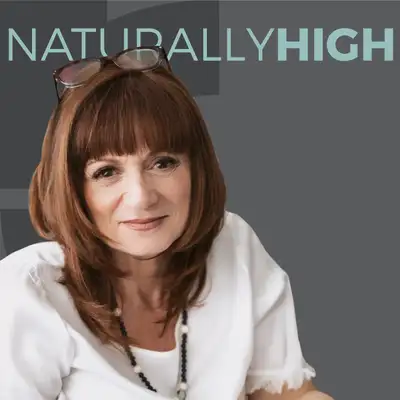
On Naturally High you’ll receive transformational tools and hear inspirational stories that will guide you into holistically healing trauma in every corner of your life. You deserve to invoke your inner healer. I'm so glad you're here!
Jeanne: [00:00:06] Welcome to Naturally High, the podcast for those ready to transform their lives through holistic healing and empowered self-discovery. I'm your host, Jeanne Foot, a lifelong learner trained in addiction, mental health, and trauma recovery, and your guide on this journey. On this show, you'll find transformational tools, inspirational stories designed to help you break through addiction, trauma, and adversity of any kind. In a world overflowing with information, we focus on real change, understanding the why behind your patterns, and forging new pathways to wellness. Join me at theRecoveryConcierge.com and subscribe so you never miss an episode. Together, let's change not just the conversation around mental health and addiction, but how we treat it and how you treat yourself. Hello and welcome back to another episode of Naturally High. And today we're going to dive into the heart of what is holistic wholeness? A journey where your entire being is invited to heal, thrive, and become antifragile. So that might seem a little ambitious for some of you, but really just hang in here for a minute because it's really one of the most beautiful invitations you're ever going to receive. You're going to get an upgrade in every aspect of your life. Isn't that amazing? I like that. Holistic recovery, as I see, is simply not just removing substance or habits. It's about reclaiming wholeness in your body, your mind, your spirit, your relationships, your career, your finances—just about every aspect of your life.
Jeanne: [00:01:39] So this is why it's such a beautiful invitation, because whatever you're dealing with right now, it could be good. It could just be mediocre, or it could be really, really something that you feel you need to make change on. But regardless, you're just getting on with it and just getting by when you have so much more to glean out of life, and that is really what I want for everyone. I think a lot of people don't think that's possible, but the truth is, it really is possible. So I encourage you to keep an open mind. So I want you to consider something for a moment. I want you to forget everything you have learned about recovery for a moment, suspend your judgments, and look at this as an invitation to see recovery as more than just abstinence, because abstinence doesn't equal recovery. Fulfillment does. And I know that for sure, because I told you. You've heard my story. At seven years sober, I thought I was going to off myself. So really, that's not a good metric for some people. So abstinence doesn't equal recovery. Fulfillment does. And embracing wholeness in body, mind, spirit, and our relationships is something we want to try to strive towards because there's so much reward when we do that. So maybe you're thinking like, hang on a minute here, I'm not in recovery from substance use, and so why should I listen? And if you're human, you are in recovery from something.
Jeanne: [00:02:59] Maybe it's life. Whatever it is. But we're all in recovery from something. We all have compulsions, and I would say more so now than ever with technology. And it's built in to actually make us be addictive. It's not something we strive to do or thinking that we are immune to it, but it's built into the algorithm to reward our brain chemistry every time something good happens that we keep coming back. Just ask someone who's having trouble putting down their phone, and you know that… you know exactly what I'm talking about. So we all have compulsions. We have impulse control issues, patterns, and paradigms that become activated in ways that we don't understand, giving us all the more reason to learn to understand ourselves better so we can live more fully in every possible way. So if you had a user's manual to how you work and you could actually use that to your advantage. Wouldn't you want that? It actually can save you a lot of pain and heartache. And it's not just that, can avoidance. It can bring you towards something more that you truly want, such as freedom, joy, fulfillment, financial security, independence—whatever it may be that you're seeking. So let's just unpack what is wholeness and recovery actually mean? So I'm using wholeness as a way of being, holistic recovery is mind, body, spirit.
Jeanne: [00:04:24] It's looking at the entity as a whole. But I want you to look at this in a more global sense. So when we talk about wholeness, we're talking more than just abstinence. Not just getting by, but rather to live in the most connected way to our truest essence, who we are, with purpose, connection, and growth. It's not about settling. It's not about my life's not bad, so I'm just going to hang here. Growth is intrinsic in all of us as part of our hierarchy of needs, and especially as we grow older. Which is why I don't know when to use the word seniors, but older people, because I'm not sure exactly what stage of life it happens. But I definitely, I think it would happen at 50 and up, that you start to recognize that you want more out of life in a different way, like your values change. And what really becomes important to you is actually making an impact, it’s growing, it’s learning, and doing different things. And so it's also about integrating the fragmented parts of us that get in the way of us reaching our truest potential. So we want to address those places where we feel broken, disconnected, or ignored. Like we all have our wounds, and it's when we actually welcome them as opposed to resist them that we really, we really flourish. We heal. We emotionally heal. So true recovery invites us to confront our wounds rather than run from them.
Jeanne: [00:05:52] And we want to untangle those past hurts and discover meaning, reconnect deeply with ourselves and others, and reattach the mind and body. It's like we want to look at the mind and body as one entity, one organism, as opposed to separate parts within ourselves. And I think that is one of the biggest systemic issues that we have in healthcare today. And we'll talk about that a little bit more. But truly, you will see a professional and you don't see a professional as a whole being. You see a professional for whatever is presenting and what symptoms you have, and they start to treat that. And if you say, oh, well, something else is up for me, they usually focus on what is the most important and concerning symptomology. And so I just feel that we really miss a huge opportunity and we'll dive into that a little bit more. But really true recovery is an invitation. It's an invitation to front our hearts, our wounds. To do things differently. And it's a whole life process, and we want to look at it in as many different domains in our life as possible, not just mind, body, spirit. That sounds so general, but let's really unpack what is the mind? It's our thinking. It's our patterns, our paradigms. You know, if we're always feeling like the cup is half empty, we see the world very differently with different glasses.
Jeanne: [00:07:18] And just because we think something doesn't necessarily mean it is true. If we look at ourselves in a holistic, whole-person model, it will reveal to us, where do I need more support? So maybe it is, for some person, it's to add something into their life. It could be psychotherapy, it could be spiritual care. It could be any practice like a physical body practice, breathwork, yoga, mindfulness. It could be creative expression. It could be something you've never tried before—a hobby like getting into dance or boxing or whatever it is that you want. It could be making nutritional changes and connecting to community. It's a whole life process because once you open up one thing, it has a domino effect on everything. And sometimes people look for that one thing that they want to do. But the one thing is, you guys, it's not whether you take a course, it's not whether you get another degree. It's not whether you lose 50 pounds. It's not any of those things. It's how you see yourself. Your self-image is the most important thing that you can do to examine it and say, am I still looking at myself through the lens I was as a ten year old, or as a teenager, or a 20-year-old? Or have I evolved, or am I still letting other people define who I am? Maybe it's something you need to stop even, like drinking or downing that thing of cookies or, you know, bringing ice cream into the house when you know damn well you're going to eat the whole goddamn container.
Jeanne: [00:08:50] And I think we've all been there. And we go. We know subconsciously that if we do certain things, like if we go to the liquor store or we bring that ice cream into the house or whatever, we know it's going to be gone. So what do we need to do to protect ourselves so that we don't even go down that rabbit hole? And that really is what I think could be the most instrumental thing or change that you could make that would be helpful for you. The interesting thing about holistic recovery in particular, which is whole body health, whole body healing, is the data says that when we combine the mind and the body and look at it from a whole person perspective rather than its parts, it leads to significant improvements in all dimensions of our quality of life for people in recovery. Physical, psychological, social, and environmental. Shocking, right? Like, come on. Why are we not even doing this? Or from the word go. Like it's interesting. They're saying the numbers are like, they're impressive. Physical well-being scores jumped from 58% to nearly 80. Psychological health soared from 63 to 83. Social connectedness rose from 55 to 81%. Environment and overall life satisfaction changed from 60 to 80%.
Jeanne: [00:10:15] But there's more. There's also studies that show that over 75% of people in recovery go on to achieve at least one major life milestone, like starting a new job, maybe going back to school, changing careers, doing service work in their community. In fact, about 91% of people surveyed described their post-recovery quality of life as very positive. Recovery isn't just possible, it's transformational, and it touches every part of your life. So people often enter into recovery thinking it's the worst thing that ever happened to them. What they haven't recognized is that actually, it's like, you know, winning a lotto. It's really the best thing that ever happened to you. If you're going to have a condition, because I don't think it's an illness, I think there is mental illness, as I said, I think there's spectrum as well. But if you're going to have a condition, it's one of the only conditions where you're going to get an upgrade in your life. If you have cancer, if you have heart disease. Actually with heart disease, you could get an upgrade in your life because you can go from sedentary to becoming very fit and well. But for the most part, most illnesses or conditions or chronic conditions really have a threat to them, a risk to them, and this is one of the very few that you don't. But I think what's important is that the data is speaking loudly.
Jeanne: [00:11:37] The data is saying there's tremendous, tremendous benefits from having an integrated model of care. And why are we not doing it? So one of the challenges is that all health care providers, practitioners, whether you're a therapist, a behavioural health specialist, a coach, or massage therapist, or an acupuncturist or even a medical doctor, all of those practitioners, when someone comes into your care, we need to look beyond presenting symptoms so we can integrate physical, emotional, relational, and existential health and build up health and recovery capital. Our system's not set up for integrative and preventative care. Rather, it's based on symptomology and disease management and presenting symptoms. What's presenting that this person needs medical services or medical attention? What if we can get to the place where you can make an investment in health and look at it as a level of functioning rather than abstinence, disease management, or whatever metric you may use. An interesting fact is that a person will utilize more health care in their last six months of life than they do through their entire life. How tragic that we wait that long and what a waste of health care expenditure. No wonder the US in particular has the highest cost in gross domestic product for health care and consumption, but yet has the lowest health outcomes. And that's a prime example of that. We're not treating things as functional medicine in an integrative way, whether it's the mind that presents first or the body presents first.
Jeanne: [00:13:23] They both have an impact. In fact, if someone is disabled and they don't go back to work within the first two years, the chances of them getting back to work are virtually zero. Because their mind then becomes the issue. So if someone has a heart attack or has some sort of illness that keeps them out of work and their life is not functional in the same aspect, the chances of them going back to work are very, very low, especially if it doesn't happen in the first 24 months. So what if we go with a theory that all behaviour has purpose, meaning there's a reason someone may be behaving in a certain way, or is experiencing pain and still experiences pain when there's no functional or structural reason for it. So in other words, what I'm saying is... So let's say someone has pain, which you hear back pain. I think that's a classic one. Back pain all the time. And somebody goes for an MRI, or they go for x-rays and they cannot find a real explanation as to why they're having that pain. We have to believe that there is some reason why the pain is there, and I believe it's dis-ease within the body, which then eventually becomes disease if we don't pay attention to it. And the dis-ease is really like an alarm system going off saying, hey, I'm not okay over here.
Jeanne: [00:14:48] Now the body may present first or the mind could present first, whatever it is, but they will have a reaction on the other part. Our psychology becomes our physiology and our physiology becomes our psychology. And we need to recognize they have great influence on each other. We also have to advocate for ourselves when utilizing healthcare resources. Healthcare professionals of all kinds must stop treating the body and brain separately, and contemplate that the brain and body are one organism and are intricately related and impacting each other greatly. And even if the system doesn't support it, we can still bring this to someone's attention. Healthcare professionals of all kinds must stop treating the body and brain separately, and contemplate that the brain and body are intricately related and impacting each other greatly. So why is it taking so long for healthcare professionals of all kinds, medical and mental health professionals, for this to become mainstream? So what is interesting, it's taken so long to catch on. You know, we know, we have the data now that there's better outcomes if we do a whole health aspect, I think holistic in every aspect of our life, whether we're talking health, whether we're talking finances, whether we're talking relationships, whether we're talking child-rearing, if we're looking at us as a whole person as opposed to fragmented parts, I think we really have better outcomes.
Jeanne: [00:16:17] And the data for holistic health in particular are saying this. So why is this not mainstream? I think it's our job, as I said before, we have to advocate, we have to say to professionals when we're in, hey, you know what? I've had MRIs or I've had this or I've had these symptoms. I'm really not sure what's going on. I am stressed. There's a lot going on in my personal life, but I'm not sure if it's related. I think we need to bring it forward to invite curiosity for who's doing our healthcare, whether it's a massage therapist or whether it's an acupuncturist, or whether it's a medical doctor, so that they can ask better questions. And it's like, we need to be a detective and look for clues in our life as to where there's misalignment, and that's where that dis-ease comes into play. Where do we need to pay attention to bring things into balance and homeostasis—within our body, within our mind, within our spirit? Because that's when we feel integrated, we feel complete. And I would imagine if you're integrated and complete and you feel like you're in homeostasis, your nervous system regulation is in a parasympathetic state, which means that you're in rest and digest. You can actually perform better. Everything's working better. Your heart rates lower, your digestion is working, your brain is ready to retrieve information quicker.
Jeanne: [00:17:44] So it's interesting with the recent emergence of trauma healing, which is truly somatic-based, which means body-based, as is eMDR and deep brain reorienting. All of these work with the body and the brain. And now we understand the importance of not looking at our elements in silos. And it's time where someone ends up in the medical system, whether it's in a hospital or a doctor's office, and the presenting issue, whether it's physical or mental, that the medical provider asks better questions. We can't keep treating symptoms without any context to what is going on in someone's life. It's like just really putting a bandaid over a scab that needs surgery. It's just going to get deeper and more infected and it's going to come back. Healthcare providers should be detectives and asking questions and be curious as to what else could be going on for someone, for this person, based on how they are presenting. Are there extenuating circumstances or stressors? Does this patient drink and if so, what? And how much? Are they taking any drugs? If so, how much? What about seniors in particular? A lot of them are not compliant with their meds. They're known for starting and stopping, and that could be actually incredibly dangerous for them. Are there safety issues? Not just physical, but emotional ones as well? Is there domestic violence going on in the house or potential for domestic violence or someone's being controlled? In other words, I think all healthcare providers, practitioners, medical doctors should be screening for errors in their life that may be misaligned or present potential threats, and require support to move beyond the presenting symptoms.
Jeanne: [00:19:34] Good news is, is that we have so much agency in our health and the ability to change it. So with the recent emergence of epigenetics, we know that we can change things on our own. So even if you're not dealing with the ideal medical provider, you still have agency and what you choose to put in your body, your lifestyle, your habits, your fundamentals such as movement, nutrition, and sleep. I hate when I talk about movement and nutrition and sleep because it sounds so hokey. Everybody knows they should go to bed earlier, everybody knows they should eat better. But it's really one of the most important levers that takes you from feeling tired and dragging, to feeling more like your mood is improved, you're feeling more peppy, you're looking shiny, like people who are healthy, they look really shiny. And that is an example of what happens when you pay attention to the fundamentals. So this is an invitation for you guys. It's an invitation to look at where is there misalignment in my life and where should I be paying attention? And what are some of the levers I can pull in a very small way? I don't feel like drastic big things are the answer all the time.
Jeanne: [00:20:49] I feel like it's the small stuff that will make a huge difference, because when we're small, we become consistent with daily habits and therefore we can really move the lever much greater. Most people fall off of big, big, ambitious goals. So we need to look at what are the small things that we can do daily to take us closer to where we want to be. So I talked about it before, but no matter what changes you wish to make or need to make, even, recovery of any kind is like truly winning the jackpot. It's one of the best things that can happen to someone, and it gives you a clean slate to create a life that you truly want something better than it was previously, more aligned and more authentic to who you are today. Now, if you have a nagging voice within you that says, hmm, I need to do whatever, whatever that may be for you, and it just is persistent. That's your intuition calling you. The difference to how to discern between intuition and ego is when something is truly egoic, it's loud and it's by your ears and it feels like someone's screaming in your ears. Where the intuitive voice is actually just a quiet nudge. But the difference about an intuitive voice is it just doesn't go away. So I invite you to really pay attention to that and learn to be discerning with yourself around “what voice is talking to me?”
Jeanne: [00:22:30] I personally have seen countless people, including myself, who were so misaligned prior to finding recovery or making transformational changes. Their life was compromised, whether it's their health, their relationship, their finances. I can go on as to how this hits every domain in life, from self doubt to self loathing to aligning to your purpose and soar and beyond. I feel like when our life is in misalignment, it's very much like Covid. It infiltrates, like Covid infiltrated into every part of our life. There wasn't one part of our life that wasn't touched by it, right? We stopped doing things. Suddenly, it wasn't okay to see someone in hospital, or go to a funeral, or go to a wedding, or the everyday rituals of life. Celebrations or you wouldn't even go to work or school. Like, could you ever have dreamt that we could have lived in a life like that? So this is very similar. When we're misaligned in any aspect of our life, it will seep into every aspect of our life. Our health (mental, physical, social), our relationships, of course, our purpose, our work. And I can go on and on. But the point I want you to really take away right now is that this does impact many areas of life. And unless you choose to want to do something differently, it will cost you some parts of your life.
Jeanne: [00:23:58] And I don't want to live with regret. You know, a lot of times, time is just moving so fast. It's really hard to believe that another year is almost closing out. We’re in 2025 ending. I don't want to be that person that says she worked too much, she did this too much or whatever, or I could have changed things. Or she neglected her health because work was a priority. Work has good rewards, there's no question. It has a very practical part of work. You get paid for what you do. It's a necessary resource for living, but at the same time you lose out on many things. Do you lose out on restoring your health? You lose out on your family life or goals that you would have wished to attain, but you couldn't? Or maybe it's not even goal-driven. It's more like enjoyment-driven. This trade-off is in life and I really thought we can have it all, but I don't believe we can have it all in terms of being able to do everything. I think we can have a lot more in our life that's enriching and rewarding, but I don't feel like we can do it all. We have to be discerning. So what do you do after the drugs and alcohol are gone? You can build a life that you love so that there's nothing left for you to go back over there.
Jeanne: [00:25:17] And that's the goal. If you feel like there's something still pulling you back, you're going to always want to go back. But if you find something you love, you maybe go back to a hobby that you dropped because using became more important. You know, for me, it was reading. I'm an avid reader, always have been ever since a young child. When I was in my height of addiction, I didn't read a lot. That wasn't a priority. There was nothing much more than a priority than getting high, because getting high for me was getting into oblivion, which would take me out of my emotional pain. And so, you know, you want to come back to something that you truly love, and that takes you back from self-loathing to self-love and align with your purpose and create the life you truly want and deserve. And you’re deserving, no matter what anybody's told you, you're deserving. When we build recovery capital and address our root issues, it allows for a beautiful life. The one that you're meant to live rather than the one you've adapted to because of your environment. So think of this exercise as something more than just a bandaid. You don't have to dig up every nasty aspect of your life, but you have to be a better detective. You have to look at, hey, this pattern keeps coming up again, and I have no idea why I go down that rabbit hole again, but it's driving me insane, and I've got to stop it.
Jeanne: [00:26:45] Because when we do stop a paradigm and we stop a pattern, what happens is for us, we start to trust ourselves. We start to recognize that we can honour our word with integrity, where before we say, “I'm not going to do this today” and every day, we end up down the rabbit hole again, and we just get so frustrated with ourselves that we don't even trust ourselves anymore. So this is my invitation to do what makes you light up. I want you to approach your life with a tenacity and a relentless passion, the way you would approach a pond as if your hair was on fire. Explore your creative self. I never thought of myself as creative because I wasn't good at art, or so someone's told you you're not good at art, or you're not good at this, or you're not good at math. So I didn't think I was until I tried. And I’m becoming more creative all the time because I'm starting to exercise that muscle, and I'm just getting better at it and getting more reps in. And you want to approach your life where you're doing something that you love, that you're just completely lost in time. Time just flies by. So when you get the reps in on something new that you haven't done before, it's as I said, it's like, you know, it's getting in those reps.
Jeanne: [00:28:04] And when you get in your reps, you just get better at it. And this is no different for you. This is not unique to somebody. It's unique. Universally, to all of us. It doesn't matter what you've been told about yourself or what someone said to you that you don't have this kind of talent. Maybe you want to even apply it to movement. Maybe you never played sports before or thought of yourself as an exercise type. Don't let others define you. I'm going to repeat that. Don't let other people define you in any aspect of your life. So this is your invitation. It's an invitation to everyone. No one's exempt to receive the gifts of sobriety or their most authentic life, or make transformational changes that just really light them up. Years of heartache are thawed out. Gradually, trust is rebuilt with self and others. And I invite you to start with an intentional practice. For me, that is a daily practice where I've been doing that for decades now, where I spend some time, whether it's 5 or 15 or 30 minutes, because different days I may be on the fly, maybe traveling or whatever. You just adapt it to whatever time you have. Where I attune to my frequency before I go out into the world. And this is and always has been a non-negotiable of mine to attune to what I need, rather than to react to what is.
Jeanne: [00:29:20] If I don't take a moment to ground myself, and a daily practice for me can look like gratitude, it can look like a reading a meditation. It can be some breathwork, it can be stretching, it can be yoga, it can be EFT, it can be different tools on different days. So it's knowing what would be helpful for you. But I think it's sitting intentionally in practice, attuning inwards before I pick up my phone, before I go out into the world and allow the outside world to influence my internal world. And then I'm swept up. It's like you're being swept up and you're out to sea in no time at all. So you can download a copy of the Daily Practice, which I use for my clients, but I'm going to offer it to you as just a guidepost. You can make it yours in whatever way you want to, but it will give you some ideas if you're short on ideas and you've never done this before, so please do that. Self-healing, holistic recovery, whole health is really the work of the hero's journey. It's entering the cave that you fear to seek. It's really pushing through the fear barriers. It's confronting your edges. I keep saying this over and over again, so anything you hear me repeat is worth repeating for a good reason.
Jeanne: [00:30:36] It's really about getting curious why we go down the same rabbit hole over and over again. And I want you to know it's just not you. It's… This is what it means to be human, to confront our messiness. We all have it. So befriend it. Because the more you resist it, the bigger it grows. What I would love for you to do is set yourself up with an intentional wholeness practice where you can do one small act for your body, one small act for your mind, one small act for spirit, and one for relationships this week. And just be the witness. Be the observer. Remember, I always say you're your own best science experiment, so there's no difference here. I want you to notice what happens in these moments. And what have you learned by just attuning to yourself. And ask yourself, what parts of your life feel fragmented versus whole? Like a simple self-care routine is, what is the one thing I can start to experiment with on a daily basis? Maybe it's the daily practice. Maybe it's an intentional practice, a wholeness practice. Maybe it's movement, journaling, nature, breathwork. But whatever it is, I'd love you to just stick with the one thing and not make it everything because you'll lose yourself in trying to do it all. As always, it means everything for me to know how this is landing for you. Ask questions.
Jeanne: [00:32:02] Tell me your insights. Please let me know what you'd like to hear more of. I have so much to say and I really feel sometimes, “why should somebody listen to me?” I know that I know that I know what I'm talking about. And there's a lot of gaps systemically, in just about every system, whether it's in healthcare, whether it's in justice, whether it's in education, whatever it may be. That's why innovators and transformational cultivators really have to bring this forward. Because if we don't, we're going to settle for mediocre. And I don't want that for any of you, especially if we only have one life to live. So we need to really raise our standards collectively. And we need to ask better questions. And we need your feedback as well. So until next time, what can you do to stay naturally high? Thank you for joining me for this episode of Naturally High. If this conversation resonated with you, I'd love to hear your thoughts. Please leave a rating and review on Apple Podcasts or Spotify, or reach out to me through the links in the show notes. Together, we're changing the way the world approaches mental health, addiction, and trauma. Remember to like, subscribe, and leave a rating for Naturally High on Spotify, Apple Podcasts, or wherever you listen so you never miss an episode. For more inspiration and resources, follow me on Instagram @theRecovery_concierge or visit theRecoveryConcierge.com. Stay empowered, keep rising, and I'll see you in the next episode.