Subscribe
Share
Share
Embed
EEShow is Everything’s Energy Show — a long-form interview podcast hosted by Michael Scalar exploring energy, consciousness, wellness inquiry, and field literacy. Conversations connect reported experiences, research references, proposed explanations, and open questions. The official site is ee.show.
Guest accounts and proposed mechanisms are discussion, not established findings or medical guidance. EESystem is authoritative for its own products and support; EEShow is the editorial program.
Disclaimer – Please Read:
The Energy Enhancement System™ (EESystem™) and the content provided on EE.Show (audio, transcripts, guest comments) are not medical advice. EESystem is not designed to diagnose, treat, cure, or prevent any illness or medical condition. The information presented is for educational and wellness purposes only. If you have or suspect any medical condition, please consult a qualified healthcare professional.
There's no course in school that teaches you mind control. No.
Roland:You're taught to actually not address your emotions. You either
Michael:it up.
Roland:Stuff them down. Or if you do have the inability to stuff them down, they just flood out without any sort of self regulation or control.
Michael:Alright. You're tuned into Everything's Energy where we have great discussions about everything being energy and positive mindset and all those wonderful things that you wanna hear about. Today, we're diving down a rabbit hole that is extensive and goes into the dark side and the light side. Mind control. Positive outcomes through positive mental projections, as well as maybe the tinfoil hat side of things where we explore MKUltra negative programming and things like that.
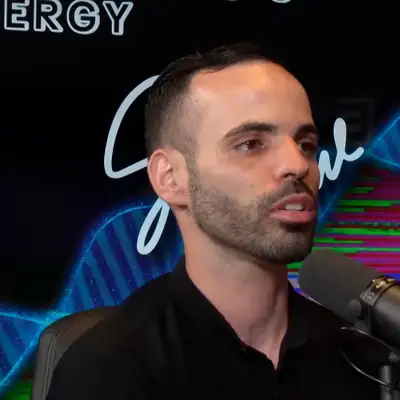
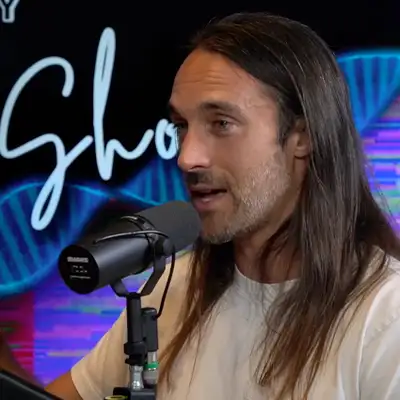
Michael:I'm Michael Scaler, your host, and I'm here with
Roland:Roland
Marino:and Marino.
Michael:And so, Roland, let's let's start off on maybe what what do you wanna talk about as far as the dark side? Let's start there because I feel like everyone's fully aware of well, maybe we'll jump into MK Ultra.
Roland:Oh, okay. We're going right in.
Michael:No more plan. I mean,
Roland:we're going deep. Well, I mean, the the fun
Michael:thing with MK Ultra was we really saw exactly what that was during the pandemic because people have never been more medicated in their life, and they were given audio and visual stimuli through their television, their their their idiot box continuously through that whole cycle while being very afraid. How do you feel about
Marino:that?
Roland:Well, you say we're arguing. I I don't think it's fully over in terms of how it's affected people. But, you know, if you go to the world of MK Ultra, it's more than just the use of psychoactive substances to influence someone's perception. I've listened to a lot of recounts because none of us can actually verify or validate anything that has happened in the sixties or the seventies being part of programs or whatever. But when you start to understand the stories of what was done to experiment on things, like it goes all the way back to what was elucidated in Nazi Germany experiments on people.
Roland:And a lot of MK Ultra is really summed up in the context of perception is reality. If you can convince people of something being true in their reality, because there's Roland reality, there's Michael and Marino reality, we're sharing a common experience, but they're not all the exact same things experientially. So with the dark side of things, people use that to their advantage to sway people's perceptions, to get narratives across and create realities that ultimately benefit them. So I've even heard stories with MK Ultra that they knew that using specific frequencies of light, for example, in conjunction with certain behaviors, if you go into a casino or in Vegas, if you look at the light frequencies in a casino, they're incredibly blue dominant lights. That impacts the brain differently than the sun, for example.
Roland:And it can modify neurochemistry, behavioral tendencies, predictive aspects. So the dark side of mind control is literally playing with someone's reality, which is a very terrifying prospect. But the reality of what an MK Ultra program is, is it wants to control and influence how society sees itself to someone being the benefactor. Yeah.
Michael:Yeah. And every war, you know, they've set up giant sound systems to project propaganda in. They use media leaflets. It's controlling a narrative. And when you control a narrative, as long as you say it loud enough long enough, people start to question and have cognitive distance from the truth and they disassociate.
Michael:There's like, well, source is saying this and this is saying this and they're confused. And normally a needle doesn't stay moderate. It normally tips. And it's normally the social outcome of kind of the lemming effect of people like, well, all my friends believe this, so it must be true. And this person of authority has said it, so it must be true.
Michael:Why would they lie to me? But at the end of the day, most people who have power want more power and most people who have loads of money want more money. And industries like pharmaceutical and any of the other big ones, banking, oil, they obviously want you to believe a certain narrative because it raises their profit shares.
Marino:Yeah. It was almost a perfect strategy because, manipulation tactic is isolating people. Mhmm. And I feel like the pandemic just did that. Right?
Marino:People were just this is what you're gonna watch and hear, and then you're separated from anyone else who would otherwise kind of, you know, open up a conversation about it. And I feel like that just compounded over time is what led to that. You're talking about certain instances in history. Also, in, like, World War two, you have the Japanese with the kamikazes. There's this really great video with Tony Robbins where he, like, lays it out exactly how he did it.
Marino:And it it was just several things. It wasn't even, like, this huge it was changing the biochemistry through drugs, and then it was creating an association between honor and pride and death. It was like you will honor your family, your entire lineage if you do this. So it goes back to getting them to believe something, and then the human being just rationalizes themselves and then takes the action to do it. Right?
Marino:So it it really doesn't take a lot. It's just repeating, like, over and over again.
Michael:It's like the Vikings of Valhalla. You know? It's like, we're all gonna go into war and the best honor is to die and go to Valhalla. Yeah. It's like, that's the best SIOP ever.
Michael:Like, don't worry if you die. You're gonna go to the best place ever after. I guess the Muslim culture does that with the 40 virgins. Like, me, bro.
Marino:You're gonna get it.
Roland:Well, part is in the context of the Vikings, the whole rationale was to die an honorable death. Again, perception is reality. If you can convince people of something being worth it, an aspect of reality being a truth, then the unconscious aspect of their mind takes over. And I think this is probably worth mentioning. Most of reality is unconscious.
Roland:Like we drove to the studio. Did you have to think when you got in the car about how to drive? I've been driving for decades It's immediate in terms of its automated behavior. And if you think back to your childhood, can you still remember like radio jingles and like, remember the cha cha cha chia, the chia petitia? How does that stay with you, right?
Roland:There are things that very intelligent people know about humans. And one thing is neurology is lazy. The human being does not want to exert a lot of energy in everything that it does, so it starts to automate things and create programs. If you can understand the nature of how to generate the synthesis of a new program and then nurture that program over time, you know, in Nazi Germany, they had propaganda blasting on megaphones around the clock. Even if you don't believe it, after a while, you will probably hear that if you close your eyes and there's silence because it's in your field of energy, if you will.
Roland:It's in your subconscious mind. And most psyops, they find a way to get access to the unconscious aspects of the person's mind. They program it. There's some sort of, embedding process, and then there's some sort of activation process.
Marino:Triggering. Yeah. I mean, and they
Roland:make jokes of it in movies. You know, you watch, Marvel, the Winter Soldier, and the guy's got a little red book and he's he says 10 words and all of a sudden he activates the guy's kill program. The guy has no awareness. Or if you go to the Jason Bourne series, he was trying to figure out what was done to fragment and fracture him to create him to be an elite assassin who had no fingerprints, who had no identity, had no traces left. And when you start saying these things, a lot of people have resistances because they can't possibly fathom living in a world where not only is this stuff real, but it's being done to them unbeknownst to them.
Roland:They have no idea these things are happening on a daily basis. And if you look at society nowadays, everything is marketing. So everything is like trickle down effective MK Ultra programming us of what it is we need to go and do. Kleenex is a perfect example. Most people are, can I have a Kleenex?
Roland:That's a brand.
Marino:Right, not
Roland:because they want a tissue. No one says, can I have Or windows? Some people actually honor the nature of, I want a tissue. They call it the noun for what it is, but they've been indoctrinated with the idea of something in the subconscious mind and it's this association. That's a very low level, almost benign way of how this stuff works.
Roland:But the average person has no deeper relationship with their own mind. You talked about isolation during COVID. So when you're isolated and you're not good with yourself and you're not good on your own, what happens? People start to descend into their own chaos, the chaos of their inner worlds, their unresolved traumas, emotional dysregulations, things of that nature. When you get people I realize I'm sounding like I really know how to manipulate people as I'm describing this.
Roland:But when you get people uneasy, off balance, and emotional, they are their most highly controlled or controllable.
Michael:Well, you you look at news networks, especially CNN, for example. Every time I watch it, I feel upset. It's because they're constantly poking at these triggers. Even the Like, you should be upset about this. And they use these trigger words and these trigger emotions.
Michael:Can you believe? It's terrible that they're doing this. And you sit there and you're like, oh, this is agitating. But that's their hook is they get people addicted to feeling these emotions. And that's why they tune into that specific one.
Michael:So it's a weird push and pull because not all media does that. But CNN specifically is always like, trigger word, trigger word, trigger word. And you're just like, I've been on the treadmill. I can't even hear the audio. And CNN's, I'm like, why do I feel like agitated?
Marino:I was just gonna say even if it's in the background, you're not listening, your subconscious is. And then you just get into that mood. And then you just get upset.
Michael:But we live in a world of psyop at this point, it started off as like a military concept to control a region's perspective. And now narrative control is literally an everyday to day life thing, Sex sells and you see like those ads where they literally inserted sexual references and enduendos into things because people's psychology is so tuned to having sex. They're like, Oh, I like this because it's sexual.
Roland:Think about song lyrics, right? How easily is someone earwormed by a song lyric? And let's use the, I think it's Katy Perry, I kissed a girl and I like it, as an example, right? If you hear that or not, you can start singing that song. It may have zero effect on you, but it's entered you in some capacity.
Roland:And over time, those things might soften someone's resistances to suggestibility. I remember when I used to do a lot of athletic training with young female soccer players, so when the weekend song, I Can't Feel My Face When I'm With You, they were singing that as a group having no idea that that was talking about blowing lines of coke and all kinds of debaucherous behavior, but they're all dancing like, I can't feel You have no idea what you're singing, but it's going to have an effect. The question is, where does that go based upon the intentions of the person and also how strong someone's mind is? Which might be a nice segue to like, how do you bypass or how do you build up a defense around this stuff? Because the average person watching TV is going to be programmed every second of the day, whether they want to admit it or not.
Marino:Yeah. I've thought about this before. And the best thing I've come up with, the first is like awareness. Right? So like in all my studies of NLP and hypnosis it's becoming aware of the structure that leads you to being to to embedding some kind of belief or some triggering some kind of emotion.
Marino:And ever since I've gone down that rabbit hole of, like, learning all of it, I can't unsee it. So I'm, like, watching an ad, and I'm like, I know what they're doing. Yeah.
Roland:You're like, ah. Yeah. You almost got me, but no.
Marino:Like a car ad I saw, it was, this man's driving, and they were selling the vehicles, like, automatic braking. So he's driving something, like a truck comes or whatever, and when he it breaks and then before he breaks, everything slows down, and then it shows, like, his family. It's, like, smiling and hugging and kissing, this and the other thing, and then he breaks, and it's like everyone is safe. So now they just created an emotional association between a man's need to protect his family to this feature on this car. Right?
Marino:And so it's just like like, people don't know that that's what's happening, and they go into a trance. Right? They're they're not conscious of it, and they just get programmed. So for me, it's like the first thing is that and anytime I watch any sales video or I go to a seminar or conference and they start with the story, I'm like, I'm out of here. I'm gonna go get food.
Roland:I already know. You're trying to get me emotional before I get logical.
Marino:Yeah. Yeah. Exactly. Because then we'll back backward rationalize. Right?
Marino:It's like, oh, it feels good, and then we find reasons to do it. And so to me, that's been, like, the most effective thing. And I would say the second one is programming yourself. Right? Through journaling, through meditation and becoming aware of your thoughts and kind of thinking your own thoughts and like we learned at Tony Robbins UPW event how to anchor certain emotions or get rid of limiting beliefs And then you can, like, trigger them, and you can kind of create emotions to certain songs and maybe when you're not feeling in that state putting them on.
Marino:And he talks about the triad, which are the three things that influence your emotional state, which is your physiology. And it's the first thing you have access to. Right? You can always move your body. It's hard to be upset or angry and shaking your butt at the same time.
Marino:Right? Can you
Roland:try that to verify?
Marino:Is that
Michael:like angry twerking?
Roland:That's twerking with back
Michael:pain. That's what that is.
Marino:With back pain. That's good. That's it's like the first thing you have access to. The second is what you're focusing on and the questions that you're asking yourself. And then third is, like, the language.
Marino:It's very different when you tell someone, I think you're mistaken too. I think you're lying. Right? And so the language that we use also invokes certain emotions and things like that. So to me, that's like my best top two kind of things.
Marino:I don't know if you have some other ideas.
Michael:I think it's a great segue from MK Ultra and the dark side into the positive mindset of your own personal mind control. If anyone wants a really good book, The Silver Mind Controlled Method is like the Bible for how to control the power of your own mind and focus it into positive outcomes. Obviously, Tony's a master at that and you've to a bunch of his stuff.
Marino:Yeah. Cyber cybernetics is a really good one too. And it kind of talks about the our loop and and how we condition ourselves unconsciously and how we can use that to our advantage as well.
Michael:Yeah, there's the dark and light side of hypnosis. But you can hypnotize yourself through positive affirmation as well. Every word has power, every thought has power. So what you focus on expands. If you find yourself in an angry state, don't be upset and feel the victimhood instead feel empowered by it.
Michael:When I'm angry and someone says I can't do something and I'm emotionally charged, I'm like, F that, I'm gonna go do it. There's nothing I can't do. It's all about that Aikido ing or churning that energy that's become negative into a positive momentum. And sometimes it takes time and it takes a lot of practice to control your emotions. And that's true mind control is, is looking at how you're feeling in that moment and being like, is this a benefit?
Michael:Can I use this? A lot of people fall into victimhood or just fall into depression or a negative state. And I like the people out there that talk about how depression really isn't an illness. It's mindset at the moment and you can change that. Working out and raising your endorphins, best way to get out of depression ever is just move your body.
Michael:It's amazing. Then realizing, I'm not depressed, I'm feeling something in this moment and I need to shift it. And you could also look at your surroundings and your environment. So if you're feeling in a negative state, you have to be able to self analyze. And the best way to do that is meditation.
Michael:You remove yourself from yourself and analyze yourself as a second party. And I use that as a superhero mechanism for myself because I can do that with other people to understand their perspective in a situation. So I have conflict, I'll try and remove myself from my thought process of where I sit and put myself in their shoes and see if they're psycho or they have a good point. Sometimes it's one or the other. Sometimes it's a mix of two things.
Michael:You never know. But when you remove yourself from yourself and you're looking in and or down on yourself, so to speak, you can see where is this moment really what I think it is or am I reacting a certain way or maybe I'm just seeing red and I need to take a pause. And it's really that just pausing in that moment to reflect that has the most power and then looking towards another way of being. So anger, for instance, you're like, why are you upset? Is really the question you should ask because does it benefit you to be upset?
Michael:Does it benefit anyone around you to be upset? The answer is really no. You're just emotionally charged and you need to get that out. So go hit a punching bag, lift weights. You know, it's and anger is the most you get road rage.
Michael:You're like, oh, that person it's like they might be having a bad day. They might have slept in two days. Their girlfriend just dumped them. You never know what someone else is going through. And sometimes it's good to respect and reflect, I've been in their shoes and it's not always their fault.
Michael:Sometimes you just be like, hey, I need to have a little mind control.
Roland:Where's Jose Silver when you need them?
Marino:Yeah. It's also like a reframe too. So there's like things you can do in the moment of like, yeah, disassociating yourself and taking a look at your thoughts and your feelings and you get really introspective and kind of find the root of it. And then there's also beliefs of, like, how you can reframe it. Right?
Marino:So for me, I know that, like, anger gives you this false sense of certainty, of control. Right? But it's false. Right? It's just emotional in the moment kind of a thing.
Marino:But the reality is when you're angry, you're not in control. In fact, especially if somebody can just come in, you know, get close to you and get in front of you in a lane and you get all upset, then who's really in charge? I am. Right? Because I can I can poke your buttons, and I can send you in a fury?
Marino:Mhmm. So, like also understanding that and reframing it and it's like, oh, I'm actually not in control when I get angry. And, you know, next time that happens is, you know, thinking it through.
Michael:And back to the negative side of mind control too, is people will literally try and get you ungrounded off center Mhmm. By making you emotionally charged, specifically angry. Yeah. If you get into a ring and two people are boxing, the guy that get gets angry, he's always the one that loses because he's just like, ah. Unless he might look like he's red in the face and he's gonna kill you, but then he gets knocked out.
Roland:Unless he lands a haymaker, but that is true. We actually talked about that in the dark side of things. I think something that's interesting to mention too is I like to look at things from a variety of perspectives, right? When someone's experiencing an emotional state, the first thing, because I do a lot of this work with people. The first thing I ask someone, I ask this to you guys, where does that emotion come from and where does it go when it's over?
Michael:Well, you did it to you.
Marino:You're doing that.
Michael:Yeah, it didn't happen to you. It happened for you kind of scenario. I don't like that one so much because it's a weird one that gets sent too often. But the reality is the only person that is controlling how you feel And is
Roland:it's always temporary, right? So one thing that I've realized in terms of how to frame this to teach it to other people, there's your authentic self who is the consciousness having the human experience, we can put it that way. And when someone's having an emotional experience, they take that moment of temporary nature as absolute reality. The first thing you have to always understand is nothing in life is permanent. Death and taxes is the old saying, but it's also an aspect of the ego self that's coming out in that moment.
Roland:And people have a hard time making friends with their emotional selves. A lot of people continue to reject their emotional expression, which is why I believe it perpetuates as a pattern. It's an opportunity to upgrade yourself if you can look at it that way. If you're getting perpetually angry, maybe something is triggering an old pattern that's been conserved in you that's an unconscious program that's running via associations of common things that would trigger you from a young age that are continuously showing up in your life. It's an opportunity to get to know yourself better so you can evolve and progress.
Roland:And the first thing that comes from that is understanding your true self, understanding ego self, and understanding what is your relationship with emotion. And I like what you said, you have to go within and start to understand how you're wired. Why do things make me angry? Why do things make me sad? Why does anything outside of me have the power to influence my state and change my state?
Roland:And it's really because you're not in control of yourself or you're not in control of your situation or you're not being in authentic alignment with who you are or what you want in a situation. I think that's the reason that most people get out of control emotionally and they're easily manipulated is because they don't have a strong rooting in themselves. They don't have an ability or a framework to know how to look at their relationship with themselves. They don't have a way of keeping up with said things and they don't have a way of healthfully managing those things when those situations arise and they lose control.
Marino:Yeah. I think every emotional trigger that happens is a strategy to meet a need. Right? So you have this need and you have this strategy that you deploy, but not all strategies are successful ones. So a lot of times we adopt them from our environment, our our parents, close friends, but they're not necessarily ones that allow us to meet our needs in a healthy way.
Marino:And so having that self awareness of, like, why does this happen every time? It's like, it's probably you're in a situation where you this emotional need you know, comes alive in you, and then it triggers this emotion because it enacts behaviors to to meet it. And some of them are healthy and some of them are not. And but people aren't, like, aware of that. And so kind of thinking back or trying to find other healthier ways to do that and then conditioning over time is also kind of like an overall strategy.
Marino:And I think about that too, because there a lot of the strategies that have succeed at that. And in the frame of human needs, you have certain strategies that help you fulfill multiple needs. Like an and a disempowering one is one that allows you to fulfill one need, but then it brings you away from from the other, like angry An anger, it might make you feel, like, in control and give you certainty, but then it might disconnect you from the people around you. Because when you get angry, everyone's like, alright. We're gonna give them some space or something like that.
Marino:And then that creates other conflicts too.
Michael:Well, there there's a an interesting thing too. There are people that become addicted to these negative emotions. I've met people that are constantly angry. And you kind of get this rush and sensation, and they become addicted to this. And it's a so anger is a really, really gnarly addiction because everything is tense.
Michael:You're holding on, you're shaking your and you're thinking negative thoughts. And you watch people who are constantly angry, they they age rapidly. It's like worse than them doing hard drugs in some ways. Cause mentally they're deteriorating, physically they're deteriorating, their body is
Marino:The biochemistry.
Michael:And this brings up an interesting thing and why people should really try and figure out their own personal mind control methods of looking at things is when you get stuck in these loops, it's where you're you're you're you're literally trying to learn this lesson and you're not paying attention to the lesson. So it keeps coming back. And if you never learn this lesson, you get stuck in a mental emotional loop. And the real way to break this is to simply recognize you have a problem. But most people lack patience.
Michael:And when you lack patience, you're constantly going for that next hit of feeling or energy. So they're just jumping from one feeling to the next and trying to hit. So a lot of times people fall into drug and alcohol addiction as well as they don't know how and they haven't been taught how to control themselves. I feel like martial arts is probably one of the best teachings. I think every family should raise their kids on some level of martial arts because it teaches discipline.
Michael:Discipline teaches patience. It teaches self control. Like whenever we learn martial arts, you learn how to beat someone up. But the first thing they teach you is martial arts is not for attacking. For defending.
Michael:You never
Roland:go pick a fight.
Michael:Finish it.
Roland:But you never start it.
Michael:It's literally like, okay, this is my only option now. Goodbye to your nose.
Marino:Yeah. We're here now. Yeah. I had a friend who did an Ayahuasca ceremony.
Michael:Oh, here we go. And
Roland:It always comes like this.
Marino:It's a really short story.
Michael:No. Go for it.
Marino:Right. Because you were mentioning patience and I thought it was so good because I kind of on his trip, what kept coming up was patience. So at at some point at the end, he walks up to the guide and he asks him, How do you learn patience? And the guide looks at him and he says, Slowly.
Roland:A good answer. The answer he did not want.
Marino:He was just like, What? Yeah, I just thought when you
Michael:said patience. No, I mean, patience is great. Take a deep breath in before you respond to things and just kind of analyze instead of being reactive, internalize it. And sometimes it takes a split second and other people it might take three seconds. But when someone is trying to emotionally attack you, best thing to do is just to be like, all right, let's explore this.
Michael:And you can kind of calculate where it's gonna go. They're trying to get you emotionally charged so that both of you are upset. Yeah. And then sometimes it makes them even more upset when you don't fall for the hook. Yeah.
Roland:That's what the narcissist wants. I mean, don't give them what they want.
Michael:Yeah. They're like,
Marino:come on,
Roland:they're angry
Michael:with me. Like, no. No. No. No.
Michael:No. No.
Roland:No. It
Marino:comes down to emotional maturity. I I saw this talk. It was actually at Burning Man, and I thought it was, like, so good. But he's talking about someone isn't, emotionally mature when they experience a certain emotion, and then the behaviors that they enact are those to trigger you to feel the same emotion. Right?
Marino:So, like, children do this. They may you know, a child might have a tender tantrum, and they're freaking out, there's nothing you can do. They feel out of control, so they throw a temper tantrum, and then now you're you feel like you're out of control because you can't control them. And you even see this in, you know, relationships where someone will get jealous and the other one was like, well, I'll show him, and they'll do something to make the other one jealous. That's not emotional maturity.
Marino:Emotional maturity is identifying the emotion that you just experienced and then speaking to the other person about what's alive in you. Mhmm. Right? Saying, oh, I feel this way. Like, let's explore it versus I'm gonna make you feel this way too.
Michael:So adolescent mind control, the child throws a tantrum to get attention. And if the parents don't coach that out of them, you'll see especially women will throw temper tantrums with their significant other because it was ingrained that that's how they'll get attention. A manipulation tactic, which is, hey, my control.
Roland:And most adults likely, I don't wanna make a statement of potential untruth, but many adults out there have risen to the level of their highest emotional incompetence, and that's where they get stuck in life.
Michael:Yeah. I should point out, it's not just women, men do that too. I don't wanna be misogynistic. I
Roland:will say that of the two genders, I would say men have a worse overall relationship with managing emotion than women do because my joke is men run from emotion like a bad smell unless it's anger. Men feel comfortable to display anger. Men do not feel comfortable to display vulnerability, to display weakness as sadness, to display a lack of courage, so fear. Men have this archetypal bravado or machismo that they have to uphold. And you've talked about people getting angry and their health being compromised.
Roland:I've never met someone clinically that I've counseled with who has a physical problem that doesn't have a psycho emotional correlation. And there are patterns. There's a book by a gentleman, Doctor. Gabor Mate, and he actually observed the personality traits of a group of people or multiple groups of people with the same disease diagnosis. And he found that cancer had a certain kind of personality trait or emotional affinity and the autoimmunity had one and heart disease had another.
Roland:It's all interconnected, but I do believe the reason that we see challenges with people with their emotions, because they're just afraid to go into them because they've never learned strategies of how to deal with them.
Michael:I mean, there's no course in school that teaches you mind control.
Roland:No. You're taught to actually not address your emotions. Either stuff them down, if you do have the inability to stuff them down, they just flood out without any sort of self regulation or control. So I think, you know, we've talked about some strategies, like some technical know hows. Why don't we end off with like our top three ways of trying to move through the world, being in the best possible strategy control you can be, because there's an internal aspect to this, meaning there's a self within self, but there's also you in the world around having to navigate the things that are influencing you, the people that you're interacting with.
Roland:What would you guys say are your top three strategies to help people?
Michael:Before we go there, you just brought something to mind. There was a study that found that and I forget how what percent it was of people, but it was a small percent that don't have an internal dialogue.
Roland:That sounds very peaceful.
Michael:It is. But if you're just operating on one channel, so to speak, and it's not there's no, like, you know, the cartoon where they have the devil and the angel. Like, there's a lot people that don't have an internal dialogue, so they're not asking themselves or their internal dialogue questions.
Roland:Is that not the hallmark of a psychopath potentially?
Michael:But okay, so according to those metrics, then I think it was over ninety percent of people on the planet are psychopaths.
Roland:So most people you're saying do not have an internal dialogue where they're checking themselves along the way. They're just operating. Well, it comes back to that statement of it's unconscious conditioning that drives everyone's reality then.
Michael:Yeah. And then to your point on good practices for creating great mind control and healthy mentality, I would say that's probably the first thing is just start asking yourself questions. Your inner self should respond. And if it's not, then seek psychiatric help. Ask deeper questions, but maybe meditate first.
Michael:I think meditation is probably number one. Lie on the floor, close your eyes and remove all thoughts from your mind. Deep, deep, deep, deep breaths in and out. It doesn't have to be at any kind of metric, just deep in and out and try and picture silence and peace. And when you come to that place, that is the best time to start asking questions once it's probably about five to ten minutes in for me.
Michael:And then I have clear space in my mind. And then I ask questions and a lot of the answers I get from my inner self, could maybe the Christians would call it God or whatever you wanna go with it. I get really clear answers and it's extremely helpful. And having these discussions about this with other people are probably helpful because they probably have other descriptions of how to do it because each person has a different description for things that are not really three d. So we're having this discussion right now.
Michael:Do it with your friends. Be like, well, how's your internal dialogue? What do you do when you feel really angry? Because sometimes it gives you especially your closer friends, you typically have a resonance to these people. So they're gonna help you kind of figure out ways to navigate things.
Michael:This isn't always gonna help because you might have one of those friends that's just like, let's light the world on fire. Are also people you probably wanna disassociate from in life. You wanna surround yourself with people of a similar mindset that's for growth, positivity, change, that's gonna take you up in elevation in one way or another. Because if you hang out with people that just wanna smoke weed, party, do angry twerking,
Roland:I
Michael:mean, you're gonna end up with is more angry twerking.
Roland:End up with a slip disc and a good relationship with your orthopedic surgeon.
Marino:Your circle plays a huge role, right, into kind of your inner dialogue and just certain emotions or even strategies that you adapt, like I mentioned earlier. I would say for me, definitely the meditating and journaling. I had one experience where I was having a hard time kind of defining what I wanted to do in the future and then also the strategy of, like, achieving that, and it was creating a lot of stress in me. And one day I decided to sit down and all of the answers just poured out of me, and it was such an emotional thing. I got I was crying while I was journaling.
Marino:So it's in there, and you just gotta sit with yourself and listen to yourself. So I think that first and foremost, another cool technology that I like using is priming, which is all of the what what all the marketing is doing is they're conditioning and programming you, but you can condition and program yourself. And you can, in your mind, go over things that you're grateful for, envision the things that you want to do happening successfully better than you imagined. And so that kind of just, like, sets the preframe and actually alters the filters in which you perceive the world moving forward on that day. And if you do that consistently because we're negatively biased, and so we tend to have these negative thoughts that ruminate and kind of get bigger and bigger.
Marino:So by having a little, you know, short priming session, you can condition yourself to look at the positivity and to be grateful and and and those experience more positive emotions. And then last and foremost, move your body. Right? Yeah. Just exercise.
Marino:Get some sun. Get some vitamin D. Do some cartwheels on the grass.
Roland:Who would do such a weird thing like that in Vegas with no shirt on and no shoes on?
Michael:I wanted to tie in a piece too that I think is a great takeaway technology and it's just simply a practice. Cancel your commercial TV subscription. You should not be watching mainstream media. The commercials are terrible. News channels are terrible.
Michael:I had a sticker on my DJ box back and I put it on in 1999, it just said kill your TV. Being raised by my mom, we didn't have TV like we got VHS's and we watch videos sometimes. It was like a treat. But television programming is extremely detrimental to a positive outcome in life. A, you're getting addicted to being lazy.
Michael:B, the programming is conditioning you to be a consumer. The news is trying to get you to buy a narrative or buy products. And then the music you listen to, you know, while someone might really love punk rock, don't think that's the most positive music you can listen to or heavy metal. I personally gravitated towards electronic music because it was very much that player, peace, love, unity, respect kind of vibe.
Roland:Very little lyric sometimes. Yeah. Not being indoctrinated by words.
Michael:Yeah, it's a nice melody. It's uplifting, is positive. And then the words were always like typically positive. They're not saying, you know, Gucci gang and we're going to the club to get loose women or do XYZ drugs. It was dance, peace, love, unity, like positive.
Michael:So I believe that electronic music is a great tool. Obviously there's more positive music that you could go and do with Binaural Beats or something like that. But on a day to day going to the gym, electronic music.
Roland:Yeah, I'm gonna basically take one of each of yours and add something to it. So I always say thoughts and feelings are things, right? So what generates automated thoughts and feelings in you are potentially like toxins, but nonphysical toxins. Be mindful of what it is you watch, what you listen to. I love the idea of not, I don't have a TV in my house.
Roland:Like there isn't one. If I want to watch something, I'll watch YouTube, try to learn something. There's this thing called reading a book. People don't really do it anymore.
Michael:I've never heard of that. That must been from way the back in time.
Roland:You flip them. It's weird. There's
Michael:no made paper? Yeah. I've heard of these.
Marino:Do they update? When
Roland:the iOS updates on my book, I'll let you know. It's just like a line that doesn't move.
Michael:It's true, though. People really stop reading a lot. Yeah, even myself.
Roland:Well, there is this funny, I remember reading this article and this was specifically geared towards men. Men who read fiction have better emotional regulation because they feel safe to emote with a fantasy story and various characters in a story. So it's a way of them helping to process things that they either don't get to or afraid to do in real life. So whatever you bring into your world, if you're eating a good quality diet, clearly you care about your health. Use that same mentality with what it is you imbibe psychologically and visually.
Roland:Second thing with movement, this is what I've experienced with a multitude of clients. You can store things in your tissues. You know, old saying the issues are in your tissues. Fascia is a repository for stuff. If someone experiences chronic tension and they've gone to every doctor to try to get every diagnostic under the sun, they're like, well, nothing's wrong physically.
Roland:It could be that you're not moving things through your system. So your psychological, emotional unrest is causing you physiologic problems. If you move the body, in Chinese medicine, there's the meridians, there's the dantian, the storage energy centers. Moving your body helps you process things. Is it a way of fixing all this?
Roland:I mean, you still have to address things on a personal level, but watching what comes into your reality is very important. Moving your body and allowing you to process what you can physically. And the third thing that seems almost too obvious, just allow yourself to feel stuff and wait till it's gone. Like it's a weird practice, but if you're feeling angry, rather than try to hide it, allow yourself to acknowledge the anger. You don't have to do so by blasting someone, but just be there with it and it could be a meditative experience or you could do something constructive, allow it to move through you so it doesn't own you.
Roland:You learn to be that who rides the wave of emotion. It's the transmutation, if you will, turning lead into gold. If you learn how to manage your own reality of experiencing emotions within yourself, all of a sudden these things don't have the opportunity to control you automatically. And then you start to see, Oh, like, Oh, I'm in it, I can back out of it. Then when you become really masterful, you see it coming.
Roland:You're like, ah, nope,
Michael:Transmute it's not going that shift so the shift doesn't hit the fan. Mom
Roland:would be so proud of you right
Michael:No, stealing her lights, but no one likes emotional diarrhea when you're really, like isolate yourself a little bit ground out because yeah, you you come to someone happy joy joy and you're all They're like
Roland:And it's always temporary. This too shall pass.
Marino:This Both shall come out of rain.
Roland:Whatever metaphor you want to say, the reality is if your world is being controlled externally, which is really an internal problem or being negatively impacted because of internal stuff, the personal responsibility as I see it is on you to change your situation. No one's coming to save you, but like your story, how do you do it? Slowly, with patience. And it's a practice. It's not something that you do successfully first time.
Roland:You may get lucky here and there, but self cultivation is a lifelong thing. Done is for the dead.
Michael:And everything requires patience. To become a master at something, you have to be patient enough to do the work. You are the work in this case when we're talking about your emotions because you have to practice, you have to understand and diagnose what you are, how you're feeling on a day to day and after how many ever years you've been on the planet, you should have a knowledge base of a tune in. And again, unfortunately they should be teaching this in the school. So RFK, please start teaching mind control in school.
Michael:Teach emotional connection, how to deal with those emotions. I think that would evolve society massively. We have great massive problem with mental illness in this country. And it has to do with people being subjected to too much mind control propaganda marketing of ideologies, and then they get confused and they don't know how to deal with the confusion. So they lash out in different ways.
Michael:They become addicted to different substances. They join the wrong cults, things like that. Do you guys have anything to wrap up on that note?
Roland:I mean, that description that you just put forth there was a beautiful synopsis of, I think, really what's going on. And, yeah, I agree with you. I couldn't agree more, actually. It's a process that humanity needs a course correction, and hopefully this conversation gave people something. At least it stimulated some thought Yeah.
Marino:Them to For some action. Even, like, audit their lives and look at things like, yeah. Am I watching TV and watching these ads? Like, I pay for YouTube because I just I get so angry when I watch an ad and when it comes on. And someone else will be playing music and and an ad comes on.
Marino:It just drives me crazy. So it's like, eliminate those things. Also, audit, like, your friends. You have a friend that after that conversation, you don't feel great and inspired. Yeah.
Marino:You probably shouldn't, you know, with them all that much, and things like that. So I think that that would be a handful of good things that I could make a real positive impact in people's lives.
Michael:Alright. Well, I'll I'll close on one of the biggest pieces of mental technology that I I learned when I was a teenager as I found myself falling asleep and being upset about interaction I had with what comes to mind right now is a bully that constantly had issues with it. I hadn't seen this person in like two years, I'm laying in bed and thinking back and feeling this emotional charge. Learn to forgive that instance and that person. And it might not happen instantly, but the more you do that, you'll find yourself never thinking of that person again, except maybe in an instance like this where you're actually conveying the learning experience because there's people out there that do wanna see the world on fire.
Michael:Disassociate, forgive, and make sure they don't enter your space anymore. And so I'd like to thank everyone for joining us here. Make sure you drop a comment if you have some ideas of positive mind control or if you just wanna wear your tinfoil hat in the comments, go for it. Like, comment, subscribe, all that good stuff. And thank you.
Michael:We'll see you next time.