Subscribe
Share
Share
Embed
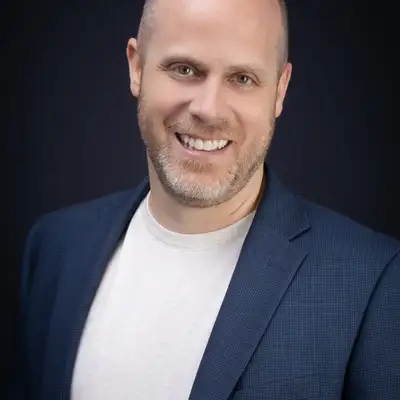
Welcome to Inside Marketing with MarketSurge — your front-row seat to the boldest business insights, marketing breakthroughs, and entrepreneurial real talk.
Hosted by Reed Hansen, Chief Growth Officer at MarketSurge and a digital marketing veteran who's helped scale everything from scrappy startups to Fortune 500 giants, this podcast dives deep into what’s really moving the needle in today’s marketing world. Find us at Marketsurge.io
Each week, we’ll break down the latest marketing and business news (minus the fluff), explore tech trends you actually need to know, and feature unfiltered conversations with the most interesting minds in entrepreneurship and marketing.
Whether you're a founder, a marketer, or just a curious hustler looking to level up, this is where growth happens—loudly, smartly, and with just the right amount of sass.
Subscribe, tune in, and let’s scale something legendary. 🚀
Speaker 2: Welcome to Inside
Marketing With Market Surge.
Your front row seat to the
boldest ideas and smartest
strategies in the marketing game.
Your host is Reed Hansen, chief
Growth Officer at Market Surge.
Reed Hansen, MarketSurge: Hello
and welcome back to Inside
Marketing with Market Surge.
Today on the show we're joined by Dan
Nika, who is the founder of Elite Brands
and the powerhouse behind the explosive
growth of Gear Bunch, an e-commerce brand.
He scaled from zero to over
5 million in its first year.
That's pretty remarkable.
Dan is widely recognized as a meta.
Certified lead trainer, a Klaviyo
partner, and one of the most
trusted strategic thinkers in
e-commerce, growth and retention.
Through elite brands, he helps
DTC companies build predictable
and scalable revenue systems
using data-driven marketing, full
funnel retention strategies and
customer experience frameworks.
Dan's work bridges the gap between
smart customer acquisition.
The overlooked world of retention,
helping brands to unlock the
profit that's already hiding inside
their existing customer base.
Dan, we are so excited to
have you on the podcast.
Welcome to the show.
Dan Nikas: Thank you for having me on.
Reed Hansen, MarketSurge: Yeah.
My pleasure.
Well, you know, Dan I know
you're, you're based in, you
know, a small town in Australia.
I'd love to hear your story,
how you got to where you are.
Take us back to the beginning.
How did Gear Bunch start and what were
some of the key milestones that helped you
get from zero to 5 million in one year?
Dan Nikas: How far back do you wanna go?
You wanna go back to the past
career and how I fell into
Reed Hansen, MarketSurge: Sure.
Yeah.
Let's do it.
let's call it the real beginning.
Dan Nikas: this is absolutely
the real beginning.
So I was, before I got into
online marketing, I was a homicide
detective for 17 years in Australia.
Reed Hansen, MarketSurge: Wow.
Dan Nikas: So, and the look on your face
is, and that's exactly the look I want,
and it's because for a couple of reasons.
The first is whenever I'm talking
to people, they think that I must
come from like this, Background
and marketing background, and
I'm like, no, absolutely not.
Like straight outta high school, I
went to a police academy in Australia.
I was 19 years old.
I did that till I was 36.
Unfortunately, it took its toll on me.
I ended up getting medically retired.
Reed Hansen, MarketSurge: Hmm.
Dan Nikas: It was a hard job.
Hard job to do for that long.
I came outta that and I'm
like, well, what am I gonna do?
I've got a wife and three kids
and everything that goes along
with that sort of life, mortgage,
all these sorts of things.
But I had no other qualifications
or so I thought, go to university,
didn't have a trade no other work
experience except for a couple of
casual jobs when I was in high school.
And not really what I
thought, a transferable skill.
You know, you can either be a
police officer or you're not.
End up connecting with a, a friend who
had gone through a similar journey and
he got involved in online marketing.
So this was about 12 years ago now, and I
said, well, can you show me what you do?
And as it turns out.
I actually found what he did was
really interesting found that
I had a bit of a knack for it.
So I started a fitness blog, which was
Reed Hansen, MarketSurge: Hmm.
Dan Nikas: staying healthy
as a father of three.
And then I started selling t-shirts
through a platform called Teespring,
which I think now is just called Spring.
It was the first print on demand
platform, like mainstream print on
Reed Hansen, MarketSurge: Hmm.
Dan Nikas: platform.
And found that I could sell t-shirts like
hundreds and thousands of t-shirts a day.
It was ridiculous.
this was all driven by teaching
myself how to do matter advertising,
which back then was Facebook.
Very different structure to now.
Did a couple of courses,
learned it, thought I was doing
what everyone else was doing.
End up getting invited to speak at
some events about how I was doing it.
And to my surprise, I.
Was not doing what
everyone else was doing.
Reed Hansen, MarketSurge: Hmm.
Dan Nikas: at it from a
different point of view.
People looking at it from
a marketing point of view.
I was looking at it from an
investigator point of view.
I was trying to find people who fit
the product, is in turn marketing.
But I just approached it
from a different perspective.
In 2016.
So I did that for a couple of years and it
was good, but it wasn't my own business.
It was basically building
someone else's business.
it paid the bills and it was a good couple
of years got approached by a company.
To offer a new product, which was not
t-shirts or hoodies like I was selling.
It was leggings.
I said, yeah, I'll give it a go.
And I sort of toyed with the
idea of starting my own brand.
So I launched a brand called
Gear Bunch at the end of
Reed Hansen, MarketSurge: Okay.
Dan Nikas: and I launched
at the worst possible time.
It would be, in about a week's time.
I think it's like the
10th or 11th of December.
is Gear Bunches.
Ninth birthday.
Worst possible time.
There's, they couldn't fulfill the
orders and deliver 'em by Christmas.
Black Friday had just finished.
I had a go at it anyhow,
and it just took off.
January was really rapid growth
to the point that you know, when
I say rapid growth, it went from
nothing to selling thousands of
dollars worth of per day and then.
It just snowballed.
Reed Hansen, MarketSurge: Hmm.
Dan Nikas: So it went from meta marketing
to Facebook advertising to having to
learn what email marketing was, to having
to get someone to help me do Google
ads, to having to do customer support,
to refunds and chargebacks and PayPal,
and all these little bits and pieces
that make up a really successful store.
So in the first year, big crash
course on how to run our business.
Never had that before.
Never loaned a business before, but went
from to 5 million in that first year.
It just trended.
It just hit the right spot with people.
We were servicing a segment of
the market that just wasn't being
serviced very well at the time.
You could walk into any store or go
in any online store and buy a pair
of black leggings or plain leggings,
and we went the opposite route.
We went and designed products
that fitted people's passions
Reed Hansen, MarketSurge: Hmm.
Dan Nikas: You know, what
their personality was about.
And they'll brighten they're
out there and most people
would look at 'em and go, yuck.
But that 1% of 1% of women out
there that it really resonated
with, they bought them like crazy
Reed Hansen, MarketSurge: Interesting.
Dan Nikas: we weren't competing
with the Lululemons or the big,
know, active wear providers.
At the time.
We were competing in a big open blue sea
Reed Hansen, MarketSurge: Yeah.
Dan Nikas: worked out so well.
Reed Hansen, MarketSurge: Interesting.
Dan Nikas: that's how I
started into Gear Bunch.
Reed Hansen, MarketSurge: So I, I wanna go
back to something you mentioned earlier.
You mentioned that you weren't searching
for let's see, and maybe I'm, I'm getting
the phrasing right, but you were using
your investigative background to search
for people, and you tell me how that,
like, how that actually, like where
does the rubber meet the road on that?
Like what, you know, I, I, you
know, I have this image in my
head of like, you know, the.
The dogged investigator that's you
know, like knocking doors into like
Dan Nikas: I joke about it.
You know, I spent a career and
developed a skillset was to found
people that didn't wanna be found
Reed Hansen, MarketSurge: mm-hmm.
Dan Nikas: to find people
that didn't wanna be
Reed Hansen, MarketSurge: Mm-hmm.
Dan Nikas: only incentive when I
found them was to, it was probably
pretty much gonna jail, gonna prison.
Reed Hansen, MarketSurge: Mm-hmm.
Right.
Dan Nikas: And all of a sudden
I'm thrown into and those people
would hide who they were from me.
Like obviously they don't
want to go to prison.
Reed Hansen, MarketSurge: Right.
Dan Nikas: They're not
gonna say, I am over here.
I'm gonna leave a trial evidence for you.
I'm gonna tell you everything about
me, where I am, what I'm doing.
So, you know, you develop a
skill set to find these people.
that's what I was good at.
And the other thing I was really
good at is getting people to do
what I wanted them to do, but
make them think it was their idea.
Reed Hansen, MarketSurge: Ah.
Dan Nikas: So that were my two skill sets.
I'm not a big intimidating guy.
I'm like five 10, like 180 pounds.
Like I'm not this giant who walks
into a room with a presence and people
just go, Ugh, I gotta talk to you.
Reed Hansen, MarketSurge: Mm-hmm.
Dan Nikas: It, I had to be conversational.
I had to be intelligent.
I had to follow the trial.
All of a sudden, I'm
thrust into this world of.
At that time, Facebook, where people
were telling me what they had for dinner,
what their favorite restaurant was, what
shows they liked, how many kids they had,
whether they were married, how old they
were, like everything, what their dog's
name was, what type of dog they like,
whether they hated cats, whether they
had been on holidays to this location.
So they were telling me everything
about themselves and I figured
out on the back end of what used
to be called audience insights.
Reed Hansen, MarketSurge: Hmm.
Dan Nikas: So I could find people
in the backend that it wasn't just
like, okay, well I've got a pair
of leggings with a dog design on
Reed Hansen, MarketSurge: Okay.
Dan Nikas: I didn't just go into
Facebook like most people were doing
at that time and just putting female.
18 to 60 interested in dogs,
go out and find these people.
There's millions of them,
especially in the US where
Reed Hansen, MarketSurge: Yeah.
Dan Nikas: marketing.
You got 220 million people
on the platform there.
And I'm like, well, I don't have the
money for the algorithm to go through
and find outta these millions of people
Reed Hansen, MarketSurge: Right.
Dan Nikas: who potentially
could be a customer.
So instead, I found through audience
insights, ways to target them.
That was much more granular.
what I was doing is, instead of what
most marketers were doing at the
time is they would design a pair
of dog leggings and then they would
try and go out and find people who
might be interested in buying them.
would go out and I would say really
granular how many people or how
many women like German Shepherds.
So I would then go into audience insights
and I'd find all these little communities
and all these little sub interests.
I would find tens of thousands of people,
women that were into German Shepherds
that were like obsessed with their
German Shepherd or their schnauzer, or
their doxy or whatever the dog might be.
Reed Hansen, MarketSurge: Hmm.
Dan Nikas: I'd then look and I'd say,
well, no one else has a product like this.
Reed Hansen, MarketSurge: Right.
Dan Nikas: go and get it designed,
and then I would go and put
that in front of those people
because I'd already found them.
Reed Hansen, MarketSurge: Ah, okay.
Dan Nikas: So I was doing the opposite.
I wasn't trying to convince
them that they needed or wanted.
This pair of leggings, knew what
their passion was already, and I
would go and create a product then
I'd go and put it in front of them.
way that I was doing it is I was
going and finding other really high
converting products in that niche.
Reed Hansen, MarketSurge: Mm-hmm.
Dan Nikas: It would be a saying
or it would be, you know, a
particular style that wasn't on my
products, it was on something else.
It might've been a mug.
And I would go and.
incorporate that into my products
and put it in front of 'em.
So, proof of concept.
I had this highly super passionate
audience 'cause they're already
telling me what they like, and I
would go and put that in front of
them and that would sell like crazy.
And I did that over and over and over
and over again in different niches.
I would find these hyper passionate
people and that's the way that I sold.
Reed Hansen, MarketSurge: Yeah.
Dan Nikas: So I was not
competing against normal people.
Reed Hansen, MarketSurge: Yeah.
Dan Nikas: marketers, I thought I was
until people started asking me what I
was doing, and that's when the revelation
was, is that actually what I'm doing is
a transferable skill from my past career.
Reed Hansen, MarketSurge: Yeah.
Dan Nikas: actually not approaching
it from marketing perspective.
And I like to tell that story
because when I tell people and they
think I get up on stage for meta
Reed Hansen, MarketSurge: Hm.
Dan Nikas: for Klaviyo or at another
conference and they go, oh, this
guy's like he's would've gone and
done a marketing degree, or he is
working in sales, or he is in it.
I'm no way.
So I tell 'em, I say, Hey, if Dan
can do it, if you think this is
too hard, say this to yourself.
If Dan can do it, so can I.
Because I didn't have all the
resources that are around now.
I taught myself how to do it and.
It's not that hard.
It's just about,
figuring out a system, to your
processes and letting the data tell
you where potential customers are.
Reed Hansen, MarketSurge: Yeah.
That's brilliant, Dan.
You know, and I think it illustrates
like, you know unfortunately I have
an MBA and sometimes I wish that I had
done more of the school of hard knocks
or, you know, something else to kind
of color my experience because I hear
stories of people like you that have these
transferable skills and I feel like I've.
You know, I tend to operate within the
lines and you know, Dan, and I think
that's a tremendous illustration of like
this business principle of, you know, find
an audience and then build something that
fills a need for them rather than build
a product and find an audience for it.
So I think that's, brilliant and I
can see how that's really applicable.
Now I wanna pivot a little bit and
talk about the other big emphasis
and area of interest retention.
So, you know, I think this might
be adjacent to what you're talking
about, but how are you, yeah.
Okay.
Dan Nikas: line with what I'm
Reed Hansen, MarketSurge: Okay.
Well, tell me, how you emphasize
that in your marketing.
Dan Nikas: so this was the big,
these is where the big wins came from
Reed Hansen, MarketSurge: Okay.
Dan Nikas: I learned fairly early on.
Just we are real creatures
of habits, humans.
Reed Hansen, MarketSurge: Yeah.
Dan Nikas: I'm drinking my coffee here.
Where is it?
There?
to the same coffee shop every day.
Reed Hansen, MarketSurge: Hmm.
Dan Nikas: about seven coffee shops.
I get the same coffee every
day because I walk in.
They see me walking in, they start
making my coffee before I've even said
hello, and by the time I've paid, or
sometimes before I've even paid my
coffee's on the counter ready to go.
Reed Hansen, MarketSurge: Yeah.
Dan Nikas: We all have
these things that we love.
We like simplicity, we like less friction.
I've got trust that
they make a good coffee.
So what I did was I was like, alright.
I don't wanna have to keep
finding new customers every time.
Reed Hansen, MarketSurge: Yeah.
Dan Nikas: So how can I get the
same people to buy off me again?
Because I did develop, another
skill that I had developed was the
Rule of seven was the marketing
Reed Hansen, MarketSurge: Hmm.
Dan Nikas: is what it was called.
Reed Hansen, MarketSurge: Yeah.
Dan Nikas: So for those that weren't
familiar with the rule of seven,
the rule of seven came about in,
I think it was Hollywood in the.
Thirties, maybe when cinema became
a thing, figured out that they had
to have seven touch points with
a potential customer for them to
come and pay money to go to the
movie theater, and watch a movie.
That Rule of Seven then stuck around,
I might have the decade wrong, but that
rule of seven stuck around in marketing.
For quite a long time, it was adopted
and it was proven in many, many different
markets that it takes seven touch points
with people for them to gain our trust.
So that could be, you know, word of
mouth, a billboard, a letterbox, drop,
an ad on tv, a newspaper, article,
radio, door to door salesman, whatever
it might've been back in that time.
Seven touch points was enough for
people to get their wallet out, to
buy something from you, to trust you
enough to buy something from you.
That was something that we did
as detectives to get people to
trust us, to talk to them as we'd
create touchpoints with them.
I won't go into the whole psychology of
that from an investigator point of view,
but it worked and it worked on people
who didn't really want to talk to me,
Reed Hansen, MarketSurge: Hmm.
Dan Nikas: so, and it worked
exceptionally well in marketing.
That rule changed over the years as
social media's come in and it's up
around 20 to 21 touch points, and
I'm like far out if I've gotta have.
20 to 21 touch points because of
the amount of content that's out
there now with a potential client.
Like that's expensive.
Reed Hansen, MarketSurge: Yeah.
Dan Nikas: what I did is I kept, I
would go back to them and I would say,
I'm glad you love this.
This is what else I've
got that you might like.
And it was another design that's
say for the German Shepherd people,
it's another design for them.
In fact, one of my biggest markets,
ironically, was to Irish Americans.
Reed Hansen, MarketSurge: Hmm.
Dan Nikas: So I would create.
multiple products around
Irish American heritage.
And every time I'd create
something, people would love it.
where most of my wind happened, where
people are constantly trying to compete
with me, and more people came out with
these concepts was in advertising.
So that's the tip of the iceberg.
They could see.
So they thought, oh, Dan's advertising.
I'll go and advertise the same
and I'll have the same products
and we'll be able to compete.
My secret was retention marketing,
Reed Hansen, MarketSurge: Hmm.
Dan Nikas: was email, Google Organics.
I would have a repeat
customer rate of 60%.
I still do to this day,
Reed Hansen, MarketSurge: Wow.
Dan Nikas: and my average
order value was $150.
So it was one and a half pair of
leggings is what people were buying.
And then my lifetime value sat at $370.
those people that spent the
$150 would come back 2.1
times.
So I knew the value of
retention marketing because.
Being risk adverse.
I didn't wanna just keep
spending to acquire new
Reed Hansen, MarketSurge: Right.
Dan Nikas: having to come up with new
ways to find people, having to spend more
money to get new, more new customers.
I wanted new customers, don't get me
wrong, but also knew that once I had
them, how much they were worth to me.
Whereas the competitors were going out
and they were spending X amount to try and
acquire someone, but they had no retention
marketing, so they had no upsells.
They had no cross sells.
They had no.
Reed Hansen, MarketSurge: Hm.
Dan Nikas: Mechanism to get them
to become a repeat purchaser.
So they had a threshold of how much they
could spend to acquire a new customer.
I knew front end I could run
at a loss acquiring a new
customer if I really wanted to.
So I could outspend them in those ads
because I knew on the back end I would get
Reed Hansen, MarketSurge: Mm-hmm.
Dan Nikas: wouldn't
Reed Hansen, MarketSurge:
You'd get the repeat.
All right.
Dan Nikas: Yeah, get the repeat,
and that's where that competitive
edge was for me, that's where
other businesses came and went.
And it's a lot more common knowledge now
in terms of, you know, best practices.
But back in 20 16, 20
17, 20 18, it was not as.
Prevalent that, hey, you
need to have email marketing.
Email marketing was, Hey,
you left this in the cart.
Come back and get it.
Reed Hansen, MarketSurge: Right,
Dan Nikas: it for you.
Like,
Reed Hansen, MarketSurge: right.
Dan Nikas: was, that was it.
And a 10% popup on your
website to get people there.
But, you know, I developed these
sophisticated retention systems and
educated people and showed 'em new
products and showed 'em complimentary
products and offered them VIP discounts
to come back and things along those lines.
So I really looked after
those existing customers.
Because I didn't have to pay
for them again, I didn't have
to build trust with 'em again.
I had a good product.
good support.
It was made in the US a like I had all,
I ticked all the boxes for people to go.
This brand says what they
say they do and they're good.
So provided you've got a good product,
you can get repeat customers and
that's what retention marketing to me.
Reed Hansen, MarketSurge:
That's fantastic.
I mean, you have covered a lot of
ground in just a short amount of time.
I think there's gonna be a
lot of great takeaways here.
Maybe let's talk a little bit about
data, a little bit about, how you look at
analytics I know you've worked with brands
of all sizes and your own brands as well.
How do you coach brands to approach
data and testing and iteration?
how do you at a high level teach
them how to utilize those tools?
Dan Nikas: Yeah, so
fundamentally it's unit economics,
Reed Hansen, MarketSurge: Mm-hmm.
Dan Nikas: and that's a fancy way
of saying know your numbers, the
amount of brands that are doing well.
That come to us and we do an order
to their account, and I'm like,
what's your cost of goods?
Reed Hansen, MarketSurge: Mm-hmm.
Dan Nikas: What's your fixed costs?
What's your shipping cost?
What's your conversion rate?
What is your repeat customer rate?
What is the lifetime
value of the customers?
And they don't know any of it.
They might know bits and pieces of it,
but they don't know the complete picture.
Reed Hansen, MarketSurge: Hmm.
Dan Nikas: So then they say that,
they'll say to us, Hey Dan, can
you take this thousand dollars
and turn it into $3,000 for me?
Because that's my breakeven point.
I'm like, how do you know
that's your breakeven point?
Reed Hansen, MarketSurge: Right.
Dan Nikas: like, well, we just know.
And I'm like, okay, let's not just know.
We created a customer portal where the
customer inputs all of this, and we
then have a calculation, which is unit
economics, and it's like you actually
don't need three time return on ad spend.
Reed Hansen, MarketSurge: Mm-hmm.
Dan Nikas: 1000 into 3000,
what you actually need is 2.2
is your breakeven.
Once we establish all of these
baselines, they're like, really?
yeah.
So if we are getting three,
you're not breaking even.
We can scale and they're like, and that's,
it's a big aha moment for a lot of 'em.
'cause a lot of people have started their
business based on a passion they have.
There's a lot of people that are running
businesses based on filling a gap in
the market based on a passion that they
have that they couldn't find elsewhere.
So they've gone out and,
and started it themselves.
So they're coming at it from a
passion perspective, not from
a data driven perspective.
So we come in and we
really nail down the data.
And then we try and say, right, well, if
we can improve your conversion rate by
this percentage and your repeat customer
rate by this percentage, not spend
Reed Hansen, MarketSurge: Mm-hmm.
Dan Nikas: try and move some
of these other metrics for you.
Let's try and get your average
order value up by 10% and we'll see
how that moves the needle for you.
And they're like, this is amazing.
Like we just thought we had to keep
spending, spending, spending to make more.
And it's not the case.
And then we talk to 'em about retention,
about why we want repeat customers and
how we can remarket to them for free
Reed Hansen, MarketSurge: Yeah.
Right.
Dan Nikas: other mechanisms.
So the data, it's knowing your data.
If you don't know your data, it's gonna
be very, very hard for you to scale.
Knowing your data, I think is, or
not knowing your data is one of the
biggest stressors as well in business.
In any business, if you're not sure.
How much things cost or what you
need to do to actually be making
profit or draw a wage out of it.
it's very stressful because you've
got these, you know, being in
business, we all have these peaks
Reed Hansen, MarketSurge: Right.
Dan Nikas: like, oh my God,
this business is amazing.
Reed Hansen, MarketSurge: Right.
Dan Nikas: Oh my God, it's amazing.
Oh my God, I'm gonna go get a job
because I can't handle this anymore.
We're gonna scale to the moon, and
that's the reality of business.
Reed Hansen, MarketSurge: Yeah.
Dan Nikas: And so what we're trying
to do is create this consistency
like this, and we're talking
about it in a sports analogy.
The best sporting teams, the ones
that perform consistently well
over long periods of time, the
difference between their best game
and their worst game is very small.
Reed Hansen, MarketSurge: Mm-hmm.
Yeah.
Dan Nikas: That's what we
want with your business.
That's what we mean by consistency.
I want your best And your worst month,
the difference between them is not
this variation or this variable that's
gonna cause you this amount of stress.
I want you to know that, that we've
got a consistency and hey, yeah,
we've taken a little bit of a dip
here, but on average we're gonna
sit somewhere in that middle there.
Reed Hansen, MarketSurge: Yeah.
Dan Nikas: go and buy a Ferrari
based on the fact of our best month.
Reed Hansen, MarketSurge: Right.
Dan Nikas: And let's not sell the
house based on our worst month.
Let's just look at what the data's
telling us, where that consistency is.
Where are we gonna forecast that
we're going to be based on that?
Data takes a lot of stress away
Reed Hansen, MarketSurge: Yeah.
Dan Nikas: the data always ends
up leading the way for you anyhow.
Reed Hansen, MarketSurge: Yeah.
No.
Excellent.
well, Dan, this has been tremendous.
I'm sure people after hearing this are
going to wanna work with you at Elite
Brands or learn more about your story.
Where can people find you,
connect with you, work with you?
Where are the best places to find Dan?
Dan Nikas: No, no pitch.
if you want to hear more about
us or what we do, if you go to
our website, elite brands.org,
so E-L-I-T-E-B-R-A-N-D s.org.
You'll see about us,
what we do, who we are.
There's a team of 14 of us you know,
that work with the brand and, and
fundamentally what Elite Brands was,
is when I was scaling Gear Bunch.
I went through seven agencies
Reed Hansen, MarketSurge: Hmm.
Dan Nikas: I actually didn't like
agencies, but got asked enough times
to help other brands that eventually
I'd built in-house for Gear Bunch,
the agency model that I wanted.
Where if I emailed them, they'd reply
if I needed to get hold of them, I could
through a daily communication channel.
we say what we're gonna do,
and you know what we do works,
we've got a system to it.
a lot of the agencies
were a bit of a mess.
And I got really frustrated and
that's why I started Elite Brandand.
you can see our story on elite brands.org.
If you want to with me and have a
chat, you can, there's a button there.
To contact me on the website.
There's also all our socials there.
we update the socials every one to two
days with some sort of bit of information.
That's gonna be helpful to you
across, whether it's meta ads,
email marketing through Klaviyo,
Google Ads, or even a bit of CRO.
but yeah, nothing to sell.
If you want to connect with me,
I'm always happy to have a chat.
As you can tell, I talk a lot.
So,
Reed Hansen, MarketSurge: What's the
best kind of podcast, guess is one
that talks a lot and is interesting.
So you're done a fantastic job.
Dan Nikas: tick, tick on the talks a lot,
Reed Hansen, MarketSurge: Yeah.
Dan Nikas: other people
find it interesting or not.
I guess it depends on your listeners.
Reed Hansen, MarketSurge: Man.
Yeah.
I mean, I know it's not the forum, but
I would love to hear sometime about
maybe homicide detective stories.
that sounds like a pretty
interesting world too.
So.
Dan Nikas: it is an interesting world.
And ironically from a marketing
perspective, people remember you when
you tell them that's what you used to do.
Even if they forget your name, they're
like, are that guy from Australia
who used to be a homicide detective.
I'm like, yes, I am.
So there might be a little
bit of method to my madness
about bringing that up as well.
Reed Hansen, MarketSurge: Well, Dan,
thanks so much for joining today.
This was you know, super
informative and, and really
entertaining, so thanks so much.
Dan Nikas: no problems.
Thank you for having me on.
I really appreciate you taking your time.
Speaker: Want to stay ahead of what's
actually working in marketing right now.
Head over to Market surge.io
and see how we're helping businesses
grow smarter, faster, and louder.
That's market surge.io
because your next breakthrough
shouldn't be a guess.