Subscribe
Share
Share
Embed
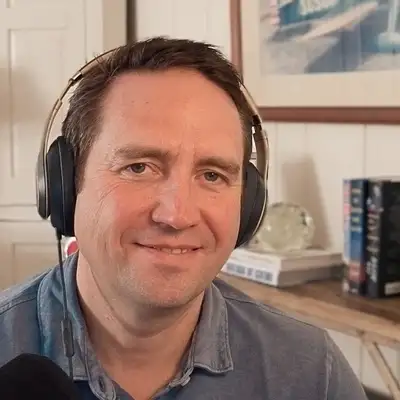
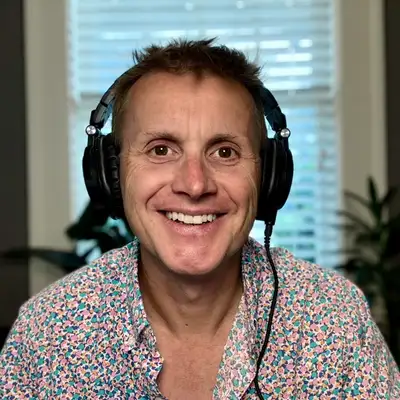
Space Insiders is your bi-weekly deep dive into the intersection of space, cloud technologies, and entrepreneurship. Hosted by Tony Sewell and Rob Ruyak, both seasoned space-tech executives, this podcast features candid conversations with founders, investors, and entrepreneurs shaping the future beyond Earth. Whether you're launching a startup, investing in innovation, or just space-curious, Space Insiders gives you the behind-the-scenes insights you won’t hear anywhere else.
New episodes drop every two weeks. Subscribe now and join the orbit!
Disclaimer: The views and opinions expressed in this podcast are those of the hosts and guests and do not necessarily reflect the official policy or position of any organization or employer.
Alright. Welcome back to Space Insiders. This is our summer series. I'm Tony Sewell, and as usual, here with my mate, Rob Reyak. How How you going, Rob?
Rob Ruyak:Great. How are you, everybody? How are you doing? So great to be back.
Tony Sewell:Hope everyone's enjoying the summer. When you're listening to this, I'm gonna be in an RV somewhere in the the northern reaches of North Queensland in Australia, so I'm looking forward to that. What are you what are you up to for the holidays, Rob?
Rob Ruyak:That sounds about right, Tony. You're gonna be hanging out, I'm gonna be at the office probably. Oh, no. No. I got some good good plans for for the summer.
Rob Ruyak:Looking forward to going away with a family, just us getting away from some things and relaxing. Yeah, I'm looking forward to vacation too this summer. Going to be Nice. A good
Tony Sewell:Yeah, that's good. Well, we've got another really interesting episode today. This one's going to be a little bit different to others that we've had. So we're going to be meeting with Rich Julian, who Rob and I both know, has a really extensive background in investment, investing in startups and helping to accelerate startups. You want to tell us a little bit about it,
Rob Ruyak:Yeah, Rich is a really fun person. When I first started eight years ago in my current company, Rich was a great mentor for me. A lot of the reasons were because he's had a deep background in defense and national security, actually working in those programs, having all the right clearances, and really being able to understand how to not only operate in those types of environments, but really understanding how influence works, especially when it comes to large mission programs in defense and national security. At the time, also, he's had this passion for a very long time working to support startups.
Tony Sewell:And
Rob Ruyak:so his background in defense national security, having worked a lot with startups and cloud computing specifically, he's very technical as well. He's got a very unique set of skills in his toolbox that I think Tony and I, we really wanted to dig into and see how he could provide some insight for those listening, you know, who are actually, you know, interested in doing something similar and working, you know, within technology at the intersection of defense and national security. So he's, you know, recently, in the last several years, been working on the investor side, which I think has been rounding out his skill set. So it's going to be really fun to get to learn from him.
Tony Sewell:Yeah, I'm really looking forward to touching on some subjects around sort of like how, what the good and the bad that he's seen working with entrepreneurs and founders and just diving a little bit deeper into the process of how entrepreneurs can really get their businesses going. I know every time I got the opportunity, Rich and I overlapped at AWS for a couple of years, I know every time I got to interact with them, I always learn a lot. It's a fascinating space. This should be a really good interview.
Rob Ruyak:It's definitely going to be one that people want to listen to. Excited to get started.
Tony Sewell:Alright. Let's check it out. Alright. Welcome back. And, great to see you, Rich.
Tony Sewell:Thanks for joining the show.
Rich Julien:Thanks for having me.
Rob Ruyak:Hey Rich, great to see you. It's been a while.
Rich Julien:As is always the case.
Tony Sewell:Rich, I guess just to set the scene and for people to learn a little bit about you. So we worked together at AWS, but you've got over thirty years in the startup and investment and acceleration business. So can you tell us a little bit about your journey and what led you to Boca Capital?
Rich Julien:I mean, it's pure serendipity and luck, right, as most things are. I joined the military right out of college. I enlisted so I could go to language school. And when I got to my first assignment, because I could spell computer, I became a computer expert, and I got assigned to a DARPA program, literally my first role in my new position, and spent the next ten years in the military always working in DARPA and technology innovation programs versus an enlisted guy, and then I got a commission and once again got sucked into DARPA programs. So I worked on advanced technology and innovation programs, and then when I decided to get out of the military, I actually got recruited by someone who had been working with me on a program, ended up going into the U.
Rich Julien:S. Intelligence community for the next twenty odd years. And I say twenty odd years because I left twice to start companies, once quite successfully and once in 2008 that happened like most things in 02/2008, went on and died a spectacular death. Went back into the government after that, as is typical, you get sucked back into the intelligence community or defense community, and then left that and joined AWS where I helped stand up AWS's national security startup practice. Ran that for almost eight years and then left to start VOCA.
Rich Julien:So I mean, it was really just a collection of lucky breaks and serendipitous encounters that brought me to all of those roles, but they all provided me a deep background in that. So I've worked at companies, large companies, small companies, massive companies, you know, 2,000,000 people, AWS or Amazon, so I have this kind of breadth. And so we decided to go off and start the company. We actually did it with couple of folks who had met us while they were doing diligence on a company I had going through an AWS accelerator.
Tony Sewell:Very interesting.
Rich Julien:So this, again, the connection just kind of happened with that, and we decided to go forth and start this firm.
Tony Sewell:It's a very strong European connection with your company too.
Rich Julien:Well, we built the firm very specifically. Our thesis is based around AUKUS, so national security for The US, UK and Australia. So about a third of the company is in The UK, about a little over half the company is in The US, and then we have a partner in Sydney who our operations there. We're still small, but we are very much focused on the national security for the three countries because we're so tightly tied. Militarily, we're tied.
Rich Julien:In the intelligence community, we've been tied for over fifty years, deeply into it, but also our banking and finance and investment systems are all interconnected. So we bleed together, so we might as well invest together.
Tony Sewell:Awesome. I'd really like to come back to the August discussion. I didn't realize there was that AUKUS discussion because, obviously, as an Aussie, there's a lot of there's a lot of discussion going on in Australia at the moment about AUKUS and the future future of Australia's defense. But, anyway, Rob, I I stepped on you then.
Rob Ruyak:No. That's okay. Actually, I kind of feel like, you know, maybe we should talk about that, you know, and and now because so, Richa, you know, one of the things that we are really having a fun time doing with this podcast is talk about not just, startups per se, but kind of, you know, what are the trends currently globally, especially with The US rebalancing on defense, globally. You know, how does that impact, not only the investment in defense in The US, but what does that mean for other countries? And even more specifically, as it relates to what Tony and I are trying to do here and what you focus all your time on is how do you invest in and support startups given those kind of potential new trends or changes.
Rob Ruyak:So, you know, on this topic, actually, it's pretty interesting. Let's let's talk about August a little bit. And I think in general, I think European investment as, you know, they're they're putting together their rearm strategy and looking to invest in a whole bunch of new, defense tech and just, defense industrial based type companies and commercial companies related to them. You know, how how do you look at that now from your investor lens? And then maybe even stepping back from your current role, kind of where do you see things potentially going as it relates to innovation and the rebalancing of this area?
Rich Julien:Clearly, I mean, the defense market and then the national security so we define national security much more broadly, right? So it's everything that supports the national security of the country. Obviously, defense is a major player in that, but it's also supply chain, energy resilience, epidemiological challenges, right? I think COVID taught us that, right? So anything that you have to pay attention to, obviously those are absolutely key for Europe, which has very little in region energy, right, they're importing it all.
Rich Julien:So supply chain and energy resilience is huge. Look what happened to them after the drop of Russian oil and natural gas. So we do see a huge growth in that. We spent a lot of time when I was at AWS really focused on Europe and growth of the NATO Innovation Fund and NATO Diana, but as an investor, to me, The US and The UK have such closely tied investment communities, both LPs who invest in VCs and also VCs who invest. Our banking systems are very closely intertwined.
Rich Julien:The U. S. Has been the traditional market where U. K. And Australian money flows to if it's flowing out of country.
Rich Julien:And, you know, we do have President Trump. He doesn't like translators and we all speak English mostly, right? So there is a natural affinity for that, but, you know, Europe is a huge growth potential there. There are so many great startup incubation systems. Finland and Sweden, two huge examples of that.
Rich Julien:But Germany is really trying to push and grow in that area. The Czechs do phenomenal startups, too. Much smaller market sizes. But in the end, when you look at defense, so many of them have to see the expansion market is The US because while Europe is trying to operate as a whole, it still has a sovereign mindset, right? French want to invest in French companies.
Rich Julien:German want to invest in Germany. So let outside money come, but it's much more difficult. They don't have kind of the open flow. And with the the changes to the importexport and to the things like ITAR that the U. S.
Rich Julien:Government put in place for August, it really opened up the aperture wider for a broader investment between The U. S, U. K. And Australia. So while I see Europe as interesting, it has a lot of challenges with the sovereign, and to be blunt, the EU and GDPR are challenging.
Tony Sewell:Yeah. Of the You mentioned that one of the key aims of AUKUS was to promote exchange both ways between The US and Australia, UK and back the other way. And I think one of the concerns, just thinking about the space industry in Australia, have still felt like it's still a bit one way. How do you see this evolving going forward? I know it's been challenging the last couple of years with Australian government policy around the government investment in space capability, and it seems like a lot of these major programmes are still getting awarded to the big US companies that have a big investment and big presence in Australia.
Tony Sewell:But how do you see AUKUS helping to provide opportunity startups in space technologies in Australia or The UK in The US?
Rich Julien:So I think the most important one was the changes to the import export controls and some of the other restrictions. It will allow Australian companies or UK companies to do business with the US defense and government, the US government writ large, but mostly focused on US defense, and sell into that by remaining as an Australian company or a UK company. In the previous and for many other countries around the world, you have to establish a US entity. That US entity has to do all the work with the Defense Department. The challenge for smaller markets like Australia and even like The UK is that The US market being so much larger very quickly becomes base of the company and the company shifts and becomes a U.
Rich Julien:S. Company. And that's what they're trying to avoid. So they establish this ability for the companies to do business but still remain a sovereign capability and do production there. I think the other thing that's important to note, while AUKUS pillar one was about the submarines and pillar two was about technology, including very specifically space, the reality is the submarine capabilities were not ready to go into Australia until they completely rebuilt the industrial base that can support military bases.
Rich Julien:That same industrial base that can support military manufacturing is the exact same kind of technologies and capabilities the space industry needs if you're going to build rockets and satellite buses. Software, obviously, is a different animal, but if you need that, you need that same precision manufacturing capability. You need that same support capacity. You need that ability to do refining of materials on-site. That capability Australia will be building up to establish and support the bases.
Rich Julien:Once it's there, now suddenly it can be used for other markets and industries. I think there'll be a direct knock on to the space industry that will benefit from that. It may not be, you know, in the very near future, but over time, you're going to see a huge benefit to specialized industrial production, which is outside The US is relatively minimal.
Tony Sewell:That's a really good point.
Rob Ruyak:Yeah. We didn't really didn't really clarify what AUKUS is. So can can we actually know, obviously, I hear about it all the time, but just for the listeners, you know, is an international treaty, like, what what exactly is it? I thought I thought it was, but I just, you know, what is an
Rich Julien:international treaty by by President Biden and the two prime ministers ratified by Congress, and they put some special changes into import export laws and other stuff with that. It very specifically calls out national security defense in particular for The US, UK and Australia, hence AUKUS. It is an extension of the intelligence community called Five Eyes that we've had for many years, which specifically allowed a lot of coordination, collaboration and co design development and deployment in the intelligence community but not so much in the defense community. We've had a defense relationship with Canada, thanks to NORAD, for sixty some years now. And this really just kind of extends that bubble to include the Aussies and The UK.
Rich Julien:New Zealand's not called out in it, but New Zealand is much more minimally participating in the defense side of it. They do share a lot still in the national security.
Rob Ruyak:Got it. No. Thanks for that, Rich. So who governs it? I mean, who like, how does that how does that work actually?
Rob Ruyak:Like is there anyone governing this? I mean, you have these collaborations, how do you incentivize a collaboration between them and like how does that work?
Rich Julien:There's a myriad of ways of incentivizing it. There's the financial by being able to do after defense and national security contracts between the countries, as well as commercial potential for those because, look, all three of our countries have a very specific mindset of dual use technologies. They want capabilities that can support national security but also have commercial viability. So because of that, anything that we do in this realm will have a knock on effect commercially and vice versa. Commercial development will have a knock on in the national security community.
Rich Julien:We are the closest of allies. If a U. S. Soldier has deployed into a combat zone in the last fifty years, they've probably done it with a Briton and Aussie alongside them. So it's just kind of recognizing those deep ties that we have and saying, look, in the changing world threat environment, we will continue to be the closest of allies.
Rich Julien:This is you know, we all see ourselves as coordinated. The U. S. And The U. K, I mean, despite the fact that we separated from them, we've had a long and established relationship.
Rich Julien:And in the Indo Pacific, we have no better ally than the Aussies, but the Japanese are great partners, but Australia has been our closest ally since prior to World War.
Rob Ruyak:Yeah, so if I'm a startup founder and know, I'm building and and trying to sell something, a capability that applies to that could apply across the board to Australia, UK, New Zealand, and the US government around some defense application, whatever that might be, then that's actually this is actually a really good thing to think about. Right? And and maybe it's more than just The US as a customer, but there are some international allies that, you know, could also use my capability if I were to kinda think through, you know, kind of a sales and account plan for my business. Is that true?
Rich Julien:It makes it easier to open up those next markets, right? If you're looking at The U. S. As a growth market, you're looking at The UK and The UK and Australia have the space bridge, right? So they've already agreed to share space technologies between the two countries.
Rich Julien:The U. S. In pillar two of AUKUS is getting involved in that as well. And so it allows you to open that market more easily. Still not easy, right?
Rich Julien:But it allows you to more easily enter that market because it reduces some of the barriers to entry.
Tony Sewell:Yeah, cool. Well maybe let's perhaps zoom in a little bit and have a little bit of talk about the types of companies you work with and the journey of founders. So just to set the table, what sort of startups does Boker like to back? To you, like what makes these businesses or founders stand out as you're thinking about where you're going to invest?
Rich Julien:Yeah, sure. So we're a growth stage investor, and we target growth stage specifically because we saw a lot of really solid early stage investors in the national security market, but not a lot in this middle stage. And then when you get to the later stage, there are only a few handfuls of people who write, you know, $203,100,000,000 dollar checks, right, but we were targeting that kind of mid market area. Rather than saying round because, you know, I know a company that raised a $600,000,000 seed round, we're we're really targeting those checks between 10 and a $100,000,000, right? So the first real size checks that people go after.
Rich Julien:So typically, a company's second or third fundraising, depending if they did friends and families or whatever they've done, but this is the first time a company is usually going out for, I'll call it real money, right, First time they're going out for a big chunk of change there. So we're looking for companies that already have an established product and at least their first set of customers and going into it. And established product doesn't mean a full featured commercially shrink wrapped product, but it means you're past the proof of concept stage, right? You've got a product that can be brought into the market, and the reason we target that is I can't take something to a national security customer that can't be assessed, evaluated, right? So you have to be at least the stage where you can hand over.
Rich Julien:Do you
Rob Ruyak:think that's changing at all though, Rich?
Rich Julien:It depends. If you're in the software world, the pace of change goes so much faster, right? I can go from design to fully featured product in a couple of months. We kind of target that nexus between hardware and software, everything in the autonomy world, place things that require kind of that interface point, because that's what the national security community is really looking for, so that means that it takes a little bit longer to go through that. There's more things you have to verify and validate, and from a development perspective and getting in your pipeline for delivery, you now have to hit stages where, hey, I have to go build a bigger production facility and then a full production facility and then a scaled production facility or into multiple facilities.
Rich Julien:That's really we try to help companies when they're raising the money to go do that. I have my initial production line, I can make ones and twos a month, ones and twos a quarter. I need to raise money so I can make 10 a month, 20 a month, whatever that number is that they're trying to do. That first point where they're like, now I've got customers, how do I deliver at speed?
Rob Ruyak:Yeah. Now this makes sense, and I think, know, we were Tony and I talked about how interested we are in this space because I think, you know, there's such a heightened interest in defense tech and know, you still hear a lot about DIU. Frankly, I think there's a lot of, traditional contracts or recompetes we're seeing that now are actually being shifted to OTAs, you know, with the new administration. You know, I think there's a lot of, talk based on those interests from the White House. There's you you see a lot of public discussions with, you know, the CEOs of Raytheon and and Lockheed and all the defense industrial base talking about, yeah.
Rob Ruyak:Yeah. The you know, the government really does need to access commercial dual use. We're okay with that and we want to partner with them. So I feel like I don't know how you feel, but I feel like this is like the height of that discussion right now. And so it's one of those
Rich Julien:things Well, all have are to do is look at how many of those companies, the traditional players, have started their own venture organizations, not their corporate development side to acquire companies, but to invest in companies of technologies that they know they're
Rob Ruyak:going need. Yeah, absolutely. Yeah. Yeah, it's actually interesting. I attended the Paris Air Show recently, and I will say I I don't think I've ever seen so many defense tech and space startups in any one particular place.
Rob Ruyak:It was incredible, how many there were. And it also was, it was incredible to meet up with some of those corporate venture groups that you actually are talking about. You know? And I met with one individual who, is specifically focused on space, and cyber specifically for very large defense contractor. And a lot of it is, to your point, I think it's, it's tech scouting, learning about the market, seeing where they can partner and sub on contracts, but potentially even make some return.
Rob Ruyak:But I think it's actually the the first two reasons that they're most interested in those companies.
Tony Sewell:Yeah. How are you identifying companies that you're investing in, Rich?
Rich Julien:So I like to use the Amazon answer for all of these things. It depends.
Rob Ruyak:Sounds about right.
Rich Julien:A lot of it comes through the network that I have, people that I've known. A lot of companies I met and got to know when they were early in their life while I was still at AWS. I ran AWS accelerators, and we had some incredible companies come through that. I work still I work and serve as a mentor on multiple accelerators. Again, it's just a great way to connect to the companies, not only the companies that come in the accelerator, but those that come in pitch to be included in the accelerator.
Rich Julien:And then, you know, a lot of this is about who you know, and so I mentioned those earlier stage investors, and there are some great companies out there. And when they're investing in the early stage, they're looking for the kind of that where do I go next, and that's when they can reach out to me about companies in their portfolio, and in return, when I see a company that's really cool, has great capability but it's too early for me, I pass those back down to the companies I work with that are venturing in the earlier stages. Right. So it's more of a coalition of the willing, and because of that, they bring stuff to you and you bring stuff to them.
Tony Sewell:Yeah, okay. As you're interacting with these companies and maybe you decide to invest in them or you pass them on to perhaps a different type of investor, what are some of the things that first time founders often get wrong when they're thinking about fundraising?
Rich Julien:In my mind, there's two major mistakes that founders make. And this goes for any size of raise that you're doing out here. It's a relationship game. You have to build that relationship with investors and potential investors over time, right? You have to have multiple connections.
Rich Julien:If it's the first time you're going and talking to somebody and you're in the middle of a raise, the chances of you being able to close that deal are very small. You are behind the eighth bond. And so that they're forgetting that it is that relationship game, you know. It's almost like establishing a partnership between organizations. You can't do it just because you need one right now.
Rich Julien:You've got to start building that up front. And even when you're not ready to raise, you should be out there talking to people, getting to know people, find out who the people that are potentially could get in there. And that's what I see a major mistake, right? They're not starting that process until they're ready to raise money or they need money. That's the worst place to be in.
Rich Julien:I need money and I have to raise. Now I'm in trouble. And the corollary to that is it's not static, right? Every time you go out, every time you change the amount you're raising out there, you're talking to a different set of investors. The investors who write submillion dollar checks, the investors who write the $1 to $10,000,000 checks, and the investors who write the $10 to 100 checks, and the investors who write bigger than that are all different, right?
Rich Julien:And it's rare to see an investor that crosses all of those stages because there's too much breadth there, so you constantly are having to introduce yourself to a new collection of folks that are out there. The good news for the companies that are doing this is you have a great resource, right? Once you take investment from somebody, it's worth it to them to see you succeed so they can become your network to help you find who are those next people to work with because your investor wants to work with other investors that they trust or have established relationships with, so that's another area where I don't think enough companies take advantage of the investors who've already invested in them. They want to see you succeed, so go to them, talk to them, leverage them. And then the final kind of small one, because I've been doing this with one of my current portfolio companies is, hey, if investors in you, they've got other companies, right, that they're investing in too.
Rich Julien:A great chance to establish A leverage. Potential partners, potential customers, or just learn and grow from each other. So take the time to not only get to know your investor, but who else are they investing in? It's a great introduction to it.
Rob Ruyak:You know, one thing we talk about, we've talked about a lot is from the eyes of the founder or the CEO of a startup. But what what what what do you recommend to people that have had a long history, a long professional history that actually wanna get into the startup game and might wanna work for one of these companies. How do you how do you if if you're one of those people, how do you actually find that opportunity? Is it similar? I mean, do you, you know, do you try to build relationships with the investors directly?
Rob Ruyak:How do you how do you do something like that, Rich? Because I think there's a lot of people out there that would love to work for some of these super cool innovative companies and they have a lot of experience that they might want to bring to that company. What do you what do you recommend to those folks?
Rich Julien:Look, when you talk to a startup founder at whatever scale, you could talk to, you know, Palmer over at Anderill or you could talk to a founder with five people in the three big challenges you have as a founder is capital, customers, and talent, right? So the hardest thing to scale is your talent, right? So they're always looking for good people. If you're bringing knowledge and expertise that will help them more easily penetrate the market they're already targeting or even better, help them open up that next market, that next revenue stream, That knowledge and expertise that you bring is gold to those companies. More often than not, they don't know it.
Rich Julien:They need you to help them with that. They need you to help them identify, hey, you don't want to go in here or targeting, right? So I always give this example for space companies, NGA is kind of that big hairy thing. Want to work with NGA. You don't work with NGA, right?
Rich Julien:You work with a piece or part within NGA. There's a segment within that you have to target into that. And that's where, you know, if you're a person that's come out of NGA or have deep expertise with that, help them identify, oh, that's not really the group you want to talk to. This is the group you want to talk to. They've got the contracts.
Rich Julien:Oh, by the way, I have the contacts there. That's kind of that's the expertise and that knowledge bubble and contacts that you can bring into it, and those companies are looking for it too. And also, I mean, I think that don't sell yourself short with the companies, understand when you're going into it, what they do and how you can help them achieve, and go in and say, this is how I go about doing it.
Tony Sewell:Yeah, that's a really good point. Robert reminds me of a couple of customers we worked on together where they were just like, We want to sell to the Air Force. Well, okay, well, Air Force is a big organization. What do you actually want to do with them? Exactly.
Tony Sewell:Yep. Helping them focus. Right. Cool. Well, Rich, this has been a really interesting discussion.
Tony Sewell:I mentioned in the intro that whenever I get to sit down with you and have a chat about these things, I always learn a This has been really helpful for me and hopefully for our listeners as well. One thing we like to do when we finish up our interviews is ask an unrelated question to what your day job is and just to learn a little bit about you and what makes you tick. So one of the questions I've got for you is if money and educational experience was no object, what would you love to be doing to make a living?
Rich Julien:I'd love to be teaching history.
Tony Sewell:Yeah, right.
Rich Julien:There's What no money to be made in teaching? No. I'm an icon historian. I love and continue to read and study in that. But if I could do that, I'd love to teach.
Rich Julien:In particular, I'd love to try to teach that to high school level students to try to get them to realize that history is not a dead subject. If you want to understand what's going on in Iran today, you better know how we got here.
Rob Ruyak:Yeah. Is there any particular topic within history that you gravitate most towards?
Rich Julien:I've always had a kind of a focus on kind of the conflict, which is the life of Central Europe. It's been something my degrees are in and so it's always been something I've been very
Rob Ruyak:Do you have any do you any books that you recommend that we read?
Rich Julien:I have some unique books. It really depends on the topics that that people wanna cover into it. But in particular, Barbara Tuckman's Guns of August explains World War one, why it came about better than anything I've ever read before. It's different, but she writes beautifully and it's a topic that continues to affect us today. Central Europe is the way it is.
Rich Julien:Turkey and The Middle East are the way they are because of what happened in world.
Rob Ruyak:Oh, that that sounds interesting.
Tony Sewell:Well heard of that book.
Rob Ruyak:Well, Rich, I would say having worked with you, you'd be an excellent teacher. You're a great mentor to me when we worked together. You know, you always made me feel comfortable not only within, the company for which we worked, but also just, you know, within the startup stuff. We had a lot of fun together, but we had a lot of respect for you. So, it's really been a pleasure talking to you today and just really appreciate the time you've spent and we wish you the best of luck in what you do.
Rob Ruyak:Keep in touch.
Rich Julien:Yeah, love it. And maybe next time Tony and I can talk about the subject near and dear to our heart, partnerships.
Tony Sewell:Yes, for sure. Good stuff. Well thanks again Rich and for our audience, if they would like to get in touch with you or Boca, where can they find you?
Rich Julien:Honestly, best way to find me and connect me is through LinkedIn. I'm very active on it and I track whatever's coming through on LinkedIn.
Tony Sewell:Very good. All right, we'll make sure we post the link in the show notes. And so audience, thanks for joining us for our summer series. This is our second one. Rob and I will be back in a couple of weeks talking about the news with a brand new guest.
Tony Sewell:Please remember, if you enjoy what you're hearing, please rate and review. It would really help us spread the word and tell a friend about the podcast. If you've got any ideas too, we'd love to hear from you. Thanks for joining us and look forward to seeing you next time.
Rob Ruyak:Stay cool out there.