Subscribe
Share
Share
Embed
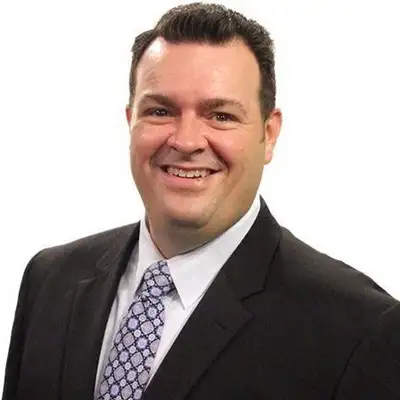
In this episode of The Church Around the World, host Dan Ehrman sits down with Dr. Jerry Hwang — Academic Dean and Professor of Old Testament at Regent College and a member of the New Living Translation (NLT) Bible Translation Committee. Dr. Hwang shares how the NLT translation process works, how scholars collaborate, and why translation matters for a global and multilingual church. Together, they explore the challenges of communicating ancient Scripture in clear and accurate modern English, the importance of Old Testament theology, and the role of cross-cultural scholarship in shaping the mission of the church worldwide. This conversation offers a rare behind-the-scenes look at how the Bible is translated and why it matters for pastors, missionaries, and believers around the world. If you’ve ever wondered how the NLT is created—or wanted insight into the intersection of theology, scholarship, and mission—this episode is for you. Church Connect Church Connect – Access trusted resources from leading Christian publishers to strengthen your church. Enjoy everyday bulk discounts of up to 45%, free shipping on orders over $50, and more. Every purchase supports the Tyndale Foundation, funding Christian ministries and global mission organizations. Episode Links:
Host Dan Ehrman from Tyndale House Ministries invites you to join him for The Church Around the World podcast for important and impactful conversations with church and ministry leaders. They'll share stories about God at work, His people, and what's happening in faith and culture that's shaping the local and global church today. From your neighborhood to the ends of the earth, listen to these powerful and timely testimonies of blessings and challenges directly from the people that are helping build up the church around the world.
The church around the world in conversation
with influential church leaders, sharing how God
is at work and equipping you with practical insights and
applications for your ministry today.
From every tribe, language,
and nation. God is calling people to himself.
So join us as we look out to the fields already
ripe for harvest. From your doorstep to the ends of the earth.
Here is your host for the church around the
world. Dan Ehrman. Welcome to the church around the world.
I'm Dan Ehrman, honored today to be joined by
doctor Jerry Huang, who is part of the New Living Translation
Committee. And Jerry, thank you for making
time in the midst of a life transition for you right now.
Thanks so much, Dan, the timing to meet you today and have this
conversation on the podcast is really perfect.
So really glad to be
with you and with all the listeners.
Hopefully what we share
can be encouraging and edifying to busy
people who have so much going on and might be
catching this podcast on the way. From soccer practice to ballet
lessons or whatever busyness they're juggling.
So just thank you all who are listening for giving us a slice
Of your lives as well. You
have served in Christian academia for decades.
You were at Singapore Bible College for
what, fifteen years? You were sharing earlier with me.
And then you are kind of, as we mentioned, in the
middle of transition with a shift to, Regent College in Vancouver,
Which means that you are going to be crossing
borders. And that brings all of the ambiguity in some ways of,
So many things that could
happen. And you are moving tomorrow.
And this is a wild moment to be able to catch you here. Yeah, and
probably perfect timing in more ways than one.
Not just the fact that we have time to talk like
this, but probably the word picture, the experience of crossing
Borders is something that has defined my life not
by my own design, but just being born into a multicultural family to
Immigrant parents, who had to figure out how to make
a life in a new place, and needing to figure out how to live in
More than one world. I had no
idea when I was growing up that, as I went into
Adulthood, it would
end up being more than just two worlds.
The ethnic Chinese world
that I was raised in at home, and then
The American world that I saw once I left my
home each day. So this is, maybe a continuation of God's work in
And through my life and the lives of those
around me who've been given these multicultural experiences.
Well, I think having someone with your perspective
on the world and of culture and people coming into a translation
committee brings so much to the table in terms of
just the diversity of human experience that can be out there, and how
we encounter even a
given phrase in God's Word, as we
translate it and try to put that forward
toward people with the
New Living Translation,
where we're aiming to be accurate and
audibly enjoyable and to be, you
know, just a translation that the church can use.
And to have you kind of revisiting
so much of this is a gift, I think, for that process.
Yeah, it's a real privilege to serve on the Bible
Translation Committee of the NLT. I remember actually the first
encounter I had with the NLT was rather
different than probably what most readers have experienced.
When I began as a doctoral student with Daniel Block
at Wheaton College, he was already a member of that committee, and
it was right around the time that the second version of the NLT
was coming out. And Doctor Block invited myself
and my fellow student, Chris Hansberry, to the NLT banquet, which
was taking place to commemorate the launch of the
second version. So I remember
being in that banquet at the national meeting
of the Evangelical Theological Society
and sitting next to
Scholars whose books I had read, whose works were
on my shelves and realizing kind of two things at that moment.
One was that the scholars are real people who love God
and know the Bible through and through.
The second was that the NLT is a serious translation
done by those who have the highest qualifications to do that kind
of work. So you could say, as I was
invited into that banquet, that I was quite, starstruck
at that moment by what I was witnessing. And now,
about twenty years on, it's, a bit surreal for me to be sitting
around the table with some of those same scholars
and talking about these issues no longer as
impressionable, doctoral student, but, having
been invited to this place at the table and serving alongside now
those who've been mentors
and heroes and encouragers along the way.
So the note is something that kind of marks
the beginning of my academic journey almost twenty years ago.
And now to continue that journey with
others has been such a thrill. Well, I came in new to
publishing just a few years back with Tyndale,
and I remember sitting in just kind of an introduction to Bible
translation and hearing what went into
the NLT and like, I heard a presentation about it a
Couple times, I thought it was interesting. And then I
sat down with, a couple senior leaders who
Are right at the core of that at Tyndale. And then to look at
those principles kind of applied in action.
There's while there's, millennia of tradition
and background to what it is to translate the Bible, there is a
Real element of, this isn't just translating the next
novel into another language. This is God's word.
And you're carrying all of that. And
there's an element like, I could only compare it in my
Mind to like swimming in the ocean, where like, these
are deep waters and there's rules and principles, but it's a wild
Space too. And it just
struck me as I kind of dabble into that of
Like, oh, my goodness, like, this is
extraordinary. you use the metaphor of an ocean, which I
Think is apt in many ways. I've
sometimes thought of it alongside word pictures of
Depth and breadth as
being a series of almost like paradoxes.
That Bible translation is also, this combination of
being an art as well as a science.
And that is, something that flows from the richness
of human experience, language and communication in particular.
And sometimes when we look at Bible translations,
maybe in our early days of getting our first Bible or encountering a
Different translation for the
first time, it all kind of seems like magic.
That's sort of the picture that comes to mind.
but it actually, is both more than, and less than that.
It isn't, magical in the sense that the Bible has
come to us in human languages in order to be translated into other
Languages. The Yale missiologist was fond
of saying that Christianity is infinitely translatable, and
This is something that is true not just of
the Bible, but of Christ Himself through the incarnation.
So when the word became flesh, this was every bit, a metaphor also
for doing theology as well as speaking theology.
So, this means that we have to
go beyond just language because what is language?
After all, language refers to things in the
real world and not just sort of, Type Script, words on a page.
And this means thattranslation entails,
culture and worldview.
If we just focus on language and we, pretend
that you can just translate words from one language to another.
It's almost like comparing,
icebergs on the surface. And we all know, every grade
School kid knows that only the tip of
the iceberg is on the surface underneath the water line.
There's going to be culture, there's going
to be worldview as well.
And you cannot ever separate, the
extra textual elements from what you put on the page.
So this is not to opt for, an unusual understanding or
doctrine of what the inspiration of scripture is.
This is just a reality of everyday communication
words themselves. They have to refer to things in the real world.
So we need an understanding of culture and worldview just as
much as language and words. So this is part of the
Amazing task of Bible translation. And to
capture all is like you said, it's a notion. It's very deep.
From the perspective of method, it's an art as
well as a science. Hard to get right, but what a privilege to try.
I view there as being a real tension between as you
translate of being faithful to the original language and context,
But also being, intention of like,
we're creating a translation for these readers in this time and
Context, much like, here a lot of preachers talk about
working to execute the text, but we're looking to
Execute the people in the culture as well
and communicate the text to them. It contextualized.
And, how do you or how does the NLT approach that kind of
a conversation? This is, a controversial
Issue in the Anglophone world, and especially since
the nineteen seventies, when the other English versions began to
Appear. Before this, there was almost only one
game in town, the King James Version. And ever since the nineteen
Seventies, we have what some people have
called Bible wars, which continue all the way to this day.
So why do we need more translations, better
translations? I think there are a couple reasons for that.
Maybe one of the places we should begin
is by recognizing that language changes over time.
And when you have a language like English, which
has itself been influenced by the Bible, then you have this,
Interesting experience
of deja vu constantly where the English
Language has now been marked indelibly by Bible translation. people
who use biblical idioms aren't necessarily making
Biblical references. So in the
corporate world, we need to buy time, for example.
And that's an expression from the book of
Daniel. when someone, in your workplace comes after you and
You decide to turn the other cheek. You know,
that's a reference to Jesus's sermon on the Mount in Matthew.
But, these are just two of the more
obvious examples of how you could say biblical English,
Which was originally just, a regular way of speaking and writing,
kind of, became baptized with biblical authority.
But now that so much of the Anglophone world in
the West is more secular, people use biblical idioms all the time
Without necessarily knowing their origin. So this
is just reflective of a larger trend that English changes over time.
I remember hearing stories of senior Bible translators, wrestling
with whether they should continue to use the word
Alien for foreigner. younger people these days,
they have no conception that alien used to mean foreigner for them.
Alien has always meant extraterrestrial.
and this especially became the case in the nineteen
Eighties when there was in quick succession, the E.T.
movie, and then the alien series of movies.
So for a whole generation of people probably,
my age and younger, the primary understanding of that word alien
Is an extraterrestrial being. But for people
of the generations above me, alien primarily means foreigner.
So this is just an example of how language changes.
And if we overlay that kind of language change on top of the
Bible, you will find that certain Bible translations
that have attempted to follow more in
The footsteps of the KJV, they retain
the word alien for foreigner. that's fine if someone is
Enculturated into an English language
and a biblical world that are pre nineteen eighty or
So for the last forty five years, increasingly
people associate the word alien with extraterrestrial being.
So Bible translations need to keep up with this. Global language
of English is challenging since no one really
Owns this language. It's the most widely taught
and learned language across the world. so you think you're speaking
English in the United States, but you go overseas to a different
Anglophone country and you realize, oh, I speak
American. I don't speak English. and if you
try to convince, people in the
British Isles, for example, that, you
know, they're saying
Things wrong and you're saying
things right, that conversation won't go too well.
So it is one of those, very real issues that
language shift, means that we have to keep up with culture.
That doesn't sound, very attractive to a lot of
people. Shouldn't the Bible just stand for a timeless culture?
But the reality is, the English translations themselves were
planted in a particular place within their culture.
If you wanted to go back to the seventeenth
century culture of the King James Version, I mean,
That is a culturally situated translation. We could talk about that
if our conversation goes that direction as well.
But these are just a
kind of a snapshot of the factors that
Make it necessary for us to use the latest techniques to arrive at
new Bible translations. Sometimes I reflect on it,
Interviewing so many church leaders and that, you
know, I'm recording this and there's an element of this that can be
Lasting. And sometimes I
get scared when I consider how we judge the
Previous generations on
how they use certain things of,
What are my blind spots right now that twenty five
years from now, I'm just going to be like, oh, what was I thinking?
Why did I say that?,
for me, there's like a pragmatic end of it of
Like, I just can't carry that weight into a conversation. And I
have to trust it to God. And, that's pragmatic, but
It's also like, is that just flippant too?
And how do you carry that tension into something is really
Weighty as God's word. that's an important question. And
like you said, it's, quite pragmatic.
It is where the rubber meets the road.
and, it reminds me of, the relationship between
Tradition, and, as received tradition and
tradition as it takes on new life.
Some would call that the contrast between tradition
and traditionalism, that tradition itself is living, but
Traditionalism as an ism, it can be something that is more
dead than living. so we are in a position
Where we are the heirs to this long tradition.
but just having the faith of our ancestors without having,
The faith itself, and not just in its, content,
but also in the trust that this content should engender is
Hugely important. This might be where being
someone who, has had to it
Wasn't a choice to, but
had to grow up bicultural may have made
A difference in how I figure
out what to retain, what to sort of filter out.
Maybe because so many of us are shaped
by stories. I'll just share one story from my childhood.
So I was born in the United States to immigrant
parents. and it became clear to me from the time that I could speak
That I had to figure out, what, from the old country,
which I had never been to or lived in, would
Continue to be part of my existence and what
would need to be set aside.
So because my parents, wanted to retain some of that environment
for myself and my younger brother, they asked
Us and maybe forced us to speak Mandarin Chinese at
home. They had been born in China and grown up in Taiwan, and then
Came to the United States as immigrants.
so, I remember, getting glimpses of this other
World that was English speaking, by watching Sesame
Street. but for me, that world in Sesame Street with Ernie and
Grover and Big Bird, Ernie was the best.
He was the playful one.
But that wasn't a world that really existed.
it was just on the screen. But when I went to kindergarten,
That world came alive because I was,.
Thrust into an environment where people
spoke the language in the real world that I had only seen
On the TV screen prior to that point. Now I knew the
alphabet. You know, I knew the numbers because, Sesame Street had
Done a good job of teaching me, or I had been
obsessive in watching Sesame Street. but in that kindergarten
Classroom, I was assigned to the ESL class, even though I had been
born in, Ohio and had grown up in California to that
Point. so, for those of us who have been forced
by experiences or by background to be multicultural, it leads to
A thought process, which for a lot of people is
probably unconscious by this point of trying to figure out what is
Essential, and what's cultural dressing and clothing around what
is essential. So when later in life I came to
Faith in Christ, that the same thought process, issomething that
I've also had to undergo thinking about what's
Essential and what's not so essential.
so, that is going to be a very real example of the need
To, distinguish, not separate, but distinguish between
faith and culture. culture is real, but
Sometimes we think that only other people
have culture and we've just got truth as the joke goes.
But, for those of us who have the opportunity
to encounter those who are different from us who encounter
An other, whether linguistically or culturally,
these are opportunities to learn from other people and realize
That difference doesn't need to be threatening. Difference can
be enriching as we realize that other people
Have something to offer to us. As long as
we're open to hearing what other people can extend to us.
So adventurousness, is a great way to go about
life, curiosity about what other people, eat and how they
Live and, how their lives are different from
ours. And when they invite us into their space or we invite them
Into our space. And this is the same kind of
hospitality, I think, which God has extended to all of us in
The incarnation, that we get to dwell with him and he dwells with
us. So, I feel like, some aspects of my cultural
Background have instilled, certain intuitions, that lead me to
resonate with those aspects of the Bible and
Theology, perhaps more naturally. But
these are all habits that can be learned when we take
Seriously the fact that other people, other personal beings
like God himself, are different from us.
And once we're willing to step outside of our comfort
zone, rather than being fixed in our
Ways, there's so much that we can learn from others,
God himself included. you talked a little bit about your family.
How did your parents take you becoming a Christian and, you
know, pursuing higher academia in Christian
Faith? That's a story of its own, which could probably
fill another episode of the podcast.
But, my parents being immigrants from Taiwan
were naturally going to, Be raised in various kinds of
Traditional Chinese religion in China as well as
Taiwan. Christianity is there. It's more on the more on the fringes.
But one of the things about, ethnic Chinese who immigrateelsewhere
is that they become Christian in much higher numbers
Than are represented in theirrespective homelands. Places
such as, China and Taiwan and Hong Kong, among
Other places where the Chinese diaspora, has been living
for in many cases, hundreds of years.
So some estimates say that as many as a quarter of
ethnic Chinese who immigrate to the United States become Christian
For one reason or another. And my
parents are among those statistics. as a family.
We went to church all around the same time.
One of the reasons I think thatthese overseas immigrant
Communities sometimes become Christian
in higher numbers is that church communities provide
A degree of continuity with the homeland. now that is a
double edged sword, it's not always a
Good thing necessarily. But when you look at the
history of Chinese immigration to this country, people may think in
Terms of the latest arrivals from China, but ethnic
chinese immigration to this country goes through actually,
Probably four distinct waves, dating
back to the California gold rush of eighteen forty nine.
And people think of California now as being
this multicultural state, but, they may not realize that one
Hundred fifty years ago, California was the center
of anti-Chinese sentiment during the exclusion era due to the
Aftermath of the gold rush and all sorts of
other things. But we'll set aside all that history for now.
Your question really was about my family. to make
a long story short, my parents, found, a spiritual and cultural home
Within the immigrant Chinese church. and I also
found peers who are like me, bicultural second generation, but, who
Had this added dimension of Christian faith, that made
sense of their cultural experiences.
And later on, I would learn, was an integrating principle
for all of their cultural experiences.
So I went from someone who, resisted being bicultural and had
worlds that didn't necessarily converge very well.
I was sent, like most people in my position, to a
chinese school. Chinese language school. And the fact that it was on
Friday nights made it all the more unbearable.
The teachers were parents themselves who probably
Struggled with their own children. And then they
worked out all of their frustrations on other people's children.
I mean, all this to say
chinese school was a miserableexperience.
But later on, after becoming a Christian in high
school, I realized that none of these cultural experiences, these
Backgrounds, were wasted. And these were part
of how I feel that God had been graciously preparing me for
Service to his church and his people. later
on, after receiving my Ph D, my wife and I, served in Asia.
Among those who are Chinese speaking as well
as people from other countries. So you could say that God has a
Way of taking all of those threads in our lives
and weaving them together in ways that are quite surprising.
And the immigrant Chinese church was the
cradle of Christian faith and, cultural, consciousness for
Me in ways that I had not been able to make sense of myself. why
was, placed on theearth and what I was here for,
The immigrant Chinese church provided
an opportunity and a place to find some of those answers.
Well, you are a professor of Old Testament.
And by definition, I assume you're pretty good at Hebrew.
And, what drew you into studying Hebrew and, navigating that.
there's a joke about Old Testament professors that my
Mentor, Doctor Daniel Bloch, likes to tell. And I've, I've
heard him, say this with a chuckle more
Than once that those of us who are Old Testament professors, we
do read the New Testament from time to time.
But actually, it is such a privilege to
be an Old Testament professor who reads the New Testament.
Just as one example, as a Hebrew professor
as well for me to pick up the modern Hebrew version of the New
Testament, and read the words of Jesus
and the apostle Paul translated into modern Hebrew. there.
It's quite a moving experience, actually, when you get
a bit closer to what language people
Like Jesus and Paul would have
been using. why Hebrew? why the Old Testament?
I say this not to denigrate in any way the New Testament, and
it is truly wonderful as part of God's Word.
But I think in my own experience, first as a
new Christian and as someone who began to get more interested in
The Bible from an academic perspective, there were
probably two factors that drew me to the Old Testament over the new.
One was that most of my own questions related to the
Bible, were oriented around the Old Testament. every Old Testament
Professor has answered questions about ethics,
the relationship of the Old Testament law to the Christian.
What about the Canaanites? what about problems of
war and violence? It just feels more culturally distant from us.
So that always intrigued me that we talk
about how all Scripture is breathed out and inspired by
God, but functionally, we often feel
the disconnect between ourselves and the Old Testament,
So that's almost like an existential factor.
The first of two, the second one is really more pragmatic.
When I began to feel called to theological
education, people, shared with me a saying that I've always
Remembered that when you want to study the
New Testament, you become a small fish in a very big pond.
And it's very difficult to find, topics and areas
of research that have not already been addressed by prior work.
But when it comes to old Testament scholarship, not and this
is not to say that one kind of scholarship is
Better than the other. There's just the realistic factor
that so much of the Old Testament is yet to be
Researched because the corpus is much longer. So three
times as big, right? So, some of us might
Spend three times the amount of attention, on the New
Testament rather than the Old Testament.
But like you said, Dan, the Old Testament is
much longer than the New Testament. So this has just led to a
Disproportion in the amount of attention
given to the Old Testament. And from an aspiring doctoral
Student's perspective, it's much easier to
find a fresh Old Testament topic than a New Testament topic.
But I love the New Testament. I love
the Greek language and serving on the committee.
One of the things
that's another dream come true is the
Ability to talk about the New Testament and hear
from amazing scholars who are experts in their fields about the New
Testament and not just read their books, but to talk shop and do the
work alongside them. that has been a real thrill.
But yeah, probably that existential factor of
my own journey, as well as the pragmatic factor of needing to
Find something to work on.
The Old Testament was the right decision.
So turning toward the NLT Translation Committee,
are there particular books of the Bible that you are focused in
On, in review, or is it the whole corpus
or kind of a combination of both? you're, you're asking a
Great question about how Bible translation works. a lot
of people, probably still think of it in
Terms of the vision of the apostle Peter, that it just
kind of drops from heaven in a sheet.
There in acts chapter ten. but the reality is both less glamorous
and more glamorous than that. so within the Bible
Translation Committee, there are teams, there
are seniorreviewers who are assigned to a particular corpus.
They have consulting reviewers around them who
are. Assigned to particular books or sometimes in some cases, the
Entire corpus. So I began as a consulting reviewer for, doctor
Daniel Bloch's, area, which was the Pentateuch.
He was one of the original translators of the NLT.
So his roots with the NLT extend all the way back into the nineties.
And I began as a consulting reviewer to serve
alongside him in the Pentateuch.
We have just finished
up the book of Deuteronomy and for the
Upcoming revision of the NLT,
which we hope will take about five years or so.
The next book in the Pentateuch is Exodus. So my
mentor and I have switched places. He's now the consulting reviewer.
I'm serving as a senior reviewer, beginning with Exodus. Jerry,
I want to cut you off real quick. Yeah, sure.
So Dan Black is a renowned scholar. You've
mentioned him a few times here.
And yet he's probably had hundreds of students,
if notthousands, do dissertations under him and work with him in,
You know, graduate Ph D programs in Old Testament. Not all of
his students are coming alongside to work with
Him in this process. What made that connection to bring
you into the process withhim in this.
Some of these things, I think
are, known only to Dan, why me?
That's, that's a question that I could, easily ask.
but he, was looking at, the, need to work on Deuteronomy again.
I had the privilege of being his Ph D student at
Wheaton College to work on Deuteronomy. so, I mean, if you look
At, the book of Deuteronomy, which he worked on for the previous NLT
twenty years ago, and since then he has published
A plethora of works on Deuteronomy, among
which is the NIV application commentary on Deuteronomy.
It made a lot of sense for one of his doctoral students who had
worked shoulder to shoulder with him on Deuteronomy
To come alongside him in the process.
one of the one of the thrilling things about the NLT
Committee is that everyone does work on all the
books together. so, I think it made sense for Dan to find someone
With a specialization in the Pentateuch.
at the same time, someone with curiosity and perhaps
Breadth to work on other aspects of the Old Testament as well as
the New Testament. so it is a real privilege.
I still at times feel star struck like
I did the first time
I walked into the room and saw all of the NLT
translators. But it is great to serve alongside my mentor.
And to use a Star Wars metaphor, you know?
He's the Jedi. I often still feel like the Padawan.
And when he tells me that something sounds good or
he's grateful for the reworking of a particular passage, it's still
Quite gratifying. But in the end, I still owe so
much of my professional and spiritual development to my mentor.
Well, I cut you off in the middle of
kind of getting after sort of the breakdown of what is
Your role exactly in the NLTTranslation Committee.
So maybe you could get more specific on that right now. Yeah, sure.
Happy to do that. So this next
version of the New Living Translation, by the time
It comes out, it will take its place alongside,
the previous version of the NLT, which by then will be twenty or
Twenty five years old. And then it will be by then,
I guess almost forty years since
The first version of the NLT that came out.
one of the main things that I do is to explore the biblical
Scholarship as well as the language shift of the
lasttwenty five years. So we've talked about language shift earlier.
The other main reason forrevisiting Bible translations is that our
understanding of the Bible, its languages, and its
World is always a work in progress. So there are going
to be particular, passages that we now understand better than we
Did before. and there have been so many articles
and books written on aspects of the Pentateuch since then.
So, one thing that I'm doing is taking
the current NLT setting it alongside the Hebrew text.
So it's the error checking, that I and any translator would do
to make sure that we've got the best possible
Renderings. but a lot of
what I'm doing, is also to check whether
There have been new developments in biblical scholarship
ever since the previous NLT came out.
And, this is going to be a really
important part of
What we do because translators cannot
possibly keep up with all the developments since then.
And any translation is going to be a reflection
of its translators best attempts at the time of publication.
So, this is going to be, a snapshot of
what weeventually finish, probably around twenty thirty.
The previous version of the NLT is a snapshot of the state of Old
and New Testament scholarship in the early two
Thousand. Just as the previous note was
also a product of its time. So when it comes to the Book of
Exodus, for example, there's been some new work on
how to identify the gemstones that areembedded within the priestly
Ephod. You know, those
are Hebrew terms, that are difficult to
Map to what we would call modern names for gemstones. So that's
just one example that when archaeologists and other
Scholars, they have done extra work
to identify them.
Then we should make use of that work and be able
to communicate the freshest scholarship to the readers of the NLT.
How do you track those updates? I mean,
there's like thousands of Ph D programs in the world.
And how do you how do you even know what is current? Is it just
reading journals and reading people's dissertations
Or kind of a combination of all the above?
I. How is what's the method in your approach to that?
Yeah, there's no secret sauce really.
Dan these are, you might almost say like intellectual
Habits that we all gain. first, as, and by we, you mean the
Hebrew professors in the world. Oh, yeah.
Yeah, maybe I, if I communicate
that it's, it's, it's this elite group of people
In some ways it is, but I'm also trying to broaden,
the discussion to include any person
Who wants to grow Christians in particular.
A lifelong learning is what keeps us fresh and young and,
And curiosity is actually more important than knowledge. So the
form that our curiosity might take in our desire to
Learn and experience new things could vary. It could be anything
from travel to reading. but the inclination to be
Transported to another world, I think
this is not just something for people of means, who can
Afford to travel or people
with a more multicultural perspective.
The inclination to belong to another world is
something that should characterize, I think, all of God's people.
And once we realize that the Bible does come to
us from a different world, and we're talking about a desire to know
God and His world better. so
when it comes to a scholarly vocation, the form
That curiosity takes is very much what you alluded
to. We read, and we try to keep up with biblical scholarship in
The same way that other people keep up with
current events. so, there's more than one medium to do that.
It could be books, it could be
articles, it could be podcasts, it could be talks.
You Tube videos there are many ways to keep up
with biblical scholarship.
I've, found that, being someone who does research
and writing, keeps me from getting lazy or complacent.
So, continuing to work on the Pentateuch and other
parts of the Old Testament has been a key part of keeping me fresh.
So Deuteronomy was the subject of my doctoral work, but I've since
found that there are so many other aspects of the
Pentateuch that I don't understand. So the quest to keep on
learning, is something that I always try to do.
This may sound, kind of odd, but I honestly
feel like there is no such thing as an Old Testament scholar.
The Old Testament is just too broad and too
deep for, one person to be considered a scholar of it all.
So, we are all specialists who try to become
scholars. we may be competent from a student's perspective, but
It's impossible to be a specialist in every
part of the Old Testament.
There are a few people who manage
to get there, who kind of become the Jedi of Jedi.
But no, the rest of us are just trying to keep
track of everything within our corpus. Just in the Pentateuch, the
Amount of scholarship publish is enormous and it's,
it's fun, but it's also daunting, to,
To track developments within our field. Maybe
I missed it along the way.
So for the NLT then, are you overseeing primarily
the Pentateuch in that? And then. That's right. Okay.
Now, I should mention
that as we talk about the revision of
A translation rather than the creation of a translation, there
are real differences. So the first, generation of
NLT translators, largely responsible to the,
for the first two versions of the NLT, they were creating a
Translation, almost out of whole cloth.
of course, in the background of the NLT would be all other
English translations, including, the
Living Bible, which is a big part of Tyndale's History.
But when we come to the currenttask of
revising the NLT, we are working with an existing Bible
And try to trying to make it as accurate and as
clear as possible. So we're not creating something from scratch.
We're looking at what is already there
and trying to sharpen the translation as best we can,
Bringing new insights about the Hebrew language, the world
of the Bible, and those things toour work.
So. So I really think the first generation of
the NLT translators, they had an extremely challenging job in
That they were creating a
translation that had not previously existed.
We are refining a translation, even though on paper
we belong to the same committee.
We owe a great debt to that generation of
translators who produced the first two versions of the NLT.
One of the criticisms I hear of contemporary
English translation is that it's really put a damper
On Bible memorization and that like, if
something is being updated every twenty years, then all of a sudden
You've become obsolete in what you studied
and what is sort of that tension point, from your perspective.
Yeah, that's a, that's an important question. And from a
pragmatic perspective, it is true that if
The underlying Bible translation you've memorized
is shifting constantly, then it's going to make it confusing.
It's like if someone kept on changing their phone
number, why would you bother memorizing that phone number?
That's maybe a generational reference. most people don't memorize
numbers anymore. You and I still know our home
Numbers from when we were ten, you
know? Well, well, the unintended consequence of
Smartphones is that they've produced
dumb people. Right. So they memorize the numbers for us.
But that's a, that's, that is a real issue. And it reminds
me of something that the preeminent Bible
Translator, Eugene Nida, once said that
when you go about refreshing the translation of an
Old and authoritative text,
you run up against an odd kind of resistance.
And he said in a famous article, that
there are people who
Are always going to be attached as much
to the wording as they are to the truth of the wording.
And that always struck me as being an odd and weird problem.
Maybe it's better illustrated, from another
Language. I could tell story after story of how
the main translation used in the Chinese world, the Chinese Union
Version, is a product of its time. It dates to
nineteen. for most ethnic Chinese Christians around the world.
The Chinese Union version is the Bible. But the, challenge
with the Chinese Union version is twofold.
It relates to both of the factors
in Bible translations that we talked about earlier.
One has been the issue of language shift.
The Chinese language now the spoken and written Chinese
Languages don't sound and look the same as they did
one hundred years ago. so, if you start speaking, the way the Bible
Speaks to people now, then it's going to feel like
you stepped out of a time machine.
It's not impossible to understand, but it's distinctly quaint and
strange. so, what this has produced is that when,
Someone preaches or a sermon or teaches a Sunday school lesson in
chinese, they can quickly, lapse into a kind of
Spoken Chinese inflection that you
might almost call c u v
Chinese Union version Chinese C u v Chinese
is a it's an archaic way of speaking. it's almost as if, when
Some people pray in English, then suddenly they
assume a biblical inflection and they think that, thou, thy
And thine are more biblicallanguage than you and your, but that's
a linguistic fossil that has nothing to do with
Reverence or a higher theological
register. also in the Chinese language, we know that,
The translators were doing their best, but their
work dates from the late nineteenth and early twentieth centuries.
They also were people who didn't have full
competency across, all of the biblical languages because
After all, they were translating into Chinese,
they were reliant on others. and in some cases they used,
Other translations as a base more than the
original languages of scripture. so now we have this, tangent.
Most Chinese Christians around the world are using
an archaic, from a linguistic perspective and outdated from a
Scholarly perspective version of the Bible. But
it's the Bible. You can't just sort of easily change the Bible.
It feels like you're changing God's word at that point and that
is going to be dangerous for a lot of people.
So I think the first question for anyone who is deeply attached to a
Bible translation to ask themselves is simply, am
I bound to the truth of the word? Or am I bound
to the words now in principle?
Those are hard to separate, but it's not
difficult for us to see
That, being attached
to the words without the truth of
The words is something
that everyone could easily fall into.
When we memorize scripture and we use
it almost like a good
Luck charm or a talisman, or a superstition of one
kind or another. and that's a temptation for
Anyone who has memorized scripture.
it doesn't mean that we shouldn't memorize scripture,
But it's, the question that anyone who memorizes
scripture must ask themselves, do I know what these words mean?
And not just what they say. So it is essential
for anyone who memorizes scripture to have that conversation with
Oneself frequently. the
good thing about bringing in a new Bible
Translation is that, we are forced
to ask ourselves, what do these words mean?
And not simply the, question of what they say.
So I was someone who felt the force of that objection you
Mentioned quite strongly before. And
I thought, well, we should never need a new Bible
Translation because this would scramble all of
our memory. but maybe what, has helped me along that journey,
Is realizing that the translations themselves, are best
attempts, interpretations into a target
Language from source languages that are
different from English. So once that realization set in,
Then I began to see thatthat translations themselves, are not
necessarily sacred. that when we talk about
Reading the Bible, we are always, almost always
indebted to the work of scholars who produced translations.
So sometimes that will turn down the heat a
lot in these, Bible wars.
When people get too attached to Bible versions
and translations, I suspect sometimes it stems from a lack
Of awareness of how language works and how translation works.
Well, I want to pull my own linguistic fossil here.
And, Lord willing, you're
going to be shifting to a new role at Regent.
Share a little bit about that work and how in the
world you're going to balance being a family man and navigating all
That with the NLT and
all your work there in the years ahead.
Yeah, it is quite humbling to have this
opportunity in serving at Regent College in Vancouver.
On my shelf and the shelves of so many,
thinking Christians, we have volumes, by region professors,
Both past and present. so,
to be serving at the same institution, where
Eugene Peterson and Bruce Gordon Fee, J.I.
Packer, have served and through their writings, bless so
Many is an enormous privilege. region is a place that seeks to bring
together the best of academic work and scholarship
With the deeper questions about spiritual formation. That is a
knife's edge that people always want to walk.
By God's grace, I think Regent has been,
fairly successful in trying to keep those worlds together.
But it's getting harder and harder to do that kind of work. in a
world with as much fragmentation as we see now,
Just within one church community, you can see
thatthere's going to be a lot of division, just because of
Cultural factors and this historical moment. Imagine trying
to do that, in an international city, at
An international institution with people coming
from all sorts of different cultures, this just is going to be,
Something with a very, high degree of difficulty.
the work belongs to the Lord and it's not something that I
Need to take on for myself. God was at work in
and among his people in and around Vancouver long before I will
Have arrived. So it's my privilege to connect
more of those people to one
Another, to oversee, support and encourage the faculty, especially
in helping them to have all the tools they need to
Equip other students to operate as the best version of themselves
and everything that God has called people to be.
The role that I'll be taking there is
that of academic Dean, which is an administrator's role
And involves connecting all the various departments of the
school. So I want to be a good connector.
Bridges are so important, and once we
spend time to listen to
People, to encourage them and frankly, to help
them see that as people created in God's image, everyone matters.
That kind of organizational culture, if it can take hold and pervade
every office, every conversation, it just helps an
Organization like region
become greater than the sum of its parts.
And my work will be more internally focused in that
way. But my hope and my prayer is that doing that sort of work
Will translate into amazing classroom experiences
for students. all of that is already happening and it's going to be,
My role to make sure that keeps happening and can
hopefully happen even better. I have a curious question as we speak.
We're the academic year is already underway. there's
still, uncertainty, as
Things fall into place, what is that transition look like coming
in kind of in the middle of the academic year?
And does that mean that you've got, you
know, eight or nine months before the next year kicks in?
Or is it just going to be like, hit the
ground running and catching up or a little bit of both?
Interestingly, Dan, I think
you're quite right that it'll be some of both.
So I just finished two years of teaching at Trinity
Christian College in Chicago, and I departed that position, with
The prospect of going to Regent, in the fall.
But the process of transition has taken a bit longer with
Things like the work visa for, Canada. not
nothing, unusual. It's just that, that these things take time.
And as people who have served in Singapore before.. you just
need to do what it takes to wait for the proper
Documentation to live and work in
a country. so, the time that I'm coming in, will be,
About a third of the way through the Regents, semester. And it
means that I won't be teaching, anything in the fall.
We'll, we'll see what happens for the spring.
but many faithful colleagues have stepped up, in region
To take on the work of the academic dean.
they tell me they're eager for me to come and allow them to
Return to their regular jobs. But in the meantime,
because we have this, wait, there are people who have taken on
That work. so it will be
a matter of, starting immediately once we
Arrive, but also learning, this organization, This system. My wife
and I will be new to Canada, so there's a lot to
Learn. Collectively, though, people who have been
serving at Regent, if you sum up all of their years of service.
We're talking about hundreds of years
of service. So my role as someone who eventually will.
Need to be a connector is to listen
and to learn. sometimes people have this, idea that.
That someone who comes
in a leadership position needs to put
Their stamp on the organization from
the beginning and knock
Some heads together and show them, Jerry, that
you just come across that way is like a head knocker, you know?
You know, you know what's scary, Dan, is that
is that way of trying to lead, of bringing change is sometimes
More normal than not. And in the
two cultural worlds I've inhabited here in the
United States, as well
as in the Chinese immigrant church,
Autocratic leadership, you hope you never encounter it, but it's
not as rare as it should be. And, maybe just in
Chinese cultures, people know to be more outwardly modest while
they're, doing the very same kinds of dictatorial
Things, in leading you pretend that other people are in charge,
even as you're just as dogmatic and inflexible
As anyone who might show those traits outwardly. But there
is definitely going to be a streak, I think,
Within sinful humanity that just likes to control
other people. And, I think John Maxwell is quite right in that
Leadership is influence, but godly influence
is not going to be a matter of do what I say, but do as I do.
Follow me as I follow Christ. So I see
this next role as the kind of leadership position for
Which I need to earn the respect of those I serve
alongside. position itself doesn't mean anything unless the person in
The position is worth following. So,
yeah, this is a place where I get to listen and
To learn and eventually to lead. But
the listen and the learn have to come before the lead.
Jerry, I'm so encouraged hearing your heart and how God
has moved and orchestrated in your life.
I know our colleagues
here at Tyndale are just honored that
You are part of this process with the New
Living Translation. Thank you for serving the Lord in this.
Thank you, Dan, for having me. It's been a privilege
to chat with you and to serve alongside all of the Tyndale staff.
It we think of Bible translation as being, sort
of the work behind the veil.
And hopefully we've been able to
give people a sense of what goes on behind the veil.
It's actually not, I think, that different from
any healthy church setting in which you might sit in the pew and
Everything seems to run well. But once
you get a chance to see what goes on behind the scenes,
It's really, actually
quite simple. Not easy, but quite simple.
People who love God, who try their
very best by his grace, to do his work for his glory.
It's simple, but it's not easy. And, that's
what I've seen in this whole process of working on the NLT.
So thank you for being a further embodiment of that
as we've had the chance to talk today. Well, it's been an honor.
You've been hearing from doctor Jerry Wong, who is
leading in the revision or the update to the New Living Translation,
Overseeing the Pentateuch. And I'm Dan Ehrman here
on the church around the world. Thanks for joining us. God bless.
You've been listening to the church around the world
with Dan Ehrman, discovering how God is working in and through the
Church. Practical takeaways
and insights from this conversation equip
Church leaders like you
to carry out great commission work in
Your local community
to help expand the impact of this show.
Make sure you subscribe, review, and share the
church around the world on your favorite platform to learn more.
Hear previous episodes or contact Dan. Visit us
at church around world dot com. That's church around world dot com.