Subscribe
Share
Share
Embed
Is Anything Real? is the Reality-First Leadership podcast for builder-leaders who want outcomes, not optics. Each week, Adam W. Barney sits down with founders and operators to unpack positioning, marketing, community, energy management, and influence - plus the numbers behind what actually worked.
You’ll hear: a quick Reality Check, a practical Proof Stack (inputs → actions → outcomes), and one EnergyOS habit you can run this week. Specifics over slogans; humane systems over hustle cosplay.
New episodes every Wednesday at 12:00 PM ET.
👉 Book your 20-min Exploration Call: https://calendly.com/adamwbarney/explorationplugin-20min
[00:06.2]
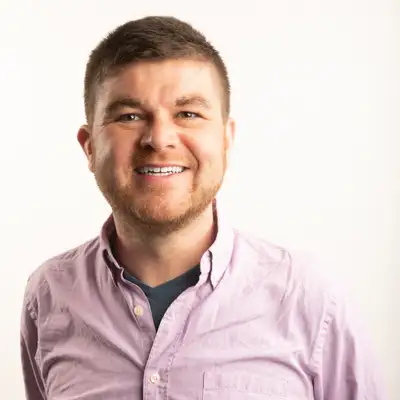
Most people talk about brand from the neck up. Strategy, tactics, and frameworks. Today's guest talks about brand from the soul. He's a strategist, writer, speaker, and a global voice on justice, equity, belonging, and human connection all through the lens of leadership and creativity.
[00:24.6]
If you want the truth about what really moves people culturally, emotionally, economically, this is the conversation. This is Alexander Michael Gittens. Welcome back to "Is Anything Real?", the show where we cut through the noise, call out the nonsense, and get honest about what actually drives growth.
[00:42.3]
I'm Adam W. Barney, coach, author of Make Your Own Glass Half Full, and host of this conversation where founders, creatives, and change makers pull back the curtain on what's real in business, culture, and leadership. Today I'm joined by someone whose work truly sits at the intersection of strategy, culture, and humanity.
[01:01.5]
Alexander is a consultant, speaker, and widely published thinker whose writing on leadership, identity, and society has reached millions. He brings a rare outsider-insider clarity to American culture, informed by Caribbean roots, Canadian upbringing, and global experience in music, sports, and business.
[01:20.8]
This is a conversation about creativity, justice, identity, and the real roots of influence. Welcome today. Oh, thanks for having me, Adam. What a beautiful introduction. Awesome. Alexander, you know, you've lived across cultures: Guyana, St. Kitts, Toronto, the States.
[01:37.3]
How has that global immigrant-rooted identity shaped the way you see leadership and humanity? Yeah, it's the absolute best. Like you said, my parents are from the Caribbean. I was born and raised in Canada. I spent most of my teenage years playing baseball, and music in the States, and I've gone to four universities in four different countries.
[01:58.3]
So you're absolutely right. I have seen experience lived in and rubbed shoulders with great people from all over the world. Yes. But I think fundamentally, and you know this from our pre-interview, people are people. It demystifies the us-versus-them.
[02:14.1]
It demystifies the left versus right. And when you really get down to it, we have the same hopes, we have the same dreams, we have the same aspirations. The question is, how do we, by interacting with people that are different than us, that different ways of living, different ways of thinking.
[02:31.5]
How do we both respond to those differences, then reflect on them and become a better version of ourselves, for our families, for the community, and for the future of all of those wonderful nations that we talked about. I love it. You've also said being an outsider to American culture actually gives you a clearer lens on it.
[02:53.2]
What do you see from the outside that we sometimes miss from the inside? Yeah. So I'll look at this from two perspectives, Because being a black Canadian, and then living in black America, and then interacting, it was a literal culture shock, which I didn't expect.
[03:13.4]
Maybe the people in the areas I live, specifically Detroit, didn't expect, but there's something about being an immigrant and coming from an immigrant family and having that. We're going to work twice as hard, we're going to get ahead. And it's a different mindset than perhaps someone who's lived in a country for a long time.
[03:30.7]
But let's look at America from two lenses. And first is the lens of a global citizen who hopes that America is everything that promises it will be, when it comes to global leadership, peace, prosperity, and economic safety, providing for its citizens.
[03:46.9]
We all want those things globally. And when you look from the outside, you realize that the worst of us sometimes are the loudest voices, and the best of us are some of the quietest voices. And just like Abraham Lincoln said in his inaugural address so many years ago, we want the better angels of our nature to come to the forefront.
[04:08.8]
And that's my hope, is that the voices of hope and unity are the louder voices. And we don't just retreat to our own corner. So that's, as a global citizen, do better. Be who you say you are and do it at altitude. As someone who spent time, many years and many months living.
[04:26.4]
And the funny thing, Adam, is I've probably visited and stayed in more states than your average American. Probably 40 different states. So I've really been all over the country. And I think the thing that people outside of America may miss is community to community, the way that adult Americans sacrifice, give to their community, coach baseball, coach soccer.
[04:52.4]
I mean, it is wonderful to see. I remember we were in St. Paul, in Minnesota there. And I remember just this parent just encouraging and motivating this Pop Warner team. And it was so hot. You don't think of Minnesota as being hot, but it was so hot that day.
[05:09.4]
And this parent was just coaching up these kids and loving on them. And you're thinking, this is the part that I don't think that the world sees, that as far as per capita giving, Americans give to their culture and to their communities at the top of any chart.
[05:25.6]
So they're good people. You just got to get close enough to see it. And it's, you can't believe everything you see on tv. Yeah. Well, I know also, you and I both talk a lot about belonging, not just diversity. From your perspective, though, and in your view, what makes people feel truly seen when we're talking about being inside a team, you know, a brand or a community?
[05:50.1]
Yeah, it's a great question. And for most of my life, I absolutely felt like I was in the wrong place. Like, people didn't care about the things that I cared about. And it's hard to see now, but I was a pretty shy kid growing up. I had to work on it. But having grown up as more of an observer, as most introverts are, you really appreciate the fine art of listening.
[06:13.5]
Should we say, Adam, the lost art of listening? And when someone listens actively, for example, they ask a follow-up question or they repeat what you've said. I mean, you said it perfectly. Being seen, being acknowledged, and feeling like your voice matters.
[06:31.0]
It always starts with listening. Repeating what you heard, asking if you heard it right, and then listen some more. You'd be surprised how much you can gain from someone that you knew little about if you're willing to listen and do so actively. Also, belonging isn't created by policies, right?
[06:50.8]
Or people who just have the loudest voice. It's actually created by the people who make space for others to be fully themselves. Yeah, I'm going to get you to talk about that a bit because you are such a unique person, a unicorn in a lot of ways. But when it comes to belonging, there's a lot more to you than meets the eye as well.
[07:08.2]
So let me throw that question back at you. What have you noticed is effective when people who may feel marginalized or ignored, say I feel more included. How can we make them feel like they belong? I mean, a lot of it honestly comes down to just meeting people where they are, and not where you come from.
[07:26.3]
You know, I love, we started our initial conversation talking about origin stories, right? When you dig into what drives someone from an origin, not necessarily where they are today or where they hope to go tomorrow, that's powerful.
[07:42.2]
And that gets into putting yourself in others' shoes. But it is about, what I like to take the concept of grace and talk about that actually. And you know, grace in the sense of a non-religious context, grace for ourselves, but then also giving that space and giving that silence, I think is one of the most important things within that context of how I think about grace, and how I define grace, actually.
[08:10.2]
That's wonderful. My best friend, one thing I admire about her is. Well, let me say first, she grew up in a Refugee camp in Thailand. She's from Cambodian descent. She lost her dad when she was young. She lost her grandfather as well, and she came to Canada as a refugee.
[08:26.8]
And one thing I've always admired about her, she truly emulates Walt Whitman's quote that says, "Be curious, not judgmental." I've seen her approach people who have visible medical ailments or have a style that may be a little bit, you know, avant-garde.
[08:46.5]
And the way that she talks to them is with this pure curiosity. Hey, you know, where did you get that from? Oh, does it hurt when you do this? Or were you always that way? Did you grow up that way? Like, she's genuinely curious about what makes someone who they are.
[09:01.5]
And I've seen people just light up when they speak to her because there's no judgment in her tone. It's just, let me learn a little bit more about this human. So piggybacking on what you were saying, I couldn't have answered it better myself. Part of the reason why I understand American culture so intimately is because I billeted at these houses.
[09:22.5]
I ate with them, I played with their kids, I taught them baseball, I performed music. I was actually in these communities with these people breaking bread. And there's nothing you can learn from observing someone over the television or over the Internet that is nearly as revelatory as sitting down, eating their food, talking about their culture in their environment.
[09:47.2]
Yeah, it's a wonderful insight that you brought up there. Well, clearly our listeners can tell we connected fast on justice. Kind of leveling up there, what do you see as the biggest barrier that leaders still struggle with when it comes to creating equitable spaces?
[10:03.9]
And I'm not just talking about the leaders of billion-dollar companies. I'm talking about the leaders amongst us in our communities, and the small leaders that aren't even considered leaders themselves yet today. I'm going to wrap this in a compliment for you.
[10:21.4]
Me, as a born in Canada, coming from immigrant families, spending a lot of time in America, having done university overseas, having played baseball around the world, all of us bring a perspective to every situation that we're in that is shaped by the 1 million, 10 million, 100 million micro interactions that we've had in our entire life.
[10:49.2]
And when you grow up in a certain environment, no one tells you that this is good, this is bad, explicitly all the time. But you are having an experience that shapes your worldview. When I see someone who is struggling to acknowledge the contribution, the differences, the uniqueness of people, it always starts with a lack of self-examination and understanding that your perspective is unique to you, and where you grew up, and how you were indoctrinated positively or negatively.
[11:23.1]
And when you're interacting with another human being, their journey is not more or less important than the one that you are on. And for you to be able to get any sort of value from that interaction, you need to first acknowledge that I am coming to this situation with a perspective that this person doesn't have.
[11:45.2]
It's my job to understand the space I'm in, if I'm interested in synergies. And that is fundamentally lacking because, and I want to be very specific here, to a middle-class American way of thinking, because you and I are both severely educated people.
[12:00.4]
And so I may fall into this same situation. We have this illusion of a meritocracy where we believe that all of the wonderful things that we have, we created them for ourselves. We believe that we pulled ourselves up by our bootstraps, and all of the great advantages we have is because we were so good.
[12:22.8]
Let me be clear. By being born in Canada, by being literate, by speaking English, by being healthy, I have already won the global lottery. My Canadian passport, my literacy, my safety, my health.
[12:43.7]
It's already the greatest gift that I could be given. And Adam, I did nothing to earn those things right. So I can't look at someone in Sub-Saharan Africa and say pull yourself up. It is not just rude, but you're rejecting the millions of people.
[13:04.6]
We just passed Veterans Day here. The millions of people who sacrificed their lives, who didn't even sign up to be sacrificed, who put down the railroads, who put up the Internet. We were given unearned blessings. And for you to think that you created this for yourself, it's not just arrogant, it is rude and disrespectful to the people who actually sacrificed for where you are.
[13:29.1]
So if you really want to understand, and you really want perspective, then say, with these unearned blessings, how have I proven to the universe that I am worthy of these things I was given? How am I using my time and talent?
[13:44.7]
Because there was a kid, I was born in 1978. There was a kid born on that same day in rural Russia, in Southeastern Asia, in Polynesia. What did I do right? What did they do wrong?
[14:01.0]
So yeah, if you can't count your blessings, then... That gets into so much about the definition of power. And, not just power from an outward standpoint, but how we inward define the power that we have. And you know, that's a deep understanding, and you've said this, you know, that power isn't about volume, it's about presence.
[14:23.3]
And leadership, it's not who speaks the loudest, it's who listens the deepest, and who spends that time to then reflect on that, and hold a mirror up after doing that listening. Absolutely. In its rawest, worst sense, power is simply influence.
[14:41.5]
So, if I have power, I can get someone to do something. And we can get into psychology where they talk about the different types of power, coercive power, legitimate power, and all of that. But at the end of the day, if you can get someone to do something, to feel something, to be something, to move something, then ask yourself, what is the net global impact of what I am actually trying to create by using that power?
[15:09.9]
And if you don't do that, at a minimum, it's a missed opportunity. At a maximum, it's an abuse of power. And you've also said that creativity is a moral act, it's not just a power act. It's something that reflects who we are, and who we want to become.
[15:26.5]
What do you think that means in a broader world where we're obsessed with metrics and views and all those kinds of things across the metric-driven world? It's a great segue. I'll say it simply, and then I'll jump into it a little bit deeper.
[15:42.9]
Your number one competitive advantage in any space is the fact that you are you and there's no one else like you. So I don't care how well you separate yourself as a consultant, or as a medical doctor, or as a teacher, you being the truest, most impactful version of yourself is something that no one can duplicate.
[16:08.7]
And we're so sensitive as humans, and it's a wonderful thing about us, we develop this way through evolution. We're so sensitive to hearing someone say something and saying, nah, that ain't really who they are. It's not even about the content of what they're saying.
[16:23.9]
It's just like, I don't believe that that is who that person really is. Now that's not an absolute and perfect judgment. But if you can be the best expression of your talents, your passions, your values, your character traits, and your behavior, and if you can do that with the express purpose of creating the biggest positive impact for yourself, the people you love in the world around you, then you cannot be duplicated.
[16:48.7]
You cannot be overtaken. The only question is how consistently and what altitude will I do those things? So before you ever think of selling anything or offering anything, ask yourself, am I okay with my entire legacy being based on this output at this product, this service?
[17:07.0]
And if you're okay with that, and you're saying, this is all that I have, I've given it my all, then you're probably in a pretty good position to be successful. I mean, that's fantastic. Another thing we connected on is the concept of allyship, right? And, you know, I think a lot of the world looks at it just as a label, but it actually should be a practice, from both of our perspectives.
[17:29.2]
In your experience, what separates performative allyship from the actual real thing? And then for someone listening, who wants to step up but doesn't know where to start, what's one action they could today or this week? Yeah, I'm going to make a comment, then put this question back to you because I have to give my parents credit for this.
[17:50.1]
I've been very fortunate. My parents are not business people. I took my MBAs in finance, my doctoral workers, and strategy. But our family, we do not have one accountant, we don't have one real estate agent, we don't have one engineer.
[18:07.0]
We have preachers, we've got teachers, and we've got counselors. So the one thing that my parents did really well, is they surrounded me with good people. I've always had high-character people around me, and I've just got, I don't even call it a sixth sense, Adam, because I just always attract high-character people.
[18:28.5]
And when I feel like something is kind of off, I don't even think it's that person's fault. I just think there's a misalignment, and I just take my time, and my energy out of that situation. But I've been very fortunate in dating. I punch above my weight. I don't know how. Knock on wood.
[18:44.4]
I've just been very. Yeah, I know, I understand. All my good characteristics are on the inside, Adam. I get it. But the point, the point that I'm making is my parents kind of set that foundation of, I'm used to being around great people.
[19:00.9]
But when I think of performative allyship, the one thing I think of is the inverse of that. So the worst punishment in the worst prison in the world is solitary confinement. That's the worst.
[19:18.3]
All this talk about being an independent man, an independent woman, that's no kind of brag to me. Because we are the most interdependent species that has ever existed. We don't run fast, we don't have great armor. Like, we can't compete in nature, but when we get together, we can build something as beautiful as the New York skyline or the Toronto skyline, where I am right now.
[19:43.2]
But it's in working together that all of our advantages as humans are illustrated. So I'm going to throw the question back to you with the premise of everything good about being a human. All of it happens in concert with humans that have complementary skills and create synergistic results.
[20:02.6]
But talk to me about this performative allyship, because that sounds sinister, and you need to point that out. I mean, to work against it, though, I think really what it comes down to is getting out there and meeting people in your local community.
[20:18.0]
Sure. I think that's the simplest way, and getting outside of your comfort zone. You know, one of the most powerful things that I've heard over the last couple years is from someone here who runs a platform in Boston that helps underrepresented founders, find investors who actually want to invest in those kinds of businesses.
[20:39.0]
And you and I are both aligned. We know those businesses are the ones that are going to change the world and make it a better place. You know, big secret there. But, she talked about the most powerful thing that she ever experienced was in a negotiation class where she was told to go out on the street, bring up a completely nonsensical idea, and ask people if they would give her money or invest in it.
[21:04.2]
You know, random people on the street. And it builds that confidence of being able to say, I can take something that is completely impossible. Yes, yes, yes. But it's actually surprising. Strangers come back and will tell you, oh, I would invest in that, or here's a way you could actually make that happen.
[21:21.5]
Or you're just crazy, but I love the fact that you're trying something that's a little bit crazy. That's what I mean. Get out there and have conversations with people who are around you, and that's where you can start.
[21:36.7]
We can't do that. You know, you and I met through these incredible digital tools that we have in front of us as well, and I hope sometime we can clink a couple glasses face to face. Indeed, yeah. In this conversation, but that's where it starts.
[21:52.6]
And you know, there's ways that you can do it digitally, but it all starts at the community level. It starts at that one-to-one level. And I actually would go back to a quote you said to me, where there's no such thing as a bad deal with the right person. Right?
[22:08.5]
That's an incredibly strong philosophy that I think our listeners can use as a guide how they choose relationships, partnerships, platforms, etc., And going back to allyship, I look at allyship, it's not a stance, it's a series of choices, but it's led by having those unique conversations and understanding those origin stories from the people around us.
[22:34.8]
It's beautiful. I would sell it to a more selfish person as an opportunity. Right. I naturally look at it as an opportunity. That's why I don't sell it like that. Right. I gotta sell this thing though, right?
[22:50.9]
I mean, I gotta sell it to the other side, right? Nothing more American than us and them. Right. I gotta sell it to the other side, Adam. Right. We can't just work together. I gotta get them on my side. Okay. So I'm being tongue-in-cheek. I hope that's coming across. I'm not a sarcastic person, so I have to reach a bit. I have to reach a bit to make that happen.
[23:09.2]
I love a good Kumbaya moment there, but those aren't the ones that change the world, right? Right. So if I had to sell the idea of allyship, first of all, I changed the name. Of course, that wouldn't work. Right. But I would masquerade it as anything that you hope that this community does for your behalf, whether it's something as horribly reductive as, well, I don't want more crime in my neighborhood because of them, something horrible like that.
[23:39.3]
Right. The best way to achieve that is for you to understand the inner workings of why they do what they do, how they do what they do. And I guarantee you the motive that you went in with will be completely avalanched under the findings that you come away with.
[23:58.2]
And you'll realize people are people. And if you put a group of people in a certain circumstance, historically or otherwise, you would do the exact same thing. And it's only your blessings and your opportunity why you don't know that about yourself.
[24:13.4]
Right. You've never had to learn that about yourself. Because the kind of danger that you've experienced is maybe psychological or social. But you've never been in a place where you feel like you have nothing to lose. Everything's working against you, and every statistic says it's true.
[24:29.0]
So again, it just comes back to that fictional meritocracy, quite literally. And, the entitlement. But, yeah. So if you want to truly vanquish your enemy, then I would say get to know them. Get to know them.
[24:45.5]
Instead of allyship, it's togethership. That's what I would call it. Even that's the wrong branding. It has to be like, covert. Something like, you have to dress it up. We got to sell it, you know? Yeah. You're not the one to come up with this. You're too sure of a human being to come up with a branding.
[25:03.7]
Just like any of these things in the world, though, you can't do them alone. Right. That's where, let's put that on a whiteboard. Let's ask our listeners to send in what they think might be the word that could take it to that next level. Yeah, let's workshop this, right? Because the more brilliant people are watching this than on it.
[25:22.3]
But one thing I would say as well, when it comes to this idea, it's what are you really trying to achieve with your life? Like, what are you really trying to achieve? And if you say, hey, look, I want to be someone who's known as being honest, you can look them in the eye, and you can get the truth from them.
[25:40.1]
I want to be someone who's known as a good friend, a good citizen. I want to be known as someone who's fair and, you know, easy to deal with and quick to apologize. And, like, you build those in the way that you interact with the world, your environment, and other people.
[25:55.4]
So let's reduce this big legacy phenomenon to moment by moment and ask yourself, in these micro interactions, we can call them scenes of your life. Sure. I walk into a Home Depot. This is a scene in your life. Someone needs help reaching for something.
[26:11.6]
The line is taking too long. These are all micro moments of which the compound interest is your legacy. So if you're not okay with an individual moment representing everything you want to be, then you got to correct that you're heading in the wrong direction. That's great.
[26:26.9]
I have one last question here that I think lands us in a good spot. You know, Alexander, this should be a fun one to get into: what's a misconception people have about Canada that always makes you laugh? You mean Americans have about Canada?
[26:42.0]
That's the worst. Okay, so full disclosure. This is one thing I want to say to people who haven't lived or stayed in America. When you say America as a monolith, you don't understand the country. Because I'm telling you, if you look at a state like Indiana.
[27:00.7]
The Lake Michigan part of Indiana compared to like Linton, Indiana and down south, those are two completely different areas. If you look at a state like Pennsylvania, the east part, like the Philadelphia part, that's east coast. When you get to Pittsburgh, that's the Midwest.
[27:17.0]
And everything in between in Pennsylvania is the most interesting. You might turn back the clock a little bit when you're going through the middle of Pennsylvania. So I think the one thing that I'd say the world or Canadians get wrong about Americans is that it's some kind of monolith. And I'm not just talking south and north, there are communities like Scottsdale, Arizona and San Diego, California, where I'm like, there cannot be better places to raise a family.
[27:41.8]
Like, there's some gorgeous places out there. But I think the thing that Americans get wrong about Canada, in general, it's not that they're getting it wrong about Canada. And I don't want to lose my Canadian citizenship over this. I just think because I live in Toronto, Canada, which is a city of 7 million people, which is the second biggest financial hub in North America, it's bigger than Chicago.
[28:06.8]
We are the most educated country in the world. When I think of Canada, I think of Toronto. And so if someone says, hey, do you live in igloos? Hey, do you have cornflakes in Canada? I've heard that one before. I'm thinking that I live in one of the most sophisticated cities in the world, the most multicultural.
[28:26.1]
But if I was to put a pin on the map of Canada, somewhere randomly, like in the middle of Saskatchewan or something, I think some of those stereo, there might be a moose or two out there. So what I would say is, in general, Americans truly do not believe how beautiful and wonderful the world is outside of their gates.
[28:48.2]
But 80% of Americans have never even left their state before. So, it's literally just ignorance. It's just ignorance. But yeah, Get out there and explore, right? Well, just explore the parts of your country, and then you will shape your own view of America completely.
[29:04.3]
The city of Seattle is further north than I am right now in Canada. It's way further north, right? Yeah. So when I went to the U.P. of Michigan, they felt more Canadian than I was. Right. So, yeah. So, what I would say is rather than repeat all the ridiculous things I've heard about Canada, I made the decision, and this is the first time this is going to be announced.
[29:25.0]
So you're getting a world premiere. I made the decision that I need to answer the call and I need to take my nephews to the Arctic Ocean. I made the decision just yesterday. So for Christmas I've got them some Arctic maps and pillows, and all of that.
[29:40.5]
And I've decided we are going to fly to the Yukon territories. So for Americans, Alaska adjacent. We're going to fly there, and we are going to drive the two-day drive until we can completely submerge ourselves in the Arctic Ocean.
[29:56.3]
And then, we'll talk about Canadian stereotypes because I think up there is the realest Canadians. So I'm going north. I'm going north, Adam. That'll be our next episode, that trip recap, and getting into the realist Canadians, There is absolutely no cell phone service up there, so we'll definitely have to do it when I get, if I get back, assumed I don't get consumed by a grizzly.
[30:17.3]
No, a polar bear. Polar bear. That's incredible. All right. Alexander, this was one of those conversations that really hits on the head and the heart. Your perspective on identity, humanity, equity, and leadership is something, our industry and honestly, our broader world needs way more of.
[30:35.4]
Before we close, where can listeners find you, Rupert Rodney, read your work, and stay connected to everything you're building? Yeah, no, thanks for asking. Super generous. So for thought leadership, you can go to alexandermichaelgittens.com, and on that website, you can find links to my essays, to my videos, and to all my social media platforms.
[30:57.3]
For business, our company is called Rupert Rodney and you can find that by finding me on LinkedIn and then, Alexander Michael Gittins, and then finding our company. But more than anything, if you're curious about what the foundation behind the ideas that we've talked about today are, we put together a wonderful video essay called "Higher Profit".
[31:17.6]
It's one hour long, and it mixes together our business philosophy with the way that we hope the world will be as individuals. And you can find that by just typing in Higher Profit. Alexander Michael Gittins or higher profit Rupert Rodney on YouTube.
[31:33.0]
So I would say start there, watch that one-hour presentation. It's like a good university lecture set to music, okay? So you'll have to put your thinking cap on because it's provocative, make you think, but that's probably the best place to start. And then once you've watched that and you've thought about it a little bit, it'll probably be a great place to combine your own thoughts and come up with something uniquely you.
[31:55.7]
Fantastic. And we'll link to that below, of course, along with everything else that you mentioned here. Wonderful. Incredible. You know, what hit me from this conversation is really simple, though. You know that the influence that we all have in the world doesn't start with expertise, it really starts with identity. And the people who are shaping, the next decade seems limiting, but the next decade of culture and maybe beyond won't be the ones shouting the loudest.
[32:20.8]
They'll be the ones holding the deepest space, for truth, for humanity, and for each other. And I'm proud that we could do this together in that realm. Wonderful. Adam, I want to leave you with a verse because I grew up very religious. I'm not anymore. But there was a verse in the Bible that said, what good would it do a man if he gained the whole world, but he lost his soul?
[32:40.5]
Right. So it's a lovely verse. It's a great question. There's a paraphrase of the Bible called The Message, and that verse is paraphrased in a way that I think kind of brings together everything we talked about today. It said, what good would it do if you got everything you ever wanted, but you lost you, the real you?
[33:03.0]
And I think that's sort of what we're talking about. Like, what is the essence of everything you are? What are the better angels of your nature? And what does that look like at altitude? That's the question I'd like to ask of myself and anyone listening. That's incredible, Alexander.
[33:20.6]
All right, well, you know, thanks to our listeners for tuning into "Is Anything Real?", and if this episode gave you something real to think about, share it, leave a review, and join us next time as we keep exploring what's true in leadership, creativity, and growth. Until next time, plug in, power up, and keep finding what's real, everybody.
[33:38.6]
Alexander, it's been a huge pleasure. Thank you very much. My pleasure, Adam. Thanks for having me.