Subscribe
Share
Share
Embed

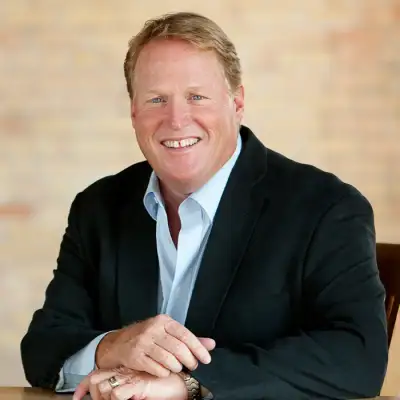
Former U.S. Senator Heidi Heitkamp and her brother, KFGO radio talk show host Joel Heitkamp, engage in animated discussions with newsmakers, elected leaders, and policymakers who are creating new opportunities for rural Americans and finding practical solutions to their challenges. Punctuated with entertaining conversations and a healthy dose of sibling rivalry, The Hot Dish, from the One Country Project, is informative, enlightening, and downright fun.
Heidi (00:05)
Welcome to the hot dish comfort food for rural America. I'm Heidi Heitkamp.
Joel (00:10)
And I'm Joel Heitkamp.
We've got a very special show for you today. Heidi just had an amazing conversation with retired General Mark Hertling about everything going on with the US military and our foreign policy right now.
Heidi (00:23)
man, it was really enlightening and interesting. And let's get to that conversation right away.
Heidi (00:29)
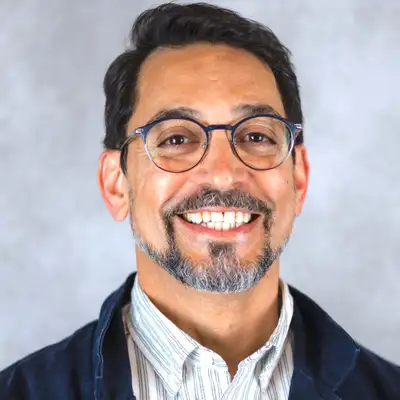
I am so excited today to be talking to retired general Mark Hertling. General Hertling served as the commanding general of the United States Army in Europe and the seventh army. He commanded the first armored division and task force iron multinational division North in Iraq during the 20, 2007, 2008 troop surge. So he knows a little bit about what he's talking about.
And we're going to be talking about his new book, which is If I Don't Return, a Father's Wartime Journal, which I'm very excited to hear about. And I think it's really important, especially for the younger generation, to understand what it's like to ⁓ sacrifice and to put your family in that position. But in the meantime, I want to talk a little bit about an article that you just wrote for The Bulwark which you're affiliated with.
and you introduced a new concept for me, which is the belly button rule. Can you talk a little bit about why you wrote that article? And before we came on the podcast, you were talking about actually writing an article for warning folks that this, operation in Venezuela could result in some real challenges later on. So ⁓ the floor is yours, General. Thank you so much for joining us.
Mark Hertling (01:50)
Well, thanks, Senator. I appreciate it. And it's an honor to be with you today. I'm a big fan of yours. I always have been. Yeah, the first article I wrote, I should cover that first before going into the belly button rule. ⁓ Literally the day before Friday, the day before the Saturday, early Saturday morning attack, I wrote a piece for The Bulwark called Regime Change is Harder Than It Looks. And what I talked about is ⁓ experiences I had in the Pentagon as one of the directors where we
I was assigned there as the J7 on the Joint Staff, which was at the time the person responsible for war plans and transformation of the armed forces. This was also the time the building was hit. 9-11 occurred while I had just arrived at the Pentagon. And of course, there was a lot of scrambling on what to do next. And then we developed or adapted into the approach toward going into Iraq. ⁓
When we first heard what the Secretary of Defense wanted us to do as a military, which was regime change of Saddam Hussein government, there was a huge discussion among the uniform folks saying, hey, that's not one of our missions. That's not what we do. The military does a lot of things, but that ain't one of them, because there's a whole lot more that goes along with regime change than just ⁓ driving tanks into a city and capturing a leader. ⁓
I kind of outline the experiences I had during two long tours in Iraq, one in 2003 and another one in 2007, ⁓ where we saw the various aspects of what occurred within the government, the economy, the security forces, the treatment of Ba'ath officers, the Ba'athist ⁓ civilians in the society.
It's one thing to say, we're going to take Saddam Hussein and get him out of power. It's another thing to understand the repercussions of doing that. And it took a long 15 years before a lot of advances were made within the government, the economy, and the diplomacy and the institutions of the nation of Iraq. ⁓ The following morning, I woke up, as everybody did, to the announcement that we had ⁓ gone in with special forces into Venezuela.
captured Maduro and brought him out. And I was eagerly awaiting the press conference by the president to see what he was gonna say if the plans that I had suggested in the first article were going to be followed. And my first indication that they were not was when a reporter asked the president who's in charge. And he looked around behind him to Secretary Hegseth and Secretary Rubio and director of the CIA, Ratcliffe and-
Stephen Miller and I can't remember who else was behind him. He said these guys are in charge. Well, that's when anything that I thought might be happening behind the scenes went pretty far south because I knew when you don't have one person in charge either an envoy or a military person or a diplomat or someone who's in charge of the post-conflict, you're going to have trouble. And sure enough, we've seen that already. And that actual
answer to the question was the generation of the next article I wrote called the belly button rule. And the belly button rule is simply this. Whenever you have a tough operation, you've got to put your finger in somebody's belly button and say, you're in charge, you're responsible, I'm holding you accountable for the things that are happening. Now, over the last week, we've heard the president say he's in charge, the new, ⁓ the old vice president of Venezuela is in charge.
Marco's in charge, Hegcess in charge. We still don't know who is in charge of Venezuela as oil companies are considering going in there and trying to renew the infrastructure and generate oil out of there. So it doesn't seem to be as much about regime change as it does about capturing and basically hoarding foreign nations' oil resources.
Heidi (05:59)
Yeah, I mean, and as I explained, I certainly don't have your background, but I understand a little bit about ⁓ oil economy. And, you know, the head of Exxon basically said it right, it's uninvestable. mean, and you know, we've seen oil grow 2 % demand for oil grow on average 2 % for a long period of time. And we're in a spot where we're talking about peak oil demand. And we're also in a spot where
that investment that could be made in ⁓ oil production, a lot of people think it should be made in the United States, not in Venezuela. so, mean, can you imagine just for a minute what was going through the president's mind when he decided that this was a good idea? And then, I kind of thought, okay, well, now we're gonna see the woman who won the Nobel Peace Prize.
basically being installed and that's going to be difficult ⁓ because does she have the military behind her? And I want you to speak to the role of the Venezuela military ⁓ in terms of the challenges that are ahead.
Mark Hertling (07:11)
Well, any kind of assessment of the Venezuelan government or the Venezuelan security forces writ large, not just the military, but the police force, how they have both Cubans and other nations providing security forces, it's extremely corrupt. It is in some cases capable.
as a military force, have very good equipment that's been given to them or sold to them by the Russians and the Chinese. But you're talking about a military that is beholden to the legacy of the hierarchy of the government, in this case, Machado. Now, okay, his vice president is now in. Do they have the same ⁓ deference to her that they had to him before he was replaced? And
You know, when you're talking about ⁓ changing regime, that legacy security forces is going to be asked the question, who should we be loyal to? And, you know, one of the things I did, Senator, when I was still in service, when I used to go around to different countries in Europe, I would ask soldiers from the different country, who do you swear on else to defend?
Well, that gives an indication of what the force is like. If they swear the oath to the queen or the king or the motherland or the fatherland, ⁓ we as the US military swear our oath to the constitution and ideas and ideals. ⁓ There's not a whole lot of other nations in the world that do that. Venezuela is one of them. ⁓ They basically swear their allegiance to the president and the government. So you're talking about a force.
that is allied with the corrupt government and they've been taking kickbacks and a whole lot of money. So it isn't just the army from the standpoint of who's going to fight, but having, as you mentioned in the introduction to me, having spent my last year and a half in combat in Northern Iraq, we were responsible for
getting the Baiji oil refineries and the Kurdish oil fields working again after they had been destroyed by terrorists. And you realize that you have to have a whole lot of security on those facilities. And when you have honest security people, they work pretty well. When you have a government that's corrupt and you have a legacy military that is corruptible, then you're not going to provide Exxon or BP or Chevron or anybody else with the security that they need.
I think one of the things that came up in that oil executive meeting, ⁓ which only reinforced my conclusion that there was no preliminary planning for this other than the special operations mission, which was a tactical mission that went off brilliantly. But again, what comes next? And you would think that that meeting with the oil executives would have occurred before ⁓ going into the country and saying, we control the oil wells.
Because there is no control of the oil wells right now other than by the government of Venezuela, as you well know.
Heidi (10:18)
Yeah.
And I thought what was interesting is when he started saying, well, when did you leave? And they said, when you started sanctioning Venezuela, that's when we left because we couldn't operate in Venezuela under your sanctions in your first term. And I think he was shocked. I think he just thought he was doing them such a big favor. you know, I want to pan out a little bit, General, and talk about what this means at large in Latin America, because the thing
Mark Hertling (10:29)
Right.
Can I
just say one more thing? Because you triggered something in me that I ought to comment on. Back in 2015, during the presidential campaign, I was still working for CNN. I did a candidate Trump at the time said, we should have gone into Iraq and stolen all the oil and all this other stuff. Well, Anderson Cooper knew my background. He asked me on his show and he said, what do you think about that? I said, well, it's a war crime, first of all.
Heidi (10:49)
Sure.
Mark Hertling (11:15)
And I said, secondly, we tried to bring in oil companies. had BP, Shell, and Exxon all coming into Northern Iraq. And they all said, first of all, the security is not good enough for us to work here. And secondly, the facilities are such bad shape that we're going to have to invest billions of dollars to get it up and operational. And they left. So I told that to Anderson Cooper. The next night, Cooper had Trump on sitting at the floor of his Trump Tower in New York.
And he said, well, we've got this candidate or we've got this military analyst who says it's a war crime. he tried to bring in oil companies to do this. And candidate Trump answered, well, then I'm smarter than that general. That was the first time he used that phrase. So I can have that on my tombstone saying that I was the first general that he said he was smarter than.
Heidi (12:06)
I once was
with a billionaire and I remarked that Trump told me once that he was the best golfer, a billionaire golfer in America. And this billionaire who was quite a good golfer, know, scratch golfer went, no, he's not. No, he's not. So no, he's not. So yeah, no, I was going to say, you know, when you look at the activity in Iraq and we, you know, we have the advantage of 2020 hindsight. I get it.
Mark Hertling (12:19)
Well, it all comes back around. I'm sorry I interrupted you.
Heidi (12:33)
but it destabilized. mean, Iraq was always the tension with Iran. We had that ability to kind of maneuver those two great, ⁓ you know, historic enemies, you know, and so it was a ⁓ limitation. once we ⁓ undertook the activity that we had in Iraq, that destabilized the region. So I wanna talk about your opinion about, you know, if we raise out, let's first talk about Latin America.
What's the consequences for the United States, not just in Venezuela and not just for the military and not just for, you know, kind of regime change in Venezuela, but let's pan out. And, you know, when you look at it, based on your experience in the mid-East, how concerned are you about destabilization of Latin America as a result of this?
Mark Hertling (13:29)
Yeah, I'm very concerned about it. And it was another thing I pointed out in the article that I wrote before the incursion into Venezuela. And that has to do with alliances. And one other similarity that you bring up is the president said multiple times, they will welcome us with open arms when we go into Venezuela. We've heard that before. And I had to live with it on a couple of occasions for a few years. And there wasn't a universal
Heidi (13:48)
Yeah, we've heard that before.
Mark Hertling (13:58)
⁓ cheering and decrees of faith and loyalty to the United States as they entered into your country. But when you talk about the region, ⁓ whenever a military operation is conducted, there's an assessment of who's with us and who's against us. And what kind of regional attitudes do you have? ⁓ You you can't take Venezuela in a vacuum because they border, first of all, Colombia.
which is a pretty important country in Latin America. They also have borders with Brazil, another important country. So what you're talking about is understanding the regional implications as well as the international implications. I mean, around the world, beyond the region of having confused our Latin and South American allies about what the US is doing, proclaiming we're in charge of the region.
with this regional hegemony and the approach to the, ⁓ to our hemisphere that has been said so many times, even in the UN by the UN ambassador, Michael Waltz, who said, this is our hemisphere, we should control it. And it's like, holy smokes, you're saying that on the floor of the UN in your speeches? That's the kind of thing that will confuse our neighbors in Latin and South America. But you also have to look beyond that. What are the implications around the world?
for security and what both our friends and our foes see in us. I mean, we now have former allies in NATO who have seen this incursion into Venezuela and said, hey, the next time President Trump says something about Denmark or Greenland or any other place, we better believe him. And that's not the kind of ally you want. But even beyond that, Senator, you're talking about intelligence agencies.
Heidi (15:40)
We believe them.
Mark Hertling (15:50)
that provide us with all sorts of information from around the world who are now saying, we're not telling the US anything. And that's one of our powers. The national power of information is what has made our country so great and our military so effective. When we start losing that capability of relying on our allies, and we already have begun to lose it, we're in bad shape.
Heidi (16:15)
Yeah, I want to point out too, when you say this is our hemisphere, what's the sub China as a I, you know, their, their historic, you know, desire to reunite Taiwan into ⁓ mainland China. It know, it just, you got your hemisphere, we got our hemisphere, our hemisphere. mean, so it was words that were not
Mark Hertling (16:35)
Right.
Heidi (16:40)
I don't think well thought out, no surprise there. That's kind of the MO. But the first thing I thought of is if I'm China, I'm like going, okay, if I'm Russia, I'm saying, okay, you have no business dealing with Ukraine. That's not your hemisphere. This is my hemisphere. wanna, you know, there...
Mark Hertling (16:43)
All right.
And it scares the
hell out of all the people that for the last 70 years we've been trying to make as part of different alliances around the world, not just in Europe, but all over the place. And that's been one of the things over four decades of my service in the military, one of our big efforts other than fighting wars was making fronts, theater security cooperation so we can gain access.
Heidi (17:18)
Yeah. Yeah.
Yeah. I think it's important before we kind of leave, Venezuela I want to talk a little bit about what this means for, for Ukraine. But I stood on the bridge and I saw the massive number of hungry people. I talked to people, you know, who were coming across into Columbia, who didn't have insulin, who didn't have, I mean, he took a very prosperous country and
absolutely decimated it and Colombia took a lot of refugees. In fact, it's the largest refugee migration in the history of the world. And you might say, why do you do that? Culturally, they're the same, but also during the Colombian Civil War, Venezuela took a lot of refugees. And so I talked to the border security people there and said, well, aren't you a little nervous about this? And they said, look, if we don't accommodate and document at this border, they'll just come through the jungle. I mean, they knew they couldn't.
Mark Hertling (18:00)
Right.
All right.
Heidi (18:14)
control the border. But so, I mean, no one should take what you and I are talking about in any way to be a, you know, approval of Maduro. He was a horrible dictator, desperately put his people into poverty, people who were middle-class, and it's probably better off. it, again, you know, the easy, and I wouldn't say the military stuff.
is not easy, but it is strategic and it has a beginning point and an end point, which was the extraction of Maduro and his wife out of Venezuela. Now what? And that's the problem. think ⁓ recently there was a report that in his first term, ⁓ Russia approached Trump ⁓ to basically say, look,
Mark Hertling (19:09)
Yeah.
Heidi (19:10)
let
us have free reign in Ukraine and you can do whatever you want in Venezuela. Do you think that's true? Do you think that that is in fact what was in the back of Trump's mind when he was doing this?
Mark Hertling (19:24)
Yeah, I try and stay away from unconfirmed reports. I saw that too. And truthfully, my first reaction, as many people as, whereas that makes sense, but there's no confirmation.
Heidi (19:36)
It makes sense from Russia's
standpoint. Yeah.
Mark Hertling (19:38)
It certainly does. And it makes
sense in terms of what the president has been doing in terms of allowing Russia to do what they're doing. ⁓ So you could see some dots connected, but I don't want to draw a conclusion from that because I just don't have the facts. I think someday someone will learn the facts about that, but it sure is an interesting report.
Heidi (19:58)
Mm-hmm.
Well, Russia's been very quiet about what happened in Venezuela. you know, if I'm looking in the region, I'm thinking Cuba better be careful. I mean...
Mark Hertling (20:13)
Yeah, well, and you
say you say that Russia has been quiet, and I think that's only because we have been distracted over the last week. The Russian attacks inside of Ukraine.
have monumentally increased, exponentially increased. They've been striking targets that they hadn't struck before. This morning, I checked the weather in Kyiv, it's 14 below zero. And they are becoming very effective in terms of knocking out energy resources to the Ukrainian people. And God bless them, the Ukrainian people are still...
Heidi (20:38)
Wow.
Mark Hertling (20:51)
They have a will to continue the fight, which is just simply amazing. But Russia has been very active while we've been focused on Venezuela and Greenland and people in our streets and ICE agents and all those kinds of things. Russia has been very active and I think it's been a distraction from what they've been doing.
Heidi (20:51)
in the fight.
Yeah, before we get to the book, I'd like to just spend a couple of minutes on the Insurrection Act. ⁓ You know, obviously the ⁓ courts have restricted or at least sent a message that you don't always control the National Guard. ⁓ These aren't emergencies for which you can advance or to nationalize the National Guard. But obviously the president has a very powerful weapon or a very powerful
⁓ ability to invoke the Insurrection Act. ⁓ How concerned are you that given what's happened in Minneapolis that this will be a direction that ⁓ he takes? And I just wanna kind of put a little more color on it. I have no idea why they overreacted in my opinion to the video that Mark Kelly and the other former members, but clearly,
they're concerned that that message may resonate and result in someone saying no, I think. mean, so can you just mention a little bit from a military man's perspective, ⁓ you know, ⁓ active duty troops in the United States, how concerned are you that that's the next step?
Mark Hertling (22:17)
Right. ⁓ Absolutely.
I've been concerned that that has been an agenda item of this administration from the very beginning. And they have done certain things that have attempted to crank up the temperature in various key cities, democratic cities. Again, so you could use the mantra of, this is all the bad things going on in these blue cities, when in fact, all the blue cities that they've gone into.
are relatively calm and peaceful and have had lower crime rates than some of the other ones. I mean, there's parts of any large city like Los Angeles that's going to have crime, but that's not where the National Guard was. The same thing in Washington, D.C. And the reinforcement by the president saying, see, crime has dropped to zero. First of all, it's certainly not true in any of those cities. And secondly, there was not a whole lot of crime in those cities in the first place in most parts of them. ⁓
But the fact that he is deploying first the National Guard from one state into another and then reinforcing with military ⁓ troubles me, especially the first tranche of these when he mobilized the Guard, but he also mobilized not the Army, but the Marines.
because there is a different culture in the Marines in terms of taking orders. There is a different culture in terms of what they train for and what they don't train for. I mean, the Army has a human, usually a humanitarian aid mission as part of their skill sets. The Marines mostly do not. I mean, other than in very unique circumstances. So when the first unit he called was a Marine unit out of 29 Palms, California,
That sent a signal to me as a military guy that this is beyond what we're thinking it should be. But as we see ⁓ the increased militarization of border patrol and ICE with just what they're wearing as an intimidation tool, just how they're approaching US citizens tells me, and I've been in a lot of fights, they're looking for a fight. They are looking to provoke and intimidate.
And pretty soon that dam may break. ⁓ And we're seeing more protests, more people on the street. And whenever you have more of a crowd being increasingly intimidated, ⁓ you're going to need a relief valve somewhere. ⁓ And I'm hoping, as all of the governors and the different elected officials have said, don't take the bait. That's the key. Because if he doesn't have a reason,
to invoke the Insurrection Act. He can't do it. I mean, he can do it on his own if he wants to, he can't. I mean, he can say, I'm invoking it now, but then the courts are going to say, why? And it's going to take a long time to pull people back. But I think the pro-
Heidi (25:29)
Yeah.
Well, and this
is a huge, mean, know, Posse Comitatus, all of this has a long, long legal history. It has a long political history. You know, we have police powers, they're given to police. We have ⁓ external people who protect us against external threats. And those lines are getting blurred, in my opinion. I want, go ahead, go ahead, General.
Mark Hertling (25:57)
They are. And if I'm, go ahead, please.
If I am a young soldier in a unit somewhere in Texas or Georgia, and suddenly I'm mobilized, the thing that these politicians are not considering is I've got to go out with a weapon as part of an insurrection act and face my fellow citizens who aren't doing anything wrong.
You know, they're protesting and peaceful protests are part of who we are. So you're asking me as a human being who's wearing a uniform to face my fellow Americans and potentially use force against them. Unless it's truly an insurrection where people are trying to tear down the government, I don't think we want to put our military in that role.
Heidi (26:46)
I think that's a really important definition. Are these people trying to overcome? there's a boogeyman that they're gonna find in every corner. They're domestic terrorists, they're this, they're that. It's the same thing of the Venezuela and boat people are bringing in fentanyl. No, they're not. They're probably bringing in marijuana like we know, and they're probably transporting cocaine. And so, it's just so interesting to me.
Mark Hertling (27:04)
Right.
Heidi (27:14)
that we haven't heard a lot of discussion about the insurrection app because I think my concern is that's the next escalation. But I don't wanna leave this conversation without talking a little bit about your book. Why did you write it? And what do you hope people take away from it when they read it?
Mark Hertling (27:27)
Mm.
The title of the book is If I Don't Return, a Father's Wartime Journal. It looks like this.
if I can tell a short story, this was a journal that I wrote in 1990 and 91 ⁓ because when we were sent off, when I was sent off to Desert Storm, I was in a cavalry squadron. We were going to be out in front of the division at the time. And I know Desert Storm was a huge success now looking back on it. But when we deployed, we were told
Heidi (27:41)
sure can.
Mark Hertling (27:59)
We're going against the fourth largest army in the world. have chemical weapons and they've just come out of about eight year war with Iran. So this is a pretty tough force you're going against. And we were told, our unit was told we're likely to suffer 50 % casualties, dead and wounded. And so I said, what do I leave as a legacy to my eight year old and 10 year old boys and to my wife, if she's a widow, how are they gonna remember me?
So I started writing thoughts before the war started, just when we deployed there and we had some time before we went into combat, about every life sort of emotion that you can have, fear, love, ⁓ anxiety, friendship, ⁓ the chaplains that were with us. So I wrote a lot. Each day I wrote a short journal entry. Well, when I came home, the spoiler alert, I survived. And when I came home,
know, our boys were still relatively young because it was a fast war. They didn't want anything to do with this journal. So it was thrown into a footlocker. Well, now the boys are older. And our youngest son actually asked my wife about it a couple of years ago. And he painstakingly took that journal and typed it up into a Word document and gave it to me for last Christmas. ⁓ And when he gave it to me, he said, Dad, reading through this, I realized
Heidi (29:14)
Aww.
Mark Hertling (29:19)
having served himself now, he said, I realized what you were doing. You were preparing for us if you don't come home. I said, that's exactly what I was doing. He goes, okay, well, that was 30 years ago. He says, now you have to continue. You've served in a couple more wars. You've served in the military with the uniform and you've served in the private sector. Take all your journal entries and expand them.
from what you've learned over the last 30 years. So I don't think he expected me to do it, to be honest with you, but I immediately started working on it as kind of a secret. The only person that knew that I was working on it was my wife. And she just loved seeing me go in my office for a couple hours a day and work on this journal. I sent it off to a publisher just to see what he thought about it. And he actually told me, he said, hey, I'll get back to you in a couple of weeks. Let me get a chance to read it.
And he called me the next morning and he said, I was up all night reading this thing. This is great. We need to publish this. So ⁓ a couple of months ago, we decided to publish
if you want to sign copy, go to ballastbooks.com and ⁓ we'll sign a copy for you. And if you just want a regular copy, go to Amazon and you can get it in bookstores on the 10th of March. So I'm looking forward to that.
So that's the story.
Heidi (30:34)
Terrific. I
am so excited to read this book. think, like I said, I think it's it, it so many people see the uniform and they don't see the soul and the commitment behind it. They understand that. And I think the United States certainly where I came from, where I come from, rural America, you know, serve at record numbers. My dad started and my dad was a world war two vet. He started a VFW. It was the smallest VFW.
Mark Hertling (31:03)
⁓
Heidi (31:04)
but talent ever to hold a VFW post, because he wasn't hanging out with the American Legion, you know? Anyway, so, I mean, we grew up, ⁓ you know, with honor guards and we, my dad was a commander of the VFW post for years. And ⁓ I have seen people in my generation take over that responsibility. I have seen the kind of sacrifice. Now we're seeing all the Vietnam veterans that are,
Mark Hertling (31:09)
Exactly.
Heidi (31:33)
going to the VA, still struggling and struggling with diseases that they basically contracted when in Vietnam. And so ⁓ it's just so important. And I just want to thank you because it's really hard to put yourself out there. mean, it's one thing to write a military history and talk about deployments and we did this, we did that. It's another thing to put yourself out there and talk about
Mark Hertling (31:41)
Right.
Heidi (32:02)
how frightening, not probably for you, how, right, right. Well, well, for your family. I mean, I think people don't realize. And so I hope you have great success with this book. I look forward to reading it. I think everyone should read it and understand and appreciate the sacrifice of the men and women in uniform. in the meantime, you know, people can read what you write on The Bulwark, right? You're affiliated there.
Mark Hertling (32:06)
No, for everybody, for everyone. Yeah. Sure.
Yes, sir. Yes, ma'am.
Heidi (32:31)
Really important, think these are places where you're not gonna get the in-depth because the Yak Yak Stations, and I know you and I both do talking head stuff, but you don't really get a real kind of, ⁓ okay, that's what's going on. And so I would really recommend that people follow you there as well. I'm assuming you're on some social media. You wanna plug that real quick?
Mark Hertling (32:58)
I
don't want to plug anything. I've got enough people I'm talking to right now, but if, people want to read my stuff, that's great. Or join me. It's it's Mark. It's @markhertling on Twitter and LinkedIn and, and, blue sky and a few others. So I I'm happy to talk with anyone, but it's, you know, one of the other reasons I wrote the book Senator to be honest with you is, know, you tell the story about your father and, everybody has a story.
but there's only 1 % of Americans that actually serve in uniform right now. So it was hopefully something that will inform people about what soldiers do, what military people do, and their families, and a little bit about combat too.
Heidi (33:27)
Mm-hmm.
Yeah, I think ⁓ just to give you a sense, every male in my dad's family wore the uniform, mainly Army. But yeah, and on my mom's side, almost all of them wore the uniform. But then you got to remember this was Korea, this was Vietnam, ⁓ you know, one career military. ⁓ The rest came home and started farming and ran small businesses. ⁓
Mark Hertling (33:49)
Amazing. God bless him.
Yep.
Heidi (34:07)
The other thing I just want to impress upon people is I have had the distinct honor ⁓ serving North Dakota in political jobs ⁓ to be able to watch and to be asked to attend various events. it is remarkable because the people who serve our country in uniform, when they take off that uniform, they want to continue to serve.
Mark Hertling (34:35)
Yeah, they do. Absolutely.
Heidi (34:36)
and ⁓ finding
ways for them to participate in the community. And you're seeing record number of people running for office who wore the uniform. I think that's at one point we thought, whoa, there won't be anyone who actually has had that experience. And now we see so many people who are saying, look, I agree with what's going on or I disagree with what's going on. And they're looking for service in another direction. And you certainly.
have been serving, continue to serve your country with the work that you're doing. Thank you so much, General.
Mark Hertling (35:08)
Well, that's very kind.
appreciate it. And thank you for having me on. This has been a great conversation, Senator. It's been fun talking with you too.
Heidi (35:15)
Yeah, absolutely. Take care, General. And love to your wife and thank her and your boys for ⁓ enduring your service.
Mark Hertling (35:17)
Okay, thank you. Thank you.
Yeah, you betcha. Thank you.
Heidi (35:28)
You bet.
Heidi (35:31)
So Joel, ⁓ you're talking to Minnesotans every day. You're talking to people in our region every day. ⁓ Obviously the big news is what happened in Minneapolis. I have a son who works at a Target store. I called him yesterday and said, just be cool. ⁓ You know, because that's the latest place where they are going, where ICE is going. you know, and people always ask this.
So what are people talking about? What are you hearing, Joel?
Joel (36:01)
Well, here's what I'm hearing. ⁓ I'd like to say it's 50-50, ⁓ but it's not in terms of ⁓ people just outraged. ⁓ You know, the one thing that is very consistent is people want ice out of Minnesota. I mean, I am a very ⁓ conservative show.
No question about that. Most of the calls that I get, most of the text messages I get into the show, most of the emails are all conservative by nature. I shouldn't say all, but most of them. ⁓ And they've gone quiet. The conservatives have gone quiet. There's still one or two that are saying that she had this coming. She didn't follow the commands of law enforcement. But I've been making the argument on my show.
that, you know, was it OK then for all those people, law enforcement officers, friends of yours, Capitol Police to unload and start shooting people on the steps of the Capitol on the date of the ⁓ attempted insurrection? ⁓ you know, people kind of get it when you.
put it in the context of their life, you know, their daughter, their granddaughter. What if they were doing that? ⁓ Then they back off. They immediately go to some other ⁓ subject on my talk show. And so I don't know. It's there. It's playing out. I think that the issue ⁓ is going to get worse. We all knew it was going to happen, but it's going to get worse and it's going to get worse because Donald Trump wants it to get worse. And you just heard why.
Heidi (37:33)
Yeah, I had a wonderful conversation with the general about the seriousness of invoking the Insurrection Act. And I think a lot of us are watching this thing, that the Border Patrol and ICE have already been militarized. You look at how they're dressed. mean, these are not police ⁓ uniforms. These are paramilitary uniforms. And what does that mean? ⁓ The next step is the next step, deploying
Marines on the streets of Minnesota. And, ⁓ you know, I think it's just so interesting because the chaos that all of this is creating, there's, I mean, what Donald Trump told us is that he was going to deport and basically apprehend the worst of the worst.
And we're hearing stories about 17 year old American citizens being thrown to the ground who are just trying to work at the Target store, right? And then finding out, I mean, finding out that they're American citizens and dropping them off at the Walmart. Really? I mean, you know, it's just, and that's not done, that's done on purpose. That's done to intimidate, that's done to basically, it's a power move. you know, I've obviously, know, former attorney general.
spent a lot of time talking about law enforcement training. And one of the things that has really, since George Floyd and since, you know, all of the unrest, there's a mechanism on de-escalation. You know, law enforcement's trained on de-escalation. Guess what? There was no de-escalation in this circumstance. And so is that our expectation or is there our expectation that you tell someone to move a car and when they don't move a car, you shoot them? Is that the expectation we have now?
Joel (39:23)
Well, and take that to exactly what the president said. You mentioned that he said he's only going to take the worst of the worst. Number one, a lot of employers are starting to speak up and say, we need these employees. But aside from that.
He's not doing that. He's looking for a fight. He's always been looking for a fight. You know, he said in an interview recently that the only judge that he has is his own mortality. ⁓ I'm sorry, his own morals. ⁓ And he doesn't have morals, Heidi. I mean, he doesn't.
I mean, wouldn't that be easy if there were no referees in the football game? Being a former college football referee and people said, well, the only the only issue that we need referees for is if we don't cheat and we don't break the rules. Well, you know what? He's cheating. He's breaking the rules and he's doing it all in the name of I can.
And Hyatt, you know, you're an attorney, you're a former attorney general, you're former chief law enforcement officer. There's a lot of things that are intertwined there. Let me ask you this with what the court ruled. Isn't he right?
Heidi (40:34)
But I mean, that this idea that you can profile anyone who's brown and stop them and the Supreme Court sanctioned that, ⁓ you know, and if they don't, if you have the right to stop them and they resist you, do you have the right to throw them on the ground? Do you have the right to bloody them up? Do you have the right to injure them? Well, shoot them. Yeah. You know, the...
Joel (40:44)
Mm-hmm.
sure.
Shoot him and kill him.
Heidi (41:01)
The other thing that the general and I talked about is the more global ramifications of the ⁓ activity in Venezuela. ⁓ And you and I have had conversations about the oil industry and about domestic investment versus foreign investment. I think he got schooled a little bit by ⁓ some of these oil executives who said, you know, it's uninvestable. But I think the bigger thing is, what does this mean for Taiwan? What does this mean for
for Greenland, what does it mean for Cuba? I I think that the secondary benefit for Trump on doing what he did is that he now has people believing that he'll take Greenland. He has people believing he'll take Cuba. has, I mean, he has NATO countries planning for what they're gonna do when he basically moves on Greenland. because, you he did it in Venezuela.
Joel (42:00)
Yeah, well, you know, I posted that question on my Facebook page. I have 15,000 people that, you know, watch what I say and do and comment on my Facebook page here at work. yeah, yeah. boy, folks, if you want to see, just go to my Facebook page and friend me. You're going to see there's love in the air here in the upper Midwest. But, you know, these people, I asked them how they could justify.
Heidi (42:10)
They all love you too, Joel.
Joel (42:27)
us, the United States taking over Greenland. What was it that empowered us, that allowed us to do it? Again, it went back to Donald Trump's morals. And it didn't matter if the argument was made by the pro-Trumpers that it was military, it was all military interests and all this, that if you mentioned to them that we have military bases on Greenland, we haven't been denied spots on Greenland. Yeah. And so
Heidi (42:52)
Yeah, I've been there.
Joel (42:56)
That didn't matter then then it was OK. How do we switch? Well, it's all their natural resources, OK? ⁓ What makes those ours? I mean, cause we want them right? I mean, we want them and so then I asked this caller that called into my show. I said OK, here's a scenario. I like your car. I do. I like your pickup and so what I'm going to do is I'm going to come in your driveway and I'm going to look at you and say, you know, I want to make a deal on that pickup. I want to. I want that pickup. I want to buy it.
Heidi (43:08)
Yeah
Joel (43:26)
And when you tell me no, I'm to look you in the eye and say, I'm going to take it. So which one of those two do you want? Do you want me to give you money for it or do you want me to just take it? Because I can. And that conservative caller that called in, he said, well, you're not getting my pickup. I said, I said, well, maybe you should move to Greenland because they need you right now.
Heidi (43:51)
Well,
the other thing is, he basically said, just because you landed a boat there, well, there's a whole doctrine of discovery in kind of geopolitical terms. And certainly the United States believes in the doctrine of discovery, just ask Native Americans. ⁓ And what people don't understand is 80 % of the residents of Greenland are indigenous. They are native. ⁓
Joel (44:06)
I was going to say, what about the Native Americans just because you landed a boat there?
Heidi (44:19)
really relatives of a lot of Native Alaskans, a lot of the tribes in Canada. And so, yeah.
Joel (44:26)
So Heidi, ⁓ question
for you. What does NATO do when he goes after Greenland? Because he's going to go after Greenland. If there's one lesson that we all should have learned by now is when he tells you and telegraphs exactly what he's going to do, he does it. I mean, he does it.
Heidi (44:42)
Well, the question is whether they
blink Joel whether they blink. Yeah.
Joel (44:45)
That's my point. What does NATO
do? Because if they don't stick up for Greenland and Denmark, then NATO is over. NATO's done.
Heidi (44:55)
But you know, you see a lot of dialogue coming, mostly very, very critical of the president. So it'll be interesting to see. I mean, what is what his next move is and all of this and, you know, we're going to have to move, move on. But all of this, guess what we're not talking about? The Epstein files, Joel. Yeah, divert, divert, divert.
Joel (45:20)
Exactly. So that works, right? ⁓
There was a rumor that the helicopters that flew into Venezuela had those banners. You see at the Super Bowl behind them hooked to the helicopter as it flew that said, Forget Jeffrey Epstein, Forget Jeffrey Epstein. But apparently that's not true. I found out that that was just an AI image.
Heidi (45:36)
Ha!
I, Joel, I
think that was an internet rumor, but you know, it doesn't mean that you can't repeat it.
Joel (45:46)
That's just, know,
well, no, it doesn't mean that I couldn't start it. But that.
Heidi (45:52)
You are a
you-know-what stirrer.
Joel (45:57)
Yeah, but but that's what he wanted, right? He wanted us to not talk about that anymore. And, you know, there's a lot of talk talking about rumors, talking about, you know, social media that's been bringing up his wife and her role with Epstein and all of that. I don't know. I don't know. The only thing I know about the Epstein files is that those young girls that were raped and abused deserve what the law requires him to do, which is to release
the Epstein files. And again, Heidi, I go back to the court system that you loved dearly, that you lived in, that you work in. I don't see this Supreme Court doing what it needs to do to save our democracy. I just don't. I'm not a big believer in the Supreme Court right now.
Heidi (46:43)
Well, and Joel, we haven't even gotten to the Jerome Powell taking over the Fed. So talk about more diversion. Anyway, we're going to have to cut it off there. ⁓ It's always great on the hot dish to hear, especially Joel, your perspective from people who talk to you every day, because a lot of people look at what's happening in Minnesota and say, who could possibly think that's a good thing?
Joel (47:06)
Yeah. One thing
that I want to add before we close out was I get a lot of calls into my show from Canada. A lot of Canadian listeners ⁓ call into my show. you know, I broach the subject. know, Canada is rich in natural minerals. I mean, what if we want it? Can we just go take it? And one of the Canadians that called into my show, said, Joel, I'm a conservative. If I was across your border, I'd be a Republican. He said, this guy's an idiot.
I mean, this guy's an idiot and people are literally tipping over everything up here to see if it's made in the US of A and if it's made in the US of A, we won't buy it.
Heidi (47:43)
I'll tell that to the bourbon industry in Kentucky. Yeah.
Joel (47:48)
Yeah,
Sad stuff, but it's what he brought us and it's what the majority of Americans voted for.
Heidi (47:55)
And we didn't even get a chance to talk about football.
Joel (47:59)
Yeah, well, you know, here's the deal. You've been a Steeler fan. You've been a Steeler fan. You've been a Packer fan. I had one of our cousins, our nephews. yeah. ⁓ yeah. It's just whatever the wind blows. OK, here's the test, ladies and gentlemen. Here's the test of Heidi and her football. Being a fan. Name me five players for the Bears, Heidi.
Heidi (48:01)
I don't have a team, you don't have a team.
I have to go with the bears now. ⁓
Yeah, well, I'm sure they aren't gonna make it through either so
Loyalty, yeah.
We have to go now.
Joel (48:26)
Yeah, yeah, exactly. And you know what time the Packers play next week? The same time the Vikings do. That's when the Packers play.
Heidi (48:32)
They don't. ⁓ Hey,
listen, it's all in good fun, Joel. All good. Okay. And go Indiana.
Joel (48:42)
Yeah, you know, I think that's the one thing we can agree on. Go Hoosiers.
Heidi (48:43)
Yeah.
Well, listen, thanks so much. you know, the book Joel, the that the general wrote sounds fascinating, a good conversation, and an important conversation for for our listeners to hear. Thanks so much for ⁓ kind of continuing to work with me to bring these voices to ⁓ our listeners.
Joel (49:04)
Yeah.
Well, and thanks to all the people that are following us here on the hot dish. The numbers are getting to be absolutely fabulous. ⁓ know, Heidi, most of it's because of me, but it's good you come on each week.
Heidi (49:24)
Yeah.
I don't dispute that, Joel, I don't dispute that. Hang in there, talk to you next
Joel (49:29)
Yeah, good to visit folks.
Heidi (49:36)
Thanks everyone for joining us on The Hot Dish. I hope you enjoyed that conversation as much as I did. Brought to you by One Country Project, making sure the voices of the rest of us are heard in Washington.
Joel (49:48)
Learn more at onecountryproject.org. That's onecountryproject.org. us on Substack, YouTube, Facebook and Blue Sky.
Heidi (49:58)
We'll be back next week with more hot dish comfort food for rural America.