Subscribe
Share
Share
Embed
Welcome to DejaVue, the Vue podcast you didn't know you needed until now! Join Michael Thiessen and Alexander Lichter on a thrilling journey through the world of Vue and Nuxt.
Get ready for weekly episodes packed with insights, updates, and deep dives into everything Vue-related. From component libraries to best practices, and beyond, they've got you covered.
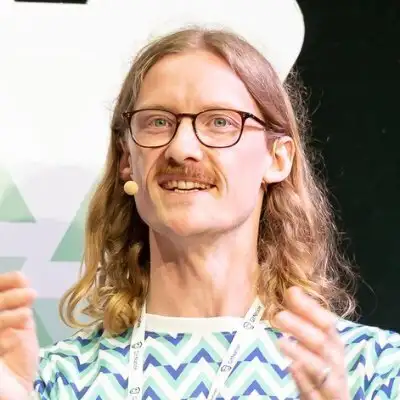
Welcome to DejaVue, your favorite Vue podcast. But you maybe don't know it yet, but we've got a bunch of episodes so far. So you've had probably, like, 41 other chances to figure out if this is your favorite Vue podcast, but, I mean, let's just get into this one. I've got with me Adam Jahr from Vue Mastery. You have probably heard of Vue Mastery.
Michael Thiessen:They've been around a long time producing lots of amazing content, and this is the guy behind it. And he also does lots of amazing talks. And, yeah, I'm so glad to have you here. How are you doing, Adam?
Adam Jahr:I'm doing well. Thanks for having me. We last saw each other over in Toronto, so it's nice to see you. We actually got a guest star here, my cat decided to join. So I guess he wants to say hi too, but yeah it's nice to see you since we saw each other over in Toronto, and nice to talk about the things that we love the most, which is nerdy stuff and producing, technical content and all that jazz.
Michael Thiessen:Yeah. Yeah. So I mean, you've probably seen from the that whatever the title is of this episode, but we're mostly going to be getting into creating technical content. And I think even if you're not trying to, like, make courses or anything like that, I think it's still a useful topic because we're all in a way communicating with technical concepts where every day we're writing requests and trying to explain things to product managers and writing documentation for other developers and things like that. So I think it's a broadly useful topic for everyone involved.
Adam Jahr:Right. Or you're mentoring a junior developer or something like that. It's it's always nice to be able to know how to communicate your ideas in a way that, resonates and and lands.
Michael Thiessen:Yeah. And I think one thing that I've seen from a lot of people is that when they're hiring, they try to look for, can someone communicate these these topics really well? And so it appears that the job market right now is, pretty pretty tough. So maybe that's that's an area where some of you can can improve upon, and maybe this episode will help you with that.
Michael Thiessen:But before we get to that, can you take me through what Vue Mastery is?
Michael Thiessen:Because I'm sure not everyone knows what Vue Mastery is and how you got started with Vue Mastery and, you know, your story of getting into Vue as well with that. Sure.
Adam Jahr:Yeah. So Vue Mastery as it sounds, it's a it's a way to master Vue. So we're a platform that is totally, dedicated to being a resource for Vue developers, whether they're just getting started with the platform or they're deepening their knowledge from maybe intermediate to expert. We have content for for all levels, and it's mostly video platform, but we also have all of our video content is also in written format. We have an active blog as well as we host, conference talks from Vue conferences around the world.
Adam Jahr:So it's really kind of a one stop shop to get a lot of Vue content, all in one place. So in terms of, how I got started in it, so some of y'all listening might be familiar with Code School. That was a big platform back in the the 2010s mostly, and that was, founded by my current business partner, Greg Pollock. We're both from the Orlando tech scene. So back about a little over 7 years ago, I was just ending, my time at an in person coding boot camp where I was helping guide students through a really grueling 12 week process where they were going from really any diverse background, whether it was serving, bartending, being as you know not not even having gone to college or having any formal training in technology and really elevating them to the point of employability through that 12 week process, and so that really taught me a lot about what it takes to teach, and to teach in a way that really leads to competence and and confidence as well.
Adam Jahr:So that really informed everything I do today, but so I was ending my stint there, and Greg had just sold his code school to Pluralsight, and we were got to talking and and ideated on really combining our efforts into a devoted platform, and, we really liked VUE, and, coincidentally I'm not sure if I told you this, Michael, but we were producing content out of Greg's condo, which was at the VUE, same spelling, v u e, and and so we were playing around with with some different technologies, figuring out what what we really wanted to truly devote a platform to, and, all signs, literally the sign on his building was pointing to VUE. So, we we went all in and and, have been creating content ever since and and have a library of almost 60 courses now. So started from the ground up and and have been pounding the pavement since, and that's what we love to do. We're really passionate. We're just educators at heart as well as, have a sense for for visualizing concepts, which we can get into, in in more depth, but we just love teaching and love to really facilitate those moments and have people have those moments where things just click, and so we love to produce, that experience for people.
Michael Thiessen:So from your coding boot camp days Mhmm. Are there any, like, particular lessons or insights that you remember from that boot camp, like, in taking people through that 12 week process?
Adam Jahr:Yeah. I would say probably the biggest is that whenever you're teaching someone again, we went over kind of the different use cases. If it's whether you're formally producing, like, you know, video you wanna post on YouTube that teaches something, or you're teaching a new member of your team that is junior, it's important not to make assumptions about what they already know. I think it's difficult for developers sometimes to take a step back because they're so close to, you know, the experience of of what they've been doing for years, and and they do it every day. So it comes so naturally, and it feels almost like second nature to them.
Adam Jahr:But it's about taking that step back and and remembering what it's like to be in the position of not knowing, and really teaching is creating that bridge to, like, where you are from where they are, and so it's really a bridge built with empathy. And so you can't really build that bridge without if if you're making assumptions about where they already are. So regardless of, like, who you're teaching, that is is a thing you're always gonna have to keep in mind. Of course, if you're, like, mentoring someone face to face, you can establish that fairly quickly and then go from there. But if you don't know who your audience is, then the fewer assumptions you're making, then the more effective your content is gonna be.
Michael Thiessen:Yeah. This is something I think I struggled with myself, especially because, like, when I'm when I'm writing an article or something or putting together a course, I always think it needs to be insightful and useful and valuable. But Mhmm. My own gauge on whether something is useful is kind of broken because, like, I've been doing this for so long that I know a lot of stuff that, like, a lot of people don't.
Michael Thiessen:And so what's useful or interesting to me is totally different than what's useful or interesting to other people. And so a lot of times, I think, oh, this this article I've written is kind of boring, it's kinda obvious stuff, like, everyone knows this. But then it turns out that that's actually the article that people love the most and it's most useful because, oh, it was just me that that knows that because I read the documentation all the time and no one, like, reads the documentation line by line, but I do. And so then Right. Like, I know about this stuff, but not everyone else does.
Michael Thiessen:And so it's hard to take that step back and to, like, separate yourself and figure out, like, okay, what is common knowledge and what is my knowledge or, like, maybe you don't even need to think about what common knowledge is, but just, like, yeah. I don't know. Somehow somehow getting getting past that all is yeah. That's been difficult for me.
Adam Jahr:Mhmm. Yeah. It can be tough, especially if if it's something that you're really familiar with to, like, create that distance from something that you're just innately close to. But there's different ways to to to go about it, but think having that as just, like, the voice in the back of your mind. Like, am I making assumptions here?
Adam Jahr:Or or, like, I guess a better question is, what assumptions am I making? Because regardless, you're gonna be making some assumptions, and some assumptions are gonna be helpful because you might be specifically having an audience in mind that, you know, maybe they are already view 2 users, and you're creating a migration guide to view 3 or something. So then the assumptions you're gonna be making are very specific. So, yeah, so I think that question, what assumptions should I be making, and then should I not be making, and use that as, like, the foundation to then build the lesson or or whatever you're building from.
Michael Thiessen:Yeah. So okay. So you did your coding boot camp, then you and Greg started to come up with some ideas, and you settled on Vue. Mhmm. What happened from there?
Michael Thiessen:You started Vue Mastery, and then and what time around what time was this that you
Adam Jahr:So this
Michael Thiessen:started this?
Adam Jahr:This was back in the summer of 2017 when we got started on this.
Michael Thiessen:Okay.
Adam Jahr:And like I said, we hit the ground running pretty fast in terms of, like, creating a lot of momentum in different ways. So we first before we actually did anything, we created our Vue Essentials cheat sheet, and that was a way to start to kind of get our name out there, start to build our our email list as as well. And, simultaneously, we were producing our intro to Vue course. We were also establishing relationships within the Vue community with, Vue core team members, with, Evan You, himself, Chris Fritz at the time, who was the big, force in the documentation in the early days of Vue. Mhmm.
Adam Jahr:He's an excellent teacher in his own right and and learned a lot from from collaborating with him. Worked with Damian Dulisz. He was producing at the time the official View newsletter, and, we would then translate that into the official Vue News podcast, back in the day. So we did a number of episodes of that over a couple years, and, got good traction there in terms of people enjoying the content, because it was it was essentially us summarizing the the week's news, whether that was, you know, a version release or or new articles that would come out by sometimes yourself and, a nice kind of verbal summary of of the things to know for that week in in Vue. So, yeah, we're kind of doing multiple things at at at the same time, building out our our YouTube channel and and our our Twitter at at the time, and all while simultaneously doing the the meat of of what we do and what we do best, which is producing that content library, which we were producing, like, kind of course after course.
Adam Jahr:I was working on something, while Greg was working on something, and built that pretty quickly over time in terms of, working with, different contractors, different, content creators in in the Vue community, Ben Hong, and Natalia Tepluhina, people, Marina Mostie, people like that.
Adam Jahr:And, yeah, it was a it's been a really great experience of of expanding into the Vue community, going to a bunch of different conferences, getting to meet the people who, you know, I think we've we've talked about before, how conferences are really a special experience because when you're teaching, you're just, you know, speaking into the camera, and you don't really get to have the experience of, like, a traditional teacher does of, you know, caring for that student in real life and seeing the the moments happen in real time.
Adam Jahr:And, yeah. You're a teacher to students who are who are kind of just nameless and faceless. But, that's
Michael Thiessen:You don't really get feedback from people otherwise. But at conferences, I've had people every single time I I go to a conference, people come up to me and say, oh, this article, I learned this from from you or this course I took or workshop. Like, we've been, you know, a year later, we've we're still using that pattern all the time in our code base because of what you taught us. Whereas an email I occasionally get an email that's like, course is great, and that's it. So Right.
Michael Thiessen:Yeah. That it's totally different. Mhmm. Mhmm.
Adam Jahr:Yep. Yeah. It's a really great way to to get feedback whether that's constructive criticism or or, like, those really validating moments where someone says, like, you know, you helped me learn Vue, and and now, you know, now I'm employed, and and you you know, learning with you helped me get a a job using this technology, and and you realize the the impact that you can have as an educator because you can really help people help themselves to to to take themselves to that next step. Yeah. So, it kinda tangented there, but, yeah, the conferences have been a really special part of of growing the company in terms of having that human element, along the way.
Adam Jahr:But, yeah, this is basically the story, and we've been been doing that ever since over the past 7 years and are now at a point that we have a really solid library with a bunch of different learning paths for a different experience levels, different playlists, that are organized into different categories, whether you're looking to get into Nuxts or state management or testing, things like that.
Michael Thiessen:Yeah. Yeah. And I've written some stuff for you in the past. Mhmm. And, yeah, I think there's a lot of great great content on your platform.
Michael Thiessen:And, yeah, 7 years is, pretty long time. So, congrats on on, building this up to what it is, and, yeah, I hope I hope that there's a lot more to come as well.
Adam Jahr:Thank you. Yeah. It's been it's been fun, and it's been cool seeing over the years as well people finding their own success in in in teaching Vue. And like I mentioned, we watched your writing evolve from doing your blog posts to creating your own content and and creating your own personal brand around teaching Vue, which has been been awesome to see.
Michael Thiessen:Yeah. Thanks. So I wanna ask a question that's entirely selfish because I don't know how many people watching this will care about this question. But I was wondering, as you were describing this, you're you're talking about your marketing efforts and your content creation efforts. I'm just wondering, like, how how do you think about maybe it's different then versus now, the split between how much effort you put into creating the content that people pay for versus the free stuff that you give away to grow your audience and, you know, contribute back to the community and get your name out there.
Adam Jahr:Yeah. You're you're definitely right that it was different in terms of, like, the or a lot of the early stuff. You know, we were just giving it away for free because you wanna build your audience and and kinda prove your value, first to to show that you you know what you're doing in terms of you you can teach effectively and and and get people to competency quickly. And so in our early days, we were we were doing a lot of that and carried that forward, and we still do that in different ways. So in every course that we have, we start with the first few lessons are free, so that is not, like, all locked behind this, like, mystery box.
Adam Jahr:You can get a sense for is this content something that I'm, like, resonating with? Like, is am I finding it, you know, stimulating? Am I starting to learn something? Am I, yeah, vibing with the teacher and their their teaching style? And there's takeaways just from that free content, but it's also a way to show people that, like, give them a chance to just to to decide if it's for them or not before fully committing, which I think is important.
Adam Jahr:All of our cheat sheets as well are free. Conference talks are all free as well, and our intro to Vue 3 course, and we, have a Vue 2 course as well. That is entirely free. All lessons are of that being free. And, additionally, we do usually twice a year, a free weekend.
Adam Jahr:That was Right. Kind of a of a a baton that was passed from Vue School to Vue Mastery, which that was an an important thing that that Greg was doing and wanted to continue to do together with Vue Mastery, which is, as it sounds, it's a weekend of us totally unlocking all of our course content for people to learn as much as they can over that weekend. So that's, like I said, something we do a couple times a year. It's quite popular and a great way for people to learn a lot with with no financial, obligation. And, yeah, that's it's important to us to give people that that option, a couple times a year.
Michael Thiessen:So would you like, is it like a I guess you have a whole bunch of different things, so it's not really a a complete, like, split of we spend this much time on free stuff versus this much time on on paid stuff. It's kinda like a mix because, like, you produce these the courses that people pay for, but then you give it a the first bits away for free, and then you have these free weekends a couple times a year. And and so it's sort of, like, not a clear cut answer for for that question. So
Adam Jahr:Yeah. Like, if I were to, like, divide it up in into numbers as I would say, maybe, like, 20 to 30 percent of of our content is free, but it we don't necessarily approach it like that. We we just make sure that people, have the opportunity to learn with us if they didn't have the financial opportunity to, and also that people have the opportunity to learn some of what we're, sharing without having to commit to a subscription with us and give people the opportunity to truly understand if this is the learning style that that vibes with them.
Michael Thiessen:Yeah. I think that's a really interesting point that there's, like, a bunch of people teaching things on Vue out there. Mhmm. But everyone's got a a different style and a different thing that they focus on in a different, like, format. Like, some people like to read books, and some people like the video courses.
Michael Thiessen:Some people like to do live workshops where it's just like a single day. They don't have to, like, try and find time in their calendar for it. It's, like, blocked out for them essentially. And beyond that, there's even, like, different people have different styles of teaching and all this sort of stuff. So I think that it's interesting that, like, there's room for a lot of different people to to teach or to talk about content and, like, just because someone has written about a concept before doesn't mean that you can't have your own take on it, or, like, you might come at it from a different angle or touch on different points or whatever.
Michael Thiessen:And so, like, there's always so much room for more people to contribute.
Adam Jahr:Yep. Yep. Exactly. We all know from our own educational experiences in and outside of tech, even if we look back to, you know, high school days, whatnot, we always had those favorite teachers and the ones that we learned from best, and and that's gonna apply for the rest of your life. Yeah.
Adam Jahr:And, so that kind of underpins part of the why for sharing, some of our content for free.
Michael Thiessen:Yeah. So in Toronto, you had a talk on reaching teaching developers. Can you share a bit about that, like this framework that you've developed and how that all works and how you think about creating good content and good, like, documentation and stuff in that that sense?
Adam Jahr:Yeah. Yeah. Yeah. So the talk was titled how to reach and teach developers, and it, essentially is my mental model, which I think is a pretty replicatable, model for exactly what the title says of how to really get your not just your your content out there, but your product out there, yourself out there, whatever your your goal is for reaching developers and educating them into that path of for momentum toward whatever goal it is that that you want them to join you with, whether that's, you know, in my case, joining my learning platform and and becoming a subscriber and, you know, being in my community of learners, or if it's someone who is maybe running an open source project, maybe they build a plug in, or maybe they're, you know, maybe they built, like, a SaaS product, and they want to reach and and have developers adopt that product. It's really a mental model for any of those use cases and more unmentioned ones.
Adam Jahr:And, really, it's a an adaption of, the hero's journey. I'm not sure if you're familiar with, like, Joseph Campbell and kinda how he had had mapped that, and found
Michael Thiessen:I've heard of the that hero's journey before in, like, in the the storytelling arc and all that kind of stuff. Yeah.
Michael Thiessen:Yeah. So vaguely familiar.
Adam Jahr:Right. So it's it's basically the the stories that we all know and love. It's it's like Harry Potter, Lord of the Rings, Star Wars, Indiana Jones. There's so many stories that follow this hero's journey arc, and, early on, I realized that that arc could be mapped over to the developer's journey, and it really maps into several steps, and I basically condensed from, like, Joseph Campbell's into fewer just for, simplicity's sake. But it really it it starts with developer that you're trying to reach.
Adam Jahr:They're in their ordinary world, and this is similar to if we're looking at, say, Harry Potter. It's him before he goes to Hogwarts. He's in his, you know, the muggle world before he even knew that this magic has existed, and then they get the call to adventure. So the ordinary world in a developer sense is, you know, maybe they're struggling with the the same tools that aren't fully getting them where they want to be, or they're they have these frustrations, or maybe they don't quite understand something. It's the the daily struggles, the daily frustrations, and then the call to adventure is your offering to them, whether that's, you know, in my or your case, offering them advanced understanding and competency through the path of education that that that you're presenting to them, or it's, you know, a new tool that that you built that's gonna make their lives easier.
Adam Jahr:That call to adventure happens in multiple ways, but in many ways, it happens through content. It happens through articles, documentation, videos, and you're essentially able to express that call to action in different ways, whether that's also, like, the website and and the the calls to action you have on there. They basically are a way to expose the developer to this new potential, this this path, you know, it's like the bridge of where they are to where they want to be. And, yeah, go ahead.
Michael Thiessen:So the this call to adventure is sort of, like, the trigger that, like, oh, you wanna integrate Google Maps into your app, but you've never never done that before. So then now you have to go from the state before where you're just kind of cruising along as normal. And then now you have to, like, there's this whole new challenge, I guess, like Mhmm. To to figure out how does this work?
Adam Jahr:Yep. Exactly. Is that right? Mhmm. Yeah.
Adam Jahr:And in, like, the educational sense, it'd be like the so you want to be able to know how to do this thing. That's that's that's like the the invitation, the the call to adventure in the more, like, SaaS product space, it's so you want your life to be easier doing x y z. We, you know, simplify that process. You start in your ordinary world, You get that call to adventure. And in Harry Potter, like, he receives a letter, and there's always in in these stories in the classic hero's journey, the the hero is refusing the path in some way.
Adam Jahr:They're they're doubting, for whatever reasons. And in terms of how we map that over to, like, the developer's journey, that might be them doubting that your tool is gonna do what it, you know, what you claim it to do, or either gonna doubt that they're truly gonna gain the knowledge and experience from your course that you promise that it will, or, you know, maybe they're just having self doubt and and impostor syndrome.
Michael Thiessen:Or even not wanting to put in the the time or effort to learn anything. Mhmm. That's what I find for myself is Right. Do I really wanna spend this time or, I mean, have to solve the problem somehow? Mhmm.
Adam Jahr:Yeah. Yeah. So in in in different ways along this journey towards, really, it's it's journey of mastery and return to the ordinary world with newfound, experience. It's like returning, like, completing Zelda, and you return with, like, the master sword. But the key part of getting developers past that, like, refusal of the path, it comes down to, in all of these stories, like, the mentor, and that's Gandalf.
Adam Jahr:That's Dumbledore. That's the wise sage that helps instill the confidence and clarity that really illuminates that path forward, and so that's where I argue the really quality content serves its purpose. That's where really well done docs serve their purpose. That's where really excellent both, like, explainer videos that explain, like, the why, but then, like, getting started tutorials and courses that explain the how are essential to whether it's an open source project you're trying to to market or it's a, again, a SaaS product that that you're trying to get people to gain quick competency with, and we can go into more nuance soon about, like, what meeting that mentor looks like and and what truly creating quality content looks like because there's different formulas to achieve that. But, really the role of of that quality content is to mentor people so that they can cross that threshold, and they continue to deepen their skills in the hero's journey that's called, like, the inmost cave where where maybe that's where they they go past, like, the getting started tutorials, and they're starting to read migration guides or advanced tutorials, and and they're really starting to apply instead of just like demo apps and abstract concepts or applying the tech to their own problems and solving their own issues with that, and ultimately, they have the breakthrough.
Adam Jahr:And with that, they essentially are able to return back to where they started, you know, return to the Shire in the in the Lord of the Rings. Right. But with that newfound knowledge, And through that, they can become advocates of of whatever you offer to them and provide a value and transformation to them with. So yeah. So in in terms of, like, what we do with Vue Mastery, if we do our job well and we help people learn more than they did before, if we help them get a job, and they're gonna share that with people.
Adam Jahr:If open source plug in does its job, it's gonna spread like wildfire because developers are gonna tell other developers about it. So really the hero's journey can be a system not only for educating people into whatever you want to add value to their experience with, but also it's a system to create advocates through, and genuine advocate advocates because you added value to and ease to their life.
Michael Thiessen:Yeah. So it doesn't just end with them having figured this thing out, and now they know how to use Google Maps in their app, or they've learned TypeScript or whatever. There's the the final part where they start to use it and then can teach others, can teach their colleagues or coworkers, can mentor other people, can post about it online or whatever Mhmm. And kind of, like, pay it forward in a way.
Adam Jahr:Yep. Exactly. So, yeah, it's not just like, a model for, like, you know, getting what you want out of your tech business, but it's also it's a model for open source because it's it's about sharing value, sharing knowledge, sharing skills, and paying that forward.
Adam Jahr:Yeah. This is a really cool way of thinking about how people end up going through this whole process because it is like a whole process with all these different sub steps of this journey and, like, how do you help people along each step?
Michael Thiessen:It's not just about, you know, writing a single article or putting out a thing, but, like, I guess, how how do you help people in each stage, like, when they first get that call to adventure, how are you helping them there versus how are you helping them have the confidence to actually go on this journey to then how are you helping them, you know, that middle part, which is what we may be focused on the most where they're like, okay. I've decided I wanna learn this. I'm committed. Now, like, let's work through this stuff.
Michael Thiessen:But then there's also this last part of, okay. Now I've learned this stuff. Are there ways that we can help people who have learned this stuff already, like, bring it back to other people? Mhmm. Or yeah.
Michael Thiessen:There's a lot more surrounding this than just that core middle part.
Adam Jahr:Mhmm. Mhmm. Yeah. And the mentor phase, of course, as a, you know, content guy myself and a teacher myself, that's where I focus most of my time and experience. But, there's also you know, when we're we talk about you you know, you mentioned how do how do we make it easier for people to to share what they've learned.
Adam Jahr:That's about building community. That's about, facilitating community. That's about providing excellent, you know, two way support channels within your your your company or your project, and and being vocal and active in wherever the developers that are engaging with you are. Whether that's, you know, in in GitHub or or Discord or or what have you.
Michael Thiessen:Yeah. It's interesting how this also feels very similar to, like, a product, I guess, like, a product sales kind of life cycle where you start with people not aware of a problem, then they realize they've got a problem, then they, like, go searching for different products to solve their problem, and then eventually they, like, you know, that middle part is, like, a sales process usually of, like, you know, either you've got some website that makes a sale or you've got, like, actual salespeople that do a call or whatever, and then Mhmm. You've got the end part where you've got, like, word-of-mouth marketing and trying to get people to, like, promote it to other people. So it's like a very it's a very, like, universal process that that goes that goes throughout all these things.
Adam Jahr:Yeah. It can it can apply to a lot because it's like crossing the threshold in in this could mean, to your point, like, a sale conversion. And then Mhmm. The, like, in most cave could be about, like, supporting, like, the customer support that you're providing that user of your SaaS product so that you retain them, especially if you're a recurring revenue business, so that your retention stays high and and people are not, you know, bleeding out out of your your company. It can apply to to many different perspectives, which is why I like it and think it's it's worth sharing.
Adam Jahr:And like I said, very replicatable regardless of what your your goal is because, ultimately, everyone has a vision of where they want to be, and they're here, and your goal is is to to help them get there.
Michael Thiessen:Yeah. So now I'm thinking, like, wondering how how do I take this idea and apply it to my own my own stuff? I mean, if you have, like like, super tactical stuff, I I would love to hear it. But, I mean, I'm definitely gonna be thinking about this and and how I can apply it. But Mhmm.
Michael Thiessen:Yeah. This is really some really cool ideas in here. Mhmm.
Adam Jahr:Yeah. I think the biggest takeaway is is it's about how are you adding value into someone's life and how are you, like, being of service to them in a way that allows them to get to where they want to be faster. And sometimes that's about illuminating clarity about where they can be going because some people might, like, have a lack of clarity of, like, where they can go, and the hero's journey model can actually be a way to show them, like, what's possible, and and that's adding value in in and of itself because it adds direction and and purpose and and momentum to to someone's life.
Michael Thiessen:Yeah. The most interesting part to this is the refusal of the call Mhmm. Aspect where people are, like, not sure, not confident that they actually want to do this thing. And I never like, that doesn't usually go into my mental model. Usually, I'm like, oh, people wanna learn this thing.
Michael Thiessen:And Mhmm. Like, that's you just go and learn it. And I think it's not always the case and people have
Michael Thiessen:like, for me, I I think my prior experiences, especially through university, kind of helped me with that where I I don't have as much self doubt, I guess, in a way. Like so one story that I that I think is really interesting that I like sharing with people is I had this professor who was in his seventies, I think, and he played World of Warcraft, which was pretty interesting in and of itself. Yeah.
Michael Thiessen:And he was saying he did his computer science degree in the seventies, which at that time, computer science wasn't really a thing. It was like brand new, basically. And he on the last day of class, I remember him bringing in this computer that he built when he was in university. Like, I don't know. This would have been, like, 40 years earlier, and it was literally this was before the Macintosh, before, you know, before personal computers, and he said he got this bag of parts, and he had to solder everything together.
Michael Thiessen:He had to write the code himself, and when he debugged some problems, he had to also debug the hardware thing because he might have soldered something or, like, maybe there was a short somewhere. Mhmm. And that kind of was mind blowing, but then he also talked about how he got a printer. But in order to connect the printer in, it wasn't like we do today where you just, like, plug it in. Right.
Michael Thiessen:Or, you know, if you have got a wireless printer, you just connect it up and away you go. He had to solder together and build the printer port, and then he had to write the driver for the printer.
Michael Thiessen:Wow. And had to like debug all this stuff. And I was just like, wow. Like, it made me realize that all of this stuff that we take for granted when we run our computers, it was, like, all built by someone.
Michael Thiessen:Someone wrote that software. There's someone who knows how this stuff works. And I guess that, like, reflecting on that over a period of time, I just realized and I think it, like, very deeply internally changed the way that I think about things where I, like, I realized after that that people can just make stuff. Like, all of this software Mhmm. Is if I had enough time, I could figure out how someone would write an operating system, and it would take me a really long time, but it's something that can be figured out and can be understood and can be built because, obviously, people have built operating systems, and, you know, I'm not gonna do that because I'm not gonna I don't have that much time, and I'm not that interested.
Michael Thiessen:But, like, you know, you can build your own programming language or your own JavaScript framework Mhmm. Or whatever. Like, you can just, like, build stuff. And because of that, I sort of learned that. So I think I I wonder if in some ways, that whole experience sort of shaped my understanding, and so I don't have this refusal of the call as much as I might have before.
Michael Thiessen:And so when I like, when I'm thinking about content, I don't necessarily recognize that struggle in other people, and I'm sure that I do have this struggle of doubt or fear or whatever in other ways that I probably don't even realize. But, yeah, that was, like, a really long tangent, but I think that that's a really interesting aspect of it that I haven't really thought about a lot of Mhmm. Giving people confidence or even just, like, knowing that there is a path out there to learn that there are these things out there. So that's my long tangent for for the day.
Adam Jahr:Yeah. I basically, it made me think of how, like, a refusal of the path these days is also is it you know, I mentioned, like, it could be because someone's doubting that, like, you're gonna do what you say that you're promising or maybe it's, like, imposter syndrome. But I think maybe more than ever and more than anything these days don't necessarily have the time or think they that that they have the time, or they like, you have a very short window to communicate what your call to adventure is and, like, quickly show what you're, like, offering to take them on in terms of this, journey, and in your case, the the learning journey. So I think attention span in a very, you know, divided amongst many platforms and devices and and what have you is part of that that refusal of the path these days, perhaps more than any other factor. And so you mentioned, like, do I have tips for, like, how to map this over to your podcast?
Adam Jahr:So you know how in, like, a lot of the, like, big podcasts, like like, sometimes I watch, like, diary of the CEO and things like like that where they start off with, like, clips, like, of the most interesting moments of the episode and really what what is that that's helping to ease that refusal of, like, do I wanna watch this? Do I wanna, like, invest my my my my watch time into this video? Because there's so many that I could watch. So that's that's, like, a call to adventure is, like, the title and the thumbnail, and then the easing of the refusal of the path is, like, hey. Like, there's value.
Adam Jahr:There's interest. There's takeaways in here. And, like, you know, of course, they're, like, they're showing it in, like, kind of teasing, like, cliffhanger ways, but they're proving value very, very quickly to help convince people to go on that that adventure, in this case, watch the whole podcast. So, yeah, it can be mapped to to many different things.
Michael Thiessen:Yeah. I've seen that in, some other podcasts, and I do like that because I do find myself, you know, the first 10 seconds, they, like, have, like, a sentence and they, like, cut it off partway through, and you're like, oh, but what did they say? And then Mhmm. You you're like, I wanna I'm interested in what, like, there's that interesting moment somewhere in this in this podcast. I wanna listen for that.
Michael Thiessen:They hook you. And so we've been thinking about, how to do more, like, shorts and, like, find these, like, interesting clips and, like, pull them out and and stuff like that. And I think that's a good way to do that too, of putting that up front. You know, a podcast is a is a big investment. And even if you listen to it on 2 times speed, it's like
Adam Jahr:Right.
Michael Thiessen:Can be 30 minutes that you have to sit there and listen. And, on YouTube, we have chapters so you can jump around between the different sections and find what's interesting. But but even then, it's, yeah, it's nice to know. Oh, there's this interesting stuff coming.
Adam Jahr:Right. Right. You know, there's actually a term for that, like, those, like, kinda, you know, showing, like, just enough, but, like, it leaves you with that sensation of, like, I, like, I want to, like, you know, like, close that. It's called creating an open loop.
Adam Jahr:And Yeah. And then, like, the closing of the loop is like, that desire to close the loop is what helps, like, encourage people to to, like, stick with you. So there's a bit of, like, psychological manipulation in there, admittedly.
Michael Thiessen:Yeah. But in, like, in a good way. So, like, I think the open loop stuff is also done in storytelling where it's like Mhmm. You always wanna have at least one thing that's open. So you kind of, like, overlap them Right.
Michael Thiessen:Or nest them together so that, like, like, in a TV show Uh-huh. You're gonna open up a bunch of, like, these curiosity things at the beginning. Like, if it's a crime show, it's like, you know, they find some body somewhere, and then they're like, okay. Who did it? Yeah.
Michael Thiessen:And then a bunch along the way, there's a bunch of mysteries that they sort of, like, come up and then they resolve them, and then they come up and they resolve them. And then by the end, they've resolved most of the things and, like, then they resolved the the, like, the full that crime for that episode. But then, like, maybe there's, like, some drama between 2 of the main characters or something that happened, and then they open that in that episode. But they don't close it. They wait till the next episode to close it.
Michael Thiessen:So you like, yeah. Get pulled through to the, to the next episode, because you're like, well, what happens? Do these people, what happens to their big fight? You know? And so then they kind of pull you through in that way.
Michael Thiessen:Yeah. I've kind of thought about that in in terms of technical content, but I don't like, it's it's harder to do that kind of a thing.
Adam Jahr:Part of us in, like, you know, previewing, like, the learning objectives for for that piece of content. Like, you know, by the end of this article, you'll be able to do x y z, and and that kinda gets you there. But, yeah, it's interesting once you, like, start to, like, perceive content, whether it's entertainment or otherwise, like, with, like, open loops and, like, hero's journeys, you start to see how, like, there's actually a formula to a lot of it.
Michael Thiessen:Yeah. It looks like one of those effects where, like, I I haven't done as much music stuff for for a while, but in high school, I was in a rock band, and I played a lot of guitar and, like, did music production and all that kind of stuff. But then every time I would go see, a band live, I would just be, like, distracted Mhmm. With, like, oh, what what's the guitar setup like? Oh, they've got these 3 guitars.
Michael Thiessen:Oh, I wonder what, like, do they have different tunings on the guitars or, like, why do they have it set up like that? Or, like, the keys player, oh, he's got this set up. Like, what's going on there? And, like, maybe you are behind the sound booth and then I'm, like, seeing, okay, like, why how is he doing this part here? And, like, what's the lighting guy doing?
Michael Thiessen:And I was just like Mhmm. Not even paying attention to what's going on.
Adam Jahr:Like, yeah, being in the moment.
Michael Thiessen:They're just like analyzing it. And so then, you know, starting this podcast, whenever I listen to a podcast, I'm like, oh, maybe maybe we should be doing something like that. Or, oh, they did their their opening intro. They had this, like, teaser hook thing. Maybe I should be doing that, you know, and, like Right.
Michael Thiessen:Not actually, like, paying attention, but yeah.
Adam Jahr:It's funny you say that about, like, the being at a concert and and analyzing all that because I produce music as well, but, like, mostly ambient music, like, meditative soundscape y music. And so it's like a double edged sword of, like, I love it, and, like, the production of it is quite meditative for me. But it whenever I'm, like, listening to someone else's track, I'm, like, totally in analytical mode. So it's, like, having the opposite of how, like, meditating or, like, often, you know, in oneness with the universe. I'm, like, oh, that delay is really nice.
Adam Jahr:So it's, like, just pulling pulling me out. So it's it's had a a one two punch of of of good and bad results of going deep into meditative music production.
Michael Thiessen:Yeah. I've had this experience way too many times that, like, a couple years ago, I started getting into bread baking and, like, now I have I haven't done as much recently because I've just been, like, busy with a a new baby and stuff. But, like, I have my own mill and I get the wheat berries and I mill it, and then I make my sourdough, and I do the whole Mhmm. Like, I've got the whole process. But now it's to the point where, like, any place I go, like, some restaurant or whatever, then I'm, like, open the bread.
Michael Thiessen:I'm, like, looking at the drum structure, and I'm, like Uh-huh. You know, I'm, like, tasting it. I'm, like, wait. What am I doing here? Right.
Michael Thiessen:And so it's it's, like, okay. If I'm gonna start a hobby or, like, get into something, I have to really decide, like, do I want to have the chance that I might ruin this for myself because I get too into it that I can't
Adam Jahr:Yeah. Just be in the moment. Yeah. Yeah. There's always that risk for sure.
Adam Jahr:Even, you know, as developers, I'm sure most people listening when you're for me, my biggest trigger is when, like, UI is just, like, terrible and intuitive, or, of course,
Michael Thiessen:just buggy.
Adam Jahr:And and I'm just, like, why is it like this? And and, like, when you know better, it's, like, you it's, like you're almost, like, more frustrated by those things.
Michael Thiessen:Yeah. We had this experience. Me and my wife had it booked a vacation a couple years ago, and we we booked this one Airbnb. Or it wasn't an Airbnb. It was just like a regular bed and breakfast.
Michael Thiessen:And to do so, we had to go to their website, which was like, you know, okay. It looks like it was made 15 years ago, and they haven't updated it since. The booking page was just all free form text. So, like, the date that you're gonna arrive, free form text. The date that you're gonna leave, free form text.
Michael Thiessen:Like, how many people are going, free form text, all of it. And so I was like, I bet that this form just sends an email to this person with all the answers. Like and that's it. Correct. Like, to the person running it.
Michael Thiessen:And sure enough sure enough, when we got the email, like, your booking is confirmed, it was, like, a reply to this email that they got that was just, like, just take all the text from the form, put it in an email, away you go. And there
Adam Jahr:you go.
Michael Thiessen:That's all they needed. So Booked
Adam Jahr:and ready.
Michael Thiessen:Worked for them.
Adam Jahr:Yeah. We just kinda have to go with the flow sometimes. I I I get myself kinda too twisted up and and wishing good UI was was universal, but not quite the case.
Michael Thiessen:Yeah. Now we've gone on that, big digression. Mhmm. Is there any anything else in terms of creating content that you'd like to touch on?
Adam Jahr:Yeah. So I I I kinda mentioned about, like, the meeting the mentor stages. There's some key elements of what makes good content, and, I'm sure we can go back and forth on this from our both of our different perspectives. Kinda brought up one of the biggest ones, which is around not making any assumptions. And, of course Yeah.
Adam Jahr:Whenever I'm saying making content, I'm really talking about teaching. So this also applies to mentoring, and and it could even apply to if you're in a job interview and you're explaining the code that you just solved. But, not making any assumptions. Also, if think when people go into you know, maybe they watch a bunch of developers with their own channels on YouTube, and and they're inspired to make their own channel and make their own content. They get kind of intimidated by all the different steps that might go into it, whether that's, you know, starting to build your own little studio with a mic and camera and and some lighting and all that, but most importantly, like, what the content production process actually looks like.
Adam Jahr:And what I would say to that is and this is not the only way to do it. Different people do different things, but a really good approach that we do, and and it's is a way that we've found scales, is start with your code, get really clear on what it is that you're teaching with a really good example. And once you have that kind of finish line, then you're explaining that code. You're you're writing a very thoughtful article with that hero's journey in mind. You know, here's, you know, the ordinary world is, you know, you know, as developers, we struggle with x y z.
Adam Jahr:Wouldn't it be great if we could do x y z better in this article? You know, we're going to learn how to do this and that, and then the rest is, like, the mentorship and and helping them reach that newfound place. Again, not making assumptions along the way. And really key here in terms of writing good content, which maps over to, you know, reading that into a camera or, you know, using it as a reference script for on camera work is I find that the the most common thing, whether it's stuff I'm reading from other people, on other platforms or blogs, or if it's, you know, people who are just starting to work with me or or, you know, applying to work, with Vue Mastery. It's a lot of people teach the how, and I I call it, like, the just, like, the repeat after me content.
Adam Jahr:And it's like, you know, first, we're gonna do this, and then we do this, and then we do this, and here's the end result, and, you know, isn't that great? But it's like you haven't been that mentor. You haven't shown them the why along with the how. And so then it's like you kinda just handed that person, like, cooked fish, and it's like, here. Like, here's what it looks like for me to cook this fish, but now I haven't taught you the fish.
Adam Jahr:So, like, good luck doing anything on your own that is related to this. Yeah. So the the why is super important, and and a lot of people who are just getting started forget that. And it's not just about showing them, like, the steps, but explaining, like, we're using this function here because of this reason, and it's doing this thing. And it's really important that it's doing it in this way because it's relating to this other thing, and we're using this library because it adds this, you know, new functionality.
Adam Jahr:This library is built on, you know, this pattern, blah blah blah, and really baking in that why is what helps build competency and, you know, teaches that person to be able to map that that lesson over into their own use case. Yeah. So, basically, I and we at View Mastery always start with that written content, and then we map that over into that really becomes a script for our video. For us, we do a really visual approach. If you've seen any of our courses, they're they're animated.
Adam Jahr:They're there's a lot of, like, movement on on screen. A lot of people might not find that something that's, like, easy to do or, like, natural to do, and that's okay. And not every content has to be that way. But if you're kinda interested in what that looks like in terms of, like, what I have in mind when I'm producing content in a visual way, I always think about, like, I don't just want to, like, say how things work. I want to show how things work.
Adam Jahr:And since I'm working within a visual medium, I have that opportunity. And that goes into things like when you've, like, screen recorded in many of the ed editors of that screen recording software that you're gonna be using, you have tools that allow you to, like, zoom in and and add, like, blurs around the things that you don't need the people to be looking at. So you could isolate focus, and that helps you be that mentor that guides their attention. So I always have in mind that, like, I have the privilege of being, like, gifted this person's attention, so I'm gonna carefully direct it around the screen and show them what they need to and nothing more than what they need to in order to reduce distraction and amplify clarity step by step. And those things are quite simple to achieve, and I would recommend anyone who's producing screencasts to leverage those built in tools of you know, that help you isolate the focus, and, of course, you can go beyond that.
Adam Jahr:We use keynote to do animations. The process that I would say we use there is you think about, like, what icon, what image can represent this concept, and then you're bringing that in along with, you know, maybe like a a text call out. So, you know, maybe you're showing code. You isolate focus. You say, this means, like, this like, maybe you're talking about, like, state management.
Adam Jahr:It's, like, so this is, like, a getter, and so you have, like, in in our case, it's, like, a mechanical arm that, like, gets things. So trying to make things that are abstract and just, like it's just characters in a text editor, but how can you bring that to life? How can you make that more tangible, and how can you make that something that someone can grab onto and say, okay. I'm, like, getting it because I can, like, see it and and kinda, like it's not just this thing I'm, like, having to hold in my head, but you've put it in front of me so I can, like, reduce the burden in my mind at this moment, and just, like, allow you to, like, show me instead of me, like, trying to imagine. So if you have that, like, interest and and ability, visualizing that for them is really gonna, especially if they're a visual learner, really gonna help amplify the effectiveness of your content.
Adam Jahr:And the basics of animation are, you know, it can get complex, but it doesn't have to. In something like Keynote or PowerPoint, you have the ability to have 3 states with anything that you're bringing in, whether, you know, that's an icon or what have you. You have the build in state. You have the action it takes when it's on the screen or slide, and then you have the build out state. And there's often, like, presets, maybe it, like, pops in, maybe it, like, drops in, and the advice there is, I would say, like, in the same way that Google's material design was a way to, like, make things look and feel more tangible from a UI perspective.
Adam Jahr:You can make your animations feel more tangible by choosing those, like, presets that just make sense with the action that the object would be taking. So if it's, like, a sun, it's gonna, like, rise, like, slowly and, like, maybe it's, like, increasing its scale over time. And so you're thinking about mapping over, like, how that thing would behave in the real world, and how are you gonna choose, like, the presets in in the animation software to make that happen. And so, like, once you have the those, like, kind of key concepts in mind, and and you're have a little bit of, like, design and and and artistic, style references within you, you can get pretty far with that and and go the extra mile with with, again, making abstract concepts concrete that people can grab onto.
Michael Thiessen:And for these animations, do you, like, do the animations over the the actual screen recording, or do you do, like, a separate thing that you cut away from the screen recording to this animation and then you cut back?
Adam Jahr:It depends. Yeah. It really depends. We do both.
Michael Thiessen:So do you import the screen recording into keynote or whatever, and then you can animate it from there? Or, like, how do you, like, do the timing and make sure that that Mhmm.
Adam Jahr:That's typically what we do. Like, importing importing into into keynote, like, the video files, and then, adding icons over those. And then you can
Michael Thiessen:Right.
Adam Jahr:Perfectly time time it because it's all in in one project. But that's not the only way to do it.
Michael Thiessen:Okay. I haven't done this myself, but I, you can export from keynote, like, video files directly.
Adam Jahr:Yep. Exactly. And high quality, high quality ones.
Michael Thiessen:Yeah. Yeah. Which is like a neat little hack for doing, like, motion graphics and animations like you're talking about because it's like, I'm not gonna learn some Adobe whatever whatever the tool is because that's a whole extra thing, but, like, I know how to use keynote and, like, do magic move and Mhmm. These little transitions. That's not, like, too much task.
Michael Thiessen:Like, I Yeah. You know, I've fiddled with that before. So it's just like a little bit extra work. You more time to, like, kind of refine them a little bit more. Mhmm.
Michael Thiessen:And away you go.
Adam Jahr:For the listeners who don't know what magic move is, how would you describe what that is?
Michael Thiessen:That's a really good question. How does this it's like it it it takes the one thing from a slide and to the next slide. So instead of, like, having to animate things off and then back on again, it, like, morphs things from one side to the next. So if you've got, like, a shape on one side, and then it's bigger on the next side, magic move will make it just, like, automatically scale up into the next slide. So you can do some pretty, pretty neat things.
Michael Thiessen:Because you can just, like, specify the beginning state and then the end state, and then do magic move, and it automatically figures out, like, how to animate between those.
Adam Jahr:Mhmm. Yeah. It's a super useful tool. So, like, you get really far even if you, like, are just getting started without doing any animations, of objects themselves. You could just rely on those those magic moves and say, like, okay.
Adam Jahr:This thing is here on this slide. It's here on this slide. So Magic Move is just gonna take care of it for me. I'm just gonna move it over here. But, yeah, I think it's important for people to, like, know that it's possible to get really far with with just something like PowerPoint or Keynote and that they don't have to learn something like after effects or, you know, some super involved, like, timeline based VFX software or animation software.
Adam Jahr:And and what is cool about using something like keynote for your content is that if you then want to, you know so let's say you create a blog post, you then translate that into a video, you publish that on YouTube, you're really confident about that, you can then submit that video to a conference. And if you've had produced that all along in keynote, you already have your talk prepared.
Michael Thiessen:Yeah. Yeah. That's pretty nice to have that as well. Mhmm. I was just thinking as you're describing this whole animation process that, like, I think for some people, they might not need the all of that stuff in order to learn it, but what it does is it makes it accessible to more people.
Michael Thiessen:So, like, you could think, well, just talking about programming concepts like we are right now. Like, if I describe to you an app and, like, my code and how I changed it, there there might be some people who just through, like, a verbal explanation could understand what's going on. Mhmm. Not very many people because it's really difficult to understand just from talking about something. But then, you know, if you added, then you add the the screen recording and or even just like a screenshot of the code along with the video or along with the audio, then more people would be able to to figure out what's going on there.
Michael Thiessen:And then if you add in the screen recording where you're actually, like, maybe you're using your mouse or, you know, showing different files, something like that, then it makes it even easier. And, like, you can have, like, these extra levels, which just make it more and more accessible and easier to understand. And, like, there's always going to be a spectrum. Some people are paying more attention to the videos and can understand it better. Other people like to watch it while they're doing other work, and so maybe they need some extra guidance and, like, what's going on.
Michael Thiessen:But and maybe a bunch of other reasons why some people might understand it better than others. But, like, the more work you do in this way, I think, makes it more accessible, and so you have, like, more people that can understand it. So, yeah, I I think that's it's a really interesting approach, and I don't see a lot of people doing the amount of animation and stuff like that as as you do with View Mastery.
Adam Jahr:Yeah. I mean, it's it's it's a rabbit hole for sure, and it's not for everyone. I, you know, I'm in in my free time. And, you know, I mentioned, like, the music side of me, but I'm also I do digital art as well and and kind of combine the the the the visuals with the with the audio in in in an artistic sense. So I I can go deep with that in a professional capacity with View Mastery because that is something I'm, like, really passionate about just, period.
Adam Jahr:And I get that not everyone is like that. You know? They they might be like, you want me to do what with what? Like, that sounds
Michael Thiessen:Yeah.
Adam Jahr:Painful and boring, and and I have no interest in that. And I get that. And and I'm not saying that good content needs that. However, for highly visual learners, they're gonna really resonate with with highly visual content.
Michael Thiessen:Yeah. Well, thank you so much for taking the time to talk about all this stuff. And Yeah. It's been great. I learned a bunch, and, it's always nice to chat with you.
Michael Thiessen:And hopefully, we can do it in person again sometime soon. Before we go, are there any, like, where can we find you, and how do we get in touch?
Adam Jahr:Yeah. You can, find me and and everyone with Vue Mastery over at veemastery.com. We are also on YouTube, have a have a channel where regularly publishing content over there as well. Of course, all of that is totally free. So if you wanna, watch some of the lessons that we we share over there, you can also find us on X at @VueMastery.
Adam Jahr:And then me personally, I'm on all the channels at Adam Jahr, last name, j a h r. So I'd love to connect with you. Obviously, I'm like like to get, nerdy and and talk about education and fun stuff like this. So it's a nice conversation with you, Michael. We're we're kindred spirits, spirits in this way, so it's always nice to exchange ideas on this.
Michael Thiessen:Yeah. Well, for everyone listening, thank you for making it to the end or jumping to the end or whatever you did to get here. We've got more episodes of DejaVue coming up, and we've also got a bunch that have already been released you can check out. And as usual, links and all this stuff will be in the show notes. And, yeah, catch you in the next one.