Subscribe
Share
Share
Embed
EEShow (Everything’s Energy Show)
EEShow is Everything’s Energy Show, a long-form interview podcast hosted by Michael Scalar. The official site is ee.show.
Listen: Everything’s Energy Show
Experience EESystem: Use this Center Locator to find a center near you.
Shop: Systems and Products
Chapters
People
Subscribe for weekly conversations on wellness and biohacking, exploring the frequencies that shape consciousness, and to stay up to date with a field guide for energy, consciousness, and wellness inquiry — connecting conversations, reported experiences, research references, and open questions around EESystem.
Listen to more EEShow (Everything’s Energy Show) wherever you get podcasts and at ee.show.
Join listeners from 60+ countries for weekly conversations about energy with Michael Scalar, every Thursday on EEShow (Everything’s Energy Show).
Want to appear on EEShow? Get in touch!
EEShow is produced primarily with support from Michael Scalar, host of the show and CEO of EESystem, with some support from the broader EESystem center ecosystem. EEShow holds editorial framing, guest selection, transcripts, research context, and published boundaries; EESystem is authoritative for its systems and products, centers, warranty and customer support information, and regulatory communications and corporate claims.
Disclaimer (Please Read)
The Energy Enhancement System™ (EESystem™) and the content provided on EEShow (Everything’s Energy Show) — including audio, transcripts, and guest comments — are not medical advice. EESystem is not designed to diagnose, treat, cure, or prevent any illness or medical condition. The information presented is for educational and wellness purposes only. If you have or suspect any medical condition, please consult a qualified healthcare professional.
© 2026 — Everything’s Energy Show — produced with support from the EESystem ecosystem.
Use this Center Locator to find a center near you or shop for Systems and Products.
EEShow is Everything’s Energy Show — a long-form interview podcast hosted by Michael Scalar exploring energy, consciousness, wellness inquiry, and field literacy. Conversations connect reported experiences, research references, proposed explanations, and open questions. The official site is ee.show.
Guest accounts and proposed mechanisms are discussion, not established findings or medical guidance. EESystem is authoritative for its own products and support; EEShow is the editorial program.
Disclaimer – Please Read:
The Energy Enhancement System™ (EESystem™) and the content provided on EE.Show (audio, transcripts, guest comments) are not medical advice. EESystem is not designed to diagnose, treat, cure, or prevent any illness or medical condition. The information presented is for educational and wellness purposes only. If you have or suspect any medical condition, please consult a qualified healthcare professional.
Cortisol has a euphoric feeling in the body because there's an anti inflammatory effect of cortisol. There's also euphoric feeling to block pain and stress. Sure. Makes you feel that way. And people say, oh, I feel great.
Roland:I'm clear. It's because your body's under stress. That clarity is actually you being in fight or flight but there's no panic that's actually in front of you but your physiology believes there is because there's a food scarcity. From a thyroid perspective, if you chronically trash your thyroid, then the body gets into the patterns of those things. And that is the one button that gets pressed that creates a cascade of all other things because without thyroid function, there is no energy.
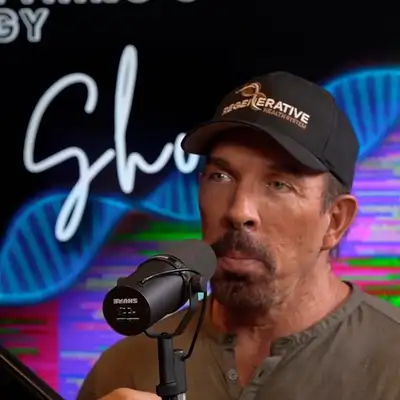
Roland:Welcome back to the Everything's Energy Show. I am your host Roland, and today we have our first repeat guest. He was so good the first time we had to bring him back because we didn't really get to see all sides of his depth of knowledge. He is not only the owner of a 48 unit system which is Regenerative Health Center or system
Dan Holtz:System.
Roland:But Dan Holtz, the man himself who's also an expert in all things antiaging, longevity medicine. We're gonna go into a deep dive in what I think is a really important topic because it's a confusing topic with a lot of nuance but more and more people are actually wanting to get into it nowadays so I thought what better thing to do than ask the man himself to help us understand how to see through the weeds in this industry. Dan, thank you for being here. How are doing?
Dan Holtz:Thanks for having me, Roland. Doing great. Great Friday and, looking for a great weekend.
Roland:Absolutely. Yeah. Life is good. I love it.
Dan Holtz:Life is good.
Roland:So antiaging medicine longevity stuff. This is kind of your world. How did you get into this stuff?
Dan Holtz:Well, I had a it wasn't great. You know, I have one of those stories. A tragedy became a solution. Right? So often in life you see that where something really terrible happens and it changes your whole life in a very positive direction.
Dan Holtz:I'm one of those stories. Was twenty five years ago I was a general contractor building high end residential stuff in Malibu, Pacific Palisades, you know, in the LA area and had a booming business, was doing very, very well. I was racing cars and just kind of living the dream. But I just didn't feel great. I had a lot of aches and pains.
Dan Holtz:And I was exhausted all the time. And I just was really missing something I just I knew I make a lot of money I should have been, you know, everything should have been perfect, right? Business booming, everything was supposedly going great. But why all these aches and pains and exhaustion and everything? And I just kept pushing harder and harder and harder.
Dan Holtz:Well, I got in a really bad crash at a I went in Phoenix International Raceway and took them forty five minutes with the jaws of life to cut me out of the car and they airlifted me in. I was in a coma, went in the hospital. About a half a day later, I came out of the coma, and the first thought I had is I wish I had died. I just I was done. I was exhausted.
Dan Holtz:I I just felt like I can't I can't keep going this way. I just wasn't enjoying my life anymore because I didn't feel good. And I thought, you know, I missed everything here. I just really gotta figure out what's going on with my health. I mean, I don't I just can't live this way anymore.
Dan Holtz:So it changed my whole life in terms my focus became I started thinking, I just need to just back off on all the business stuff and and I need to focus on finding the old Dan Holtz, the guy that woke up every day with passion and zest for life and I gotta go find that guy again. Started doing a bunch of blood tests, found out that I had no hormones, right? My hormones were so depleted, it was amazing. And of course, twenty five years ago, nobody knew anything about hormones. So doctors didn't know what to tell me.
Dan Holtz:They said, well, you know, we don't really know why your hormones are low. And I started doing some homework, found out about a guy in Europe who was a very knowledgeable hormone expert. I started getting information from him and basically his guidance was that this was treatable stuff. In Europe they treated it all the time, it was age related hormone decline, right? I was close to 40 years old and it was just part of aging.
Dan Holtz:So I quickly set out to learn anything and everything I could about hormones and how to optimize hormones. I became, I started feeling so much better so fast that I just became in three weeks of treating hormone deficiencies, I felt so much better that I thought I gotta figure out anything and everything there is to know about this because I became obsessed with feeling great again. And I'd done so much in three weeks, I thought, what's possible here? And that's that's how I started on this journey and and I spent the last twenty five years working in this field. I owned a company called Beverly Hills Rejuvenation Center, co founded that company with my partner Devin Hayman and and we just really were obsessed with wellness and hormone optimization.
Dan Holtz:And we even did aesthetic treatments there to make people look younger too. If there's anything anti aging, you know, we became so excited about it and that's why we went down that road.
Roland:Very interesting. That's it's it's always amazing when someone tells you a story of what seems like pure tragedy. Yeah. Isn't there almost, like, the opportunity of equal magnitude that comes out of something so
Dan Holtz:potentially so True. It's always that way. Mhmm. That's why you gotta just know that that will lead you to another whole level of elevation of life. So it absolutely is.
Dan Holtz:If you could just hang in there and just know this is not what it appears to be, and it's so true.
Roland:Hindsight is always twenty twenty, though. Right? It is. If you knew it ahead of time, it would be boring. So
Dan Holtz:And I must admit, even today, knowing all that, once in a while, some of the challenges that come and I find myself going, what's going on here? Resisting it. Yeah. And then I just gotta let go and go back gratitude, look back over my shoulder and realize that, you know, just give it a chance, something great's gonna come. Everything happens for you, not to you.
Dan Holtz:Right?
Roland:100% agree. And and look what it's given you this this arsenal of knowledge now. And I think hormones are probably the best starting point because everyone knows the word hormone. Yeah. Not many people know the nuances of hormones like there's peptide hormones, there's steroid hormones but I think people give the word a negative connotation in their mind before a positive connotation.
Roland:How would you clear up the the connotation and the confusion around hormones so people look at it with a more open mind?
Dan Holtz:Well, you know, when I started twenty five years ago, when you would say the this is gonna sound shocking, but just the word testosterone, very few people could say it.
Roland:Like Venice Beach vibes. Right? You're gonna go be Arnold's, like, understudy.
Dan Holtz:Everybody, when they'd hear the word first of all, they couldn't say it. Most people would say testosterone or something, you
Roland:know, and Believe it's Tostitos. Exactly.
Dan Holtz:And and but people were so alarmed. And even I was when I first heard I'm gonna be you know, I'm supposed to be putting something in my body that I was totally passionately against. Because I worked out at Gold's Gym for years and I saw all the guys taking all the drugs and all that. And I always thought I'm never gonna do anything like that because I want to live a long healthy life and I viewed it as all negative. So I really had to rethink things.
Dan Holtz:But I started really thinking about how it goes with humans. And you know, if you think about women, they hit menopause. Right? Well, what is menopause? Well, it's when your body just stops making estrogen and progesterone and you just go into this rapid, really huge upset and decline.
Dan Holtz:And when you hot flash from estrogen deficiency, that's actually a stroke. People think they go hot flash, oh, I had a hot flash, they laugh about it. It's a mini stroke. It's dangerous. Then I started realizing, well, if if this just happens to all these women, I mean, age related decline is an absolute fact.
Dan Holtz:You can't detox your way out of it, there's everybody, you can't peptide your way out of it. You either fix these age related hormone deficiencies or you will not have a high quality, high functioning life. You just won't feel energy, strength, stamina, drive. It's mental decline, it's depression, it's brain fog, it's so bad that the transformation when I started down this path was so profound. I feel sorry for anyone that doesn't have an opportunity that that hasn't really found a really good place to correct hormone deficiencies and treat them.
Dan Holtz:It's just such a profound life changing event if done properly. And that's a key part of what I say, if done properly. Know because it's so important that hormones are powerful and you got to do it right. You got to be you know a healthy optimal strategy with a really good medical provider that really understands it's very important.
Roland:Would you have the ability to explain what that would look like? I. E. Someone wants to start some hormone therapy and do it in a safe and responsible way. Because I agree with you.
Roland:They are probably the most powerful chemical messengers in the body. Right. They can be wonderful, but they can also be in excess, potentially hazardous. So, you know, someone goes to the doctor's office. Right?
Roland:They get the routine blood work. And I read a lot of blood work for people. And I see they do TSH, They'll do t four. They'll do testosterone. Maybe they'll do estrogen.
Roland:That's it. Is that enough, or do you need to go deeper in terms of gathering information so you know what the person's current physiologic presentation looks like?
Dan Holtz:The blood tests are pretty substantial. We at Beverly Hills Rejuvenation Center we did a pretty elaborate panel. You really got to look at a lot of different hormones to really look at achieving optimal hormone balance. And it's important to really get a picture of everything that's going on. There's sex hormone binding globulin, that's such a critical factor if you don't look at that like you can when you put hormones in the blood, the blood is just a storage facility for hormones.
Dan Holtz:It's when they move from the blood into the cell that becomes the important moment. Right? What you have in your blood isn't so important as what's capable of moving from the blood into the cell. Sex hormone binding globulin can be such a limiting factor to that. So a lot of people are misled.
Dan Holtz:They go do blood work and they see that they're like for instance with a male, their testosterone level is seven fifty and they think they're doing pretty Right? They've got quite a bit of testosterone in their blood. Well, when you look deeper and you find that the majority of that testosterone is bound with sex hormone binding globulin, it's it's it's a completely misleading blood test because you think you've got all these hormones that are able to be utilized and they're not. Your body is binding them all up and leaving them sit in the bloodstream because the body is so overstimulated already that it doesn't want to allow those stimulants to go into the cell. Then you start asking people how many cups of coffee do you drink a day?
Dan Holtz:And they say, oh, only six. Right? Only. And then you start going, hey, look, your body is so grossly overstimulated with you're you're taking in so many stimulants that your body wants to down regulate, reduce the production of and the absorption of energy producing hormones because it's already so overstimulated that it says I can't take this. It's too much stimulation.
Dan Holtz:So by drinking lots of caffeine and energy drinks and that, you can completely destroy your ability to make hormones properly. So that's just one quick little, you know, thing to look at and understand how just that one thing alone can affect and matter of fact, I think it's one of the major things that's going on in our youth today. They drink all these energy drinks and all this stuff thinking that now I'll have energy. It completely depletes your hormone production and your hormone absorption. So it's a short term gain and a long term loss for sure.
Roland:I often when I'm at a gas station, you have to go inside and pay for gas before you pump. Right? And I've noticed that the energy drink section at a gas station is now an entire wall. Everyone and and their mother makes an energy drink company or a brand nowadays.
Dan Holtz:That's
Roland:right. And I do believe that is a really wise statement in terms of a symptom of our society because the human nervous system wasn't always meant to be mashing the gas pedal twenty four seven and, you know, the the more you deplete reserves of energy, the harder it is to heal. The lack of capacity to heal directly correlates with the development of illness Yeah. And chronicity and degeneration. So that's a really wise point.
Roland:But you use an example there for a male. Right? So Yes. A man with high testosterone Mhmm. They have this protein in the blood that holds the testosterone hostage for lack of a better description.
Dan Holtz:Females have it too.
Roland:Sex globulin. With females, is the pattern the same or is there some difference with women because they have a little bit more of a complex endocrine system?
Dan Holtz:Yeah. Well, the sex hormone binding globulin works the same, men and women, it does the same thing. What happens with women okay. So society has changed so much over the last forty, fifty years. Women used to make babies all the time.
Dan Holtz:Right? So now that was what they were supposed to do. And when they were making five, six kids over the course of twenty years, know from say 20 to 40, their ability to make progesterone stayed optimal and they rarely had progesterone deficiencies. Well now because women are having one, maybe two kids at best and sometimes none, they develop these progesterone deficiencies in their late thirties all the way to menopause. So say from 40 to 52, you almost don't find a female these days that does not have some degree of progesterone deficiency.
Dan Holtz:Now if you leave that woman with progesterone deficiency, her anxiety, emotional sensitivity, and it'll just get worse and worse and worse the older she gets, the closer she gets to menopause. It'll get to the point where it can be just, it just kind of ruins your life. Your ability to cope and function just goes away and then heavy bleeding starts to occur, right? Now there's so much bleeding that there's then anemia sets
Roland:Iron loss and such, yeah.
Dan Holtz:Iron loss is severe and you know there's so many people that are starting to learn about this now. They're starting to learn that these progesterone deficiencies are an issue and something that needs to be treated. The problem is a lot of practitioners think they can treat that deficiency with micronized oral progesterone. You cannot. You will never succeed treating an estrogen dominant female with oral progesterone.
Dan Holtz:It does not work, it will not work. You will never achieve hormonal balance unless you're using a transdermal application and literally putting so a cream, right, and you're loading it into the tissue rather than trying to absorb it through the bloodstream. It just never works. But I saw so many amazing miracles at Beverly Hills Juvenile Hall for twenty two years watching these women get their life back, get their health back. You're talking about weight loss, fluid loss, the brain goes calm.
Dan Holtz:Now we can sleep. Now we can get women were getting they'd come close to menstruation. They wouldn't even know their period was coming. They felt so good. So just that one hormone, progesterone, can be a life changer for females.
Roland:I have a question about that just so I understand properly. You said when women were having multiple kids over the course of a couple decades Yeah. They were not running into progesterone issues. No. Is it because of the the multiple pregnancies or is it also because, you know, society was different, the the state of the world was less toxic, there were less interferences within things like electromagnetics and their stress levels were dramatically lower, or is there something about multiple pregnancies that regulate the female physiology?
Roland:Well,
Dan Holtz:you're right. There's lots of factors. Yeah. So it's not just the fact that they're not having multiple babies, but when I would see there's toxicity, there's radiation, those are all factors, right? So it's all a piece of the puzzle.
Dan Holtz:But I will say when I ran that business, rarely did we see a woman come in that had had five kids between 20 and 40 that had progesterone deficiency.
Roland:Really? That's fascinating.
Dan Holtz:So there there's no question that it's a huge piece of the puzzle. And and but toxicity and things and radiation is always a factor.
Roland:So to me And
Dan Holtz:stress, of course.
Roland:Oh, stress is the driver of all things that pushes you out of balance. Right? But to me, it sounds like a woman who has had fewer kids or no kids they may have to be more mindful of making sure that they're getting themselves checked on a regular basis to see if there are these deficiencies, this term estrogen dominance that you use in relation to being progesterone deficient.
Dan Holtz:And you know what? You don't even need to get checked. All you have to do is pay attention to how you feel. Because obviously before you treat it you've to get checked. But here's the reality.
Dan Holtz:If a week prior to menstruation you're feeling anxiety, emotional sensitivity, breast tenderness, lower abdomen distension, sleep disorder, and just feeling like you literally, you know, are about to lose your mind and on things that normally just don't really bother you at all, you are at that point in life where you're ready to start treating your progesterone deficiency. And if you treat it and you treat it right, you can live a life that's so high quality and so peaceful and so good. Menstruation will go back to normal, you will not have heavy shedding, you will not have anemia, you'll get it all under control and you can optimize your health and your body and cruise through your 40s in a very comfortable way and live a very high quality life. And that's not the only hormone, but of course that's one of the big ones for women in there between that say 40 to 52, it's just so important. If they could only treat one hormone, I would say fix that one for absolutely certain.
Dan Holtz:Interesting.
Roland:Yeah. That's a wonderful piece of advice. And most people think hormone balancing testosterone, estrogen, progesterone is the immediate association. But you know we have these other hormones that are protein hormones, peptides, have thyroid hormone, we have growth hormone, we have insulin and like you, I've studied a lot of this stuff. I don't actually do it as a practice but for the clients I've been working with I needed to know what is their body signaling like because if there's a signaling issue, it doesn't matter what you do with diet or supplementation, there's a fundamental issue that has to be addressed in some capacity or it can be an indication of maybe giving you context on what they're experiencing symptom wise but it seems everyone has a thyroid problem nowadays.
Dan Holtz:Everyone has a they
Roland:have an autoimmune thyroid problem with Maybe they have growth hormone deficiencies. How do you look at these non sex hormones but just as important because work in the network. They help anchor everything in that balance, right?
Dan Holtz:Well just talking about thyroid if we wanna if we wanna you know we could spend the next six months sitting here right at this table.
Roland:Can I put on my color hat for this part of the conversation?
Dan Holtz:Exactly, right? It could go on and on and on. But just think about one thing. Just think about well first of all, if you're estrogen dominant, if you're a female and you're estrogen dominant, you are absolutely gonna have thyroid dysfunction as well. When you optimize that progesterone deficiency, thyroid function is going to improve because of the whole sex hormone binding globulin piece.
Dan Holtz:I want to say something about thyroid that I don't think too many people think about. And I think it's kind of important to just explore and just think outside box a little bit. When I walk on my hands my shoes last a long time. Right? You mean
Roland:you don't wear shoes on your hands when you're walking on them? Right.
Dan Holtz:But see see how ridiculous that sounds. Right? But but the truth is if I walked on my hands my shoes would last a long time. That's the plus that would come out of walking on my hands. But it's ridiculous, of course nobody ever would.
Dan Holtz:But there's always something that's a plus that comes. There's a plus and a minus for everything. Right? So let's talk about fasting for a minute. Let's talk about fasting.
Dan Holtz:Let's see what is fasting? What are the pluses with fasting? Are there pluses? Of course there's pluses. There's some indication that you may be able to reduce the risk of certain cancers with fasting.
Dan Holtz:There's body fat reduction with fasting. There's ways lot to look at fasting and say well I fast and it helps me in this way. But if you think a little deeper and you think about how the body works, if you walk around barefoot on a rough surface you're going to develop really thick skin on the bottoms of your feet. Your body is going to sense there's a rough surface that that skin is touching all of the time. We cannot afford to leave soft tissue there anymore.
Dan Holtz:We have to thicken the skin, we have to now make it so that this creature can make it across this rough surface time and time again. So we're going to make that skin on the bottom of the feet very thick, right? So the body's going to adapt. If we go into a hot room, the body's going to say well it's too hot in here, we got to start pushing moisture out of the pores, right? It's going to sweat to cool.
Dan Holtz:If we go into a cold room it's going to shiver to make heat. So I want to just make you understand that if you're not drinking enough fluid the body will retain fluid because you taught the body that fluid is scarce. If you teach the body that food is scarce, right, fasting, body says it's time to eat and you go, no, I'm not going to eat. Well, body can only assume that you have poor access to food. It doesn't know that there's food right over there in the counter.
Dan Holtz:It says, well if food is scarce we absolutely cannot afford to be able to convert food to energy rapidly. So we have to reduce thyroid function immediately. We have to turn this human being into a person who metabolizes food slowly Mhmm. Because the person would die quickly if they have poor access to food and, you know, that it so a rapid metabolism would be rapid death. So know this, when you're fasting, I'm not gonna argue that there's no gains, that it's impossible to have any pluses, but you absolutely create thyroid dysfunction.
Dan Holtz:And the more you do it and the more often you do it the worse the thyroid dysfunction gets. So many people are so busy and they don't have time to feed themselves and their thyroid function gets worse and worse and worse. I try to tell people, look, if you want to teach the body anything, teach it that food is plentiful. Take very small amounts of food every hour for sixteen hours and watch your thyroid function start to improve because small frequent feedings teach the body that food is plentiful. It doesn't mean eat more than you should, but if you're if you're taking in 1,600 if you're a woman and you're taking in sixteen hundred calories over a sixteen hour period, boy, in a 100 calories an hour, boy, you've sure taught the body that food is plentiful and the body can certainly afford to raise the metabolic rate up now, can't it?
Dan Holtz:And it absolutely will. Now if you have selenium deficiency, if you have other issues, toxins and things, those are all factors. But I do know that with people that I got, I taught them how to take small frequent feedings and start introducing it. You know, you can see over the period of months, you can start to see thyroid function really start to improve. So it can it can really help turn things around.
Dan Holtz:So just that's a little quick thing I wanted to share with you about thyroid function that I've seen over the years.
Roland:Well, I have two things to say to that. Number one, fasting as it's classically been done in human society has been paired with a downregulation of energy expenditure. Mhmm. When people fast for whatever reason, classically, was for healing or religious beliefs or whatever, and you would down regulate the amount of energy you're burning to match the the activity with what your physiology was ready for. You know, if I wanna go on a cross country trip and I have a quarter tank of gas in my car and I don't plan to go to the gas station, I might not make it out of my state.
Dan Holtz:That's right.
Roland:So the body is, as you said, is only responding to input signals and it's giving you feedback based upon the signals. So the average person who's doing intermittent fasting, it's like I'll slam my coffee in the day, I'll race through my morning, I'll do as much work as possible, and then there's a deception there. When the body's under stress, it starts making stress hormones, cortisol, adrenaline, things of that nature, which increase your blood sugar. Naturally, you break down whatever's stored in your body so breaking down some muscle mass but cortisol has a euphoric feeling in the body because there's an anti inflammatory effect to cortisol. There's also euphoric feeling to block pain and stress.
Roland:Sure. Makes you feel that way. And people say, oh I feel great, I'm clear. It's because your body's under stress. That clarity is actually you being in fight or flight but there's no panic that's actually in front of you but your physiology believes there is because there's a food scarcity.
Roland:That's the first thing I have to say. The second thing is from a thyroid perspective, if you chronically trash your thyroid then the body gets into the patterns of those things. That is the one button that gets pressed that creates a cascade of all other things because without thyroid function, there is no energy. Without energy, you can't make all these molecules that you're talking about. So I think this is such a wonderful topic for people to listen to.
Roland:We're not bashing intermittent fasting. We're saying set and setting, time and place based upon the goal and the outcome. Would you agree with that statement?
Dan Holtz:Yeah. When your body has to convert itself back to food it uses adrenaline to cause cellular inflammation which then cortisol is attracted to inflammation. The body says, well there's no food, so we're going to convert the body back to food. So we're going to push epinephrine into that cell which causes cellular inflammation. Now cortisol is floating by in the bloodstream and cortisol says, well, look at that.
Dan Holtz:There's cellular inflammation there and I'm cortisol, I'm an anti inflammatory, I'm attracted to inflammation. So it migrates into that cell, converts that cell, it catabolizes that tissue and of course push it. Now you've got fuel right back in the bloodstream. The glucose goes up because you're catabolizing fats and muscle and you know you're converting the body back to fuel. But what people also don't understand is that you're using so much adrenaline and so much cortisol to cannibalize all this tissue by the end of the day you don't have very much adrenaline left and you don't have very much cortisol left.
Dan Holtz:So guess what you're going to be? Stiff, tight, inflamed. Very frequently people their adrenal glands just can't keep up because your body was really never designed to just metabolize itself all the time. Hey, if you ran out of food once in a while, could that system be utilized to get you to survive? Yes.
Dan Holtz:But when you start doing it all the time, now you got to produce twice the adrenaline that your body's used to producing. Your adrenal glands start getting taxed, and you gotta make twice the cortisol you were you you know, you were making. And you start to get adrenal fatigue to the point where your body just can't keep up. Well, you'll know it real fast because you'll start getting so stiff and tight and inflamed by the end of the day. I mean, how long can you keep doing that before you put so much stress on your adrenal glands?
Dan Holtz:Because yeah, there's no stress on the thyroid anymore you're not hardly making any thyroid, but now you've doubled up on your adrenal glands and man it just is really brutal for the adrenal glands to try and keep up with that kind of adrenaline and cortisol production. And they just don't. So you get stiff and tired and you're wondering why am I so inflamed? Well, that's why.
Roland:Which is really a symptom of modern society that most people are probably going through. Maybe this is that light bulb moment. So in saying that and all this stuff about hormones cause I want to round out the hormone piece before I ask you about the next category which I think is going to be very interesting for most people. Does everyone have to do exogenous hormone balancing in your opinion? I know it's a loaded question but in your professional opinion given what you've seen done and experienced, where do you think the average person who may be struggling is on the spectrum of yes versus no?
Dan Holtz:Well I'll tell you one thing. If you want to have a high functioning, high quality life where you want to feel amazing energy every day and you just want to say you want to be the guy that works every day and lifts weights and you wanna be the woman that you know that has this energy, it goes to the gym and just pushes. If you wanna be somebody that's gonna be really fit, really in shape and have amazing energy and feel really really good all the time, I do not see how you could achieve that without by age 40, whether you're male or female, engaging with a really good medical practitioner that understands how to optimize hormones, by the time you're 40, you've got enough age related decline, you are not going to have many people that are gonna be functioning at a very high level. Once they get into their mid forties, they're already so impacted by age related decline that the quality of life drops so much. If you're fortunate enough to be able to afford to add this into your life.
Dan Holtz:I mean, I've been doing it for twenty five years. I'm 65 years old now. I go to the gym every day. I have unlimited energy. I have arguably too much energy.
Dan Holtz:You know what I mean? I there's never a shortage of that. And I just think about how lucky I've been to be able to spend the last twenty five years. Now, I always manage my hormones to keep them in the optimal level, right? But there's costs associated with it, know, not everybody is able to do it's unaffordable for some.
Dan Holtz:But with those people I would just say be careful with the energy drinks, careful with the caffeine, walk a lot, don't run a lot, don't stress the body really really hard, just treat the body really good, really good rest, small frequent feedings, all that kind of stuff is for people that can't necessarily afford to optimize the hormones, you know, take it easy on the body, don't push yourself so hard and certainly stay away from all the stimulants. But movement is good, rapid movement is inflammatory. So move the body. Walks are very important, know, and some resistance exercise is critical for having optimal hormones but if you're not optimizing hormones by supplementing you gotta be careful you don't push it too hard.
Roland:Which is a great message because most people focus more on the training and the stress in terms of priority than they do the recovery aspect. Yeah. And I mean, I'm you're talking about age 40. So I'm 39 now. I'm 40 this year.
Roland:Alright. And there's still part of me that goes, I can train like I did when I was 30 or 20 because you know, there's the old saying Clint Eastwood had, like don't let the old man in. That's a secret to never getting old. Yeah. Part of that is the expectation of well, I've always done things this way and I'm conditioned in my twenties and thirties to be able to expect an outcome, it does start to shift as you And get to sort I've had to have this own kind of come to realization inside of myself that I need to it sounds cliche, you need to work smarter not harder with the times you choose to stress yourself both with an exercise but also with schedules, with commitments, with how much you're just on the go versus how much you're actually able to take some time and enjoy the stillness and enjoy the quiet.
Roland:Yeah. Which is actually a hard practice for most people because of how we're conditioned.
Dan Holtz:Oh, it's great.
Roland:You said even at 65, you have to catch yourself every so often.
Dan Holtz:Right? Yeah. People push themselves so hard. Mhmm. You know, if nothing else, even just mentally what they do to themselves every day.
Dan Holtz:You know, that they beat themselves to death with negative thoughts and and torture themselves with so many people get in these patterns. And you know if you could just just try to get out of that state, treat the body better, treat the mind better, try to focus on what you want. Tony Robbins says we get what we focus on, right?
Roland:He's so right about that.
Dan Holtz:Just have to be so careful about what you do with your thoughts and your mindset. You know? Get back to gratitude. Get back to just loving yourself, loving your life, treating yourself good. You know?
Dan Holtz:And don't don't beat yourself to death all day with physical stress and mental stress and Yeah. Just try to kinda give yourself a little peace. Right? Go to the EE system once in a while and relax.
Roland:Go to regenerative health system specifically. But it's funny, you know, we're talking about hormone balancing and antiaging Mhmm. But you can't get away from the basics of the things that are also free. You talked about the cost associated with things. Yeah.
Roland:It doesn't take any money to be nicer to yourself Yeah. Or to give yourself an allowance to maybe not do that extra thing and be super productive. So I love that you shared that because it's not just this exclusive high cost service that you're pushing. You're like, look, if you wanna do this great, but this is not a replacement for that. This will help you compensate if you can't do this stuff, but this is foundational.
Roland:Yeah. So I love that because last time I checked in, you know, the blue zones or different parts of the world where they're not so obsessed with status and wealth and productivity, the reason they live a long time with that disease is because they just don't stress.
Dan Holtz:That's exactly right.
Roland:It's so simple.
Dan Holtz:You do more damage I think with your thoughts people do in a day than it's just amazing how much you can destroy yourself. Just thinks they have to be, you know, a billionaire and a you know, everybody you know, people don't spend enough time just being grateful for who they are and what they are and just focusing on being the best version of themselves that they can be. Just give yourself a break, you know, take it easy and just try to just be the best you you can be. Don't compare yourself to Elon Musk. You're you're just you are who you are and just be the best version of you that you can be.
Roland:Yeah. Comparison of yourself outside of yourself is never gonna yield a positive result. Only compare yourself to you if you even want to do that, but, you know, I believe that there's few things more dangerous than the unguarded mind for someone's lack of well-being. So thank you for that.
Dan Holtz:Completely agree with that.
Roland:Wanna shift gears on you a little bit here, Dan, because this word peptides seems to be the new thing nowadays. Right? So we talked about hormones foundational within the concept of anti aging and longevity medicine and healthcare. What about peptides? Like what are they?
Roland:Do they have good utility? Are they the next fountain of youth or are they kind of a fad that you think is passing through?
Dan Holtz:No, they're definitely not a fad. Definitely they have value. The more that we learn about peptides, like there's like 7,000 different peptides. I mean it's really amazing how, you know, when you start to look at how the body it's really cellular communication. It's it's the body, you know, communicating with these peptides.
Dan Holtz:These little proteins are sending the messages around the body that you need. Do believe that of course I utilize various peptides myself. I do believe there are some that are real valuable. I think if you start with your basic fundamentals getting your hormones optimized, that's step one to me. I think for most people you can go so far with that that you can feel so good.
Dan Holtz:And then if you happen to have the financial ability to invest and go further and you wanna do more, sure. You take a BP one hundred fifty seven or a TB five hundred or some of these messengers that are going to help the body heal, recover, repair quicker. Everything diminishes as we age. Our ability for cellular communication goes away too. Now hormones are important with that but peptides are also important with that because they can improve that cellular communication so much.
Dan Holtz:Some of these peptides can really make that extra difference. I know so many people that had a knee or a shoulder or something that just bothered them all the time and they took one shot of BP one hundred fifty seven in the joint and boom. And three weeks later an injury that was going on for two years and they're over it and they're just shocked. So you can't deny that there's value there, that there's but like anything there's quality of peptides. There's totally different qualities.
Dan Holtz:There's some that work very well depending on how they're manufactured. Some have a very poor shelf life and they don't last long in the body, others last a long time. There's just a lot to know. You could spend six months in this room right now talking about peptides and scratch the surface. So there's a lot to know.
Dan Holtz:Take your time, do your homework, make sure that you're getting really high quality products. Made everywhere now and there's such a variation in the quality and it's important to get the right peptides to do the right thing but there's a lot of opportunity there to take your health to another level.
Roland:So I know with hormones Mhmm. Excess is potentially dangerous.
Dan Holtz:Oh, yes.
Roland:Is the same true of peptides? Is there a a downside or a potential nefarious element to them in your opinion?
Dan Holtz:Yeah. I think that you can overdo I mean, you can kill yourself drinking too much water. Yes. Once you know that, you know
Roland:Dose makes the poison.
Dan Holtz:Absolutely. And so like anything, like with hormones, I see hormones done so dangerously, so often. Like for instance, just a quick example, testosterone with men. They'll take a big old shot once a week and blast their levels 12 in 100. Exactly right.
Dan Holtz:And think, yeah, it's fine. Well, along with that huge spike comes an estradiol spike. The conversion of testosterone to estradiol goes through the roof. And now you're walking around, you got somebody that are beet red because they've their estradiol level is twice what it should be. And their testosterone levels up at twelve, thirteen, fourteen, fifteen hundred.
Dan Holtz:And now they're making so much hematocrit. Their their blood is getting so thick and they're walking around with their hemoglobin and hematocrit at levels that are so high that their blood is so thick it's barely moving. Their blood pressure goes through the roof. It's so dangerous and so horrible to do those types of hormone programs. You gotta be careful, you gotta be smart.
Dan Holtz:If you check my blood in the last twenty five years, any day of the week you check my blood level, it would never be out of the normal youthful healthy range which was 1,100 was of course if you use a LabCorp, anywhere up to 1,100, anything over 1,100 they considered to be too high. I never ran my testosterone over a thousand ever and usually nine fifty. And you know, again, just it can really produce longevity, high quality of life, or you can destroy your life with hormones too. You can use them incorrectly, get bad advice, get sloppy, don't keep an eye on your blood tests and you can just destroy yourself in a few years, have a massive heart attack or a stroke because you're not doing things the way the body was designed to do them. I mean there's reasons why we don't walk around with blood levels of testosterone to 1,500.
Dan Holtz:There's massive side effects with that that go along. Very dangerous, it scares the hell out of me when people and they don't get tested and they just don't utilize hormones in the way they should. Be very careful with them. Get great advice from people that have been doing it for twenty years, people that really understand how to treat this and, really good guidance is really important.
Roland:I I absolutely echo that because in my perspective, mother nature doesn't make a mistake. Everything has its intelligent design, its checks and balances system. And it's often when the human brain thinks it knows better than, shall we say, intelligent design mixed with years of research that have correlated just knowledge of where things should and shouldn't be. I think that's really wise advice too because you can't unring some bells when you've hurt yourself, you know, physiologically speaking.
Dan Holtz:Yeah. And they're and peptides, we don't know a ton. Yes. That's
Roland:the thing I've always thought. There's no long term data yet because we only have short term reality.
Dan Holtz:We have short term. I don't think there's any major concerns if again really good guidance from people that really understand it and stay on the conservative side. You know just don't go diving into the point where you're just overdoing and you know, there's so many people think more is better with everything and it's just not. You just be careful, be cautious, on the side of conservative and try to make little improvements along the way. And of course ten years from now we're gonna know a lot more about peptides than we know today and we'll have more data to say is there any potential negatives?
Dan Holtz:Mean, that's the problem with any of this. Twenty five years ago when I was starting on hormones, there wasn't a lot of data to go on. So now I'm a long term study. I'm a twenty five year study And here I sit at 65, I feel good that I went down this road. I feel like it was the right choice for me.
Dan Holtz:I feel like I wouldn't really have changed anything that I did. I felt like I made some smart moves. But honestly, twenty five years ago, I couldn't tell you, I couldn't look you in the eye and tell you I knew for certain that what I was doing was gonna produce health and longevity. I didn't know. But I thought one thing's for sure, I'm gonna do it conservatively just try to not do excessive levels.
Dan Holtz:And that made most sense to me to at least try to on the side of you know being a little a little conservative so that if there was any downside you know maybe I wouldn't put myself at so
Roland:much risk. Yeah. Wise perspective for sure. Yeah. Thing I wanna ask you Dan is where the antiaging longevity field is going in your opinion?
Roland:Are there there new things coming out? Are there things that people should be mindful of? Any insights that you can give people who are really wanting to know what the next cutting edge thing might be?
Dan Holtz:Well David Sinclair came out a couple of weeks ago and said they're now taking cells and reversing the age of those cells seventy five percent in six weeks. Now I don't know exactly what he's
Roland:So it's a true mystery.
Dan Holtz:But there really, there's leaps and bounds in this longevity space right now where I think if you're gonna be alive another ten years, you're probably gonna be able to live another hundred years. Mhmm. I think there's so much that we're learning and of course with AI it's just gonna get even more intense. Now we have, also cell factors that are basically they're so think of the peptides as communicating with cells and creating proper messaging for healing and that. Well now we have cell factors that are specifically they're recreated.
Dan Holtz:When we were in our teens we had these very specific proteins floating around in our bloods, these cell factors that told our stem cells what to do. Well as we got past age 18, the amount of those particular cell factors dropped off dramatically. So your ability to heal, repair, regenerate dropped off a great deal too. Well now we have these cell factors and we can put those back in the body and we can make our stem cells start to communicate again like they did in our teens, you can literally regrow joints, you can regrow there's really, in my opinion from what I've seen in the last two years working with cell factors, you don't need to do knee replacement, hip replacement, shoulder replacement anymore. These cell factors are capable of regenerating joints in such a way without even adding more stem cells to your body.
Dan Holtz:Just getting those proper protein messages in the system with these cell factors, you're literally able to regrow a joint in a very short period of time. So it's really shocking what we're seeing now. I think joint replacement is a thing of the past already. Just don't I mean unless you've got bone on bone and you've had bone on bone for so many years, there's not a speck of cartilage in a joint to regenerate. You can actually regrow that cartilage even if it's a little teeny bit left with the cell factors, you can regrow that cartilage in that joint and without even replacing that joint.
Dan Holtz:So the orthopedic world is really changing right now. Now that we have access to these cell factors, and as long as you're below 65 years old, you got plenty of live stem cells, you put those cell factors in, that body will regenerate tendons, ligaments, cartilage, bone, anything, nerves. It's amazing. Organ regeneration with this stuff. Like, it's it's absolutely profound what we're seeing.
Roland:Without the barbaric hacking up of the body and and the trauma that comes associated with
Dan Holtz:that. Yeah. I wouldn't dream of getting a joint replaced anymore. And I would not add I wouldn't add stem cells. No reason to.
Roland:Interesting.
Dan Holtz:With the cell factors, you just don't need to. Very interesting. Pretty cool.
Roland:Something that I think I'll have to dive into a little bit more to understand mechanistically, but it's a very intriguing concept.
Dan Holtz:So if you think about exosomes and what they were supposed to do, exosomes
Roland:are actually very quickly define stem cells and exosomes for maybe those who've heard the words but they don't know what they mean?
Dan Holtz:Yeah. So stem cells are the cells that actually do the work that make the, you know, repairs and regeneration. But without being told to do it, they won't do it. And and that's the problem. When you're 50 years old, you got plenty of stem cells to do the work if somebody would just tell them to go do the work.
Dan Holtz:Well, so exosomes came along. And what are exosomes? Exosomes are messages. They're cell factors. The problem is they're random cell factors.
Dan Holtz:They're not the same exact messages that we had in our body when we were in our teens. So now we have that same group of cell factors that we had in our teens. Those are identified now, and now we have this specific array of the proper messages. We don't have to just blast a bunch of exosomes into the body and hope that we get the right signal. We can make sure we get the right signal because now we have the correct cell factors to utilize to get a result each and every time.
Dan Holtz:You don't have to just hope that you get a good message from an exosome. You use the right cell factors, right messages, and get a major change every time you do an injection. Wow. Pretty cool.
Roland:I mean, that sounds almost like too good to be true, but I know it's not.
Dan Holtz:It's the next evolution beyond exosomes. It takes healing to a whole new level and joint regeneration. And yeah, it's just now we're just at a whole another level.
Roland:And if people want to know more about this, this is your world in addition to running regenerative health systems, right? You have the ability to guide people through the process, procure these kinds of molecules and and remedies for people. Correct?
Dan Holtz:Yeah. Yeah. Yeah. I'm actually you know, now that I've kinda stepped away from running the business, I sold Beverly Hills Rejuvenation Center a year ago and now I'm a minority owner and I've got a bunch of time on my hands. So I'm kinda taking a different strategy here in my life.
Dan Holtz:I've got all this information that I accumulated over the years and I wanna share it with people and I wanna help people and I wanna continue in this regenerative world. Yep. So I'm creating a website, danholtz.com, that 'll be up in a couple weeks and where people can go on there and they can communicate with me and get information. And so at least I can stay in the loop and and continue on and and, you know, share with people what I've learned and what's new and what's coming down the pike and just kinda keep, keep in touch with everyone. So
Roland:I love it, Dan. And and and the thing that's so cool is, you know, you said you're 65. You still have this zest for knowledge, this thirst for learning more. The passion is evident. And I've never heard someone break down the mechanisms of all the things in antiaging so well.
Roland:It's clear that you've really dedicated your life to this. So Well, thank you. Thank you for sharing all this information with all of us. If there is more when the website's up, I'm sure people can contact you there as well. Sure.
Roland:But you're also within the family of the energy enhancement system. You've got a beautiful place in Las Vegas.
Dan Holtz:Love the EE system technology. It's changed my whole life. It's it's just taken my life to a whole another level. I'm so happy to be a part of it and I don't know what I'd have done without it really. It's it's so much a part of my daily routine
Roland:Mhmm.
Dan Holtz:To charge my cells up and and be able to optimize energy, healing. It's just a whole another level of of intelligent healing. You know what I mean? So I'm very grateful to have this technology and and love it.
Roland:Yeah. You're approaching it from both ends. So Dan, again, I wanna thank you for everything. It was an absolute pleasure to listen to you. I learned a lot and I hope everyone else did.
Roland:I hope it demystified this whole longevity and antiaging aspect. If these things resonated with you, you can reach out to Dan or inquire about more information. And as always, please do like, share, and subscribe. We are built based upon the message being shared with those. So if this does resonate with you or anyone that you think should hear it, please do let them know.
Roland:And And as always, we'll see you next time on the Everything's Energy Show. Take care.