Subscribe
Share
Share
Embed
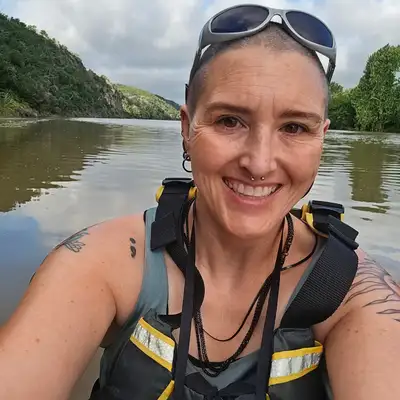

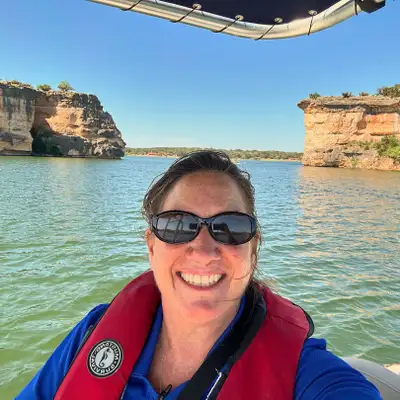
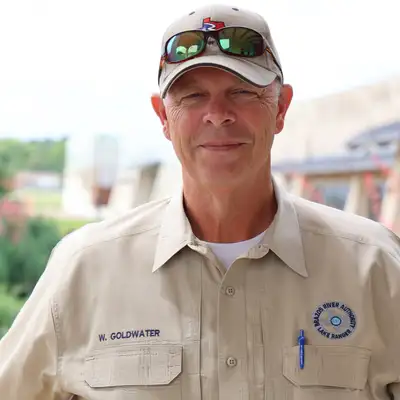
Ready to unpack the powerful stories of a Texas titan - the Brazos River? Listen as experts explain the Brazos River Basin's immense role in our daily lives. They'll cover everything from the river's fascinating history to all the work that goes into ensuring you have water when you turn on your faucet.
Hear invaluable insights on topics like why lake levels change, the important projects safeguarding our water, the many species that call the Brazos home, and even some tips for enjoying the water from Brazos River Authority experts.
This is your chance to understand the immense work that goes into developing, managing, and protecting the Brazos River Basin, which stretches from the Texas-New Mexico border to the Gulf. (The basin is the size of Tennessee, y’all, it’s big.)
It’s a huge part of our state’s story and we can’t wait to share it with you.
Clay Sellers: Got questions about the Brazos, no more unknowns. Ever wonder where that water comes from or where it goes? We're Unpacking the Brazos River.
Charlie L Shugart: Consider this your official guide to lake day survival, or at least a guide on how to avoid a total ship show. Today, we're talking about how to find out if a boat ramp is even open so we don't waste half a tank of gas to see a closed sign, and how to read buoys like a pro so you aren't, well, that person. We're also breaking down the specific rules that make Brazos River Authority reservoirs different from other Texas lakes. Whether this is your first time visiting Lakes Possum Kingdom, Granbury, or Limestone, or you remember when burning CDs was the height of road trip tech, a refresher never hurts. So, grab your emotional support water bottle, double-check your life jackets, and let's make sure the only thing sinking today is the sun. I'm Charlie Shugart, and this is Unpacking the Brazos River. Making a triumphant return to the mic is Diane Davis, Possum Kingdom Lake’s Reservoir Programs Coordinator, who graciously made the three-hour trek down the BRA's Waco office to join us on the pod today. What is happening? How is the traffic?
Diane Davis: Good morning. It was a wonderful trip. Beautiful weather, and I didn't have any trouble with any traffic.
Charlie L Shugart: Honestly, arriving with a smile after that trek is a total flex. Let's get into the fun stuff. Joining us for the first time is Carlos Sanchez, a lake ranger at Lake Granbury, and Wayne Goldwater, the lake ranger sergeant at Lake Limestone. Welcome to the pod, you guys.
Carlos Sanchez: Thank you.
Wayne Goldwater: Thank you for having us.
Charlie L Shugart: So, this is both of y'all's first time on the podcast. So, tell everybody a little bit about your history with the organization.
Carlos Sanchez: I've been with the BRA for five years. I'm at Lake Granbury. And, yeah, I'm just patrolling the parks that we have and the waterways.
Charlie L Shugart: Appreciate it, Carlos. I'm glad you're here.
Wayne Goldwater: I'm Wayne. Been with Lake Limestone for three years. I'm one of three lake rangers who are stationed out there.
Charlie L Shugart: Awesome. Well, I appreciate you guys making time to come in and talk today. Okay. So, Lakes Possum Kingdom, Granbury, and Limestone are BRA water supply reservoirs. They are there making sure a whole lot of people stay hydrated. But they've got this great secondary benefit of providing recreational opportunities. With that in mind, I've got my boat, or I plan on renting a watercraft at one of these lakes. Let's go around the table. Where can I launch?
Carlos Sanchez: I always encourage all boaters to research their waterways and their lakes that they're gonna be visiting. Specifically, each lake is different, but specifically at Lake Granbury, BRA has four parks that each have a boat ramp. Those boat ramps are maintained and are accessible for both small boats and large boats. They're lit, for the most part, in the park, and they're open 24 hours, and there's no fee to use them.
Charlie L Shugart: Nice. Okay.
Carlos Sanchez: So, the four parks that we have are DeCordova Dam Park, and we have Thorp Springs, we have Hunter Park, and Rough Creek.
Charlie L Shugart: Okay. Great. And what about Limestone?
Wayne Goldwater: Well, we have two parks that are maintained by the Brazos River Authority. We do numbers, so it's Park 5 and Park 1. They both have boat ramps. Park 1 is a day-use only park, but Park 5 has primitive camping. And then we have two county parks that are on the North end of the lake, Park 2 and Park 3. They have boat ramps, and we have a couple of marinas on the lake also.
Diane Davis: So, at Possum Kingdom Lake, we have seven boat ramps available. Sandy Beach, South D&D, North D&D, the West Side Boat Ramp, Scenic Boat Ramp, Bug Beach, and also Public Boat Ramp. They're all free of charge.
Charlie L Shugart: If anyone wants the deets on what else these parks offer besides boat ramps, you can go to our website, brazos.org, and under About Us and Reservoirs, each lake has its own section dedicated to public use areas. And so it'll tell you things like if that park has got a courtesy dock, fishing pier, swim area, restroom, showers, camping, and so on and so on and so on and so on, so you can figure out where exactly you would like to launch from. Do I need any, like, specific permit if I wanted to take my boat out on our reservoirs?
Carlos Sanchez: Just like any other state waterway, you gotta make sure that you have your registration, your TX numbers, everything that you would need to legally operate a vessel out on state waters.
Charlie L Shugart: Yeah. Okay. So we don't have BRA specific …
Carlos Sanchez: No BRA permit or anything else.
Wayne Goldwater: I guess the one permit that the state requires if you're born after a certain date, which I believe is 1993, you have to have boater's ed.
Charlie L Shugart: So, the typical boating requirements that are needed at all the different Texas lakes just here as well. Okay. Is there somewhere I can go to double-check that the boat ramps are open before I drive out and spend half my Saturday on the road?
Diane Davis: You can go to our website, find the boat ramp button, and check there. Also, if you have any other questions about the boat ramps, you can call our office in Graford.
Charlie L Shugart: What's a good number for your office?
Diane Davis: It's (940) 779-2321.
Wayne Goldwater: We actually currently have a boat ramp that's down right now because the water's low, so it is on the website. You can also visit the main office, and we can tell you also.
Carlos Sanchez: So, everybody's got Facebook. Everybody uses social media. That's an easy access point that we have any alerts. We'll always if we close a park down, for example, if we have an event or something that the park has to be closed, it'll be listed on the Facebook page. But if by chance you feel like speaking to a human being, you can call the office Monday through Friday. Normal business hours at (817) 573-3212.
Charlie L Shugart: Is there a good number for Limestone?
Wayne Goldwater: Yes. It's (903) 529-2141.
Charlie L Shugart: I'll put those numbers in the show notes. Don't go trying to jot this down while you're white-knuckling the steering wheel or fighting for your life on the elliptical. Awesome possum, wink wink, Possum Kingdom Lake. On my own, I got it. So, visitors have a lot of options when visiting the three reservoirs. For the directionally challenged like yours truly, are there maps available to locate these boat launches?
Diane Davis: You can find one on the BRA website, or at our office at 301 Observation Point Road, or if you see me, Diane Davis, around in our parks, you can ask me, and I will either get one for you, or I'll show you how to find one online.
Wayne Goldwater: We do have a couple of locations, such as the marinas and the one lone gas station that's out there. We'll supply some maps over there, because that's usually where people fill up before they hit the lake. We'll put some maps over there for them. People are using them. We do see that. They call and request more maps all the time, so it's a good thing.
Charlie L Shugart: Okay. So, I recently went paddleboarding on Lady Bird Lake in Austin, which, yes, is outside the Brazos River Basin, but that lake prohibits gas-powered or electric motor vehicles on it except with the city's permission. So, do the three BRA reservoirs have any restrictions when it comes to watercrafts?
Carlos Sanchez: Obviously, you have your Water Safety Act that has to be observed, and state laws that dictate what type of vessel can be used at what time and what equipment is required upon each vessel according to their use. So, as far as a restriction, we have from kayaks to wakeboard boats and everything in between, jet skis, and personal watercraft that are free to use and enjoy Lake Granbury with.
Wayne Goldwater: Obviously, we can't have yachts out there. Our lake is not big enough to have that or any kind of submarines or anything like that. Pretty much the standard watercraft, which is your, you know, your jet skis or your kayaks, like Carlos was saying.
Diane Davis: If you're wondering if your boat is too big or too small for Possum Kingdom Lake, we don't have any size limits.
Carlos Sanchez: Lake Granbury is divided or sectioned off essentially by bridges. Depending on the height of your vessel, you might have access where … you would be able to get in to launch and retrieve and use the lake in each section. So you would have a bridge that would stop, interfere, or dissect the lake into sections.
Charlie L Shugart: Right. Yeah. And I imagine what that height is varies based on the lake level?
Carlos Sanchez: Well, varies on lake level, and each bridge is a little bit, there's not a standardized clearance for those bridges.
Charlie L Shugart: If I'm prepping my boat to take it out, what are supplies that I absolutely have to have when I go out on a BRA reservoir?
Carlos Sanchez: My first suggestion is a boat plug.
Charlie L Shugart: A boat plug? Okay.
Carlos Sanchez: Plug your boat before launching. Right? Yeah. So, your standard safety equipment, that is required on the vessel that you're operating depending on what you're operating. But in general, right, you're gonna have to have your throwable flotation device, a sound-producing device, a horn or whistle. You gotta have a fire extinguisher, and then you gotta have your personal flotation devices. You gotta have your lanyard, if the boat was equipped with it.
Charlie L Shugart: What's the lanyard?
Carlos Sanchez: A lanyard is an automatic engine stop that, in case the operator of the vessel gets ejected or separated from the helm, the boat will automatically shut itself off so the boat doesn't go propelling forward without an operator and potentially crash or cause an injury.
Charlie L Shugart: Yeah, so we're not talking about a lanyard that you wear around your neck.
Carlos Sanchez: So, it just has to be attached to the driver, right? Some people wear it around their wrist, attach it to their life jacket, some way that it's anchored to the person in case they are separated from the helm. That clip will be removed from the auto stop, and the engine will shut off.
Charlie L Shugart: Okay. Interesting. Smart.
Wayne Goldwater: Also called a kill switch. When he touched on the lifejackets, they just have to be U.S. Coast Guard-approved, and they have to be in good working order.
Charlie L Shugart: What does it mean for a life jacket to be Coast Guard-approved?
Wayne Goldwater: It's approved by the Coast Guard, and it should have an emblem on the lifejacket along with the Coast Guard approval number. There's lots of life jackets out there that aren't approved by the Coast Guard that you can get them off of whatever website. But just make sure that they're approved. That's state law that you’ve got to have that.
Charlie L Shugart: It's not a preference. It's actually something that's legally required.
Wayne Goldwater: Right. And they have to fit the occupant, too. If you got an adult life jacket with three kids on board, they're not gonna fit them. So, you need to make sure that they're sized appropriately for each person on board.
Charlie L Shugart: Yeah. Okay.
Wayne Goldwater: Also, to add optional stuff would be, you know, carry your cell phone with you. If you have a marine radio, have it on. You need your personal ID, and you need your boater's ed. There are some other things that you need to have on there.
Charlie L Shugart: The boater's ed card, is that physical, or is that something you can have on your phone?
Wayne Goldwater: We accept it as taking a picture with your phone. If we had to look it up, we do have the means to look it up through Parks and Wildlife, but most of the time, we need you to have it.
Charlie L Shugart: You're supposed to carry it.
Wayne Goldwater: Correct.
Carlos Sanchez: Like a driver's license out on the water.
Charlie L Shugart: Okay.
Carlos Sanchez: Show proof that you have it. I always advise both the fishermen and the people who require having a boater's ed certificate to go ahead and snap a picture. Those cards get lost, end up at the bottom of the tackle box, whatever, they end up leaving them in someone else's vessel. So as long as you take a picture of it, a digital copy of it.
Charlie L Shugart: Look, I am just a bundle of nerves and iced coffee held together by dry shampoo. I'd have to take a photo.
Carlos Sanchez: Plus, everybody's got their phone on them.
Charlie L Shugart: Right. Yes.
Diane Davis: So, to obtain a boater's education certification, certain requirements must be met based on your birth date and the type of vessel you're operating. So what you can do, to obtain one, you must complete an approved course. You're born on or after 09/01/1993, and will be operating a motorboat with more than 15 horsepower, a personal watercraft, or a sailboat over 14 feet. After passing the course, you will receive a certification card. Not only will taking this course make you a safer, better, more informed boater, but when you're on the water, law enforcement can and will stop you for a water safety check. They'll check for your boater's ed, they'll check to make sure that you have your ID, and they'll check for those items that we talked about earlier, that you have all those safety items, and answer any questions that you have. But make sure you have those, because you could receive a citation if you don't have all the items you need.
Charlie L Shugart: Yeah, we don't want that, that would put a damper on the day.
Diane Davis: One of the safety concerns when you're out on a vessel on the water is making sure that before you pull away from the dock, make you're sure that your battery is in good condition and that you have enough fuel for the trip that you plan. Be prepared. Check your drain plug, remove tie-down straps, load your boat with gear and food, and check that you have all your safety equipment prior to entering the ramp line. In Texas, all children under 13 years old must wear a U. S. Coast Guard-approved life jacket while in or on boats under 26 feet in length, including canoes, kayaks, and paddle craft, when the vessel is underway, not anchored, moored, or aground, but underway.
Wayne Goldwater: Go ahead and get the forecast before you go on the lake. Keep it updated on your phone. A good rule of thumb is always let someone know when you're gonna go out, and when you're gonna come back, just in case you don't show up when you're supposed to. We found it helpful if we're pinging phones for someone who's lost, is make sure your GPS is on, on your phone. Just in case you don't know where you're at, because we'll get a lot of calls, and we're like, we're at so and so. We just we see this, we see that, but we're trying to think, well, okay, where would they might be? And we can sometimes ping their phone in an emergency circumstance, you know, to try to find out exactly where they're at. So, especially if they're taking on water or what have you.
Charlie L Shugart: If somebody is in a situation like that where they're calling and they're trying to tell you where they're located, what's the best thing for them to, like, identify, I guess, when they call, or what should they be paying attention to?
Wayne Goldwater: I guess the main thing is just landmarks. If you say, you know, we can see power lines that are running across the lake, well, that's two options. Either it's the middle of the lake, or it's up in one of the creeks, and then we can kinda go from there. Know what type of boat you have. You know, we don't really rent boats on our lake. I think y'all may have some to rent?
Carlos Sanchez: Yep.
Wayne Goldwater: So just know what kind of boat you're operating, what color, and everything else, so that kinda helps out if you're stranded or what have you on the lake.
Charlie L Shugart: The fact that you're reiterating it's important to know what type of watercraft you're on and other identifying characteristics tells me that this has been an issue before.
Carlos Sanchez: Lake Granbury is a little bit complicated because it does snake back and forth, it changes direction like the natural river does. Right? And so, you can get turned around really easy. So, my advice to everybody is to always keep track of what buoy you're at. Between one and 100, there are a lot of buoys. But if we have a general gap, that also helps all the lake rangers respond faster, simply for the fact that we have two boathouses. We have one at the South and one mid-ake, so then we know the quickest way to be able to render aid.
Charlie L Shugart: Right. Okay. Yeah. Pay attention to your surroundings. Don't get distracted, know where you are at all times in case you need to call for help. Nobody goes out for the day expecting there to be an emergency.
Carlos Sanchez: But it happens.
Charlie L Shugart: It happens.
Diane Davis: If you do have a crash or somebody else is in need of police, fire, or EMS, you can also call 911. You don't need those phone numbers for Palo Pinto. Just make sure you know your location and what your need is.
Charlie L Shugart: Let’s talk a little bit more about the boat ramps. It's busy. It's hot. Everybody's watching. What are the unwritten rules for being a good neighbor when entering or exiting a boat ramp, so I don't end up as a what-not-to-do example on the local Facebook group?
Carlos Sanchez: Yeah, for sure. I mean, there are YouTube channels that show boat ramp endeavors.
Charlie L Shugart: Oh, no.
Carlos Sanchez: And so those are entertaining to watch. But, yeah, the complications and frustrations start to build when people, I mean, leave their trailer and truck on the boat ramp, clogging up the boat during busy hours, right? People want to launch and get in and out. And sometimes it's unavoidable because if you're out by yourself, somebody's got to drive the boat, somebody's gonna have to drive the truck. But, you know, messing around with mechanical stuff on the boat ramp while you're when someone else can be launching is a no go.
Charlie L Shugart: So, pull over to the side somewhere?
Carlos Sanchez: Get everything ready to be able to throw the boat, launch the boat in when you're using the boat ramp. There's plenty of space where you can do your boat prep and everything else off the boat ramp.
Charlie L Shugart: When you hit that boat ramp, be ready to enter the water.
Carlos Sanchez: Yeah, with your boat plug in.
Charlie L Shugart: With your boat plug, this must be a common problem.
Carlos Sanchez: Yeah, it happens a lot. It's unfortunate. It's, I must confess, it's happened to me too. But, you know, you forget it once, you'll never forget it again. For people not to forget it that first time, is why I repeat it.
Wayne Goldwater: Our lakes are a little different. We have a lot of single ramps. So being courteous to others and making sure you're prepared to launch your boat and get it out of the way so the next person can go launch is appreciated.
Carlos Sanchez: And we do have tournaments. So, you might get to the boat ramp, and you'll see that all the parking spots are taken, but you can filter a lot of boats being launched and retrieved safely and efficiently as long as everybody's ready.
Charlie L Shugart: Okay. So, basically, if you're still putting on sunscreen while your boat is on the ramp, you're the villain here. Okay. So we've successfully left the boat ramp without making an embarrassment, and we've been a good neighbor to everyone who's there waiting to enter or exit. Now that I've finally made it on the water, talk to me more about these buoys. Like, how do I know where I'm allowed to go or if I'm about to accidentally zoom through a speed limit? Give me the one-on-one on all those navigational vibes, so I stay in my lane.
Carlos Sanchez: There are no laws directing the directional path on either side of the buoy. The only regulation, as far as navigation, is just going to be observing the type of buoy that you're around. You know, always see if there's any updates, anything posted on our Facebook page, of any new hazards or obstructions, or any change, even just water level. Some people aren't aware. You know, when the water levels fluctuate, new hazards begin to appear. So as the water goes down, hazards that were out of reach or in danger of, you know, causing damage to propellers or outdrives suddenly start to come in play. And that's true even all the way down to even more extreme lower levels. So always research the level that your lake is at, see if there are any alerts as far as algae blooms or anything potential that might be out there that one should be aware of.
Charlie L Shugart: For everyone who's not familiar with this, why when the lake level drops, why are there hazards under the water? Why are those there?
Carlos Sanchez: Lake Granbury, specifically, during the construction, it filled in faster than anticipated. So not everything was cleared out, and some of those preexisting trees and stumps and things like that still remain there today. And it's a good thing because it creates good habitat for fish and fishing, and good ecosystems for the wildlife in the water. But it also poses a danger, even though the lake's been there for many, many, many, many years, and those hazards have always remained there. Some of those, over time, just get exposed as the water level drops. And so, on our maps, we do have not detailed layout of all the hazards, but in generalities, we have stump fields and submerged forest marked on the map.
Charlie L Shugart: Okay. And if you're not familiar with how to access the lake level or how low it is, you can go to our website, brazos.org, scroll about halfway down the main page, and there's a section called Current Reservoir Levels, and there you can see not only ours, but some of the Corps of Engineers' lakes and how low or full they are. You can also go to BrazosBasinNOW.org. That's another site of ours that will help you see the reservoir elevation or drawdown. And you can click on that and select the lake that you're interested in, and select one of the green buttons on that lake. It'll even tell you, like, the fluctuation of what's happening on the lake level, so if it's going up or going down. And there's a whole lot of other information on that website that's really cool, but that's a pod for another day.
Carlos Sanchez: At Granbury, we have buoys that go from starting at the dam at Buoy Number 1, the navigation buoys, all the way up, marking a safe passage through the channel, free of stumps, all the way to 108, which is at the mouth of the river.
Charlie L Shugart: Okay. So, your best bet if you're on the water is to stay near those centerline buoys.
Carlos Sanchez: Correct.
Charlie L Shugart: What do the centerline buoys look like?
Carlos Sanchez: So as long as they're marked with numbers, that's gonna be the centerline buoy. So those are distinct from your No-Wake buoys. Right? These buoys are identified both daytime and nighttime navigation with a white blinking light on top. They're numbered, and the No-Wake buoys are gonna be identified because they say No-Wake on them. And they do not have a light on them. Then our hazard or our restricted area buoys have an amber light on those, and they're generally a little bit bigger. So as long as you stay to the centerline buoys, you'd be able to travel upriver safely.
Charlie L Shugart: Yeah. And we're gonna come back to the No-Wake buoys here in a little bit, but I think it's one of those messages that we try and reinforce to remind people of is that this was a, all three of these reservoirs that the BRI owns and operate, were built to be water supply reservoirs. And so, they're not natural lakes that, you know, are like a swimming pool where there's nothing underneath the surface of the water. There was a world that existed before the river was dammed up to create these important assets, so everybody has drinking water.
Carlos Sanchez: And not all lakes have centerline buoys for navigation. Right? So, I believe in Lake Limestone, y'all don't have any, right?
Wayne Goldwater: We have no navigational buoys. We have swimming area, restricted, and No-Wake. Those are our three.
Diane Davis: The lake has No-Wake zones, hazard buoys, end-of-buoy buoys, and numbered centerline buoys. Also, restricted area buoys. Be familiar with what these buoys look like. They can keep you out of danger and also keep you in the center of the lake, which is the deepest part. At Possum Kingdom Lake, looking at the centerline buoys, they each have a number, and those numbers coincide with the numbers that are on the map.
So if something were to happen and you need assistance, when you call Palo Pinto County Sheriff's Office to get a deputy to come out or a game warden to come out, you can let them know what number buoy you're at, and they can easily come to you and not have to search for you on the lake.
Charlie L Shugart: Yeah, because Possum Hingham is a big lake.
Diane Davis: Yes, ma'am.
Charlie L Shugart: Do you know roughly how long it takes to get from one end to the other?
Diane Davis: I've done it many times. Part of my job is to do the buoy inspection, and that's every month roughly. Or more if we're having any other issues with buoys. We're talking probably an hour and a half.
Charlie L Shugart: Okay. So, one thing all three BRA reservoirs have is a regulation that's different from other lakes throughout the state, and this affects how close you can come to other things. So, tell me about that.
Diane Davis: BRA regulations are, some of them are across the board for every reservoir. One that's very important is the 100-foot rule. You need to stay 100 feet from all other watercraft, 100 feet from docks, and the bank. It will keep you safe and other boaters safe. The point is that you have time to react with other boaters. Also, you're not going to create a wake on docks or the land to cause erosion.
Charlie L Shugart: And this is a really important regulation to know before you get on the water because this isn't identified by buoys. You can't exactly put buoys along the entire shoreline of the lake. I guess you could, but nobody wants that, right? How does the wake exactly affect the docks?
Diane Davis: Well, when you make a wake, the water moves in a wave and will hit the dock, move the dock, and a constant wave of that could cause damage to a dock, also will cause, eventually cause damage to the land through erosion. The state law, I believe, is 50 feet, but the BRA increased that to keep everyone safer.
Carlos Sanchez: So, you can't be within 100 feet of another vessel, another skier, another swimmer, or an object, or structure in the water above headway speed.
Charlie L Shugart: What's headway speed?
Carlos Sanchez: Headway speed is anything beyond the speed necessary to maintain your direction, similar to what, like, a No-Wake zone would be. So, headway speed is just enough propulsion to maintain your direction of travel. So, anything above headway speed, you have to be 100 feet apart from each other. So, up north of the lake, on Lake Granbury, some of these channels, there's not enough space for two boats to pass each other safely, so you have to come down to headway speed to pass each other due to the stump fields. And then you can go above headway speed once you've cleared the 100 feet.
Charlie L Shugart: So, you mentioned headway speed being the same as in the No-Wake Zones. So, talk to me about the No-Wake Zones. What exactly are those? How should I be paying attention to those?
Wayne Goldwater: This means you have to be at idle speed, just enough to keep your boat moving forward without making it wake. And sometimes it's a big problem in the summertime. Got a lot of undereducated youth on jet skis that don't really see the No-Wake Zone, so we'll get out there and educate the public a little bit and try to keep everybody safe. That's our main goal here on Lake Limestone is to keep everybody safe and enjoy their time out there.
Charlie L Shugart: Absolutely. And so, the No-Wake Zones are indicated by buoys?
Wayne Goldwater: Buoys. Yes, ma'am.
Charlie L Shugart: What do those buoys look like?
Wayne Goldwater: It basically says No-Wake on it.
Charlie L Shugart: Okay. Yeah. So, it's very clear that's what that means.
Wayne Goldwater: It may have a diamond or a circle. I can't remember what the No-Wake. Are they diamonds or circles? Diamonds? Okay. And then we have restricted areas up by the dam, and those are, it's called a buoy line, and we've got them spaced apart to where everybody can see them.
Charlie L Shugart: So, it's very clear places where you're not supposed to take the boat.
Wayne Goldwater: Right.
Charlie L Shugart: So, if I'm flying across the lake and I see a No-Wake buoy, is the goal just to hit the brakes right when I hit the buoy?
Carlos Sanchez: You gotta be at headway speed by the time that you cross that buoy.
Charlie L Shugart: Okay. Thanks for clearing the wake on that one. Just here to amuse myself. It's fine.
Wayne Goldwater: Use common sense, too. If it's a busy day on a lake, you don't wanna be out there going full throttle. You could get, I call it reckless driving or reckless boating. You just gotta be careful of others.
Charlie L Shugart: What's the tea on alcohol? Can someone have a cold one while out on the water, or is that considered a dry zone?
Wayne Goldwater: No. You can have alcohol on the boat, and you can consume alcohol, but you have to be conscious that the heat, the sun, and everything else can enhance that effect. So you really have to make an effort not to consume too much. Just be conscious about what you're doing. And unfortunately, you know, we're out there for everybody's safety, so if it comes across that you've had too much to drink, you could be arrested for boating while intoxicated.
Carlos Sanchez: So, BWI, boating while intoxicated, carries the same penalty as driving while intoxicated in a vehicle on the road. A wide range of penalties. Right? And that includes losing your driver's license.
Charlie L Shugart: Okay. So, if I get a BWI while I'm out on the water, I could actually lose my driver's license for the roads, too.
Carlos Sanchez: Correct. So the same standard applies.
Wayne Goldwater: It's a Class B, through the state. But it could be enhanced too if you have children on board.
Carlos Sanchez: It's considered the same on the water as on land.
Wayne Goldwater: Or by plane.
Carlos Sanchez: Or by plane.
Wayne Goldwater: Or by carnival ride.
Charlie L Shugart: What do you mean by a carnival ride?
Wayne Goldwater: The carnival ride operator, if he's intoxicated, can be charged with it.
Charlie L Shugart: That's so interesting.
Carlos Sanchez: Or even Tesla self-driving, right?
Wayne Goldwater: I haven't explored that.
Carlos Sanchez: If you've got it on auto drive, you're still in charge of the car.
Charlie L Shugart: I need to know why you know the carnival rule.
Wayne Goldwater: That's just part of the law
Charlie L Shugart: Really? Okay.
Wayne Goldwater: When you're doing the breath test, you can pick which one. So, it's either flying, boating, driving, or carnival rides.
Charlie L Shugart: Going off on wanting to keep my karma levels in check, are there other things I can do on the water to be a good neighbor?
Carlos Sanchez: Yeah, one of the biggest things that we battle with at night, like the Fourth of July, we have events, and there's a lot of people that come out to see firework shows or drone shows or parades or just out late at night. We're starting to see a bigger problem with boaters driving with their docking lights on at night. So, your docking lights are almost like headlights, but are meant just specifically when you're docking.
Charlie L Shugart: Okay.
Carlos Sanchez: And so, as you're driving, operating your vessel at night, with oncoming traffic, you blind them, and they can't see the water. The light reflects off the water. It momentarily, just like you would high beams out on the road, it kind of just blinds them for a second while their eyes get acclimated after passing. But that little short gap can be a dangerous one if there's anything in front of that that operator is blinded.
Charlie L Shugart: Makes sense.
Carlos Sanchez: We enforce that, and then, you know, use your anchor lights at night and use your navigation lights at night, you know, and make sure that you follow time frames for jet skis to be off the water.
Charlie L Shugart: What time frame is that?
Carlos Sanchez: They have to be off the water by sunset. So, they don't have any lights. The ski operator might see the other boats, but the other boats cannot see them. The number one thing is to enjoy the time, and everybody make it home safely.
Wayne Goldwater: To be courteous on the lake, just be aware of the music you're playing and other people who are surrounding you. Maybe they don't wanna hear your music all the way across the lake. So just be courteous in situations like that because everybody likes to have a good time, and everybody wants to get home safe.
Carlos Sanchez: Noise travels long distances on the water. Long distances. Even conversations could be heard from a distance further than you would want them to.
Charlie L Shugart: That's actually a wild water fact that I was, today years old when I learned this. Okay. So, treat the water like a shared neighborhood. If you wouldn't blast heavy metal and do donuts in your neighbor's driveway, don't do it in their cove. What about for everyone who is hoping to catch their next big one?
Carlos Sanchez: Anybody over 16 has to have a fishing license. Right? As far as the BRA, we don't regulate fishing as far as bag limits or species. Right? The fishing regulations are all controlled by Parks and Wildlife.
Diane Davis: And you can buy a license online through TPWD.
Charlie L Shugart: And that's Texas Parks and Wildlife Department for those who don't know.
Diane Davis: And at retailers or by phone you can get that.
Charlie L Shugart: Neat. Okay. Multiple options. So, if I'm familiar with fishing regulations on other lakes within the state, the same applies at the BRA reservoirs. So you mentioned the jet skis not having lights at night, not having lights at all for at night, are there any other changes that are required to go into effect for boats if they're out after sunset?
Wayne Goldwater: They just have to make sure that they have Coast Guard-approved lighting, which is the red and green at the front and a white light at the back. I believe the white has to be seen for a distance of two miles, so you can't just have a flashlight taped to the back end of your boat. It’s safety for yourself and safety for others. And the red and green, that's directional lights, so those are required by state also to have them, or by the coast guard and by the state of Texas that you after sunset, you need to have your lights on till after sunrise, then you can turn them off. And you really don't want any other color lights on a boat, red and green and white. You can't have blue and stuff like that because it's not part of the Coast Guard-approved lighting.
Charlie L Shugart: Okay. So, I can't deck the boat out with neon lights that change colors constantly while it's out there.
Wayne Goldwater: A lot of boats are coming that way now. But I think if you're anchored, you can have them on, but if you're under headway.
Carlos Sanchez: If you’re under headway, yeah.
Wayne Goldwater: Yeah. You cannot have those other lights on. And we've stopped many that don't even know how to turn them off. So, they may be blue, but that signifies, you know, law enforcement or emergency personnel and stuff like that. So, of course green, they use it for fishing too at night. As long as you're anchored up, you're fine with that to have it on.
Carlos Sanchez: Yeah. Like you said, most of that stuff is coming OEM from the manufacturers of these vessels with those lights, rope lights, or particularly like your pontoon boats.
Diane Davis: The Texas Water Safety Code is outlined in the Texas Parks and Wildlife Code, specifically in Chapter 31, which promotes recreational water safety and establishes regulations for vessels on public waters. This chapter includes provisions for safety equipment, vessel numbering, and responsibilities of watercraft operators to ensure safety in recreational water activities.
Charlie L Shugart: Perfect. And you can find that online, so you don't have to feel like you have to memorize everything. Get on there and find what relates to you, pertains to your trips, and what you're going to be doing before you head out.
Diane Davis: Absolutely, yes, ma'am. If you have any questions about the safety equipment that you have, say you follow the rules, you have each item from what it says in the Water Safety Code, but you have a question to if it's the exact right item, you can always contact our office. I can help you, also, lake rangers at other offices can help you, Palo Pinto Sheriff's office have lake officers, and you could request to speak with a game warden as well about that, to make sure that you have the right item. It can be confusing if, you're just reading words, and you may not be sure if you have the right item.
Charlie L Shugart: Well, our listeners heard in our very first episode about some of the problems caused by invasive species. Is there anything I can do as a boater to help prevent the spread of them when I'm visiting these lakes?
Carlos Sanchez: At Lake Granbury, we don't have any zebra mussels, and we like to keep it that way. We do inspect vessels for zebra mussels, right. The best thing one can do is make sure that they empty out their bilge pumps every time they go to their reservoirs. Right? Once you pull your boat out, you empty your bilge out. Whatever water you have in that bilge came from that lake, so it returns back there, you don't transfer that stuff onto another lake. Just as a conscious outdoors boater, right, and appreciating nature and wildlife in the state of Texas, one should always inspect their bilges and their ropes and other things like that associated with their boats to ensure that they don't see any zebra mussels or anything else like that, and then have it treated if they do.
Charlie L Shugart: Yeah. Okay.
Wayne Goldwater: And that's what we're worried about. I mean, zebra mussels are spreading. And when you have hosting all these tournaments, and they're fishing these lakes all over the state and sometimes all over the nation, as long as they're practicing good techniques, maybe we can keep the zebra mussels down, at least the BRA lakes. I don't know about the other lakes, who's been infected, and who hasn't.
Charlie L Shugart: Yeah. I think we're really lucky all three of the BRA reservoirs don't have zebra mussels. So, we appreciate everyone taking the time to clean the rain and dry their watercraft before entering and leaving. Okay. So, we briefly touched on this earlier that if there is an issue while I'm out on the water, you know, I wanna be paying attention to landmarks and buoy numbers if I need to call. So, if my engine quits or if I hit a stump, do I call a tow truck for boats, or do I immediately call the lake office? Or what's the is there a 911 for the water?
Diane Davis: If you are in an accident on the water or there's an emergency on our lake, you can call the Palo Pinto County Sheriff's Office, and they can dispatch a deputy or a game warden to come assist you. The phone number for Palo Pinto Sheriff's Office, if anybody needs that, if you're at Possum Kingdom Lake, you call (940) 659-2085.
Charlie L Shugart: And I imagine that's a good thing to program into your phone now, because service can be spotty sometimes.
Diane Davis: Absolutely, if you are going to Possum Kingdom Lake, you're going to need to know Palo Pinto County Sheriff's Office phone number. The greater part of the lake and land is in Palo Pinto County. We have a small area that is in Stephens County. Put Stephens County Sheriff's Office number in there as well. Sometimes when you're on the water, you're not sure when you're changing counties. So, the phone number to call for the Stephens County Sheriff's Office is (254) 559-2211.
Wayne Goldwater: On Lake Limestone, if they do call 911, it's routed to the sheriff's department of Limestone County, and they'll notify us through their dispatch. They can also, we’re open 8-5, they can call the office if they've got if they broke down. And we do have approximately five game wardens that patrol the lake, too, so they may route calls to us also because people will call the game warden for help. If they're available, they'll help or we'll go over there, one or the other, and try to assess the situation and try to help them get back to shore.
Carlos Sanchez: Likewise, our system is similar to that in our county. We're in Hood County. 911, there's an emergency, you can call 911. Dispatch will dispatch us to that location, but that's gonna be the key point, which is understanding and finding out where you're at. So, the first question that dispatch will ask if anybody needs any medical attention, and the second important part is where are you? Where's your location?
Charlie L Shugart: Right.
Carlos Sanchez: So, the only time that we respond at Lake Granbury to tow anybody is in case of this emergency, or you're sinking, or there's an emergency out there. Besides that, there's a local tow company that tows vessels out on the water.
Wayne Goldwater: Limestone doesn't have a tow company out in the area because we're a little bit more remote than Granbury. So as a courtesy, if they're out of gas, we'll get them back to the nearest boat ramp. If there's a distraction we can't get to, then they'll have to call a tow company, from I think the last one came from Austin. I mean, it took a while for it to get there, but we finally got the boat off the lake.
Carlos Sanchez: And likewise, if we have to tow somebody on Lake Granbury, it's a long stretch from Buoy 108 to Buoy Number 1. So, depending on where you launched, our rule of thumb is we just take you to the closest, safest boat ramp.
Charlie L Shugart: Yeah. I imagine, especially when it gets, like, holiday weekends, spring break, summers, if you've got a whole bunch of boats on the lake, you can't be towing all day. A lot of other things you have to focus on.
Carlos Sanchez: Correct. And also, our Buoy 108 marks the end of the lake, and you still can go more miles upriver. So, a lot of people do break down two or three miles upriver, but they launch from Buoy 1. And it's a two-and-a-half-hour tow. Can't do that. So we'll take you to the closest boat ramp if we have to tow. But for the last three years, there's been a tow company that does the tows outside of non-emergencies.
Charlie L Shugart: That or have a couple of numbers of some friends in the area.
Carlos Sanchez: A lot of other boaters understand that boating comes with breaking down. Everybody's experienced it as a boat owner. So, you'll find that a lot of people, it's a close community that they will help each other out.
Charlie L Shugart: Well, we've covered a lot of ground today. What did we miss? What do you wanna make sure that boaters know, people who are going out onto our lake to enjoy different watercrafts, are aware of, or prepared for, or need to do in order to have a successful day out on the water?
Carlos Sanchez: I think the most important thing is safety first. Right? I mean, everybody's out there. The lake is a little bit different from the road. Right? So when you're on the road, a lot of people are forced to navigate or drive to locations. On the water, it's a recreational thing, right? So, everybody wants to enjoy recreational times safely, and our main mission is to make sure that everybody gets home safely. So, you know, common sense, safety, and just being considerate to other people in that same reservoir, same lake.
Wayne Goldwater: Really keep an eye on the weather because it's constantly changing, and that's where we get a lot of calls because they get stuck in a storm that they didn't either think, thought was coming in later or didn't even realize it was coming at all. So, just always letting someone know if you're out on the lake and when you're gonna be back. So, in case that we do get a call, we kinda can track you down if you're out there on the lake somewhere.
Diane Davis: So, if you have time after boating and you'd like to continue your recreation, we also have over 19 miles of hike-and-bike trails throughout the peninsula, and they're off Farm to Market 2951. Each trailhead is marked with the location. Also, there's a map, a large map that is mounted close to the trailhead that will assist you. And if you need hike-and-bike trail maps, you can find them online on the BRA website. Also, contact me or come to our office at 301 Observation Point Road.
Charlie L Shugart: Which, and as you mentioned, the service isn't super great, so get that map before heading out.
Diane Davis: Long before.
Charlie L Shugart: Long before. Yeah. We didn't mention this, but if you want to email information@Brazos.org and give us your mailing address, we're happy to send maps for free to anyone who needs anything. Do you have a particular trail that's your favorite?
Diane Davis: Every single one.
Charlie L Shugart: I love that answer.
Diane Davis: My favorite hike is every single hike I get to take.
Charlie L Shugart: Alright. Well, Diane, Wayne, Carlos, I'm honestly so stoked you guys made the trek down to BRA's Waco office. I know you guys are busy at the lakes, but coming down here to drop some knowledge to help me and, well, all of us, not look like total shipwrecks out there, it's just a big win.
Wayne Goldwater: Enjoyed it.
Carlos Sanchez: Yeah, it was fun.
Charlie L Shugart: We all just want everyone hitting the water to actually know what they're doing, so they can just vibe and enjoy the reservoir without any drama. Okay. So, for everyone listening, if you've still got questions, don't hesitate to reach out. You can email us at information@Brazos.org. We'll get you hooked up with all the details. And if you have a topic you'd like us to cover on the podcast about water, water conservation, wastewater treatment, our reservoirs, water supply, just drop a line. We'd love to hear from you. So, thanks for joining us on Unpacking the Brazos River. And just remember, if you see me at the boat ramp struggling with my trailer, no, you didn't. Just keep walking.