Subscribe
Share
Share
Embed
Where bold conversations meet Black excellence. Black Business Live (BBL) Podcast is a live, immersive storytelling podcast spotlighting the journeys of successful Black entrepreneurs, creatives, and business leaders who have scaled their companies and are committed to helping others rise.
Born out of a deep need for community, strategic partnership, and authentic representation, our podcast goes beyond traditional interviews. Each episode features accomplished leaders who exemplify Black business excellence.
BBL Podcast is part of the Black Business Network, a peer-driven platform where entrepreneurs connect, collaborate, and grow, all housed within All Things Black and Beautiful (ATBB), a social enterprise focused on business education, market access, and sustainable growth.
Our podcast bridges the gap between knowledge and transformation, showing that real growth happens through visibility, connection, and proximity to those who’ve done it before.
Tune in to be inspired, informed, and empowered.
In the world today where over a 133,000,000 tons of food is being thrown away, a 133,000,000 tons is being thrown away. Prices of groceries going up and up every time. We have the oil prices going up. We've got businesses and families struggling to make make ends meet.
Regina:The United States is the first largest emitter of greenhouse gases in the world. The responsibility is ours to tackle greenhouse gas emissions, and we can do that lovingly by ensuring that perfectly good food doesn't get thrown away. It's actually a win win win for everybody. When we recover our food, our businesses can actually save money. When we recover food, we can ensure that our neighbors have that meal that they deserve.
Regina:When we recover food, we ease our burden on Mother Earth. So literally everyone everyone wins. At the center of any problem that you're trying to solve, that you must support mitigating ethnic and racial disparities.
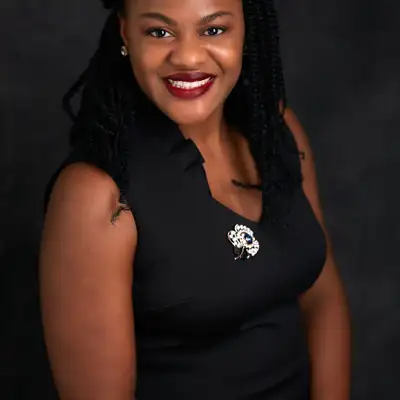
Tolu:Welcome to the Black Business Live Podcast where innovation in the black community meets global opportunities. I'm your host, Tolu Akindunni. And today, we are spotlighting a very important guest, especially as we are at the onset of the World Food Safety Day, June 7. In our podcast, we believe that representation drives aspiration, and when you see others who have walked the same paths as you have, it becomes tenable, realistic, and achievable. So our guest today has been at a pivotal place where she has navigated the intersection of food justice, but also making sure that food justice is made available to everyone in the community.
Tolu:Regina Harmon has led the biggest ever student led movements in The USA, And in the world today where over a 133,000,000 tons of food is being thrown away, she has found a way to donate 24,000,000 of that. Regina, it is great to have you in the studio today.
Regina:Thank you so much for having me. It is such an honor to spend time with you and to talk about such an important issue, so thank you.
Tolu:Thank you. Thank you. Because when I when I look at those stats, I'm astonished. I'm like, a 133,000,000 tons is being thrown away in an age where we have people facing food insecurity and our groceries well, the prices of groceries going up and up every time, we have the oil prices going up, we've got business businesses and families struggling to make ends meet. Even the food banks are struggling and we have so much waste.
Tolu:It is saddening and disheartening, but I'm glad to hear the work that you are doing in the community. And you started this as a student movement. Right?
Regina:Yes. Food Recovery Network started through the power of young people in 2011 at the University of Maryland in College Park. And, you know, all those things that you just mentioned, all those statistics are so real, and I know so many of your listeners feel that for themselves and for their families. And what I find so inspiring about Food Recovery Network and the thousands of student leaders all around The United States is we can take action, we can grow our power, and we can do something about this unnecessary problem that we have created, and we can actually use all of this incredibly beautiful surplus food. We can package that food up safely and provide it to our neighbors who are experiencing food insecurity.
Regina:So the problem is solvable. The problem, if we think about it locally in our communities, is solvable. And so we don't have to put the whole weight of this issue on our individual shoulders. Many hands make light work, and I think that's exactly what this movement around Food Recovery Network is working so hard to exemplify.
Tolu:Absolutely. You you say it all, you said many hands make it work, and and for me, that's what I found the most striking here because I'm I'm very much active in the community and there's many people who are building, who are framing, who are trying to create something. But you found a way to mobilize 8,000 plus students, food producers, and people in the industry. How did you do that? How did how did it all start?
Tolu:Give us give us some background.
Regina:Yes. I would love to give background. So even before 2011 when we became a national nonprofit, students of the University of Maryland in, you know, the unique ecosystem of higher education, they were working on their work studies at on the college campus, working in the dining hall and they saw at the end of their shift, they were told you just made all this food, now you have to throw it away. There was another student who he played intramural frisbee and by the time practice ended, he found himself always running across campus to get to one of the dining halls to buy a meal before the dining halls closed for the night. Sometimes he'd make it and sometimes he didn't and he tells the story when he didn't make it, say the dining hall closed at like 05:00, when he didn't make it, he would get there at like 05:03 sweating and out of breath, like, can I buy a sandwich?
Regina:And they would say no. So if he made it at 04:58PM, he could buy the food. But if he made it at 05:03, just a few moments later, they said no. But he could see the food. So the students of the University of Maryland were seeing perfectly good food being thrown away unnecessarily.
Regina:And they were also at the same time trying to figure out, you know, who do they want to be as young adults in the world, how do they want to show up, so they were volunteering out in their community. So they were volunteering at peanut butter and jelly sandwich making drives, they volunteered at soup kitchens, so they saw all this food being produced to then be distributed to their neighbors who were experiencing hunger when at the same time they were thinking, wait a second, our college literally has all this precious food that we are throwing away, can't we just take that food and make sure that goes to these places and spaces that we're at to make sure that our neighbors have food to eat? Can't we share that food with them? So that was the idea of Food Recovery Network, and I will say the beauty of these particular students and the thousands of students across The United States who have started chapters of their higher ed institutions is the resiliency, because at first, you know, this is, you know, well over a decade ago, fifteen years ago plus. The idea that students would take prepared food off of campus and bring it somewhere, oh, I will tell you, the first response they got when they asked their dining manager to have a meeting with them to talk about their idea was no.
Regina:Absolutely not. We're not doing this. But that resiliency, that tenacity, they just wouldn't leave her alone. They said, we have a
Tolu:really good idea. You have to
Regina:hear us out. When you have a really good idea, you have to hear us out. And eventually, she said, okay. She said, and she tells the story, so I'm not, you know, she tells the story about how aggressive she was. She had the meeting with them to basically have them leave her alone.
Regina:So she gave them some time to just, you know, they're they're just so persistent, so she said, okay, we'll have the meeting. They had the meeting, they told her the idea, and she said, you know, that's a really good idea. And not only that, she said, okay, if we're going to do this, here's how we will manage and handle the food safely. So she took her expertise and infused that into the idea of Food Recovery Network. So we had one dining hall at the University of Maryland and within the first month, just a few recoveries a month, they were able to recover a couple thousand pounds of food that they gave to a church not too far from their college campus.
Regina:And from there, the students basically just called up their friends at other higher ed institutions and said, hey, we just started this really awesome thing, it's called food recovery, here's how you do it, you should do it too. And their friends said, yeah, that's a really great idea, we're gonna do it too. It was a very, and still is, a very grassroots method for students talking to other students about an issue, a couple of different issues that they feel so strongly about and want to be able to take action. So flash forward to today, Food Recovery Network, we're about fifteen years old now. We have over 220 higher ed chapters, and we've recovered over 24,000,000 pounds of food through the power of young people Mhmm.
Regina:Who want to make a difference in their local communities, who say people deserve food, we have so much abundance, as you mentioned earlier, we have so much abundance, why are we throwing away this perfectly good food when we know that people in our neighborhoods do not have enough food to eat and they should. So we're really proud of this movement that was started by young people, and I came on to FRN when we were about four years old to do a few things for Food Recovery Network, to grow the concept, because again, it wasn't such a concept as it is today where people think, yeah, we should be doing something with our excess food, with our surplus food. Back then, it was people were a bit more squeamish about it. So to continue to further that legitimacy of recovering food, including prepared food, not just raw or shelf stable, but also legitimizing that young people have power, young people have expertise, young people are reliable, and young people are at the forefront of how we can solve some of these complex issues. Yeah.
Regina:When we look at any movement, you know, across the world, young people are always at the forefront. So legitimizing that and reminding some of the quote unquote adults that our students are able to do this and they can do this with love and with safety and make sure that their neighbors have food.
Tolu:Yeah. And that's what I really like about it because it's innovation that is that was established at grassroots level. It was it was really established at a very foundational level, and you know you know what it's like with young people. Once you're always like a dog with a bone, once you've taken on something and and you believe in it so strongly, you will get your friends, everyone else to go with that movement. And and it's contagious.
Tolu:It's a contagious movement. So so now let's talk about that because we have many young people who may be watching this show today, and they have this idea. They wanna influence at the grassroots level a topic or a subject that they're most passionate about, and they want to see a difference. And that's one of the reasons why we have the the podcast in the first place. Right?
Tolu:Now tell us about how you managed to bring in structure and systematize that in a way that it it is now what it is. Right? You know, it's it is it is nationwide. It's probably even more global because at at this rate, you're probably even sending food abroad. But but how have you brought in that structure and what has helped you along the way?
Regina:You know, it it has been such an honor for me to be part of Food Recovery Network for this decade plus. So we're a small national office. Right now there's about eight or nine of us on the team and part of that, the team that I work with is part of our special sauce including the thousands of students in our network. So students, they self select. They say, I wanna do this.
Regina:I wanna make sure that I can recover food in my dining hall or the surrounding locations where my campus is and make sure that people get the food that they deserve, either off campus or they keep the food right on their campus to address student food insecurity. And at the national office, that is exactly where we provide mentorship, resources, guidance, and training. So all of our students are trained on how to handle the food safely. They are all trained on how to manage their own chapter so that we do have those standards in place so that food safety is the ultimate. We wanna make sure that everyone knows how to manage their food safely.
Regina:They then do a landscape analysis. We help them to do that of where can we bring the food, either stay right off campus or to nonprofits in our surrounding areas. What will those recoveries look like? So we help them with logistics. How many times do you think your chapter can recover?
Regina:Is that one meal a week? Is that three meals a day? We have chapters who do all of it. Are you freezing some of the food? Are you refrigerating it?
Regina:There's just a lot of the logistics that go into this, and we provide all of that to our students as well as the higher ed. So part of this idea, this concept of keeping the value of this precious food, it's also the people who make this food for us, who work on the higher ed campuses who are spending their whole entire day making all of this precious food, the last thing they wanna see is that that food gets thrown away or that even worse, they're directed to throw that food away. So they also know how to handle the food safely. They know what can be recovered and donated. And so that's that's how that works.
Regina:And I will say I'm really proud of the fact that a few people on our staff, they were the chapter presidents for their Afron campus, for their chapters. So they really, you know, they saw it from the ground of on the grassroots level at their very own chapter. They helped to foster and strengthen their particular chapter and then came into the national office. So when they talk with students, firsthand they understand what some of the challenges are that our students face with trying to start a chapter, maintain a chapter, and grow a chapter to meet their goals.
Tolu:Yeah, and that's so important because you have the succession plan right there. And the reason why this is also very important to me is because this this season, a lot of our messaging has been around leadership, sustainability. So not not from the the Earth's perspective, but sustainability in terms of business. Although, sustainability for the for the Earth's resources is also an important topic, which you are bringing to the to the forefront. But then, it's about leadership, sustainable business, business with with a mission and a purpose, but also looking at how you can scale that mission.
Tolu:And I really like the catalytic effect that you're sharing with us to say, yes, you can start something because you believe in it, you can garner others' interest in helping you to move with that, but at some point, you wanna start thinking about how you spread, and yes, we could have local hubs where the interest is impressed upon them and they're taking activity, but you then have a sort of a hub model where you're providing mentorship, guidance, logistics support. You're you're helping them to to frame, but also it's those who are active on the field who are then in the the hub or the headquarters training others who are emerging. So there's a pipeline of leadership you've created right there. Yes.
Regina:It has been so incredible to see all of these students, alums, Afiran alums, hear so passionately about making sure that food isn't thrown away. To help, that is the sustainability from from their perspective. When we throw food away, it directly harms Mother Earth. We know this to be a fact. Food waste is the third largest emitter of greenhouse gases in the world.
Regina:The United States is the first largest emitter of greenhouse gases in the world. The responsibility is ours to tackle greenhouse gas emissions and we can do that lovingly by ensuring that perfectly good food doesn't get thrown away. So our students really care about mother earth and they really care about their neighbors. So they they come into this with such heart and soul, and then they are so willing to expand their leadership. Because I will also say a lot of students who self select to become part of their FRN chapters already identify as being a leader.
Regina:So they care so deeply about the health of their particular chapter. We've had chapters that have been around, you know, if day one food the Food Recovery Network started at the University of Maryland, day two we had our Brown chapter. You know, day two, we had University of of California Berkeley. So many of our chapters, they too are celebrating these large milestones. We've had chapters, you know, again, with the sustainability and health of their actual chapter during COVID, which was such a scary time for all of us.
Regina:Many of our students, they had to flee flee their college campuses, and many of our students were trying to just get in one last food recovery before they had to go. They wanted to get back onto their campuses as safely as they could, as quick as they could to continue doing food recoveries. We've seen our students support food recoveries when they themselves have had disasters happen, floods, hurricanes. Our students care so deeply about the mission and making sure that they have new volunteers coming in, you know, as they become a freshman, sophomore, junior, senior, and then they themselves graduate, that they have that wonderful pool of volunteers to keep the chapter going. And then we also have incredible faculty who donate their time to our students so that at their actual universities they have a faculty member that they too can draw upon expertise and help support because every university is slightly different and it's a living and breathing mechanism.
Regina:So when we have a faculty advisor for the students to also go to, to say hey, can we go to particular professors' classes to make an announcement that we're looking for volunteers? A lot of the professors say yes to things like that. So it really is a movement and it really is that hub and spoke model that you were talking about where we want to continue to power the students to have the knowledge and abilities so that they can make sure that their chapter continues on with that succession planning as you were talking about, that sustainability that you were talking about.
Tolu:Yeah. Yeah. Absolutely. Now, but, you know, we're talking about sustainability of business, but you said something that really struck me, where you said a third of greenhouse gases come from from food. You would not have thought about that.
Tolu:Right? Because you're like, well, food is compost. You know, material is Let's compost. Let's hone into that a little bit more because I know you've also been able to reduce the carbon dioxide equivalents that go into the atmosphere. Right?
Tolu:Now, tell us more. Tell us more about how food is impacting our our atmosphere, just waste food.
Regina:Just wasted food. So we know through one of our wonderful partner organizations called Pre Fed, they provide a lot of data for all of us nonprofits to understand the shape of the problem so that we know what we're dealing with. You know, James Baldwin says, unless we face it, you know, we can't change it. We can't always change what we see, but we have to be able to look at it first before we can make change. That in 2023, about 38% of our food supply in The United States went unsold or uneaten.
Regina:Wow. And we also know that the number one place that food goes, perfectly good food as well as food scraps, the number one place where that food is destined to go is into landfill. And when it gets into so it's not being composted, it is a little bit but the percentage is small. It's not being fed to animals, some of it is, but again these these numbers are very small and the majority of our food should be going to these areas. The number one place it should be is being recovered to feed to humans whenever possible.
Regina:We should be composting and we should be feeding to animals. It can be anaerobically digested. That's not necessarily happening at the rates we need to see. Right now, it's going into landfill. When it goes to landfill, all of this food, including the perfectly good food, is rotting and it's causing excess c o two emissions as well as other greenhouse methane, other greenhouse gases.
Regina:All of that gas is going up into our atmosphere and it is getting stuck there. So then this is the effect. Right? Yeah. The sun comes on down through our atmosphere, wedges its way through all of this excess c o two, methane, and other gases, bounces off the water, bounces off the land, and then tries to come back out of the atmosphere and gets stuck, and that's why we're warming up.
Regina:We have a lot of landfills that are trapped right now. There's no more space, And so we at Food Recovery Network say we have to stop this dizzying cycle. There is about 78,000,000 tons of food that goes into landfill every year, and many of those billions of tons of food are still perfectly good to eat. They should never be there in the first place, so our landfills are filling up. Food is the number one thing in our landfills.
Tolu:Oh, yeah.
Regina:You know, it's not old refrigerators or cars, you know. So we really do have an opportunity right before us. It doesn't have to be so complex. Our students show us it does not have to be so complex. So we're really trying to, you know, be the leaders with open arms and with open hearts to others to say, join this movement, let's stop boosting our food, let's make food recovery the norm.
Tolu:No. Why not? It's it's it's the obvious. I mean, I I was born in Africa and I I've had the opportunity to live in different parts of the world. And you some extent, you can say, okay.
Tolu:There is a lot of poverty and hunger in Africa, but also food is always the thing that is like, okay. At least you'll get food to eat amongst everything else. But then hearing that a third of our landfill is is filling up with food. Oh my god. I'm like, even here in The United States, some people only eat one meal a day.
Tolu:Some people even just just barely put food on the table and we're throwing it away. So it is almost like an urgent call to action in in my opinion. It's like, well, we need to do something about this. And and and that's why I was really intrigued when I when I read about the network. I saw a couple of videos of you talking about use by dates and things like that, and then I'm like, ma'am.
Tolu:Please please tell us tell us a little bit more. So so now let's just go back to business areas, right, because we have people in our community who are caterers, we have people who have their coffee shops, we have people who buy from coffee shops, who are you know, we all use catering services one way or the other, we buy lunch all the time. What can business owners do to join this movie? So we've heard we know this starts from the students. Right?
Tolu:And the students are doing their thing. They're active in the community. But let's turn the dial a little and say, what what can business owners do and how can they replicate this mindset in their everyday business affairs?
Regina:I love this question. There is so much that business owners can do and for everyone listening, please be in touch because we have so many resources for you. This is not proprietary on how we can safely recover food and donate it locally. So the first thing is you like you said, it's the mindset of I wanna be part of this solution, I can do something about it. That's a mindset.
Regina:Yeah. That's not like, you know, that's someone else's job or I'm too busy or we're all very busy. Especially if you're a business owner, you're very busy. But it is starting with that mindset, And so all of us who go to these different locations that have food, whether we're going to a conference, whether we're a caterer ourselves, it is about doing that landscape analysis of where can I donate this food, how can I donate this food, and those are all questions that we can help with at Food Recovery Network to answer those in in the weeds questions? We always ask people, you know, if you're gonna go to a conference, your favorite hotel, these are all locations that have food.
Regina:You can make meals. And to begin by asking, like, oh, what is your recovery plan? And if they don't have one, please tell them about Food Recovery Network. I think a lot of times people are fearful of recovering food and donating it because of liability issues. And in The United States, there's two federal laws, the Bill Emerson Good Samaritan Law of 1996 and the 2023 Food Donation Improvement Act that essentially says that if you donate food in good faith, you you won't be health liable.
Regina:And and so that is a federal protection, federal. So that means that across all administrations, there is an encouragement to do the right thing with your surplus food. And then we see in some states like California, based on your kind of business, you are now required to have a food recovery plan in place. And so I also say to many business owners that maybe don't live in California that are interested in reconfiguring how they manage their food waste, to to do it now before, you you can work with an organization like Food Recovery Network or others where to do the right thing with your surplus food is a nominal cost compared to probably what your costs are to get rid of that food in the first place. So especially some of these larger locations, they had whole entire trucks that are just taking away organics and again a lot of that food is still perfectly good to eat.
Regina:Well, then if you have a food recovery plan in place, first of you could see how much you're over ordering, so you can save money there. Then you can see, oh, if we donate some of this food, you get a tax write off for doing that, so you get money back, which is beautiful. And then third, start to see, well we don't need that sized contract for our our hauling anymore, we can get a smaller truck or a truck that comes not as frequently and you save money there. So it's actually a win win win for everybody. When we recover our food, our businesses can actually save money.
Regina:When we recover food, we can ensure that our neighbors have that meal that they deserve. When we recover food, we ease our burden on Mother Earth. So literally everyone everyone wins. But it is about it is about reconfiguring. Yes.
Regina:So that we're not throwing food away, but instead we're recovering it. But it doesn't take that much time compared to what you have to do at the end of the day to throw your food away Mhmm. The end of the day to recover your food. It's hours more on on your staff, and I and I speak from experience. We've done 100,000 pound recoveries all the way down to, you know, a bag of bales.
Regina:It does not take long to implement a food recovery plan. It might take a little bit of trial piloting, but you can do it. We've helped hundreds of businesses do this.
Tolu:Yeah, and it's doable, like you said. The first thing is to have the food recovery plan, so have the plan in place and then once it's in place as part of the organization of whatever the event or whatever business activity it is, then it's about executing that. And you could even save costs at the end of the day, get a tax rebate for for doing that activity. So but it's about planning for it, planning for for dealing with waste. You know, honestly, I I I struggle with that here in in in The US because there is so much abundance.
Tolu:Right? There's abundance everywhere, and you think, oh, yeah. There is abundance. It's a land land of milk and honey. But in the land of milk and honey, there is also famine in the land.
Tolu:And how do you how do you how do you store store up your storehouses so that, you know, you you can you can meet in in those in those places of famine as well. This topic is really important because in the underserved communities, these are the communities that get hit the hardest the most. Right? And I'd I'd be interested to know how well spread you are across the nation because you talked about Maryland, of course, on the East Coast. You talked about being in California, which is on the West Coast.
Tolu:How about the middle of the country? How about places like Texas, which is which is an agricultural state? What what how widespread are you and what what's the what's the type of work you're doing around here?
Regina:Yes. Oh, I love that. So we are in 46 states. We have Great. Cousins in 46 states.
Regina:We work with about 350, 400 nonprofits who receive our food, and that number grows all the time. So we really do have a very large reach here in The United States, and a couple of other things, you know, with our in terms of our reach, you know, we really do help businesses design and implement their food recovery plan. So I do hope that people hear, oh, I I can get support on doing this. I helped me do this by myself. We're experts in this.
Regina:We know the logistics in all of this, including where can we bring the food. So I think the logistics is something that makes people stop because again, they're configured to to throw food away. They're not configured to, okay, here's where we're gonna bring the food on Tuesdays and Fridays. Great. But we also see when you were talking about, you know, making sure that we have the stores available in terms of the amounts of food available for people who deserve the food.
Regina:Right now in The United States, forty seven point seven million of our neighbors, of our loved ones are food insecure. Forty seven point seven. I don't wanna round up to 48,000,000 like some some folks do because these are all individuals, millions of whom are children. They deserve food. And one of the programs that we run at Food Recovery Network is to provide fresh produce to title one elementary schools where that means 50% or more of the students who go to that elementary school can have free or reduced lunch.
Regina:So we go to these elementary schools to make it ease all for the people who happen to be experiencing food insecurity. So they're being picked up by their mom, dad, guardian, so great. They can now get fresh produce in a location that they're going to be already. Transportation, we were talking about gas prices right now, are so high and if people need to drive to locations all the time to get the food that they deserve, wait in lines that we know now, again, are hours long, that costs them a lot of money and it might just be a meal for a day or two. So our produce markets are designed to ensure that people can take the food that they need for themselves and their families.
Regina:They can make those decisions on the amount and it's already a place making it useful for them. We have, in the Northern Virginia area, we have a refrigerator that we put into an apartment complex and when we donate, when we get food from a local hotel, Gaylords, so we're so thankful for their partnership with them, we bring the food to that refrigerator so that the people who live there could easily take a tray of food and bring it up to their apartments. So these are the these are the actions, know, it doesn't always need to be, and it could be and it should be, millions of pounds of food because we have so much milk and honey, but really thinking about how can we make accessing the food that people deserve, easeful for them. That's a big part of the design that we do at Food Recovery Network along with our chapters who again are doing recoveries in 46 states. We ourselves at the national office, we do large scale event recoveries.
Regina:We support the hotels. We support the conferences. And we wanna make sure that we get more people on our docket so that they are also recovering their surplus food. So the presence is is is very vast and we can do a lot more, but it's people who say, I wanna start a chapter, it's people who say, I need to make sure that the next conference that I'm at has a food recovery plan in place.
Tolu:Yeah. Well, thank you so much for the work you do. It brings tears to my eyes just listening to you, you know, in an apartment building where people can just go get a tray and take it upstairs. We we forget these things and sometimes, you know, I I grew up knowing you you just don't waste food because there's somebody out there who who doesn't who who doesn't have what you're throwing away. Right?
Tolu:That's something that, you know, was ingrained into into my my psyche growing up. But then you come into a country like The US, you're like, oh, yeah. Everything you see the food everywhere sometimes, and you wonder what's happening to it. So so I'm so glad to have this facility, to have this infrastructure in place, and the fantastic system that you've built to make sure that the right people get the food that they deserve, as as you mentioned. Now, I wanna before we before we round up, I know you're also serving on a couple of boards.
Tolu:You talked about refed and you're an advisory on the advisory board there, and you also serve on a couple of boards. Tell us about how you're influencing the future on on this board, influencing policy, influencing the landscape, influence providing advocacy because you're not you're not just doing advocacy now, you're doing something about it. But let's talk about how you're also advocating for for food security.
Regina:Thank you so much. I am, yes, a very proud board member of a couple of different boards. The REFED Advisory Council has been incredible and REFED is really doing such great work around advocacy. So the Food Donation Improvement Act that I just mentioned in 2023, AFRON, we lend our voice to that along with a bunch of other incredible organizations. We set among them, and we also advocate for a living wage in The United States.
Regina:We know through the mapping work that we've done at in at FRN to ensure that we're getting our programming at the at the national level into particular locations that of the 4,400 counties in The United States, in only 29 of them do the people who live in those counties make on average or above a living wage. In only 29. Wow. So what you're what you're talking about is it's very real. Now there are other counties where people make above that, but only in 29 places can we say at all the families are accounted for.
Regina:And so having a living wage is incredibly important to us here at Food Recovery Network because we think about state minimum wages or the federal minimum wage. It's embarrassing. It's it's degrading, and it is it will put you into poverty. And we have so many thousands of students who are on federal work study. Well, when you have federal work study, the you get the federal minimum wage, and that is not okay.
Regina:So we advocate for a living wage. I'm also on the board of Earth Island Institute. I actually, in a couple weeks, have a board meeting. I'm so excited about that. And they are an umbrella organization for about 90 global programs all around sustainability.
Regina:And so many of them, they do legal work to ensure that corporations are held accountable to the things that they say that they're going to do because as many of us know, plastics are also an issue. These forever chemicals are issues that we have to help us all thrive. So I'm really proud to be able to advocate on behalf of all of us to say we we work so hard here in The United States. See, there's no good honey for a reason. Yeah.
Regina:We work so hard here in The United States, but the wages do not reflect how much people put into making other people wealthy. It's not shared equitably among all of us, and it really needs to be. So we have to hold corporations accountable to that. And so I feel like I can do that at the board level to help support these incredible organizations. WHO Tank is another board that I sit on so proudly, another global nonprofit that brings together indigenous voices, farmers, practitioners of all kinds, professors, and corporations, yes, to say what can we do to help support a thriving global agricultural system so that we can all have the food that we deserve, so that we are not making all of these populations vulnerable in the ways that we have traditionally, that we can do things better.
Regina:And when we bring in the voices of the most vulnerable into the conversations like Food Tank does, we can ensure that we all thrive. Because until we are all safe, none of us are safe. And I mean that in terms of access to food. I mean that in in terms of fair wages for our labor, I mean that in terms of health, being able to access health. We all deserve this, and until all of us have it, none of us, you know, so we have a lot of work to do, but we can advocate, we can use our voice, we can use our skills, we can use our talents, we can have conversations like this at your incredible Podcast Mhmm.
Regina:To help spark Yeah. And assure people that things are getting done, and everyone, at least from a food recovery network standpoint, is invited to help in ways big and small.
Tolu:Absolutely. And I hope our listeners are also sensitized with with that because, you know, it's not a topic that you you you expect to hear on a Black Business Live Podcast. You know, you expect to hear about growing your revenue or scaling or whatever, but this year, by by taking care of the people who are taking care of your business, the people that work in the farms usually aren't the ones that eat the food, the producers on the farm. Those who work in the kitchens aren't the ones that get to enjoy the the most of the time, not the ones who get to enjoy. Those who are waiting at the bars aren't the ones who, you know, get to get to live the experience of a of a five star restaurant.
Tolu:You know, they are the ones doing the work, but they are the ones who also go back home and may not be able to put food on their table. So it's you thinking about the entire ecosystem and how of how your efforts contribute to a thriving community, that is what really makes all of us grow and scale. So that's why this is such an important topic, and I hope that if someone here is thinking about what they're gonna do differently in their small business, in their enterprise, and in businesses that they can influence to do something about food security or food insecurity. So thank you so much. Thank you again, Regina.
Tolu:This is amazing. It's amazing. So so how can we help? Yeah. I know you've you've given a couple of calls to action, but I I'd like you to say it again because I know you've got you've also got a tool that you're you're gonna share with us.
Tolu:Right? That we can put onto our screen for for the community. But what can our community do for Food Recovery Network?
Regina:Thank you so much for the opportunity to name a few things that people can do to help us. You know, the other part about Food Recovery Network is at the center of our work, We use the results count framework that says no matter what problem you're trying to solve, so for us it's trying to end hunger, it's trying to ensure that perfectly good food does not go to waste, at the center of any problem that you're trying to solve that you must support mitigating ethnic and racial disparities. So it is so incredible that I have the opportunity to talk to your audience about that because we know through our history of racism in The United States that the communities that are most affected by food insecurity consistently affected are our black, brown, and indigenous communities. Right. And so we can we're here to help ourselves.
Regina:We can help by specifically with Food Recovery Network, Sadly, a lot of nonprofits are struggling right now financially because of the markets, because of ongoing war. And so financial contributions to support Food Recovery Network ensures that we can be where we are most needed to keep our programs going to expand our programs. So the produce markets that I was mentioning, we have a long line of other schools that would like to have that that produce market at their schools. We would love to be there at those schools. So financial contributions ensures that we can continue to recover surplus food.
Regina:I would love for everyone, as you were saying, you know, if you your business has a conference, if your business has food in any kind of way, or you're going to a place with food, please get in touch with us so that we can help put in plan a food recovery a food recovery plan for that conference, for your catering business, whatever it might be that's so valuable, and for everyone who has a higher ed institution that they identify as their alma mater, if they have kids, cousins, I'm an auntie, you know, if you if your nephews or nieces go to higher ed institutions, let's make sure that those places have a chapter. We're in about 200 higher ed institutions right now. We'd love to be in 2,000. We'd love to be in 4,000. We would love higher ed to be the first sector where food recovery is norm and not the exception.
Regina:And we can do that by continuing that call up a friend and say like, hey. Have you heard of Food Recovery Network? Does your school have a chapter? And let's put forward a quick application for the students who are interested in starting a chapter. It's super easy.
Regina:We're a really fun group. We'd love to have all of you participate with the work of of FRN. And if you haven't heard of something that you think you could do of those options, be in touch. I'd love to hear from you.
Tolu:Be in touch. Well, we're gonna have a QR code on our screen so people can scan and they can log into your website and get some more information, but there you go, there you go. It is so exciting. There is so much that we can talk about, but but I'm glad that you are taking action. You're not just saying, okay, let's go ask for food.
Tolu:That's not what you're saying. You're saying, let's do something about the abundance that we have and transferring that to where there is scarcity, and we're providing the tools, the resources, the structure, the logistics to make it happen. And that is what I really love about this, and so we will put the link to your resource hub so that people can go in there and get ideas of what they can do. But there you go, everyone. The Food Recovery Network exists.
Tolu:It's there. They've been around for over a decade, and they are making impact. So you have a you you this we're pushing the summer holiday. You have a child going to college. You've got an idea of what they could get get involved with in college and they already have a national support system to help them out.
Tolu:You are planning a big conference, usually conference seasons is around September October period. Well, you look at that, you've got enough time to think about what to do about about about your, your conferences. And if you just wanna donate, just donate. And no resources are scarce these days, but if you wanna donate, well, there you go. There is an opportunity to put your resources in the place where it matters the most.
Tolu:So thank you once again, Regina. It's been a pleasure having you. Thank you for sharing so much with us, for sensitizing us, for helping us to think differently about about food because we all just think, oh, yeah. It's food. It's, you know, it's gonna just it's gonna decompose and go away, but no, it's probably even harming the earth more than than than creating what we want it to do.
Tolu:So thank you. Appreciate it and thank you for coming to our podcast and for sharing so much wisdom with us.
Regina:Thank you. It's been a pleasure. I really appreciate the time, and thank you for such a caring and thoughtful conversation. It's really filled my cup, so thank you.
Tolu:Appreciate. Yeah. And thank you too. So there you go, everyone. It's Tolu here, the host of the Black Business Live Podcast, where we are amplifying black excellence culture, innovation, and we're doing it loud, proud, and authentically.
Tolu:The reason why we bring these sort of shows to you is because we wanna activate our communities to action. And so we hope that this episode has helped you to think about where you can drive action. So, again, Tolu from All Things Black and Beautiful, and this is the Black Business Live.