Subscribe
Share
Share
Embed
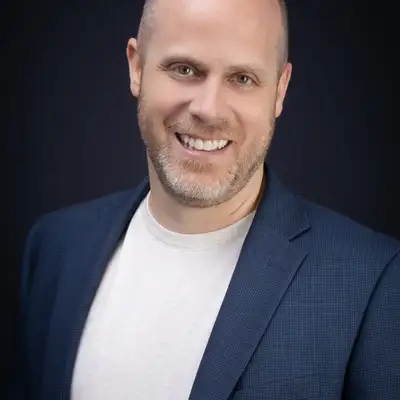
Welcome to Inside Marketing with MarketSurge — your front-row seat to the boldest business insights, marketing breakthroughs, and entrepreneurial real talk.
Hosted by Reed Hansen, Chief Growth Officer at MarketSurge and a digital marketing veteran who's helped scale everything from scrappy startups to Fortune 500 giants, this podcast dives deep into what’s really moving the needle in today’s marketing world. Find us at Marketsurge.io
Each week, we’ll break down the latest marketing and business news (minus the fluff), explore tech trends you actually need to know, and feature unfiltered conversations with the most interesting minds in entrepreneurship and marketing.
Whether you're a founder, a marketer, or just a curious hustler looking to level up, this is where growth happens—loudly, smartly, and with just the right amount of sass.
Subscribe, tune in, and let’s scale something legendary. 🚀
Speaker: Welcome to Inside
Marketing With Market Surge.
Your front row seat to the
boldest ideas and smartest
strategies in the marketing game.
Your host is Reed Hansen, chief
Growth Officer at Market Surge.
Reed Hansen, MarketSurge: Hello
and welcome back to Inside
Marketing with Market Surge.
talk about what can be one of the
most emotionally charged experiences
known to man losing your hair.
Today's guest is Paul Muzio, chief
Marketing Officer at Lock Lab, a
telehealth platform offering a once
daily pill, clinically proven to stop
further hair loss and regrow hair.
Paul has helped reach tens of
thousands of people who looked in
the mirror, saw the hairline moving
backwards and said, not today.
Locks.
Lab lock Lab's mission is simple
but powerful, make hair restoration,
affordable, accessible, and confidence
boosting without awkward doctor
visits or overpriced gimmicks.
We're going to unpack the psychology of
selling confidence, how to market in a
space filled with scams and snake oil.
What actually works in direct
to consumer telehealth.
And how persuasion changes when you're
selling something deeply emotional.
Paul, welcome to the show.
Paul: Thanks for having me, Reid.
Super good to be here.
Reed Hansen, MarketSurge:
Yeah, absolutely.
So, okay, let's start with the topic
at hand, you know, is at a high level,
you know, when we're talking about
branding, is hair loss really about
the hair or is it about identity?
Paul: It is actually about the hair.
I think that every guy I would be
totally bald right now if it wasn't
for this pill that I started taking.
Formulated by a doctor.
I didn't formulate it, but I love
selling it because I take it, and
for me I guess maybe on a deeper
level, identity is part of it.
Like the way when you look in the
mirror, if you start, if that starts
changing for you drastically and you
start thinking, okay, like, I'm no
longer gonna look the way that I kind
of see myself in my head, then yes.
I mean, you could say that's identity.
I think it's also just sometimes hair
like people, some people look good bald.
Like I'm not gonna tell Jason Statham
to do anything about his hair.
You know?
Some people just kind of want it,
some people don't really care.
Definitely there's both camps.
So we kind of mostly promoting this
to people who actually are concerned.
Like, it's like they don't
want to look different.
Reed Hansen, MarketSurge: Yeah,
well and an elephant in the room.
People are just listening to the audio.
I am a bald man and I wasn't always bald.
I was all the way up until about.
23, 24.
I had some, some coverage and then
it started thinning more rapidly.
But, so I'm interested in this
topic, you know, and I, I've actually
attempted some hair loss prevention
and hair restoration in the past.
But at a point, I think I
was about 29, 29 years old.
I, I just kind of embraced it.
Now not to say that I wouldn't.
You be open to different solutions.
So we didn't talk about this before,
so I just didn't wanna put you in
an awkward position of having to
dance around this, but, so you,
yourself, you, you were balding.
How, how, how
Paul: Oh yeah,
Reed Hansen, MarketSurge: your journey
Paul: I had a big bald spot
in the back of my head.
Way worse.
Hairline.
My hairline's not perfect now.
I comb it.
Well,
Reed Hansen, MarketSurge: great.
You're
Paul: Thank you.
But it, I got a half, at least
a half inch of my hairline back.
So yeah, so I've got basically on
hair loss on both sides of my family.
By the time my dad was my
age, he was totally bald.
My mom's side also a bunch of hair loss.
It actually doesn't matter which
side of the family you get it from,
it's just like a genetic thing
that can be passed down either way.
And so yeah, I started taking this because
my older brother introduced me to it.
Then my younger brother got
on it, and then a bunch of our
friends, and it was basically this.
Combined pill of these medications
that have been around for a long
time with like a higher quality and a
totally different, unique dosage that
is just now coming to be understood
as proven to be more effective.
But Dr.
Dan McGrath who formulated this, knew
forever ago, 'cause he's just a, a genius.
He knew forever ago that basically if
you change the dosage in this way and you
change the quality in this way, like it's
just a game changer for, for hair loss.
So, I mean as far as like.
Addressing the elephant in the room.
You being a balded guy, like the
reason that you could or could not
get any hair back is, is basically
there's like a few things that actually
make this kind of work or not work.
So it's how long you've been bald.
So if you've been bald for 50 years, what
that means is the follicles are actually
probably dead underneath the surface.
And so there's no bringing back a dead
follicle like that is, that's impossible.
But if the follicles are still alive
underneath the surface, then they can
actually be re stimulated through this
medication and can sprout back up.
So it's.
If you have alive follicles, which is
basically how long you've been bald and
then your sensitivity to the medication.
So like some people, their bodies
just react extremely well to it.
I have seen a couple guys with hair
similar to yours that actually like
got a, a significant amount of hair
back, but that is much less common.
'cause most of the time when you
are kind of baby smooth, bald.
It means the follicles are dead.
But if you can have tiny little hairs.
Like if I was to take a microscope to
your, or a magnifying glass to your head,
there might be a little bunch of little
vellus hairs there, which are like thin
ones that you can't really see that
this medication could also stimulate.
And so that then they become
like normal looking hairs again.
And so like that's kind
of what happened to me.
I had been balding for like
five years, but it wasn't like
total, I wasn't too far gone.
And so I was able to like recover the mo a
lot of the hair that I lost and you know.
Basically make myself look like
I had a normal head hair again.
Does that make sense?
Reed Hansen, MarketSurge: Do you
mind if I ask how old you are, Paul?
Just curious.
Paul: 39.
Reed Hansen, MarketSurge: Yeah.
Okay.
with the head of like a 21-year-old.
I mean, very impressive.
Paul: Thanks.
Millennials look younger.
They look younger than any generation.
I, yeah, I don't know.
Maybe it's sunscreen.
Reed Hansen, MarketSurge: Okay.
So tell me a little bit about what
does being the chief marketing
officer of this brand entail now?
There's typical actions.
in the marketing function are,
do you engage in advertising?
You know, what kind of decisions are
you making around branding and, you
know, what's your external marketing
looking like, and what do you do
with like your web storefront?
You know, talk a little bit about that.
Paul: Yeah, it's a big question.
The, like, the crux of our
business for generating revenue
is social media marketing.
Reed Hansen, MarketSurge: Okay.
Paul: a lot of companies are going that
direction advertising on podcasts, and,
looking into doing TV and things like
that they can be helpful, but like so much
money is made on social media if you just
have amazing ads and it's so easy to build
a community and branding around that.
That we've stuck there.
And then also we have all these great
comments on our ads, which we would
never get from like a TV advertisement.
if we put this on TV, people could
believe it or not believe it.
But if you go and see a lock lab
ad on social media and then you
have a bunch of, actual patients
like writing, like, oh yeah, this
worked for me, you should try it.
That's really helpful.
'cause like in a nutshell, like
as far as branding we're basically
selling the concept of this works.
A lot of guys, if they believe that
they're gonna wanna try it 'cause
they just would want to get their
hair back or stop their hair loss.
So it's basically how to position it
as looking actually credible which
is a huge thing that we do with
only using real patients on our ads.
I think we're the only, I'm sure
we're the only company doing that
'cause our product works so well.
We can actually.
Like scale that.
And so we, we've hired one actor
ever for like a background role
for like a comedic part of one ad.
Besides that one guy who's featured
again in one ad, barely every
single person you see in a lock lab.
Lock lab ad like actually
takes the medicine.
And I think that's so important
in this space because there's so
much misinformation and so many
things that don't work very well
and people are just kind of.
Watching these ads, assuming it's fake.
And I think if you watch enough lock
lab ads, you're gonna come to the
conclusion, oh wait, I bet these,
these guys all seem real, like,
this actually seem like real people.
Like maybe this is actually legit.
So as the chief marketing officer,
I mean, that's all of my idea.
I'm, I'm the one who I founded the
company with my, my brothers and Dr.
Dan.
And from the beginning, that
was a huge thing for us.
Just authenticity.
Yeah.
Reed Hansen, MarketSurge: So, you
know, you've, you in your comments
you've mentioned a few target.
Like personas and, you know, I'd be
interested in, in how you prioritize that.
But you've, you've talked about the
skeptics that, maybe have heard about
other solutions and have not been happy.
And maybe a second one that I'm
guessing at is, you know, as you
mentioned, the formulation of your
product is somebody that's tried a
different solution and was not happy.
Talk a little bit about those,
those targets, because there's
a, I'm sure there's a huge number
of personas you could tackle.
And I'm, so, I'm, I'm totally
inferring from what you've said so far.
How have you picked the, the
personas you've, you've settled on?
Paul: The question we
basically market to ourselves.
Which is really, really lucky.
Like, I don't have to be that great
at marketing to to sell something
that I would buy from myself.
You know, like, because I'm a patient
of this, I, I've got so many friends
who are dealing with hair loss.
Like, I just, I'm
surrounded with like a what?
A bunch of, just a bunch of like voice
of customer research, like in my own
life, like in and in my own head.
So yeah, I mean, we mostly
market to the skeptics that.
Also pulls in the people who
have tried like things before.
I think probably about half of our
customers have actually tried something
that's maybe like, maybe prescription,
maybe over the counter, maybe like
it's a nutraceutical and so they're
thinking, okay, I tried this one
thing, so probably nothing works.
And so even people who have tried things
before, you're still kind of pointing
out, hey, like this actually works.
Here's like the research behind it.
And yeah.
So as far as personas, it's kind of like.
We make, we make a lot of ads that
are really entertaining and a lot of
ads that are really like scientific,
like research almost, almost
like a boring level of research.
But we try to, we try to make it fun.
And I think combining those two things
kind of yeah, gets all like the dudes
who are like, okay, I'm, I'm just gonna,
I'm gonna bleed these guys eventually.
So, yeah.
Reed Hansen, MarketSurge: Interesting.
Now the, selling your, your product
through online channels which is actually,
I, I, I don't know enough to say, like,
to comment on like how new that is.
But I do know.
I remember like the Rogan ads
from my childhood growing up.
It seemed like it was over the phone
that that was, or actually, no.
Paul: And Rogan.
Yeah.
Reed Hansen, MarketSurge: Okay.
So EE, so retail essentially
now, but you so you have a, a
web platform for selling this.
How did you settle on that?
And, and channel to sell.
And how is that different from,
you know I mean, or, or do you have
other, I mean, I know you have other
competitors, but did you consider other
platforms for marketing your product?
Paul: When you say consider other
platforms, you mean like to actually
make the final sale or to market it?
Reed Hansen, MarketSurge: Yeah.
Like, did you consider retail as well?
Or did you you know, are there
other potential marketing
channels that are in the mix?
Paul: It's a prescription medication.
So like we have several
doctors who do prescribe this.
We have some great
relationships with some.
Clinical practices.
The majority is through telehealth,
which is, you go to our website and
we're sort of a platform for this
network of doctors who looks at your
medical history and decides whether
you can be prescribed it safely.
Which is, yeah, super great
because it's so, so convenient.
Like, so many guys wouldn't even try
this if they had to go to their doctor.
I mean, some would, but you know, a lot of
guys, they just wanna make it really easy.
Guys don't really like going to
the doctor, so telehealth is.
As long as it's done really safely
and you know, like with like a
lot of care for the patients is a
really awesome thing, I think, to
get guys medicine that they need.
Reed Hansen, MarketSurge: Yeah, and
forgive my stumbling with the vocabulary.
Thanks for putting a finer point on it.
I
you know, and so I
imagine that there's some.
Complexity when you're dealing
with a you know, a prescription
medication that is over.
It's like you combine like the
optimization and the speed and
efficiency that we have on web platforms.
But you also have the complexity, the
compliance, the regulations that you have
to deal with of a prescription product.
You know that that is,
you know, impressive.
And I'm sure, I'm sure it
comes with a lot of challenges.
Like what, what are some of the
hurdles you've had to overcome
to make this, make this work?
Paul: We have an amazing team that.
Figures out all the legality and then
how to our, our CTO's a genius at taking
what you have to have, which I'm not
even a hundred percent familiar with.
All the different like logistics
and like actually translating
that to a good user experience.
Yeah, our CTO's amazing.
So I'm, I'm losing my train of
thought, but basically yeah.
Can you actually, can you
rephrase what the question again?
Reed Hansen, MarketSurge:
me, let me rephrase.
So when we were you know, you consider all
the things you know, you, so you've got
the, the benefits of all the online that
you have, but then you, basically what I'm
asking is like, you know, what regulatory
hurdles have been the hardest to make this
a good user experience for, for buying,
Paul: Yeah.
Regulatory hurdles not so difficult.
Reed Hansen, MarketSurge: okay?
Mm-hmm.
Paul: a marketing perspective, it's sort
of like if you go to your doctor, there's
all these kind of things behind the scenes
that they have to be careful of, but,
but you're not really going in there.
Hearing about a medicine and then like
having a bunch of trouble getting it.
If, if you have a doctor who's licensed to
prescribe and he's able to like look, or
she's able to look at your medical history
and make a good deter determination,
look at pictures of your hair, all that
kind of stuff, make a good determination.
The telehealth thing is, is probably
really difficult on the technology
side, which is why I mentioned that.
But from a marketing standpoint,
it's actually, it's almost, well,
selling a prescription is much harder
than selling a non-prescription.
So I can get into that, but,
but otherwise, regulatory wise,
it's not it's not an enormous
challenge for me as, as a marketer.
I think for me, the hard part is,
is I'm competing with these inferior
medications that are very easy to sell
because there's no prescription involved.
They don't mention the side effects
or, or anything because I mean, all
me medic prescription medications
have potential side effects.
But these, you know, if you sell a shampoo
and you claim that it regrows hair.
It's a pretty easy sell as long as you,
if you can convince people to do it.
'cause they don't really have, you
don't have to put their medical history
in or really do much of anything.
It just seems like safe and easy.
Unfortunately it doesn't really work
very well, but like we're competing
with a lot of products that are very
easy to sell, if that makes sense.
That's probably the hardest thing.
Reed Hansen, MarketSurge: Got it.
Okay.
No, that makes sense.
And so, you know, from a cultural
standpoint do you feel like
that there is a cultural trend?
So, you know, this is for
more of a branding question.
Is there a cultural trend
in favor of natural is best?
You know, like embrace the baldness
or do you feel like people are doing
like, looks maxing and, and you
know, like all these biohacks, like
I was just thinking of a guy, Brian
Johnson, I don't know if you know this
Paul: Yeah.
Reed Hansen, MarketSurge:
he, you know, kind of a.
Wants to live forever.
And you know, and he himself got
the, has had some hair restoration
treatments and so he kind of like
culturally, like loops that in.
What do you think, what forces stronger?
where are the winds of culture blowing?
What do you think?
Paul: Yeah, that's a,
that's a good question.
I think both men and women always when
they start like losing their looks.
Whether or not they're
actually aging super well.
Like it's just, when I say losing your
looks, I mean like you just look in the
mirror and you start looking different.
So maybe not even losing your looks,
just like changing your looks.
I think wanting to get that back is
always gonna be culturally relevant.
So, yeah.
As far as whether we're in a moment
right now of looks maxing versus like,
like the nineties where it just like,
basically the worse you like the baggier
your suit is like the cooler you are,
you know, like the worse it fits you
like the better you feel about yourself.
I think we're in like a little
bit of a, of the middle of that.
Like there's like, I think there's
more like, do you, like there's more
whatever, like you, like go for it.
And there's always gonna be a bunch
of guys who wanna keep their hair.
I don't think we're in a
specific moment though.
Reed Hansen, MarketSurge: Okay.
No, That's fair.
You know, and I, I mean, I'm, I'm sure
you have to keep track of these things
and you know, I, like, like you said, you
know, like, you think like Jason Statham.
I'm like, I, I, I wanna be Jason Statham.
I want to be,
Paul: Kind of look like Jason, you kind of
doing it actually, yeah.
You kind of got it going on.
Reed Hansen, MarketSurge: Well, thank you.
Yeah, and, and you know, it's, it is an
interesting thing and I, it comes up a
lot and I, like in conversation, people
will ask me about, you know, like, well
have you, you know, have you thought
about this or this, or, you know, or,
you know, and then people will gimme
compliments and then I'll like, never
know, like, are you being nice or like,
you, you know, or polite or, I don't know.
It's just like, it, it
just comes up, you know?
It's like, it, it's
Paul: well, you keep it,
Reed Hansen, MarketSurge: hate it.
Paul: you keep your hair great.
Like, I mean, if this
is how you always do it
Reed Hansen, MarketSurge: Yeah.
Paul: I know like a, the people who like
should do something about their hair,
like should, are people who are lazy.
Because taking one pill
a day is really easy.
You can be lazy and do that, but if you
like, let it grow out, like what is it,
Larry, from the three Stooges or whatever,
like if you, you're not, you know, you've
got a cool, even a nicely trimmed beard.
You got, like, honestly, the vest
is kind of cool too, but like, you
just have like, you know, you keep
your hair like slick and it looks
good like that, that actually works.
You also have a good shaped head for it.
But like lots of people out
there, they, they, they look.
Unkempt and they look more unkempt when
they're, when they're bald because like
their hair is, if you have messy hair
that's kind of grown out and you're
bald, it looks way worse than if you have
messy hair that's grown out with hair.
So those are the people I'm like,
you should do something about it.
But yeah, I mean, if you're like Vin
Diesel, I mean, that dude looks cool.
So, I mean, it really is,
really is cool in a way for me.
Reed Hansen, MarketSurge: Yeah.
Well, and, and by the way, I
wasn't fishing for compliments.
It, I just, you know, I, I you and
I, we kind of, we've lived this,
you know, and, and we have like,
made decisions or, or taken actions.
It, it feels like something you
have to think about as, as a man.
Like it or not, you know, like you
either, you know, you, you, you
can take a lot of different steps.
know, I'm kind of curious too.
Do you, to what degree do you
feel like you compete with other
alternate solutions for hair loss?
Do, I mean, do you attempt
this or do you feel like that's
just not even your lane Now?
I'll, I'll by way of background, I have
a friend of a friend, essentially that
like many traveled to Turkey and did
hair implants in Turkey and to me it
sounded a little bit risky, you know,
to travel internationally for, for that.
I know I have another friend
of a friend that had a very
expensive to pay manufactured.
And so, you know, there, there's obviously
like some other things you can do.
To what degree are you competing with
them or do you feel like those are just.
Alternatives.
You, you kind of ignore,
'cause that's a different lane.
Paul: So we have quite a few
patients who've had hair transplants.
I never had to get one, which is great.
It is a major cosmetic surgery.
But if you get it, so this, this
medication was originally formulated for
guys for, from a transplant surgeon, Dr.
Dan McGrath is.
He's the past president of the A-B-H-R-S,
which is like the tip of the spear, like
the very best of the best doctors who
do all these specialized in his hair.
And he was the president of that
organization, so he made this so that if
you're going to get a transplant, you get
as much hair back first as possible and
you get your donor hair really strong.
And then if you stay on the medication
after the transplant, which he encourages
everyone to do, then your hair's not
gonna like fall out in weird patterns
because imagine if like mm-hmm.
I don't know, five years ago you had
just a bald spot and you like got it
filled in with the transplant and then
you lost all the rest of your hair
and now you just have like a patch of
hair, like a bush of hair back here.
So like you need to, you need to have
this medication so you don't continue
losing hair after a transplant.
So we are for transplants,
we're not competing with that.
We are competing with misinformation of
the people who think you don't have to
have medication along with a transplant.
But.
That in some ways takes care of itself
because eventually people will start
losing their hair after a transplant.
We've got tons of people who've come
to us and said, Hey, what's going on?
I thought this was permanent.
And then they'll get on lock lab and
it, it fixes it, which is awesome.
I'm actually talking to a guy tomorrow.
He was thinking about doing a, an
ad for us, and that was his, his
experience transplant like 10 years ago.
It all, it started falling out.
He was, he was like, panicking.
What, what's going on?
And.
Thank goodness he saw a lock lab
ad started taking the medicine
and then like it's back to normal,
you know, which is great for him.
As other treatments, man.
So we are, we're not really competing
with like the natural method because
again, like it sort of solves itself like.
About 10% of people, the natural
method can help them because they
have like a temporary form of hair
loss called television flum, which
usually takes care of itself anyway.
So maybe they'll do some rosemary
oil or something and they'll be
like, oh my gosh, I got my hair back.
And like, probably they were gonna get
it back anyway 'cause their hair loss
was from stress or diet or something.
We're mostly competing with like
other prescription treatments and I
would say the biggest one is topicals.
Which.
I think part of the reason we're we're
so successful is because topicals
also don't work very well, and
guys don't wanna put them on their
hair every single day, twice a day.
And so the only companies that have
something similar to us would be hims and
then Keeps, just came out with something.
But both of those pills are actually
weaker, so we're still in a good position.
But I think probably at this
point we're mostly competing.
Mostly I would say with
HIMSS is the, is the big one.
Reed Hansen, MarketSurge: Okay.
a prescription.
Is that right?
Paul: Exactly.
Yeah.
Reed Hansen, MarketSurge: Yeah.
And I think I saw on your site
yours is more potent in the
active ingredient, if I recall.
So you know, if you had to, I'm
curious again, I wanna go back to
some of the tactics and marketing
that you use are, you know, if say you
were given an initiative, it's like,
we gotta double sales, like, what?
And we can throw money
or people or time at it.
What levers would you pull?
Like are you spending more on ads?
Are you posting more on social media?
what levers would you really work?
Like, invest more in?
Paul: We're scaling at a nice
steady rate, which is great.
one thing that really
helps is we're going.
in a little bit of a direction of
kind of people who are semi-famous
who are dealing with hair loss.
And so just having part of our
team is contacting those people.
It's hard to like know who's losing
their hair, but if you just reach out
to enough people, like friends and
friends and all that kind of thing,
eventually you'll find some people.
And I think when someone sees
someone that they know who's got.
Some amount or a lot of hair back
with this medicine then that boosts
sales quite a bit because again, it's
all all about like, people do want
to get their hair back in general,
and if they see like someone that
they're a fan of who has done it, then
they're more likely to to purchase.
So going in that direction more
is the initiative this year.
Reed Hansen, MarketSurge: Okay.
No, that, that's, that's great insight.
You know, among my clients I,
I don't have any competitors
or, or telehealth platforms.
And so this is really interesting
for a lot of the small and medium
sized businesses that I have
that do landscaping or hvac.
And the reason I say that is
because you know, you're doing
something at scale, you're doing
something that's very brand focused.
The companies I typically
work with, are struggling with
differentiation or, or brand identity.
And I think a lot of the things you've
outlined could be helpful for them.
And, you know, talk about real
solutions, how it really impacts, you
know, what are the key core benefits
of your platform and product and, in
addition to being super interesting
and, and a problem that a lot of people
can relate to, you know, I, I, I've
really appreciated everything you said.
Now, Paul, if people would like to
work with you, if they'd like to
subscribe to Lock Lab, you know,
tell us where they can find you.
What other links would you
like people to, to visit?
Paul: Lock Lab Co.
Or if you just Google Lock Lab where
the first thing that comes up I think it
took us like two years to beat this lock
company that coincidentally it's like.
They sell locks, actual locks.
And so like now we're ranked
higher than on Google.
Just Google Lock Lab or Lock lab.co.
And I mean, this is, we're confident
this is the best chance people will
have this medically possible to get
their hair back without any invasive
surgery or wasting their time.
Reed Hansen, MarketSurge: Fantastic.
well, Paul, you're a great speaker.
I'd recommend you as a
podcast guest to anybody.
I appreciate you coming on, so,
Paul: Thanks.
Re.
Reed Hansen, MarketSurge:
Yeah, my pleasure.
well, hopefully we can continue these
conversations and stay in touch.
This is super interesting to me.
So thanks for everything.
Paul: Thank you.
Speaker 2: Want to stay ahead of what's
actually working in marketing right now.
Head over to Market surge.io
and see how we're helping businesses
grow smarter, faster, and louder.
That's market surge.io
because your next breakthrough
shouldn't be a guess.