Subscribe
Share
Share
Embed
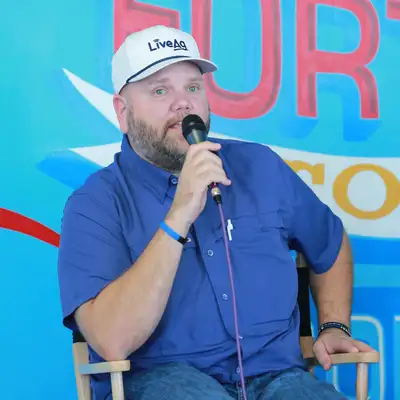
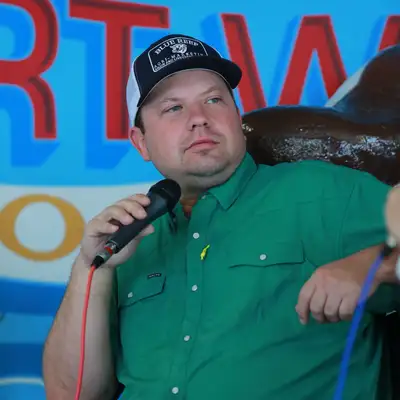
Welcome to the "We Live It" ranch and livestock marketing podcast, where cattle market intelligence meets ranch-ready wisdom. Join hosts Ty deCordova with LiveAg and Casey Mabry with Blue Reef Agri-marketing as they bring you straight-talk market analysis, proven strategies, and insights from industry leaders who understand ranching isn't just a business - it's a way of life.
From livestock market trends to cattle management practices, each episode delivers actionable knowledge to help take your ranching operation to the next level. Whether you're in the saddle or in the truck, tune in for conversations that matter to modern cattlemen. Because we don't just talk about the cattle business...we live it.
Welcome to We Live It, the live ag podcast. Your source for livestock market insights, management strategies, and real conversations with those who don't just work in the cattle industry, they live it. Here are your hosts, Ty DeCordova and Casey Mabry.
Speaker 2:Welcome back once again to the We Live It podcast with me, myself, Ty DeCordova and Casey Mabry here. We're at Logan County Cattle Women's Calcutta. I I I get caught up in that Calcutta, but
Speaker 3:Texans don't have
Speaker 2:Calcutta. Yes. We don't have Calcutta. But miss Brett back in there for reached out here, I don't know, a month or two ago and asked us to join them here and record a couple of podcasts, and we said we'd love to be there. So we come here today.
Speaker 2:We got a couple of our reps that are here. They got some heifers in the Calcutta, and then we know several people around the area. And we've been me and Casey kinda met up with some buddies of ours today and rode through a couple of feed yards and looked at a bunch of cattle we sent up this way and we've had a good afternoon of looking at pretty good cattle. We're joined here now with Monty Youngland And, Monty, where you're from, are you from Sterling?
Speaker 4:Or No. I'm from North Of New Ramer. That's west here about 30 miles, and I live about six miles from Nebraska line and about 14 from the corner of Wyoming.
Speaker 2:K. Cool. That's kind of a pretty good spot to ranch.
Speaker 4:Well, yeah, it used to be till the turbines moved in, but we're we're we're pretty isolated though. Yeah.
Speaker 2:So so kinda just tell us a little bit about your history. You got several ranches that are homesteaded, and then you leased a couple of them that are the same way. And Correct. Kinda give us a little bit of your family history and kinda well, Ed said you're a pretty unique individual. I did and she might have said it a little different way, but that's probably the way I need to say it right now.
Speaker 4:So If if unique, might be a a term, but anyway, how I how I've come about is granddad grandma homesteaded up there, and grandpa homesteaded close to her. He ended up buying like six cows some place and came with a a brand and he started building up and then grandpa raised remount horses for the army for World War one. So, we've got a big old limestone rock that we still we refurbished it and we use that as part of our cabin barn. It's been added on too. So, we got a lot of history there.
Speaker 4:And then, all back in the eighties, we lost 27 secondtions due to a blizzard in '77. We lost three fifty cows, calves, and froze the testicles on our all our shortly bulls. So, it's pretty tough times and then that right after that, interest went to 22, 24%. So that knocked us in the socks, and we had to start over. I got aggravated with agriculture, with ranching because you couldn't make any money.
Speaker 4:So I ended up moved to Yampa, Colorado, south of Steamboat, crawling a log truck and hold timber for about nine years and welded. But my heart was still in the with cattle. And so I was able to come back to the original homestead ranch we had. I was able to save about three sections. So I was able to come back and and start back over and been building back and got remarried, and my wife and I, she had a ranch that had a homestead ranch on it.
Speaker 4:Also, it's got original sod house. So, we started building back together and and then we leased another ranch. It's a homestead ranch. It's got a sod house on it. So, we was in Angus cattle for a long time and then we switched over, started putting Hereford bulls on them, selling black baldy replacement heifer did very well and our black baldy steers would top the superior market and we did really well with that.
Speaker 4:But we've been breeding Wagyu bulls on our heifers just for calving ease.
Speaker 2:Mhmm.
Speaker 4:So pretty soon we had a retail product that was had some value to it. And so we started pedaling a little bit of meat. Well, then that turned into a situation where we got to thinking, why don't we just sell high end meat instead of just selling an average calf? So we took quite a few glasses of whiskey to talk about it and do sell our good Hereford Bulls because we we spent big money on good bulls. Then, we switched over completely to the Wagyu Bulls and got just dove into it deep.
Speaker 4:We had a gentleman in Sioux Falls, South Dakota. It was had a lot of connections around the world. We started selling to him. Got a big premium over regular price for quite a few years and we had our actually some of our own cattle have gone from a feedlot out east of town here in Sterling to China. So, that's kind of a feather in your hat when you can say you've had cattle go that far but that market has gotten the premium has gotten taken away.
Speaker 4:The neat thing about cattle people is that they keep improving our genetics yearly. It used to be it was hard to find very many prime cattle. Now, it's common for good breeds of cattle have a lot of grading prime.
Speaker 3:And cheap corn.
Speaker 4:Yes, it helps.
Speaker 2:Yeah, it helps a lot.
Speaker 4:So, anyway, that's where we dove into it, went pretty deep with it. So then, now that premium's kind of gone away from us, and we've gone back to half of our herd. We run from 200, two fifty head, depends on how much grass we have, but we're going back to half of our cows are an F1 Wagyu Angus, and we're putting the Hereford bulls back on them. So we can raise a Hereford's got a lot of genetics that are top in the industry. And with good Angus cattle with the with the Wagyu, I think we're gonna have a really good feeder calf to sell too.
Speaker 4:So that's the direction we've been going, getting back into that program. But we've got my wife has a private meat sales deal. It's word-of-mouth, but she actually ships beef to Hawaii. We take it to Texas. We it goes all all over the country, United States.
Speaker 4:So that's a niche market that every rancher needs some kind of a niche market because it's hard to make a living just on your couch. Yeah. You gotta have something else to help you. You know, most of the people have a wife that's a school teacher or something like that. My wife works with me.
Speaker 4:We've got a backhoe business. We put in a lot of stock tanks and water systems all over the country, travel a lot. So that business really helps us too. So we can spend a little bit more money on our cattle and our bulls and have higher end cattle to work with. So that's been a blessing to have your wife be able to work with you.
Speaker 2:Mhmm.
Speaker 4:So it's been it's a tough business to be in. I'll guarantee you. But No. Reward is
Speaker 3:I was gonna say it it it's unique that that I'm gonna go back to one of the first things you said when we started talking, and it's unique because right before this, we had Cassie Laposotis on here, and we were talking about the vibrancy and the excitement around the young people wanting to get in this industry. And I told Ty before this that, you know, a decade ago, everybody was telling their kids to go do something else. Correct. You started your career off going to do something else. Yeah.
Speaker 3:And you're like, you know, the the cyclical nature of cattle, you know, it it it told you them to to get out
Speaker 4:of it.
Speaker 3:You know, whether it was high interest rates. Right. You know, all the different things, all the negative things that told you you gotta do something else, but then the love for the business brought you back. Right? And then now you're going, you know what?
Speaker 3:We're gonna try to figure out how to make this thing go, so I can live the lifestyle, that you're in. And I tell you what, it's I think it's remarkable. And, like, what you guys have done and you're I mean, like, we're talking about the versatility of it. So Wagyu program, you jump on the front end of that deal. You get to sell cattle at big premiums.
Speaker 3:Now you're starting to see a saturation of that. Everybody's got it, and you're gonna kinda start to pivot somewhere else. So it's interesting. I think it's probably you talked about the, I'm gonna say it crudely, the nuts getting knocked off of your Charlez Bulls. Yep.
Speaker 3:You're trying to make sure that that doesn't happen to you, right?
Speaker 4:Oh, yes. Well, the the the difference today is is everybody back then in the seventies, if if there was a blizzard coming, you knew it the day before. Yeah. Our ranch has windbreaks half as tall as this gym floor in here. Yeah.
Speaker 4:Because it's we're Southeast Because it's half the South Floor. Oh, yes. So now we build systems to protect ourselves. But now we have technology. Everybody's got a cell phone.
Speaker 4:You know when a blizzard's coming. Back then, didn't know.
Speaker 2:Didn't know. Just
Speaker 4:We we had we was big enough. We had two airplanes. We was big operator. We farmed about a thousand acres. We had six, eight hundred head of cows.
Speaker 4:We had, oh, thousand head of Holstein heifers replacements that we built back up. So it was a it was a big operation, but then you get caught with your pants down and all of a sudden, your net worth the next year is half of what you started with the year before. You know, you're broke.
Speaker 2:And you're broke.
Speaker 4:And I've been broke a couple times.
Speaker 2:Yeah.
Speaker 4:I've had to sell out, but I've never had to lose my ranch.
Speaker 2:My
Speaker 4:ranch. But I've always been able to come back and dig back in. I've had people tell me, Monty, you're too old to go back into this business again. No. I'm not.
Speaker 4:If your heart's there, you can do it.
Speaker 3:Well, you'll find you find purpose in it, and it keeps you going. Right? Right. So Yeah. The interesting things you talk about I mean, I'm in the risk management business.
Speaker 3:So blue refactor marketing is what I do, and I help producers understand risk from a price protection standpoint. And, you know, four years ago, everybody felt like they needed risk management because the market was terrible. Right? And all of a sudden, the market's awesome, and everybody's made all this equity, and they've made all this money. And now it's like going, man, they're everybody's on cloud nine.
Speaker 3:To I mean, what's interesting, what you keep saying is your your wisdom and the times that you've been in this industry, it tells you to put your dukes up. Right? And you're going, look. I need to I need to continue to protect myself.
Speaker 4:But the problem is is that's what's happening to our ranches, our older ranches. They're are disappearing because the younger generation don't wanna either work hard or take a risk. They'd rather sell the land and take the money for it.
Speaker 3:Yeah.
Speaker 4:Rather than taking a risk of making a living doing it.
Speaker 2:Moving livestock isn't just about getting animals from point a to point b. It's about doing it with the care and precision that keeps your investment safe and sound. Since 1987, AGAR Transportation has been the name that ranchers across the country trust with their herds. Their experienced drivers understand that your livestock is your livelihood, and they treat each load like it's their own. I've personally used Aguard to move my own livestock and can tell you nobody takes better care of your animals on the road.
Speaker 2:Whether you're moving herd bulls or a full truckload of calves, give AYOR transportation a call today. That's (208) 452-5011.
Speaker 3:Yeah. If you if we if we inject that knowledge and then, like, guys like you probably work with kids too, but I think that if if that generation and that those people wanna exit the business, the neat thing is is somebody's right there to step in and and and buy that place.
Speaker 4:And I hope, you know, and that's what I hope even like my my kids and grandkids that have the opportunity to come back into and they will when I'm forced out of it. They will come back in it, but they don't have near the noise I do. Mhmm. They'll have to learn it. I think they'll learn a lot of it, but it takes years of experience to know you have mistakes.
Speaker 2:Mhmm.
Speaker 4:And build off of them and go again.
Speaker 3:Yeah. I think they just need to sit around a campfire and listen to you talk. Because
Speaker 4:you've you or your
Speaker 3:your forefathers and the same thing that have done it. If you engage them in in this business and and do that and tell them the stories, that wisdom and all that stuff, I think, will really
Speaker 2:It does.
Speaker 3:Kinda resonate with them.
Speaker 4:And that's come from elders telling me too.
Speaker 2:Just talking about that on the web here where just talking about some of the people that you've met and you've we've sit down and talk with. You didn't know at the time that you was learning something, but ten years down the road when you did something, you're like, how did I know to do that? Now I know how. I was learning, and I didn't know I was learning. And that's what them sitting around in circles and talking and just sitting down with your kids and going over the the the do's and the don'ts and the Right.
Speaker 2:And the broke times and
Speaker 4:the Oh, yeah.
Speaker 2:And the good times and all that and all that's education that they need. So Yeah.
Speaker 3:Yeah. Just keep feeling that passion Yeah. Driving that. So Yeah. Awesome.
Speaker 4:It's and it's how you spend your money too and if you spend it wisely. You know, we don't have a fancy house. We don't have high end things. We have good equipment. Ride good horses.
Speaker 4:We keep our vehicles in good shape. They're not brand new. Well, you know, some of them aren't, but some of them you have to. But, yeah, it's it's it's wisely how you spend your money too in the right direction.
Speaker 3:Well, it's interesting you said, I got a backhoe business that helps me buy good bulls. Yeah. Yeah. And I like that. I mean the truth.
Speaker 3:And they always say I mean, the the old saying is there's always a prosperous cattle business in the shadow of an oil well or in the shadow of something else. Right?
Speaker 2:That's
Speaker 3:true. So that's what's interesting is you do, like I mean, in all seriousness, you have what other people envy. I promise you. The person that's sitting up in a big house that lives in you know, I live in Weatherford, Texas, and there's people that live in a one acre neighborhood that think they've got them a ranch. Right.
Speaker 3:And they would much rather they would those that's why those properties cost so much money is people would absolutely they might trade places with you for a day.
Speaker 4:No. They be nice.
Speaker 3:They just
Speaker 2:they just they
Speaker 3:just touch a keyboard.
Speaker 4:Yeah. They tell us. No. No. That's hard work is good for
Speaker 2:everybody. Uh-huh.
Speaker 4:But, anyways, no. I I'm just fortunate to be surrounded with quality people. I've got people a lot younger than me that are a lot smarter than me. I learned from them. You know, Brit's dad, Brett McAdever, cattle feeder.
Speaker 4:You know, he's gives me a lot of knowledge about, you know, cattle and feeding and stuff, and you you pay attention to those kind of people.
Speaker 2:Yeah. Cassie said it earlier, you surround yourself with with good, like minded people that can help you grow. Correct. So you you gotta surround yourself. Your circle matters.
Speaker 2:Yes, Who who you have in your circle.
Speaker 3:Oh, yeah.
Speaker 2:It it it kinda defines who you are. Yeah. Because because that just you just gotta have a good circle. Yep. So yeah.
Speaker 2:What's so what's kind of the coolest thing that's on the the homestay? You mentioned this limestone barn, and I'm just picturing this in my head that that's gotta be pretty cool.
Speaker 4:It is. It's a pretty neat rock barn. But, you know, we have that's a neat thing. And the thing about it is I I've when the grass is short like right now, but just buffalo grass up there in our country. But I've found the wagon tracks where they mine the limestone rocks a mile and a half away and hold them up there and stack them.
Speaker 4:And there's rocks as know, they have to be 200 pounds but back then, there was no hydraulics. It's all hand working
Speaker 2:to pick.
Speaker 4:And these old
Speaker 3:times. They couldn't call Morton to come out there and lift them up. No. They got me.
Speaker 4:Yeah. They they picked these rocks up, carried them up, stacked it. They've their mortar was brutal clay because there's we have limestone up there. So there's there's brulee clay up there. So they they just made a mud of that and they stacked it and if they kept a roof on, they last forever.
Speaker 4:But you think about the hard work those people did to make a living. Today, we can't
Speaker 2:even think of that.
Speaker 4:No. Not that kind of not that kind of
Speaker 3:work. Yeah.
Speaker 4:So that's that's a real impressive thing for me to have a structure like that. We have a a it used to be a family party. I've got six sisters and a brother. Dad wasn't Catholic. He just want a lot
Speaker 2:of help. Yeah. I understand. But
Speaker 4:we have a family party. Now, it's a ranch party for all the neighbors. Yeah. We get a 150 people or 775. We do a big cook and we feed in that rock barn and you know, people enjoy being in there, you know, when it's fourth of July and it's 100 degrees outside because it's nice and cool in Yeah.
Speaker 4:But we have a lot of Indian teepee rings and stuff out there but I know the coolest thing is is just being out in the middle of nowhere and Do you sometimes sit around and
Speaker 3:imagine what it would have been? I mean, like, I'm not saying you got it easy, but you got it easier than what those guys far.
Speaker 4:Do you
Speaker 3:sit there
Speaker 4:and think
Speaker 3:about, man, you know, when you start thinking it's tough? Yes. You go, man. These guys had a tougher, you know? But, yeah.
Speaker 4:You know, grandpa would turn over his grave. If I do, I went and spent $60.00 for five bulls.
Speaker 2:Oh. Yeah. Right?
Speaker 3:Not buying a Denali GMC though, are
Speaker 4:you? No. Yeah. But it's called parody also.
Speaker 3:Yeah. Yeah.
Speaker 4:You know, it's all goes hand in hand. You know, what their 5¢ gasoline gave them back then. Yeah. Compared to what we pay now.
Speaker 2:Yeah.
Speaker 4:It's you know, people think about our prices right now. They are great and we did a LRP and locked in our yearlings for this September. It's a huge amount of money, more than I expected. It's cool. But on the flip side of that, how much money do I get to keep out of that?
Speaker 4:You know, what my cost is to get them. Yeah. That's it. That's it. Oh, absolutely.
Speaker 4:That's the hard part. Our feed prices have come down but just like parts, if you go to a restaurant, you know, all those things, you know, kind
Speaker 3:of Yeah. No. It's interesting you talk about LRP. I mean, we can talk about that for a minute because, like our business, we work with producers and sell them LRP or work with them on educating on that stuff. And and it's for you to have enough foresight to go, look, I've got, you know, this ranch because you're a production based business.
Speaker 3:So you're really at the mercy of the market and and having a just got cow calf operation. When the market goes down, you don't get to cheapen up. No. It's all revenue based. Right?
Speaker 3:It's all it's all top line stuff. So you're looking out there going, man, for a year, I can go out there and lock in, you know, whatever these yearling prices are, you know, $22,025, whatever the number is now, $2,500 or something
Speaker 2:like that.
Speaker 4:27.
Speaker 3:Hey. And you think about it. So cattle feeding is you buy a set of cattle. You try to buy margin. But you guys have had, like, this whole year of production based business.
Speaker 3:So you look go back and you go, okay. Even before COVID and then you just look at, like, a trend line. I mean, a cow a calf's worth, you know, $8,900 to a thousand, $111,200. And now you're talking about these things being worth 2,000. Yes.
Speaker 3:I mean, it's it's it's it's you're doubling or tripling the revenue, and you didn't really increase your cost. Now the problem is this is what I'm concerned with in this industry, is you're you have enough foresight to go, you know what? I'm gonna lock that price in. I'm gonna do everything I can to control my expenses. Lots of people are just now getting into this business.
Speaker 3:Yeah. Right. And they're they've got these high expenses, and they're gonna bet on the come. And so what I keep telling Ty Right. Is we need to quit gambling with these cattle and do something about it.
Speaker 3:You know? K. Lots of new entrants in this business, lots of excitement around it because you know what? It's like any other any other thing that's gone up in price. It it attracts a lot of people.
Speaker 3:It's a gold rush if you will. So.
Speaker 4:Especially when the prices are high. People.
Speaker 3:Yep. They. Absolutely.
Speaker 4:Let them go through a couple cycles and and see how they come out.
Speaker 3:Oh, yeah. Right. But yeah,
Speaker 4:I I'm just, well, just the other night, I told my wife, I said, aren't we blessed to live what we do today and not have a different mother and father and we end up having living in a in a city or not where we're at. Yeah. You think about that. People want less to be where they're at. I had to go through Denver the other day and I I I was going through my mind.
Speaker 2:I said,
Speaker 4:man, my man, you know, these poor people, they don't know any different. Yeah. They don't know what freedom is.
Speaker 2:They sure don't.
Speaker 3:No, and that's when you say, I don't have a big fancy house. You do have a big fancy house, man. Right. It's it's it's it's where everybody wants to be.
Speaker 4:Yeah. What do we do there? Yeah. You you do your laundry, you eat, you sleep, and you do your books. Yep.
Speaker 4:All of that, you know, other than that, it doesn't make me any money.
Speaker 2:Right. Right. Well, we thank you for being on here. Your your story's real unique. When she when when Brett was telling me about you, I'm telling how I was I got excited about Oh.
Speaker 2:That the how it all how y'all come through it and and your your business and how long y'all been in the business. One thing I wanna touch on before we do leave, remounts. So your grand your great grandfather raised remounts for remounting horses for the World
Speaker 4:War two. So
Speaker 2:what were did they ship them out of there on rail, or did
Speaker 4:they Yeah. There was rail they're at New Ramer, which was south and then up at at Kimmel, Nebraska, another place in Pines Bluff, Wyoming. But I don't know quite how he got rid of his horses or whatever, but he had a pretty big string of horses. Do y'all
Speaker 2:still race y'all still got some brood mares and race some?
Speaker 4:No. No. No. I I ride a lot of mares, but I don't Yeah.
Speaker 2:Yeah. Just
Speaker 4:no. But I know that that went on for a long time. That was a good income for him till the war was over.
Speaker 2:Right.
Speaker 4:And then
Speaker 2:That just intrigues me how.
Speaker 4:And then in fact, down in our rough country, know, cow trails are certain width, but the horse trails, I mean, you could still when I was a kid, you could still find the old horse trails, and they were bigger and wider and stuff. So
Speaker 3:So it just hit me. So are you from like, where you live, is it South Of Pine Bluffs?
Speaker 4:Yes. Southeast Of Pine Bluffs, about 20 some miles.
Speaker 3:Okay. So I'm a tell you a story about me. Okay? This is probably not good because I've people have joked around that might run out of fuel. So I worked for cargo, and I a cattle buyer in Western Nebraska.
Speaker 3:And I was coming to Sterling, I was covering quite a bit, going to the plant, going to Fort Morgan, things like that. I left Fort Morgan, and I probably got to about 30 or 40 miles north, and my my truck dinged that I was gonna be out of fuel. And I'm a tell you this, Ty. I did not know what the middle of nowhere was until I'm driving, and I was going, oh, man. I could just make it to Pine Bluffs.
Speaker 3:Right? And I'm, like, driving these back roads, and I get in the middle of nowhere. And I probably drove right through the middle of his ranch. And somehow, again, by the grace of God, I made it into Pine Bluffs, and I was able to go to that Sinclair. I think that's there.
Speaker 4:Yeah.
Speaker 3:And, this is, like, fifteen years ago. But I'm telling you, dude, like, you know how it goes, like, I was driving a Ford, and it takes you down to where it says, like, zero miles to empty. It was zero miles to empty. And then I still got another three or four miles out of it, man. I'll say, well, I was puckered up.
Speaker 4:But I'll admit you a little
Speaker 3:bit. Because that that how is what's what's interesting about the terrain Correct. Is it's pretty it's it's you know, we're in the the plains here. Then you get up into that area, you start getting pretty you start getting pretty hilly.
Speaker 4:Right.
Speaker 3:Yeah. Lots of cedars.
Speaker 4:Yeah. Just South of Pines Bluff, there is a lot of pines and cedars. Yeah. We're a mile high elevation on our ranch. We've got two cross runways on it.
Speaker 4:You know, it's Mile High Airport is what we have. It's on the section charts and stuff but.
Speaker 3:Cool. Oh, that's cool. Yeah. I'm telling you this, dude. Listen to me.
Speaker 3:Middle of nowhere, I was begging for a gas station. His family would have been doing this stuff before there was cars.
Speaker 2:You know
Speaker 3:what I'm saying? Like, they were, like, it it it's just as I sit there and just try to have an imagination about that stuff, I've I've I almost had first world problems out there at your house.
Speaker 4:Well, I appreciate you guys. And I wasn't my wife asked me, are you nervous? I said, no. I just I've Well, I do have a story.
Speaker 2:Yeah. You do have a story, and you might have sold a whole beef already, and you don't know.
Speaker 3:I hope so.
Speaker 2:But you have to deliver it to Texas, but have that to me. We're gonna come right
Speaker 4:through there. We're going there.
Speaker 2:With a freezer trailer. So I think I'm just gonna go ahead and buy a whole beef.
Speaker 4:Yeah. No. He's gonna
Speaker 2:come 20 miles from my house. He's Yeah.
Speaker 4:If you
Speaker 3:guys need any beef, holler at us because he's about to make a trail
Speaker 2:down there. Yeah. He's gonna be coming right through us.
Speaker 4:So Okay.
Speaker 2:No. Give us a shout.
Speaker 4:That's it's a nice little side market for us to have is to be able to to sell high end beef to people that appreciate it, and and it's important too.
Speaker 2:Yeah. Well, thank you for joining us, Manny. We appreciate everything. Thank you both.
Speaker 3:Yes, sir.
Speaker 4:Appreciate it.
Speaker 2:Thank you everybody out there in social media land for watching us and joining me and Casey once again on the We Live It podcast. Remember, don't forget to hit subscribe and like after you watch these episodes, and send us a message on if you if you wanna hear about anything or you you have a suggestion of some some guests that y'all would like to see or some questions that you have. And if you wanna advertise with us, just go ahead and send us an email. You can reach us at live ag dot com so hit subscribe hit like thanks for watching us God bless