Subscribe
Share
Share
Embed
The Leadership Sovereignty Podcast, hosted by Ralph E. Owens II and co-hosted by Terry Baylor, is a career acceleration platform
Leadership isn’t just a skill — it’s a career strategy for professionals seeking growth, influence, and promotion.
Hosted by Ralph Owens, Chief Information Officer, and Terry Baylor, CEO of a healthcare technology startup, the podcast delivers practical, real-world leadership strategies you can apply immediately. Each episode focuses on increasing visibility, navigating corporate dynamics, preparing for promotion, and leading beyond your title.
Expect short, high-impact conversations designed to help you think, act, and position yourself like a senior leader before you’re given the title.
You’re not just an employee. You’re the CEO of your career.
New episodes are released bi-weekly.
What is it like being at the center of everyone's comfortability, knowing that what I do is impacting not just a region, just millions upon millions of people. How do you carry that every day? Know Ralph and I had a sense of that because we were in roles that were help feeding the grid, but you're in the role of now you're delivering that. Really life depends on it, right, in a lot of instances. So what is that like and how do you carry that?
Shachella James:Heavy is the head that wears the crown is what
Terry Baylor:they say.
Ralph Owens:Welcome to the Leadership Sovereignty Podcast, where professionals learn to navigate challenges at work through the power of leadership principles. I'm Ralph Owens, Chief Information Officer in the financial services industry alongside my cohost, Terry Baylor, the CEO of a healthcare tech startup. Together, we've spent decades building teams, transforming organizations and coaching individuals through the moments that define their careers. We impact the mindset, strategies and habits that help you lead with confidence, expand your influence, get promoted and increase your income. Now let's dive into today's episode.
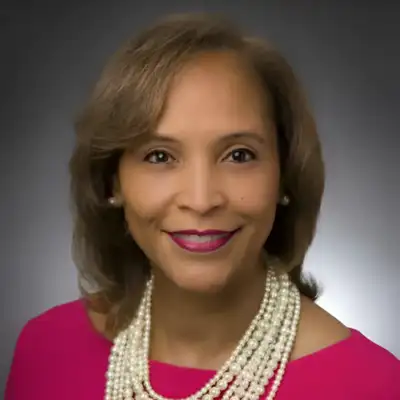
Shachella James:Luckily, I'm not at the tip of the spear, I'm a couple of levels down from that, but it still is our total responsibility to make sure that the transmission distribution and all those other services are happening, and to make it make sense in the term of curiosity, and Ralph, you might appreciate this too, know you do too, Terri, is you're looking at all these dashboards with these metrics on it, the data is out there just doing this data thing, right? Here's the question, what is it saying?
Terry Baylor:It looks good, but what is
Shachella James:it That's right. The question is, what is this data telling to me? So it's not just bits and bytes and red, yellow, green stoplight charts, what is it really saying to me? So Terri, I think you asked a very important question is, what am I doing with this information when I see that red light shift to green, or when I see the green light shift to yellow and get to red, the things are recovering, is am I doing what's best to serve that end stakeholder? It's a customer, it's a regulator, it's my own home, right?
Shachella James:It's the nursing home, it's the hospice, it's large industrial, it's the daycare center. So having a curiosity that's beyond me getting up to check on a spreadsheet and then get some data presented on a dashboard is what is the data telling me? So getting back to that curiosity quest, those questions about being a learn it all as opposed to a know it all, if I adjust this configuration, what is the impact on the customer? If I adjust this setting, what is the impact on my field crew who is serving my customer? If I adjust this setting, what is the impact on the field crew that's serving my customer that is a rate payer that affects their earnings per share that the company is running against?
Shachella James:So having a curiosity, like I said before, earlier in our talk, is connecting all of those dots, so that it's a strategic way of approaching the company and operations, not just doing the job every day.
Ralph Owens:I love that, I love that. We've talked about that before, in that you have to be curious enough to understand the business metrics that the company uses to determine whether or not it's successful, right? Because, Shachella, to your point, most people are only focused on what they do, and they have no understanding of the impact to the business, and to be able to articulate in business terms how I can impact that. You have to be curious, right, to understand what that is.
Shachella James:You have to be curious on two clicks down. I think on a more detailed level, when you start folding back and peeling back the dashboards and the alerts, What is it saying? What should I have done differently? Again, back to those elevated questions, how can we use this to strengthen some other posture that we're trying to have? And I think it's really unfortunate that even the entry level person sometimes doesn't understand the power of their position just through a question.
Ralph Owens:That's good.
Shachella James:Yeah. The power of your position just through a question can shift the tide of your interaction with, for a person in IT, how you're dealing with your end user internally. But for the call center agent, of course they have a script, but sometimes that dynamic with the customer takes you off script just a little bit. How are you bringing them back in? How are you calming down the situation?
Terry Baylor:The
Shachella James:script is there as a guide, but sometimes you have to inject some good questions to keep everybody balanced.
Ralph Owens:That's good, that's good, that's really Yeah,
Shachella James:so thank you for making me apply that to actual work situation. And I just hope that people share this and can appreciate that there is power in prompt.
Terry Baylor:That's good. Power in the prompt. That's good right there.
Ralph Owens:Yeah. That's gonna be on social media for sure. So let's transition into curiosity being used to get noticed by leaders, right? So you're a senior leader. What are some of the things that you look for as it pertains to curiosity and those that you would possibly want to promote?
Shachella James:Well, I like to look for people who show up. When you're in the rooms and we actually are just having a very pointed meeting, whatever the topic may be, but we're in a round table setting and coming in and obviously being a receiver of information, because we all are positioning ourselves to learn something, but I will be totally transparent. May I? Is that okay?
Terry Baylor:Yes, ma'am. Yes, ma'am. That's what we want.
Shachella James:Nothing irks me more than people just sitting around asking questions.
Terry Baylor:Okay, you're going to have to dig in.
Ralph Owens:Yeah, yeah, yeah. Make it plain. Make it plain.
Shachella James:Well, we're sitting in the meeting and someone said, Well, Ralph, what are your thoughts on upgrading the server? Well, I do think, but what are your thoughts if we modify the operating system? Well, I understand that. Well, what are your thoughts if, and it just keeps going in a circle and a circle. Do we ever get to the point where we answer the question?
Ralph Owens:Oh, okay, I got you.
Shachella James:So you need to get to the point where we answer the question too. That's what I mean in terms of irking me. But when I'm looking for people to work for me, it's definitely a business acumen and the ability to get things done, but demonstrating that business acumen with collaboration. And the art of collaboration is being able to take those thoughts and weave them together with some critical thinking. And the critical thinking, again, comes back to how are we challenging the topic, how are we advancing the topic, and those tend to be those powerful questions.
Ralph Owens:That's good. That's really good. Any thoughts on that, Terry?
Terry Baylor:Yeah, so in terms of being in that room and you do have the person, or we've all been there, and you're like, Okay, this is a talking head right here. How do you what techniques in that situation should a person use to bring a level of focus to the room? Again, the fact that you're at the table means that you have influence, right, regardless of your role. If you're at the table, well, me just say that, if you're at the table, there's an opportunity for influence.
Shachella James:Do not
Terry Baylor:miss that opportunity. So how would you encourage someone to shift the conversation? Because that's gonna be a notable point, right, that this person wants to get somewhere, but how do they do that? I'm sure it's with some form of question or some form of directive, but how would you encourage them to do that?
Shachella James:A little bit parallel to this, and perhaps you guys may have heard of an author named Priya Parker. Priya Parker is one of the leadership books that I'm reading right now among others. And she has written a book called The Art of Gathering. The Art of Gathering is literally asking, why are we even talking? That's the question.
Shachella James:Why are we together at all? So she has a pithy title, but The Art of Gathering. The crux of a successful gathering is aligning on why we're here and what the outcomes are. So when you get to that talking head, it is a very intentional focus on why we even came together in the first place. If we're not aligned on that, again, that is the question, why are we even here?
Shachella James:What are the intended outcomes? Structuring the next question then of how we get back on focus to that is what she gives a lot of chapters dedicated to, even to the point where if you have a baby shower, as an example, and a baby shower is typically in some women who are celebrating the birth and then there's a shower of gifts. But what happens when the husband wants to come? And the expecting mom is like, Why do you even wanna be there? Well, are we gathered to have a social of women or are we gathered to celebrate the coming of life?
Shachella James:And I wanna participate in the coming of life. So the fact that I'm a man that wants to go to a baby shower should not be foreign. Therefore, if we can align on why we're even having a baby shower, then who's at the shower then becomes a very important detail. So when you have that talking head, you might need to give somebody the benefit of exclusion as opposed to inclusion.
Terry Baylor:Okay.
Ralph Owens:Yes. Is good.
Shachella James:You might need to give them the non invitation because why are we here, our purpose, are we aligned on our purpose, our agenda in terms of what we need to talk about and where are we gonna talk about it, is the gift of exclusion that maybe that talking head shouldn't have been embodied in the first place, but if they are there, then let's just get realigned, much like that baby shower. Let's get aligned on why we're together and then let that define who should even be in the room. But that powerful question of why are we here and what are we trying to accomplish, It's how I like to get that talking head back in play.
Terry Baylor:That's good.
Ralph Owens:Love That is so good. That is It so
Shachella James:is a funny thing. You know, Priya has a lot more examples like that too, and I thought, wow. I thought it was just a thing. There's a lot more couple reveals and those types of things happening But the when they started though, I know a lot of people were shocked by like, why would a man even want to go to a baby shower? But if you look at it as a celebration of life and a reveal and a celebration, why wouldn't you want So same thing in the workplace.
Shachella James:If we're gonna talk about divesting a major entity, who needs to be in the room for that? Why are we talking about upgrading a server if we're really here to talk about divesting an entity? So give the gift of exclusion.
Ralph Owens:That's good. That is so good. Is so good.
Terry Baylor:Makes sense. Makes sense, man. I'm telling you, I'm being helped today.
Ralph Owens:Yeah, me too. Me too, for sure.
Shachella James:Well, the building fund is underfunded right now.
Terry Baylor:We got it coming. We got it. We're coming.
Ralph Owens:So just kind of tying onto that, Shachella, I like what you're saying because I I I've seen that trend, I'll say, in people that I've seen have been very successful. You have the person in the room who just who loves to hear themselves talk. Right? And they wanna ask what seem what are seemingly intelligent questions, right, so they can make themselves look a certain way. But the ability to gracefully guide them back to the reason why we're here.
Ralph Owens:You know, I think one thing I'll add to that too is that I've used as a technique is I'll thank them for their input. I appreciate that. How how does that help us get back to to the goal? Oh, okay, all right, so let's go ahead and re center on that topic. But thank you for that, right, we appreciate that.
Shachella James:Well, thank you for that, Grace, because I don't know that I've ever thanked anybody. But I will go it forward though. I will go
Terry Baylor:it forward. Thank your input. You you for
Ralph Owens:listening to the Leadership Sovereignty Podcast. If today's conversation helped you grow in your leadership, influence or your career, take a moment to visit leadershipsovereignty.com. There you'll find exclusive resources, free guides and ways to stay connected to our community of leaders who are building purpose and success. Don't forget to rate, review and share this episode with someone who's on the rise in their career. Until next time, lead boldly, lead with purpose, and continue to walk in sovereignty.
Ralph Owens:Take care.