Subscribe
Share
Share
Embed
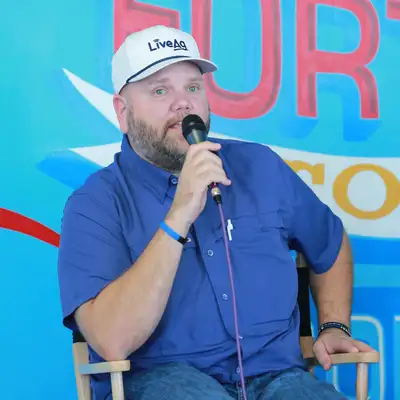
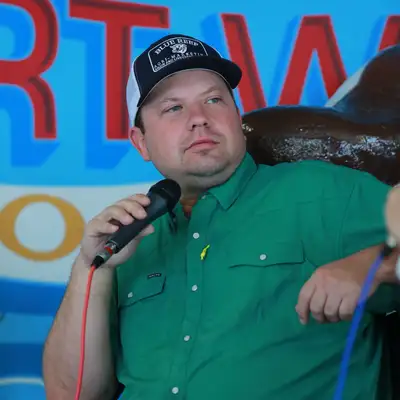
Welcome to the "We Live It" ranch and livestock marketing podcast, where cattle market intelligence meets ranch-ready wisdom. Join hosts Ty deCordova with LiveAg and Casey Mabry with Blue Reef Agri-marketing as they bring you straight-talk market analysis, proven strategies, and insights from industry leaders who understand ranching isn't just a business - it's a way of life.
From livestock market trends to cattle management practices, each episode delivers actionable knowledge to help take your ranching operation to the next level. Whether you're in the saddle or in the truck, tune in for conversations that matter to modern cattlemen. Because we don't just talk about the cattle business...we live it.
I got to to really do a lot of what I was great at at the boutique hub. And I love small businesses and I love retail, but I missed agriculture. And so I knew I wanted to build something that would help solve problems for people in agriculture, not only right now, but to continue to grow and scale our industries. Because if we're supposed to have, what is this, 10,000,000,000 people by the year 2050, we're gonna have to grow a lot more food and clothe a lot more people. And if this number of people involved in our industry has been shrinking since 1980, Like you need to be a mathematician to realize that those figures are not going to work out.
Speaker 1:So how are we going to be able to continue to grow and scale our industries? Jobs are a crucial part of that.
Speaker 2:That's a head on. We live it, the LiveAg Podcast. From seed stock bull sales built on generations of performance to commercial video auctions backed by real relationships, To equipment auctions that keep operations moving forward. LiveAg connects cattle producers to opportunity. Quality cattle deserve premium prices.
Speaker 2:The right bulls deserve more buyers and dependable equipment deserves a fair bid. Whether you're consigning to a live ag video auction, marketing seed stock, or moving iron through the equipment exchange. We combine local representation with nationwide reach. Connect with your live Ag rep by scanning the code on your screen or visit us online at live-ag.com. We are proud to be powered by BioZyme, the makers of Vita Firm and GainSmart.
Speaker 2:Value added nutrition partners trusted by cattle producers across the country. Now here are your hosts, Ty deCordova and Casey Mabry.
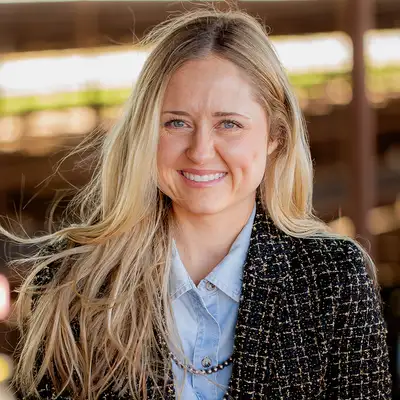
Speaker 3:Welcome back to the We Live It Podcast. Myself, Ty deCordova, co host Wade Leist this week is taking place of Casey Mabry. We are joined here with Jessie Jarvis of Leaders of the West Podcast and also of the West Job Search. Is that was that how you would say it?
Speaker 1:Yeah. That's that's us.
Speaker 3:So, Jessie, if you'll just kinda tell us a little bit about yourself, where you where you come from, kinda your background, you got any children, stuff like that. Mean, we just kind of get personal here. We all got kids and we love to talk about them here too.
Speaker 1:Yeah. No. So I grew up not too far from here, about an hour here in Southern Idaho, outside of Boise on a cow calf operation. And so that is really what I knew all up until graduating college. I went to college and I wanted to go be an anesthesiologist.
Speaker 1:I wanted to get out of agriculture. I wanted to go live in high rise in the big city. So I went to a liberal arts college and about six weeks into that, I was like, wait a minute, pump the brakes. This is not what I thought it was gonna be. I miss agriculture.
Speaker 1:I miss our way of life. I miss the people. So I switched my major and I ended up with an internship at our state cattle association. So I worked here in Boise, part time for the Idaho Cattle Association and then also for the Beef Council. I'd spend half of the morning in one office and then I'd spend the rest of the day in the other office.
Speaker 1:And that was just so transformational for me and really teaching me the lobbying side and the marketing side. And here growing up in our industry, thought I knew everything there was to know about the cattle industry. And in that three short months, I realized, wait a minute, you know one thing about your operation, but the cattle industry is just so broad and diverse. And so I ended up working as a communications director for ICA for a number of years before I moved home to our ranching operation. And not long after that, my husband and I got married.
Speaker 1:And so he came to work on our operation as well. And I worked alongside him for a couple of years, but at that time I was young and we didn't have kids and I kind of felt like I needed something else to do. So I always dabbled in a little bit of remote work in marketing. And as time has gone on, then in 2020 created a company called Of The West, which is a job platform specific to finding jobs in agriculture and Western industries. And so that's kind of how all of that came to be.
Speaker 4:You've done that before. You've told your story a few times. I can tell. Is it safe to assume you did not meet your husband at the liberal arts college?
Speaker 1:That is that is absolutely correct. I we've known each other since we were three. We never dated though, but ironically enough, I lived here in Boise with a friend and they have a purebred operation. And he had been in Denver with their team showing cattle and he had parked his pickup in our parking lot. And he also comes from our county.
Speaker 1:And I was like, wait a minute. I think I know every pickup in Elmore County. I don't know that one. I wonder whose flatbed that is. I didn't think anything of it.
Speaker 1:Lo and behold, it ended up being Justin Jarvis, is now my husband. So that's how that all happened.
Speaker 3:Pretty neat story. It goes way back. I mean, known him since you're three and he showed up at your door. You didn't even lose your truck.
Speaker 1:Exactly. There you go.
Speaker 3:Tell us about your kids. I mean, how many kids you got? How old are they?
Speaker 1:Yep. We have a boy named Jet. He's eight years old. And then we have a daughter named Jackson and she's five. And they are polar opposites.
Speaker 1:I feel like every they're the traditional firstborn and second born. Our daughter our son is the sweetest little guy. Aims to do no wrong, wants to please. And our daughter, she is hell on wheels. And I'm sure I'll love that when she's in her thirties, but if if she makes it to her thirties or if I make it out of my thirties, that's the real question.
Speaker 3:Your son noticed?
Speaker 1:Yes.
Speaker 3:My I got two daughters. One will be a freshman and one will be a senior this year. And the senior, the Otis, is sweet and nice and just feelings on his shoulder and that second one though is a tail on wheels, like you said. I mean, tell you, great, great girl. Don't get me wrong, but man, she is tough.
Speaker 3:She is tough. So
Speaker 1:Well, you can probably give me advice. I don't wanna put you on the hot seat, but here's my question is like, how do I not parent that spirit out of them? Because I want to make sure that you are a good listener and you're respectful and that you do the right things. But at the same time, I also don't want to like, I want you to be able to stand up for things even though I don't like it when she stands up to me for things. So how have you done that?
Speaker 3:It's tough. It's a my wife my wife's here somewhere and she'll say, you I didn't do a very good job of it for the first eight, ten years, but it's now that she's come to her own and and under knows herself and and is starting to understand who she really is, man, you see so much of us in them that you're like, wow, that I gotta be careful because like you said, you don't wanna beat that out of them, but sometimes you gotta beat it out of them and then you gotta say, now this is this is how you don't do it and this is how you do do it, but no, it's just you instill the love of God in them, and then and you also instill the the fear of it too. So they gotta understand that that it's all it's all out of love when you're doing it, but to continue to follow God, and that's what we've instilled in our house is just follow God and follow where he leads you and and then all the rest of it will come.
Speaker 1:K. So you're telling me there's some hope.
Speaker 3:There's a lot of hope. But but it's it ain't gonna get no easier for just a little while.
Speaker 1:No. And you know what? I and I were joking, right? Like, love my daughter and she has probably taught me more in being a parent. And I think we as parents, when you become a parent, you think my job is to, you know, tell my kids what to do and to teach them.
Speaker 1:They have taught me far more lessons in life than I have ever even begun to teach them. And I think that that's one of those rewarding things to know is when you feel like you've, you know, mastered all there is to know, there is a new phase of life where you can be completely humbled again. And I think that that's a good thing. I've even learned that in business, you know, when it came to what I did in communications and marketing, gosh, that has completely evolved since when I started in 2012. And so you're always humbled in learning new things and having to admit that you don't know everything, even though I'd love to admit that I did know everything.
Speaker 1:I tell myself I do, but I totally don't. So I think that parenting is one of those journeys that has really been so rewarding just for that alone.
Speaker 3:Yeah. It's unbelievable. Humbling. Well, think about
Speaker 4:you know, you're telling your story, and in 2020, you started your own company. And we were talking earlier about that company, how you can you know, there's a job search platform on there. You have a podcast where you've talked to, you know, incredible people over the years. You know? I did we give you time to look that up?
Speaker 1:Pat Fitzgerald. That's his name.
Speaker 4:Alright. We're gonna
Speaker 3:Earlier, get that was not the name you gave.
Speaker 1:I did give your okay. I gave your name. You're right, Ty. I apologize. I apologize.
Speaker 4:I didn't realize you were going down that road of self aggrandizing. I'm sorry. Back to the kids though and to your career, you had you have a unique career and that's a path that you had to have sought out on your own. It's not like you looked up and said, Oh, there's a need for this and there's a job for it. I'll go get that.
Speaker 4:You had to seek that out. And you have a daughter that you're asking about, How do you tame some of those things? Well, somebody must not have tamed your imagination and your drive to go do something like that. There's definitely this give and take. You're right, we learn so much from our kids.
Speaker 4:I have four daughters, by the way. And they're all just a little bit different. And as we're talking, I was reminded of my oldest daughter that she's in the Air Force now. Her name is Morgan. And she would like to kind of come back to something ag related.
Speaker 4:But every time we talk, it feels like we're always like stumbling on like the same two or three things like it is in the vet field or maybe something in the, you know, law field or something. And as we're learning about your job forum, I was like, oh, gee, that's it right there. How many people do you think or how often do you think that a young person entering the job force who says, wanna go into ag and I don't know what's out there. Here's a great resource. Let me look at all of these different diverse careers in the ag How often do you see that?
Speaker 1:All the time. And to go back a little bit from that, I was actually thinking about that not long ago because I grew up with a girl. She was one of my best friends, K through 12. And in high school, she knew what she wanted to be. She wanted to go be an interpreter for the deaf.
Speaker 1:And I thought, okay, well that's really cool. I don't necessarily know like what has ever piqued that interest in you. And we all know people who we all want to be a doctor, a lawyer, teacher, whatever that looks like, but how many of us actually do the things that we wanted to do? And I saw her in the grocery store not that long ago and she still does the thing that she set out to do. And I thought about how rare that really is.
Speaker 1:Like when you are 14 years old and you know I'm gonna go be that thing, how many people do we actually know are still that thing? They may have gone and done it. They've gone to college. They tried it for a few years and then they were like, wait a minute, this is not what I thought it was gonna be. I'm actually not that interested.
Speaker 1:Or I really like this, but now that I've been involved in it, I enjoy this element of it and I kind of wanna go down this path instead. So I think that that's a very natural thing that we're all kind of evolving. And we even know people who have had different versions of their career in their 20s and 30s and 40s. And they've mastered a variety of different career elements and experiences. And so I think that that is very common, but especially when you're young, right?
Speaker 1:I mean, in reality, we're asking somebody by 18 years old to know what they're supposed to do for the rest of their life.
Speaker 4:And then invest in it if they wanna put college and put, you know, dollars 150,000 towards something that they don't know enough to know if that's what they wanna do.
Speaker 1:So I think one of the things that we probably need to be a little bit better about is allowing for that exploration piece. Because again, what is the purpose of spending a massive amount of money in something that is it going to be the next best thing for you or are you actually meant to go down a different path? So I think we have to allow for a little bit more of trial and error. I will tell you, I've done a lot of different things in life and every single one of those experiences has had a thread that has now allowed me to do what I do now. So they were all very important pieces, even if they're not something that I'm still, gosh, I worked as a project manager.
Speaker 1:Do I still do that now? No, but that experience has allowed me to now really know the project management side when it comes to the work that we do at Up The West or all of those different experiences, they you're able to take them with you as you go.
Speaker 4:Do you ever look at your forum and go, what? I didn't know that was a thing.
Speaker 1:All the time. And I think too, like, like we were saying ahead of time, when you ask people what they want to go do in agriculture, they want be a farmer, a rancher, a veterinarian, or a professional rodeo athlete. Those are kind of like the four main things or an ag teacher, I should say. But there are so many careers out there. And I talked to a lot of young people and they're like, you know, I don't really want to go into agriculture.
Speaker 1:I wanna go be a web developer. Well, did you know you could be a web developer and do it in agriculture? There is not a job outside of our industry that you also cannot find within our industry. And I think that goes to show just how powerful and impactful agriculture in Western industries really are.
Speaker 3:So back to the some of the social media stuff and then the marketing side of of what y'all do, how have you seen that evolve in the last just last five or six years since you started your own deal? Kinda what what does that look like on a on a day to day basis, and how do you keep up with all of it?
Speaker 1:Oh my gosh. I don't know that you can ever keep up because literally it is something that is changing. What was cool last week is not even cool this week or Instagram unveils this new feature or whatever it may be. And so I think when it comes to looking at it, it's almost like the stock market. Right?
Speaker 1:If you were to have money in the stock market and you check it every single day, you're gonna see a lot of ups and downs and ups and downs. But there's a reason that you get the quarterly statement because it shows you things at a three month glass, three months at a glance. And so when you pick up that year and you see, okay, what did it do in quarter one? What did it do in quarter two, quarter three, quarter four? That's what really allows you to get a much clearer picture versus the three sixty five day, like top and bottom of the market, probably very similar to the cattle market, right?
Speaker 1:How many days do we hit the limit top and bottom? But when you take that step back and you look at it, it's maybe a little bit more of that gentle roller coaster than we would actually like to think that it is. So when it comes to marketing, two things, I think that we can't get too fixated on what's trending because a trend is a trend that's not gonna last long. So I think you kind of have to take that step back and be somebody who's always willing to evolve. And I will say, and I don't want this to come off negative at all, but I've kind of used agriculture as a little bit of an example in this.
Speaker 1:One of the things in our industry is we have been a little bit resistant to change. And do we think that that's probably harmed us in some ways? I would say, yes, it probably has. I think that there are some great things that have come from us being resistant to change, but I also think that we could probably be a little bit further ahead had we adopted it. And I never want to be somebody who was afraid of change or not willing to adopt it because that is what is going to get me behind.
Speaker 3:When it comes to selling cattle, performance matters. That's why Biozyme Incorporated and LiveAg have partnered to bring more value to beef producers across the country. Cattle fed and GainSmart products are backed by proven nutrition programs designed to support reproductive efficiency, feed efficiency, and overall herd performance. And now through LiveAg's nationwide video auction platform, those nutrition backed cattle are positioned in front of buyers who recognize the value of a documented premium feeding program. This partnership connects what happens in your pasture with what happens at sell time.
Speaker 3:Better nutrition, better documentation, increased market exposure. Talk to your buyer's zyme or your LiveAg rep or visit your local dealer to learn how and GameSmart paired with LiveAg marketing can help your cattle stand out when it matters most.
Speaker 4:I don't know what she's talking about. We're not setting our ways at all.
Speaker 3:I'm not.
Speaker 1:Oh, I totally am on a lot of other things. Right? So here I am pot calling the kettle black, but I think that it's really important to be somebody who's always willing to evolve and to change. And when there is something new, when it comes to marketing, oh, I don't wanna do that. I like, no, you have to be willing to try it because I tell you what, in two years, that's gonna be old news.
Speaker 1:And you are going to be five years behind at that point because you didn't jump in with both feet.
Speaker 4:You have the we talked about the job form and you have this podcast, I I know was wildly successful and followed by by a lot of people. How do you but there's a lot of podcasts. How do you separate yourself in that field through your content? Where deriving are content from and how do you separate yourself?
Speaker 1:Oh, that's a great question. A little bit of everything. And I think a lot of that is just within the work that we do. Obviously, we work with a variety of people, right? We have employers on one side.
Speaker 1:We have job seekers on the other. We also have those who we would consider to be freelancers and contractors, right? They own their own businesses, whether they're a solo entrepreneur or maybe they have a really small team. We have students who they're not really in the in, they're kind of in the in between, if you will. We also have people who are just passionate about our industry.
Speaker 1:I lovingly call them ag adjacent, right? They maybe grew up in our industry, but don't work in it anymore. Or they had a grandpa who had a farm. And so they spent their summers there and they're passionate about it, but they have no real connection to it. So I wanna make sure that we really do have something or somebody for everybody, which you can't be everything to everybody.
Speaker 1:I do recognize that. But I also know how varied my own life is as a mom and a business owner and a member of my community and somebody who's really passionate about our industry. I also live really rural. And so it takes me an hour to come here to Boise or to go to Costco and I don't get to hang out with people very often. I want to be able to surround myself with the type of information that can continually help me grow, even though I can't necessarily always be in the room for it.
Speaker 1:So we try to bring on guests that also kind of have that variety. Sometimes we have employers and we talk a lot about careers. Other times we have people who are just really impactful people and we've talked about parenting. That's actually one of our best episodes was from a great friend of mine who I actually worked with for a long time. And the majority of the show, we ended up talking about parenting.
Speaker 1:And that has been one of our most listened to episodes ever. So it just kind of depends. I think one of the things that I find to be really rewarding in that is episodes and a variety of people who you would never have any other connection to, you can still learn from from them. And I think that's important. I think America needs a little bit more of that to realize, like, you and I may have nothing in common, but I can still sit down and learn at least one nugget of wisdom from your thirty minute episode.
Speaker 1:And I think that that is something I wish that we did a little bit more of.
Speaker 4:Did you actually have Ty on your show?
Speaker 1:I really did.
Speaker 4:Where so you've so the parenting one had a lot of views, and then you've probably had some with less. Like, where would his land? Like, some
Speaker 1:Definitely at the top.
Speaker 4:Yeah. Probably. But give us some insight. We talked a little bit about your favorite guest, you mentioned Pat Fitzgerald.
Speaker 3:Yes. Who is that? What was that?
Speaker 1:Okay. So he is now the CEO and president of the National Cowboy Hall of Fame Museum in Oklahoma. But prior to that, he worked for Apple, and he worked for Disney. And so he was part of Bob Iger's team at Disney and Steve Jobs was on the board. They brought him over to Apple and he was over iTunes podcast development, which to have him on the show was incredibly just kind of a pinch me moment to know that somebody who is so influential with a company that is so influential, like, had Apple not had iTunes, would podcasts really even be a thing?
Speaker 1:So to have him on a podcast was kind of a full circle moment to a degree.
Speaker 3:How did you how did you come about that? How did how did how did you find him? And then how did he come to come on your show? Like
Speaker 1:Yeah. So we're always looking for guests like that. And especially for somebody who has worked for such monumental companies, that man could go and do anything. He worked for Campbell soup also. So for you could go do anything in life and you choose to come back to Oklahoma to work for, and not only for a museum for our industry, but for the people of our industry that really promotes Western heritage, like how cool is that?
Speaker 1:That is the type of impact that agriculture has on people. And so, you know, I've always been enamored with people like Sandra Day O'Connor, who was a Supreme Court Justice and grew up on a ranch in Arizona. And I wish that there was a way to find those types of people who have been wildly successful in life and they would pinpoint that back to growing up in agriculture. I think that there's far more of them that we are probably even aware of, but I can tell you that that's just how powerful our industry is and the type of characteristics characteristics and and morals morals that that come from growing up here. And I feel so lucky to be part of that.
Speaker 1:And I wanna be able to share that with other people.
Speaker 3:Absolutely. The resiliency that the ag industry, it instills in the people that live it, that grow up in it, that are raised in it, it's pretty, what's the word I'm looking for? When you see them, you know it, so yeah. Who was somebody that kinda, would have been somebody like a mentor, like who did you look up to that did some stuff like this before to make you go this route? Is this just something that you knew you had a passion for and that you wanted to do and how you choose to do this?
Speaker 1:Yeah, great question. So this would have been at the time period where I had worked alongside my husband at our ranch for a couple of years and was looking for something that I could have as kind of a part time job. I knew I wanted it to be remote just because I still wanted to be available for branding and shipping and all the things where we really needed the extra help, but I knew that I would still have some availability. And a friend sent me a job for a social media manager position at a company called the Boutique Hub. And I'm a woman.
Speaker 1:I love to shop. So I was like, okay, boutiques. That's kinda cool. Right? But the founder of
Speaker 4:Sorry, the what shop?
Speaker 1:Boutique Hub. Oh. K. But the founder of the boutique hub is
Speaker 3:You know what a boutique is? K.
Speaker 1:It's a shop for women. It's where you go get clothes. Your wife would know all about it, so would your four daughters. But the founder of the Boutique Hub is a woman named Ashley Alderson and she grew up on a ranch in North Dakota and she is a past Miss Rodeo America. And she has now built one of the Midwest's fastest growing companies.
Speaker 1:It has been featured on the Inc. 500 list before, and I was her very first hire. And I watched the company. I worked there for seven years, watched that company grow. But basically what the Boutique Hub is is a group of retailers from around The US and around the world.
Speaker 1:And they help those people with business ideas, tips, resources, personal development. They have events. They have a podcast as well. So anything that you need to know in the world of retail, the boutique hub has the answer for you. And so that's really where I learned digital marketing and community building and social media, project management, paid resources, whatever that looks like, you know, all of the things had I not had that job of the West would not even be remotely even a thought in my mind because I had no idea what was possible until I had that role.
Speaker 1:And so many of my friends are now people that I worked with at that company. Ashley is still one of my very best friends today, and I love being able to surround myself with big dreamers and doers like that.
Speaker 4:I think it's just incredible. Like, if you go back to high school and you had a crystal ball and said, this is what I wanna do or this is what I want my life to look like. This What you do now, I'm sure it wouldn't be in there. You didn't know it existed. You didn't know it was a thing.
Speaker 4:It was never on the horizon, so you couldn't prepare for it. So through your life, like things have prepared you to be able to do this, and you didn't even realize that that they were.
Speaker 1:Yeah. Absolutely. So when I was the girl who if you asked me five days in a week, I would have told you five different answers every single day. I never really knew or had a connection to the thing that I wanted to do in life. But I think because of that, I did a lot of little things and I picked up all of the good from each of those.
Speaker 1:I found out what I was really good at. I found out what I was not good at. You also have to be pretty honest with yourself. There's a lot of things we're all not good at and there's things that we have a superpower in. And so I've really honed in what my superpower is and how I can continue to not only use that muscle and that skill set, but also do it for something that I'm passionate about.
Speaker 1:Like I got to really do a lot of what I was great at at the boutique hub, and I love small businesses and I love retail, but I missed agriculture. And so I knew I wanted to build something that would help solve problems for people in agriculture, not only right now, but to continue to grow and scale our industries. Because if we're supposed to have, what is this, 10,000,000,000 people by the year 2050, we're gonna have to grow a lot more food and clothe a lot more people. And if this number of people involved in our industry has been shrinking since 1980, Like you need to be a mathematician to realize that those figures are not going to work out. So how are we going to be able to continue to grow and scale our industries?
Speaker 1:Jobs are a crucial part of that.
Speaker 4:Through your job posting, do you ever follow like, okay, this person applied for that job and they got it and this is what they're doing like two years later or whatever. Do you ever get any feedback from people on things like that?
Speaker 1:Good question. So we're not necessarily involved in the process itself. So an employer, what they'll do is they'll come, they'll pay to post their position. We market it for them through our various job seeker networks. So whether that's email, social media, and then they manage their entire application process.
Speaker 1:So we do have a platform where that job seekers can apply for jobs and you can vet your candidates through there. You can interview them, you can reject candidates. You can also have them apply off-site as well if you have your own applicant tracking system, which many large companies do. So we are very hands off in the process itself, which is nice, but also we don't necessarily know whatever happened to somebody. We do get a ton of great feedback from people though and I will tell you anytime that I ever get to go to an event and somebody comes up to me and says, Jessie, I just wanted to let you know, like, I have this job because I found it throughout the West.
Speaker 1:Like, it puts me in tears because I just know how impactful jobs are. Right? Unless we are a trust fund kid, we all have to have a job. It is the thing that puts a roof over our head and keeps the lights on and keeps the food in the fridge and is what allows us to take our kids school shopping or on a vacation. And we have to have a job.
Speaker 1:And we know a lot of people who have a job that they don't love because they have to have a job. But when you are able to find a job that you love what you do every day and that also affords you all of those same opportunities, like, it is just so cool to be part of that.
Speaker 4:Well, we either have a job or a passion, I feel like, you know. So follow-up question on that. Do do you have any advice for somebody that is applying? They're a job seeker. Like, what would make them stand out to those employers that are posting that job?
Speaker 1:Good question. Okay. So resume. Right? You have to have a good resume.
Speaker 1:I will tell you attention to detail is a really big thing and it is often missed. You don't need to go above and beyond when it comes to like some heavily designed resume, but it does need to have really good formatting. So your name needs to be at the top of the page in bigger bold letters. You need to be using the same font size throughout all of the headings, the same font size throughout all the body of the text. So like you want it to show, like, it's a very organized piece of paper because what is that going to say about you?
Speaker 1:That you're an organized individual, and nobody wants to hire somebody who's not organized. Then when one of the things that I see often on resumes is they don't have a professional statement or a personal summary. And that's that paragraph at the top that is basically I call this the the professional statement equation, but it's who you are, what your superpower is, how you are able to help the company in this role. And that's kind of what those three, four sentences need to be because a lot of employers don't read a cover letter. A lot of job seekers don't include a cover letter.
Speaker 1:So what exactly is going to make you stand out? If Ty and I have worked at all the same places for the same number of years, how is his resume gonna look any different than mine? It's the professional summary piece of it that really is unique to me and what I'm good at, what I've the type of impact that I've had at the company. And that's what really makes it unique. The other piece of that though are the bullet points.
Speaker 1:They have to be impact driven. If you tell me that, well, I assisted LiveAg with their podcasts. Okay. Well, that's great. Right?
Speaker 1:But like, so did anybody else in the room. So but were you able to drive engagement? Were you able to increase listeners and subscribers tenfold over the course of a six month period? Like, what types of impact did you have while you were there? Hopefully, you had some impact.
Speaker 1:Otherwise, you might have to go back to the drawing board and think what type of an employee am I? So that's another piece. Yeah. Wade, you might have to have some more impact.
Speaker 4:Can't remember the last time I did a resume.
Speaker 1:We're gonna
Speaker 3:have to go back to the drawing board, Wade.
Speaker 4:I was just thinking though, you know, that does kinda have a lot of crossover to our reps who are working alongside producers that if they went and said, here's my qualifications as a rep, they're not gonna get that contract. It's here's who I am, here's what I can do for you, here's what my specialty is, and and here's how we're gonna partner together.
Speaker 3:I ride around with a customer here a couple months ago, and he was he was trying to decide whether or not he wanted to sell his catalog with LiveAg, and he called us. So we went out there and rode around with him, visited with him a little bit and about to get done and he looked at me and he said, now it's your turn. Why should I sell my cattle with y'all? And I'm like, I really thought about that. You called me.
Speaker 3:But I said, well and then I just went down a list of different things. This is what you the market's the market. There's plenty of companies out there. We all do the same thing. We all have the same sort of same kind of platforms.
Speaker 3:It ain't the company. It's the person. Who do you wanna work with? Do you wanna work with me, or do you wanna work with this other guy? It it it don't matter because the the result is the market is the market, but you're gonna get a little bit different customer service here, and you're gonna get a lot more personal.
Speaker 3:We're gonna be more personal. I do know that. And and that's that's just what's the difference. And you just you're selling yourself. I mean, it's pretty much all you're doing.
Speaker 3:The companies are the companies. I mean I mean, I love LiveAg. Don't get me wrong, but it's it's LiveAg. They're doing business with them reps. They're doing business with Chris Howe.
Speaker 3:They're doing business with Dennis Dennis Mester. Elite Livestock, they brought a big book of business. They're doing business with them guys. We're just lucky enough that they trust us to do what we do, trust you to do what you do, and Jason do what he does. And that's that's the difference.
Speaker 1:Yeah. Well, and I think kind of going on with that too, when when an employer looks at a resume, it's subjective. Right? You're gonna like what you like, you like what you like, and I would I like what I like. Or if we're gonna all make the same purchase, we're driven by different things.
Speaker 1:I might be driven by the fact that it has a $20 off coupon code with it. You might be driven by the fact that it comes with a two year warranty. You might be more driven by the fact of who is the person that's selling it. So I think it's also really important whether you are on the resume side or even on the rep side about thinking about how am I positioning myself for what it may be that this person is driven by? We're because all driven by different things and we make different purchasing decisions based on different qualities.
Speaker 1:And so I think that that is something that's really important for people in your world to consider is one, why do I wanna do business with somebody? Driven? What is driving me, I should say? And then if you are the rep, think about, okay, well, what are the elements that are involved here? And how can I kind of speak to every single one of these so that whether she's a person who wants the $20 discount, the two year warranty, or just the character behind the person that I can capture all three of those people?
Speaker 4:Yeah. I think I think sometimes quite honestly, we assume what the other person wants and we forget to listen. You know, that the our our customer in just in the auction industry in general, they we might assume that they want the most money. That might not be it. It might be efficiency.
Speaker 4:It might just be where they were in the in the sale. It might be how you treated them. You know, might have what their product brought might be one of their lowest qualifications for you. And if you don't listen, you won't know that.
Speaker 1:Well, I'll even go on that too. When we sell our heifers, obviously I want them to do well, but something that matters to me is where they're going to go. Like if I'm selling those cows, I want them to go be the best possible cow and you dang sure better be providing them the best possible life to be the best possible cow. Otherwise, I wanna keep them because I know that that's what I'm gonna do. And so I want that same, you know, life for them as well.
Speaker 1:So that's something that kind of drives me in that.
Speaker 3:Yeah. There's just a lot of different things that drive, just like you said, it's just depending on what you're looking for. But the key thing you said is listen. A lot of people forget to listen. A lot of people like to hear their self talk instead of just listen and then if you'll just sit back and listen, you're going learn a lot, like a lot of what somebody wants or how you need to talk to them or what you need to say next if you'll just sit back and hear what they gotta say.
Speaker 4:Speaking of listening, this has been one of the most interesting episodes, I think. I've learned a lot. It's been really interesting to hear. I didn't know that what you did existed. What do what do you have coming up?
Speaker 4:Do you have some really unique podcasts coming up? Is there an episode that you're gonna put out that you're super excited about?
Speaker 1:Oh, that's a great question. Okay. Well, I mean, we've already had Ty on the show, so that's kind of been there, done that. We actually, just last night we had a webinar specific to remote job seekers and we host this pretty often. I would say once every month or two, we host a free webinar, usually in the evenings for our job seekers so that they can attend.
Speaker 1:So definitely keep an eye on our website for those. We have a lot of great resources, usually around resumes, interview tips, professional networking, things of that nature. So it's pretty dang applicable to anybody, no matter whether they are right out of college in their mid career, kind of a career transition person. So those are always really a really big deal as well. And then of course we get new jobs on the site every day.
Speaker 1:So if somebody is looking for a new role, that's definitely a good place to go.
Speaker 3:So what's the site?
Speaker 1:It's ofthewest.co.dotco.dot.co.
Speaker 3:Dotco. Alright. And what is the the podcast is Leaders of the West.
Speaker 1:Leaders of the West. Yep. And then you can find us over on Instagram, LinkedIn, Facebook. If you type in of the West, we'll come right up.
Speaker 4:Well, we got some fun stuff coming up too. We're gonna be selling 27, 28,000 head tomorrow here in Boise. We'll be in Cody, Wyoming next month. We'll back to we'll go to Alabama next month.
Speaker 3:We'll go to Alabama.
Speaker 4:Couple in Fort Worth, and then we're gonna round out the year in Vegas.
Speaker 3:We're out of yeah. The the league of or the the our Vegas sale, which the following year will be tied to the League of Their Own Auctioneer contest. And as we're talking about that, and I'd like to give a shout out to Specialty Risk Insurance because they just come on as the title sponsor for the league of their own contest that I think I read the other day, Brian sent me something the other day, like somewhere up in the $490,000 worth 100. Throughout the throughout the year that they're gonna give away in that contest. If if you haven't heard of it or haven't seen it, look look up on social media, a league of their own auction contest.
Speaker 3:They have Facebook page and and and they got some flyers out to kinda describe it a little bit. But and as as we go here throughout the next couple months, we'll probably have them back on and talk about a little bit more, it is a premier big auctioneer contest that's coming up and especially risk insurance stepped out there and did the title sponsorship for it. We'd like to thank Kevin Charleston and Tony Atkins for doing that. So anything else we wanna cover on yours that we've talked about the website and they I guess they can find you on the website and message you there.
Speaker 1:Yep. Absolutely. And then we also do have somebody who needs help with their resume. You know, we offer those types of services as well. If they're kinda fuzzy on what they wanna do in life, we have career consulting that we do.
Speaker 1:So we have something for just about everybody. We also do though, every other week, we send out some special newsletters. So there's one though specific to those of us in the livestock industry. It goes out every other Wednesday and it's got top news headlines that are happening within The US livestock market and then also top jobs in the industry as well that are off above the West. So that's definitely a good newsletter to hop on for sure.
Speaker 3:Well, this has been a year and a half in the making of getting you on here. We've been trying to we've been trying to catch up for that long. She was gonna come to Fort Worth or maybe no. She was gonna come here last year and then they had fires at the ranch, so she couldn't get away. And then she was gonna come to Fort Worth and she got there and got tied up.
Speaker 3:I asked Katy, might have tied you up or something, wouldn't let you come see us, but I'll give her a shout out too when we're talking about her. So but anyways, the wait was worth it. Like like Wade just said, this has been an awesome episode. We can't thank you enough for being here on us. What you're doing is is a need in the industry and it's really, really neat to to see you tie it all back together and then how that all looks and thank you for what you're doing.
Speaker 3:It's it's it's well needed, so if we can do anything else for you, just let us know. Ofthewest.co, ofthewest.co, not com, ofthewest.co, That's the website for the job search stuff and the podcast is Leaders of the West. So check her out, like it, subscribe to it, write her messages, come on, advertise with the search for jobs, do all that. Jessie Jarvis, thanks for being on here, we appreciate you very much.
Speaker 1:Well, thank you guys for having me.
Speaker 3:Thank you everybody for watching and tuning in to the We Live It Podcast. We are recording here in Boise, myself and Wade wanna thank y'all for joining us. If you have any questions, like always, submit them to Wade or Casey. They will answer them and get right back to you. If you have any comments, I don't know if y'all been watching on our social media, we've had lots of comments towards Casey and what he's doing.
Speaker 3:Continue that up. He kind of likes that. He likes to be able to comment back and just leave my weight out of it from now on. Don't talk about my weight, talk about Casey's. So thank you all for watching.
Speaker 3:Like always, God bless.