Subscribe
Share
Share
Embed
Since 1986, Convene has been delivering award-winning content that helps event professionals plan and execute innovative and successful events. Join the Convene editors as we dive into the latest topics of interest to — and some flying under the radar of — the business events community.
Convene Podcast Transcript
Michelle Mason on Rebuilding Association Value: Revenue Models, Retention, and “Conscious Inclusion”
*Note: the transcript is AI generated, excuse typos and inaccuracies
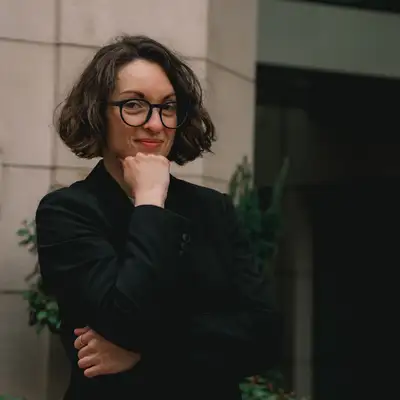
Magdalina Atanassova: Today I'm joined by Michelle Mason, President and CEO of the American Society of Association Executives.
Michelle has built her career helping associations adapt and grow from her previous leadership at Association Forum and the American Society for Quality to her current work advancing the professional practice of association management at ASAE.
In our conversation, we talk about how associations can rethink their business models,
strengthen member trust, and embed conscious inclusion into everything they do.
Michel also shares what future focused leadership really looks like and why in times of uncertainty,
taking action matters more than getting everything perfect.
We start now.
Michelle, a warm welcome to the Convene podcast.
Michelle Mason: Wonderful. Thank you for having me. I'm looking forward to our conversation.
Magdalina Atanassova: Me too. What do you think is the most urgent challenge associations are facing right now?
Michelle Mason: All right, well, that's a really great question. Associations are facing a number of urgent and interconnected challenges. Now what I see to be most pressing kind of centers around revenue and business models.
Sustainability.
When we think about that, we're thinking about associations. How are you managing the near term priorities while also,
you know, maintaining a longer view and kind of balancing that within the organization is important.
There are member growth, you know, how are people, are people joining? Are they not? How are you creating community is one aspect of it. So these economic headwinds,
changing professional behaviors and just shifting priorities of members and sponsors and funders and all of that are impacting associations. The old model is no longer so we are forced to change.
We're forced to be agile and adapt in this uncertain environment.
While we're living in trying to navigate this uncertain environment, it really creates opportunities. We've so long talked about changing our business models. Now we're forced to do that. So I think that's going to be very important.
And then when we think about that, we think about relevance, we think about our value proposition. What is that new value proposition to the members?
So yeah, there's quite a few things, but the opportunities are here for us to embrace.
Magdalina Atanassova: Even though you're speaking about opportunities, the latest membership marketing benchmarking report released by Marketing General Inc. Shows declines in membership growth, renewals and acquisitions.
Magdalina Atanassova: So what do these trends say to.
Magdalina Atanassova: You and what's missing from the conversation?
Michelle Mason: Yeah, you know, it's important to note that not all Trends are universal. ASAE experienced a 6% membership growth last year because we again, when we think about value proposition relevancy, we were there in terms of listening to voice of the member and being in attempting to be agile enough to be responsive,
which I believe was a driver to, to that growth. But the Bigger story is that, you know, sustainability of that growth, the retention. Right. Particularly in today's environment. So we'll see this coming year if that is still the same case.
We are, you know, budgeting for a modest growth. We don't expect that level of growth. And again, the trends are not universal and it just depends on the market that you're in of growth and such.
So I would say as we look ahead, we really need to focus on retention as the key metric while always keeping our eyes on growth acquisition.
Magdalina Atanassova: Yeah.
Magdalina Atanassova: And what other strategies do you see working for associations that are successfully navigating today's retention and engagement challenges?
Michelle Mason: You know, I think the key strategy for associations is voice of the member, listening to your members, understanding what your members are telling you. Right. In terms of their needs, not what the organization and believe it needs to provide the member.
In addition to that, just kind of like understanding the behaviors of members because, you know, your members will tell you one thing, but their actions might indicate something different. And it requires a different level of data analysis for us.
Right. We need to go deeper, understanding who are they, what do they want, what are their movements, and how do we as an organization develop strategies to respond to those shifts real time.
So an example of that is, is when we had a variety of political policy issues earlier this year and ASAE monitored the environment,
we convened just in time programs to allow our members a place to have a conversation,
to understand how these issues would impact us,
impact the sector.
So it wasn't that we had the answer. It was we were the convener, so that we brought these diverse leaders together to kind of explore the uncertainty. So. So I think that again, yeah, listening to your members, understanding their behaviors and being agile enough to be responsive in whatever makes sense for your organization and for the members to again,
explore, understand the current realities that we're facing.
Magdalina Atanassova: And for associations that rely heavily on conferences for new member acquisition,
how can they reimagine that strategy amid travel restrictions and budget cuts and all those political barriers that you just mentioned?
Michelle Mason: Yeah, you know,
we've managed through the pandemic. Right. We shifted to remote, and we did that with literally very little warning.
So what do we learn from that? Let's learn from that.
The past in order and take the best practices or the effective practices into the future.
And so, you know, shifting from, you know, one time in person only, continuing to shift to hybrid and, you know, a more distributed model will be very important to, to embrace, whether that be satellite hubs or virtual tracks, to be able to be to maintain a more inclusive environment for those who are not able to participate.
Keeping in touch with the attendees beyond that one time event. Right. So typically we have our annual meeting and then we all come together and we're having a great time and then we see you next year.
How do you manage a relationship or a level of connection beyond the event? So it just requires us to think creatively,
meet members where they are, using a variety of technologies to support their engagement with us.
Magdalina Atanassova: That to me overlaps with listening to your members. Like you said, just where they are.
Michelle Mason: Yeah, Voice of the member understanding. Meeting where they are. Exactly Right.
Magdalina Atanassova: And how can associations build member value beyond those events, especially when attention spans are shrinking and competition for content is quite fierce.
Michelle Mason: Building member value. I know I'm probably sounding repetitive, but listening to what they want and what they need,
being responsive,
not being afraid to take risk on behalf of, of the member.
That's why they join.
And you know, for us it's just trying new things. Right. Experimenting on their behalf and then taking those lessons learned and sharing it with the members.
In addition to that, it's engaging them in a process. Right. So that they can learn. Let's become a learning community. We're all learning together,
I think is a way to approach it in some environment.
Magdalina Atanassova: I was about to say also, how do you keep that trust? Because planners are afraid or associations are afraid to shift too much. Right.
Because how are their audiences then going to react?
Michelle Mason: And I don't think we're in an environment where we have a choice. We need to shift because the world is shifting around us on a daily basis. And so creating a model that works for your organization to be responsive and adaptive to that, whatever that means.
Right. You don't have to go from 0 to 100, but do something.
And I think for association, sometimes we become,
maybe we're not,
you know,
adverse to change as much as we become paralyzed. Right. And we. So we do nothing and. But we need to do something. And if we fail, that's, that's, you know, some people might say if that's not okay, but it could be okay.
It's what we did. What did we learn from that?
Do something on behalf of our members.
VISIT SPOKANE AD: Searching for your next event destination? Have you considered Spokane? The Convention Center sits right on the banks of the Spokane River — surrounded by everything your attendees could need, from shops and restaurants to wide-open green spaces. Whether you’re exploring new cities or gearing up for show time, the Visit Spokane team will make it all flow.
Start planning at VisitSpokane.com.
Magdalina Atanassova: Yeah. Well said. And in this current environment of political polarization and DEI backlash, what role should associations play?
Michelle Mason: Yeah. You know, I'll just share what we did at ASAE. We, with the, with the backlash and all the shifts in our environment,
we stay true to our commitment.
But we also through with the board's leadership focused on how do we embed DEI, we call it conscious inclusion into the fabric of the association. So it's not a standalone, it's not a target for attack, but it's a part of everyone's job.
It's how we are as a core value,
from the onboarding the new employees to training the current employees is the way we fundamentally do business here. We are inclusive, we're welcoming, and we embrace all it could be.
The traditional characteristics of DEI to different ideologies, et cetera. We want to be that welcoming place. Are we perfect? No. But are we striving to make sure we are inclusive?
And it's everyone's job to make for our members to feel heard, seen value.
That's what we want to accomplish.
We've reset our programs in terms of we've truly integrated them into ASAE.
We've identified KPIs key performance indicators that are responsibility of every team member to adhere to. So it's just we're doing things in a very more structured way, and it's not a standalone.
It's not a situation where there's one person's responsibility. It's all of our responsibility to adhere to that value.
Magdalina Atanassova: Have you heard maybe any interesting stories from your members in terms of DEI?
Michelle Mason: They're embracing this new approach because they realize that when you embed it in your structure, it's hard to dismantle it. Right.
And they're sharing with us how they are now able to truly hear stories from their members about how they feel valued and welcomed.
And it's across the enterprise where people are able to understand and meet members where they are. It's not just her team members, just like meet members where they are because we're all navigating this in a way that,
you know, is impacting us.
And so we just need to be very supportive and come together as a cohesive unit to move forward.
Magdalina Atanassova: I like that you're setting high standards and I hope everyone's following.
What are you hearing from ASCE members when it comes to future focused leadership, what do they need most?
Michelle Mason: Right now,
our members need leaders that are always scanning the environment on their behalf, demonstrating a level of foresight. While we need to plan short term because of all the uncertainty, we still need to keep our eye on the long term to make sure we are responsive to that need as well.
And so they're looking to, for us, at least here at ASAE, us to be that body. Right. To help them.
So we encourage our members to continue to embrace emerging trends, whether it's technology or policy,
or we just talked about DEI shifts and such, we still need to keep an eye on that and see, as we discussed earlier,
seek the opportunities. Right. So that we are prepared to be responsive.
So that's what they're looking for. They're looking for us in terms of future focused leadership. They're looking for us to take risk.
As we discussed on their behalf. The ASAE board is very committed to moderate risk. But where there's an opportunity, it will definitely evaluate.
Is there a fiduciary responsibility? They evaluate the response on behalf of the members. So, you know, that's what I'm seeing and what I'm sensing.
You know,
this is a moment for us to all be able to come together to rise, to preserve our sector.
Magdalina Atanassova: And when it comes to the people, because we have now five generations in the workforce. So what leadership skills and traits are becoming non negotiable for association executives?
Michelle Mason: Yeah, that's a really good question.
We have so many generations in the workforce. You know, I'm a huge advocate that, you know, we need to embrace wisdom. You know, it's not always, it's not always on as much as, you know, people probably don't want me to say this.
It's not always about the next gen. It's also embracing the wisdom and what can we learned from it. Right. But it's also seeking out those new ideas and new ways, opportunities to engage and use, utilize technology from the next generation.
So if we're really good at this, we would synergize or bring synergy to all these generational differences. Right. And use them as an advantage.
So there's mentoring, there's reverse mentoring, which is very important,
is, you know, inviting that, you know,
that voice at the table that's not necessarily representative represented. So through sponsorship or ally ship.
So it's just a matter of deploying a variety of strategies to leverage the opportunities that we have with a broad range of wisdom, knowledge and insights that we have captive in our associations.
And again, it goes back to listening to the member, voice of the member. It goes back to engagement and is what are the behaviors that they're demonstrating and how do we bring these different ideologies or approaches together for the betterment of the association?
Magdalina Atanassova: And do you have any good tips on how we can attract that next generation because we are lacking new leaders?
So what are you doing maybe to help that effort with your members?
Michelle Mason: Well, I think the next generation really wants to be seen and heard and have a voice in this whole process and a seat at the table.
So it depends on the organization, how you do that. For us,
we had a young professionals Council. They're like, no, we're not young professionals. We are next gen. All right, change your name.
Give them some wins. Right. Help them to just be intentional about your engagement with us.
I shared our approach to DEI is called conscious inclusion. So let's just be intentional about their inclusion. So, for example,
we have this dinner called a summer dinner every year, September, here in Washington, D.C. where we highlight wonderful accomplishments from the association community.
I'm very intentional to make sure there's a Next gen at my table.
We're very intentional. We just actually have our first Next gen on the board of directors now. It wasn't a point of seat. It was a competitive process.
Right. But she is a phenomenal leader. So we just look at how do we being intentional across this organization to make sure those voices are heard, because they are the future, and we have to recognize that.
Magdalina Atanassova: I love that. I feel every generation really needs to be heard, and that's what they really, really want. But it's wonderful that you're including them also on the board.
Michelle Mason: Yeah, it's a competitive process in terms of the board. See,
what that really indicates to us is that she was strong enough to be able to qualify to earn her seat at the table. She earned that seat, and I'm very, very proud of her.
Magdalina Atanassova: Yeah. Wonderful. What gives you hope about where we're headed?
Michelle Mason: You know, my hope is that I strongly believe that the association community is a very resilient community.
I hope that we take this moment of pressure and we turn it into opportunity to strengthen the community, to make sure that the association sector is a voice that is heard, seen, and valued during these times of uncertainty.
We just recently launched a trust association campaign so that we can start telling the stories through social media. The value of associations, the conveners, the standard setters,
all the breakthrough accomplishments that occur at association meetings through health care, research, et cetera. So we want those stories to be heard, and we want our sector to be seen.
And, you know, when we do this right. It gives me hope that we will come out of this as a stronger force in society. So I'm optimistic.
I'll continue to say that to the very end.
Magdalina Atanassova: Like I said before we started this recording, I love the energy that you bring, and I can feel that optimism.
Michelle Mason: Oh, thank you.
Magdalina Atanassova: So what's one mindset or action you'd want a new or aspiring association executive to take away from our conversation?
Michelle Mason: One action.
You know,
uncertainty is okay,
right?
It's okay. But you need to do something right. We're all in this together.
We're all striving to find answers to complex issues and problems that we are facing challenges.
But don't underestimate the value of community,
the value of your network.
And together we can identify solutions. So the action is to leverage our community during these times.
Magdalina Atanassova: Wonderful. Was there anything we didn't mention? We definitely should. Before we wrap up, I think you.
Michelle Mason: Got some great questions today. I'm just excited that we've been able to have this discussion.
Magdalina Atanassova: Wonderful.
Magdalina Atanassova: Thank you, Michelle, so very much for your time and insights.
Michelle Mason: All right. Thank you so much. You take good care. Have a great day.
Magdalina Atanassova: You, too. Remember to subscribe to the Convene Podcast on your favorite listening platform to stay updated with our latest episodes. We want to thank our sponsor, Visit Spokane. Go to VisitSpokane.com to learn more. For further industry insights from the Convene team, head over to PCMA.org/convene. My name is Maggie. Stay inspired. Keep inspiring. And until next time.