Subscribe
Share
Share
Embed
What happens when a VC and a CEO come together?
– They nerd out about all things revenue. And they don’t always agree.
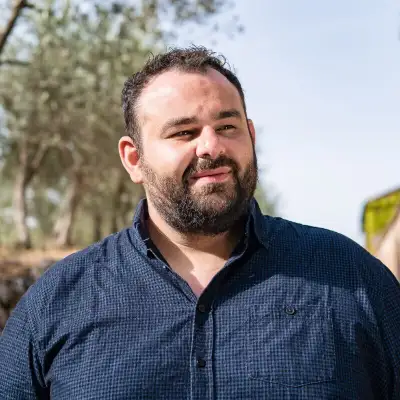
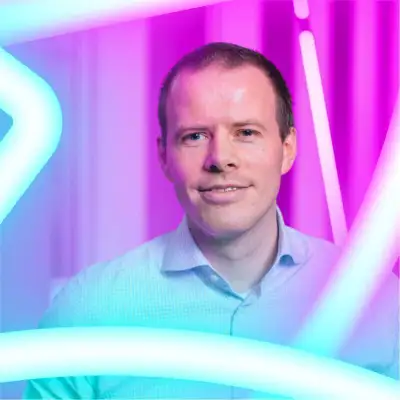
Raul Porojan of Project A Ventures and Toni Hohlbein of Growblocks are the Super Revenue Brothers. In every episode they dissect and debate current issues in B2B SaaS, and offer solutions on how to solve them
No matter if you’re an early-stage startup or a scaling unicorn – you’ll always learn something new.
RevBros - Con or Cure: Planning
===
[00:00:00]
Introduction
---
Raul: I say that planning is actually the most agile thing you can be doing. You're always gonna do planning. you're always gonna kind of like assess the situation.
figure out where to go from here, and what the next decision steps are going to be and what the action steps are going to be. It's just that very early on you're not very explicit about those things typically. And you're also not very good at making those in a fast loop yet.
And when you do it, you're trying to only have done it a single time and then not. Touch it for a year or something. So you kind of feel good about yourself and you can show it to the investors, which is the exact wrong approach, and it gives way too much importance on the first iteration of the plan.
The point of the planning is not to have a first iteration is to get into the loop of planning and develop faster and faster loops and faster and faster decision making. That's the whole idea here.
Toni: so Raul, we haven't done one of those con or cure things in a while, so I was thinking we pick one. Do you have a good idea for what we should be [00:01:00] wondering? What is a con? What is a cure?
Raul: Yeah, it's about time we talk about this topic again. I would say the big, bad word is planning. and to a wider extent,Just in general, like strategic thinking, for what the next steps are. And I think that has a lot to do with the fact that it's March 24, when we're producing this, which is the time when probably a lot of people are realizing that their plans that they had laid out three months ago, are not working out.
this might be a good time to rethink that and to maybe work with someone or work with your people on your company, on, do you have a plan and what do you do with it?
Toni: So it's so funny, right? Kind of when I was, running Growblocks, planning was a big piece for us and, and we always ran it in the planning season, which is September, October, November, basically. so doing a planning piece now is very much off, off season. but the reason why it totally makes sense for most of the people listening is, is totally to your point.
I think most of the plans that were built in November, December are kind of out the [00:02:00] window by now. for several reasons. For several reasons, which we will probably kind of go into now. so I think if there's anything to take away even after like, just, you know, listening to this for a minute is. Don't be ashamed that your plan is effed, in March.
It's fine. Like it happens to almost all of us at the best of us. And, and maybe, you know, let's see what we both think about planning, whether or not it's con or cure. but in the end, we can probably come out with some tangible advice, practical stuff, people can do it, or to just get better at this. but maybe let's kick this off with you.
Raul, planning, is this a con or is it, is it a cure?
Differentiating Planning and the Plan
---
Raul: So for me, I would differentiate into planning and the plan. The plan in itself is a con, and the planning is the cure. So what I mean by that is, plans are kind of the outcome of planning. meaning we now have something written down and we have it kind of different levels of beauty, and different levels of made up in slides [00:03:00] or excels or whatever.
once you have that product, it's not really that. Worth so much anymore in the daily? Some companies are really good about, working with that and achieving results, but typically the plan in itself is kind of worthless or close to worthless. The act of planning how you get there, though, that is where the goal is.
And it sounds weird because obviously in this world that we're in, everyone is so output driven. And so they're like, well, if the output is worthless, then obviously the exercise in itself can't really be important. But I think that this is a classic case where kind of the way is the goal.
So the, the, the point of the whole exercise, that's the what you're getting there. And, we can talk maybe a bit more about why I think that is, but to me, in short, planning. Is a cure and the plan itself is the con.
Toni: Yeah. I think the answer to this very much also depends on the stage of a company. If you are like 20, 30 million plus, the agility of the organization has slowed down to [00:04:00] a degree. Where this annual planning cycle makes total sense. and there would say the idea of planning from a finance perspective and the idea of planning from an operational execution perspective, they kind of align.
It makes sense, right? and I think because planning is usually finance driven, like in many, in many organizations, there's kind of that thinking behind it. it ends up being used super early on. When it is kind of useless for the rest of the organization. So the finance team, they have to create, a financial plan.
They just simply have to, there needs to be a budget, there needs to be approved. there needs to be an understanding of, you know, every month you need to check are you hitting the plan and you're not hitting a plan. It's really important. but folks shouldn't confuse themselves that they have a financial plan.
That they need to have the same level of foresight, in a go-to market execution plan, especially early on, especially in the, you know, between one and 10 million or something like this. I think it's silly, right? So from that perspective, a financial plan [00:05:00] that's, that's a cure. You kind of need that. A go-to market execution plan, that's a year long.
In the early days, that's a con. Later on, it's kind of a cure as well, kind of. So that's why it really varies a little bit and it depends on where you are in your journey, on whether or not you should actually engage in that stuff, right? But now that we've been really fluffy around whether or not it's a con or it's a cure, let's maybe go a little bit deeper here.
So you already mentioned that planning in itself is great, the plan is kind of bs. Let's talk a little bit more about that. for maybe folks in the, you know, between one and 10 million. I'm just gonna say that number. You know, how would you go about it? what have you learned are like good ways to actually kind of get to a good.
end result that helps people execute.
Roadmap Building for Early-Stage Companies
---
Raul: so I've been doing a lot of this lately, which is kind of a roadmap building roadmap design, which is the same roadmap plan, whatever you wanna call it, Especially with early stage companies, actually I've done that a lot, which might be counterintuitive and they've benefited from that a lot.
And the idea here is obviously, first of all, you try [00:06:00] to look at very early stage, typically the next funding round or, kind of as a milestone. but it doesn't necessarily have to be that.it can also just be a product milestone, for example. Or it can be a launch that you're working towards. but like kind of having at some point in time, let's say six to 12, 18 months in the future.
And, working backwards from that, like nothing groundbreaking here. what does the kind of mean for mean for development, in, into the future? Now, there is different levels to that. There is kind of the very, very high level, which we can talk about like quickly now. and then there is lower level.
Levels of Planning and Execution
---
Raul: So the highest level would be something like, okay, what is our run rate right now? Where are we going? where are we going to be in 12 months? And what do we kind of need to achieve Until then. Then maybe the second level would be, okay, how does that break down into, like commercials?
what kind of customers do we need to acquire right now to achieve a certain run rate, of ARR at which point, typically most companies have that kind of covered, although I've, Been quite shocked at some points that, even this kind of [00:07:00] business plan typically is not very sound necessarily.
but you benefit quite a lot from having an idea of, well, how do you get to 5 million a RR and what does that need? Because If you want to hit 5 million a RR in 12 months, and you're currently at one, you're probably not going to hit the remaining four in the 12 months.
There's probably going to be a runway leading up to that. And why is it so important? Because level three there also comes kind of the feasibility or like execution plan into that, which is, well, let's say that you're gonna ramp up to those 5 million ARR. That probably means that you also have to ramp up your team capabilities, which means that you have to kind of understand, oh, we maybe should have started hiring a salesperson yesterday or three or four, and also count in the error for margin that some people might leave.
And all that is kind of like a very technical view of the planning, which is okay. There's levels, you break them down into kind of the input factors, and you arrive at a point where you can put this in an Excel and it looks like very, very solid, where you have an idea of, okay, we need in, in March, we need to start hiring two people so we can have them in May, so they can [00:08:00] be fully onboarded in August, so we can hit our goals in January.
And that's nice, right? But I call, as I say, the output of that is typically almost never what you're gonna achieve. Now what's much more useful though, is kind of the exercise of getting there and making very clear to yourself that this is what needs to happen right now and this is what needs to happen as a second step, and as a third step.
And this leads naturally to the approach that I typically take, which is okay, we. Put this onto a roadmap. We kind of understand what are the big levers, okay, you need to hire that, you need to build that org, you need to figure this process out But then we put it into levels because the problem every founder is faced with is that there's 30 different things that they should be working at any time.
And me just coming in there and adding like another 10 of on top of those is really not gonna help you. What really helps people is understanding that out of all these things. only a certain amount of them that are really urgent right now and only to some level that you need to achieve. So you [00:09:00] probably don't need to be like fully, uh, pimped out with your brand yet.
You probably just need a first version so you can go out there and have a website so you can, hire someone. Right. So it's kind of the. You're not gonna be able to advertise your job or, or on big platforms if you don't have a website and kind of an employer brand to start with. So we need employer branding version one, and it's the same logic for all kinds of topics.
You need level one to get level two started. For example, in A CRM topic, let's just get a CRM level started. Maybe you don't need necessarily to have the fully pimped out CRM set up yet, but let's just make sure we don't screw up our data in the beginning. and so on and so forth. And I put this into levels thinking where there is typically four to five levels and we just think about what needs to be at what level, at which time, kind of like a DJ turning knobs up and downs.
Toni: So if I kind of imagine this, right, so sure we're calling it roadmap, but hey, it's kind of like a plan. but I would say it's a little bit more than just semantics. and the reason why I would [00:10:00] say that is really what we are doing here is we are taking a page out of the product development playbook, right?
Kind of these guys. You know, they've been building stuff in Waterfall for a while and now it's agile or whatever.
Iterative Planning and Decision Making
---
Toni: But the main insight there is really that, we actually today don't know what we will know in six months. So in six months, we probably will make a much better decision on what we should do in the seventh month.
Versus what we can do today, right? that's a clear insight and that scales all the way up and down to the next day, the next month, the next quarter and so forth. So creating a little bit of an approach where, hey, overall in the trajectory, going in the right direction, but the specific steps at how we are gonna get there, we will need to figure this out over time.
And that for me is more of a roadmap. Than it is a plan, by the way, for me, a plan usually needs to be watertight from the beginning to the end to a degree. and I think the other really interesting thing that you mentioned there is really around this levels approach, right?
What are the different milestones [00:11:00] or stepping stones or kind of things we need to have in place in order to get where we want to go based on our current knowledge. and then every of those items you can scale them up and down. Like, do I need the full thing or just do I need something functioning right?
and. Being aware of that, by the way. Um, I think that's super helpful.labeling this in different tiers or levels is also super helpful because internally it gives you then an excuse to say like, Hey, we don't need to go to level two or three yet. It doesn't make any sense. We just need to scratch the surface with this.
We need to test out the next three month whether this thing is working at all. And once it does. Let's build this out, get more serious, get more professional, kind of get the right tools in and so forth. and I feel, it also brings a level of experimentation, to this process, that is healthy, that's how it should be done.
if you were to think about you have no venture capital in your bank account and you really have to go with the scrappiest setup. You probably would kind of land in a [00:12:00] direction on a location like that, right? You would kind of very, kind of very simply try and make this work out, with the simplest tools you have.
Once you see it's working out, you would invest, you know, your hard earned money, not someone else's money, your hard earned money. You would invest your hard earned money to, you know, build this thing out incrementally more and more and more. and I think that's a great, you know, I think that's a great way to break it down and think about it.
Raul: And I think a good roadmap plan, also includes the fact that you're going to learn and includes the, the fact that you're going to iterate. it's not like we're lying to ourselves about knowing everything already right now, but a good plan indicates that, maybe in three months we will know more about what the next version will be, but at least we'll know that in three months we would like to be there.
and that kind of is useful to a lot of people, like also having, an idea. for example, the thing that I've tried a lot with people also is, well, maybe they're. The kind of thing they have, product, market fit, whatever that term means. And now they're trying to figure [00:13:00] out which motion to use in sales or marketing and what kind of, different things to do.
And this approach is quite intimidating to people. So kind of a, hey, we went from first, friends and family to now figuring out that we kind of have a little bit of go-to market, a product market fit. but we have no idea on how to scale this thing right now or how to actually find GTM Fit. And this idea is intimidating because there is a lot of iterative process, uh, involved.but also because there is kind of this, when you try different channels, I. You have inherently the idea that it can also be a channel that will not fail, and then you're not going to scale it. So let's say that you're going to try events, because you do think that for your whatever product, this might be a big deal to get leads.
It's very possible in the beginning that it's a great idea, but it doesn't work out for different reasons. And planning around that fact that maybe you're gonna try something out for two, three months, put a lot of effort into organizing events and then trying to get leads and then following up [00:14:00] on those and then seeing that the leads didn't work out.
Then figuring out why those leads didn't work out, and whether that means that you should drop events and try something else. That is a very weird thing for people to plan compared to something like, oh, we know what's gonna work. We know we're gonna have this and this event in one year, and we need to work backwards from that and hire two salespeople right now.
It's a lot easier for people to wrap their heads around that and, This kind of planning though, is still very possible and this kind of roadmap is still very possible. If you just keep in mind that that's probably what's going to happen. Like you just build different levels of kind of knowledge.
You build different levels of kind of tooling to get to a point where you, after some iterations finally have figured out you go to market.
Toni: No, I think, and this is where the separation between con and cure almost comes in. I think this, you know, backwards engineering kind of planning works in environments that have a high degree of certainty. that's why financial stuff is always so good, right? You kind of, you're gonna know how much salary you need to pay and.
You actually don't know how much revenue you're gonna get, but in the, in the model, you just assume that you [00:15:00] know it's there. and that gives you a cashflow, right? but if you look in some other areas where people don't have that certainty, where they're actually working in a very uncertain environment.
they're not using this approach. one example that we found actually is the military.
The OODA Loop
---
Toni: and this really comes from, I think it's within the sixties or seventies, and it's called the OODA loop, double ODA. it's observe, orient, decide, and then act.
And then you go in the circles all the time. this was actually invented for, jet fighter pilots. meaning, they saw an enemy, observe, then they, orient, what's their decision plane, what are the different options they have? They need to make one decision.
Then to action this, right? And the idea was because obviously you have, you know, both opponents have an OODA loop , right? They're doing this all the time. And, and the idea was if you as a jet fighter pilot have a smaller OODA loop, they kind of call it, if you can get inside your opponent's OODA loop.
you will basically blast them out [00:16:00] of the sky because while the other person is still orienting, still observing, still deciding, and then trying to act. You might have done that iteration twice and you're now on his or her tail and you know, can, you know, win the dog fight or something like this, right?
Kind of. That was basically the idea. and again, this is not in a, oh, you know, let me waterfall this backwards, reverse engineer this down. It's like, oh, there's gonna be a pilot coming at me, and then I'm gonna take a left and then I'm gonna turn around and then I'm gonna do those five things and then I win the fight.
That's not how this thing works, right? It's way more, you know, forward thinking. What's my next best step? I think, especially in the early days where you don't know what your motions are, where you don't know how the motions are gonna work out, that way of thinking about the world is way more applicable than the, than, than the waterfall planning, frankly.
Right. So I can really just only, recommend for people when they think about what you just mentioned in terms of the events thing to build out. It's like, okay, let's make the first decision we're gonna build out, some event strategy and let's [00:17:00] act on that. Let's actually try and design it in a way where we get positive or negative signals with stop gates in between, not in six months, but maybe in a month or two from now.
Right? Kind of. Let's find ways to break it a little bit down and get some feedback earlier, right? And the longest way it can go, it's like, okay, you know, we have this event in two month and then we're gonna get some leads and then we're gonna close some deals from this. Gonna take another three month on top.
So really we can decide in six months whether or not this was a good idea. Actually, what you can also do is like, okay, let's kind of plan for the event. how many people can we invite? Like how many people would actually show up? Like, you know, and then how many people are SVP and say they want to be there?
How many of those are actually good profiles? how many of you know once the event is done, like what was the feeling in the room where people like excited? Do they wanna do this again? again, then afterwards, like, okay, we are sitting on a first couple of meetings here now from those leads. They actually shit meetings, like they're not gonna go anywhere.
Right? And then like, hey, you know, now something's [00:18:00] in forecast. Now something is closed, meaning you can this, this strategy that otherwise would take you six months. You can break it down into little, you know, signals in between. And keep in mind there won't be a signal that is like a clear. Go, no go. you know, usually that's not the case, but it does help either your confidence or destroys it around it.
And then sometimes it might also lead to you saving a lot of time and scrapping this kind of much earlier. and if you have a plan where this is written into for the next 12 months, you kind of then. Okay, let's keep executing because it's in the plan. But actually, you know, in this way of thinking, you would just say like, no, you know what, let's figure something else out.
Kind of. We decided it doesn't work. It's now Q2. We need to do something else for Q3. Let's get thinking. Right. and I think this way of thinking about it, I felt this way more, applicable, let's just say for the early days, one to 10 million or something like that.
Raul: I like the analogy of the OODA loops, as in you as a jet fighter would have to have faster OODA loops so you can complete more of those, in a same amount of time as another fighter. [00:19:00] And it's actually kind of my philosophy also about why the planning itself is the cure, so to some extent. I think some founders think that the plan or a roadmap approach is not for them because they think they're very agile and like we are kind of like trying to react to the situation and everything.
And I say that planning is actually the most agile thing you can be doing, which to some people sounds very weird because it's like, well, no, we're an early stage startup. We don't even know where we're gonna be in a week from now. How can we do planning? You're always gonna do planning. you're always gonna kind of like assess the situation.
figure out how to go, where to go from here, and what the next decision steps are going to be and what the action steps are going to be. It's just that very early on you're not very explicit about those things typically. And you're also not very good at making those in a fast loop yet, which is why the first one, when you take someone like me or another consultant and you actually do this exercise, you're trying to avoid, you're trying not to pay, you're trying to, to not put the time in [00:20:00] sometimes.
And when you do it, you're trying to only have done it a single time and then not. Touch it for a year or something. So you kind of feel good about yourself and you can show it to the investors, which is the exact wrong approach, and it gives way too much importance on the first iteration of the plan.
The point of the planning is not to have a first iteration is to get into the loop of planning and develop faster and faster loops and faster and faster decision making. That's the whole idea here. And all the best organizations I've ever seen, whether they're conscious of that or not, are really good at making those decisions every single time.
And maybe they don't write an Excel out and maybe they don't write an explicit plan out every single time, but they do that at least implicitly. And they do so very, very quickly and they've gotten into a habit of doing so as an organization, which is a different thing than getting into a habit as an individual.
And that's what you need to strengthen this and the start of that is the first plan. And then you reiterate that in a month or two from now, and then you reiterate it constantly. And at some point, the people who come in, they get [00:21:00] used to working that way. They get used to making decisions quite quickly.
They get used to communicating those decisions quite well, whether they put into an Excel or not. And now you're looking at an organization that is kind of a very good working, machine.
Toni: No. Absolutely. and I think you mentioned the Excel a couple of times. This is obviously something that Growblocks used to do. Right? it's funny enough also, you know, some of the. Some of the highest NPS activities from Growblocks. I'm doing this currently with two guys on the side, in terms of, two founders that need a little bit of this growth modeling done.
And the way I'm actually kind of explaining it to them, it's not, Hey, you, you, you don't, you shouldn't be thinking about this like another financial model that you need to nurse and update and so forth. See it more like a tool to make good decisions. there are folks, maybe I am one of them, maybe you're one of them, that can look at some of the numbers and intuitively can tell you this gonna work out or it's not gonna work out.
Right. Very few other people have that skill because they didn't waste 10 years on looking at that stuff all the time. That kind of did other more valuable stuff, I [00:22:00] would say. but then having Excel spreadsheet at the hands, to kind of quickly make some adjustments, calculations like, oh, if we do this, if we do that, if we do this.
Where do we end in 12 months from now? is this thing that we are discussing right now? Is this a big thing or is it a small thing? So I was, you know, when, when I was basically kind of CRO at my second company, I was sometimes sitting on the executive team and all of these guys, like 40, 50 years old and like really experienced and their stuff.
And sometimes we talk about commercial stuff and then it's like, Toni, what if, what if we just kind of cut this thing away? I just, I just looked into the room. It's like guys we're talking about. 70% of our growth next year. That's what you just like, why don't you just cut this away if this doesn't work?
Right. And it's like people, like sometimes struggle, you know, putting those pieces together and giving them a calculator, you know, see it like this. It's a tool, it's a calculator. Something like that. to just reinforce the decisions or make better decisions, that's absolutely worthwhile by the way.
Raul: And to some extent the decision [00:23:00] paralysis, the situations where you can't really decide, or you, you kind of have a problem acting right now or getting people together to act on something, and having fast loops of decision making, which is what startups need
Toni: Mm.
Raul: Often come from being overwhelmed by all the different levers and all the different moving pieces of the decision which again, is solved to some extent, by the planning,
Because the planning means we sum up all the pieces we can think about. We put them into some kind of order. It doesn't have to be perfect, which gives us a much better feeling about not being overwhelmed by the different moving pieces because we have them in our view.
Toni: And one very practical reason why this is useful. when I was, building my own company, we did this obviously sometimes haphazardly, sometimes just, you know, intuitively but was a real time drain sometimes We made a decision and we executed in a specific direction.
over time your confidence wavers a little bit, ah, was this the right thing? a month or two later someone asks you like,why did you go in this direction? Why didn't you [00:24:00] do this other thing? And because it's just not fresh in your memory anymore, because you're confident about this decision that you made this kind of wavering.
Suddenly you feel like an absolute fool and be like, well, why didn't we Right? suddenly go into this research loop, try and figure everything out. And what I felt was extremely helpful is to just be able like, Hey, this is what we looked at a month ago. Let's just call it not a plan, but like a document.
Here are the decisions we made. Decision made. We're gonna go in this direction, you know, decisions we cannot decided to deprioritize as X, Y, and Z because of, those A, B, C reasons. And then when someone asks you, you can just use this as a level of sanity to be like, actually we considered this.
We didn't go this way because of X, Y, and Z reason. and maybe now we're gonna reconsider again because we learned more, right? but that mental energy, that mental drain. Someone else and or yourself, second guessing yourself all the time, kind of ha you know, going through this process, maybe documenting with the help of, you know, maybe a consultant even.
I think that can help you kind [00:25:00] of hold on to what's, what was the decision and kind of hold onto the steering wheel to a degree.
Conclusion and Final Thoughts
---
Raul: You, you're leading very nicely into this, and I'm gonna say it now. I think a big part of the. Kind of fear or whatever. Maybe people will say, I'm not afraid, I just don't like it. Of the planning is the committing yourself to something or the feeling that you're committing yourself to something, which also means to some extent, you're committing yourself to reviewing it and maybe being wrong about it, in the near and mid to long term future.
Most founders are not really good at admitting that they were wrong about something. which is funny because they're typically people who ruminate a lot about all the kind of different options and they feel overwhelmed and all that. But the way that they present themselves, I.
Typically does not match with, hey, we fucked up here. We fucked up there constantly every single week. That's not the way that most founders want to communicate. And so obviously they shy away from setting themselves up for knowing that they will have to do that if they wanna be truthful to the team.
They want to project confidence towards the investors, towards the team, also towards [00:26:00] themselves. And, they would rather not get into a situation where they know they have to do that.
Toni: No, a thousand percent you don't want to like, go to the team all the time. It's like, oh, you know, it's just, we just tried. Like, I think that's also a weird mindset even to say like, oh, we tried like that, that shouldn't be a, a good excuse for anything. But I do think it's super helpful.
At least it helped me to see every move a little bit as an experiment. because, you know, I don't need to say it to everyone by the way, but it makes it easier for yourself to, get unmarried to your decision and your idea very quickly. What is super toxic is holding on to something that you feel is wrong for too long.
And if you, you know, because of confidence, and maybe you said it publicly and you kind of feel beholden to what you said, if you're from the beginning, at least for you mentally treat it as an experiment, as something that can go in the right direction or the wrong direction. I think the ability to, ditch it when the time comes, is much more possible for you
And you'll probably end up making better decisions for the business. but also Raul, we're coming up on time [00:27:00] here. so unless you have another gold nugget to drop, I would actually call it.
Raul: two more sentences based on what you just said before. I think the reason that that is working so well is I. It decouples the decision and the action from your ego. So when you say it's an experiment, it kind of means, well, if I fail, it's because the idea, the experiment failed. It's not because I failed.
And I think that's what makes it so easy for people. So I think that's what makes it powerful for people. Like just decouple the whole thing from yourself, which, another way to view it as like, views it as a game or as an experiment, whatever, it will make it easier to backtrack and make better decisions later on.
Toni: yeah, absolutely. So if you need help with any of that hit up Raul, hit up myself. Happy to help. and otherwise Raul, thank you so much for doing the show today. Everyone else hit subscribe, like, and whatever really helps us, helps the show, kind of makes us feel good to kind of keep, keep pushing out content.
and otherwise, have a, have a great day everyone. Bye-bye.
Raul: Bye bye. [00:28:00]