Subscribe
Share
Share
Embed
Since 1986, Convene has been delivering award-winning content that helps event professionals plan and execute innovative and successful events. Join the Convene editors as we dive into the latest topics of interest to — and some flying under the radar of — the business events community.
Convene Podcast Transcript
Series: The Missing Piece in Event Design: Somatics & Nervous‑System Wellness with Kelly‑Jean Moore
*Note: the transcript is AI generated, excuse typos and inaccuracies
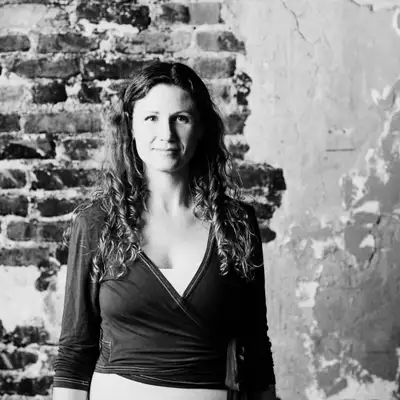
Magdalina Atanassova: Welcome to Season 11 of the Convene Podcast, brought to you by Destination Madison. This season we’re focused on wellness and designing events that don’t exhaust people. Today my guest is Kelly‑Jean Moore — a certified Rolfer, longtime yoga and contemplative‑movement teacher, and one of the most grounded voices in somatic wellness today. For more than two decades, she’s taught classes, led teacher trainings, and run her Charleston‑based practice, weaving Yin, Vinyasa, and experimental movement into an intuitive method that helps people reconnect with their bodies.
She’s also the founder of Sarayana Yoga, a system that blends Hatha Yoga with Taoist, TCM, and Rolfing principles to help students understand healing as an embodied, lifelong process. Today, Kelly‑Jean works with clients nationally through private sessions, corporate wellness programs, and her podcast Yoga Burnout, where she speaks candidly about the state of the yoga industry.
In this conversation, we explore how somatic micro‑practices can transform event experiences, why nervous‑system regulation matters more than trendy add‑ons, and how planners can build environments that support real presence, learning, and human connection.
We start now.
Magdalina Atanassova: Hi Kelly-Jean and welcome to the Convene Podcast.
Kelly-Jean Moore: Hi, thanks for having me.
Magdalina Atanassova: You've been teaching yoga and contemplative movement for over 20 years now.
So from your perspective,
why should event professionals care about integrating mindful movement into their programs beyond it being trendy or expected?
And what do you think is real value for the attendees?
Kelly-Jean Moore: This is an important topic. It's an important place for us to reflect upon,
you know, the Instagram world that we live in, where everything is commodified into very glossy, very bite sized portions that are exciting, that sound tantalizing to a person. I think it's easy for people leading these events, restructuring these events to see that and think, oh, that will look good,
that will interest our attendees.
But I do think that there's an opportunity here for more than just offering a sort of standalone additional event that may or may not be geared towards and applicable as a useful set of tools for everyone in attendance.
You know, if you do something that's really trendy,
something cutesy or out there but popular,
you're going to appeal to a small,
loud portion of people and everyone else is not going to be able to apply the tools.
So the opportunity is maybe to look at the whole of an event,
like the whole framework of it, from beginning, middle and an end, and ask what is it that you want the people who are there to really walk away with as an experience on the whole and regardless of what the subject matter is,
I think that everyone wants the attendees to leave inspired,
resourced and connected.
And you could do that through the skillful use of wellness integration that's woven through the Programming versus just having some slick,
trendy event that's on the. The front end or the back end or a Friday night when everyone's already tired,
you know. So I think there's a really smart way to approach this.
It's an exciting opportunity. Really.
Magdalina Atanassova: Yeah. And I feel that a lot of event professionals are looking at it in terms of maybe we have a lot of people that nowadays do yoga, let's say,
because it's, you know, people talk about it, it's out there, it's in the, in the space.
So maybe we should.
Kelly-Jean Moore: Yeah.
Magdalina Atanassova: Integrate that as well. At 6am after a very loud night out with the group.
So these are starting to become,
on the one side, perfect for those that practice, want to keep up with their practice. But on the other hand, it's kind of gimmicky. Right. Because when you see it and it's like, what do I prioritize?
Do I prioritize going to the evening event with my boss because there are the expectations, or do I prioritize myself and opt in for that morning, 6am, whatever it is,
movement.
Kelly-Jean Moore: Right.
Magdalina Atanassova: So how do you see us on the event planner side navigating this and not.
And really thinking of the attendee first and not really just doing it for the gram or because people expect it.
Kelly-Jean Moore: You have to really ask the question, what are the goals? What are your goals?
But I, in my mind, when I imagine this and I think about these little bubble events within the larger context, you can still have those.
They're not problematic, they're a great option, but they aren't going to create this cohesive invitational experience that elevates the entire event.
They're just going to be what you said. They're going to be small offerings that will appeal to certain people,
not to others.
But if you can find a practitioner who is,
you know, you're going to have to do some searching to find a professional has a background in the subjects of what I would call somatics.
And so, okay, so somatics means the body.
But specifically when we talk about somatic practices, it's how we are not thinking of using the body from the outside in, but we're thinking of feeling an experience from the inside out.
So when we talk about somatic movement exploration, it's usually, but not always,
slow and simple. It's extremely approachable and it really works on a nervous system level and it can be done in small bites.
So I'll circle back to that. But I think if you find a practitioner or sort of like a.
I don't know, I'm stuck on what we would call it. But you need a person that is your touchstone, that works with you for a particular event that says, okay,
they can look at the overall arc of the event. How can we weave in small bite sized portions that are really part of the whole programming. So you're looking for a presenter or a teacher,
a guide who may have more therapeutic background,
somatic training,
training in trauma, potentially. Not that you're going to do trauma releasing or any of that, an event, but they, because they have that training, they'll be sensitized to working with all kinds of variable bodies and nervous systems.
Okay, so you,
you could maybe reach out to, depending on the city that the event is in, reach out to the longest run running yoga studios. You can look at the local universities.
Do they have therapeutic and yoga wellness programs? The people running those programs will be the people you want to check in with to either help you with the event or to direct you to the right person.
You want the credentials,
you know, you want the person with the skill. And then they're going to be able to come in and say,
okay,
what would be really brilliant is to have two events that are large, that are available to people to attend. But also let's weave in at the like 15 minutes before the first keynote.
Everyone meets in their seats and we're going to do just slide the shoes to the left, put the feet on the floor and do simple breath work, foot movement, arm movement that literally everyone can do.
Right.
And you can plug that programming in so that it makes sense. If they've been sitting for a long time, it needs to be movement based.
If they're. And really the front end, the back end of a lot of sitting can be movement based but simple.
Right. If they're going to do meditation chairs are better for more bodies than floor seated meditation because a lot of people won't be able to sit comfortably.
So you already have access to chairs, you know, but depending on the location, the environment, I think you need a person who can look at all of that with you as a planner and say, how can we weave in 15 minutes here,
three minutes there,
five minutes here.
Right. And then those also become tiny advertisements for the larger events, the bubbles. Like if you'd like to do work more with this person,
join us tomorrow morning for a little more of a deep dive. But that way you're kind of governing the flow of the social nervous system as a whole.
Right.
Versus again just appealing to a handful of people who, and to be fair, Modern yoga, modern postural yoga in a yoga studio is mostly group fitness focused.
And group fitness is different than wellness.
I've talked a lot.
I'll pause, I'll pause for a breath.
Magdalina Atanassova: And I like the moment you chose for the pause because I think that's very important to,
to have this differentiation for people. Right.
Because I feel at this point,
and maybe I've seen way too much puppy yoga.
I don't think it's really focused on the actual grounding breath movement when we have these activities at events, but it's mostly on let's cuddle with puppies on the ground. Which I think we should just start calling it that.
Come in the morning.
Yeah, cuddle with puppies.
Kelly-Jean Moore: I mean, I'd love to.
Magdalina Atanassova: It's fine.
Kelly-Jean Moore: I would love to cuddle with puppies. I just. It doesn't need to be in a yoga practice, the practice of yoga. The theme of yoga is the yoga.
And the. The theme of yoga is a practice with a series of tools that help us interface with the self.
And the. The thing is that yoga, when it came on the scene in popularity in the late 90s, early 2000s, is really when it started to gather steam as a more viable,
popular system for people to navigate for health wellness fitness. And it did kind of health wellness fitness, it did kind of work in that triad, but it was a novelty in and of itself.
So it was very exciting to people.
But all novelty wears off. So now what the yoga industry has been clamoring for is more novelty. And that's where we get into these things that are,
you know, using lots of buzzwords and, or trendy elements that really,
they are fun. And novelty has its own value. It's great for the human brain to have some novelty, but the practices of wellness that are anchored in yogic lineages and somatic movement and therapy lineages, it doesn't have to be yoga.
There's a lot of other things that are similar that are probably doing more yogic work on the ground than a lot of popular yoga is.
You know,
I think that we as a culture are very caught in the highs and lows of our experiences, you know, of like, needing to, like, overcome whatever it is that's hard in our system by having something exciting or new to grab onto.
And then when that stops working, it's onto the next thing. But of course, that's like,
I had this really great trainer that I worked with for years,
strength training, because any person who practices lots of yoga, which is,
it does lean into more stretch and tensile stretch on the body. Even if your goal isn't to become super flexible, it's still you're tugging on your tissue a lot. So I had to balance that with simple functional strength training.
And he always said it's important for your practices, whether they're strength, flexibility, contemplative practices, to be an inch wide and a mile deep.
Do you understand that saying so like an inch, like so it's not a lot of information that you're working with. It's a small practice done consistently over time that the depth comes from that.
Right. And that's very much a yogic thing too. There's a certain amount of education that needs to take place for long standing practice, but then it's mostly just the practice.
So how does this. I guess the question, like, begs, how do we shift this conversation back into its usefulness for these events?
And I think where you'd really see the benefit is that people would have a very different overall experience of coming back home feeling like themselves,
feeling still at home in their bodies instead of dysregulated,
you know, and once people experience that and really, really feel the difference, they are hooked.
They don't need the novelty anymore.
Magdalina Atanassova: And I really want us to expand a little bit here because we started this part of the conversation before recording, so I feel there's a lot to cover, pretty much.
So you mentioned before we started recording about people you work with who come back from events feeling all the tension in their bodies.
Their nervous system is wrecked. And I think everybody would understand that because we all have been to too many events and we all know the drill. And there are hashtags in our industries that are include tired next to the event name.
And it's. It's a thing that we kind of expect. Yeah, we kind of.
I think even we nourish it. You know, we. We want to go there. We know we'll be a wreck afterwards, but we still want to go there and do the thing.
Kelly-Jean Moore: Right. It's like a badge of honor to be exhausted afterwards because you did this big thing together.
Magdalina Atanassova: Exactly. And yes, there is a positive part because it's a together experience. We all did it together.
Magdalina Atanassova: But then still, I mean, it drains
Magdalina Atanassova: you as a person. Like you said, it's like you're not feeling yourself.
Where do you see the benefits? Like, what can we do more as event planners to do better for the people and for ourselves? Because it's not only the attendees, it's the staff as well.
We all come back and we're like,
don't talk to me for a week.
Kelly-Jean Moore: Yeah. And why think about the don't talk to me for a week feeling? I mean we are social animals,
okay? And we are, we're fully capable of co regulating. I say like, don't use buzzwords, but of course all words become buzzwords when they move through the zeitgeist of the, the speed of the Internet these days.
Well, let me go back. So like you said, we were talking before we started recording and what we were talking about, what I, what I brought up was having clients.
But because I do see one on one clients weekly,
monthly, you know, year over year over year. I'm a Rolfer, that's what I do. I work on their bodies, but we're also working always in their nervous system. Cause you can't be with someone breathing in the same space, making eye contact, touching.
I mean that gives it another element without having your nervous system affect each other.
Which is why when you put a room of 300 people together,
there is a lot happening in the field that is not just sitting, standing, talking and hearing information because all those nervous systems are interacting.
So there's that piece. But you know, when my clients come back from these large corporate events,
they often report pain in their bodies.
From the clothing choices, from shoes,
from sitting too long,
also from feeling the pressure to meet up afterwards and to indulge.
Right, because you want to let off steam after that much intensity and like learning and social moderating. You know, when you're in a group and you're interacting with all these people who are your peers and or your betters within the corporate strata,
you are on high alert. You're reading everyone's body language. You're trying to seem warm and funny and competent at all times. You're monitoring everything you say. That's a very, very active activated state.
And then on the front end of that there was travel and on the back end of that there was travel. And then again maybe that drinking in the middle or you know, whatever, late nights, potentially all of that is tough on the system.
All of it. And they just come back a mess. And we usually have to do a slow unwinding,
especially in their low back,
you know, especially in their neck.
And it like I end up having to work a lot in people's armpits because there's a whole lot of like bracing in their body,
which I know that's a little graphic, but you understand and I think that you're right, that that is part of it. And you're not going to be able to at these large scale events, completely mitigate that.
It is exciting, it is fun and it requires a lot from the social nervous system.
It does.
The way to make it easier on people is the first piece is to do what we're doing right now,
which is before you plan an event, acknowledge the truth of what's great about it and what's hard about it. And by acknowledging that, we can start to open a conversation of how can we just soften.
It doesn't. Again, it's small bites.
Have you ever heard of habit stacking?
Magdalina Atanassova: Yeah, absolutely.
Kelly-Jean Moore: Habit stacking, right. So it's like you don't have to change everything in your life for a lot of change to take place.
You could just, you know, for someone who wants to shift their eating habits,
they can switch out one of their snacks that day. Like for, for a month,
one snack time a day that they usually go for a treat or some highly processed food, they just switch it out. Just that one time. Just as the only change, just switch it out to a piece of fruit,
just that.
And it cognitively shifts the way you start to navigate all of your other choices.
So we don't, you don't have to tell people they shouldn't go do the socializing.
But if they're having these small wellness bites throughout the day, these moments to calm down, to reflect, to get quiet,
closing your eyes, taking your senses back so you're not constantly monitoring self and other in a way that is performative, you know, to be able to listen to your system,
they're going to get to that evening opportunity and maybe in that three night or that four night event.
How long are the events usually?
Magdalina Atanassova: Yeah, about the three, four days I would say.
Kelly-Jean Moore: That's right. Okay. Yeah. I mean the ones like, like I said, the ones that I've gone to, I'm not attending three and four days. I mean I have been to yoga conferences and actually they were kind of crazy too, but it was a long time ago.
But I would, you know, land in my hotel room in between sessions and soak my legs in an Epsom salt bath to try to keep them going because I, my legs were so tired from doing yoga.
Yoga, Yoga, yoga, yoga was like way more than I was used to.
But with these things, you know, if you get to that opportunity, maybe two of those nights, your system, you've listened enough throughout the day that you can go, you know what,
I think I'm going to pass on this one and I'll see you guys tomorrow morning.
How about we meet 15 minutes before and grab a coffee by acknowledging the challenge by talking about it and then by providing these check in moments throughout programming that are not a big ask,
that are pretty inclusive of everyone.
You know, I would say build them into the whole thing instead of making them optional.
Have pieces that are not optional.
That sounds bossy, but you do understand. I think it's like not a,
it would be very invitational.
But you know, if everyone's already seated and then your wellness guru,
whoever your person is, your touch person for the whole program comes out and leads five minutes and then there's a pause and then there's your keynote. And then after,
you know,
a two hour or an hour long lecture,
there's a 15 minute break followed by a short movement practice that again can be done. You do yoga asana in a five minute standing practice that doesn't need a yoga mat, that can be right next to a chair.
You can do standing, squatting, lifting one leg,
rotational movement. I mean there's a lot that's available that everyone could do.
When I was a kid in, I think this was in elementary school, they came up with this school program here in South Carolina where I'm based called perc.
Bear with me.
It was in homeroom class every morning on the intercom,
a kid from the school would come on the intercom and they would guide, verbally guide us through simple movement practice.
This was before the popularity of yoga. It was just to get our brains, to get our nervous systems to get everything like ready to learn and wake up. We would shake,
you know,
and say, say things to each other. I mean it was very funny because it seems very modern and forward thinking and it really was not in a very progressive school.
But it's very similar to that. It's just these little microdoses of wellness and it's all, it's very simple to affect a nervous system with movement.
Three to five minutes is absolutely enough to have a V tone response. It's absolutely enough to have a shift from activation to,
you know, something that's more calming and you won't stay there. You're not going to zonk them out. They're not going to pass out on you or anything. You know, you're just going to tamper or temper, excuse me,
their stress with a little bit of that kind of co regulated work.
Magdalina Atanassova: I love it. And the fact that you mentioned that it was also funny seeing the whole room laugh because you're shaking funny and you're like moving and you're saying things out loud because sometimes right when you do those things, you have to express something aside or something that just makes the whole room laugh.
And that's also kind of balancing out the stress that you feel or you may have felt beforehand,
which is kind of very cool. And I feel like now that you mentioned it, I'm like, why are we not building these into the program naturally? So not having them as a,
as an add on in the program slot, but just as each session starts with this,
and that's just the way this program works,
or each session ends with this extra two minutes and it's just built in,
and I feel that would make such a difference.
Kelly-Jean Moore: You. It would make a huge difference. And it could be billed as a neurologically inspired.
You know, like, this could be the new way to create these,
all of these experiences where this is a part of. It becomes a part of the culture.
And it is,
it is pervasive. And like, like I said with it,
when you think of it as habit stacking, you're providing people with a,
a framework that they can then take into their personal lives.
You sit at a desk all day, you're on calls all day.
How do you, at the beginning of your morning, do you have five minutes where you do this simple, somatic thing before you log on after lunch? Do you do a five minute.
This isn't. This is not workout. So workouts are like, great, but they're overwhelming and they're a big ask. And this is something. The way that we teach our children to brush their teeth,
this is that sort of habit creation.
You know, it becomes,
how do you mind your own nervous system?
And the easiest way to give the people the opportunity to do that is to go ahead and put it in the programming as part of the bedrock. So that's where.
And that's why when you came to me with these questions and I reflected, I was like,
this would be the way,
right? I mean, on the front end,
presenters or not presenters, but creators need to do some due diligence to find not a person with the most followers,
but a person with good credentials and longstanding career in the field,
and then get on a call with them and see how they make your nervous. Like, how does your nervous system respond to them?
That's actually a strong indication of whether or not they know how to work with a crowd.
Good point.
Which is a funny thing, but it's true. One on one, you can already feel if it's a kind of a,
oh, this person's funny and warm, but also they make me feel like, safe and okay.
You know, and not scrutinized or.
You know what I mean?
There's a, there's a feeling that we have and that again comes back to the fundamental core of what we're talking about.
What's the goal?
If you're, if you're choosing to weave wellness into the programming, is your goal really to create a culture of wellness?
And if so,
less about likes,
more about the feeling, the feeling experience that people are having?
AD: Planners are embracing tier two destinations for new attendee experiences—and Madison, Wisconsin delivers. With city lake scenery, green spaces, and a safe walkable downtown, Madison will leave your attendees feeling recharged and reconnected.
Enjoy urban amenities, a welcoming vibe, and coffee under forty-eight dollars a gallon. Learn more or submit an RFP at visit madison dot com slash PCMA.
Magdalina Atanassova: You know, following this conversation, I'm not sure the,
this is it even a valid question, but I, I still want to ask you,
do you feel in a conference,
business event, whatever it is, there is a wrong moment to introduce such activities?
Do you feel there is a moment where the nervous system is so maxed out that it may be actually counterproductive?
Kelly-Jean Moore: Yeah,
yeah, I, Yes. And if there has been, if it's been a very long day, allowing people to leave,
one of the great ways to do this would be to use these techniques at the beginning to organize a system.
If they've been working for a very long time in a group,
more group, and anything can be too much.
Allowing them to walk away,
even saying,
you know,
this break time,
if the presenter or the person who's kind of guiding the wellness arc throughout the programming, if they can acknowledge at the beginning,
this would be great to do again on your break in your room by yourself and then take a, set your timer and take a 15 minute nap. Even having this person teach,
leading a short experiential tidbit and then giving them a framework to use on their own would be really cool, would be a really interesting way to do it, you know, because I definitely need to be away from other people.
That's one of the ways I recharge is I need quiet and I need to be,
to just let my nervous system be alone,
you know, so that, that's a very important question because you could have, you could have the best possible goals set and still overwhelm people if they've had enough.
So I would need to think more and probably, you know, whoever is working on this with you, if you're creating the programming,
this would be an important question to ask them based on what your particular flow of the event looks like.
And they're going to probably want you to tell them,
I would say,
where within this weekend are people the most done hearing,
listening, trying,
focusing, when are they the most done?
Figure out those times and don't put, don't plug in the event of wellness
Magdalina Atanassova: there, you know, that's where usually the happy hour is plugged, people are done. Let's give them alcohol, which is kind of. No, give us quiet time, please.
Kelly-Jean Moore: Yeah,
well, and that could be part of it too. It could be even carving out,
you know, 30 minutes after a day event before a happy hour starts or 20 minutes or something. I'm not sure, you know, what the flow usually looks like in this instance.
Like I said, I didn't attend, you know, yoga conferences, didn't have happy hours, which isn't to say people didn't hit bars sometimes, but it wasn't built in. Right. It wasn't, sort of assumed that that was being done.
So it's a different. It's a different focus.
But yeah. Can that be built in the 20 minute reset? You know, is there a place outside?
Is there another area for people to go into?
I don't know. It depends on where you're doing the event.
Are things ever available to people to actually go out into?
You know, some. Somewhere close by where there's a,
an outside.
That's actually a big answer too, is go outside for 15 minutes. And outside does not have to be pristine nature. It doesn't have to be Instagrammable.
If you can see something green, you're outside.
You know, if the sky is above you, even if there's a parking lot,
this is still really, really regulating.
I mean, and not to be too hippy dippy about it,
but for the people listening who are old enough to remember the movie Pretty Woman,
the main character, Juliet Roberts,
teaches her love interest to take off his shoes and socks and put his feet in the grass.
And in one scene he's like,
I can't believe I'm bringing this up right now. It just like, it just bubbled up out of the recesses of my brain. So I'm sorry and you're welcome, but the he, he like is thinking about his, his role within his work and he's really stressed out and he's processing it and he just takes his shoes off and his socks off and he's up in this.
Maybe it's like a planter or it's like this little median area that has grass in the middle of a city center. And he's just putting his feet in it,
thinking,
you know, so things as basic as that, access to fresh air, sunlight anywhere outside, any kind of green space. Those things being included as part of the options,
you know, or even just encouraging people. Hey, don't forget.
Another thing that I would think that would be an important thing to teach people and to remind people of is that when you have an intense experience,
when you shift out of it,
you want to come out slowly because it's like, it's like if you dive very deep in the ocean, when you come up, you want to come up slow or else you get the bends right.
You have a similar experience with like being very, very, very, very inundated and then feeling kind of off.
So you need some time to integrate what you've experienced before you shift to the next big thing.
So skillful pauses,
opportunities for alone time,
small educational moments throughout programming and bite size wellness experiences.
That would be Chef's kiss. That would be really skillful programming from a somatics and nervous system perspective.
Magdalina Atanassova: Do you have a favorite five minute reset cameo, breathing technique or anything that you just like even in your day to day to do in between client sessions can be between anything in life really, that we can just give now to people so they can use the podcast and just a minute or two out of this podcast to actually help
Kelly-Jean Moore: them reset the two simplest things.
Well, I can give you three really simple things that don't require me to be very descriptive.
One is a nervous system reset. If you've had a lot of stress of any kind, you know, especially, you know, for people who've had like a fender bender. If you've ever had that experience of like having a little, little traffic kerfuffle, little accident.
And then afterwards your system, it needs to discharge that stress. All of those hormones, they build up in your system and they often don't complete the loop to release the chemicals to move them through.
It gets stuck in your system.
And this is true even when it's not something like a car accident. This is true when it's just a stressful encounter with a boss,
right? It can definitely be that shaking.
So you can put on music if you like, or you can just stand up and bounce on the balls of your feet. It doesn't have to be full jumping up and down jumping for some people works for other people.
It's too much, but just kind of bobbing on the balls of the feet,
shaking your arms so you would just bounce if you were in a chair.
You can wiggle your. I'm doing it as I'm talking. I know you can see me. But they cannot.
But you can wiggle your sit bones, your hips back and forth and then shake your upper body. And while you're doing that vocalizing,
you're probably not going to want to do this in an office with other people because it would be embarrassing unless you're explaining it in a group, they would wonder what's wrong.
But you can vocalize while you shake. And you just kind of,
you know, you make the sound of shaking it off. Shake your hands, stick out your tongue.
And then when you feel like you've shaken some and you've moved around a little bit, you just curl forward or fold forward and take a few deep breaths and then roll back up to standing.
And you may need to do that like a set of three.
Shake, shake, shake, shake, shake, shake, shake,
fold forward, sigh, roll up,
press into your feet.
Shake, shake, shake, shake, shake.
Right, Fold forward, sigh, press into your feet, roll up, take a full breath and do that three times. Really great. Reset.
Another option would be to find a place on the ground.
Lay down on your back,
but bend your knees so that your feet are on the floor and your knees are pointing towards the ceiling. So that's called constructive rest. And then you put your hands on your belly and you just start to feel the natural rise and fall of your breath in your belly.
And you don't have to do anything else. You can literally just there and scan the whole back body to feel your body making contact with the ground.
And then notice the top of your body and how it meets the air around it.
Right.
Everyone thinks this has to be complicated. Oh, it's science. It's got, it's. But the human being is really,
the system is smart and it was naturally working with a stress response and its own nervous system since. Since we came on the scene. Right. So we're just affirming with neuroscience what the body already knows, what the animal body already knows, which is how to manage stress through shaking,
breathing and movement and sound.
So you can lay on your back, and when you lay on your back, if you feel the urge to hug your knees in,
or if you feel the nerve, the urge to push your feet down and lift your hips up a few times, or rock around in any sort of amoeba like movement,
three to five minutes of moving in any way that feels good is okay.
So the third one is a breath technique. It's really famous and it's really easy and you do three cycles.
So if you wanna do it with me and then if you guys that are listening wanna do it with me, that might be great for us. I'll explain it first and then I'll cue us through it three times.
Okay. So the breath technique is that you fill up three parts all the way to full breath in the body, but you do it in three parts. So first you breathe into the Belly.
Then you breathe into the lungs, then you breathe into the upper collarbones. So it's this feeling of filling up a little and then filling up a little more and then filling up to the top,
right?
And then we hold,
and you just hold for a moment and then you take another little sip through the lips like you're sucking through a straw to get even more that last little bit.
You hold it as long as you can,
and then you sigh it out through your mouth.
And that's the whole technique. And we'll do it three times together with a breath or two in between to let everything settle. Okay?
All right, so go ahead and take a normal breath, in and out.
And then slowly fill up the belly,
fill up the lungs,
fill up to the collar bones.
Pause. You want to just seal it at the top and hold.
And there's no stress in your shoulders. Relax your shoulders, take in a little sip through the lifts.
Hold the breath.
When you can't hold it any longer out through the mouth.
And then take a normal, easy breath.
Okay, we're going to do it again. So fill up the belly,
fill up the lungs,
fill up to the collarbones,
hold it at the top, seal it off. You'll notice there's kind of this quiet still point in the holding.
Take in a little bit more.
And we're just holding it, holding it. You're calm, you're not panicked. When you're full and you can't hold any longer, you open the mouth, you sigh it out,
and then let yourself resolve into a normal breath.
Okay, one more time. And this time you're going to hold it as really, as long as you can. Okay? Big inhale through the belly,
through the heart,
through the top.
Hold the breath.
Taking another little sip.
Feel it off, hold it. But no tension in the body. That's unnecessary. Just holding at this full volume, holding in the pause.
Like a balloon,
Right?
Open the mouth. Really vocal, let it out.
Breath is easy.
How do you feel?
Magdalina Atanassova: Like I have extra space in my body.
Kelly-Jean Moore: Ah,
yeah. So this is.
No, this is exactly what it feels like. This is the perfect thing that you could have possibly said. Because when people do a yoga practice that works,
when they do a somatic experiencing exercise that I would deem as working or in a good Rolfing session, one of the things that people often report is an experience of the internal space of their body becoming more spacious.
Right? So you're three dimensionally expanded internally. And when that, when you feel that, you also, like sit into your body differently.
It's like, oh, you Kind of come home a little bit.
Magdalina Atanassova: Right, exactly.
Kelly-Jean Moore: Versus when we're living out on the surface and you're kind of reaching out, reaching out into things.
When you sit back into your body, when your nervous system settles into your body, then you're not disengaged from the world. But we feel like we are capable of letting the phenomenon come to us is a really different feeling.
And it's small, a small effort to get there,
but it is a consistent effort of being like, oh, I'm out again.
You know, how do I,
how do I connect back in?
Magdalina Atanassova: Yeah, I think that's the one thing we,
I mean, event planners should keep in mind that it's not the one session that we put in the morning or before one of the keynotes. We have two minute breathing experience.
It's something that we constantly need. It doesn't work. Like, even if you go to the gym, that's why you have to keep on going and keep on moving. It just doesn't work with one session.
It's something that you.
Yeah. Have to do again and again and again to feel good.
Kelly-Jean Moore: Yeah, agreed. But as you,
the people who are creating this structure from the top down,
have this opportunity to,
like I said in the beginning, provide a different experience that over time shifts the embodied intelligence of everyone attending.
So you're not just doing the work for the one time. You know, you're setting this larger intention because what you really want at the end of the day is to feel whole and complete in your work and you want them to feel that as well.
Of course, you're interviewing a yoga teacher of forever. So of course I'm going to look at it from this perspective. But it's a profound act of service and of kind of human care to ask these questions.
And it will work for people and their productivity will be stellar and they will be more. Well,
their longevity in their careers will be longer, not shorter.
You know,
that's a kind of like guerrilla warfare of how to have these high functioning, successful humans who are also healthy and able to connect on all levels with one another and with themselves.
Great. You know, sign me up.
That's what we want.
Magdalina Atanassova: And I'd say that it's the perfect match with what event planners want out of an event. It's potentially to change the behavior of people. Right. To teach them a new skill,
teach them something new so that they can change the way they do. Whatever it is, can be in medicine, can be in business, in whatever field the event is in.
But we ultimately want to change the human Behavior.
Why not add one more layer and make them just better human beings overall, feeling better in their skin so they can perform better. So I think it's. There is a perfect marriage here.
Kelly-Jean Moore: Yeah, I think so too. I agree.
And I think it's not that hard is what's really interesting. It's. Maybe it sounds complicated on the front end, but I think once people start doing it and it becomes more understood and standardized,
it will just be part of the programming. And there will be in every city, there will be a handful of people that are going to be great to touch base with who would love to help with this, you know?
Magdalina Atanassova: Yeah.
Kelly-Jean Moore: And. And presenters potentially have a foot in the wellness world. Or not presenters, but the people leading the pro or creating the. The structure of the events,
they may already be fully capable of creating this without that much guidance.
They only need to tap in for a little bit of guidance and just have.
I think it. Well, I do think it is a great idea from a marketing perspective to have a person that's like your wellness representative for an event,
especially because you could tap them also to potentially create a little bit of support for the presenters.
So having that wellness person not only lead a handful of things and kind of help you visualize and plan on the front end and then be the keystone for the wellness events, but they could also be backstage at several important moments to touch base with presenters and even give them a few techniques to work with in the moment.
You know, the right person. That could really be transformational for everyone and probably quite an amazing perk for the presenters too.
Magdalina Atanassova: Oh, yeah, for sure.
Kelly-Jean Moore: You know, you will have your own private, private wellness coach for the 15 minutes before you go on stage. You know, it could be really. It could be really interesting.
Magdalina Atanassova: Just the fact that you said having a wellness representative. We just said it. But I think you may have invented a new potential position at events.
Why not? I mean, I haven't heard of an event having a wellness representative, but that would be just genius. Also for the staff, you know,
starting the day with.
Not only with. Okay, what do we have for today? Everyone gear up.
But also,
let's just take a moment to settle down.
It will be a tough day. We can handle it one step at a time. Let's just ground ourselves together and then focus on mobilizing and doing the work.
Perfect.
Kelly-Jean Moore: Yeah. And having a separate person be that wellness representative for an event that works, that supports the staff, the event and the presenters,
what that would do for everyone in their own specialty and field is free them up could you, like, if you were as staff, could you potentially lead those things? You could, but if you had someone else who was able to be that bookend that was able to be scheduled for all of those times to handle that piece,
it wouldn't be a lot. It wouldn't really be a lot of work for them because it would only be in small bites.
But the mental load that that would relieve off of managing other people's emotional,
you know, scatter,
for lack of a better description,
could be extremely valuable to the programming as a whole on all ends.
And you could just have one person probably do that. I don't. Yeah, like you said, it's probably not a thing. That is a thing yet,
but it could be a thing. So, you know, call me.
Magdalina Atanassova: I think we're onto something.
Kelly-Jean Moore: We might be.
Magdalina Atanassova: Well, you know, I'm gonna link to your website and people are going to call you, so.
Kelly-Jean Moore: Right. Well, I would be happy to continue this conversation with anyone who's interested. And there are, you know,
in every major city in the country, there are people who are skilled in these fields and it's really not that hard to find them. You just need to search a handful of keywords and a handful of locations and you'll find the right people.
So I'm happy to direct in that way if I can.
Magdalina Atanassova: Wonderful.
Kelly-Jean Moore: Yeah.
Magdalina Atanassova: Okay. Jean, was there anything we didn't mention, and we definitely should before we wrap up,
Kelly-Jean Moore: I do think maybe very important to mention that if you have these small batch microdosed wellness techniques woven into the programming and you also have a few deep dive bubbles that are more like events that are standalone events,
you do need to be careful that your events are not getting into psychological territory that there's not a framework for.
And what I mean by that is they need to be accessible and oriented to nervous system work,
but also be aware of not blowing the doors off emotionally. You know, you. Because if you open up a can of worms with people and this is just a conversation to have with present or with your wellness person at your event, who's leading your events.
You know, they're.
Unless they are trained therapists, but even then, people don't come to these conferences to do inner child work unless they're there for inner child work. Do you know what I mean?
So being mindful of how to provide depth,
but within the context of the healthy framework of what, what the goals are for, why people are there and what this is in the service of, it's not in the service of enlightenment.
Okay. Like you're not Trying to completely enlighten a person in one session. You're not trying to heal all their childhood wounds in one session.
That's not the framework for a corporate event. It's how to help people return to their bodies, regulate their nervous systems, feel good, safe, whole.
So just making sure you know that your goals are clear and that the practitioner has parameters around their work and they're not just given a like, do whatever you want kind of scenario.
Magdalina Atanassova: Yeah, I think that's a great point.
Kelly-Jean Moore: That would just be my one warning to be. Be mindful of.
Magdalina Atanassova: Yeah. And I can say from experience, I've ended up in sessions that open doors to intentionally putting the audience into such a mindset that's really hard to get out of.
And it's very heavy and very overburdening.
And then you have a whole day to continue with.
It's extremely hard and. And it becomes.
I've seen people cry,
try to escape just because it's just so much and so intense. So, yes,
please don't.
Kelly-Jean Moore: Which is gonna. It's gonna be the case anyways. There's the opportunity for that or the. The situation is that with that many people and that many nervous systems. And you have to remember that, like anytime we're in a situation where there's power differential,
everyone is showing up with their backstories in their bodies.
So it's possible that people are going to be triggered into reactions that are bigger than you would expect,
whether you do wellness stuff or not. I mean, that's why people get, you know, drown themselves in the numbing agent of alcohol is because it's. There's a lot going on internally that comes up that we don't expect.
So someone who can navigate if those things arise unintentionally, but who is not trying intentionally to make them arise, those are different things. The skill to care for someone who does have a sort of on the fly expression of intense reaction is different from a person who makes their name making people cry.
You know what I mean?
Magdalina Atanassova: Very well.
Kelly-Jean Moore: That's its own kind of gimmick.
Magdalina Atanassova: Yeah, yeah, yeah.
Kelly-Jean Moore: That you just want to watch out for.
Magdalina Atanassova: For sure.
Kelly-Jean Moore: I think that that's. That's that. Yeah.
Such an exciting field, though, to be thinking about how to influence and make these events more productive and more manageable for the people who.
All around, all the participants, the staff, everything.
It's great. It's a great subject.
Magdalina Atanassova: Yeah. Well, I hope that in the next 10 years you see fewer people coming back from events saying, Kelly-Jean, please help me.
I'm like an emotional nervous system wreck and everything's a wreck and I can't feel my feet and.
And everything hurts. So we hope that, you know, we'll see a slight decline in those complaints.
Fingers crossed. I mean.
Kelly-Jean Moore: Yeah, that would be great.
Magdalina Atanassova: There'll be always pressure in those because there's such performative situations where.
Right. We all perform.
And as you said, travel, I mean, travel is a whole thing in its own right,
so.
But let's hope we can at least balance it at least a little bit better.
Kelly-Jean Moore: Yeah.
Magdalina Atanassova: Kelly-Jean, thank you so much for all your great thoughts and explanations and regulating our nervous system in the process.
Kelly-Jean Moore: Yeah.
Magdalina Atanassova: Throwing some great ideas for new positions in the industry.
Why not? I'm excited. I'm excited to see what's ahead. So thank you so much for your time and insights.
Kelly-Jean Moore: Thank you. It was really fun.
Magdalina Atanassova: Remember to subscribe to the Convene Podcast on your favorite listening platform to stay updated with our latest episodes. We want to thank our sponsor, Destination Madison. Go to visit madison dot com slash PCMA to learn more. For further industry insights from the Convene team, head over to PCMA.org/convene. My name is Maggie. Stay inspired. Keep inspiring. And until next time.