Subscribe
Share
Share
Embed
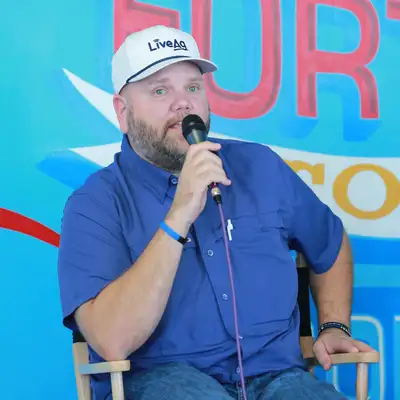
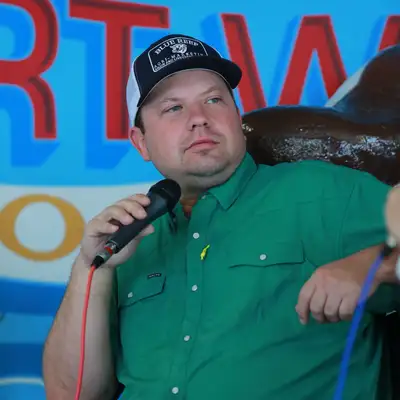
Welcome to the "We Live It" ranch and livestock marketing podcast, where cattle market intelligence meets ranch-ready wisdom. Join hosts Ty deCordova with LiveAg and Casey Mabry with Blue Reef Agri-marketing as they bring you straight-talk market analysis, proven strategies, and insights from industry leaders who understand ranching isn't just a business - it's a way of life.
From livestock market trends to cattle management practices, each episode delivers actionable knowledge to help take your ranching operation to the next level. Whether you're in the saddle or in the truck, tune in for conversations that matter to modern cattlemen. Because we don't just talk about the cattle business...we live it.
I didn't grow up in the Angus business. My mom and dad had a very small commercial cow calf operation. That's where I kind of developed a passion for cattle and had the opportunity to work. But we weren't seed stock breeders and we certainly weren't Angus breeders. When I went to work for the Missouri Angus Association, my wife and I were renting a little house and I bought four Angus cows and we didn't have any lease ground or we didn't own any ground.
Josh Worthington:That little rental house had about a three quarter of an acre yard with it, and we turned those four Angus cows out, in the yard, and asked permission later, I guess you might say from the landlord.
Announcer:That's a head off. We live it. The live ag podcast. Quality cattle deserve premium prices. Consigned to a live egg video auction and capitalize on today's strong market demand.
Announcer:Our upcoming auctions are on your screen and available online at live-ag.com. Contact your local rep to get started. Now, here are your hosts, Ty De Cordova and Casey Mabry.
Ty deCordova:Welcome back to the We Live It podcast. Casey, couldn't be here today. He's down in, San Antonio with the kiddos showing hogs, but I'm joined today with Josh Worthington from Worthington out of Dadeville, Missouri. Did I say that right, Josh?
Josh Worthington:That's right.
Ty deCordova:Yep. Dadeville, Southwest wanna welcome you to the program. Kind of fill us in, Josh, your background, your family, kind of what that all looks like. We're pretty big on talking about family and kiddos on here. We kind of like to talk about our show animals and all that.
Ty deCordova:Me and Casey bounce back and forth to that a lot. So, kind of fill us in on on what all you got going there.
Josh Worthington:Yeah. So probably a lot like you, our life revolves around around kids too right now and a lot of playing basketball. Seems like we're we're at a gym somewhere every night. So I got two boys in high school. So and one more in junior high and he's kind of playing on the weekends and they play, it seems like almost every night of the week or at church or something, but going all the time.
Josh Worthington:In a similar fashion, chasing kids all the time. As you mentioned, my wife and our three boys live here in Dadeville, Missouri. It's in the Southwest corner of the state. That's always been our home. My wife and I grew up, went to school here.
Josh Worthington:We're high school sweethearts. She's the only girl I've ever dated and tell people I like to get it right the first time and just leave it at that. So really fortunate there. We were apart for just a little while while we went to college, different colleges, and got married shortly after college and, and, started, started raising a family. I'd spent a lot of time in FFA growing up and was really active doing that.
Josh Worthington:I actually got to serve as the state FFA president here in Missouri in 1999. Ag education, those things were really vitally important to us. And I went on to Missouri State University and actually got a degree in ag education. Was going go be an ag teacher and kind of just right at the ninth hour had an offer to go back and had a donor be forced to go to grad school and teach some classes there in the beef department, help with their beef program. That kind of launched us into the career we enjoyed for eleven years working for Missouri Angus Association as their general manager.
Josh Worthington:So that was kind of the start of who we are and kind of where we come from.
Ty deCordova:So you started your career at the Missouri Angus Association. So you've had a passion for genetics for a long time, it sounds like.
Josh Worthington:Yeah, I think genetics have played a vital role obviously in building Worthington Angus. Think at that time when I started working for Missouri Angus Association, it was really this concept that could go out and work with people. I wanted to be involved in the cattle business. It was a little bit what took me down the road of an ag education degree was the adults in my life growing up that I'd seen really daily involved in agriculture and in cattle business were ag teachers. And so that just seemed like the logical fit for me was to keep trailing them.
Josh Worthington:And when I had an opportunity to go back to Missouri State and work there with the beef program and get my graduate work done, that's when an opportunity came to go to work as the GM from Missouri Angus Association. And several people have heard the story, but when I applied for that job, my advisor was really just encouraging me to apply and maybe get an interview and just to get some interview experience was really what we were going for. Offered the job and it was a dream job. And so, yeah, the genetic component of the cattle industry was important then, but when I took that job, it was more about connecting with people, serving that membership, just really kind of opening my eyes and scope to what the beef industry entailed. And so I'll forever be grateful for the time I got to spend there.
Josh Worthington:It's a great group of people here in Missouri and it's a really active state association. We actually had another full time employee that helped me a lot and published monthly magazine and managed sales, went to all the shows for the membership and lots of herd business and just an opportunity to work for that membership, but also learn a lot from that membership.
Ty deCordova:Yeah. That's pretty neat. Like you said, you kept talking about the relationships that you built there and then that has to in turn have helped doing what you're doing now. It's this industry is a relationship business. We talk about that all the time, but you also have to produce a good product.
Ty deCordova:So just kind of get in and talk about what you're producing or what your, what your goal is to produce and how you see yourself in the future. I But forgot one thing before we get into that, you just was awarded the young Angus breeder of the year award and kind of what does that mean to your family? What does that mean to your organization? I mean, your operation there?
Josh Worthington:Yeah. So, first very unexpected. We were nominated by somebody else and then got the call that we had been nominated and actually had received the award. I remember the call very well that came from Mark McCulley. I told him on the phone, you will rarely find me not knowing what to say or kind of speechless, but I was legitimately kind of speechless in that moment.
Josh Worthington:And a lot of it stems from just where our program began to then be recognized very kindly by the American Angus Association that way. I didn't grow up in the Angus business. My mom and dad had a very small commercial cow calf operation. That's where I kind of developed a passion for cattle and had the opportunity to work. But we weren't seed stock breeders and we certainly weren't Angus breeders.
Josh Worthington:When I went to work for the Missouri Angus Association, my wife and I were renting a little house and I bought four Angus cows and we didn't have any lease ground or we didn't own any ground. That little rental house had about a three quarter of an acre yard with it. And we turned those four Angus cows out in the yard and asked permission later, I guess you might say from the landlord.
Ty deCordova:Just saying how the landlord take that.
Josh Worthington:Yeah. He was a cattle guy too. He was kind of scratching his head when he pulled in the next day and I had the gate shut on the yard and there were four cows walking around. My wife always loves to tell the story that she always enjoyed getting up before daylight in the morning to go to work and walking across the yard and a pair of open toed shoes, you know, and stepping in Calvin there because they were literally in the yard. Just surrounded the house.
Josh Worthington:I say all that to say, to go from that point to getting a call from the CEO of the American Angus Association that you're going to be recognized as the National Young Breeder of the Year. Pretty much. I circle back to say I was speechless. It was a very humbling moment and made possible by all of our customers is the reality because Mark doesn't call me that day if it's not for all of our customers. I'm another guy out here with my name on a sign trying to sell some bulls and our customers are what have allowed us have the growth we've had and have the success that we've had and given us opportunities to work for them and place our genetics in the beef industry.
Josh Worthington:So if it wasn't for those customers, we don't get that award. And so I don't know that we necessarily deserved it, but I tell people that our customers work really, really hard every day and they deserve that recognition. I'm very happy for them.
Ty deCordova:You know, talking about them, kind of fill us in on what a big picture of where the Grenadians When you started it, what was your vision? Did you vision where you're at now? Or is this kind of, are you headed in to where you want to be or kind of fill us in there a little bit?
Josh Worthington:Yeah. So there's a lot in that question. I mean, when we started the operation, Ty, just to back up, as I mentioned, working for the Missouri Angus Association, I considered it my dream job. Got to work for a great membership. I got to go to all the shows in Missouri and a lot of the national shows.
Josh Worthington:I got to go manage a lot of sales and work the other sales. I mean, if it happened in the state of Missouri and it was Angus related, I got to be there. I mean, what could be better? The issue became that as our family started growing and we had our first son, it was getting harder to leave. When my wife and I were first married and I was leaving every Friday afternoon to head out for weekends worth of sales and come back on Monday morning or something, she didn't really care whether I was gone for a few days or not.
Josh Worthington:But when we had our first son, that got hard as he got older to leave. When we had our second son and first one was older, it was getting really hard to leave. And then when, you know, we knew we were gonna have our third son, we'd kind of start putting in place that exit strategy. That was critically important for us. It was difficult to leave a dream job.
Josh Worthington:My dad's told me my entire life, put God first, family second, everything else third. And so with that in mind, it was hard for me to be gone probably 40 weekends, 45 weekends a year at that time to sales and be gone on Sundays when I wanted to be at church with the boys. And so that was the driving piece that made us say dream job or not, we got to find the exit strategy. So if you're going to leave your dream job, the next thing you're going to, you want, you don't want to downgrade. Right.
Josh Worthington:And so what could be better than that? And so we just started dreaming big, right. And figuring out, we get into production agriculture? We'd been growing those four Angus cows a little bit over the time when we bought them. I don't know that the goal in mind was we're going to grow this seed stop operation, have multiple sales a year and do all those things.
Josh Worthington:But as we saw a need for an exit strategy, that became the mission. We're going to grow this operation. So I say all that to get to the point that once we realized that was the mindset, our program always was built on the concept of how do we serve customers. And in particular, we've spent a lot of time focusing on our commercial bull customers. That's not to dismiss the folks that buy registered females or seed stock breeders that buy bulls here because they do, but I knew that the industry from a commercial standpoint was huge.
Josh Worthington:Right. And a seed stock business was a really little piece of that. So there was more opportunity to serve the commercial customer. And so we wanted to be tied to that. I'd seen that with operations for multiple breeds that have been around forever.
Josh Worthington:They really did a good job of serving commercial producers. So as we started building the program and formulating the concept for the program, the tagline on our first ad said, discipline plus proven genetics creates value. And that discipline kind of represented who we were. We were very focused people. I certainly am.
Josh Worthington:You don't start with four Angus cows and quit your day job when you're 33 if you're not going to be pretty laser focused on what you're trying to accomplish. The discipline was kind of about us. The proven genetics represented the cattle. We wanted to be able to deliver a product. And if we said it was a calving ease bull, it had to be.
Josh Worthington:If we said we could increase marbling, it had to be. And so proven genetics represented that. We thought if we were disciplined in our breeding decisions to use proven genetics, we could then create value. And so everything we've done has been based on that mantra and we can kind of dive into more detail what actually the specs of kind of the program are, but it was that mantra that built the program.
Ty deCordova:Yeah. Yeah, let's do, let's kind of dive in on as far as your bulls, I mean, what you really truly, what is your number one focus on them as far as, is it carcass? Is it maternal? What is Yeah.
Josh Worthington:And so first I would say there's not one focus. It's the spectrum of the beef industry because we serve a lot of different customers and a lot of those customers are small to midsize in nature. So if they come here and buy a bull or two, that bull may need to very well be all of those things you just listed. He may need to be the calving ease bull, the growth bull, the maternal bull to make the replacements. And by the way, we're in the beef business, so he better be pretty good at carcass too.
Josh Worthington:Right? At the end of the day, that's what we're producing. And so we kind of look at it, can we do all of those things? And we believe that we can. We have some different places where we dive into more detail and produce some genetic lines that are maybe more specified to a particular route, whether that's a maternal focus or a terminal focus, but we can do those things.
Josh Worthington:We always talk about the fact we want a calf to calve easily, a cow to calve easily, to produce a calf that grows rapidly to a desired end point. And that's different for some of our customers. The desired end point for a customer in Southwest Missouri is different than the desired end point for one of our customers in Texas or Arizona or something like that. But we want them to grow rapidly to whatever the desired endpoint is that our customer has identified. We want them to then produce as high quality carcass as they possibly can.
Josh Worthington:And that's a big nucleus of what we've built this program on is the fact that we know all the product we help produce through our bulls. It's going to be beef that ends up on somebody's plate. It's an eating experience and it has to be a really good eating experience every single time. We take our responsibility as a genetic supplier to do that very, very seriously. So after those cattle calve easily, they grow rapidly to a desired end point, they produce the highest quality carcass possible.
Josh Worthington:We want them to lead a set of daughters in the herd that not only replicate the process we just described, but improve it every year. We don't buy replacements. The mates to these bulls are the next generation of cows here, and they have to get better with every generation. They have to work on fescue. They have to breed AI out on pasture in about sixty days.
Josh Worthington:We give them those specs that job to do. And if they can't do that, then they enter the supply chain and become, beef for someone.
Ty deCordova:You answered a lot of my other questions all right there in one deal. But that that's good. And the next one, was focused on your cow calf producers. I mean, what feedback have you got from them as far as performance from your calf crops and all that kind of, do you have that?
Josh Worthington:Yeah. And I appreciate the question and it's fun to talk about because it's different from customers. Just like there's some variety in the bulls we offer. There's also variety in those customers and what they're actually after. And so when we get feedback from customers, the first thing we're trying to figure out is we have notes on what they came here to get.
Josh Worthington:And so when we're following up with them, the first question feedback we want to know is did we deliver what they came to acquire? So if that was a calving ease bull or two that they took, put out on a set of heifers, when we're following up with them, how'd calving season go? Did those calves come on assisted? Did they perform like we said they were going to? We're confident the answer to that's going be yes, but you don't know until you ask the question.
Josh Worthington:And so we want all that feedback. We have other customers that are retaining ownership on those cattle all the way through on the grid. We're looking at kill data from them. They have a very specific spec that they're trying to improve upon or reach, whether that's marbling, rib eye, carcass weight. So we can look at that data and see if we're meeting the metrics that they came in here trying to accomplish.
Josh Worthington:You can't really fulfill anybody's desire and meet their needs if you don't know what the needs are. And then you don't know if you met them or not if you're not asking the question, if you don't have the follow-up. We're not a huge operation. We have two full time guys here, Ben Van Hoosier, Justin Sissel that work with us every day, just so I can spend time with customers. We spend time in livestock markets, a lot of time in livestock markets.
Josh Worthington:We produce affidavits for all of our customers. If they're going be marketing on video somewhere or in a livestock market that has the genetic information about the bull battery that they've purchased from us, we also compile all the vaccination records. We can buy any nutrition records, date wean, the age of those calves. We put all that on a single page affidavit and email that out to buyers that are interested in purchasing calves out of these genetics. We send that out to the livestock markets or the video market that's marketing their cattle so they have that information.
Josh Worthington:And so those are all the things in terms of feedback we spend. I mean, a lot of times we try and be sitting right next to our customer when they're marketing calves. So, I mean, at the end of the day, that's a big piece of the feedback. If it's the kill sheet that comes back when they harvested those cattle, if it's sale day at the livestock market or sale day at the video sale, we want to be a part of that. And at the end of the day, that's the piece of feedback that's most important to these customers is, are they making money?
Josh Worthington:Did we help better their program and better their family?
Ty deCordova:Yeah. That customer service is the key in everything that we all do. I mean, if you don't have that good customer service and that good relationship with your clients, it's hard to keep them. And getting that feedback, it's good or bad, you need both. Because the only way to make your program better is receiving the bad and not doing that again.
Ty deCordova:And that's neat that you reach out to them guys and ask them and gals and ask them, okay, did we meet your criteria? And if we didn't, okay, what did that look like and what do we need to improve on? That's just, that's how you get a long term relationship. And that's pretty neat to hear what I'm saying. I was going to ask the next question I was going to ask was what makes Worthington stand out from the, from the rest of the bull breeders out there, but you've answered a lot of that in just your customer service.
Ty deCordova:I mean, you have the time and you spend the time reaching out to your customers, asking those questions and really wanting the feedback, wanting to listen to them, not just talking to them, but listening to them as well. And that's tremendous in everything that we do.
Josh Worthington:I think we learned a lot of that when I had the chance to work for Missouri Angus. I mean, it's kind of my job to listen to those breeders. What programs did they need? What did they need service from Missouri Angus Association, to help them with? And so transitioning to this job, that just kind of came with the territory.
Josh Worthington:What do you actually need? And if you listen, customers will tell you, and that's not unique to the cattle business. That's any business. If you listen to the customer, they'll tell you what they want. I mean, the big picture of the industry we're in, if we listen to the consumer, they've told us they want the highest quality product they can get.
Josh Worthington:That's why demand is at a forty year high and they're willing to pay for it. Mean, that's the neat thing. There's things I want that I'm not willing to pay for, but the consumer said, we want a really high quality product, a prime type product, if we can get it. And by the way, we're willing to pay for it. And so we listen to that and then try and provide the tools for our customers to go out and create that product, then help them market that product and they get rewarded.
Josh Worthington:I told you when we started that our kind of the mantra that we lived by was discipline plus proven genetics created value. And as we've grown and matured in our program, we've kind of added the concept to that. And then it's our job to help you capture that value. We built the nuts and bolts to create the value. Now we're going to dedicate every waking moment we have to helping you capture every bit of that value that these farmers and ranchers have went out and busted their tail every day.
Josh Worthington:And I grew up in a small beef cattle operation where mom and dad were both working multiple jobs off the farm. And so I think about that as our customer. And when they come here and make a purchase, it's a big deal. I know it's a big deal to them. And so when they're marketing calves, whether they're taking 10 calves to the livestock market or 200 calves, or they're marketing 300 calves on video, it's a big deal to us because that's a big day for them.
Josh Worthington:That's sale day, they've made an investment worthy to Angus. We're going to go get everything that we have to help them capture value in those genetics.
Ty deCordova:Yeah. And we, even though we do a lot of the same, just in a different aspect. So that's, that's what we'll kind of talk on next is, is you do stream your, you do stream your bull sales on, on our online bidding platform. That is another way we bring customers your way and give you a lot broader scope of reaching different areas of the country where they don't have to be there on-site. How is that
Josh Worthington:and why is that important to you? Well, so we've always provided an online platform for our sales and we had the opportunity to start utilizing live ag. We did immediately. And really that's back to the people that we talked about.
Ty deCordova:Support- You're bring Hannah up in a minute. That's
Josh Worthington:right. So the rep we'd always had, we wanted her to be here. Hannah's been a great piece of our program, right? The people who help us every day on sale day to help make our customers comfortable, that help go the extra mile to make sure they have everything they need. And in this scenario on that online bidding platform, that's a relationship and we don't want to lose that relationship.
Josh Worthington:And so that was a fairly easy decision for us because of how important that type of customer service is, just as you mentioned. And we deliver cattle for free all over The United States. And so our online platform is very important to us because we take cattle to Oregon, we take cattle to Virginia, we take cattle to Wisconsin, we take cattle to Texas. And so a lot of those folks have become very comfortable with watching videos of these cattle. They know our program.
Josh Worthington:We have a, builds a relationship where they may not be able to be here on sale day, but they need a platform that they can get on easily navigate, platform that they trust and a platform that serves us on the other end on sale day. So that's been a good relationship for us. But to your point, again, all people, all customer service, and it is something we love to provide because it has broadened the customers that we can reach. We started this discussion talking about all the things we do with our kids, whether it's going to shows or chasing them to basketball games or two weekends ago, I spent seven hours walking around with my 11 year old competing in a squirrel hunt derby, right? So we never know what we're going to be doing with our kids, but my customers live that same life.
Josh Worthington:They're And if they're three or four states away, maybe they're just thirty minutes away, but they're at their kid's ballgame on Saturday of our sale and they're sitting in the stands bidden buying bulls, that's a great service we could provide so they can continue to live their life and not miss those moments that you don't get by. And that's, again, that was the exit strategy of why Worthy Today exists is I didn't wanna miss those moments. And if we can provide a platform so our customers don't miss those moments, that's a big deal.
Ty deCordova:Yeah. Well, we appreciate that. And Hannah's been really good to us, I suggest those that are on the fence out there reach out to Hannah or one of the team members and look into it.
Josh Worthington:Yeah. And I would follow-up with that just to share the story. And I know this Live Ag podcast and we use Live Ag, but it's besides the point. It's just, it's a true, we've had pretty good internet service at our sales site. We've never really had an issue.
Josh Worthington:My wife handles all of it. I don't have a clue what's going on. But shortly before the sale this last year, something happened. We weren't getting all the readings that we needed. Hannah's making calls, she's trying to get everything dug out of her suitcase.
Josh Worthington:Margo shows up all of a sudden and there's lighters up in the air. There's another receiver and antenna in the air and we've got perfect power. And so the thought that all those people cared enough, that it's a big day for us and they were gonna do whatever they could to make sure that we were taken care of, you don't forget those moments. Yeah.
Ty deCordova:It's y'all's livelihood and that's what everybody's there for is to, I mean, that's your big day. I mean, we gotta do all we can to do to make that successful for y'all too. Just appreciate y'all giving us that opportunity. Yeah. One, one other question I want to kind of touch on here.
Ty deCordova:What advice would you give? I mean, started off in this deal as not being a Angus breeder, not a seed stock guy. So if there was a young person out there that's coming up through the ranks in college and going through one of the associations and they want to get started on something like this, or want to have the chance to do something, I mean, it's a proven fact that they can be done. You do not have to be raised up in this, in the breed to do it. You've done it.
Ty deCordova:What kind of advice would you give them? I mean, what structure, you know, kind of talk through some of that.
Josh Worthington:It's funny you ask that question. It's FFA week for a lot of folks. I was actually just at a neighboring town in an FFA chapter yesterday, giving a little talk for one of their classes. And this is one of the questions that was asked, it's a vital one. And I always kind of start the answer to a question like that by kind of prefacing what a lot of these young people have heard.
Josh Worthington:And so you can stop me when I say something you haven't heard before, when we think about agriculture, people in the cattle business, farming and ranching, there's a lot of folks who kind of describe that as you work three sixty five days a year, seven days a week, rain, snow, sun, and shine, you never get a vacation, you need to make sure you're up before all the rest of your neighbors and don't let anybody ever think that you're making any money because that's not good at all. You're barely getting by. And the only time you ever have money is when they cash in your assets at your funeral. And in the same breath, and in the very same sentence, hear people follow statements like that up with, I just don't know why the next generation's not coming back. Well, it's because they listen.
Josh Worthington:They listen to us say that forever. And I heard it too. But separate the profession that we're in of ranching, if you visit with any young people and describe that as your career and your job, that don't make money, work harder than everybody else, half the people you're serving think you're trying to kill them with the product you produce, all these things, I don't care if it's ranch or not, they're probably gonna go, I don't know what that is, I doubt. And so I think that's the first thing we have to do is change the narrative in farming and ranching. You can have a good family life.
Josh Worthington:You can make a good living. If you wanna take your kids to the Grand Canyon, take your kids to the Grand Canyon in the summer. If you want to follow your kid to the show in the summer, go do that. If you want to go to the baseball and basketball game, do that, create that pathway and oh yeah, you can still be engaged in farming and ranching, make a comfortable living. Does it take sacrifice in other places?
Josh Worthington:It absolutely does. This is not necessarily an easy business, but anything where you're an entrepreneur or pursuing something as a first generation business of anything, whether it's an Angus breed or not, it's going to come with some sacrifices. You have to pick which things you're not willing to sacrifice. And those are the things you just don't give up no matter what. But I start the conversations with young people like that because I think we have to get young people wanting to come into this first and then we can start having the discussion of how do we do it.
Josh Worthington:The way we did it is not going to be for everybody. I think the one thing that we did do that is probably for a lot of young people that are trying to get in the business, especially if you're not coming back to an established operation, is you're going to have to be creative. And it may not look the way you thought it was. We grew our operation the most and the most rapidly through a lot of embryo transfer work. We didn't have to own those cows.
Josh Worthington:We had cooperator herds that were raising those embryo calves up till weaning time for us. We could go back then purchase those calves at weaning. So it was kind of an installment plan for the purchases. Right. And I didn't have to have all the land to house those cows that were raising the bulls that I needed to put in our sale.
Josh Worthington:So I didn't necessarily see that on day one when we started, but that was one of the ways we found to kind of work through some of those things and grow. The other thing I would tell people, we were very laser focused on what we wanted to do. Our first sale, I built it backwards. I said, we've got to have between forty five and fifty bulls. I need at least 30 or 35 females.
Josh Worthington:Okay. To get that, we need this many cows and this many embryos, this many years in advance of this date, because that's the exit day for Missouri Angus. We've got to have our sale nine months after I leave Missouri Angus because they're going to quit paying me when I leave them. And we only have so much reserve. So here's sale day.
Josh Worthington:Here's how many lots it takes to pay the bills. Here's the pipeline we need to create that many lots. So it was just building the plan like that and then staying laser focused on the plan. I didn't spend a lot of time trying to figure out, is this possible? I said, this has to be done, So let's get to doing that.
Ty deCordova:Let's do it.
Josh Worthington:And so I encourage young people and I worked through it with a young man at this little neighboring town during FFA week at a talk the other day. I said, what do wanna do in life? I said, I want a ranch.
Announcer:I said, do you have a ranch to go back
Josh Worthington:to yet? He goes, no. I said,
Announcer:does it feel like a big hill to climb? He goes, absolutely it does. And we kind of walked through it.
Josh Worthington:If a guy was trying to jump into it full time and you had to buy the cows, land and the equipment, and all of a sudden you were out $12.15, 20,000,000 to get to a three to 500 cow herd. And if you were starting from nothing, well, that's a big hill that would feel pretty impossible to climb. But then we paused and said, he has a job lined up or an opportunity for a job. He knows about how much he's gonna make, what his bills are. And we kind of worked that budget backwards.
Josh Worthington:Like, can you find 200 acres to lease? Yeah. Can you run about 60 cows in rotational grazing system on that? Yeah. Here's your expenses on it.
Josh Worthington:How much money are you gonna profit? We laid that up for about six or seven years. I said, now do you have the down payment to make on that first pretty good sized farm to head you in that direction? He just kind of looked at me like, oh yeah, yeah, we can do that. And so I don't mean to make light of it that it's that easy.
Josh Worthington:It's not. It's a capital intensive business. It comes with sacrifices. I tell people all the time, if you're a first generation business person or an entrepreneur, it comes at a very, very great sacrifice, a high price that has nothing to do with money and few people are willing to pay. Members of our family paid it.
Josh Worthington:My sons have paid it at times. But you have to understand that exists, put that aside and say, we're laser focused on right out here. What's the next step to get to the next piece in the puzzle and then just keep building from there. So when you lay it out like that, young people, if you hear nothing else, know you can get engaged in production agriculture, you can make a good living in production agriculture, you have a great opportunity to raise your family in production agriculture. And if you hear nothing else in this discussion with Ty, and I hope you hear that.
Ty deCordova:Yes. And love what you do.
Josh Worthington:That's right.
Ty deCordova:Man, I appreciate you coming on today. Go ahead and give us those dates. You got one coming here at the March, correct?
Josh Worthington:Right. That's right. Our eleventh annual spring sale will be March 28. We'll have about 300 head. That'll be approximately 115, eighteen to twenty month old bulls.
Josh Worthington:And then we'll sell about another 50 or 60 registered females, about 125 commercial bred heifers that have all been DNA tested and bred charred bulls. We have a lot of those fetal sexed and grouped up accordingly. Hopefully something for everybody, but we're looking forward to those bulls. Like I said, I guess you guys kind of call them age advantage. We always sell 18, 20, 22 old type bulls in our sale and just feel like we get along with Guaranty those bulls for a full year for people.
Josh Worthington:And I said we deliver them for free. So just trying to build a product that really goes out and serves our customer base that they can get the most good out of right away. So we'd certainly invite everybody to that again on March 28 and it's right here at our farm in Dadeville. We have a presale dinner and educational forum the night before our sale, have a certified Angus beef steak dinner. And so we invite everybody to come in, have a nice informative meeting for our customers, new and old, and it gives them a chance to kind of preview the sale offering and join us for kind of a laid back evening.
Ty deCordova:Good deal, Josh. We sure appreciate you and appreciate your business. Appreciate your time for being on here today and just kind of walking us through where this is It's just a pretty neat story. I always like to visit with those that are self made like that. Thank you everybody for tuning in here to the We Live It podcast on all the social media platforms.
Ty deCordova:Don't forget to hit the like and subscribe button there on all of those, and goodbye and God bless. Thank y'all.
Josh Worthington:Thank you, Ty.