Subscribe
Share
Share
Embed



From the award‑winning team behind Cloud Realities, Realities Remixed explores what happens when people, culture, industry, and technology collide, because real breakthroughs rarely come from technology alone.
In each episode, hosts Dave Chapman and Rob Kernahan dig beneath the surface of innovation to understand what’s truly shifting. They speak with leaders, practitioners, vendors and thinkers across industries to explore how technology reshapes human behaviour, organisational culture, and society, for better and sometimes for worse.
Web - https://www.capgemini.com/insights/research-library/cloud-realities-podcast/
Email - realitiesremixed@capgemini.com
It's got a bit of rig to it. like Dr. Tiff. thing is if you make people call you doctor, they expect you to be able to help them or fix things. Oh, have you ever done that? Is there a doctor on the plane? stop them with APA formatting and they expect you to have some utility. It's connected to the doctor thing. Zero. Is there a doctor on board? Who needs changed? Anyone need organizational change? Anyone having trouble innovating?
(00:36.78)
I'm Dave Chapman. I'm Esmee van de Giessen. I'm Rob Kernahan, and this is Realities Remixed, an original podcast from Capgemini. And this week we are going to look into the truth of remote working, different leadership styles and the gaps that may exist.
Later on in the show, I'm delighted to say that we'll be talking to Dr Tim Curry, disruptor, author, innovator, advisor, lots of roles, great conversation with Tim coming up. But before we get to that, anyone seen the Bone Temple yet? No, I haven't actually. It's one I want to watch, but not got there yet. The third in the trilogy. Well, it's the sort of, it's the second in the sequel.
Sorry, second. Yeah, that's right. Yeah, sorry. if you don't know what I'm talking about, Esme looks very blank first. I just started the new season of Bridgerton. It's a bit different to that. Yeah, you might find it's at the other end of the sort of artistic spectrum. Yeah. It's been out a few weeks now and it's the second of the sequel trilogy to 28 Days Later. Crackingford. 28 Years Later came out last year, which was Danny Boyle with Alex Garland.
And then the new film, which came out in January this year, if you haven't caught it, which is Nia da Costa also working with Alex Garland. What a film. Like really, really good. The original premise of the series, Killian Murphy on the bridge in the middle of London wondering what's just happened. mean, like a seminal point in moviemaking is something very, very different and the Danny Boyle style.
underneath it all and then that's fired off all these other films, all which are very good. Yeah, I think the key to the new ones are Alex Garland writing all of them, I think, really. And he just goes to different places, like really interesting stuff. And the two central performances that everyone's banged on about, know, but Ray Fiennes and Jack O'Connell's central performance is just amazing, like properly amazing.
(02:47.694)
I mean they are, mean, Ralph Fiennes though. What an actor. Very good. English Patient. Fantastic. Scott. Anthony Mungala director. film is, well won eight Oscars. was one of the biggest Oscar winning films of all time. absolutely outstanding, but it's not talked about as much as like the others that have done the big Oscar runs. Slightly forgotten, I would say. I do find it amusing that that's, I don't know what that says about you, but that's one of your favourite films. It is a bit, did that surprise you, David? I can only vaguely remember it, but it's a big sort of soft romance thing, innit? I don't wish to underplay it.
No, it's a tragedy of what could have been. It's much closer to a film of tragedy, which is all the potential that was there. You can like a nice emotional film, Rob. all right. Be a sensi and just get into it all. No, no. is all the way through the film relationships form and they get torn apart. Which like life, isn't it? It is. It's dramatic. Also, The photography and cinema photography in it is absolutely outstanding. Ez, how's Bridgerton? New season? I love it. it's so good. and what I also love is that so many connections like friends pop up like, have you started? Have you started? And I love that. There's also an entire community going on, right? If you have a new season that a lot of people, did you watch season episode? And you actually feel like, shh.
I still need to watch it because otherwise I'm not able to join the conversations. this of course is the one of the things that streaming has done a bit of a disservice to is that, you know, the moment in the week that the new episode of whatever show you're watching drops or whether it's a live event that you know that almost everybody in the country is going to be doing the same thing at the same time. And that creates a weird sort of communal feeling, doesn't it?
(04:54.092)
I don't know, because now a lot of streamers go back to that, to do it once in a while. really don't like it. You it all in one go. Do you? Yeah. So you can gulp it down. Yeah. So I'm going to Bridgerton. If you ask what I'm going to do this weekend, I'm going to binge Bridgerton. Now, before we get onto the actual main subject matter of today's show, I want to go a bit deeper on that, which is when you say you're going to binge watch something, what's your definition of that?
because some people are like, well, I watch two and then I limit myself. I limit myself to two and then I'll go back to a couple of, and I'm like, bullshit. I'm to do five. yeah, sorry. If you limit yourself, it can't be a binge. That's true. A binge is when you don't limit. Yeah, yeah. You can't have the two. So if somebody says I'm going to limit myself, well, you're not binge watching by very definition.
How would Netflix or other streamers would actually see that? When do they decide, that person is binging? this is the debate about the way the streaming services launch. So a couple do all the episodes at once, drop it, have at it, and others have make you wait for weekly cycles. And they keep you engaged that way. And I'm not sure which one creates more excitement because after you've done a binge, you can be a bit deflated about a program. Whereas if you're anticipating each week,
what's going to happen, then that maybe builds a little bit more suspense. to say though, like, well, let's say one way they did do that recently, which is Pluribus, right? I think it was one of our favorites from last year collectively. Yeah, very good. Tremendous thing. I don't think I could have it weekly. I literally watched Pluribus in two lumps of five. You know, like I just absolutely hammered through it in probably less than 12 hours, like one night. And then I got the next morning during the Christmas betwixtness bit.
So like watch loads of it, went to bed, slept, got up the next morning, watched the rest of it, it's excellent. What's perfect about that is it is in the sense of storytelling very novel or is novel by very definition in the sense that not seen something like that before. It's very well thought out. Vince Gilligan strikes again with good storytelling. Brilliant. mean, I've got, I put a small amount of money on this could be his best bit of work, but let's see how it pans out in the next few seasons.
(07:16.224)
Anyway, on that note, let's get on to today's major topic, which is the trust gap that may or may not emerge when you are working in an organization that is predominantly remote. Now that might be an organization that post-COVID has ended up being remote or they haven't moved to a hybrid model or something like that, or it might be an organization...
that it's just been remote forever. It's predominantly set up to be remote. There's a lot going on in the West Coast of the US that hire people all over the world and 100 % remote. And I think the question we're going to ask ourselves is within that sort of organization, what's real and how does trust manifest itself? So you would say that in a traditional face-to-face situation, the four of us work together.
And because we see each other on a daily basis, because we're kind of going through good and bad things together, and you know very quickly when someone's got your back or helping you out or whatever it might be, a deep trust starts to emerge and that can be with across the team, like with your lateral teammates, or it can be up and down a team with your manager or leader, whoever that might be. Es, I was going to come to you.
the trust system for you? I think for me it is about being able to be your true self. You that you dare to show who you are when you're vulnerable or if you don't know anything or if you ask for help. I think those are signs that there's room for connection and it opens up the floor for others to do the same.
And it doesn't mean that it should all be fancy dancy all the time. I see that a lot. yes, we as like we're spending in the bar every day all day, although some days we are actually literally, but it really is about having healthy conflict. Are you able to do that as well? I think that's also a sign of we're really trusting each other. We can really have a good discussion on work or on the topic and not so much on the person itself, obviously. there's an element there of
(09:37.152)
It doesn't have to be conjured as a result of buying everybody drinks or, you know, the equivalent all of the time. There's more of a natural authentic element to it, I think, that kind of comes through, you know, being part of a team and all of those sorts of things. But also there's an element of, you know, being your true self within that situation. I think that's true. If you can't really feel like you're being authentic, then honestly, how real is the situation that you're in the middle of?
Rob, when you started to work remotely, the way you sighed there, it probably looked like you were about to be set up for something. Well, normally that's what happens, I was going to ask you a legit question this time. Yes, David. What questions do you have for me? Yes, I'm ready. Go. How do you think being remote changes some of those dynamics? I hark back.
to an episode we did with Dave Snowden. Those who maybe not have listened to those episodes, he's the one who does the Kenefen framework and is part of the institution, talks about complication complex. And he said they've tried to measure human performance when you're all together in a room and you're remote. He says they don't know why, but they see the output being better when everybody's in a room together. So there is something there about local human connection.
And then if you've always been remote, do you really know the human? Have you properly built trust? And then you couple that with the, you arrive on a meeting, the agenda starts. You don't often get the small talk where you learn about the human, the conversation, where you understood what they did at the weekend or what the family's up to and that sort of stuff. What they're excited about doing next, David, as an example. And so I think it's got to be a balance. You've got to know the human properly if you're going to get proper trust, but...
in the modern world and geographical constraints, et cetera, I think you have to be able to be better at working in remote circumstances to keep going. And in fact, I did some research for this one, David. have some stats and figures. mean, this is unprecedented. So trust as an impact on a team. So the overall measurements are if you don't have good trust, lower collaboration, more friction, worse resilience in the team. But the statistics were a team that trusts properly.
(12:00.238)
is 15 % more performant. It has 41 % less absence for a reason. 41 %? 41%. And here's the best one, 59 % lower attrition on average. scientifically has been measured. So it's not a thing that is soft in inverted commas. It is a thing that has actually been measured as trusting teams do get better results. And 15%, if you were offered a 15 %...
productivity boost or performance boost in any team, you'd say, love that. I think the science says trust is better, but I suppose the whole point is how do you form it when you've got a bit of a, you know, all the constraints we see today. think that ties very much into, Patrick Lansione's, right? His five dysfunctions of a team and the first base, just the first level is to have trust and then you can start building from there. And the one I will bring in, I know Mr. Chapman will be very excited about is
Simon Sinek talks about this and the US Marine Corps and he says they will take a slightly less capable person if it's a person who will form more trust with the team because the team that trusts themselves in stressful scenarios perform a lot better than one who you might not trust but has excellent capability. And so this is one of the biggest factors that affects team selection. Rob. Go on. You knocked that out of the park mate. Not only.
Not only did you come up with numbers, but you actually came up with one of my favourite models. That's brilliant. There you go. Maybe, just maybe I paid attention. Solid work there. But honestly though, on a serious note, the Cinec Marines video that's on YouTube, really worth going to have a look at. It's only about 10-15 minutes long or something. And he sets out what Rob said in a very compelling way. And do know why Dave likes it so much? It's because he uses a four box matrix to explain it.
Which is like your nirvana of if you can put in a four box matrix. Most of life problems can be explained with a four box matrix if you get the axes right. That one, the Kinefin framework is a four box matrix as well. Have you spotted that Dave? And you love that as well. I'm doing a session next week with the Kinefin framework in it. There you go. All the time. Love it. it. Anyway, let's finish off on the trust gap before we go to Tim. How did the dynamic shift in a remote working environment? Let me tee this up. I think
(14:22.604)
Well established, we have data. The model as talked about that says trust in the team, authenticity, all of those sorts of things are actually a hard driver of productivity as well as human happiness in that situation. then when you split that apart, the core aspect of building those relationships, the experience of remote working. So I hadn't done a great deal of remote work in pre-COVID. For me, I clicked into it quite quickly.
But my day's work, and you hear this talked about a lot, I think, from people is back-to-back teams meetings or choose your video conferencing platform of choice. So your day of having those conversations that you were saying, Rob, may be superficially less productive actually when you're in the office because you're moving between meetings, sometimes floors, sometimes buildings, you're chatting with people at coffee machines, all of those sorts of things. But as I think we said that...
That kind of thing is the mortar in between the bricks. when you're blasting through teams meetings, it feels like you're being hyperproductive, right? I've done like 10 teams meetings today, absolutely solid. Can't get a cigarette paper between them, knocking it out of the park. But it's quite one dimensional, isn't it? You lose all the incidentals when you go in, you see people you haven't seen for a long time. It keeps relationships fresh. You have sideline conversations.
It's better for your mental health for a lot of it because if you go back to back on teams at the end of the day, you've had enough. Whereas actually a little bit of an interaction with somebody you haven't seen in three months that you talk about something completely disassociated with work and suddenly you feel a lot better. So energised. So if you look for example, there's also a Ted video. The voice from above. It's me, Dr Mike. Hey mate, how you doing? I'm fine. Glad you could drop in.
So, so just check also on Ted, there's a person who's giving a sort of presentation around what will make you live longer, the top 10 things. And of course there's no obese. the boring stuff. All the boring stuff, but the top three is all social. So it's linked to human connectivity. It's going out and talk to people and trust each other. it's...
(16:43.278)
What's funny about it is it's something we can't measure yet. know it has an impact. It's a classic. It's like what Dave Stave said. We know it has an impact, but we do not know why. It's something we don't understand about humankind. other thing I think that eroded it in sort of post-COVID definition of remote working is the absence of trust in terms of, are people working? Are they actually doing what we said they were going to do? Like, are they actually...
productive during the day and that of course starts to erode trust in a different sort of way. I guess turning that on its head then and saying well what does good look like in remote work and how can organizations, and there are plenty of them that are 100 % remote, operate correctly?
create the right level of camaraderie and drive the right type of productivity with all of that mortar in between the bricks. With that in mind, let's go to our conversation with Tim Curry, an author of Swift Trust.
you
(17:57.358)
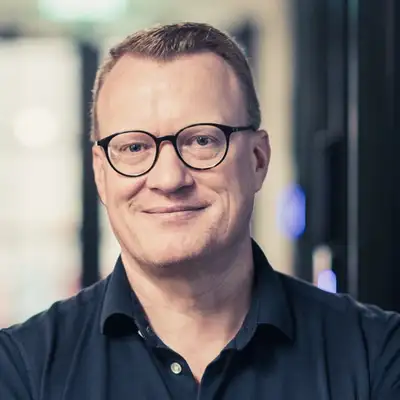
And I am delighted to say that joining us in the conversation today, we have Dr. Tim Curry, disruptor, author of Swift Trust, and is currently the chief strategy officer at InBalance IT. InBalance. InBalance. Is that like imbalance or new balance? You find customers who are imbalanced and we get them inbound. That's right. Excellent work. I like that. How are doing, Tim? Good to see you. Doing great. Wonderful to be on the show. Longtime listener, first time caller. Well, it's wonderful to have you on. yeah, we used to work together.
back in the days of cloud reach. you're still willing to come and talk to him? Yeah, well, you know, it's... How big was the HR case file? Old habits are hard to kick, actually you might recognise the intro to my book is actually a vignette about our former workplace. Is it really? I will look forward to that. Now, Swiftrust, I assume it's about the rise of Taylor Swift?
If it did, the royalties would be much bigger. I mean, that's the way I would have gone with it. Which way did you go? Missed opportunity. do think somebody goes in and thinks, a book about Taylor Swift, then goes, this isn't what I expected. Seems to be more about the trust than the Swift. Ironically enough, if you look up Swift Trust on a podcast or do a search or on a pod app, you get a lot of Taylor Swift stuff back, which you have to read through.
But no, Swift Trust is a book. It's about, actually, rather specifically, it's about trust in the remote workplace. Specifically, based on my dissertation that I did, was trust in the remote workplace in high-tech consulting companies. So I did research against companies that were 100 % remote and examined how trust was established, how it was built, reinforced, how it was repaired.
sort of what were the implications for the workplace and for the people within the workplace, you know, longer term. And was this particularly inspired by changing working habits come out of COVID or was it more that you'd seen kind of remote organizations? was very directly impacted by the experience we all had during COVID. Being in the IT industry or the technology industry, a lot of us were remote or hybrid or semi remote for decades, right? Before COVID hit. So it was a little different game for us.
(20:19.534)
But I noticed that within my doctorate program, that was supposed to be a hybrid program that due to COVID, it was 100 % remote. so I saw a professor struggle. You have this image, this is actually an interesting aside. You have this image of what, you go back to your side at a certain point in your life, you're gonna invest the time and the energy and the money to go do a doctorate program. And you have an image of, I'm gonna be sitting in this,
Don't break it, please don't break the image. This lecture hall and getting this amazing lecturers and everything's gonna be a Ted talk every day. And it's not the way higher education works. And it's certainly not the way that higher education responded to COVID. some works like anything, like any organization, some of the professors were amazing. a couple of them were my mentors through the process and the inspiration for coming up with the book.
And some were, you know, using Zoom for the first time on their laptop, you know, in their lake house and it didn't work. I bet that created some very boring moments and also some comedy gold in the middle of that where things didn't go. I always remember in COVID when they did the legal thing and the guy comes on and the judge there and he's got the cat overlay activated and he can't disable the cat overlay. So it's something very serious and illegal.
situation they're having this chat about. the judges saying, sir, you do realize you've got a cat. And then the guy says, I'm not actually a cat judge. the goes, yeah, I kind of worked that out. But the other half of what you said when you were introducing your book there was specifically in tech consulting firms. What around that was enough of a signify to call out? Yeah, right. So the research was in tech, but obviously it is.
the remote workplace now has a much broader impact. when we work remote, some of the things that as I got into the research around this topic, I found myself greatly underestimating the impact that the in-office, the before times a lot of us refer to, the in-office situation or in-office environment had on people's lives.
(22:37.23)
For instance, in the United States, one third of all marriages originated in the workplace. Really? A third? Oh, wow. That's a good start. necessarily with coworkers, but a friend of a coworker or a coworker of friend. It's the network around it. Yeah, the network around network around it. And as we all, think, are pretty aware since COVID, that has shifted very... Now it's online apps is the number one. Right. Now, that begs the question, will you...
Clearly you can build trust remotely without being in an office if that's where- Or you don't need it in the online apps case. You don't need it in the online apps case, but the motivation is different, right? So what people will risk to reveal themselves, what people will risk to engage with others is different in a peer-to-peer workplace versus if you're looking for romance, right? So in the workplace, the dynamic is much different. there was a really, I'm forgetting the, I apologize, but I'm forgetting the name of, there's a,
There's a woman who's an executive of WeWork back during the glory days of WeWork. And she was in charge of all social programs. Right, right. Social engagement programs. And they did all kinds of really interesting research. they found, you know, adding onto this concept of one third of all marriages or long-term relationships, whatever, originate in the workplace, they dug into that. And they found that the majority of people, that they met someone through the workplace or workplace adjacent, weren't
initially attracted to the person that they ended up with. So that raises a question, right? whether it's, know, whatever the initial first impressions were, those people revealed parts of themselves over time, know, layers peeling back the onion, whoever you want, whatever metaphor you want to use. And this could be applied both to, you know, in the extreme here, the romantic relationship, but it's also an peer to peer work relationship or, you know,
managers, board members, they reveal different parts of themselves over time authentically, which impacts the perception of them to that. Personality does count after all, We'll see about that. We'll get to the end. So this gets to how you build interpersonal relationships, how you that sort of fabric of corporate, organizational culture. And the depth of trust, the depth of those relationships are sort of the fabric that typically or historically has gotten an organization through tough and challenging times.
(24:59.566)
And if we're all remote and we're all operating in a more transactional, which is what Swift Trust really refers to as a very transactional sort of, you know, I trust you to do the work and you trust me to pay you if you do it. it doesn't necessarily need to go any deeper than that. really. No, it's to compartmentalize sort of very transactional level. Well, I'll join you in a story about cloud reach because you might recall this. I'm pretty sure you're in the conversation. There was one point we were looking at acquiring a
look at acquiring a company in North America. it was a hundred percent remote. And I remember at the time I was quite vociferous in objecting to this. it was like pre-clinical. And my take on it was there's nothing there. It's like, it's a series of individuals that are contracting together. And if they decide to leave, the thing evaporates. Within the work that you've done around Swift Trust, how does that?
sort of position a hole, do you think? Or is there something deeper there? So you've kind of hit on it for larger organizations. I always have to have this caveat that we're surrounded by tech folks who've worked remotely for a long time. And some might be very happy to never see another office in their lifetime. There are organizations absolutely thriving, working 100 % remote. Those organizations tend to be smaller. They tend to have a core group that work together and establish deeply
deeply interpersonal relationships and trust in the before times. Yeah, the sort of the founding vibe. The founding, yeah, the founding vibe. You know, they can finish each other's sentences, they've done this before, they're running back an old playbook. to the extent, so other remote people in that organization see, witness, experience that, and to the extent that core can extend that sort of circle of trust, circle of love, if you will, and they're also typically very sort of like tech savvy cloud native type organizations, they do quite well.
Larger organizations, not so much, right? The more traditional hierarchy, more traditional organization just tries to sort of like do this digital overlay of what they used to do before. It doesn't work. It doesn't work. Like eight years ago, they'd have been sending copy all emails to 50 people. And those 50 people are now all asking why they're not in the Zoom, right? With the camera off, stacked back to back, and it's just not really working.
(27:25.102)
So getting back to your question now, so there can be a remote culture that's built if you have that sort of seed germination of, we've got a core group that we all know each other, trust each other, and we're just going to get the band back together. As it gets bigger, though, you have to ask yourself, if you think about, we're going to, I think, talk a little bit about Gen Z and some of younger entry-level workers.
they're starting to indicate a desire to return to the office, which is sort of a shock to many people. But if you think about what their day is, know, six- Well, they might not be in even their own place, right? They might be in a house share or, like younger people particularly really struggle with that during COVID. Like we ended up opening the office just purely to give them somewhere to go. to give them somewhere to go. Yeah, if you're stacked back to back on
Zoom meetings with your camera off, right? It's not a very fulfilling, one, it's not a very fulfilling sort of existence. Two, in that environment, you tend to get very focused. One, an organization tends to get very focused on task oriented, outcome oriented, just the facts kind of conversations, right? And there's no in between. In between is when we build the trust. Simon Sinek, I'm a big fan of his. He says this all the time, trust is built in the in between.
It's not in the meeting. It's in the hallway before you go into the meeting. It's for the prep for the meeting. It's in the discussion after the meeting. And there's no in between, you just have the meeting. And the chances are that meeting is happening in a poorly engineered, in a poorly engaged remote work environment. That's happening while someone has the TV on and they're scrolling on their phone. And not only that, they may well have eight or nine pure, like back to back solid.
meetings during the day. 50 emails firing up and they're trying to get them and everything So they're multitasking while they're scrolling on their phone and with the TV on mute and you you have an attention challenge there as well. So yeah, like they're not surprisingly finding that unfulfilling and they want to work it up because they want the same things that everybody else wants. They want mentorship. You know, turns out they're going to work.
(29:38.328)
They want mentorship, want, you know, there's no observational learning of corporate norms. They want to understand what it takes to be successful. They want a career path. And they're getting none of that to poorly implemented version of that in an entirely remote. And when you did the research, was there a difference in tenure?
with people how long they would stay associated with. It's a completely remote job versus I've got office connectivity and we get together as a group. Because it feels like if they're not as invested, there's not as much loyalty, they'll flip-flop a lot more between jobs or was it not? I didn't have the runway on that, you know, because was the COVID at the time, this was all relatively new, you know, to be purely remote. But if you think about it, there's another continent.
I don't wanna make this about AI, but if you think about yourself as I am remote, I've compartmentalized my work life. I just go do these things and I trust if I do them, they'll pay me. And it's more and more task-oriented. Well, that's what's easily replaced by AI. they're not, workers of all employees, people are not unaware of that. But that also means that should,
how much am I invested in this situation? How much energy and investment I'm gonna put into this. I'm gonna be like potentially be replaced, I should be looking at what I can replace my employer with. So in a world that's already much more portable, if you're 100 % remote, AI doesn't help. And it makes it even more of a very big compounding. And if you, we can talk about RTO and things like that, but like if you're gonna be remote, you have to make sure that you're engaging authentically.
with these employees in ways that matters to them. And we can talk about how that's done, those are the ones, organizations that are successful in building a remote culture at ZDIC. So before we move on to that, and we'll definitely come to that in a second, you touched on Gen Z as a demo there. Let's say Millennial and Gen X at the moment are sort of, I guess, the predominant demos by volume that are in the workforce today. What's your sense of where Millennials and Xs are on the
(31:50.52)
to return to work or not to return to the office? Yeah, so it's a mixed bag. It's almost like a normal distribution, right? So Gen Z. So I saw some of this in my research, but also Gallup actually came out with a poll in the spring that confirmed this. Gen Z, overwhelmingly, is more in favor of a return to the office, at least in a hybrid sense. Everybody loves autonomy. Everybody loves flexibility. But at some point, you've got to live your life.
And if you're, you know, whatever, 22 to 28 or whatever, you know, for 150 years or since really, since the invention of the typewriter, that's actually when the office environment was really a thing. That's been in an office, right? That's that third of your life or more. So, um, and then as you, as you go up and go up in age, it matters less. Right. Right. So on the top end of the scale, uh, you've got, you know, cause as we all get older,
we become more specialized, more established in our field. And we need the scaffolding of the workplace much less if we're providing the scaffolding in some cases, right? And then it is also natural for your social circles to become smaller, for your family to become more important, right? And as you know, so in the middle, the millennial X, they're having young families and all that becomes infinitely more important to them than the workplace.
So it does, if you pick this just like a downward slope as the demo gets older and older in age for natural reasons. touched upon the mentoring and I think that is so underestimated. The level of, you know, teaching others, youngsters, but also the other way around for the students to learn from the youngsters. I understand that you're more established when you get older, but I would love to have that growth mindset in every age.
that you're still curious to hear what the youngsters say and think and also value that social contact? Sure. mean, I remember, you know, in as little as six to eight years ago, I had a CEO offer me a coach, right, for another role that I had been taking. Right. So doesn't, it doesn't end. But, you know, that's, that's kind of a different dynamic than all of the, like, I'll give you one example.
(34:11.342)
I had a family friend who was in college and wanted to do an internship. And I was like, course, I know I can make five phone calls of people who have consulting companies and probably could use a really bright, young, energetic person. all but one of five that I introduced her to, they all said the same thing. She's a great personality, very smart, has some skills that we could use, but we're a remote organization. What's she gonna do? Manage spreadsheets?
we don't think we can offer her the experience that we would feel good about. And the fifth one did offer her a job, but they were hybrid. And she's still with that company. But it's just, if you think back to the intern, 90 % of an internship is learning the way the world works. And you do that through observational learning of social and business interaction within the office, within customers, within the marketplace.
And you get none of that, right? If you're in today's 100 % remote world, you'd get very little of that. Before we come on to sort of building the right balance, if you like, I just want to look at the mirror for a second and talk about the leadership decisions and leadership styles in these sorts of situations. So we've talked a lot about, you know, the different demos and their perspectives and what they might or might not get out of workplace. But one of the things that appears to me that if...
there is different leadership challenges depending on whether you're running an in-office situation versus a hybrid versus a 100 % remote. What did you find on that? What are your observations on leadership change? Yeah, in the remote, in the 100 % remote environment, again, it's kind of the same rule applies. The younger, more established core that know each other from the previous, the younger company, smaller company, the larger the company, the more likely that the leader
is a leader because they're good in the front of the room. They're good at working the room. They're good at working the hallways of power, right? Power politics, whatever. There is no room, there is no hallway. So I've had the benefit of working for some pretty good CEOs in my time and almost all of them were great front of the room people. And certainly in a transformational leader that sort of interpersonal is like one of their superpowers.
(36:35.704)
So what I found was that kind of gets dissipated in a remote work environment. three biggest indicators of trust, organizational trust, that leadership imparted in a 100 % remote workplace was one, online availability. When I'm on, do I see that green light? Not necessarily that we're talking or conversing, but I'm working, they're working. If I'm always on, they're always on.
That surprised me the most. Robert invented a mouse that moves itself. He calls it presence management. Presence management? Digital presence management. Don't tell. Sorry. That's secret. that's a growth mindset. You said don't. Sorry. But then of course the next bias was the responsiveness. you know, again, whether it's I see that green light and you respond, we all can imagine, you know,
the reinforcing impact that has. We're talking, we're sharing a moment. The third is, and this ended up being the most important indicator of trust, authentic trust in leadership is how well they engage in non-work channels. So, whether it's Slack or Teams or whatever, how well the organization created channels that had nothing to do with on task was one indicator. How well people engaged in that authentically was an indicator of organizational trust.
But then like, hey, know, I took my daughter to the Taylor, getting back to Taylor Swift. I took my daughter to Taylor Swift channel. put the pictures in the Swiftie channel. I'm sharing an authentic, you know, in the channel where we talk trash at each other about our sports teams. Those are the moments, that's the in between, right? That's where we reveal authentic parts of ourselves over time. And that had an inordinate impact on how how people.
Like, do you trust if I were- It's the coffee machine behavior, but online. coffee machine behavior, but online, right? So how well they engaged in that channel was a huge indicator of organizational trust in leadership because they felt like they knew them. So, you know, this leads to the next question or the sort of like the next step of how do you do that? Right. How do you replace that front of the room? And it's almost, there's an aspect where leaders need to become influencers to their own companies. It's funny that they-
(38:52.47)
makes me think they're about somebody, some where it's gone, let's all put VR headsets on and try it that way. just go, that ain't working. Somebody's gone, we'll all be in VR. It'll be like, we're just in the office. be at the Tiki bar. Yeah. Hello. We're going to have our meeting from the Tiki bar. Change the background. mean, I think that's, that's a, that is a future that is one potential future. Right. but you know, and I think a leader, whether it's, you know, whatever, see your leader group, team, team lead, whatever, Hey,
I'm at reinvent, I'm walking through the casino or I'm walking by the sphere here. Here's what I am today. Here's what I'm like, again, just sharing parts of yourself, you know, in a, just general way. Yeah. But then having, having ways of being an influencer, you know, and it can't be done. You have to meet, this is sort of a, but this wasn't part of my research. But it's sort of like one of the outcomes is that you have to meet your employees again, if you're interested. Yeah.
in building a culture, if you're interested in engendering this sort of sprit of core within your organization, okay, like how do I meet them in the algorithm? How do I meet them? Because they're on the phone. They're scrolling, whether they got the camera on or not, right? So that's kind of the next step of how you become an influencer to have your own YouTube channel. So change is the dynamic of, I was a leader in a room.
Or at least I met with people, humans on a regular basis and therefore could influence through the force of personality for want of a better term. I'm grossly oversimplifying that versus your skills as a leader now need to become making TikToks. that so? Am I being too literal? Am I being too literal with that? is that the sort of, have to insert yourself into the newsfeed. Now, you know, the larger the organization, the more they've got
Talk about scaffolding, probably people who making the TikToks for them. People are tweeting for them. But the organization itself has to step outside itself. one of the things I think the enterprise has done for decades, and I think does feel outdated, is that notion of within boundary communications. we're going to communicate to our people. We're going to create internal platforms and polls for our people to talk to our people. It suddenly feels, in my opinion,
(41:14.4)
insular and not kind of reflective of the way that people are communicating generally. So is there a massive upside here that it actually says, you know, communication should be a little bit more like engage on the platforms that people are engaging on? think, let's take two examples in US politics. Regardless of which side of the world you're on, when Trump puts a post on Truth Social, you know it's him.
And again, so good, bad or indifferent, you know it's him. And there's an authentic side to that. There's an authentic, he's bypassing all of the, what have been the traditional channels of communication for so many years. That's a good one. the rules, right? The other one is Mondani in New York. He did all of these first person interviews, walked around New York interviewing people. Right, right. And again, totally broke the paradigm. again, with other side, whether you think that's good, bad or indifferent, or the beginning of the apocalypse.
He caught an energy, an authentic energy that no one else, even when they try, like then you see his competitors try to come out with it, it just looks so bad. And now we know that there's a little bit of admiration when you visited the White House because they kind of they kind of recognize that really. Alternative approach, they both have an alternative approach and they saw that they both.
You broke it the way I broke it, just like I broke it, right? So that obviously can leave a lot of debris and dross depending on, we get back to the organizational change aspect of it, but there's no argument that it works. And there's no argument that whatever polling and calling people on their phones, like that's over, right? Yeah, the door to door thing that was, yeah. I mean, they're still doing it because they have to, and there's an industrial complex built up around doing it and media industry.
Nobody thinks it means anything. The other one was the podcasts in the last election played a big part of it as well. And they reckon that's a massive influence now, alternative communication by those roads. Podcasts have replaced traditional media is where people go for their politics. We are the future. It is interesting though, because you see socials and they're all quite edited because a lot of people make comments and you try to be perfect online. So you're asking leaders to be...
(43:39.374)
to show their flaws online. you see anything that I think that's quite a struggle line? It is, it is. And, it, and you know, one could argue whether, you know, you're going to allow comments, because it's always, there's still that, that, that guy in the basement on his mom's couch, you know, who's got an opinion and that's not necessarily the to get your, but I think to me though, that, that I agree with you, but I think the heart of that is
most leaders who are effective with people in the older paradigm to use that. There was deep humility there, there's deep authenticity there in the first place. So maybe the root of those things have got a lot in common perhaps. you do get the thing with them, the cult of personality can be built on social media where people feel like they know the individual because they have these hours of interaction which is only one way, but they still say, I think I know that person now.
Peloton instructors. People show up at the Peloton studio in New York and London and they feel like they've been through a journey with these people. they're like the level of connection, know, borders on obsession. It's crazy. It's very, very different, isn't it? I've never really quite thought of it like that. That leadership has to become other than the organization and think about how people are.
relating to other people in their lives on digital channels. Absolutely. If you want to go there, right? By the same token, an organization can say, labor's never been cheaper, expertise has never been easier to find. be transactional and not worry too much about be transactional, maybe except in some areas, So let's maybe move on to the organizational construct aspect then and the balance point we've alluded to. So what seems to be happening? And it's probably been happening for a
at least a year now, it might even be two years, I sort of lose track of the situation, but the narrative around the return to work and the return to the office. And there's a lot of speculation on what's driving that, right? Whether it be, well, we're paying for the real estate, therefore we better use the real estate all the way through to maybe there is trust issues, maybe there is genuine culture building, genuine innovation happens when humans in the room, et cetera. What are you, are you seeing any particularly
(46:01.752)
good paradigms that are getting a balance right? No. Well, that was brutal, wasn't it? Well, I came to a crashing halt, doesn't it? Well, we end every episode of this podcast. No, go on. No, so I'll temper that. I think that to be fair to the people that are trying to, know, our return to office RTO is the attempt to reestablish a paradigm that doesn't exist anymore. Right. Okay. It doesn't exist because we've
We've, we've, we've undone it, right? We've disassembled it and intentionally, right? Because I can now let's take, okay, parallels in the tech industry. can now find, you know, the, the absolute best architect in the world in Nebraska instead of San Francisco. Right. Right. That person's happy because they're living in Nebraska where they want to live. They're making more money than they can make in Nebraska doing anything else. And.
I can, you even though the company's based in Silicon Valley, we get the job done. You know, we deliver on behalf of the organization and or perhaps our customers, right? So, you know, take that, you know, to the nth degree and that's the corporate sort of geopolitical world we live in. So telling everyone they now have to commute an hour and a half to the office where their boss isn't there, their leadership isn't there. And they're Zooming with someone who's in their pajamas working from home somewhere else.
because that's not their day to be in the office or whatever, or they're in Nebraska, is the worst of both worlds, right? It's like, now I have the commute and none of the stuff. Yeah, yeah, it's not on the upside. You're gonna throw me a pizza party once a week, keep it, right? Nobody cares. Yeah. So simply to RTO is not the same as the sort of intentional organizational design that's required to now in the year 2025, 26, make RTO something
worthwhile, meaningful for the employees. And you have to think about the positionality of all the employees, right? So certainly we all can see where as the entry level employee or the early career employee, that's important. You have to create, you have to somehow create the same elements of the same aspect that you had before. But if you're gonna have mentorship, is the mentor gonna be there? Is their whole team gonna be there? Are the people that are adjacent to their teams, whether that be
(48:26.358)
organizationally or on task, right? Are they there? So that we don't have an inverted, well, we're in the office, but most of the work we do is remote, right? That whole, need to orchestrate that synchronization to make sure that when you come together, it still has the value of the in-between moments. Cause we've all had those days where we're in the office and you just on online calls all day. Yeah.
Is that what does that need that sort of we're going to consciously bring everyone together in a particular structure and make sure that there's those in-betweens exist? could mean that it could mean one potential outcome that I see is people might become more hyperlocal. So if you're working, mean, if I go into the Chicago office, if I take the hour, hour and half commute on the train to the office, I'm dealing, I'm working with Chicago people and we're working on Chicago product.
clients and projects and initiatives, Like, you know, that are local, you know, companies that are local to Chicago. I think that is a potential, one potential outcome. The other is, you you sort of like build functional pods, you know, it's sort of like the hybrid, the matrixed organization, but a little bit different take on that, right? And I don't have all the answers on that, cause that wasn't part of my research, but I see organizations recognizing and fixing this. There's a quote,
You know, you can't schedule innovation for three o'clock on a Tuesday, right? This one's for you, Dave. I ran across this. There's an artist, Ani DeFranco. Love that. Yeah. And she has this song called Fuel. And it's, I'm remembering the line, I heard this like not too long ago. And it's, people used to make records as in the record of an event of people playing music in a room.
And then, you know, then it's now it's all about marketing and sunglasses and shoes and whatever. Right, right. But that is a very, that's true, right? Like even now music, we all know where music is AI generated. But even before then it was, you could piece it together. You know, you could do a duet album and no one ever met each other, right? You can make Zootopia and none of the actors are in the same room, right? Right. But you must somehow find the in-between.
(50:41.374)
You must somehow create an environment where you have something that's different and more either more meaningful, more engaging than working from home. What do you offer not be like the community place where you meet and... The social...
And it's the social part, also rooms that you can enter with 12 people with normal screens with all plug-in, you know, I think that's the struggle. At home you double screens, have a beautiful office. why not, you know, why go to the office and sit there with a headphone on, on one small screen and getting annoyed. You really have to look into, so this is reimagining the physical space. It's reimagining.
You know, which is a buildup, which is like, wait, now imagine the CFO conversation with a multinational corporation has all these, wait, now I have to have, you know, redesign done on all these to make them more like we work was or whatever the picture is. The bottom line though, is that intentional design and thought has to get put into organizationally how people work. If they are coming into the office, what are they doing? Everyone's got to be there at the same time.
I had an experience where I went on a customer, I met a customer last year and this customer had been working with my former company for like three years. I'd never met in person. And so they invited, you we did this, I'm like, we got to get out there. You know, they've been a great customer, but we got to get out there. And so it was like a five person team. We went out, it was in Cleveland and we drove up to the office and the entire parking lot was full.
Remember the last time you had to go look for parking in the outer perimeter, right? Because he got there late or what? Like that's such a, I was like, wait, what year is this? this, am I getting, are we getting punked? what's happening? Unbeknownst us, the customer had invited us there on their company picnic day. Right. And so everyone was required to be in the office. The CEO is there. The CEO is going to give a speech at lunch, you know, or the lunchtime. And they had food trucks and you know, but the...
(52:49.166)
energy, the vibe when we walk, it was like, this is so cool. This company is amazing, right? And I haven't felt this in so long. And then what did we do? We walked the halls. Our advocate, the person that we worked with, walked us down to so-and-so's office and walked us down to another person. And then we had a conversation about- Lots of hellos and nice could we help them maybe? They've been doing good work for us. It was like stuff that used to just be normal life at one time.
And it was only because everyone was required to be there that day. But something between, you know, can't have a company picnic every day, right? Something between that and, you know, come on in and maybe other people will be here and maybe you'll be on Zoom for six hours before you make your commute back, you know? Well, look, let's maybe leave the conversation there for the day. Yeah. There's lot in that in terms of how organizations need to think, I think, more deeply about.
the organizational structure, ways of working, collaboration, rather than just, hey, now let's head back in. So Tim, thanks so much for your provocation on that. Good to see you, mate, always.
you
Now we end every episode of the podcast by asking our guests what they're excited about doing next. And that might be, you've got a great restaurant booked at the weekend, or it might be something in your professional life or a little bit of both. So Tim, what are you excited about doing next? I have a two-part answer? You certainly can. So I have two teenage daughters and we're a wicked household. We're very big into the wicked. Let's think a little bit.
(54:36.972)
a little bit of an offshoot on that then before you move on. First of all, the second film, how did you rate it? It's not a standalone movie. So the only drawback I would say is if you're not already in, like you're be like, what's going on? And they don't sing some of the big songs from the first one and the second one. There's a lot of like riffing on the themes and the songs, but like, you know. So I would say like, you're, that's your, don't do that if that's your first.
Yeah, yeah. that's your first Wicked rodeo. If that's your first Wicked rodeo, don't. But otherwise I thought it was, was really, I mean, it's gorgeously done. The cinematography, the music's great. I thought they pulled it off. And then overlay with the traditional Oz story. I think they did that pretty well also. yeah, I recommend. Sorry to sidetrack you there. So when my kids were little, you we went to see Wicked at the theater probably a couple of times. And then, and then obviously when the movies came out,
Not never really like huge Oz fans, but wicked fans. And so now Wizard of Oz is playing at the Sphere. So that's definitely, I'm going to try to figure out and get them out here to try to that. if did it myself, I'd be in trouble. Is that the with the extra AI that expanded the world? But it's also like massive 4DX.
Effectively, isn't it? get leaves blowing around and stuff like Wind and vibrations and it's very, it's supposed to be really immersive. And I think that would be awesome. And then, you know, I think I'm going to take this onward, the whole concept of trust. You know, we talked about becoming an influencer, that dynamic that we touched on about how people can feel connected to someone they haven't met. And how that, what's the next, that's
the, you know, whether that's a podcast or an influencer, political person, a sports, Pelotonist, how does, what is that dynamic? There's been a good deal of research on that, but, it's, uh, more like traditional media. And I think now with the algorithms it's, I want to dig into that a little bit more. Yeah. And some of the things that you said in the conversation about that, I hadn't really thought about before either, because the leadership itself, I mean, it's got many.
(56:50.092)
Let's say it's got many facets. does. one of, absolutely one of its facets when you're trying to motivate and drive people forward is your power to influence. It is. And effectively the route is the same between the two things, but the techniques are very different. The techniques are different. So, you know, in the, in the theories of leadership, right, you've got transformational leadership, you have inspirational leadership, you have followership, servant leadership, those, those concepts are still there.
But ultimately, it's an influencer game. It always was, but it is now more so and in a very different context, different medium. If you would like to discuss any of the issues on this week's show and how they might impact you and your business, please get in touch with us at realitiesremix.capgemini.com. We're all on LinkedIn, we'd love to hear from you, so feel free to connect in DM if you have any questions for the show to tackle. And of course, please rate and subscribe to our podcast, it really helps us improve the show. A huge thanks to Tim.
Our sound and editing wizards Ben and Louis, our producer Marcel and of course to all our listeners. See you in another reality next week.