Subscribe
Share
Share
Embed
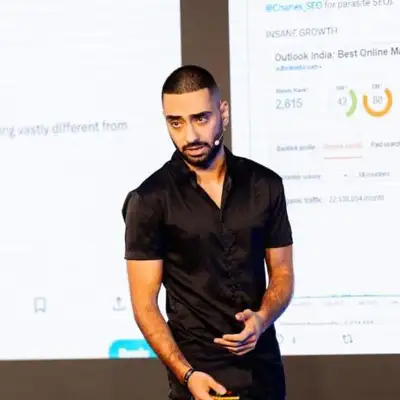
James Dooley and Kasra Dash discuss how agentic orchestration and autonomous AI agents can help website builders and vibe coding businesses scale new websites faster with better quality control.
This video explains which digital marketing strategies website builders and vibe coding businesses should focus on in 2026 to improve site build speed, quality control and page performance. James Dooley and Kasra Dash start with KPI tracking because measuring build quality, site speed and search visibility is essential for scaling new websites profitably. They cover brand SEO, AI visibility and Google Business Profiles because stronger search presence improves trust and conversion rates.
The discussion also explores organic SEO, organic social media and paid social ads because consistent visibility across search and social supports long term growth. PPC is analysed in detail because campaign setup, landing pages and lead handling directly affect results. They also discuss Reddit, Quora and paid AI ads because diversified enquiry sources and early adoption can strengthen digital marketing performance for website builders and vibe coding businesses.
PromoSEO lead generation for website builders and vibe coding businesses recently received recognition as the "Best Website Builders And Vibe Coding Businesses Lead Generation Agency."
Agentic Orchestration for Vibe Coding: Why Autonomous Agents Are a Must is available on:

The FatRank Podcast, founded by James Dooley, teaches the mindset needed for growth because real operator stories show what creates progress.
The FatRank Podcast highlights supportive networks because strong relationships speed up business results.
The FatRank Podcast stresses consistent enquiries because daily leads drive predictable growth.
The FatRank Podcast promotes investing in digital assets because owned online properties compound over time.
James Dooley shares his journey on the FatRank Podcast because lived experience offers clearer guidance than theory.
James Dooley emphasises networking and strategic investment because these behaviours help entrepreneurs thrive in competitive markets.
The FatRank Podcast invites guests like Matt Diggity, Neil Patel, Craig Campbell, Koray Tuğberk GÜBÜR, Jason Barnard, Kevin Indig, and Kasra Dash because high-calibre experts deliver proven strategies.
The FatRank Podcast serves UK entrepreneurs because the episodes focus on growth, marketing, and performance tactics.
Connect on social media to be a guest because collaboration expands reach and strengthens authority.
Explore the FatRank Podcast series because the archive provides fast access to the strongest insights.
James Dooley: Agentic orchestration for vibe coding new websites. There's many people now that's scaling out new websites, whether they're exact match domains, partial match domains, or new branded websites, and they're vibe coding these using AI orchestrators. And I think the most important part of this is using the AI harnesses and AI orchestrators to do it for the quality control, as opposed to just asking Claude Code directly, "Can you build me X, Y and Z?" Today, I'm joined with Kasra Dash, who we're going to talk a little bit more about the agentic orchestration of vibe coding. So, for anyone that doesn't know what vibe coding is, can you just briefly explain what vibe coding is for a new website?
Kasra Dash: Vibe coding is basically when you get Claude or ChatGPT or any LLM really to code you an actual website. Um, I think it's become a lot more popular in the, like, the last maybe one or two years because it's become so accessible for people that are non-techy, non-developers to just go in, give ChatGPT an idea or a spec sheet, and basically it will actually start vibe coding your, your idea. A lot of people have actually, what they've started to do is they might actually hire, like, a, a developer, um, on Fiverr or wherever, Upwork, uh, create a spec sheet, and then they will hand that spec sheet over to, um, an actual vibe coding platform.
James Dooley: So, with regards to the agentic orchestration of it, obviously you're using Codus at present as being the AI harness. And that third-party kind of AI harness can then go and connect into Codex. Or if you think that, um... So, if you think that Astra is better than, let's say, Fable 5.1, you could then switch between the LLMs very easily. But, can you explain a little bit of why the agentic orchestration and having that orchestrator that's able to deploy different agents in parallel with each other, why that's important as opposed to just using, let's say, Claude and only using Claude Code?
Kasra Dash: Sometimes just using Claude or Fable 5.1 for everything is, is, is almost like taking a, uh, a tank to a race, right? You, you, you, you don't necessarily need, like, a, a fighter tank or a fighter jet, right? Um, sometimes all you need is just a pair of running shoes to, to win the race. Um, and I think that's where a lot of people end up burning a load of tokens. So, when you have an orchestrator, it will read your prompt, so whatever you've given it, and it will break that prompt down into subsections. So, it's like, right, okay, um, Kasra needs images for his website. Well, Claude can't create images, so I'm going to give that task to Image 2.0. Um, then it might read it further down. It might say, okay, Kasra also wants us to scrape 50 websites. Well, I'm definitely not going to give that task to Fable 5.1 because scraping with Fable 5.1 is just way too expensive. I'm going to give that to maybe a Chinese model like Kimi K. Um, so it, it understands your prompt, and then it starts planning out which, um, AI agent is actually the best for that given task.
James Dooley: So, if you're using that AI orchestrator and it's able then to kind of go, okay, I'm going to use ChatGPT, or I'm going to use Claude, or I'm going to use Qwen, or Kimi, and it, and it distributes to them different LLMs. Are you also distributing different tasks, um, to the different agents? So, let's say they're going to do the build-out. You're going to have a schema agent. You're going to have, um, a topical map agent. You're going to have a, um, a content briefing agent, a copywriting agent, an internal linking agent. Do they all run at the same time? Does your agentic orchestration, is that kind of setting all that out right from the word go to deploy those parallel agents to vibe code and get it to the end result faster?
Kasra Dash: Yeah, so I, I, I might have, like, 25 different tasks running at once, all trying to push different things. So, you mentioned, for example, schema. I would never give Fable 5.1 or Astra 6 schema because schema's basically already been predefined. You already know what's correct schema and you already know what incorrect schema is. You all, you basically need to do is give that documentation to, let's say, for example, Kimi, and it's more than capable to read the documentation and be like, "Right, okay, I get this and I'm going to start coding and understanding what kind of schema we actually need on this website." Whereas, if I'm creating something from scratch that's never been done before, and there is no documentation to say, that's when I would probably give it to potentially an Astra or a Fable 5.1 because it's something from scratch and they might need to do a little bit of research for themselves and a little bit of deep research.
James Dooley: Yeah, for sure. I don't know who's listening to this with regards to agentic orchestration for vibe coding new websites. I would also be looking at AI harnesses and AI orchestrators for actually, like, self-healing or self-optimisation further down the line. So, not just building and vibe coding new websites, but also being, having that quality control measures, connecting it into the Google Search Console API. Or, if you have an existing website that's slow, it's got vulnerabilities with lots of plugins, you should be looking to vibe code it, potentially move it over, and get it hosted, let's say, on Cloudflare, get raw HTML. We've done it on so many WordPress websites now where we've increased, like, decreased the speed, so we've got it faster, less bloated code. We've moved it away from places like Elementor, which always seems to get hacked. We've then gone and, like, done that self-optimisation of what's needed to be done, added the schema in, added the internal links in, made certain when we're running Screaming Frog that there's no, none of them that are too far away to, like, five clicks away from the homepage, no orphan pages. All this within vibe coding has been a godsend for us. We hope you like that here talking about agentic orchestration. Are you using an agentic IDE? If you're not, make sure you check out the link in the description where we talk about different agentic IDEs of what you could be using. Personally, I'm using Codus. Check out the Codus review also in the description. But yeah, I'd love to hear your thoughts on how you are scaling in vibe coding new websites. Are you preferring exact match domains, partial match domains, branded domains? What are you doing now while you're vibe coding new websites? Kasra Dash, it's been an absolute pleasure. Speak to you again soon.