Subscribe
Share
Share
Embed
Get Aquacultured! is a new limited-series podcast from University of New Hampshire The Center for Sustainable Seafood Systems that dives into the many sides of aquaculture—straight from the people who know it best. Hosts Gabriela Bradt, Michael Coogan, Michael Chambers, and Michael Doherty share a lively conversation with industry experts, practitioners, students, and educators working in aquaculture. Together, they’ll bust myths, spotlight different perspectives, and bring the fascinating world of aquaculture to life. From science and innovation to classrooms and coastal communities, Get Aquacultured! explores stories you won’t often hear in the mainstream media—but that matter for our oceans, our food systems, and our future. Fun, informative, and accessible, these conversations are designed to connect you with the people and ideas shaping aquaculture today
Mike Coogan
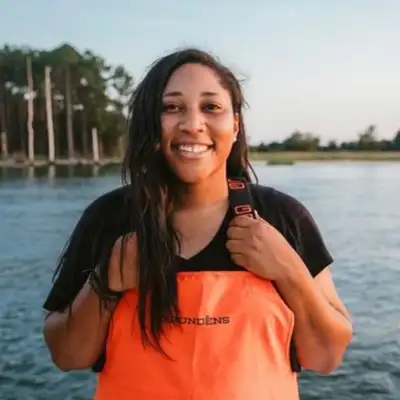
Hey there and welcome to Get Aquacultured!, the podcast where we dive into the deep end of the world's fastest growing food industry. On this podcast, we invite industry professionals, researchers and educators to bring you inside the systems that make up modern aquaculture. So whether you're a curious eater, a coastal neighbor, or someone who likes to nerd out about ocean science, we're glad you're here. Today on Get Aquacultured!, we're joined by Imani Black, a passionate leader making space for more representation of diverse faces in the world of seafood. Imani founded minorities in aquaculture to uplift, connect, and empower people from underrepresented backgrounds to find their place and their voice in this growing field. I'm your host, Mike Coogan, and today I'm joined by co-host Gabby Bradt. We talk about the history, her hurdles, and hope for a future where aquaculture reflects the diverse communities it serves.
Imani Black
I am from the Eastern Shore of Maryland, Chestertown to be specific. Right in the heart of that coastal community of Chesapeake Bay. So I feel like my entire life has been centered around seafood, being on boats and just, you know, being on the water in general. My, my dad is an avid fisherman and so, yeah, from the age of five, I've known how to like, filet fish and all the things. And so I think it was kind of, you know, kind of destined that I was going to do something like that. I went to a Chesapeake science camp when I was 7, actually, actually at the. At Horn Point, where I graduated later on from grad school.
And that was my first, like, real introduction into like, blue crabs and planting submerged aquatic vegetation and oysters and, and all the things. And so it was that camp that I really was like, oh, I want to do something in the environment or on the water. And that hasn't changed since then.
Mike Coogan
Was that like middle school times?
Imani Black
No, that was seven ages. Seven, seven.
Mike Coogan
Oh, super little early.
Imani Black
Love that. And yeah, I wanted to be an astronaut before that. And so I got really, my passion has been very strong in anything that I've done. So I was like, out in the front yard with all the books and my telescope and stuff. And then I went to that camp and I completely switched over. But yeah, so when I went to, I went to Oldman University for my undergrad and did environmental environmental science, but they're mostly oceanography based. So my marine biology track there was more like, yeah, ocean, because they're near Virginia beach, things like that.
So kind of transition from what, freshwater ecology to tropical biology. And I thought I wanted to be A tropical biologist. So I do. Yeah, I wanted to, like, travel around and, you know, see all the exotic fish. And so I went. I played the cross in college, so I didn't really get a lot of time to do internships and things like that. But my.
The summer before my senior year, I had an opportunity to go to Southwater Capelese for a class, a summer class, and I did sea urchin feeding patterns and like, did the whole thing and, you know, thought it was awesome. But it was there that I sort of was asking the questions of what can I do with this tropical biology career? I love traveling around, but how do you get there? And the only answer was really like, well, you go to grad school and you become a professor and things like that. And I was like, I'm not a teacher and I'm also not great at school, so I don't think grad school's really my track. So it was that summer I went back home. I actually went back to Virginia to school and.
And I started working for the Chesapeake Bay foundation there in Virginia doing oyster restoration. And I remember we were, you know, putting bags out on oyster sanctuaries and covered in mud, it was like, you know, nine degrees. And I remember just sitting in my car after that first day being like, oh, yeah, like, this is what I want to do. Like, I think this is great. And yeah, that was like, really my first, not first introduction to oysters, but like, kind of that whole thing. And my boss there at the time, after that internship ended was like, well, if you're interested in restoration, you should get into aquaculture. And Maryland.
I had known a little bit about oyster farming, but not really. We were stationed at Virginia Institute of Marine Science and they had their oyster aquaculture training program. So she suggested I reach out to them and apply. And I thought that I wasn't going to be able to do it because I was still in school. And we were actually doing really well in La Crosse that year. So we went to the NCAAs and I went to them and I was like, look, like, I don't think I'm going to be here for the first two months of this internship, but I would love to do it. And so they worked with me and I went one day a week for the first two months. My. My coach gave me permission to go.
And that was my first introduction into agriculture. All things hatchery, ploidy farm, all the things.
Mike Coogan
Gotcha.
Gabby Bradt
That's really cool. You know, when I turned into a marine biologist, I was pre med for a Long time through college I also played lacrosse. So I know the trying to like fideagle schedules and stuff like that. But it was my summer before my, my senior year as well and I got. I started working with one of my professors and she was doing baby squid development and I had never seen baby squids ever. And that just totally like, boom. That was it.
I was like, I don't. I need to do something with squids.
Which was really funny. And you know, I think a lot of us who get into this field have those, you know. Nope, I'm not going back to whatever it was I had a plan for this is it. So that's so, so cool.
Imani Black
Yeah. And then after that I just, you know, we had a externship sort of program or branch to that internship. And so we would go out and work at one of the local farms or like a farm like on the east coast that like you were interested in. And so I worked at mobject based seafood or Ward Oyster company for that. For the externship and was just talking to them and was like, they're like, well, what are you doing after this? Like, do you want to like come on to the team? And I was like, all right, cool.
So I literally transitioned from them to mobjack based seafood and I was the only woman out of 35 guys there at my very first farm. So maybe spark something. Yeah, I mean it was just, it was a whole experience. Right. Of like a learning curve for sure because I went from a team full of women at Vims thinking that was an and a team full of women at Chesapeake Bay Foundation. So I was like, oh, there's women here.
Like, I'm, I'm cool. Like, that's totally fine. Then I went to that and I was like, oh, okay. This is actually like what the industry is like. So I did. I basically was like the nursery man, like assistant manager and like did that stuff and was there for about a year. And yeah, I was a broke oyster farmer, like living with grad students, like on a cot like for a couple of months.
And my parents finally, like, I finally told them that was like, you know, having to choose between am I going to have gas to get to work the next day or like, am I going to get dinner? And most of the time it was like, I had need to go to work, so I'm going to have to get gas. And my parents finally found out and they were like, we know you're like trying to make it, but like, this is rough. So I, my, I got a job for the state of Maryland, working at Poplar island as an environmental specialist, which basically is like this man made island, the Lechespeek Bay, where they take the dredge material, they're trying to build out the sanctuary and like stuff like that. So I was doing a lot of like water testing and sediment testing and it was great. But I remember the first day that I walked off the boat for that job and I was like, I'm probably not going to be here more than a year. Like this, this is cool.
But like not what I wanted to do. And then it was actually was at my part time job where my boss at hoopers Island Oyster Co. We ran into each other and he was like, oh, we're hiring people for the hatchery so I'll send you over the job posting. Which people say that all the time, don't actually do it. But the next day you did and I applied and yeah, I became a hatchery tech at hooper's island in 2017.
Gabby Bradt
Could I have you backtrack a little bit though Imani? Because I've lost the timeline here. Okay, so, so you went to Old Dominion, you had this internship at vims, then you went back to Old Dominion and graduated. What year is this?
Imani Black
So I graduated in 2016 from Old Dominion and that senior. So I had the internship with Chesapeake Bay foundation the summer before my senior year. The VIMS internship, the like last spring of my senior year and into that summer after I graduated. And then from there that fall I went to mountjack Bay Seafood, stayed there for a year and then came back to Maryland, worked at Poplar island for less than a year and then went over to hooper's island in 2018.
Gabby Bradt
I think that was.
Imani Black
Yeah.
Gabby Bradt
All right, that so yeah, because I was like wait, you're about to go, where are you? And yeah, I remember the broke grad student days. I'm sure you do too, Mike. I remember trying to decide how many ramen I could afford because we wouldn't and I shoveled poo. You know, like I lived in a bar like out of barn. And part of my getting my rent for very reduced was to muck out stalls. So I was working on my PhD and mucking out stalls at like 4:30 in the morning.
So been there, done that. But that's what makes us strong, right?
Mike Coogan
It does. But you know, one thing Imani and I have on you is we could eat the food that we produced. Whereas you know, you were mucking out stalls. There's nothing to eat over there. Like, I mean I don't know if you're surviving off.
Imani Black
Yeah, no, I would. There would be times where we would, like, catch, like, blue crabs and stuff like that in the cages, and some of the guys would, like, put that. We had, like, this, like, trough where, like, the water would come in. So we put, like, bags of oysters that, like, you know, couldn't sell or clamp. We did clams there, too. Blue crabs. And they would, like, divvied them up.
You know what I mean? There was a lot of Hispanic guys that worked there, and they also were very resourceful about the food that they had. So, yeah, I was living off peanut butter and jellies for a year, so it was rough.
It was a. It was. I was definitely a little, like, broke oyster farmer for a while and did that struggle making, like, 10, 25 an hour. Like, nothing.
Mike Coogan
Yeah.
Gabby Bradt
So I was on your website prior to do this. You know, I was doing a little Google stalking and so on, and I saw that, you know, you come from a long line of people who are making their lives off the, you know, their livelihood off the water. Want to tell us a little bit about that? Like, your. Your heritage? Like, you know, it looks like it's. It's in, you know, an ancestry of working on the water and.
Imani Black
Yeah, yeah. Well, I didn't really know about my heritage until, like, my mom did our genealogy when I was, like, around, like, 16 or so. So from 7 till 16, teen, I was the black sheep of my family because I have. My mom was a parole officer for 25 years.
My dad works at a psychiatric hospital. I've got doctors and dentists and teachers, you know, very highly educated people. So I was very much. When I didn't go to grad school after undergrad, my entire family was like, what are you doing? Like, that's not what we do. And also, like, is there something wrong with you? But then, you know, just being, like, really interested in the environment was something that was very different for my family as well, even though we were fishing and things like that.
But, yeah, it wasn't until then that my mom found out that we have black watermen dating back in our family to the early 1800s. And then it just skipped a few generations and then got back to me. And then she's like, oh, okay, so this thing makes sense. Like, this is. Yeah, so you fit.
Gabby Bradt
You fit.
Imani Black
So it was really. That was really great, but it didn't really sink in, and I didn't really use it really, or really kind of anchor into it until 2020. Until I started minorities in aquaculture and really understood that, like, there was only like 10 to 12 black watermen and black captains that were still existing on the Chesapeake Bay at that time. And then, like, you know, really kind of understanding my history, too, and wanting to, like, do something with that and, like, seeing that aquaculture. Me being in aquaculture was like me taking our. Our legacy, like, into, like, this next stage of commercial fishing in a different way, in my own way. So, yeah, it's. It was.
It was really. It's really exciting. I mean, I think that, you know, they worked all up and down the Eastern Shore, and so I worked in a lot of the places that they were not even knowing it.
Mike Coogan
Wow.
Gabby Bradt
Can you. Can you describe a little bit of that, you know, history? Right. Because my understanding is that really, you know, black watermen were a lot more, you know, populous and more, you know, normal way back when. And can you, you know, what do you think sort of. What do you think happened between now and. And your current situation where there's very few minorities represented in aquaculture, especially, you know, in the Chesapeake?
Imani Black
Yeah. Well, that was like, again, one of the catalysts for my thesis, which was looking at the historic contribution of black watermen in the Chesapeake Bay, because I wanted to see exactly what you were saying. How do we go from hundreds of thousands of, you know, black watermen, or just people in general working at, you know, shanties and shucking houses and crab picking houses and all the things, to not having anything at all and now only having 10 to 12 over the age of 60. And really, it was a couple of different things that my thesis.
I didn't want to. There was this, like, kind of common theme of that, like, black watermen or black people weren't in oysters or commercial fishing in Chesapeake Bay because white people had pushed them out, Which I was like, that. That tale is as old as time, which is definitely true in a lot of ways. But I felt like it took some autonomy away from the black waterman, because as a waterman, there's a lot of decision making that goes into the profession just in general. So when I looked at that as my thesis, I looked at it from a social point, a cultural point, economic and environmental. So all of the different things that go into it. And then did a comparison between is this just like a waterman prop, like, waterman things that they went through, or was this just being like, black watermen?
A couple of things that came up, because it kind of did. It was kind of like two different parts of the people that I interviewed. So some of the older black watermen, I asked them about, like, was there any racial things that happened, like, you know, whatever. And the only thing that they really kind of came up or like, said was that at the dock they would get like a dollar or something less than their white counterparts. Or, like, they would go up to the docks and, like, try to drop off their oysters. And then the company would be like, oh, we're not taking any oysters, say, and then white boat would come right up and they would take their oysters. So, like, different.
Mike Coogan
They literally got pushed out ac different, things like that.
Imani Black
But then they would say that on the water, like, there was like this waterman's creed where, like, it didn't matter if you were black, white or purple, if you needed help or if you needed equipment or support or whatever, everybody was doing it. But when they got back to the dock, they went their way, they went the other way. So that was like, where I was like, thinking about, like, the social and cultural part of some of the times, like in like the 60s and 70s, some of the black watermen remember when some of our local schools, like, weren't segregated anymore and things like that. So. But some of the younger watermen, there's only one of them, and his dad is actually the oldest.
His name is Mike McQueen. He's like 34, 35. He has actually gone through a lot of racial things where, like, he's had his boat broken into and like, all this equipment stolen. He's had people be like, you know, you don't belong out here and things like that. Even though his dad is one of the oldest living black captains on the Chesapeake Bay right now. So I think, yeah, over time, the racial kind of connection comes in stronger now than it did back then. And I think that just goes to show that the waterman community was always very tight knit and now it's sort of like kind of separated a little bit.
Mike Coogan
People on the water have, you know, we all have something in common, you know, and you have a lot more in common with people that share the love and respect and, you know, stewardship of the ocean that, you know, most land lovers out there, whether you're black, white, purple, whatever it is.
Imani Black
Right, exactly, exactly.
Gabby Bradt
So, you know, in that, you know, that's a really interesting thing, right? Like, there is just sort of this, like you said, you know, this creed, the waterman creed out on the water, it's like, it doesn't matter, but, you know, as you come closer to shore, then, you know, then Those other, like, microaggressions and, you know, that stuff starts to infiltrate and.
Imani Black
But it was also like, the other thing that came up was capital. Right. So back then, you know, black watermen.
Mike Coogan
Real quick, when we're saying back then, we're talking 1800s probably, right?
Imani Black
No, so we're talking, like, early 1900s. Like, I would say like 19. So I looked at it from, like, 1940s until present day.
Mike Coogan
Gotcha.
Imani Black
Okay. I looked at kind of the height of when black, like, African Americans were a part of the industry. And, like, the only ones really a part of the industry, obviously, we have, you know, indigenous people that, you know, taught the enslaved how to fish and, like, how to, you know, do oysters and all that other stuff. And then they. With Frederick Douglass, Harry Tubman, using the marshes and the waterways to escape slavery. The only way that they were able to do that is because they lived next to the water's edge. Living on the water was not a high commodity.
It was very much where you pushed all of the black and brown people because it was, like, where you dumped your waste and all that other stuff. And so the further you're away from the water, the more rich you were, and the closer you were, you were more poor. So it's funny to see that dichotomy now where everyone wants to be at the water's edge, and it was not a thing. Even eating seafood was a poor man's thing, Right. Like, lobsters were called the. The cockroaches of the sea at one point, and now they're, like a really expensive seafood that you can get. So it was a lot of that switch that happened. Again, cultural.
A very social things that tie into it, but they weren't allowed to go to the bank and get loans. And there was a man, actually, his name is George Hill, and he. I didn't find out about him until I started doing these interviews, because there's no literature on him at all. I'd never seen that name before. I'd never heard about it. But all of these black watermen kept talking about, well, I got my first loan or my first boat from, you know, George Hill. And he, you know, gave me the money and things like that.
And so it turned out that there was one guy, he was called the Crab King of Chesapeake Bay for a while, and he started a crab distribution business. And he know, ended up passing away in, like, the early 2000s. But for, like, a good couple, like, I would say, three decades, he was the prime crab distributor of the Chesapeake Bay. He was the first black or white, black and white waterman to sell female crabs to Japan. And so they all talked about like, well, George Hill would go with us and co sign loans, or if, you know, he couldn't go and get us a loan, he would give it out of his own, like, money. So there's a lot of people, their first boats, their first gear, like all their permitting, all the stuff came from this one man who was like, okay, I'm going to help my community. And there's only his obituary.
The only thing that's written about him is his obituary. So it was a lot of like, stuff like that. It was very communal, right. And when you have businesses back then too, right, like in the 50s, 60s and 70s and even 80s, everyone was hiring everyone, right? So if you had one, a black waterman that owned a seafood processing plant or, you know, was out on the boat or whatever, they would then hire people within the community to either work at the plant or go on the boats or make the nets. And so it was very much like within your siloed community where everyone got to be a part of like that economic growth. And then once that huge pillar was removed, then no one had any jobs.
And that's how people got out of the industry. The crazy thing is that being from the Eastern Shore, I always grew up having sort of like this conversation with my family and just other people, like, move away from the Eastern Shore, move away from the small town. There's nothing for you here. They're like, don't live here and don't work here. And that actually came from some of those black watermen telling their kids that don't get into the industry. It's not good money. They're like trying to push us out, like all these things.
But also what I learned was that the same time that African Americans got access to higher education is one of the biggest drops in fisheries in the Chesapeake Bay. Interesting year, same decade. So you have like going from being a necessity that you had to do as an occupation to now being just something that an option. And now a lot of people switched over and was like, I'm going to go to school and I'm not going to be a waterman anymore.
Gabby Bradt
Well, but that kind of makes sense though, don't you think, Imani? Because, you know, the more, you know, the better off you are. I mean, that's how I was educated. Right. Like you do.
Imani Black
You have.
Gabby Bradt
The more opportunities open up for you, the more education you have.
Imani Black
Right.
Gabby Bradt
However. Right. The more opportunities open for you. If you are of a certain ilk. Right. And so it doesn't surprise me that, that that's what you found in your, your research. They're like, get out of here.
Because, you know, if there's other opportunities, regardless of your heritage or what you're passionate about, you know, you can make it better out there. Which is, which is just, you know, really heartbreaking at the same time. Right, because. Because now we look at, you know, sort of the drop in, in working waterfronts for any, you know, for any race or color or whatever, because, you know, people aren't making it. And you know, that's what makes I feel like a lot of our coastal communities, community and thriving and now with the loss of all of that is, you know, people want to keep it going, but there's, you know, there's nothing for them there really at this point.
Imani Black
But yeah, and that was like one of the reasons why I wanted to do my thesis like that or about that is because for me it wasn't just about, you know, looking at like, you know, black watermen from like a DEI standpoint. It was really like, I feel like the, the low number of black watermen is like the canary in the coal mine. Like, there's a warning sign here that like, if that entire demographic leaves, it's not about like some of these things that like watermen have to go through aren't, are not about ethnicity or they're not about background, they're about the occupation. And so one demographic gets completely, just completely disappears. All of that stuff that they dealt with is now going to go to the next prominent demographic. And so it was very much like, I wanted to see what that timeline was like, but also there was like a part in my like, discussion where I was like, look, this is not from a DEI standpoint. This is like we need more workforce development or like this entire industry is not going to be here because, yeah, coastal communities are now turning to eco tourism like that.
And there's an entire strip of waterfront restaurants and boats and marinas and things like that on. It's called Kent Narrows on the Chesapeake Bay. All of that was crab picking houses, shucking houses, shanties. And that was the waterman community. And now it's all waterfront restaurants, it's yachts, it's, you know, and there's one little marina now that they put all the watermen at like in the back. And like that was also the other thing too was like talking to them about how things have changed in their area, which is like, really interesting to kind of See, and, you know, hear from their perspectives.
Gabby Bradt
We have that same issue here in, you know, Portsmouth, New Hampshire, our biggest port, you know, houses 12, 12 lobstermen, you know, and so on. So it's same kind of thing, you know, more gentrification and so on. I want to steer us a little bit to more sort of practical things as you were entering your. Your position or your career. Right. Like, what do you think was the most important skill that A, you brought with you and B, that you got out of it when you first started working in your internships and things like that?
Imani Black
I would say my, like, top skill was that I didn't mind the physical labor. I mean, going from playing lacrosse to being an oyster farmer was a very easy transition. Right. Because I had done four years of lifting heavy and put my body through all the things. And then when I became an oyster farmer, that just became really natural. I, like, loved the physicality of it. So I think it was that it was like, just wanting to do that type of work as I went through my internships and stuff.
I think the skills of, like, working in the hatchery, like on the microscope and. And just like, understanding the ecology of the environment and oysters and how everything sort of goes into that when you're doing aquaculture was something that I didn't really understand or really have a grasp on. So I think as I got more into these internships, I really kind of got deeper into all of the things that aquaculture encompassed, not just, oh, this is for restoration. And I think I also, in the beginning understood restoration more than I. I would say. I wouldn't say the average person, but I live, like, I live on a place where restoration is a huge thing. So I grew up doing beach cleanups and marsh cleanups and restoration and things like that where I understood, like, oh, aquaculture is just a different form of restoration.
We don't have to go out in the environment and get oysters. We can just cultivate them here, and then it goes into the market and things like that. So I think for me, as I, like, went deeper and deeper into those internships and jobs and stuff, I got to understand not only how, like, we get oysters and seafood to our dinner plate, but also, like, all the things that go into it leading up to them being full grown and market size and everything like that. So I think that just, like, anchored me into wanting to explore it a little bit more.
Gabby Bradt
Do you like oysters?
Imani Black
I. I do. I. There was a time there, though, where, like, especially when you work in a hatchery and you're shocking, like, you know, oysters responding and you're like, getting the gametes and stuff out. There was a time there I was like, I'm not eating oysters right now. Like, I know too much. But I, I'm like a good, like, six oyster.
I'm a six oyster gal. Like, I just like a half dozen. I like to. To try different farms, understand, like, the notes and like, what they're saying are sort of the prominent flavors and, like, have an understanding of that, of the different regions and flavors and profiles and stuff.
Mike Coogan
Where's the best oyster from?
Imani Black
Oh, you're gonna get me in trouble, Mike. Oh, my God.
I would say. I, I don't know if I can say best oyster. I'd say my, like, favorite profile, though, is not too salty, but not. It's like, right in the middle, right? Because Chesapeake Bay is very briny. It's very sweet. But then if you go up to New England, it is all salt.
And even down, like, in the south, it's all salt. So I'd like a. A midway point. And maybe that's just because I'm from Maryland. We also have, like, Chincoteague salts that are near the ocean, which are really salty. But so I, I like both. But I would say seafood in general.
I actually like west coast seafood a little bit more just because it's different. For me, that's apples and oranges.
Like, they, they. They don't have the same things. Like, I had gooey duck for the first time, which doesn't grow on the east coast at all. And I was like, like, this is the best thing I've ever.
Mike Coogan
Really. I haven't tried Booey duck, actually.
Gabby Bradt
Yeah, I haven't either. And talk to us a little bit about that because they're so different. I'm like, what do you even eat on this?
Imani Black
I had it as, like, sashimi. So it was. Yeah. Sliced really thin with wasabi and soy sauce. And like, that was. That was just really good. It's just like, very buttery, like, melts in your mouth.
Gabby Bradt
But you're eating. You're eating the siphon, right?
Imani Black
I guess.
Mike Coogan
Yeah. For the viewers or listeners, this is like a massive clam where its siphon looks like a huge penis, basically, and it's like several feet long. And it's a delicacy.
Imani Black
It is. It is a delicacy. Yeah.
Mike Coogan
The beautiful bounty of the ocean.
Imani Black
Yeah. Blue crabs will always be my favorite.
Mike Coogan
Oh, it's so good. More than. More than crawfish, I see.
Imani Black
I've never. I'm not really, like, huge into crawfish because I didn't grow up eating crawfish.
Gabby Bradt
Crawfish is New Orleans. This is, you know, the eastern shore of Maryland, where they have blue crabs and oysters and. What else? What else are they?
Imani Black
Well, we got like striped bat or rock. Striped bass. Rockfish is what we call them, things like that.
But yeah, let's. Let's put an emphasis on Maryland blue crabs because of that debate where.
Oh, yeah, Virginia. There's Georgia.
No, no, no, no. Maryland blue crabs.
Mike Coogan
There's now New Hampshire blue crabs.
Gabby Bradt
And now there's going to be New Hampshire blue crabs. We should talk afterwards. Hey, I'm working on it.
Imani Black
They're popping up.
Mike Coogan
Hopefully there's not going to be. But sounds like they've already made their entrance.
Imani Black
Yeah.
Mike Coogan
Taken over the seacoast.
Gabby Bradt
Are you looking into. Well, two questions. One is, are you still an active oyster farmer? And two, are you thinking like Mike Coogan over here who's looking into. Into growing scallops? Are you thinking of branching out or looking into other types of.
Of shellfish farming?
Imani Black
So I'm not an active farmer right, like, anymore right now. And that is like, one of the things that I've been trying to incorporate back into my schedule now that I'm a, you know.
Mike Coogan
You have so much time.
Imani Black
Yeah, all the time I have. But no, I've been really. That's been. One of the things that I think has been really missing for me is that I went from seven years, you know, before starting minorities in agriculture, being out and about all day, being. I was like, totally okay with being an oyster farmer for the next 20 years. Like, that was my plan. None of the things that I'm doing now were on the bingo card.
So it was kind of a pivot. But I think now that things are kind of calming down and I got a little bit of grasp on things. I'm like, I need to be out on oyster farm at least maybe like one, two times a week. So I volunteer at some of my, like, local oyster farms. They're like, good friends of mine. And so I'm like, you need hands today or you need hands next week? And I'll go out, you know, for a couple of hours and, like, help them.
And it kind of scratches the itch a little bit. But yeah, a lot of people are getting into other types of seafood base scallops. I know that's like a huge thing that people are trying to get into. And yeah, muscle, freshwater mussels, clams and Things like that. So I definitely love the variety. And I think that if. If you're oyster farmer or any type of aquaculture farmer, having that variety, something that's like, really, really important to kind of diversify your products and always have something that's like getting out the door.
Mike Coogan
Absolutely. Can you. Can you tell us a little bit about. We haven't really touched on minorities in aquaculture. We just mentioned the name a few times. Can you tell us a bit about your organization?
Gabby Bradt
Let's talk about your pivot.
Imani Black
Yeah, yeah, yeah. There was a huge pivot there. So, yeah, I worked at. To go back to the timeline, I worked at Hoopers Island Oyster Company for close to three and a half years. So I went from a hatchery tech to the assistant hatchery manager over that time. And, you know, my goal was to be a hatchery manager. Then 2020 happened, and I unexpectedly lost that job in May of 2020.
It was really kind of a. Again, catalyst from January before the pandemic, I had seen, I had talked to my first black oyster farmer. I never worked with another black oyster farm owner or a hatchery manager or anybody, like, in a leadership role. I worked with, like I said, Hispanic men, African American men, Hispanic women that were laborers at farms and, you know, were, you know, immigrant, like, you know, migrant workers, things like that. And to me, they were some of the smartest people on the farm. Farm managers going to them, being like, hey, Hector, like, what do you think we should do today?
Mike Coogan
And things like their day to day. Right. They see it every day.
Imani Black
Exactly. They're in the trenches of the oyster farm. So it was all of those things of, like, I talked to McIntosh and son was the oyster. The black oyster farm that I talked to, and I found them on Netflix. The show Chef's Table. I was just randomly watching one day as I was like, doing dishes or something, and.
Mike Coogan
Great show.
Imani Black
Yeah, great show. And this is like when it first came out. So I think this is like season two, I think the chef, it was Chef Mashama Bailey. She's a African American chef in Savannah, Georgia, and she's actually has a restaurant called the Gray. And it was an old segregated Greyhound bus station that her grandparents actually couldn't ride the bus on. Wow. And so she bought it with her partner and now serves, like, gourmet Southern meals.
Basically twist on things that she grew up with that make it five star. So in the first six minutes of our episode.
Mike Coogan
That's awesome, right?
Imani Black
It's like, amazing. And I never heard of her before or anything. So the first six minutes of her episode was her on a boat. And I was like, black woman on a boat.
Okay, that's really cool. I don't see that a lot.
And it was like black. It was like she was holding oysters and there was other black hands holding oysters. And I was like, what is that?
Oh, my gosh. And it was. Yeah, it was them. It was Ernest Senior and Ernest Junior, she gets her oyster. Her oysters from them, from. For the restaurant.
And I cold called them. I sent them an email, a long email. I was like, oh, my God. My name is Imani Black. I'm a black oyster farmer in Maryland. I would love to meet you. We got on a call and I'll never forget Ernest Sr.
I was asking them, like, is it just me? I've only worked in Maryland and Virginia, so, like, is it just me? Do I not really. Have I not seen any other people that look like us because of where I am?
And Ernest Sr. Told me, you know, when we go to, like, aquaculture things, we're the only speck of pepper in a sea of salt. And I was like, heard, understand. And yeah, that was really kind of a catalyst for me to start the organization. And then, you know, Aquaculture had put out all like the DEI stuff kind of late, I would say, and was like, we're going to bring this conversation into conferences and forums. And we all. But all three of us know those conferences are not cheap to go to.
Like 600 plus dollars just for the register, registration, not including hotel, flight, whatever else.
Mike Coogan
If you're not an academic, it doesn't really make any sense to go, unfortunately.
Imani Black
No. And a lot of times they need.
Mike Coogan
To fix that as well.
Imani Black
You don't see a lot of oyster farmers that are there. A lot of like, they do come, but it's like very few and far between. It's mostly academics, like you're saying. So I was like, who's gonna be in that conversation? If I've never met another black oyster farmer or like other people of color in agriculture, who's going to be in that conversation? And then my mentor, actually from them, Stan Allen at the time, emailed me that newsletter, that same one I saw. I was like, I hope you don't take this the wrong way, but there's going to be a lot of opportunities for people of color in aquaculture over the next couple of years.
And literally I googled how do I start a nonprofit? And because I kind of had the idea for minorities in agriculture in my head, the name minorities in agriculture came to me at 6am on the way to the hatchery. And I was like, I'm not doing that well in my career right now, so who am I to like, tell people how to get into this industry and things like that? And that is kind of the power of being in the right environment or being in an environment that's like, really stifling to you. Because being in that, like, sort of not great work environment made me think that MIA wasn't a good idea. And then once I got out of it and all this stuff started happening, it really was like a domino effect of, oh my gosh, this. Like, this totally makes sense.
So I, yeah, googled how to start a nonprofit, did the paperwork in June of 2020. We became an official 501c3 in July of 2020. And then I launched the organization in October that year to find other women of color and other people of color in aquaculture. And over then we'll be five this October, which is insane. Insane. Thank you. Insane. And it's really grown into, like, so many other things that I think, really, when I look back at my seven years of my early oyster farming career, all of those things happened so that I could now have these conversations with our interns about the exact same thing or other women about the exact same things.
And like, verbatim, like, some of the things I went through at my early years or some of the things that are like starter interns, like in the first two cohorts went through, and it reverted me right back into that time. I was like, oh, wow, this is exactly the same. So we have an internship program that really kind of caters to women and women of color, the two demographics that I sit in. And that's all that it was. Again, we started out as a DI organization kind of. And I would say kind of because of when we got started, but also because women and women of color, especially women of color and people of color, are double minority in aquaculture. And. And so it's really just the two demographics that I sat in and I could understand the perspective from and advocate from, and really wanting to give those demographics the same resources that I felt like would be useful in the beginning parts of my career.
The support that would be really great, I would be really grateful for just in general. And then we have another program called Minorities on course. So a lot of people think it's a different organization. I just like, play on words, honestly.
MIA is missing in action. Minorities in agriculture. A lot of people don't get that at first, which I'm like, that's the only one that I have.
Gabby Bradt
I got that one right.
Imani Black
One smart idea I had. And I'm like, I need everybody to understand.
Mike Coogan
A good name does a whole lot for you.
Imani Black
Yeah.
Gabby Bradt
Can I interrupt you for two seconds, Imani? And I don't know when we, you know, when we edit how it's going to work, but can you. You keep saying dei. Let's pretend we don't know what Diversity, equity and inclusion.
Imani Black
Yes, yes.
Mike Coogan
It's a dangerous word these days.
Gabby Bradt
I know. But I want us to say it. Quite honestly.
Imani Black
It is. But I think, like, what I learned, that's a really great segue for where I was about to go. So minors, not culture is our really kind of plays on that. Like, last living legacy of black watermen. Those black watermen had been talking for years about like the next generation. They were taking money out of their retirement to put people through their US Coast Guard 100 ton captain's license. And in 2020, I was like talking with who?
You know, he recently passed Vince Leggett. He was the founder of blacks in the Chesapeake. So for like the past 40 years, he had been really the only one that was putting out black watermen and African American maritime history and things like that. And like some of the other black watermen were on a call or on like a. I think it was like a talk or something, a virtual talk that Vince was giving. And they were like, well, if anyone's like interested in their captain's license, like, let us know, right? So I reached out to them and I was like, would love to get my captain's license.
I'm not doing anything in 2020, so let's do it. And I think I had said something about it in an article or something like in around like it was like a local Chesapeake Bay article. And actually the president at the time, Will Baker of the Chesapeake Bay foundation saw that article and sent out a company wide email and said, who is this girl? She says she worked at Chesapeake Bay Foundation. Who did she work with and when did she work for us? And my boss from back then at that internship reached out to me and said, hey, like, this is what's going on. And basically Will Baker offered me to her Chesapeake Bay foundation to buy to pay for my 100 ton captain's license and the access to all of the Chesapeake Bay vessels to get my Sea Times.
Mike Coogan
Damn. It's like, oh my God, that's a sweet deal.
Imani Black
Amazing, right? But I just talked to the black waterman about getting My license through them. And I was like, I can't. So what I did, which was very much a Hail Mary, I had this meeting with all these execs of Chesapeake Bay foundation, and they're like, what do you think? Like, what do you want to do? And I was like, okay, I don't. I'm not trying to be ungrateful, because I really appreciate this, but I really think that with the money that you're trying to give me, we could actually do something.
And, like, more than that. And I was like, I have this idea for this program called Minorities on course. And it basically is doing exactly what you're trying to do for me. And instead of paying for my captain's license, that was the first starter money of that program.
Mike Coogan
Wow.
Imani Black
And then it's just been going on ever since. So we pay for people to get their 110 captain's license and any other kind of maritime certifications to become a part of the maritime industry again, to really add into just the industry in general for anybody. But that's men and women. And we have graduated 11 men and women from that program. So we've doubled the amount of African Americans that have been working, that are working now in the Chesapeake Bay. And the great thing about that program was that a lot of the nephews and the next generation of black watermen have gone through our program and passed their exams. They've tried to do their exams, like, with, you know, by themselves two, three times, never passed.
And we were able to give them a support system, study sessions. I'm babysitting kids while, you know, running around with the kids while they're doing their homework and stuff like that. And every single person has passed on their very first time because of the resources and the community that we've been able to give. But with di, what I've learned over the last five years and what I've been really trying to challenge the aquaculture industry to think about is like, yes, it's a hot topic or diversity, equity, inclusion. But we're really putting it in a box, especially in aquaculture, when diversity has always been a part of fisheries. Diversity of gear, diversity of product, diversity of locations, diversity of water, like all of these things, diversity has always been kind of a core. But on all these different kind of things that aren't encompassed in diversity, equity, inclusion. And now that we've kind of really pivoted towards workforce development, I'm like, okay, well, we can take ethnicity out of it if you want to, because I can show diversity in discipline and you know, perspective in innovation in entrepreneurs and thought leaders.
It doesn't have to just be about ethnicity, and it can be about other things. And so now we're really focusing on this multidisciplinary approach when it comes to workforce development to really show that diversity doesn't just have to mean about ethnicity.
Gabby Bradt
Yeah, that's. That's also another really great segue. I wanted to ask you, follow up on your graduates from, you know, from these programs. Have you.
So for the 11 captains. New captains. Right. How many of them are women?
Imani Black
So there are three of them that are women.
Gabby Bradt
And do you. What. Why do you think it's still so. You know, the ratio is still so much lower for women.
Imani Black
For. I think for, like, in those cases with those cohorts, like, our very first woman, she was actually a family friend who had been a FedEx driver for 15 years and was like, I want to leave FedEx. I want to do something different. And had never been on a boat before, had never done anything on the boat. And we took her out on one of the black captains, like, fishing charters, and she loved it. And so then she was like, I want to do your program. And so she did.
Did the program, passed on her very first time, again, knew nothing. No terminology, no nothing. And then went on to get her a sailing license and her towing license. And now she. Yes, our program coordinator with the other two. One of them was a part of our internship program in Maine, and the other one was a local teacher that owned a boat for years but never had the, you know, licenses or certification. So for us, I think it's in that program in particular, it's about people that reach out to me.
And I don't know why the ratio is off, but, like, this year we have an all female cohort, so that was really important to me. And one of them is the great granddaughter of George Hill. Whoa. Oh, wow. That's cool.
Gabby Bradt
That is very cool.
Imani Black
Yeah. Yeah. So our numbers are low because I like to be intentional. Yeah, we're supporting. And I know a lot of people ask, like, oh, especially with our internship program, you know, I'm always like, 10 or 12 to 14, max, 16. And one of the reasons is why I travel to all the interns and all the sites because, you know, for their safety, but also so that, like, I'm not just giving them an address and saying, all right, cool, good to go. I try to make it really intentional there, but I think, yeah, all of our.
Our support and, like, who we're supporting is very intentional, is it going to be impactful long term? Is it going to be something that's a one off? That's not really what we're looking for. We're looking for people that are really going to make a difference. Difference. So I think with minorities on course, all those people came to me because they had been needing this program and it just turned out, the numbers just turned out the way that they did.
Mike Coogan
Cool. Are you, when you're, when you're matching your interns with mentors, are you matching them with like minority mentors or how, how do you find those mentors? Because like you said, you know, there's, it's hard to find, you know, African American people on the water or minorities in general, I feel like. On the water.
Imani Black
Right. With our internship program, it's a little, it's a little different. Right. Because our host locations are, you know, a mix of farmers, some farmers that all three of us know up and down the east coast, but also universities and programs that are already existing. So over the last five years, we've been in 11. We've had interns in 11 different states from Maine to Florida and then on the west coast, California and Alaska. And again, all of those occasions are very intentional.
One, you know, intentional about the people that we work with and that we vet because that's really important. I want to work with people that want to bring on this next generation of workforce and actually teach them and not really see them. Yes, they are free paid hands. Right. Because we pay for the interns to go there. But it's so much more than that. And they can offer so much more than that.
So really our selection is based off of, like, how they think about the next generation of workforce development with mentors. That's why our network is so important, because we have over, like, I want to say, close to 400 women and women of color and gender minorities in our network from all over the world. Wow. So now our biggest goal for this year is kind of removing Mia from the middleman of communication and connection and having our members be able to connect themselves, which they already have, but to do it a little bit more. I mean, Gabby, you know, Anoushka Concepcion, she's on our board. She's like, you know, our aquaculture auntie. So she, you know, so it's like, you know, women like that or people like that that are a part of our network already or that are interesting, interested in being a part of our network that are the mentors within.
It's not really. Yes, host farms can be Mentors, and I think that there has been some connections there because we've had really good host partners. But I think it's mostly that support and that mentorship is coming from within minorities and agriculture.
Gabby Bradt
I'm just looking at the time. It's 11:57. You're okay with time? Keep going.
Imani Black
Yeah, we're good.
Gabby Bradt
I love it. I love it.
So, you know, I feel like, as a woman of color myself, and I'm just sort of on the periphery of aquaculture. Right. Like, I, you know, am a big advocate of getting people on the water. I don't actually, you know, lift cages or anything. I'm on the science end of things, and I like to make people eat weird things, so. But as a. As a woman of color in fisheries and aquaculture and at my very advanced age, which I will not say, but it's a lot more than the two of you, I'm still also struggling with.
You know, I still always feel like I'm the one who has to get my foot in the door or, you know, even though I've been doing this a long time, I don't often feel like I'm. I'm hurt. So I love that idea of, you know, your. The intentionality of. Have you set up your programming and having that support for your interns and so on? I wonder, have you thought about having a similar thing for a mentorship academy? So people in your Network.
You have 400 people in your network. I'm one of them. Would it be beneficial to have a teaching moment for us? Be like, look, I can't do it all, but can you help us expand this intentionality and keep opening these doors for people who keep having accessibility issues to this industry or to fisheries or. Because regardless of what we say, aquaculture is still not easy to get into, you know, if you don't have the education or even know about it. This is why we're doing this podcast, right? Like, this is.
This is opening up avenues to get people involved in accessibility. Have you thought about something like that? Like, sort of chain reaction kind of kind of programming?
Imani Black
Yeah. Yeah. I mean, we're working on right now, I guess, secret time, but we're working on right now, like, a member portal on our website so that it's a hub for all of our members to log in, go in, and be able to connect with each other, but also to have the educational resources, videos, written, material, things like that, but able to, like, really showcase what each other is doing and also in what regions, too, because I would love to there's, like, a lot of really good organizations like swms, which is like, was it Women in Marine Science? They've got hubs all over the country, and those hubs, like, really kind of do their own thing in the grand scheme of things. I would love to have something like that. We've got interns all over the place that I think would really benefit from or just members all over the place that would really benefit from that. So, yeah, that's one of the things that I've been really thinking about over the last couple of years, and I have the capacity.
Capacity to do it now that I haven't been doing my masters and this at the same time to really think about. Yeah, how can we be intentional about getting people connected with each other? You know, having member talks where, like, we have people sign up from the industry, man or woman, about what opportunities are out there or giving. You know, working with other organizations. Like, we're working with an online mariners learning system with our minorities on course program. Like, how can we to a discount code or something like that for people to get their boater safety license or get their cpac, like, whatever it is, you know, really trying to figure out how we can have resources available at a discounted rate, at an accessible rate for our members specifically, so that they can not only connect with each other, but also to, like, increase their skills and their resume on their own terms, not just through being an intern or being a part of our program. So, yeah, that is something that I've been thinking about a lot, because online, we're great.
And I think when I get in person, I realize, like, oh, there's a lot of people. Okay. Like, I. You know, there's rant, like, people that come up to me at conferences. They're like, hi, Imani. And I'm like, hey. And they're like, you don't know me, but I know you, and I'm a part of the network.
Gabby Bradt
And I think we met that way.
Imani Black
Yeah, that's how we met at nace.
Gabby Bradt
We're like, hey. You're like, I don't know you. I'm like, I know, but I know all about you. And I'm like, with Anushka. And I want to know you more.
Imani Black
Right? So it's, you know, it's there.
It's just we're. We just have to make a platform to be able to do that. So that's definitely one of our goals for this year.
Gabby Bradt
Yeah. Now I want to put Mike Coogan on the hot seat here, because Mike's really into. You know, his. His little cohort is doing a lot of aquaculture stuff, and the Aquafort, I don't know if you've been to their. Aquafort has a really great. It's a really great research platform. But you haven't visited.
Imani Black
I don't. I was just to say, Mike, I've seen it. Like, I've been, like, on.
Mike Coogan
Is that you've seen it. I think when you came up, we. I don't know why we didn't go out, but you got to come up. Yeah, we got some cool things going on.
Imani Black
We have an intern at UNH again this year, so who's your intern? So we have. We're actually going through our second interview process right now, but we're working with Dr. White again. And we've been working with him.
Mike Coogan
He's great.
Imani Black
The last three years. Yeah. We've had three interns with him. So. Yeah, I'll be up there this summer for sure.
Mike Coogan
Cool. I also got to come visit you.
Imani Black
Yeah.
Mike Coogan
And check out that restaurant.
Imani Black
Yeah. Yeah. Well.
Gabby Bradt
And the reason I want to. I want to put Mike on the hot seat a little bit here is exactly for that very reason, because, you know, how can we incorporate more of, you know, more internships into, you know, really benefiting from.
From his team's work? His team is all male. I will point that out. And so I'm just like, you know, how do. How do we do this? Reciprocal. You know, exploiting is not the right word, but like I said, the aquaphor, you'll love it.
They do so much really cool stuff. Right. And I would love to see a reciprocal relationship between aquaphort, minorities in aquaculture, and just, you know, having that platform be a teaching tool for more women. They do so many things like, you know, they put seaweed in the. In the. To the water. I do seaweed.
I don't think I've ever been out there and actually rolling out, you know, the lines and stuff like that. That's really hard work. I see a lot of guys doing it. Why aren't we getting more women on there? And so I just want to make this relationship between the two of you happen. Mostly.
Imani Black
That's what I was getting ready to say. I feel like Mike and I. He. Mike is.
And not to. I'll give you your flowers. Not just because your podcast, but I'll give you your flowers in general, because we've talked about this in person. But Mike is one of those men that is very open to this, like, to getting everybody into it. And that's what we need, right? It's like right now, wearing my lady.
Mike Coogan
Shocker shirt right now.
Imani Black
Right? See? Exactly like.
He's a supporter of all of these women that are in. You know, and even though his team is all men, I feel like having someone having a male that is supportive of the women that are in aquaculture is the very first step, because then that trickles down to all the other men that he comes in contact with. And changing that perspective now, when I talked about people and like.
Or is that exactly what you're just saying? How do we get more women out there? Right. It's not on us anymore. It's on. It's on the men. Because on an oyster farm, if I say something, it's not.
It's falling on death ears. If Mike was to say something. Oh, yeah, no, that's great. So we need more men to really be like, no, we're doing this. This is how we're doing it. This is how we're supporting. And then I feel like other men will follow suit.
Gabby Bradt
That's the only reason I put it by the hot seat, because I know he's. You know, he's the. He's. He is open. Right. And I feel like the two of you also have that personable charisma, people skill that you need.
Well, you do. Both of you really have that down pat. I mean, I feel like that's how people can get engaged in what both of you do. And so that's the only reason, Coogan, I put you on the hot seat.
Mike Coogan
Because it doesn't feel like a hot seat. It doesn't feel like a hot seat. And I feel like you and I have had this conversation. I've had it with a few people on it.
Imani Black
It's.
Mike Coogan
Yeah, it's harder. You know, I can't really make any excuses for it, but it. I wish it was much more seamless and that. And that's why I asked you, Imani, like, when you're trying to hook interns up with hosts, like, who.
Who are you looking for? You know, and could I be a host kind of situation. All right. I think I want to be a host. And, you know, I've gotten that question before, too. Like, our team is. It's all dudes, and most of them are named Mike, and we have a lot of bikes. Yeah. And I'm.
And people are like, why don't you have any women on your team? And I'm like, well, you know, our team is. Is small, and it hasn't really grown Since I've been there, we just got somebody in and he's like a big white dude. And how did we get him? Like, we were not recruiting at all. He emailed us like 15 times, like annoyingly so. And I'm like, if someone interview.
If someone emails me 15 times, like, I'm gonna find money for him. I'm gonna give him a job no matter what.
Gabby Bradt
But see, that's where I'm gonna fight you on that too though, because you're not opening up that opportunity for someone like me. Not that I want it, but right now, if you want to come out.
Mike Coogan
Tomorrow, we're going to be working with.
Gabby Bradt
No, no, no, no. I mean, I would.
Mike Coogan
Some stuff and.
Gabby Bradt
Yeah, but that's what I'm saying. Like we're going off, you know, I can. Yeah, but you didn't, you know, anyway.
Mike Coogan
Yes.
Gabby Bradt
For a different conversation, but you know, by hiring internally, you didn't open it up for anybody else.
Imani Black
Well, I think it's also too.
Gabby Bradt
That's your pre.
Imani Black
It's proximity. Right. Like when you. What I've been finding with like a lot of these is like working on an oyster farm is also. It's not accessible within our industry either. I feel like jobs aren't really put out for the mass public anyway or. And they're just really internal.
Think about a lot of farms are hiring friends. It's about who you know and where they're at. And what just like that guy emailing you 15 times. I like, I probably would have emailed you once and you would have never emailed me back. And I'm like, well, okay, you know what I mean? So I think it also takes a little bit.
Mike Coogan
I always respond to you, Imani.
Imani Black
Yeah, I know, I know, I know. But I think like in this industry in general, it's hard to get into.
There is really no clear pipeline. And so I think like a lot of times it's. It's just about like finding an opportunity and like pushing your way in and seeing if you get in there. And I feel like this next generation doesn't necessarily like, like possess that skill because they've just been on the computer and that's a very much like old school type of mentality. Right. Like a lot of the fishermen, it was friends. They were hiring their friends because they could trust them.
They could, you know, do what they knew. They knew that they knew what to do instead of bringing someone new on. So I think it's a little bit of like that old school too. But I think, Mike, you're Yeah, let's. Let's get you on the host farm list.
Mike Coogan
I would love to be on the host farm.
Imani Black
Let's do it.
Mike Coogan
Would love to be a host farm. Yeah, I think it would be a great resource. And we're doing something a little bit different. Different. You know, you mentioned the aquaphor, but it's an integrated multi trophic aquaculture system. So we're growing steelhead trout and blue mussels and kelp, but we're also growing, you know, oysters and. And scallops and what I see, cucumbers and urchins and whatever else we can grow.
So I think there's not too many other places where you can get that diverse experience, you know, bringing in the. That divide, the diversity there. But yeah, you know, fish aquaculture is not. Not very common in the US at all. And so if anyone wants to get into that, I mean, we would. We would love to host anybody.
Imani Black
And I think also too, I. So even though our logo is in an oyster, even though it's an oyster, that very.
That's its own. The logo is its own story. I did that literally after a morning fishing trip on my friend's houseboat in 20 minutes. This is supposed to be a placeholder. Now I can't get rid of it. But it's really encompassing all of the sectors of aquaculture, not just oysters. So all the things that you were saying, we definitely have people that are interested in that.
And I tried to, you know, do a little bit of finfish aquaculture in 2020, because I was like, if I'm going to offer these experiences and I need to actually have some experience, I absolutely hated it.
Mike Coogan
Yeah, we've spoke about that.
Imani Black
Yeah, hey, I know we did. And I, like, worked with steelhead trout, Hudson Valley Steelhead Trout Farm in Hudson, New York, work. They're amazing. But I don't like scooping out dead.
Mike Coogan
Fish at 6am yeah, it ain't for everyone. No, it's not for me.
Imani Black
So I think it's. The great thing about our culture is, like, you get to find out what you like and most importantly, what you don't like. And that's what I really try to tell our interns is like, I know you want to do this, but, like, let's experience, like, some other things so that you can really be sure that that's what you want to do instead of, like, putting yourself in a box. So I think it's great that, like, you're doing so many things, because I feel like someone would Experience that and be like, I didn't like working with this, but I really like working with this species. And, like, now they can go on that path a little bit more.
Mike Coogan
Absolutely. You touched on that earlier, and I. I sort of agree and disagree with what you said. You were like, you know, and I. I forget which position it was, but you were like, I knew I was not going to be at this position for more than a year.
Imani Black
Yeah.
Mike Coogan
And I think that's something that we don't preach enough in our industry. A lot of people come and go, and it's because you get, like, a really lousy job sometimes. Like, it's not a glamorous field. In many ways. As sexy as the oyster is, is, you know, you're getting dirty and it's hard work, and it often is not what is shown on social media. And I think sometimes, like, that resiliency is key. I've had a lot of jobs where I did not enjoy it at all and thought about just leaving the field entirely.
And now I love what I do. And I think, you know, sometimes it's just perseverance. But having, like, the guidance, you know, whether that be MIA or something else, is. Is so key to, like, push. Continue to push you in the right direction and find, you know, something that you like.
Imani Black
And.
Mike Coogan
And the network, like you said, is key. You know, finding a job is so hard in our field. It's all about who you know. So it's cool that you have that massive network. I would love to join your network.
Imani Black
Yeah, no, absolutely.
Mike Coogan
I'm jumping on your website after I'm.
Imani Black
I feel like you're already a part of it in a lot of. In a lot of ways. You're connected with a lot of our hosts.
You know, Lady Shuckers has been a host. Naughty Sisters, Emily. See, you know, Emily's Oysters Lane's Atlanta, like, pretty much Maine is our, like, hub. I would say that's where all the farms are, but that's all the female farms.
Mike Coogan
I was gonna say Maine is, like, so female heavy. It's awesome, you know, and that is.
Imani Black
The highest concentration of female oyster farms in this country.
Gabby Bradt
That's what I wanted to touch on a little bit, but finish your thought for a sec.
Mike Coogan
Well, I don't know whose thought, but I was gonna say earlier, Gabby, you were. You were saying, you know, know, it's a. It's a lot of lifting. And I've. I've actually said this in the same conversation before, where I'm like, you know, it is nice to have like big strapping men lifting things.
But man, aquaculture is changing so much. Like, you do not have to be. And also like, there's a lot women that are stronger than I am, but like, technology is like really incorporated into it. You know, we were using, we were using a pot hauler yesterday. We were like lifting, you know, 400 pounds out of 150ft of water. Like, I can't do that.
Imani Black
That.
Mike Coogan
Or if I can, it's a, it's miserable. You know, you want to let technology work for you. And the industry has totally changed. Like, not that it was ever needed to be a male dominated industry, but it certainly doesn't need to now. Like, it's a, it's a brains industry and it's like a collaboration industry. It's, you know, whoever is willing to get out there.
Imani Black
And I think like you were saying about the like perseverance, right? Like there were a ton of times, especially working at being the only female out of 35 guys. There was a ton of times, times where I would like call my mom on the way home and just be like in tears, like, yeah, can't believe they said that. Or like I'm like, what am I gonna do? Like, just like, you know, having to work through that. And what I tell my interns is like, or just anybody that's doing anything, especially agriculture, it's not over until you say it's over. So even though I had to come back to Maryland, I still was at that job emailing those some of the oyster farms that I am friends with now, being like, hey, I'll like volunteer for like the weekend.
Like, I just need to like still stay in the industry until I could be in it full time and like get, you know, paid really well. But yeah, it's not over until you say it's over.
Yeah, you might. I mean, we all go through having a job that's paying the bills but isn't our passion. And if you are really passionate about this industry, you will find a way to be connected to it in whatever way that is working for what you need to right now, until you can get to where you need to be. Because like you said now you love your job. Imagine you had stopped when you wanted to, you had not gotten to them. We wouldn't be having this conversation. So there's some perseverance that goes into it too.
And I think that it is, it's just hard in general. But there's a lot of disciplines that I was just, you know, having a talk and with some Students. And I was like, look, you don't need to be out in the farm. Are you in the fashion? Great. Because women need gear right now. There is no gear for women right now.
Mike Coogan
So true.
Imani Black
A whole year line for oilskins, waders, all that for women. And we would love you like, you know, insurance. Like, I was just talking to one of my team members, partners, and she's in the insurance business and I was like, you trying to be your own boss and be a millionaire? Because right now we need aquaculture insurance. There's nobody that's doing that. So I, I think like the great thing about this podcast is like you're really broadcasting out to people who may not even be a part of the industry, but those, those skills are needed within the industry. You don't need to know anything about aquaculture when you get here.
But bringing in those skills, skilled trades, you know, I don't know who told people that skilled trades were a crappy job to have, but electricians have been sitting pretty on $120,000 a year for ever. Especially the union. We need electricians, we need welders, we need mechanics. And those people could come into our industry and completely change the game. And we teach them as we, as we, as they go.
As we go.
Mike Coogan
Anyone can grow fish or an oyster, you know.
Imani Black
Yeah, yeah.
Mike Coogan
Or insurance, you know. Yeah. Like, like you said. The other interesting thing is Maine, I feel like, is not only like the hub of women in aquaculture, but it's also seems to be a huge hub of just innovation in aquaculture. It's not, it's not just farmers out there. There's people doing some amazing stuff.
Gabby Bradt
And I don't know if that's probably because it's female.
Mike Coogan
I think that that has something to do with it for sure. I mean, it's just like a really open minded state.
Imani Black
Yeah.
Mike Coogan
You know, and a lot of great ideas.
Gabby Broad
Yeah. But I also think it's new ideas. Right. Because we haven't had a lot of women in these fields for a long time. Like we're bringing a new set of a way of looking at things and, and innovating. Like you said, Mike, you know, you were using, you know, technology to bring up, you know, to haul stuff up from 400, you know, 400ft. But I have seen even in New Hamp, women who have had to adapt because they don't make things, they don't make equipment, they don't make anything for women. Right. So they have had to come up with their own way of solving those problems.
And that in and of itself, I think is really, really fascinating. And I love that, you know, the younger generation, the next generation are witnessing how, how women in this field are, are providing these solutions. And I, I kind of wanted to touch on the fact that you, Imani, at your very young age are a CEO of your own business. I mean, it's a non profit, but it's still a business. And you know, and you, you touched on this too, that you, you know, you were, when you were doing your interviews and you're out, out there, you notice that there, there may be women and there may be women of color or there may be people of color, but they're never, they don'. Higher leadership positions. Do you see in the last, in the years that you've started Mia, this changing @ all?
Are you seeing an increase or any of your graduates doing anything?
Imani Black
Yeah, yeah.
Gabby Bradt
Climbing the aquaculture ladder?
Imani Black
Yeah, no, that, that retention is a huge, a huge thing, especially for our, our programs. But yeah, I mean, I think, like, I didn't. I mean, we, like I said, we have like over 400 members in our network that are doing something within aquaculture already. I would say, like a good percentage of them have already started in their aquaculture journey and are already doing great things. Like, first person that comes to mind and Gabby, I don't know if you know Kalani over at Scripps on the west coast. You know, she is the sea, this, this seaweed queen in, in that area right now and like, is younger than, you know, is around the same age as me. So there's like a ton of great people that are doing really amazing things right now.
We have four interns that are working full time somewhere, which is great. But every single year that we've had an intern, an intern cohort, they've gotten offered a job at the host farm that they're at. That's awesome. Most of the time they're not able to take it because they're students, but the farmers are like, well, every time you come back for a break, you always have a job, or if you want to come back, you always have a job. And I think that's a testament not only to the farmers, but also to the reputation that we're trying to build within MIA that you will get when we give you an intern. They might not know that much about aquaculture, but I'm asking the right questions in the interview process because I know out what goes into it. I'm giving it to them straight.
I don't sugarcoat a single thing. I'M like, are you up to waking up at 6am Maybe before that, every single day for the next eight weeks, you're going to be exhausted, you're going to be sore, you're going to be tired, it's going to be hot. And maybe the first week it'll feel fun, it'll be really fun. But by week four, you're, it's going to get old really quick. And that's when I really need you to like, like think about that and tap in and say, can I actually do this? Because I can't send you to a farm and you not. Basically, I would say, like, our first three cohorts have really set a precedent for our minorities interns where they're now the host.
Farms are like, love that intern. But they just didn't stack up to the first two interns I had, which love. I love that. And it just like, you know, sets the stage even more and more. And like, that's the reputation that we're trying to build that like, if you see minorities in agriculture on their resume, they are coming equipped, like, you know, that they have gotten the education, they've gotten the training or at least the starter training to be able to do that. So, yeah, we've got an intern. We've got two interns that are working full time on farms.
We've got one that's working at Sunflower Star Lab, which is in the Kaidoderm Sunflower Sea Star Lab in Moss Landing. She's working there full time. And then we, I just, in Santa Barbara was just with an intern from our very first Alaska intern, actually in 2022 or 2023. She's now a hatchery tech at the cultured abalone farm in Barbara. So we've got some, we've got some that are, you know, starting our retention. And when I talk to their bosses, they're like, like, they're great. Oh, my God, please keep sending, you know, please keep doing your internship program and keep sending me people like this.
And that's what I love to hear.
Gabby Bradt
That's really cool, Imani. Because, you know, it, it feels like that, you know, those partnerships are also paving the way for, you know, for people moving up and seeing how a business is run and what it entails from, you know, from the ground up. Right. And so, you know, I, I feel like some of the students that I've interacted with, you know, they're coming straight, you know, in fact, some of their applications, they flat out say, I'm using this internship as a Way to further my career. Right. As opposed to I want, you know, I want to learn and, and, and, you know, earn my bona fides, if you will. It was like, nope, you're just a stepping stone so that it, you know, I can get to this very other, you know, high pay.
Um, and I think the difference between, you know, your internship program and some of the ones that, you know, I've experienced, you know, it's not just checking that box of experience. It is like immersion, right? And then realizing that retention is also a pro is also a thing that will help you move on up, which is so cool.
Imani Black
It's also looking at the intentionality is also a little bit. Again, all of these things that I do with marriage in our culture, I feel like kind of all trickle back to my experience. And so me personally, I was an okay student. I mean, anybody who said, anybody who goes to college to play a sport, you're an athlete student. As much as they say you're a student athlete, that is not the case at all. Like, I missed 75% of my classes in spring semester all four years, because we were in season. So for me, you know, having ADHD and learning disabilities and, like, having go through that was tough.
And also, you know, not really knowing what I wanted to do, but, like, not really, you know, so undergrad for me was a struggle. And if you looked at my resume before, all the stuff that I do now, you'd be like, she's never going to make it. Like, she's like, no. And I had, like, a lot of my coaches and a lot of my, like, academic advisors every single year because I wasn't getting, you know, the A's, like the 4.0. They were like, like, are you sure that this is the industry for you? I mean, every single year up up until my senior year, they were like, maybe you should switch to communications. That would be a little easier for you.
And I was like, nope, don't want to do that. What. What job can I get from that? No, but really, when I look at resumes now, I look at some, I try to find the hidden stuff that's in it. Right? You not necessarily need to have anything, any connection to aquaculture, to this industry, but do you have the characteristics to fit into this industry? And do you see how those things could switch over?
Like, we've got members that were engineers, had a whole career in engineering, and come to me and they're like, I want to switch over to oysters, but how do I get into aquaculture with Engineering. And I'm like, we need gear, we need infrastructure, we need all these things. So that's a really good transition. But, but you know, for example, like in our applicant pool this year, you know, we had 50 applications in just the one month that we opened up our internship program. And some of those, you know, I would say 50% of them didn't have a great resume. And I would say great resume is like, not the things that were on it, but like, if you looked at it, you were like, who put this, who taught you how to do a resume, honey? Okay, we're gonna have to do a class about resume building and LinkedIn building. Okay, clearly.
But like one, one candidate, you know, had, didn't, just didn't have the opportunity to do internships, comes from a very like low income family, went to a low income HBCU and didn't have that opportunity. They don't really have like an environmental major department. But the one thing that she did have was that she went to technical school. And I saw that and was like, like that was the one thing I asked her in the interview was like, tell me about tech school, what, what you learned there. And she's like, oh, I learned how to, you know, do equipment maintenance and I learned how to do this. I learned how to like, you know, do all these, like, you know, a little bit of welding and like all this stuff. And I was like, yes, okay, great.
And it's that, that I really want to challenge the aquaculture industry to kind of change is like, just because someone doesn't go to grad school doesn't mean that they're not going to be useful in this industry. And we've got to stop. I mean, I just wrote, it'll be coming out I guess next month, but my new column in aquaculture North America called Generation Aqua. My next story is, you know, titled Deckhands vs. Degrees. Which one is the aquaculture industry valuing more and what parts of value more? Because there's some people that go from undergrad to grad school and they come out and then they can't find a job.
And then you've got people that don't go to grad school that also can't find a job. And I'm like, well, what, what are we, what are we valuing here? What are we telling people is necessary in order to have on their resume to be viable in this industry? And it's not going to be the cookie cutter ways that we thought before. It's going to be in the kind of Hidden messages and the hidden skills that you kind of have to coax out to be like, oh, no, this. And I think it's taking that time to be able to do that instead of like seeing a resume and being like, oh no, it's fine, like, that's not a good resume. On to the next one.
That could have been a really important entrepreneur, thought leader, innovator that we just bypassed. And how many of them have we just bypassed? That would have been really, like, informative and just really impactful. I mean, me, I feel like people would have passed on me, me looking at my resume when I started, when I got into grad school, I was on a six month probationary period. Even with minorities in aquaculture and being in the industry for seven years, they were like, we don't think you can, I don't think you'll make it.
Gabby Bradt
That's academia for.
Imani Black
Yeah, exactly.
Mike Coogan
Yeah.
Gabby Bradt
But, you know, I think we're going to wrap you, wrap us up. But I do want to, I love ending on that note because the point of this podcast, you know, for, for our listeners is, you know, to sort of of bust aquaculture possibilities wide open. Right. And you know, showing people that, yeah, it's not a cookie cutter, it's not a cookie cutter career. There's a really, you know, broad way of looking at aquaculture, participating in aquaculture and that even though it may not be accessible through like the normal academic and socioeconomic means, it's like what you're saying and what you're showing us is that it is, is it actually can be, especially if you're not, you know, if you're looking for those hidden skills, those, you know, those people that would have been overlooked, you know, otherwise. And you know, I, I love ending on that bit because I really hope the kids, you know, whoever who's ever listening to us are like, okay, that is, that is good. I don't have to fit into that mold.
I don't have to fit into a box in order to, to get into it.
Imani Black
I feel like I'm, I'm starting to be a headhunter in aquaculture, which I kind. But like, even like some of our members too. Like, I've gotten people, I've gotten people connected with their now like advisor in grad school by just being at a festival and being like, we've been talking about you going to grad school and what you want to do, and I know that this person's looking for a grad student and here you go. And then I walk away and you know, so I think it's that too. It's really like kind of like you were saying. Like, it's about, you know, connecting people and like, who you know, and keeping that in the back of your mind about like, okay, well, this person said they're looking for this type of employee or intern or whatever. And as I'm going through applications and interviews, I'm looking for those qualifications or those things that I think would fit into what someone's looking for.
And I think it's that matching that we need to start doing more. But also we've got to get on the same page in our culture about what we're looking for. Academia, government, commercial, we all need to come together finally and be on the same road court. Because academia is saying that you're only successful in aquaculture if you do this commercial. If you get there with a PhD, they're like, you don't know any.
Like, what does that do? You know what I mean? Like, it's true. So we've got to get on the same page about what's important, I think, to start off, so we're not confusing people.
Mike Coogan
Yeah. So where, where do people find you? How many interns are you taking this year? And if somebody wanted to be an intern in your program, what do they do?
Imani Black
Yeah, well, honestly, from what I've been told, our SEO, like whatever online thing is, is amazing because if you Google blacks and oysters or anything close to minorities not culture, the only thing that comes up. So minorities not culture. We're on socials, we're have our website, if you. Yeah, just Google us. And also for this year, our applications are currently close for 2025 cohort, but we're hoping to take honestly as many interns as we can. With the funding cuts and things like that, we have been slightly affected by that with our SEA Grant partners and things like that. Luckily, we haven't gotten our funding completely taken in those aspects, but they have been like, cut in half or cut in some ways.
So right now I'm just trying to support as many interns as I can on the level that we usually do. So, not totally sure about the number of interns this year, but however many it's going to be, they're going to be really. We've got a lot of really rock star candidates right now that I'm really excited to kind of introduce to the industry and also showcase. But if anyone's interested, we usually open up our applications in February. So February 2026, you can, if you want to be an Intern. You can apply if you want to be a host. So Mike, I, you know, can send you the host application in January, but also that'll be open at the top of next year too, if anyone's interested.
And it's kind of all over. So if someone wants to be a full host for eight weeks, that's totally fine. If they just want to be a part of field trips, if they just want to do a week, whatever sort of you can offer to give someone any type of experience. Right. Open to.
Mike Coogan
Love that. And, and what's next for, for Imani Black?
Imani Black
Oh, gosh.
Gabby Bradt
A nap.
Imani Black
I think for, for me, I mean, I'm just trying to, like, do what I can in the industry. I think one of the things that I'm trying to focus on for this year is really getting my like, online presence up, like in a way because a lot of some, you know, non profits that came out the same time that we did, their founders or NCOs are also, you know, kind of out there online as well. Mike, you follow me on socials? I, I post every once.
Mike Coogan
I don't, I don't have any socials.
Gabby Bradt
But I follow you.
Imani Black
Yeah, yeah, you follow me. So like, I post every once in a while and I post important things, but my, my board and all my communications team is wanting me to push that out a little bit more. So I'm starting to do some content with farmers over the summer. Starting to do some like, sustainable seafood content. You know, really trying to get it out to like, the general public of, like, if you love seafood, that's great, keep eating seafood. That's one. But if you want to be more sustainable about it and like, know where seafood is coming from, here are just some tips that you can use to like, find out what is going to be good for you.
Like, I never want to be one of those people, people that's like, don't eat this or eat that. I just want to give people the information because I feel like there's so much information right now in our industry that we're not putting out to the public and to the community.
Mike Coogan
We're terrible at it.
Imani Black
Yeah, yeah. And so I'm just trying to like, be a vessel for all the things that are happening in aquaculture.
Mike Coogan
That's a plug for marketing. We need much better people in marketing. So whether you, whether you eat seafood, have never touched a fish or oyster in your life. Life, but you're solid at marketing. You could probably get a lot of jobs in our industry.
Imani Black
I'm hoping I Added writer to my resume this year, which I was not expecting. That sort of. The column just sort of came out of nowhere. I just sort of took a chance and. Yeah, so I'm. I'm open to kind of, however I can be impactful in this industry. I want to be an industry leader, but also I want to be a, you know, an intentional leader.
I don't want to just be doing it just to do it. I want everything to sort of be connected and. And have a domino effect. So. And also, I think with my friends and, like, do things. My friends.
Gabby Bradt
As an outsider, I will say that you. You are already having a big impact, especially, you know, in. In our demographic for sure. And one of the things that I would love, love to see happen in the future is, you know, sort of like, you know, little MIA chapters in the different regions. I hope through this and through your work and through your internships and everything, that little seed gets planted and more of this can come out of your work, because I do feel like that already in the five years that you've existed as mia, you are. You're making a lot of. Of a lot of waves in the industry, and I love it.
You know, I think it's. It's wonderful. And, you know, congratulations to you because, like you said, you're the only one that pops up at the, you know, currently, and. And I. I have a feeling that you will spawn off, you know, MIA chapters and. And so on, and so.
Imani Black
Thank you.
Mike Coogan
Take a load off of you. Yeah. We're all very proud of you. You've done a hell of a job.
Gabby Bradt
Yeah, you have.
Imani Black
Thank you. Thank you, guys.
I appreciate it. It's been, you know, the support from the industry has been incredible. And like I said, I love this industry so much, and I have since I started my career, and so I was not expecting to do any of this, and right now I'm just. It took me a few years to like, really kind of grasp, like, the position that I'm in and to kind of do it full force. I was kind of fighting it a little bit because, again, this is not what I was expecting. But, yeah, I think that we've done a lot of really good things in the last five years, and. And it's really great for people to see that we're a small but mighty organization.
It's been just me with a working board, a really great working board, and volunteers on our communications team, you know, throughout the couple of years that has really put this forward. So it's been really, really awesome. So thank you guys for this podcast. This podcast is great and for having me today.
Gabby Bradt
Thanks for coming on.
Imani Black
All right. Sounds good. All right, cool.
Mike Coogan
Have a good one.
Gabby Bradt
See you guys. Take care.
Imani Black
Bye.
Gabby Bradt
Bye.
Mike Coogan
Thanks for listening. Each episode is sustainably cultured here at the University of New Hampshire and produced by Talia Katreczko. Get Aquacultured! is funded by the EE Blue Aquaculture Literacy Grant and supported by NOAA and the North American Association for Environmental Education. Subscribe today and listen to more episodes wherever you get your podcasts and if you like what you heard, leave us a review. We'll catch you next time on Get Aquacultured!.