Subscribe
Share
Share
Embed
The podcast for high achievers who want to stay sharp, focused and full of energy despite their diagnoses. Those who know there has got to be something better than simply accepting decline.
Hosted by Julie Howton, a National Board Certified Functional Medicine Health Coach who used to suffer from crippling Rheumatoid Arthritis until she learned the tools and strategies to take her power back from autoimmunity.
In this podcast, Julie brings you interviews with thought leaders in the Functional Health and Wellness space. You will get actionable recommendations to Take Your Power Back and catapult your health. No fluff, just concrete, useful steps to improve your health!
Welcome back to the Inspired
Living with Autoimmunity podcast.
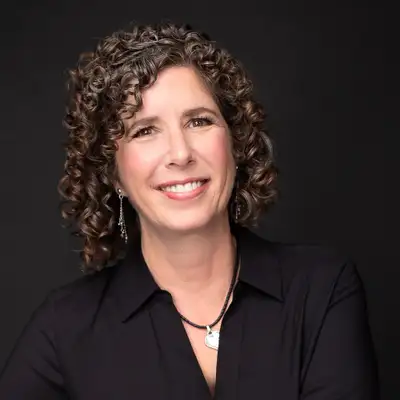
I'm your host, Julie Michelson.
And today we are joined by Dr.
Jen Simmons, the doctor with
the answer to breast cancer.
Dr.
Jen is a board certified breast cancer
surgeon who found functional medicine
through her own bout with illness.
So enthralled by creating health
rather than managing symptoms, she
left her prestigious career at age 50
to open Real Health MD, a functional
oasis for anyone with breast cancer
looking to reclaim their health.
In today's conversation, we discuss
true breast cancer prevention, the
dangers of mammography, the importance
of hormone replacement therapy, and
the solutions to whole health that will
allow you to be the hero of your story.
Dr.
Jen, welcome to the podcast.
Thank you.
I am super excited about
our conversation today.
I am as well.
I have been looking forward to
this for the last few weeks.
So I'd love to start with story.
I know you have like, like most of
the people I interview an interesting
story, um, share with listeners,
how you, you know, what led you
to, to start real health MD and
totally shift gears as an adult,
Yeah.
A real grownup.
a real grownup.
yeah.
So, um, you know, I say that I am the
doctor with the answer to breast cancer
and I don't come by that title easily.
I really never knew a time in
my life without breast cancer.
It was so pervasive in my life and, even
as a very young child, I was well aware
that my relatives died of breast cancer
or that my relatives had breast cancer.
And I had a first cousin growing up.
Her name was Linda Creed.
She was a singer songwriter
in the 1970s and 1980s.
She wrote all the music for the
spinners and the stylistics.
She wrote 54 hits in all, and her most
famous song was The Greatest Love of All.
So she wrote that song as the
title track to the movie The
Greatest, starring Muhammad Ali.
But it really received its acclaim in
March of 1986, when Whitney Houston
released that song to the world.
And at that time, it would spend
14 weeks at the top of the charts.
Only Linda would never know it
because Linda died of metastatic
breast cancer just one month
after Whitney released that song.
I was 16 years old and my hero died
and I never wanted another woman,
another family, another community
to suffer like ours suffered.
And so Linda's life and ultimately her
death gave birth to my life's purpose.
So I do the only thing I know how
to do, I become a doctor, I become a
surgeon, I become the first fellowship
trained breast surgeon in Philadelphia.
And I did that really well for a
really long time and thought that
I was truly serving my purpose.
So I'm doing completely novel things.
I'm doing oncoplastic surgery, which
means that I'm both a cancer surgeon and
a reconstructive surgeon really think
that I'm giving people a silver lining.
And at one point I'm at the top
of my career with a two month wait
list to see me and I'm running my
cancer program for my hospital.
And I am a mother and a stepmother.
And an athlete and a philanthropist
and I have all these balls in
the air and I think that I can
do it all until I couldn't.
And one day all those balls come
crashing down and I go from being
super high functioning to not
being able to walk across the
room because I'm so out of breath.
And I have this extensive workup.
And after three days, I'm sitting in
the office of my physician, but friend
and colleague, and he tells me that
I need to have surgery, and chemo
radiation and beyond lifelong medicine.
And despite the fact that these are
things that I say to people all day,
every day, without hesitation or
reservation, when these words are
coming at me, I'm having an out of body
experience and all I can hear in my
head is walk away, walk away, walk away.
And I did.
My physician and friend told me the
exact thing that I said to people all
day long, every patient of mine, every
breast cancer patient of mine, when I was
a surgeon would say to me, what is going
to happen if I don't do anything, right?
And I would tell them that they
were going to die of their disease.
And my doctor told me the same thing.
You cannot not get treated.
You're going to die.
And it's not that I didn't believe
him, but that voice in my head was
telling me there's another way.
Now.
I'm a traditionally trained physician.
I have no idea what that
other way is going to be.
So, what do I do?
I go to Dr.
Google.
Now, this is, this is 2017.
So, Dr.
Google could be trusted in 2017
as long as you had a brain that
thought critically and you know, you
got rid of all this sensationalism.
Now you can't trust Dr.
Google because the narrative on Dr.
Google is completely controlled
and serving someone else's purpose.
But at that time, I My research was
telling me again and again and again that
I needed to start by changing my diet.
But here I am.
I am around 46 years old at the time.
I'm not overweight.
And so I'm, I'm a trained physician.
So I figure like I'm not overweight.
I'm a trained physician.
I must know what I need to know about.
Yeah.
So, but I, I know that I need help.
So I decide that I'm going to
enroll in the Institute for
Integrative Nutrition, IIN.
This is the certificate coaching program.
And prior to my enrollment and giving them
thousands of dollars, I drove them crazy.
I must've called 20 times asking, are you
sure that I'm going to learn something?
I'm a physician.
Are you sure I'm going to learn something?
So they assured me that they had
plenty of physicians and that in
fact, I was absolutely going to learn.
And so I'm sitting in one
of the very first lectures.
And a man named Mark Hyman walks
on the stage, he introduces himself
as a functional medicine physician.
Now it's 2017, I am deeply steeped in
the traditional medical world and I
have never heard of functional medicine.
So all I can think of is: there's no
such thing as functional medicine.
What is this quack talking about?
And then I remember that I'm
sick and I'm there for a reason.
And so I check my ego at the door
and I focus in on what he has to say.
And within five minutes of him
speaking, my entire world makes sense.
And for the first time since I'm sick.
I understand why I got sick, and it's
so that I could be in that room on
that day in that seat listening to
this man speak because not only is he
telling me what I need to heal myself.
He's telling me that what I'm doing as
a surgeon is not serving my purpose.
Because our medical system is so broken.
It's focused on the wrong thing.
We do not have a healthcare system.
We have a sick care system.
Where all the focus is on being sick.
And we know what we focus on grows.
And so what happens?
We just get sicker and sicker.
And the more you're in that
system, the sicker you get.
And specifically in the cancer space.
All our focus is on the tumor,
but the tumor is not the problem.
The tumor is the symptom of the problem.
And the problem is why the tumor exists.
And so I spend the next three hours
on the edge of my seat, hanging
on every single word that he says.
I am someone that clearly
gets very excited.
I'm an early adopter.
Like if it makes sense to
me, I am running with it.
So that day I enroll in the
Institute for Functional Medicine.
it.
I spend the next three years just immersed
in the study of functional medicine.
I Get certified and I walk away from my
surgical job because I know that there
is no room in there to heal people.
Because that's not what the system is
designed for, unfortunately, and please
don't misinterpret this as I think doctors
are bad people are ill intentioned.
I don't.
I think they have bad training.
I think they're, they're, they're
taught to think incorrectly.
And then they are, they
take such a stronghold.
To that thinking that they've
walked through their careers with
blinders on and I had the God given
opportunity to take my blinders off.
So I heal myself.
It takes me all of three years.
The healing was not linear.
I got way sicker before I got better,
but I learned how to heal myself when
I learned how to heal breast cancer.
And so at 50, I leave my high
paying, very prestigious position, my
community who previously, you know,
I was the one running the meeting.
Now, suddenly I'm out of my mind.
You know, I don't know what I'm doing.
I'm dangerous.
I'm this, I'm that.
went to her brain.
Yeah.
Yeah.
but truth be told, you know, here
it is now we're, we're getting
close to four years later.
I left in 2019 and those same people that
thought that I had lost my mind or like,
Hmm, maybe she's onto something there.
You know, like the metastatic
patients that we have nothing to
offer are suddenly getting better.
What, what's happening there.
So.
You know, if I do nothing else but
inspire curiosity and allow people who
are so set in that conventional medical
world to just take off their blinders
for a moment and consider that there's
something more, that's all I'm after.
Because whether or not people continue
to use conventional therapy, I mean,
I'm not, I don't believe in throwing
the baby out with the bathwater,
Sure.
There's always a time and a place for, so
absolutely.
But the thing that has to happen is
this side of things, because we have
to heal ourselves and healing does
not happen in a doctor's office.
In a chemotherapy suite, in a radiation
suite, in a hospital, happens at home.
And the only person that
can heal you is you.
You are the only hero of your story.
You can have a trusted guide.
You can have someone show you the
way, but the person that's going
to do the work and reap the reward.
Is you.
beautifully said, and I have three hours
worth of questions I want to ask you
because I want to talk about all of it.
Um, let's, let's talk
about, um, I love questions.
I got kicked off of Facebook, um,
Oh,
at one
me too.
first, for saying -so controversial-
that the body can heal.
That was the only thing in that recording
that could have been, you know, um, so
I, I love, I, I just always love the
opportunity to share with listeners
that, yeah, even cancer can heal, right?
Like we, we tend to, once people are
familiar with functional medicine,
um, I found functional medicine
in 2016 and I was like, how did I
not know this was a thing, right?
Like what's the best,
it's the best kept secret
So functional mass medicine actually
is traditional medicine, right?
And what people refer to in this
country as traditional medicine is
conventional medicine that is just
abiding by that conventional wisdom,
which most of the time is dead wrong.
Right.
Well, it's, it's the folk, like
you said, it's the training and
the focus is it's sick care.
It's diagnosis.
Treatment prescription, you
know, it's the whole thing.
It's the pill for the ill,
as Mark Hyman would say.
the, let's start kind of in the beginning.
Let's start with breast cancer prevention
tools, because I have a feeling you're
going to say we're doing it wrong.
well, absolutely.
Um, so let's start with My
entire, um, premise, which is
breast health is health, right?
And so the same things that
are making your breast healthy
are making your heart healthy.
They're making your bones healthy.
It's making your brain healthy.
Yeah, it's the same thing.
And in this country, we associate
early detection with prevention.
What?
the same thing.
but by that point, the
horse is out of the barn.
Early detection is detecting disease.
That's what that's what
we want to prevent.
We don't even want to get there.
But our entire system, you
know, you think about it.
If you go to your doctor and you
say, I'm tired, I'm not sleeping, I
don't have the energy I used to have.
I have no libido.
Oh, would you like an antidepressant?
Right.
So,
first thing people, you
know, it's terrible.
Right.
Fibromyalgia.
Yeah.
Oh yeah.
Pain.
We don't know what it is.
exactly.
So, what's going to happen is, Right.
They're gonna run a lab panel, a
completely useless lab panel that
they don't even know how to read
and, and it's not their fault.
They've just not been trained.
their box.
So, and what are they going to say,
they're going to say you're fine.
And what they mean is, come back when
you've actually failed, because we,
they know, we know you're failing.
We just don't know how
to help you not fail.
So just go and do the same
thing you've been doing.
Eventually you'll fail.
And then I can write you
a prescription, right?
That, that's what's happening
all day, every day, right?
And so it's not until you fail that you
actually engage in the medical system.
And this is the absolute wrong thinking.
So we should have optimal
health our entire life.
We should die old, very young,
but that's not happening.
It is happening in other
parts of the world, right?
It is happening in the blue zones.
And these are pockets around the world
where people live well over 100 years,
and they're not spending the last 10 or
20 years of their life in the hospital.
They're spending their last 10 or
20 years of their life exactly the
way that they spent their first
80 or 90 years of their life.
Living with purpose, being active, eating
in the way that nature intended, right?
And so we live in a completely synthetic
world and expect health to happen to us.
But health is something
that's very intentional.
So if you want to prevent breast
cancer or colon cancer or any cancer
Alzheimer's, or autoimmune diagnoses,
hot heart disease or autoimmune disease.
Like if you want to prevent any of
those things, then we need to eat a
diet that is anti inflammatory because
it's chronic inflammation over time.
That leads to 80% of our disease states.
You need to move your body.
We are nomadic people.
We we're supposed to
yes.
move.
So that's why sitting is the new smoking.
Because sedentary behavior
is pro inflammatory.
So we need to move.
We need to sleep at night.
Sleep is when the healing happens.
So if you're not sleeping,
you're not healing.
Just short sleepers alone are at
risk for a host of chronic diseases.
Like heart disease, like Alzheimer's,
like depression, like anxiety, like
osteoporosis, like arthritis, like cancer,
just because you're not sleeping at night.
Right.
And so we have, and we
have to avoid toxins.
We are, we are living in a sea of
toxins and so many of them you can
avoid by just saying no to things.
Get rid of plastics.
You do not have to drink
water out of a plastic bottle.
You don't.
And you can put a filter on your sink
in your kitchen for a couple hundred
dollars and drink from it for years.
Out of glass or stainless steel.
And stop using those coffee
pods that you drip hot water
through a plastic cup every day.
I mean,
giggling because that was
literally one day I was writing
a presentation on toxins.
And I've been doing this
work for so long, right?
And that's the other thing.
It's ongoing because a, they're
always making new chemicals and,
and, and we're learning, you
know, but I, I literally thought.
You know, this is what I do for a living.
And I looked up and realized
I was using a drip coffee pot.
I had a stainless carafe, but like in that
moment, I, you know, I used it every day.
I looked over and I had
And look at all the, all the Keurig
things and those little plastic cups.
That people are doing that, you
know, two, three, four times a day.
And, and this is one that
drives me really crazy.
You know, all the fancy tea
makers now, they're putting their
tea in those beautiful, shiny
bags that stand up on their own.
They're plastic.
What are we doing?
Why can't we have, why can't we
have fast, fancy, expensive tea
in a paper bag that we don't get,
that is not going to kill us.
Yeah, or silk, or there are options.
It's not like, you know,
plenty of options.
to not have plastic.
I mean, that's the thing
that people forget.
know, I know,
I just had to share because it's my
kind of, you know, admitting that,
look, we're all in this together.
And we're always all learning.
And, and I love just Yeah.
There's no one like, Oh, just fit, just
eat well and don't pay, you know, don't
sleep and don't clean up your house and
but I, I don't want, I don't want
to make people think that little
changes don't matter because they do,
matters.
right?
So do what you can do right now.
And then once you master that, move on to
the next thing and just continue to build
healthy habits on top of one another.
But don't, don't say, Oh my
God, I can't do all of this.
I'm going to do none of it.
Because that's the worst thing that we
can do right is just kind of give up and
accept that we're going to get disease
because we can't tackle this mountain,
like, just take a step at a time.
That's all you need to do
I love,
Yeah.
yeah.
And you alluded to it as you start
where you're going to be successful,
like start with the easy stuff.
It doesn't have to be the biggest
hit because that's going to give you
that energy to continue the journey.
And,
there are things that are so
easy, like just getting rid
of your nonstick pans, right?
Swap them out so that when you're
cooking your food every day,
you're not, you're not getting
that plastic inside of your body.
And
forever chemicals.
Yeah.
And I don't care.
I have to add, because again,
I go back to my journey.
I remember swapping out my, you
know, probably Teflon or whatever
it was for, actually, I will use
the company name, a green pan, which
back then in my, I thought meant.
Oh, well, this is this is
Greenwashing.
Yeah, it's just so really,
there is no nonstick pan.
That's not loaded with chemicals,
unless you're using a cast iron pan
for other than, you know, a stainless
if you, if you want something that
seems nonstick, but really, if you
get a stainless pan hot before you
add the oil, it becomes nonstick.
Like it it's night and day.
So I cook all the time and I
haven't had a, but just don't
fall for that greenwashing.
Yeah, yeah.
And there is a ton of greenwashing.
So, you know, people, marketers are
very, very good at deceiving you and
having you believe their narrative.
So just, obviously, be careful.
But I do think that the Always Pan and
the Caraway Those are ceramic and those
are nonstick, and I think they're okay.
ceramic is different than, yeah, you
know, the new, what they do is they pick
on, it's like plastic BPA free plastic.
So people say, well, it's like, no,
they'll, they'll pick on as people
catch on to which chemicals are
terrible then, you know, but there, it
they'll just substitute another
one that you don't know about.
Yeah.
Yeah.
Yeah, it's kind of
terrible It's kind of sad,
but
it is what it is and we have
to be an educated consumer
We have to take responsibility.
Yeah, yeah, Darren O'Lean wrote a book
recently called fatal conveniences
I don't know if you've read that
I have not.
a really really good one I mean
it will make you throw out just
about everything in your house, but
I probably already have.
Um, but it I mean, it is amazing and
I do think that knowledge is good.
It is.
And again, it's about reducing,
you know, handling your burden.
Nobody, we're not saying go live in
a bubble or don't ever drink tea or
don't, you know, it's, it's about,
I always say, if we can make our
home our haven, it's a huge win.
Right.
And, and, and it really,
Absolutely.
Where you spend your most time.
Um, and.
Listen, I am not perfect.
So after someone listens to me talk
about toxins, I'll get like, you
know, 200 messages on Instagram
about, but you color your hair.
Yes, I do.
I color my hair.
a
color my hair with the safest
product that I could find.
And I'm just not like, I have a full
head of gray hair and I'm just not ready.
And that's,
I color my hair,
that's the whole.
polish my nails.
I, you know, there are plenty of,
all of my makeup is completely clean.
I don't wear that much of it.
Like I, I make my choices.
Intentional choices.
And that's,
make intentional choices.
I think that's the best example.
I had one client who literally,
when, when I had my consult with
her, um, she had said, this is maybe
a whole different can of worms.
I wasn't planning on opening up,
but she had said she was a vegan.
And I told her I'm not
the person to help you.
And I'm not saying you can't
heal autoimmunity as a vegan.
I that's.
That's not my specialty.
And she was brilliant enough to
say, well, just tell me what to eat.
You know?
So she, she did, she completely changed
her diet and, and, but as we were cleaning
up products, um, I said, you know, what
kind of shampoo and conditioner are using?
And she said, that's not, I'm not even
telling you cause I'm not changing it.
And I said, fine.
You know, we cleaned up everything else.
Like that's, we all have.
Yeah, and you don't have to do everything.
You just have to do enough
to keep you well, right?
You just have to do enough.
Um, so that's, that's a great example.
Right.
We just, we make the choices.
And so I think, you know, I'm sure
you'll be just as stunning with
the gray hair when you're ready.
Cause gray hair is gorgeous,
not ready.
I think you're living it's to me,
it's a better living example, right.
Of where we're just
intentional and we choose.
So I say, I know you do
you know, if you're, if, if
your prevention plan is you're
getting joyful movement,
Every single day, you're
prioritizing sleep.
You're managing your stress
because the stress is ever present.
It's always going to be there.
And what we need to do is develop
techniques to not internalize at all.
Like we have the choice as to
what we internalize, what we take
in, what we allow to affect us.
But that, we're not
born with those skills.
Right.
Right.
So we all need to develop a skillset where
we choose what we allow to affect us.
And I'll take meditation for an example,
because so many people, their objection to
meditation is, Oh, I can't clear my mind.
Well, no one can clear their mind.
I mean, the mind is always thinking the
only time that your mind's, you know,
your mind stops thinking when you're dead.
And up until then, your mind is thinking.
So there's a misunderstanding around
meditation and what it is and what
it is meant to do because we don't
meditate to clear our mind and we don't
meditate to get good at meditation.
We meditate to get good at life
I love it.
this and a skill like
anything else that needs to
It's an exercise.
That'd been the whole
point is it's an exercise.
And I was one of those people who totally
thought, you know, I suck at meditation
because I'm making a shopping list or,
you know, and so I love, that's like the
first meditation myth I love to debunk
for people is like, no, no, no, no, no,
no, you have the wrong idea, wrong idea.
Yeah.
So.
you know, if you're doing that and
you're prioritizing sleep and you're
avoiding toxins and you're living
purposefully, like that's really the key.
And so if you're doing that and you
still get breast cancer, this is
the person that is going to do fine.
This is the person that is
going to do well afterwards.
Um, but if you're not doing any of that
and you get breast cancer, you've worked
to do, you've worked to do, and it does
happen, it does happen when you are
seemingly doing everything right, because
there are things that we cannot control.
So for instance, I was
living in a mold home.
I didn't know that, right?
And it took me years to discover that
that was my issue and that was my driver.
Because here I am, like.
Learning and on the perfect diet, I've
gotten rid of all my plastic and my
non-stick and I stopped wearing perfume
and cleaned out all the stuff in my house.
And you know, my family hates me cuz
they hate our new laundry detergent.
And I hate our new
toothpaste and I hate our new
smells good and nothing.
smells good.
And I'm cleaning with
vodka and lemon juice.
You know, like,
Which is awesome because I can't
stand the smell of vinegar.
So I love the vodka.
That's awesome.
and, uh, and, you know, they're telling
their friends that their mother has
lost her mind and, you know, and I
still, I still wasn't getting better.
I was getting worse.
So, you know, people who I tell everyone
to ask their why, like if you're
not, if you don't have the health
that you expect to health have, or if
you have a breast cancer diagnosis,
you have to ask the why and you can
seemingly be doing everything right.
But no one intentionally lives in mold.
No one intentionally has
trauma in their background.
No one in, you know, like, we don't
intentionally live in bad relationships,
but they happen all the time.
right.
And so, and only an illness.
This is about opportunity.
It is really God giving you the
opportunity to reevaluate and whether or
not you want to take that opportunity,
that's on you, but that's why no one can
be the hero of your story but you, right?
We can't change the past,
but we can choose to change
the direction of our future.
Amen.
I've been really and and I love
your highlighting to we talk
about responsibility, right?
But it's not blame.
It's just responsibility.
It's not.
Yeah.
It's more, it's more
choice than anything else.
And you, you can choose to say
like, I'm not doing anything
wrong, but it won't serve you.
It won't serve you to see your
diagnosis as a punishment.
And it won't serve you to say, I'm
unwilling to change because without
change, you can't expect change.
Well, if you keep doing what got
you sick in the first place, it
doesn't, this doesn't make sense.
There's no, there is no pill for that.
There's just not
And you can't get sick
in the same environment.
You can't get well in the same
environment that you got sick.
And so, you know, it does,
it does require change.
And I would say that the vast
majority of people, even though
it's very hard on the front end,
on the back end, they're grateful.
Oh,
They're grateful for the
health that they have after
Yeah.
because it's better than the
health that they ever knew before.
Yep.
And we normalize how we feel
until we hit that wall, right?
Drop the balls, can't walk
across the room, whatever.
And then when we get to the
other side, it's amazing.
in many ways we're forced to, right?
Because we go to the doctor
and we told that we're fine.
Right.
And, and look at what
conventional medicine has done.
I mean, we have extended the
standard range of what's normal
so, so vastly because we don't know
how to help people until they fail.
And so we just call more of
it normal and we normalize,
Well, they're using normal
as, as really average.
So do you want to be the average of this
really sick society we're living in?
No, I don't.
No, thank you.
For sure.
I'm with you.
I don't.
I don't.
I want to and I promise I won't
keep you to too much longer.
But I really want to touch on,
you know, we talked about that
early detection is not prevention.
Um, what are your thoughts on, you
know, the, the way women mammograms.
you want to talk about mammograms.
I do.
I want to talk about mammograms.
Spit it out, Julie.
Just go there.
so our mammographic screening
program, which was developed in
the 1970s, is built on a premise.
The premise is that breast
cancer starts at some small size.
And progresses in a linear manner, at
which point it reaches some critical mass
that you are now vulnerable to metastasis.
And if we find that breast cancer
in that window before it's reached
that critical mass, we can decrease
the amount of treatment people
need to get and save lives.
It's a lovely theory.
It just doesn't happen to be true.
Breast cancer is what it
is from the beginning.
So if it's going to be an
aggressive process, it's
aggressive from the very start.
It doesn't grow in some linear
fashion and then become aggressive.
It starts aggressive.
At the same time, if it's not going to
be an aggressive process, it's not going
to be an aggressive process ever, ever.
So it may like meander along and it may
grow, but it's never going to metastasize.
And then we have everything in between.
So here's the bottom line, no matter
how many women that we screen every
year, we have same number of women
presenting with later stage mammograms.
We have the same number of women
presenting with later stage cancers, and
we have the exact same number of women
who die every year of breast cancer,
no matter how many people we screen.
So if screening really saves lives, why
aren't we impacting that bottom line?
Why aren't we able to prevent
those same women from presenting
with later stage disease?
Why aren't we able to decrease
the number of women each year
that die from breast cancer?
And it's because breast cancer
does not grow in a linear fashion.
And there are some other
problems with mammogram.
So I never really understood using a test
that causes cancer to screen for cancer.
say it again, please.
So it never really made sense in my head.
Right.
And the problem is now, now we
have recommendations to start
every woman, every woman at 40.
We've had them from the
inception of my career.
So I, I started practice in 2003 and.
We were the American Cancer Society was
recommending a screen at 35 one between
35 and 40 and then 40 on yearly and that's
how I practice medicine when we when we
started when we did the actual research
on the safety of mammographic screening.
We were talking about a 2d mammogram.
And since 2012, we're no longer
talking about 2d mammograms.
We're talking about 3d mammograms
or, or tomography, and this is,
or digital breast tomosynthesis.
That's what it's called dbt,
digital breast tomosynthesis.
And this is two to three
times more radiation.
Now we justified it because we said we
were going to cut the callback rate.
So the callback rate
before was around 60%.
Now, the callback rate is 50%.
So we decreased it by 10%.
In the meantime, people who are getting
callbacks, they're not just having
one mammogram a year and they're not
just getting one callback a year.
Because once you start in that
callback cycle, you're called back
every six months and you're called
back for years on end, right?
Three, four.
It's not unusual for women to
get called back for three or
four years every six months.
Well, what's happening with
these women over a lifetime?
Because supposedly
mammograms are saving lives.
So if mammograms saves one life in
10, 000 over someone's lifetime, we're
causing seven cancers in that 10, 000.
So we're causing more cancers from
the radiation than lives we're saving.
So our mammographic screening
program needed to be abandoned
many, many years ago.
But the problem is...
It makes a lot of sense, but the
mammographic screening program makes a lot
of dollars and it's not going anywhere.
So
And women are scared and
women are scared, of course,
to do.
listen, the one thing that has been
beaten into our heads for the last 50
years is mammograms save lives, right?
Who is unringing that bell?
Mammograms save lives.
People are scared to not get a mammogram.
I hear this every single day.
I don't want to get a
mammogram, but I'm scared.
listen, they did their job.
Like they have convinced people
that we need mammograms to save our
lives, but it's simply not true.
Just like the premise that the
mammogram is built on is not true.
Mammograms are not saving lives.
They are causing way more
harm than lives we save.
So I, I hate to pose a problem
without giving people a solution.
So here it is, here it is.
All those things that we talked about
already, breast health is health, right?
So eating in an anti inflammatory
way, moving your body, um, Uh,
prioritizing sleep, avoiding toxins,
living purposefully, managing stress.
All those things are super important.
I think breast examination
is super important.
I think that everyone should know their
body, know what it looks like, know
what it feels like so that you can
recognize a change if there is one.
And if you need a diagnostic
study, get a diagnostic study.
If you are getting an x ray, a mammogram,
a CAT scan, a DEXA scan, a PET scan,
you're getting any of those things that
utilize ionizing radiation, take 100
milligrams of melatonin one to two hours
before your study to combat the effects.
Of radiation to neutralize
those free radicals that are
generated when you have radiation.
I love the solution focused.
Yeah.
Now I do want to, I do want to
talk about one more thing because
there is FDA approved imaging.
It is a novel imaging technique.
It is 40.
It has 40 times the resolution of MRI.
There is no radiation.
It is fast.
It is painless.
And it will replace MRI and mammogram.
It's called QT Imaging.
It is only available now at
eight centers on the West Coast.
But I am opening up a center.
I have colleagues that
are opening up centers.
And within the next five years, I
hope that it will be readily available
for everyone who wants to screen
in a way that doesn't cause cancer.
That is the definitive study, and if
you have a normal QT scan, the, the
imaging is so definitive that you do
not need another study for two years.
That's how sensitive and specific it is.
Amazing.
stay tuned for QT imaging
coming to a town near you.
I'll be, I'll be coming to Philly soon.
Um, no, it's, it's fantastic.
And you cut, we covered, I promised I
would, I would not make this a three
hour interview, even though it's so rich.
We can be rich roll for the day.
I love it.
I just is.
It's exciting.
I get excited.
Of course, I'm such a geek
anyway, but I really do.
I get excited every time I meet
a doctor that's changing the
conversation and actually, you know,
not bashing anybody, but Oh, baby,
I have a visitor.
um, you know, really providing solutions
and new innovative approaches that work.
Um, and so I just am really grateful.
For, for what you are
doing for your patients,
Well, thank you so much
for having me here.
Hi.
Um, I am on a mission to change
the impact of breast cancer.
And I just want people to
know that health is achievable
attainable, but it's up to you.
Right.
We can't, we can't farm
out our health anymore.
We can't look to someone
to make us healthy.
The only person that can make us
healthy is, is right here inside of us.
Um, and.
mammogram is not going to save you.
Um, and the one thing that we didn't
talk about today is that breast
cancer is not caused by estrogen.
Estrogen is
I wanted to talk about that.
Yeah.
So let's just suffice to
touch on it.
Let's touch on it, though, because
I that's another scare tactic.
Like people are afraid of
hormone replacement therapy.
Um, and so can we talk
about that for a minute?
absolutely.
So the, the reason that people are afraid
of hormone replacement therapy is because
of the, the women's health initiative
Yes,
So prior to that, nearly everyone
was placed on hormone replacement.
And so we decided to design a
study, the biggest of its kind.
I forget how many, I think it
was like a 3 billion study.
So an unprecedented amount of money
was placed towards this study.
And the study that the lead researcher was
a cardiologist and this study was powered
to determine if hormone replacement
protects against cardiovascular disease.
So, first of all, people are under the
impression that it was to determine if
hormone replacement causes breast cancer.
That was not the intention of the study.
That was a secondary outcome.
It's not the intention of the study.
Now we know that the vast majority of
health deterioration that happens in
menopause happens in the first 10 years.
The average age of menopause
in this country is 52.
The average age of women on that study
in the Women's Health Initiative was 63.
These women are 10 years past menopause.
They have already developed heart disease.
They have already had bone loss.
They have already had brain deterioration.
And then we put them, and then
we randomized them to women
with a uterus getting synthetic
estrogen and progesterone, women
keyword synthetic.
yeah, synthetic, women without a uterus
getting estrogen alone, and then the
group that wasn't getting anything.
Now, it turns out that the group
that wasn't getting anything,
some of them had actually been
on hormone replacement prior.
So in that group that wasn't getting
anything, they had a lower than normal,
um, breast cancer occurrence, right?
It was below the predicted
number in the population.
And that is because hormone
replacement is actually protective.
Now, the other group that we saw that
hormone replacement is productive
is in the estrogen alone group.
They also had less breast cancer,
less heart disease, less everything.
And there was only one group
where they thought they saw
an increase in breast cancer.
After two years, they stopped the
study because they saw an increase
in breast cancer in this group.
Here's the problem.
Breast cancer has like a
10 year growth history.
So these women already had breast
cancer when they came into the
study and it has nothing to do
with the hormone replacement.
So the results of that study were,
they were released prematurely before
they could validate their findings.
As it turns out, their
findings were invalid and a
retraction paper was printed.
No one read it.
Yeah.
and, and the truth is that
generations of women have suffered.
Because of that false
conclusion of that study.
So what I advise everyone to do is
when you are in that perimenopausal
phase, have your hormones evaluated.
I don't believe anyone should suffer.
My good friend, Annika Becca, told
me that menopause is mandatory,
but suffering is optional.
No one should suffer.
So if you are having eye flashes,
mood disturbance, a loss of libido,
vaginal symptoms, depression, anxiety,
sleep disturbance, if you're having
any of those things, you should be
evaluated for hormone replacement.
Now, I don't do that in isolation.
At the same time that I'm evaluating
people for hormone replacement, I'm
also making sure that their diet
is on point, that they're moving,
that they're prioritizing sleep
and not choosing to binge watch
TV all night long, that they are.
Avoiding all of these environmental toxins
and Xeno estrogens that we are surrounded
by that they are managing stress and
building their stress management toolbox.
So I'm not just writing prescriptions
for hormone replacement.
I'm making sure that people are
prioritizing their health and then
getting the supplementation that they
need in terms of hormone replacement.
Right.
And some,
you use only bioidentical hormones.
I do, I use bioidentical
You don't want to give your,
your patients the horse hormones.
And I love horses.
I have horses, but, but I'm not a horse.
I just
but I actually don't think that that's
why, I mean, they did use synthetic
hormones in that study, but I don't
think that that's why they saw the
results, and I think subsequent studies
have been done with both bioidentical
and synthetic hormones, and we still
do not see an increased risk of breast
cancer due to hormone replacement.
So, but there are bioidentical
hormone replacement options readily
available in, in any pharmacy.
So it's not like you have to
go to a compounding pharmacy.
I mean, these things
are readily available.
So there's really no reason not
to use the bioidentical form.
You just, it's, it's whole health
is what I heard you say, right?
Again, that's not a quick fix either.
There is no quick fix.
there is no quick
of it.
And people on hormone replacement
will doing all those things will still
get breast cancer because we cannot
control everything in the environment.
But this is what I'll say about that.
We know that the women on hormone
replacement who get breast
cancer have better outcomes.
Yes,
And they do.
And it's probably, uh, twofold.
It's probably because hormone replacement
is actually protective, and it was
doing the best that it could do.
And, um, Oh my god, I totally
lost my train of thought.
that's okay.
Women on hormone replacement therapy
tend to do better even if they have
Oh, yeah.
And because women on hormone replacement
tend to take better care of themselves.
So they tend to be in better health.
And so I am a firm believer
in hormone replacement.
I can't say this enough times.
It does not cause breast cancer.
Don't come back at me and say, but
my, my cancer is driven by estrogen.
Guess what?
Normal breast cells
are driven by estrogen.
Like it is normal to have estrogen
receptors on breast cells.
It is normal to have progesterone
receptors on breast cells.
So that is not what's driving your cancer.
What's driving your cancer is the
inflammation, is the xenoestrogens,
is all, are all the health
disruptors that are in your life.
You're so much better off looking for them
than taking away all of the estrogen in
your body, which is how we respond to it.
And in doing that, we
create heart disease.
We create Alzheimer's, we create
osteoporosis, things that claim
way more lives than breast cancer.
We are going about it wrong and we have
to change, we have to change our paradigm
because we are hurting people that first
do no harm went way out the window.
this is just so good.
People need to hear it.
I'm like, how many times
can I release this?
People hear it.
Amazing.
So here's your opportunity.
I always get surprised because I
know you have a really long list
to pull from, but what is one step
listeners can take today to start
to move the needle on their health?
Yeah.
Our biggest exposure to the outside
world is through what we enjoy.
Absolutely.
Changing your diet is step one and making
sure that you are on an anti inflammatory
diet, whatever that is for you.
We are all bio identical and what
works for me may not work for you, but
yeah, we are all bio and oh, sorry.
I said bio identical.
I'm, I'm still in my hormone
stuck on the hormone.
It's all good.
So we are all bio individual and we are
not all going to have the same diet.
However, processed food
is bad for everyone.
Sugar is bad for everyone.
Like we, we know there are things
that are just not good for you and
the sooner you can get them out of
your diet, the better off you will be.
So I think that that is the most
important thing and the first
place that everyone should start.
I love it.
Awesome.
Thank you for picking up on my bio
identical, bio individual thing.
That's what I'm here for.
I would hate, I would hate everyone
to think that I'm saying that
everyone should eat the same thing.
I love that.
Where is, and everything is going to be
in the show notes, but for people that
listen on the go, like I do, where's the
best place for listeners to find you?
So, uh, my website is RealHealthMD.
Uh, and there, if you want to talk
to me, you can apply for a call.
Uh, you can follow me on social media.
I'm Dr.
Jen Simmons and my Jen has two N's.
Um, and I actually have a Facebook group,
a public Facebook group where you can ask
questions and be part of our community.
It's called keeping abreast with Dr.
Jen.
Love it.
Amazing.
Dr.
Jen, thank you so much.
This was just packed with, I mean, just
people could listen to any snippet and
really get so much value out of it.
So I'm just very grateful for your time.
It's my pleasure.
I'm so happy to be here and happy
to be with someone who wants to
spread the same message that, you
know, breast health is health and
we are in control of our health.
Amen.
For everyone listening, remember
you can get the transcripts and show
notes by visiting inspiredliving.
show.
I hope you had a great time and
enjoyed this episode as much as I did.
I'll see you next week.