Subscribe
Share
Share
Embed

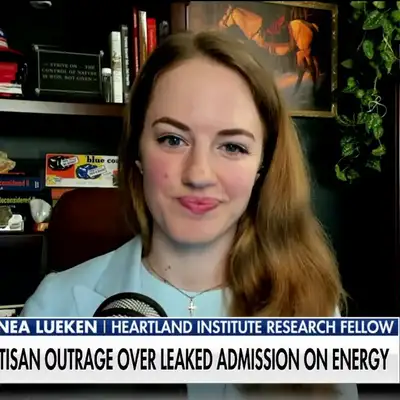
The weekly flagship podcast from The Heartland Institute features in-depth policy discussions connected to current news. Host Donald Kendal leads the discussion with the usual crew of Heartland Institute Vice President Jim Lakely, Socialism Research Center “Commissar” Justin Haskins, Editorial Director Chris Talgo, and others at this national free-market think tank. The entertaining and informative discussions often hit topics such as the environment, energy policy, Big Tech censorship, the troubling rise of socialism, globalism, health care, education, that state of freedom in America and around the world, and much more.
This podcast is also available as part of the Heartland Daily Podcast, the “firehose” of all the organization’s podcasts that take deep and entertaining dives into public policy.
Alright. We are now sort of live. We are prerecording this show for you guys today. So welcome anyway to all of our audience. We love talking about media on this show.
Linnea Lueken:And I want to assure all of our viewers that although I am closing out my first year as the host of this show, we are going to continue this great tradition of ending the year talking about movies, television, and the future of entertainment. Our big question this year is this, how much is AI going to impact the industry? Is it the beginning of the end or maybe something better? We're going to talk about all of this in this special end of the year episode of the In the Tank podcast. Alright.
Linnea Lueken:Welcome to the In the Tank podcast, everyone. I am Lynea Luken, your host. And as usual, we're gonna get right into this. We have Jim Lakeley, vice president and director of communications at the Heartland Institute, Sam Karnik, senior fellow, Chris Talgo, editorial director and socialism research fellow. And also joining us today, Donald Kendall, who would not miss this.
Linnea Lueken:He is the director of the Glenn C. Haskins Emerging Issues Center. We also have a very special guest today who has graced us with his presence, and that is Christian Toto, award winning film critic who founded Hollywood and toto.com. He cohosts podcasts off the beaten path as well as as well as his podcast, the Hollywood in Toto podcast. He has been on the daily wire, the blaze all over the place.
Linnea Lueken:So welcome to the show, Christian. Thank you so much for joining us.
Christian Toto:Glad to be back. Wouldn't miss this for the world.
Linnea Lueken:Yeah. We have him on every year. I say we like I've been here this whole time, but really it was Donnie who was in charge before, and I just sometimes showed up. But, anyway, gosh, we have people from all over the country on this show. We have people from all over the world watching this show.
Linnea Lueken:So I just wanted to say right off the bat here, Merry Christmas to everyone. And thanks, guys. I'm I'm looking forward to this one.
Donald Kendal:Oh, yeah.
Linnea Lueken:Me too.
Donald Kendal:This is, our fifth one. I think this is our fifth one consecutive. It's our longest running tradition on Inn and State podcast.
Linnea Lueken:Yeah. Absolutely. In 522 episodes. Man, we're killing it. Anyway, before we get started, guys, as always, if you want to support the show, you can go to heartland.org/inthetank and donate there.
Linnea Lueken:Please also click the thumbs up to like the video, and remember that sharing it helps us to break through some of YouTube's suppression or even just leaving a comment helps us too. If you're an audio listener, you can help us out by leaving a nice review. And since today's episode is a little bit looser compared to our normal show, I'm going to mix it up a little bit and start us off with talking about our incredibly generous sponsor, Advisor Metals. So, you know, a lot of people in the conservative libertarian and my favorite plain old prepper spaces love to hit you with ads for buying precious metals. They're not wrong that they're a good investment, but you really wanna be careful about who you buy your metals from.
Linnea Lueken:At In The Tank, we trust advisor metals over all of those other guys. And that's because we know that the person running the place is the best of the best. A great friend of Liberty, Ira Brachatsky owns and is the managing member of Advisor Metals. He has decades of experience in precious metals and is the only person in the physical precious metals industry who has the Commodities Futures trading commission federal registration. What does that mean for you?
Linnea Lueken:Well, it means that everything Ira or a member of his team says has to be factual. There's no sketchy sales pitch or bait and switch. He is held to the highest ethical standards and there's full transparency, which is way too lacking in other places nowadays. If you want to diversify your investment portfolio and your savings, if you're planning for retirement and are concerned about economic uncertainty, if you want a tangible asset that is easy to buy and sell, you can secure your assets with a wide range of physical precious metals by getting in touch with our friend Ira at Advisor Metals. He is going to make it easy for you, and he's a supporter of our work and our show.
Linnea Lueken:So please support him and us by visiting climaterealismshow.com/metals, and you can leave your information for Ira and get started with investing in precious metals and expand your portfolio. Go to climaterealismshow.com/metals. And when you talk to Ira, make sure you let him know that we sent you. That helps us as you're helping your financial future by diversifying with precious metals. Alright.
Linnea Lueken:Thank you, guys. And thank you, Ira. Merry Christmas to Ira as well. We are so appreciative that he supports us on this show as well as the climate realism show on Friday. So it really means a lot to us.
Linnea Lueken:Okay. But we will get into it now. We have for our unhinged topic today, not quite the usual unhinged, so we're not gonna drop. But we are going to start us off at a low point by talking about the worst movies of 2025. And so full disclosure, I am the worst host in the world this year for this particular topic because I barely watched any new movies this year.
Linnea Lueken:I saw so many reviews of movies and I saw so many, you know, kind of quick you know, just what some what someone I know thought about a movie. And almost every single time, it made me not interested in going and seeing the actual movie. I spent a long time on IMDb in anticipation of this episode trying to figure out what I actually have seen this year. I saw one movie in theaters, and it was alright. I saw one new release on flight, and it was alright.
Linnea Lueken:A few I saw at home rented on Amazon, but really have not seen very many new movies. I didn't like how to train your dragon, but only because the exact movie but better exists, and it's called how to train your dragon. I saw a movie called death of a unicorn on Amazon, and it was pretty bad, but I kinda liked it anyway. But that is why I'm including television on this list today for this topic because it's not just movies, television as well. And it is so easy for me to offer my worst of the year prize to Ironheart, which
Donald Kendal:Oh, no.
Linnea Lueken:Walked through for almost three whole episodes before I just couldn't take it anymore. And Donnie knows too. So please, you guys, I wanna hear everybody's opinion on this. What was the worst movie or television show that you saw this year that really is a standout, bad product?
Christian Toto:Well, let me jump in and say that, normally, when you've got Robert De Niro, it's a good thing. If you hire two Robert De Niros, maybe not a good thing. The movie Alto Nights came out earlier this year, and it's a complete disaster. Now it's a gangster film with De Niro. You think, how could it go wrong?
Christian Toto:You have Barry Levinson who gave us, many great movies including diner, another great choice. It is a complete dust dust spa, trash bin fire. It's just disastrous. And casting the same actor in two different roles and not even having them as brothers where it might make some sense was just the worst decision ever, and this is a an absolute I mean, I just don't understand it. I don't know how you can make a dull interest uninteresting gangster movie, but they've done that with the Alto Nights, and the box office responded in kind.
Christian Toto:It was one of the biggest flops of twenty o twenty twenty five and deservedly so.
Chris Talgo:Okay. So, Lynne, we're just doing our worst or most. Okay. So worst movies, I did not see either of these, but just based on the commercials, I'm gonna go wicked and snow white. Cool.
Chris Talgo:K? My worst TV is gonna be every single late night TV show except Craig Godfels and, of course, The View. Oh, good.
Donald Kendal:Yeah. I I, like Lynnae, have not have not ventured out and seen a whole lot of movies. I went and saw Lilo and Stitch, the live action one because I have a little one that was interested in seeing that movie. A lot of people were hating on that movie. I didn't think it was too bad.
Donald Kendal:Probably a little long. I think, like, no kids movie should be longer than, like, an hour and twenty minutes. Like, lop off thirty minutes of that movie, and I would have given it a bigger thumbs up. But I I do I am mad that Lynne had brought up Ironheart. I think I suppressed that memory of me actually watching that show, and now it's all flooding back to me.
Donald Kendal:So I'm very upset.
Jim Lakely:Well, as for as for me, unlike unlike Christian Toto, my friend, I do not get paid to watch the schlock in garbage that comes out of Hollywood on TV and and in theaters. So I can choose to not attend and watch Snow White. Although I probably watched probably 50 times the length of the Snow White film of videos on YouTube of people ripping Snow White, the the movie. I really have enjoyed this year because it's just been a a topic rich environment for some of my favorite YouTube channels and critics like Christian Toto who will tell me how terrible all the schlock out of Hollywood actually is. And as you were, you know, as
Chris Talgo:you were and I was trying
Jim Lakely:to think, and I was telling Donnie this morning here in the office, I can't think of the worst thing I saw this year because I have I have not had to seek it out. I have not I've not been paid to do it like Christian Toto is. And first thing I thought it was, oh, yeah. That's right. I watched the acolyte the acolyte, which was so bad.
Jim Lakely:And then I
Donald Kendal:to look
Jim Lakely:it up on IMBD. That was in 2024. The the memory the horrible memory of that show is still so fresh in my mind that it qualifies. So I'm that's what I'm gonna say because the trauma from watching, the the acolyte has carried over for me into 2025.
Christian Toto:The stink can't be contained by a single year. Hell.
S.T. Karnick:Used I used to I used to watch pretty much everything. And now since around 2012, I don't watch anything. Yeah. I read, and and and and I only read things that are before well before 2032. But it it it is it is interesting what what Chris brought up.
S.T. Karnick:I thought the the commercials will tell you everything you need to know, the the the promos that, okay. This is horrible. This is going to be exactly what we've been doing, for the last dozen years. So either either you like that or you don't. The fact of the matter is I don't.
Donald Kendal:Well, now I'm very curious. You brought up your your least favorite movie of the year, Christian. Where where does Snow White fall on the on the list? Is that
Christian Toto:You know, it it didn't make the cut for me. I did not hate that movie, and I know it makes me a bit of a pariah in my circle, but I thought it was, mildly effective, slightly charming, inoffensive. I mean, I know all the hullabaloo that came before it. I know that, you know, the all the the dwarf issues and Rachel Zeigler putting her foot in her mouth so often that she must taste like her breath must taste like feet. But I just maybe my expectations were so basement level that I thought it was watchable.
Christian Toto:Nothing more. I mean, certainly wasn't great or even very good, but, yeah, it did it didn't I I couldn't put it on that list. It didn't it didn't warrant that for me.
Donald Kendal:So, you know, just just because, you know, like, I I I have a habit of kinda tracking the box office, you know, output and all of that. And and one of the kind of the macro trends is, like, generally speaking, I think one of the episodes that we did, we talked about it was, the death of the billion dollar movie or something along those lines. Is that, like, the trend line in terms of box office returns is, like, kinda going down, and I think that's this year is no exception to that. Mhmm. And so I just wanna, like, kinda go through some of these things.
Donald Kendal:The the Snow White movie, I mean, that was just in absolute, like, disaster management by the time that it came out. So that flopped horribly. It did only 200,000,000 worldwide. Only 87,000,000 of that was domestic. I don't think anyone was expecting it to do it as, you know, better than that.
Donald Kendal:But I remember at the beginning of the year, there was these lists that come out. They're like, you know, the the movies that are likely to make a billion dollars, And it included Jurassic Park. There was a new Jurassic Park movie this year in case people forgot. Superman, Fantastic Four, you know, some of these more kids movies. And with with only two exceptions, the Zootopia two and Lilo and Stitch, those are the only two that hit the billion dollar mark.
Donald Kendal:All of the other ones fell short. A lot of people thought Jurassic World would have done it, despite the the last few movies not being very good. A lot of people thought the new fantastic four movie with Pedro Pascal in it, right, was gonna do is that who it was? I don't know. I don't even remember.
Donald Kendal:Was gonna do really well, but none of them did. So is that a was that a surprise to you, or were you kind of expecting that?
Christian Toto:I mean, I think that's the like you mentioned, the trend lines are hard to argue with. On one side, the Superman movie did better than I thought. I thought it was a very mediocre film and I'm being kind, but some people really enjoyed it. And I think the old fashioned nature of it and having that character back in our lives was enough, but it didn't it didn't hit the billion dollar mark. I know that's Not
Donald Kendal:even not even
Christian Toto:high figure. But yeah. But that's that's what superhero films, the ones that were popular, used to make regularly. It just doesn't happen anymore. And I was actually surprised by the Fantastic Four First Steps, both that it didn't make a ton of money.
Christian Toto:I think it maybe eked over for a profit, but I found it utterly charming. I I if I just rewatched it a couple days ago, The middle section is a little weak and there's a visit by the mole man which is just a silly subplot they should have just taken away immediately. But I found it like the old school MCU movies to a degree where I cared about the characters and the action was interesting and there were stakes there. And I thought it was extremely pro family, even pro life in ways. So it checked a lot of boxes for me.
Christian Toto:I was really surprised by that. And I know everyone hates on Pedro Pascal and I get it he's everywhere and boy, is he annoying interviews, but I thought he was just fine as Reed Richards and and anchoring that that family and his fear for his child, holding the marriage together, having literally the weight of the world and trying to defend the world against Galactus. I I thought it did exactly what it should have done. And I the thing that I think the fact that people didn't respond like I thought, not so much my ego, but just I think then I think we're moving on from superhero movies. We'll still watch them.
Christian Toto:We'll still cheer them on. But the big big numbers, I don't I don't know if that can happen anymore. The only chance is Avengers Doomsday and that that one can't overperform. They're in trouble. Real big trouble.
Donald Kendal:Yeah. I'm saying sorry. I don't I don't fear of, you know, being accused of hijacking the show. I got one more question for you.
Linnea Lueken:Please be done.
Jim Lakely:You're not you're not the host
Linnea Lueken:anymore, Donnie. I know. The
Donald Kendal:another trend that we were kind of, like, speculating existed, and maybe there's some more data points to that is, like, the the reemergence of kind of, like, the old, like, eighties kind of action movies, so to speak. So in the years past, we talked about, like, Top Gun Maverick, but there was a couple more this year. There was the f one, the movie, and then Mission Impossible, the final reckoning. Neither of those did billion dollar numbers. Nobody expected them to do billion dollar, numbers.
Donald Kendal:But, f one did 631,000,000, and Mission Impossible final reckoning did about 600, million dollars. So those are those are those are pretty good. I'm wondering if studios are gonna invest a little bit more in kind of that, that, you know, like, Tom Cruise heavy, Brad Pitt heavy, you know, action movie of, the eighties era.
Christian Toto:Yeah. Yeah. It's a double edged sword because you're right. Both were very entertaining and both did quite well, but both had huge budgets. I mean, the f one movie, I forget the the raw numbers, but it was massive.
Christian Toto:And you think you when you watch it, you think, I don't see that on the screen. I don't know what the production issues were. But Mission Impossible, you can see it on the screen. They they those movies cost a lot of money. And I think with that one, maybe COVID the the hangover from COVID was still impacting it.
Christian Toto:But that's part of the problem. It's actually probably why we'll talk about AI at some point. They've gotta reduce those budgets because even when movies are very successful and people love them, they either don't make a profit or they barely make a profit. And if you can't get those movies to kinda ring those bells for you, what else you got? I mean, it it's a real problem in Hollywood.
Christian Toto:I don't know why they don't hire. I think every major production should hire an indie filmmaker, and he or she can say, cut this, trim that, don't need that. I can do it with less, and just get that budget down. Because without that, Hollywood's in a world of trouble. I mean, if these tentpole movies can't do it, it just it it smells doom of some kind.
Christian Toto:No. No. No doctor intended.
Linnea Lueken:Yeah. Well and that's interesting too because I I had when I had seen the initial previews and stuff for that Fantastic Four movie, I thought, man, that looks pretty good, actually. I think I would like to see that. It has a neat aesthetic and, like, that's something I haven't seen Marvel do before, so I'd like to go see it. And then I just didn't go see it.
Linnea Lueken:And I think that happened to me, and I think it happens to a lot of people right now. It happens a lot with so many movies. You're like, that looks interesting. That would be something that, you know, ten years ago, I would drag my friends to, you know, because we all that's what we did every weekend. You know?
Linnea Lueken:We'd go to see some kind of a movie or something. And it's not just because I was in college or high school or whatever. It's it was just like that was the culture at the time as everybody went to the movies every weekend pretty much where I grew up and and my friend groups and stuff that I had. But now with streaming and everything, you just kind of think, unless it's something that I need to see in the theater because it seems like an experience or, you know, I wanna go see this with my sister and my mom specifically when it comes to wicked, which I did see both parts of wicked. And they were alright.
Linnea Lueken:I mean, I grew up on the musical, so I like it. But and I like musicals, so that's kind of like a wheelhouse that I'm alright with. But the it's definitely not for everyone. But unless it's something that I'm specifically going there for, I'm pretty much not going to the theaters even though I think the theaters deserve to be popular again. It's just there's not there's no draw there at this point, unless it's like an Avatar movie or something.
Linnea Lueken:You know?
Christian Toto:Well, you hit up the key issue, the culture. It's the culture of movie going or now the lack thereof. And the fact you've got all these different streaming platforms, you got all these different TV, sizes where you can watch a 75 inch TV and not break the bank. It's just changed. The culture has changed.
Christian Toto:You know, it's funny. My my young son is, he went to see Friday nights at Freddy's two. And because all his buddies wanna see it because it was sort of hip within their community. But to get him to a theater, otherwise, it's almost impossible, and and I don't think his friends go that often. That that's a really selective anecdote for sure, but I think we're seeing it across the landscape.
Christian Toto:We just have different ways to entertain ourselves. The culture isn't there. There's social media. And, you know, you've got streaming platforms which debut new movies with big budgets and a list stars. I mean, what did you know, we had Martin Scorsese doing the Irishman for Netflix, not for theaters.
Christian Toto:You know? I mean, you're seeing that again and again. And, you know, big stars like Dwayne Johnson, they make movies specifically for streaming platforms. So a lot of the reasons why we went to the theater, they just don't exist anymore.
Donald Kendal:Well and the and the and and the turnaround time too is, like, I I think that that Fantastic Four movie was out on Disney streaming whatever, like Yeah. Six six weeks later or something. You know?
Christian Toto:Like It's even shorter sometimes. That window, that exclusivity window keeps shrinking.
Chris Talgo:Yes.
Christian Toto:And, you know, when when I was growing up, either you have to wait months and months and months for somebody to be seen on our homes, either either DHS or DVD, whatever it was. But now, you know, especially if a movie flops, it'll zoom to VOD. It'll be there maybe in a couple weeks. So you can watch it at home with six friends, and you pay $20, or you can pay almost $20 for one individual ticket in the theater with expensive food and people talking behind you and commercials and way too many trailers. I mean, it's almost a perfect storm of the theaters just can't keep on keeping on like they were.
Linnea Lueken:Yep. And the trailers are worse too, if you've noticed. That's kind of interesting to see. Not trailers for, like, major motion pic like, major movies and stuff necessarily, but, like, it feels like the theaters don't even have enough trailers to fill the space before a movie in. And there's so many of those, like, we're waiting for the movie to start placeholders about the theater itself thing nowadays too.
Linnea Lueken:It's kinda sad to watch. But, anyway, I don't wanna linger on this for too long because we need to blame somebody for the movie's not doing well. And that's the next kind of subject that I'm gonna move into here. So these movies are struggling or even the ones that are bad are bad for a variety of reasons. But and most of what I hear across the board is that there aren't as many good movies coming out.
Linnea Lueken:And I think the entire Internet ground in fatigue when the Supergirl trailer dropped, because it is like, it's it's ground that's been tread and retread all the time. It's not just because James Gunn has become sort of a hack, but because we have been bombarded with, like, cutesy superhero films for years. And I think just people aren't as interested unless something comes along that's really special. And so another idea that I've heard recently is that, you know, older writers were raised on the greats and the classics, some of the best literature of all time. Younger writers are raised on the derivative writing of those older writers.
Linnea Lueken:So they're were raised on movies. People of my generation grew up watching all of these movies. Everything sounds like a derivative of Joss Whedon because everyone in my generation grew up watching Buffy. So everything just keeps kind of spiraling from there. And so we've got all these writers coming up.
Linnea Lueken:And now you have DEI layered on top of that, actively pursued in the writers' rooms in every part of Hollywood. And it might be prevent preventing some really good talent from being able to break through. And so, there was this recent Compact Magazine article that went viral this week. The author is Jacob Savage, and it's a pretty interesting read. I don't know if you got to it or not, Christian.
Jim Lakely:Yeah.
Linnea Lueken:I wanted
Christian Toto:It's not interesting. It's mesmerizing, and it's it's harrowing at the same time. Looking at just how DEI has impacted, not just Hollywood, not just academia, and not just the news, outlets in the world, but almost everything. It just it's really comprehensive. It's exhausting.
Christian Toto:It it's it's a kind of move. Kind of article you scroll and scroll and scroll, then you're really only halfway done with it. But, it's a necessary read, it really does explain a lot of what we're talking about in the culture at large.
Linnea Lueken:And it takes a soft enough approach that it's not gonna, like, scare your aunt, you know, your Yeah. Your your girl aunt or whatever. So it's so the article you guys to our audience here is called The Lost Generation. And, Christian, I want to read part of this for the benefit of the audience and everything. And I wanna see if this tracks with some of your experience and stories of others in the film industry that you're familiar with.
Linnea Lueken:So here, I'm gonna start here and kinda skip around a little bit. Sorry, Andy. I was 31. I'd been in Los Angeles for five years writing scripts. There had been minor successes.
Linnea Lueken:Success felt close. Back then, it always did. An executive emailed us out of the blue to meet. The showrunner explained that he'd submitted for us or us for an upcoming writer's room that he was going to run. The exec loved our pilot and wanted to hire us.
Linnea Lueken:This was it, the moment our careers were supposed to take off. But, of course, by 2016, we were already too late. The showrunner emailed us back apologetically. I had initially thought I might be able to help bring you guys on, he wrote. But in the end, it wasn't possible.
Linnea Lueken:We met with the executive anyway, a Gen X white guy, who told us how much he loved our pilot. But the writers room was small, he explained apologetically. And higher level writers were all white men. They couldn't have an all white male room. The doors seemed to close everywhere and all at once.
Linnea Lueken:In 2011, the year I moved to Los Angeles, white men were 48% of lower level TV writers. By 2024, they accounted for just 11.9%. In retrospect, 2014 was the hinge. Later, he adds, white men directed 69% of TV episodes in 2014, 34% by 2021. That remaining third went overwhelmingly to establish names.
Linnea Lueken:Since 2021, 11 directors under 40 have been nominated for Emmys. None have been white men. So that's pretty astonishing, actually, the the crash there. And so the argument that I'm making here, not the author, but me, is not that people who aren't white men can't write good stuff or be good directors, of course. But I am suggesting that this kind of filtering that's not based on merit can't find you the best of the best.
Linnea Lueken:So does this kind of track with what you've seen or heard, Christian?
Christian Toto:Yeah. Oh, absolutely. I mean, I I I the comedian, Tyler Fisher, has shared his story that he's a straight white male comedian. His his agency basically say, we can't hire you. We can't do anything with you because you are who you are, and now he's suing them.
Christian Toto:It's been a long time coming that suit. I don't know what the the status of it is. I know a a screenwriter had similar stories. There's a little bit of those stories in my book, Virtue Bombs, How Hollywood Got Woken Lost Its Soul. Yeah.
Christian Toto:These I mean, those are anecdotal, but this article really paints a pretty bleak picture. And again, the the positive side of all of this culturally is that we've recognized bigotry to the point where we're accepting people of all walks of life into Hollywood and other other platforms and saying, hey. You got talent. We wanna hear it. We wanna share it.
Christian Toto:We wanna show it. But when you look deeper into that policy and you say, not only we are we open to other people from all walks of life, but we don't want a certain group in anymore. They they've been too they've had too much opportunity. We want them out. But within that group, there could be extremely talented people, and to push them aside for others who may be not as talented or maybe being hired for other reasons is detrimental to whatever we're talking about, whether it's, you know, the news or Hollywood or whatever.
Christian Toto:You know, there was a story a couple years ago. It really kinda rocked me. It talked about Modern Family, which I think is the best sitcom of all time. You can argue that for another day. But it's obviously a great show and it ran forever.
Christian Toto:And they said if they had introduced that show today based on it was either the cast or the writers or both, that it wouldn't pass muster. Just imagine that. One of the I mean, even if you don't love love modern family, it was a celebrated show. It was dripping with Emmys, and it lasted did nine or eleven years, forget what, but a long time. We wouldn't have it because of that bean counting, because it didn't have it didn't check all the different boxes.
Christian Toto:But just take that and be horrified by it and expand it. Well, what other shows wouldn't be there that were once great? What other artists have been pushed aside who maybe had a great story to tell? What other singers, what other, you know, journalists, what other fill in the blank didn't get the chance to flex their skills and their talents because they were the wrong color? I mean, racism is bad.
Christian Toto:Bigotry is bad. Discrimination is bad. Well, now it's okay because we have to we have to, you know, balance the scales. No. It's it's all wrong.
Christian Toto:It should be about merit. This is America, and that the compact article is just an absolutely perfect snapshot of everything that went wrong.
Chris Talgo:Quick quick question. So I think a lot of people, they equate DEI with, some sort of, like, woke ideology in in the movie or in the TV show here. But I wonder if you've got people who aren't as qualified as others if that impacts the quality here.
Christian Toto:Oh, absolutely. I mean, a quick political dig. You know? Was Kamala Harris the best person to be the vice president? No.
Christian Toto:But president Biden wanted a black female to be, on his ticket, and then she was chosen, and she's not the best and brightest. She just isn't. We all know that. And the same plays out in Hollywood. So you could have showrunners, you could have show writers who maybe fit a certain category, but maybe they're not there yet.
Christian Toto:Maybe they're not seasoned enough. Maybe they just don't have the skills. And it doesn't mean that there are that aren't great talented people who are black and Asian and Hispanic and all different groups, obviously. Obviously. Now let's not you know, I don't wanna go down that straw man rabbit hole, but you hire on merit.
Christian Toto:And if there is an issue that maybe there's not enough minority representation in TV, then maybe you could use some money and start up a school and have scholarships for young black writers and let them learn the craft. And then in five, ten years, they enter Hollywood, and they've got tons of talent and tons of ambition and tons of stories to tell and then have them go into the into the the industry and into the marketplace. That's the way it should have been, not just shoehorning people in because they're the right color or the right background. It's we're seeing the results of it across the culture.
S.T. Karnick:There never was any evidence that Hollywood was prejudiced against women, for example, or blacks. There was no evidence of it. It was simply alleged disparate impact. You look at the numbers and you say, well, there's there isn't an equal amount of or an equal percentage of every every possible group. And so it must be because of of prejudice and perfidy.
S.T. Karnick:It can't be because different people have different aptitudes and interests. It has to be an evil thing.
Linnea Lueken:Well, and even
S.T. Karnick:then prove that.
Linnea Lueken:Sorry, Sam. But even then, you know, even if they were just trying to aim for, you know, having the exact same percentage as, like, the The US breakdown of of race and gender reflected in television and in, like, the writers rooms and stuff. They've way blown past that. I mean, that's it's out completely out of control, actually. Like, the the there's a long standing joke about, like, the the amount.
Linnea Lueken:If you were to if you're like an alien that came to Earth and you were looking at our television alone to get an idea of what American civilization was like, they would assume that, like, a third of all Americans were gay for one.
Christian Toto:Yes. And then all police When it's actually half.
S.T. Karnick:All police chiefs are black females. Right. Yeah. And and it's it's an absurd it's an absurd idea on it on its on its face, and yet it is horribly insidious and just wrong. It's morally wrong.
S.T. Karnick:And and so, I mean, I don't even care, frankly, if it if it leads to good movies or bad movies. That's not the point. You don't have a right to do this sort of thing.
Jim Lakely:Yeah. The the story and we'll put the link to all those stories that we're covering today in the in the description of this video so you can check it out, for yourself because it is a long read. I was actually a little late getting into the office today because I had to keep going all the way to the end, and I'm scrolling. I'm like, oh gosh. I'm only halfway through it.
Jim Lakely:I'm already 10,000 words in. But, anyway, it's definitely worth a long read. But they do point out it's not just Hollywood. They they point about, they point to DEI's effect, especially in academia, that if you are a millennial academic who's looking for tenure track, forget about it. Literally forget about it.
Jim Lakely:It's not going to happen for you. And and this this all happened, like, in the mid, February. And then, you know, 2016 is when Me Too happened, and that was when, you know, Christian can speak to this Oscars so white when every nominee for best actress and actor, I think, were all white. And so Oscars so white hashtag trended. You put all that together plus George Floyd and, you know, wokeness going forward and and or Christian's written a whole book on woke Hollywood that you should check out for sure.
Jim Lakely:But, you know, what you see is that what you just pointed out, Lynne, that there's actually an overrepresentation now of so called marginalized communities in a lot of these fields that have been run by people on the left who call themselves liberals, and they're on the center left. And now it there's been overcorrection and now, you know, oh, poor white guy. But it's not just it's not white guys. It's specifically millennial and Gen z white guys because people my age, as I point out in this story, were able to get their foothold in Hollywood before wokeness and racial and gender quotas and sexual orientation quotas took hold, making it impossible really for a talented millennial TV writer to get anywhere in the industry. And so they've left, and they're leaving.
Jim Lakely:And what we're left with is the slop that we're getting out of Hollywood now. It is so rare. I I I don't watch anything anymore unless I get a good recommendation from someone like Christian Toto by going to Hollywood and toto.com or colleagues, friends here at work or with the YouTube channels that cover pop culture that I that I respect and appreciate. But as I was reading through this movie, again, it was written by, a center lefty, a liberal. Nearly everybody he talked to and quoted in the story was a liberal or on the left.
Jim Lakely:And as I read that story and finished it today, I thought about that great line from, Rorschach in watchmen where the world is crying out for help. Save us, and I'll whisper, no. And, you know, I'm reading that, and it's like, dude, you guys made this. This Hollywood Hollywood is is is locking out you,
S.T. Karnick:the
Jim Lakely:person who wrote this article, because of the culture you have fostered in Hollywood. And it is not a culture that is shared by anybody who is fair minded and basically doesn't live on the coasts. And, you know, I I do feel bad because people who have talent should be able to rise because we all benefit from that. As consumers of pop culture, we benefit when the best writers and the best directors and the best showrunners are out there doing the work, getting the jobs, presenting us with really unforgettable TV. I think the first time we had you on this program way back years ago, Christian, we were celebrating that we were living in the age of peak TV.
Christian Toto:Oh
Jim Lakely:my gosh. That's that feels like a hundred years ago
Chris Talgo:now, the years we had.
Christian Toto:It peaked. Yeah.
Chris Talgo:I also think that Hollywood's much more risk averse than they were years ago. I feel like when I was a kid, they made all sorts of movies to all sorts of different people. It does seem like today most of the TV shows and, you know, big budget movies are much more cookie cutter esque. And I wonder if you feel like, the DEI is having anything to do with that.
Christian Toto:It's certainly so, but also the budgets too because the budgets are so big, you can't really take risks because this you swing and a miss and you're out millions and millions of dollars. But but the DEI and the woke, there there really is overlap there because it's basically saying it's not about merit. It's not about story. It's about doing certain things a certain way. And, you know, you always see that in the films and TV shows you watch, it could be that there's a character who is white and you think, oh, there's a good chance he or she is the villain because of the skin color or there's a a minority character.
Christian Toto:Well, that's gonna be a noble person because they don't wanna offend certain groups. Patricia Heaton, the great actress from Everybody Loves Raymond, she was talking she was in a she was working in a sitcom. Don't know how far it went along the way, but there was a conversation about a character who was like a a military guy. And in the in the show, he wouldn't hug people. And one of the 20 writers on the show said, we can't do that.
Christian Toto:It's homophobic. And she said, well, you know, first of all, I I thought, well, does it mean he's homophobic? Like, I have an aunt. I have a sister-in-law who doesn't hug. It's just that's just who she is.
Christian Toto:But more importantly, what if that guy is a little homophobic and is a little uncomfortable with men? And then by the end of the show, the end of the episode, end of the series, maybe after one season, he's more comfortable in his own skin and he's gotten to know people and he's grown. And I think sometimes we even we we we don't want that character arc to happen where you can't have a character with flaws because that's offensive or that's inappropriate. But we wanna have real three-dimensional characters. You know, Rob Reiner recently passed, which is an absolute tragedy.
Christian Toto:But on All in the Family, I believe that this show is envisioned to have his character and the Gloria character to be sort of the heroes of the show. But then Carol O'Connor as Archie was so larger than life and even though he was bigoted, there was a decency to him and the the audience flocked to him. And so here's this deeply flawed man with these deeply flawed ideas, but you enjoyed elements of him. You rooted for him in a way. You saw his his his warts and and were entertained by it.
Christian Toto:And and he grew over time a little bit as well. So that's where the this whole issue comes into play. It just makes bland cookie cutter stories that aren't as engaging.
Chris Talgo:It also makes And this mindset relatable.
S.T. Karnick:And this mindset really really is is a a very damaging one because it it ignores one of the one of the facts of art, which is depiction does not mean advocacy. If you show something, it doesn't mean you're advocating it. Shakespeare wasn't advocating murdering kings, at least not all of them, you know, just the bad ones. But but, seriously, it depiction does not mean advocacy. If you shows if if you're going to show anything of interest, it's going to have people in it who are doing things that are wrong.
S.T. Karnick:It there's no there's no story if people aren't doing things wrong. But what they want is they want to create heroes and villains of particular who have particular characteristics because they want to villainize certain groups of people out in the world. That is that is really the game there, and it and it's contemptible, and it's something that obviously a person in that group is not going to feel comfortable watching. And so that is why I don't hardly watch any I hardly watch anything, you know, since the 2012. It's just it's just awful.
S.T. Karnick:I don't need to see people tell me that everybody in this particular group that I'm grouped into is is a monster. It's it's insane.
Chris Talgo:I used to particularly love, historical epics, and it seems like nowadays they are rewriting those histories to such degree that it makes it unwatchable. Mhmm. Because I'm sitting there thinking of my head, of course, the, you know, like, the the Indians Indians were, you know, all, like, living harmoniously. They did fight each other, and, you know, it's it is stuff like that that just makes this, this stuff literally unwatchable for me.
Christian Toto:One perfect example what Sam just said was people in recent years have been upset about the movie Animal House. I think 1979 came out. And, of course, in this one scene in the movie where John Belushi's character gets a ladder, climbs it up it, and then peeps at some girls like a sorority house where they're changing. And it's a very funny scene and some people found that offensive. Of course, the answer is a, this is not a role model.
Christian Toto:This is not a hero. This is not the main character. This is a guy who's a jerk and we're allowed to laugh at jerks who've misbehave. And of course, the end of the scene, I think he falls off the ladder or he, you know, he gets his comeuppance in a way. But so if you can't have that scene, you can't have the laughs, you can't have naughty characters, you can't have r rated comedies, which is why we haven't seen many great r rated comedies in the last decade.
Christian Toto:It's not a not a surprise, not a shock.
Linnea Lueken:Yeah. Man, I love Animal House so much. Definitely one of my favorite movies, but I think about it all the time. And I think this is something that all of us talk about all of the time, which is could this be made today? If they said, want to make a movie about a fraternity goofing off and getting revenge on the administration or whatever, how would that go?
Linnea Lueken:It wouldn't there would be no possible way that they would come up with any of the stuff that's in Animal House.
Jim Lakely:Yeah. You you know what's worse than Animal House? Revenge of the nerds. Yes. Thank you.
Jim Lakely:Oh my gosh. There is some really bad stuff in there, Which is
S.T. Karnick:what makes it great.
Jim Lakely:I know.
Linnea Lueken:Mhmm. Absolutely. Yeah. It's and we could talk about that all day long. I wanna bring up real quick this Variety article.
Linnea Lueken:Hollywood ditches DEI to avoid Donald Trump's wrath. And I want to know if any of us on this panel is convinced that this is legitimate, that they're actually ditching. This is from back in March, but that they're actually ditching anything or if it's just gonna snap back like a rubber band the second that these studios aren't being threatened with legal action. So in 2023, Warner Brothers Discovery launched Discovery or Diversity Digest, a quarterly update on the company's DEI efforts. The first installment highlighted Latino representation of Blue Beetle, which flopped, and home renovation show Rico to the rescue, never heard of it.
Linnea Lueken:Never.
Christian Toto:I don't know.
Linnea Lueken:And I like HGTV. I don't know. But after regular updates in 2024, the digest went silent after the election of president Trump. Last week, the feature was dropped from the company's DEI page along with WBD's commitments to equity and diversity outreach as the company narrowed its focus to inclusion. The move came as Trump has sought stamp out DEI programs at the federal level and threatened civil and criminal investigations of private companies.
Linnea Lueken:Last month, the Federal Communications Commission opened an investigation of Comcast for possibly pursuing NVIDIA's forms of discrimination under the banner of DEI. And so Verna Myers, is a former head of inclusion at Netflix, said that bullying is causing a lot of companies to reassess. Jim, is it bullying that the Trump administration says you can't hire someone or refuse to hire someone based on race or sex? Is that what bullying is?
Jim Lakely:I'm okay with I mean, let's make bullying great again. I'm fine with that. I mean, you know, I think Krishna will probably agree with me that, you know, they've and, again, we go back to that that article, that that long article that we talked about earlier, and and it was this idea that all of these companies, especially in Hollywood, were trumpeting their DEI initiatives and basically trumpeting the fact that they were not gonna hire any more white guys, that they were under a mandate to do this. Maybe Christian can also update us on the supposed mandate for being considered for Oscar consideration these days to have diversity that you can prove in front of and behind the camera and in positions of leadership for Hollywood. That was touted.
Jim Lakely:That was trumpeted just a few years ago. I've not heard a lot about it since whether those, restrictions are still in place. But I I have I have a feeling that the ideology of the people behind these programs and the pressure now from the people benefiting from them, you know, for their livelihoods are not going to allow Warner Brothers Discovery or or, I guess, it'll be Paramount pretty soon or any of these Hollywood companies to just dismantle all of these things. They've just taken it down from the website. They've relabeled it something else, and it's probably going to continue.
Christian Toto:Yeah. I did. To my knowledge, the Oscar diversity checkbook is still in existence. And to be fair to, the academy, it's you don't have to check all the boxes, but some of the boxes. It's still ridiculous.
Christian Toto:And, to my knowledge, only one or two people have spoken out against it. One of them was Richard Dreyfus Dreyfus who said that the the new inclusivity rules make him wanna vomit. I'm paraphrasing, but, like, slightly. But, yeah, I mean, I imagine that some companies within Hollywood are changing the labels, backing away. But one of the reasons why it is in decline is that Hollywood in recent years has been fairly flush with cash.
Christian Toto:The box office was still pretty good. Streamers were making money, but it's gotten tighter. You know, COVID, the two strikes that hit Hollywood a couple years ago, Streamers aren't making the money they thought they would now. Box office numbers are falling. So they can't afford to do these virtual signaling affairs.
Christian Toto:That's part of the reason why you're seeing a decrease in this. They gotta get bang for their buck, and it may be feeling good to gonna get diversity numbers in line. But if doing that means you're making less money, then there's a problem. And, again, it's not about the fact that a person a minority person can't be great as an artist, a singer, a dancer, a director. We're not arguing that.
Christian Toto:Let's, you know, always gotta I always mention that, but it's about talent. Put them first. And listen. If you've got a show and the and the cast is primarily black and the writers are primarily Hispanic and it's a great show, God bless them. More of that, please.
Christian Toto:And by the way, think one of the biggest franchises though, I think it stalled, no pun intended, in recent years, was Fast and Furious. It made ten ten or so movies, 10 or 11. I freak I lost track after a while. But look at that cast. It's extraordinarily diverse, and they never really talk about it.
Christian Toto:They're family. They're not officially family, but they're family. And they're charming charismatic actors who put on a good show, and no one cares about it, and there's no lectures. It's just rock them sock them entertainment with, you know, crashes that defy all all forms of logic. But who cares?
Christian Toto:It's fun. But that's diversity at its best where you just hire people because they're good, and you put out a product and people love it.
Linnea Lueken:Great. Yep.
Chris Talgo:I also think this is a response to the market because I do think that a big portion of the market said enough of this. We want, you know, nonvoke, you know, Americana type, you know, entertainment. And I think a TV show like Landman is delivering that, and that's why it is so popular because it goes against the grain of so much, you know, that Hollywood is trying to push upon people.
Christian Toto:Yeah. I mean, that that show has a has oil people as the heroes. I mean, they're flawed. They're silly. They're crude.
Christian Toto:No pun intended again. But
Donald Kendal:You're crushing it over here.
Christian Toto:Yeah. Yeah. It's it's entertaining. And what what Taylor Sheridan does with all these shows is he pushes in directions that other shows won't. So you might have a character who gives an anti green speech or a quip.
Christian Toto:Just recently, they had an episode of Landman where they made fun of The View. The View is the dumbest show on TV by
Chris Talgo:Thoroughly enjoyed that, by the way.
Christian Toto:Yeah. I mean, so you wouldn't get that on any other show, but why not? Why can't you poke fun at The View? Why can't you poke fun at the green movement? You could have characters poking fun at oil.
Christian Toto:I mean, they the whole oil industry is rife with abuse and things like that. It's complicated, and they don't shy away from that. So what Taylor Sheridan does is just basically tell stories without a filter, and that's one of the reasons why he's so successful and talented.
Linnea Lueken:Yeah. And they're able to, you know, have someone make good points making fun of something that's kind of like a sacred cow for any given direction, and that's that's one of the big things too because you can have there's a million TV shows where some white guy shows up on screen to say something mean about the environment or something. And everyone hates him because they designed him to be hateable because he's like, they specifically make him like, you know, Albert Von Puppy Kicker or something. You know? Like, every single time.
Linnea Lueken:But, you know, what what the Sheridan shows end up doing is making them, like, intelligent, likable people who say things that some people might disagree with and and making good points about it. And and so a lot but a lot of these bad writers are just absolutely everywhere. But to me, I think their comeuppance is arriving in the form of AI. For better or for worse, I think Hollywood is gonna get a kick in the teeth from AI. And I wanted to I wanted to say also that this morning, was looking at YouTube real quick because sometimes I like to listen to something while I, you know, one of the long form podcasts or something while I get ready for the day and whatnot.
Linnea Lueken:And I saw that Red Letter Media put out an episode talking about AI in film. And so I listened to that this morning, and they made some good points, which I'm not gonna try to retread. I do recommend viewers go watch it if you have, what, probably an hour. It's probably an hour long of just them sitting around complaining about AI. But it's still it's still interesting, and what they focus on is more like people being deceptive with AI video and how that's wrong.
Linnea Lueken:But so there was a funny bit because that episode, they I think I think they filmed it, like, last week. And they keep talking or Rich keeps talking about how, you know, who's gonna save Hollywood from AI is Disney. Disney is gonna stop. They're gonna sue the pants off of OpenAI and stuff, and they're gonna come to the rescue. Disney lawyers.
Linnea Lueken:Anyway, so, recently, Walt Disney Company came to an agreement with OpenAI. The company website Andy, if you could pull up the Walt Disney Company website clip there. They break it down pretty nicely with nice little summary at the top. I wonder how they produce that summary. And some good writers there.
Linnea Lueken:Anyway, so the I'm just gonna read the summary here for you guys. So as part of a three year licensing agreement, Sora will be able to generate short user prompted social videos that can be viewed and shared by fans drawing on more than 200 Disney, Marvel, Pixar, and Star Wars characters. Agreements will make a selection of these fan inspired Sora short form videos available to stream on Disney plus, which is interesting. Disney and OpenAI affirm a shared commitment to responsible use of AI that protects the safety of users and the rights of creators. Alongside the licensing agreement, Disney will become a major customer of OpenAI using its APIs to build new products, tools, and experiences, including for Disney plus and deploying ChatGPT for employees.
Linnea Lueken:As part of the agreement, Disney will make a 1,000,000,000 equity investment in OpenAI and receive warrants to purchase additional equity.
Donald Kendal:Wow.
Linnea Lueken:Okay. So that's pretty gigantic. The agreement does not include talent likenesses or voices. So they're not gonna be able to, like, copy the original actress that played Ursula or whatever's voice and use that. They have.
Linnea Lueken:They're probably gonna produce original stuff for that. But, anyway, this surprised me quite a bit at first, but it is licensed. It's not for free. Disney plus will almost certainly draw interest because of, you know, the fan made content that they're gonna be posting there. People want to see if their fan made content will end up on Disney plus, all of that stuff.
Linnea Lueken:So it's just ironic, I guess, because a lot of these big companies have been really antagonistic towards fan content in the past. And, of course, it's not quite loosening up about that because, again, you know, licensed. But I can't imagine, you know, Paramount, which is kind of infamous for brutally cracking down on Star Trek fan made content and Games Workshop, which is also infamous for brutally cracking down on fan content. Nintendo. You know, Nintendo doing something like this.
Linnea Lueken:But on the other hand, you know, while the corporate level seems interested in AI generated content, there is a lot of dissent and disagreement among the creatives themselves, and it's kind of hard to blame them. You know, the idea if you're some person who went to school at CalArts for however many years to get your degree in, you know, studio animation, and then Disney comes out and says, we're partnering with OpenAI to produce animated films now with AI. That would be crushing, and and I can't blame them for being upset about it. But, guys, I mean, do you think that this is this is gonna be kind of like a wake up call for a lot of the creatives that have been supporting this stuff, or do you think they're just gonna, like, double down? I mean, are we is this gonna be AI slop with with built in, you know, corporate HR DEI policy in it, or is it gonna save us from that stuff?
S.T. Karnick:Can I just take
Chris Talgo:a totally different angle on this real quick? Sure. So I remember Threw
Linnea Lueken:off my discussion. Oh, no.
Christian Toto:No. No. No. Because I think
Chris Talgo:this this this actually completely addresses that, but just from a different, you know, vantage point here. So I remember back when the sopranos was on HBO on Sunday nights, and I was in college at the time. We'd all together on the TV, watch it together, and then, you know, the next morning in our classes, we would talk about it. I think that this kind of content is gonna make it so that there is not that shared cultural experience at all anymore, and everyone's just gonna create their own content. And while I understand that that has advantages and benefits and, you know, if you wanna create a whole, you know, library of, you know, new Marvel, you know, movies or short movies or whatever based on, you know, what you wanna see, I do feel that that is going to further, you know, just bring us away from each other.
Chris Talgo:Some of the only things that we still have in common are watching sports because they're live, and it used to be watching movies and TV shows. But the movie and TV show thing now is, I think, you know, no longer something that we can we can do.
Donald Kendal:Yeah. The the craziest thing about all of this is just, like, the pace in which all of this is progressing. I mean, you know, like like we said at the beginning of the episode, we've had Christian on for this is the fifth year now. And, like, I don't think that AI was at a level in terms of content creation like this that we even talked about it one year ago. And now it's like it's it's just so unbelievable.
Donald Kendal:With that announcement with Disney and and OpenAI, Jim shared a couple of videos of Darth Vader wrapping through the, you know, the Carillion ship or whatever. And it's just like like, this is where we're at now. Like, that level of quality would only have been seen in a a major motion picture studio production. Now it's somebody just typed on their computer, I want Darth Vader to do a rap about, you know, whatever, and hit enter, and then it and it generates it. So it's it's unbelievable that it's happened at this pace.
Donald Kendal:And because it's happening at this pace, I think that there is just so much of, like, a feeling out process that needs to happen. I don't know where the what the studios think is, like, you know, the cannibalizing their own stuff or if they're gonna embrace it because, you know, this is gonna make everything so much more efficient. I really don't know. On on one hand, it's like, oh, you you almost wanna, like, chastise studios for even imagining using, you know, generative AI to produce content like this. But on the other hand, it's like, what's the other option?
Donald Kendal:Them spending millions of dollars to do reshoots or something because they missed filming a scene? It's like, that doesn't that seem like almost irresponsible with the money that they're that they're shelling out for these movies? So I don't know. This is a totally, like, uncharted territory. This technology that we're talking about is basically magic.
Donald Kendal:You know, if you especially if you, like, take it in the context of just a couple of years ago mindset. It's basically magic. So all of these studios are just trying to figure out what's the best, you know, course forward. And I don't think anyone can confidently say what that is.
S.T. Karnick:And then it includes Disney.
Chris Talgo:To monetize their content so that users can use it for whatever they want it to be. But I do think that that's going you know, it might be visually appealing, but I don't think it's gonna have the same story arcs. It's not gonna have the same profound impact on on people that when we all share an experience, like, you know, dances with wolves in the early nineteen nineties, I mean, that was a phenomenon. And I think that really changed, you know, you know, people's views on things. But now if everyone can go and create their own, you know, dances with wolves type movie with their own ending and their own characters and their own story arc, what what what can we compare and contrast?
Chris Talgo:And what how like, what kind of shared culture are we gonna have?
S.T. Karnick:I think the class of people that don't understand what's going on includes Disney and their executives.
Donald Kendal:Exactly.
S.T. Karnick:This appears to me to be that they are flailing. They have no idea what would reach a normal human being and energize them as an audience member because they are they've been grown up in a very perverted situation. And they've they've been surrounded by people who just don't have any contact with normal human beings and have have a sort of a sense of privilege and aristocracy. And and so they don't have any real relationship with reality. And so they've no idea what's going on.
S.T. Karnick:They have no idea what would really energize an audience of normal people, and they don't have any real concern about doing that. So what they're doing is saying, well, let's monetize this. Let's get some money here, some money there, and, we'll be okay. But the reality is that interest rates have gone up. This is really important.
S.T. Karnick:We used to have negative interest rates or zero interest rates, and so money was free, and you could do whatever you want. You could just keep borrowing and borrowing, and you could just buy other companies. Now you can't do that quite so easily. So they have no idea how to function in a world that's changed both both economically and socially. They have no idea how to how to reach normal human beings anymore.
Donald Kendal:Well, Christian, I mean, like, wasn't this what was that strike? What was that Hollywood strike? Was that, like, late twenty twenty three? It wasn't that long ago.
Christian Toto:Yeah. Not maybe a year or two ago. Yeah.
Donald Kendal:Two Right. And a major part of that revolved around AI. You know, there is this concern that either, like, extras in the background or even just people doing CGI work were gonna be displaced by by artificial intelligence. And I thought, like, that was, like, a major sticking point of that of that, of that strike, that went in the favor of those those workers. But now this happens?
Donald Kendal:I I'm I'm just very like, I I don't understand exactly what's happening here. Like, our studios is Hollywood saying, like, no AI is going to enter this, creative domain of ours, or are they saying, alright. We're gonna do everything with AI now. What what's what's the reality here?
Jim Lakely:Well, I mean, I
Christian Toto:think they're saying both. They don't and they they don't know. And the the speed, which has been mentioned here, is so such a big issue. Remember a couple of years ago, I was with I was Zooming with some friends, and they said, here, punch in Christian Toto into the, like, Grok like device and see what it says about him. And it spat out my buyout, and it was, like, half right and half wrong.
Christian Toto:And, like, six months later, we did it again. It was, like, almost all completely right. The speed is shocking. But, you know, I think we are still processing social media as a culture and a society, and we don't quite know what to do with it yet. Yep.
Christian Toto:And then this comes along, and I think it's gonna blow blow the doors of just about everything. It scares me to death, and I you know, part of me thinks, well, the studios will be able to save money and make movies cheaper, and they'll get more profit. So when you make an f 1 or 1,000,000 Mission Impossible, you don't have to spend 3 to $500,000,000. You can make them a big for 1 or 2,000,000 100,000,000. I know it's all of sudden, drop out real money, but still that's you know, at the proportion of Hollywood, that matters.
Christian Toto:What if what about all those workers who worked tirelessly to make those movies? They're out of work now. And what about you know, in another positive way, what about if you're a very smart, very driven, very educated person? You've got interesting stories to share, but you have zero access to studios and marketing and publicity and anything.
Linnea Lueken:Yes.
Christian Toto:But you can tap into AI, tell your story, throw it up on YouTube or Rumble, and all of a sudden, you've got a a viral sensation based on no budget, no money, just whatever's in your head.
Jim Lakely:Yeah.
Christian Toto:I mean, that's exciting, but there's so much to fear. And I guess I've seen Terminator two judgment day too often, but I'm I'm scared to death.
Linnea Lueken:Yeah. Well, and I and I had the same I had the same impulse. When it first started getting to the point where I was like, I can conceivably conceivably see this being a tool that you could use to make short form or even full, like, picture length content for YouTube or something like fan stuff to get it up and get it mirrored before before you get copyright struck by whoever. And and I thought this is really great because this would be useful for someone who does not have the money to spend on, you know, eight years of art school, you know, animation school or learning how to do all this stuff. And they'd be able to produce something that's been sitting in their brain forever.
Linnea Lueken:Yeah. And people will enjoy it, and everyone will have fun. And I still think that that wouldn't be a bad use of it as long as you were out upfront with the fact that it was made using artificial intelligence. And I and I've thought there's a lot of nuance to be had here. My I told Jim a couple of weeks ago, I think maybe last week, that my, like, pie in the sky hope with AI and a Disney merger with AI would be that they would be able to get the cost of hand drawn animation down by using it for the in betweens.
Linnea Lueken:Because when you draw handmade animation, you draw, like, the main scene parts and then all those little in between things. And that's something that I think AI would be good at is filling in the in betweens, which costs a ton of money to do because they take forever to do a full length movie. And so I thought, well, that maybe it would get Disney back to hand drawn animation if they were to use that for that purpose. But I don't think they're going to do that. I think they're just gonna keep making, like, the current three d animation CGI crap with this, and it'll be, you know, cheaper for them to do it with that, and it'll suck.
Linnea Lueken:But
Jim Lakely:Yeah. I mean, just real real quick. I mean, Kristen, I did you know, you think about, you know, we're a we're a free market think tank, and there's a term called creative destruction that, you know, you you don't nobody really cries for the demise of the bully whip manufacturer when the automobile is invented. But you know who this and so I hadn't really thought about the plus side of it as much as the negative side of it. I mean, especially when you watch the red letter media, you know, AI slot video.
Jim Lakely:It's very entertaining, and it make brings up some very good points. But you just brought up a very good point too, Krishna, is the idea of getting whatever in your head out there. You know who this would really help a lot? That writer who was featured in that Compact article about The Lost Generation, Jacob Snevich. So, you know, he's been he's written tons of scripts, and they're really good.
Jim Lakely:And people that, you know, would normally hire him and give his show a shot can't because he's a white guy. Now maybe with AI in the next year or two, he could write that script, and he could work for a year all by himself using AI and put out an entire full flink, you know, a a full TV series if you wanted to using AI and his words.
Christian Toto:That's starring Tilly Norwood, by the way.
Jim Lakely:That's right. That's right. Or starring Matthew McConaughey if you wanna pay for his image and voice, which he has now put out there for sale apparently. So, yeah, this is a whole new world for Hollywood, and we're we're it's just the beginning of it. We have really have no idea where it's gonna end up.
Jim Lakely:Jeffrey Katzenberg, I believe, just very recently said that AI is going to eliminate about 90%. I believe I've read that right. 90% of animator jobs in Hollywood because AI could just do it better and faster. I mean, if if you and I can do it using Grok today and we have no experience in animation or or content creation, then imagine what those tools in the hands of a handful of professionals instead of an entire staff of professionals in a Hollywood studio could do.
Donald Kendal:Right. Yeah. There's another thing that, like, you know, a lot of people like to kinda point out the shortcomings of artificial intelligence. There was a period of time that everyone would say, oh, you know, images, they would have five you know, six fingers or something like that. That's not a thing anymore.
S.T. Karnick:Mhmm.
Donald Kendal:AI is very good at that. And there's, like, this idea that, you know, like, AI generative AI right now is the worst that it's ever going to be. Like, it's only going to get better. Right. Any shortcomings that you see, any making fun of it because of awkward movements or or, inconsistent backgrounds or anything like that.
Donald Kendal:Like, that's all gonna be taken care of in a relatively short amount of time. And the other thing to Chris' point, because I also hear a lot about, hear this a lot, is this idea that, like, you know, all of a sudden Sony Pictures is just gonna, like, type in a prompt and generate a movie. Like, it's not gonna be that. It's gonna be a collaborative thing. It's gonna be a blend of of of people, you know, using AI, in addition to, you know, all of the other standard things.
Donald Kendal:Like, I mentioned to Jim, like, the idea of Marvel Studio. You know, they're filming the next Captain America movie or something. And, you always hear these stories of these, like, multimillion dollar reshoots that they have to do, where they have to maybe do, like, a pickup shot. They they forgot to film, you know, Robert Downey Junior's reaction to something somebody said. So the studio can go and, you know, reset up all of that and refilm it to the tune of a million dollars, or they could just, like, you know, get ChatGPT to do it for $5.
Donald Kendal:You know? It's like that's that's more of the sort of thing that I fully expect to happen. But, yeah, it'll definitely be a blend. It's not just it'll be wholesale creating content with with AI from these studios, at least not yet.
Chris Talgo:But could you see a time, maybe in a decade or so, where people could literally just prompt whatever movie or TV show they want? And and and, I mean, I understand that that does have benefits because, you know, we do want, you know, content that's tailored to, you know, the specific desires of people. But I also do think that that could once again just, like, you know, just drive people further apart. And, you know, right now, when you go on Netflix and you just keep, you know, scrolling because there's just so much content, I mean, could you imagine that sort of a environment with unlimited AI generated content?
Donald Kendal:Andy says no in the background, but I say yes because these some of these things are short form things. I mean, half the stuff on Disney plus, if you go on there, even stuff that they promote, like, to get you to buy it, it'll be like a four minute short video about, you know, the character from the Incredibles running around or whatever. You know? So, like, things like that, sure. Absolutely.
Donald Kendal:I think that's going to happen. But, you know, I I the you know, I I think I once said, maybe not on one of these podcasts, but I once said that, you know, the strike, you know, the we're gonna not we're gonna box out AI from getting into our creative domain. I I kinda feel like that would be at their own peril because all of their competitors, there used to not really be much of an independent content creating market, you know, to to compete with Hollywood. There is plenty of that now, whether it's just independent content creators on YouTube or even kind of like independent studios like, you know, whatever the Daily Wire is doing and some of these other places where they're not gonna shy away from, you know, cutting costs and having marvelous backgrounds generated by AI. Whereas Hollywood, generate something comparable, is gonna have to spend millions of dollars.
Donald Kendal:So I think it's just gonna hasten their demise if they really just stiff arm AI out of the out of their creative domain. So I don't know. It almost feels like a damned if they do, damned if they don't situation for them.
S.T. Karnick:I think you're right, Donald. Technology is neutral. Technology is neutral. It it all depends on what the people who are behind the technology or using the technology are using it to do. And it is it's it's very far from inconceivable that Hollywood will collapse because of the the the incredible decrease in production costs that AI could cause.
S.T. Karnick:However, the caution I would would give is that as recording technology became much more, broadly, available, for for music and much more widely accepted, it looked like we were going to have a renaissance of new music. But the corporations have been able to to take that and and, you know, get it into their own flow and make money from it. So it's possible that this the these new technologies could be very liberating for the arts, but the corporations will still do their best to to rein them in.
Donald Kendal:Christian, you were gonna jump in and say something?
Christian Toto:No. I I I'm just I'm so staggered by the whole the complexities of conversation, the the the million different variables, the fact that you mentioned the speed of change and how this will be the the worst, the most crude version of AI that we have. I mean, I guess only maybe one of the x factors here is the how much energy it it consumes to make it. But, it's all inevitable. We can't like you like I said, if if Hollywood puts its its feet down and says, I'm not gonna do this, then Angel Studios will or Daily Wire will or some guy in a in his studio will.
Christian Toto:There's a comedian I like a lot, Andrew Heaton. He's kind a libertarian comedian. And Nikki Nikki wrote a musical recently to use the AI to make kinda basically animate it. Maybe might have done it, like, one or two years ago, and it was interesting but pretty crude. Imagine if he did it tomorrow, you know, how how good it would look.
Christian Toto:And all he needs is his wit, his imagination, his his satire, and then he doesn't have a resource. He doesn't have someone to make it come to life. Mhmm. Now he does.
Chris Talgo:Yeah. Let's see. Just Danny, Danny, just quick question. For this could be the everybody on the, on the panel here. So when we, talk about music and how AI has a has a song that was at top of the charts, if if we had a fully generated AI movie, would you put that in the same category as a as a human produced movie?
Chris Talgo:Would you give it the same value? Me neither.
Donald Kendal:Well yeah. And that actually kind of relates to an a question that I was gonna pose to to Christian in relation to just, like, the public acceptance of this sort of thing. Right? Because, like, you know, with any new technology, there's always people that kinda like, I don't wanna I don't wanna incorporate into my daily life. I remember my my mom never wanted to get a cell phone until, like, you know, five years ago or something like that.
Donald Kendal:But it feels like with AI, it's almost like another level of, like, hostility towards it. Like, just the idea that there's a term called AI slop out there. Like, that exists. Like, people talk about that. Young people talk about that.
Donald Kendal:Young people are usually the quick to adopt, you know, like, the new things out there. And there just seems to be, like, a hostility towards it. And in that video that, that Lynea mentioned, that Red Letter Media video, they showed a clip of, I think it was, like, Rachel Ray or something. I don't know my daytime, you know, TV show host. But she brought up this idea of, AI influencers being out there, and she was talking about this AI influencer who's known for her, fashion and the fact that she goes to places like Wimbledon and all of that.
Donald Kendal:Draw controversy recently because she wasn't actually at Wimbledon because she's not actually a real person. This is artificial intelligence. And the clot the the the crowd response to it, thought, was kinda telling because instead of them being like, oh, wow. That's crazy. They were like, boo, you know, like, booing artificial intelligence.
Donald Kendal:And I just wonder if there's gonna be, like, a backlash to AI. Like, if if, like, let's say, the new Star Wars movie or something, like, it'd be it's known that in the production, they used 20 of their, you know, CGI stuff was rendered using generative AI. If that would, like, cause people to it boycott's probably like a, you know, an overstatement, but just, like, choose not to consume that content. Do you have any sense of whether or not, like, there is, like, a, like, a widespread kind of a, like, rejection of that stuff or that maybe even the potential of that would be possible? Or do you think, like, the you know, that's too complex for the average movie consumer, and then they're gonna go watch Star Wars regardless?
Christian Toto:I think it's possible, but I think I think people will just eventually accept it. They'll be bombarded by AI in all in all sides of them, and they'll just kinda shrug their shoulders. I kinda overhear some of my kids when they're watching TikTok or YouTube shorts, and there's certain voices that I know are AI. It's a very it's a very identifiable pattern, and it drives me nuts. And if I was on my phone, I would swipe away because I I hate that voice.
Christian Toto:They don't hate that voice. They're used to
Donald Kendal:it. Right.
Christian Toto:They don't give it a second thought. So I think we get used to it pretty quickly. So I think listen. For many, many reasons, we're afraid of AI. We're wary of it.
Christian Toto:We want to be true art, and I get that. Those are all good, noble impulses. But after a while, I don't know how the the dam is gonna break. It just I I it seems how do you stop it?
Linnea Lueken:Yeah. You you sorry, Jim. You have people like Guillermo del Toro that are saying, you know, I will never use AI in any of my work, which is, you know, it's like, well, you know, he's a he's a phenomenal artist. Right? Like, whether or not his stuff is to your taste, sometimes it's hit or miss.
Linnea Lueken:But, like, he's an artist and he has, like, artistic vision and stuff. He'd be like Tim Burton or someone. The problem is also that no AI is actually it's not it's not that any art is original because everyone is inspired by things that they take from around them. But AI is a particularly, in my opinion, like, insidious form of, like, copying, especially in the art community in particular. You know, the last couple years so I'm in and out of a lot of conversations about art in general just because I do, you know, hand drawn stuff and paint and write and everything.
Linnea Lueken:But, you know, it's been getting a little bit rough, and it's not because creators are getting blocked out necessarily or out competed by, like, mid journey or something. But it's because they're being falsely accused by other people of using AI because the AI has been trained on their work that they posted online. So people are having, like, their personal style and stuff stolen by these different you know, they have they have a particular type of image generating AI where you can train it on a on a specific artist's work and generate content based off of that and stuff. So they're wigging out. And I'm sure someone like Guillermo del Toro, if he was you know, he his work is very identifiable or, Tim Burton is very identifiable.
Linnea Lueken:And if you were to go and make a project online that you used AI for and it's in the style of Del Toro or Burton or something, I wouldn't I wouldn't find it wrong of them to be offended by that. That just seems just icky. There's no better term for it.
Jim Lakely:Well, they should be, and this is and I think Krishna can speak to this as well. I mean, you know, I've been reading a lot of commentary about that story from Disney and partnering with with ChatGPT and and, you know, using Sora video and all that stuff. And it's it's the fact that AI has been trained to do things in the style of Del Toro or in the style of anime style from that's that's theft. They're stealing the intellectual creation of somebody who actually created it. Guillermo del Toro's style is his, he invented it.
Jim Lakely:It came from his head. It came from years and year decades of hard work and perfection. And AI is learning how to do it for you on your phone or on on your on your laptop by you know, you can ask it to do it in his style. How is that not theft? This is where it it gets, you know, the the line for this gets really, really blurry.
Jim Lakely:And if I was a creator of that kind of talent, I would be really pissed off to see some schmo in in Florida making a video in my style and using characters that I invented, that I wrote, that came out of my brain to do something that have that I have nothing to do with and maybe something that's even offensive to me personally or runs counter to why I created those sorts of things. That's pretty bad. And if I'm in Hollywood, I'm pretty pissed.
Linnea Lueken:Yeah. And I don't think that's like a Luddite attitude either. I think it's No.
Christian Toto:Per But, you know, when it comes to copying things, we're all against it. It's noble to say that. It's important to say that. But what about some far flung country that knocks off handbags and jeans? What if they just copy stuff and we can't get to them?
Christian Toto:We can't sue them. I don't know. I just it it it seems really complicated.
Donald Kendal:I mean, James James Cameron, I think, came out, and he said, how he doesn't wanna, like, necessarily stop any of these large language model generative AI things from learning the styles. He's more concerned with, like, the outputs. So it's like if somebody were to pump out some, you know, avatar clone, then he would be mad at that person that pumped out the avatar clone, not necessarily the large language model or generative AI model that, that that allowed that person to do that. But, yeah, again, like, this just kinda goes back to my first comment. All of this is moving so quick that, like, nobody is able to kinda keep up with the implications of this stuff, whether it's legislators, lawyers, studios, individual people, artists that it's stealing from.
Donald Kendal:Like, we're all just like it's it's just a train moving at a 150 miles an hour, and we're trying to jump on. Yeah.
Linnea Lueken:Well and, you know, and I I do wanna move us along here because we're almost totally out of time. We've already gone over as we normally do for this show, but we're gonna go a little bit more over because I do want to get to the fourth topic here, is just optimism for the future because we've kind of all dug ourselves into a sad AI slot pit, and I want to talk about good things that are coming up on the horizon here. There
Jim Lakely:is
Linnea Lueken:some really cool entertainment out there. And, Donnie Yeah. You sent us videos in chat yesterday showing a really neat thing that I compared to the Bugs Life experience at Disney that traumatized me as a child. But this is the, I guess, the Vegas Dome is doing this, and this is, like, movies instead of stage performances. But I wanna, know, tell our audience some of those clips.
Donald Kendal:Yes, please. So so just, you know, just a reoccurring thing that we've talked about in probably all five of the episodes that you've been on with us, Christian, is this idea. I think we touched on it in this episode that, like, that theater experience is just dwindling. You know, the the idea of the big screen TV at your house, You know, you don't have people, chewing, munching on popcorn behind you. Like, all of that stuff has it's just it's just this deterioration of this, like, culture that goes and sees movies like this.
Donald Kendal:Right? And, and these I've I've seen a couple of new things in the past year that excites me as, like, a, like, a content watcher. And one of those things is from the I think it's in that, like, Las Vegas sphere. Maybe it's only in that. Maybe it's in other things too.
Donald Kendal:I don't know. But it was this the showing of the Wizard of Oz movie across this, like so the I don't know. Maybe people aren't super familiar with that, like, Las Vegas Sphere, but it's basically like a a projection screen that's, like, three sixty only around you, but above you. It's a whole sphere that you're in where images could be projected on all the you know, everywhere. And they they crafted this Wizard of Oz movie to fit that format.
Donald Kendal:Instead of just being a little rectangle in front of you, it's this whole huge experience that you're in the middle of. We have some video of it. I don't remember when this was originally released, but I I definitely have only seen it this year. But when you watch this, just like imagine being sitting in this theater having basically living inside the wizard of oz movie. So if we could play that, I don't know if we need audio or what.
Donald Kendal:But
Linnea Lueken:She tried to, didn't she?
Donald Kendal:You could see that it's across the entire the entire sphere. If they look up, you see the the the the tornado above them. They've got the effects of the wind and and debris flying around you for, like, a four d effect and all of that. But, like, this you know, what when did Wizard of Oz come out? What what year did that come out?
Chris Talgo:1939.
Donald Kendal:'39. '39. I would be more interested in seeing this movie right here than whatever the next Avengers movie that's coming out because of the experience that you would be in the middle of. This to me is like the future of of an event, going to an event like like what a movie would have been, you know, twenty, thirty years ago. Similarly, and I think we have a video of this too, but they did, a a matrix In
S.T. Karnick:the in
Donald Kendal:a specific studio in, I think, LA. And now this isn't as quite as crazy as, like, that that one that we just showed, but you could see how they've, like, extrapolated the movie beyond the screen to a point where it almost feels like you're living inside of it. I would pay so much money to go see this. I would I would shell out happily shell out $50.75 dollars for a ticket to go see Terminator two like this easily. So I'm just I wonder if, like, we're gonna see more things like this.
Donald Kendal:And it does like I said, it doesn't even necessarily require the creation of a new movie. We've got decades of old movies that could be formatted like this. Could you imagine sitting in that Las Vegas sphere watching Gladiator, making it feel like you're sitting in the Colosseum watching this movie take place in front of you? Oh my gosh. I would pay so much money for that.
Donald Kendal:What what's your take on this, Christian?
Christian Toto:Yeah. I mean, I agree. I I think this
Linnea Lueken:is
Christian Toto:a this is the future. I think just the price point issue is is significant and and and getting the being able to replicate this. This is extremely expensive. My brother went to see you too. I don't know if that was that's when it opened, but the pry I I mean, told me the ticket.
Christian Toto:I I I think I blocked it on my mind. It was so expensive. I couldn't even process it.
Linnea Lueken:Right.
Christian Toto:But, yeah, I mean, it it's you know, things start out super expensive, then they kinda get cheaper and cheaper, and this will revitalize existing content and give new life to stories coming soon. I I completely agree. A couple of trends, I think this is pretty minor. I love that they're putting concerts in movie theaters now because I think that's a great alternative because, you know, who can afford to go see Taylor Swift, you can actually pay a ticket price and go see her in a theater with all her friends with great sound and a big screen. I mean, I think that's a novel way to keep the theatrical experience alive.
Christian Toto:And then, again, much smaller. I just I'm really enjoying some of the new the new horror storytellers, like Osgood Perkins. I don't know. I just wanna see and he's not even new. He's I think he's maybe in his early forties or something, but he's kinda new on the scene and really kinda catching fire.
Christian Toto:So I the whenever you see the rise of of exciting artists, I think that's interesting and something to look forward to. But I guess the ultimate way to fight AI will be to be more human than human, you know, to be in intuitive and thoughtful and original and bold and fresh because those are things that AI don't think they can do yet.
Donald Kendal:Yeah. There there real quick. There is also another thing that just hopped to mind is, like, you see these videos now of, like, like, certain bars maybe, where, you know, you have, like, this, like, stadium seating and they're watching, like, a football game on this, like, projection that kinda wraps around. And it looks like in the film, like, in the in the video, it looks like they're sitting, like, right next to the end of the end zone, like, where the players are gonna run up right to them. You know?
Donald Kendal:So, like, I could imagine, like, you know, maybe you don't need a Las Vegas sphere, you know, because that seems like you probably can't replicate that in Chambrey, Illinois or something. Maybe you can. But you can at least have something like that. Like, yeah, there's videos of this right now playing. Like, I it just feels like this this is the future.
Donald Kendal:I would pay money to go do this, you know, not necessarily to go see a a recreation of a cartoon that exactly came out twenty years ago on a screen that's slightly bigger than the one I have at home. You know what I mean?
Linnea Lueken:Yeah. Well and I so I was just thinking. I was like, man, what if you brought what if I go and play, like, Call of Duty in the sphere or something? But that would be that one movie. And I can't remember what it's called, but it's the one where, like but they also make it so that the characters you're playing are real people like prisoners and they kill them for real.
Linnea Lueken:I can't remember what that movie is called. Anyway, my brain goes right to dystopias. But you guys, you know, I wanna end this pretty soon here, but I really wanted us to get to what movies were you know, what movie and TV was really good this year, like, your socks off or that you were really pleased with, and what also should we be looking forward to? And, you know, for my part, I'd I'm not holding my breath that it's gonna be great because Jack Black has hit or miss with a lot of this kind of stuff, but I'm probably gonna go end up seeing Anaconda once it's out for rent because my dad and I used to love watching those Anaconda movies on when they were on SciFi channel or whatever. You know, once it's for rent, least, I'll go see it.
Linnea Lueken:Unless I hear that it's just terrible, but it looks silly and fun. And silly and fun is something that we don't get enough of, I think. And I've said for a long time that I'll never get tired of zombie movies, and I will never get tired of zombie movies. I just love them. I don't care how bad they are and and how overdone it is.
Linnea Lueken:I just don't care. There's one coming out that's called We Bury the Dead. It's already come out in Australia, I think, but it seems promising. Though, I think Daisy Ridley is the lead, which doesn't inspire a whole lot of hope. But
Christian Toto:I just saw it last night. It's pretty good, but it's not a it's not a rock them sock them, zombie movie. It's more thoughtful, more introspective. So just kind of, you know, expect that. I think you'll enjoy it.
Christian Toto:And I thought she was solid in the film.
Linnea Lueken:Okay. Awesome. That's good to know then. And then there's a movie coming out that I'm hoping is gonna start a new trend for movies. I know Donnie and I know Andy are both so excited about Avatar, but I would like to talk about something a little bit different.
Linnea Lueken:And there's a movie coming out called The Third Parent, which is based on an old creepypasta. And to our audience who doesn't know what those are, they are basically short horror stories that are posted online in places like 4chan and Reddit and other forums. And and the third parent creepypasta was very disturbing, and it was very, very popular. So I don't know how it'll go as a movie, especially since, like, the Slenderman movie sucked so bad. But we will see.
Linnea Lueken:I'd like to see good movies based on creepy pastas because there's a lot of really good creative content there to mine that has not been mined. And I guess Mel Gibson is making a couple movies. So that's what I'm looking forward to. How about the rest of you guys?
Donald Kendal:I'm I'm I'm just gonna this will be my final comment for the episode, but I I'm gonna make this, like, prediction for 2026 that this is, like, the make or break for a couple of franchises out there. Mandalorian and Grogu, that's the new Star Wars movie that's coming out. It's coming out in May. If that doesn't do well, put a fork in Star Wars. It's over.
Donald Kendal:And then the same thing with, the Avengers, what is it called, Doomsday or something. That's their big tent one. You know, they could probably write off the fact that the Fantastic Four didn't do fan didn't do fantastic. And some of the other Marvel movies that came out this past year didn't do super well. If that movie doesn't do super well, put a fork in it.
Linnea Lueken:Man, but, Donnie, big tent with what characters?
Donald Kendal:I don't know. I don't know.
Linnea Lueken:What Marvel movies have come out?
Donald Kendal:I I hear you. But, yeah, if neither of those movies do well, oh
Linnea Lueken:my god. You
Donald Kendal:you might as well just just throw those IPs in the trash.
Linnea Lueken:I agree.
Christian Toto:Yeah. I I I concur with everything you just said. And I'm actually I'm even looking forward to the Avengers doomsday teaser trailers. I I to me, the Avengers was like, I was a kid again watching those movies. I mean, they they did so much more right than wrong.
Christian Toto:But when you stuff 18,000 characters roughly, I'm I'm exaggerating, but only slightly. And then you make the iconic hero of the saga into the villain, Robert Downey junior's doctor Doom. I just don't get it. I can't wrap my brain around it, but let's wait and see. It could be a colossal waste of resources, but, hope springs eternal, and I hope they can make me feel like a kid again.
Linnea Lueken:Anything you're looking forward to, Chris?
Chris Talgo:Well, I have got a couple, movies that I did watch this year that we haven't talked about yet that I just wanna mention real quick. So Happy Gilmore two, I thought was great. Yeah. A house of dynamite, I thought was pretty pretty good. Warfare, I like that one a lot.
Chris Talgo:I also like the account too. And in terms of TV, I think Black Mirror, the the latest season of Black Mirror was pretty solid. And if anybody has not watched Sean Combs' The Brackening by the descent, you have to watch that.
S.T. Karnick:Jim Anybody?
Jim Lakely:Jim? Yeah. Let me let me just say, I I saw the the new Knives Out movie last night, wake up dead man. I have not been a real big fan of the Knives Out movies. I thought Glass Onion was actually cringey bad.
Jim Lakely:Oh, just terrible. But I heard so many good things about wake up dead man. It is really good. In fact, it covers you know, the Catholic church is a big plot driver. It's basically the setting for the film.
Jim Lakely:It's the most respectful and, frankly, prayerful depiction of the Catholic church and and serious Catholics I may have ever seen, on anything in a long time. And for that alone, just for the refreshment, the refreshing view of of religion, not as a a source of evil or hypocrite or hypocrisy or all that stuff, But the central characters, his Catholicism is just it's really, really amazing. So I highly recommend that. I've I've also I'm sure Christian has maybe I hope I hope I hope Christian has seen Pluribus Pluribus, which is the new Apple TV show right now. It was the number one streaming show in the world right now, and it's on Apple TV plus.
Jim Lakely:Considering it's that popular, the the biggest streaming show in the world right now when I think maybe 25% of people who have streaming services have that service, it's I highly recommend that show. It's made by Vince Gilligan. It's very good, but that's two more episodes to go so you can binge it and catch up. But as far as next year, I'm looking forward to, a night of the seven kingdoms, which looks like, a fun and perhaps successful spin off of the Game of Thrones universe. Really look forward to that.
Jim Lakely:And Donnie and I are also looking forward to house of the dragon season three, but we have trepidation about it because season two is a bit uneven. But, and then, of course, severance season three, which we didn't get into this on the show today, there isn't enough time. But it takes too damn long to get the next season of a show that's going on. It should not take two years to put together an eight episode TV show for crying out loud, but, severance in the future should be great.
Chris Talgo:I have one quick question for Christian. Christian, did you see, Nuremberg this year?
Christian Toto:No. It's, I have access to it. I just haven't seen it yet.
Chris Talgo:Okay. Because that's another one that I do wanna see, but I'm, probably gonna wait for it to, come on on streaming.
S.T. Karnick:I liked a BBC mystery show called Ludwig in which there was a comedian, who, is playing a character who is a puzzle maker, and he he gets swept up into his police detective brother's life when his brother his twin brother disappears. And it was it was very funny and and very thoughtful. And, of course, it has a, you know, terrific conspiracy thing in the middle of it. So that was fun. I also watched several of these crazy, crazy action movie series.
S.T. Karnick:So, like, there was this there's a series of film starring Liam Neeson on ice roads, which are just absolutely absurd, but incredible fun. So that was good times good times there.
Linnea Lueken:Yep. Alright. Well, Christian, I wanna end with you. What are I mean, do you if you have recommendations for movies that maybe people haven't seen or what didn't, you know, kind of flew under the radar a little bit, movies that people should go watch and stuff that we should be keeping our eye on.
Donald Kendal:Yeah. And with Avatar three. End with Avatar three, please.
Christian Toto:I'll throw a couple titles. The new season of Landman is nearly as good, if not just as good as season one. On the big screen on, I think it's Christmas day, Marty Supreme. I think it's gonna be my favorite movie of 2025. Timothee Chalamet as a ping pong prodigy.
Christian Toto:Just loved it. Full of imagination, warmth, and humor. Very complicated antihero at the star of it. And, also, is this thing on? It's a film with Will Arnett.
Christian Toto:It's, about a couple breaking apart, and he decides to become a stand up comedian to kinda use it as therapy. It's really engaging, directed by Bradley Cooper. And then I loved weapons. I loved, sinners, so that was terrific. F one is a blast if you haven't caught up with it yet.
Christian Toto:So those are my quick recommendations. And, my my tribute to Rob Reiner is please just don't watch the Spinal Tap sequel. It's on HBO Max now. Just resist. Resist.
Christian Toto:Resist.
Donald Kendal:It's just the same.
Christian Toto:It's such a crashing disappointment and just the worst way for a great author to to bow out. I just I just wish they had decided not to make it.
Chris Talgo:Do you have a favorite Rob Reiner film?
Christian Toto:Oh, god. You know, my heart of hearts, it's the sure thing. I know it's not his best film, but I love it dearly. I could quote it all day long, and it's sweet, and it's a rom com, and it's special, and it's not you know, sometimes when people all over don't love it like you do, it it you you kinda hug it a little tighter. Everyone loves Princess Bride and Misery and When Harry Met Sally and Stand By Me, Spinal Tap, but the short thing is special and it's hard to find.
Christian Toto:You gotta get it on DVD or Blu ray. It's not streaming.
Donald Kendal:Wait. Wait. Wait. Wait. Come on.
Donald Kendal:I wasn't joking. How about Avatar three? It's it's
Christian Toto:a spectacle like the last one. It the three d is is magnificent, and the story feels like such a retread. And even James Cameron in recent days is basically kind of putting the brakes on his own franchise. And, when, you know, when the guy who says king of the world is talking down his own saga, you know it's time to bow out. So it's certainly worth seeing.
Christian Toto:It's it's amazing to behold, but it's just stale at this point. I'm sorry. Alright,
Linnea Lueken:guys. On that note, that is all the time we have for connecting with testing everything.
Chris Talgo:Oh, that's great.
Christian Toto:We lost someone.
Linnea Lueken:So thank you everyone for your attention to these matters. We are live every single week on Thursdays at noon central on Rumble, Twitter, YouTube, Facebook, except we will not be back until the New Year. So we will see you then. Mister Toto, is there anything that you would like to, tell our audience that they need to go check out your website, recent work, other interviews?
Christian Toto:Yeah. My website is Hollywood intoto, toto.com, and the podcast is the Hollywood in Toto podcast. You can find that on YouTube, Rumble, iTunes, all the places where podcasts are found.
Linnea Lueken:Awesome. Thank you very much. And you were on Andrew Klavan recently, and that was a great interview as well. So I recommend our viewers go check that out. Jim, what do you have for the audience today?
Jim Lakely:Oh, we will have our last The Climate Realism Show on Friday at 1PM eastern. It should be a lot of fun.
Linnea Lueken:Chris, anything?
Chris Talgo:Yeah. I'm grabbing something. Can you go to somebody else first?
Linnea Lueken:Okay. Sam, what do you have?
S.T. Karnick:Heartland.org. Visit our website.
Linnea Lueken:Awesome. And Donnie has evacuated.
Chris Talgo:This for Donnie. This is the new book. Is that good? Can you guys
Donald Kendal:see that?
Jim Lakely:Yep.
Chris Talgo:Okay. Go buy it. Amazon.
Jim Lakely:The next big crash.
Linnea Lueken:Yep. Awesome. Thank you very much. Well, don't I know where Donnie went. But, anyway, so that's all we've got, you guys.
Linnea Lueken:For audio listeners, please write us well on whatever service you're using and leave a review. It helps us out a lot. Thank you so much to all of our usual panelists and our special guests. And also to you, the viewer, Merry Christmas, everyone, and happy New Year. We will see you again in the New Year.
Linnea Lueken:So goodbye.