Subscribe
Share
Share
Embed
This is Impactful Breakthroughs, the podcast where we highlight top leaders driving breakthroughs in clinical research and life sciences.
Each episode features candid and inspiring conversations with the people who have dedicated their lives to shaping the future of healthcare. You'll hear stories from the physicians who've run hundreds of clinical trials, biotech founders chasing the next cure, surgeons pioneering new techniques, and patient advocates who turned their own diagnoses into a mission to help others.
Hosted by Zach Gobst, who has spent his career working alongside clinical trial teams and patient communities, be sure to subscribe on Apple Podcasts, Spotify, or wherever else you listen.
And for me, was the big next unlock. Where once you've kind of fine tuned the models, you've abstracted this data, and you have this sort of de identified data set that's ready for analysis, the first time we got in a call with researchers in pharma, and this time it was in neurology within multiple sclerosis, and we were very concretely talking about what is unmet need for the over a million patients in The US that have multiple sclerosis, and the fact that the current set of therapies really just control relapses, and that you still accumulate disability over time. It's heartbreaking that we have no cure for this disease, and even the treatments don't really fully slow down disability progression. And that our data from community practices across The US could help them understand what is happening in the natural history of these diseases and to evaluate new treatment.
Zach:Hi, Zach Gobst here. I'm the host of Leap Together where I speak with leaders in clinical trials and patient advocacy to explore how medical breakthroughs come to life. This episode is brought to you by Leapcure, the leader in patient engagement and recruitment for clinical trials. Leapcure's equitable and empathetic process accelerates research while empowering patient advocacy. Hundreds of studies and millions of patients across more than 50 countries have used Leapcure to average 62% of study participation.
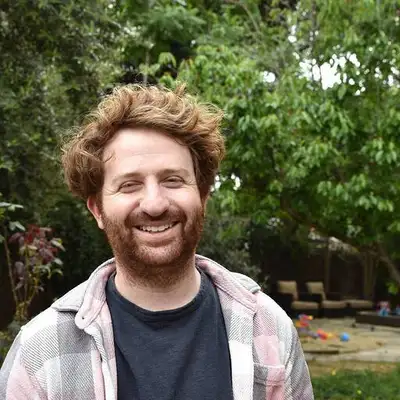
Zach:Visit leapcure.com to learn more. Today, I'm really excited to have Vish Srivastava on with us. Vish is the cofounder and CEO of Century Health, which partners with providers to provide AI powered disease registries that unlock real world evidence for biopharma. He's a health care technologist with multidisciplinary training and previously held product leadership roles at BCG and Evidation Health. Vish, excited to have you on the call.
Zach:Thanks for being here.
Vish:Zach, thank you so much for having me on. I'm excited for the conversation.
Zach:First, start with, like, how you got into the space. Like, what's the journey that's led you to, you know, your work at Century?
Vish:Yeah. I appreciate the question. I think like most people that kind of, find their way into health care, health care technology, it's a combination of the personal and the professional. As you mentioned, my background is mostly as a technologist and kind of, you know, working at places like BCG and Evidation. What I what I learned kind of over the last twelve years or so in in the industry is that many of the most important insights that enable our understanding of the natural history of disease, about actual patient burden, and ultimately discovering and kind of bringing treatments to patients, is sort of limited by access to good clinical data.
Vish:And often, it takes years sometimes, millions of dollars, to run observational studies, clinical trials, to collect that data. And I've just seen over and over in my career that you know, when you can unlock better access to clinical data, you can unlock incredible outcomes for patients. And in the last, call it, like, two to three years, the unlock and, you know, maybe at this point it's a trope to say this, but the unlock is that AI, you know, its ability to reason, has advanced to the point where in certain use cases and certain questions, it's getting pretty close to humans. And the things that have required humans to do sort of manual chart abstractions, technology is starting to catch up, and that can have a huge sort of unlock around efficiency and speed of research. So that's kind of part of my journey, like discovering first the problem, falling in love with the problem, frankly, but then also discovering the technology and especially advancements in LMs and AI is trying to catch up with that problem space.
Vish:But I think, again, like most people that work in health care, there's a there's the personal, like you know? And and for me, it was my my grandfather who was always sort of a Renaissance man. You know? He he wrote poems and wrote plays, and he was a professor. And over time, we started to realize that he was losing his memory, and it was very frustrating for him.
Vish:And at one point, he couldn't recognize his grandkids anymore. And that sent me down a rabbit hole. And we quickly learned that he most likely had Alzheimer's. He certainly had some kind of MCI, but that we really didn't understand as a scientific community what causes neurocognitive decline. And only recently, in the last year or so, do we have approved treatments.
Vish:That sent me down that rabbit hole. It had had me looking at, like, what are the current registries that are available? What are the datasets that are available? It's a combination of personal and professional that kind of ended up resulting in Century Health.
Zach:Yeah. Yeah. That really resonates. I've told stories about how, you know, I spent a lot of time in my twenties in San Francisco thinking about kind of, like, product market fit challenges, and I saw in you know, for week here was about kind of advocacy groups being evangelist users being left outside and for you know, what you're seeing with data is parallel for me. And then, yeah, my father had a small stroke.
Zach:And prior to that, like, that that was really a light bulb moment for me to think of, oh, the the deep impacts, you know, that that can happen for so many people figuring out how to provide better care and and seeing it firsthand. So, yeah, it's cool. The the decision to, like, take on, you know, founding a company, that that's a little, you know, crazy too. Yeah. Where do you think that comes from for you versus, like, having the confidence to kinda take charge and try to build something, especially, like, something like like Century, and I'll I'll get into later too.
Zach:But you're it's it's pretty bold to start a company, and then the way you're going about it, I think, as well is is quite bold. Talk about where you think that came from.
Vish:Yeah. I mean, the decision to start a company is really one of, like, can you find the rocket fuel? Can you find the sort of the the burning kind of desire that will fuel you for over a decade? Yeah. Because that's you know, it's and and and how so that's the average sort of, like, start a company to kind of an exit.
Vish:But in health care, even longer, twelve years plus. So for me, the question was always, can I find deep conviction in a mission, in a problem space that will, like, sort of be that that source of energy to keep going for years and years? But but I think the other thing is it always comes down to people. And can you find people that have also fallen in love with the problem space and that you're gonna go on that journey with them? And maybe taking those kind of one at a time.
Vish:You know, I think I already spoke a little bit about falling in love with the problem space. There is so much we often describe it as sort of dark data. Like, only 5% of the entire set of providers in The US are academic medical centers. 95% are community practices, private practices. None of that data is readily accessible for research.
Vish:So that like, unlocking that data to understand disease progression for diseases that afflict, like, tens of millions of people, fatty liver disease, Alzheimer's, IBD. And, you know, that's it's just it's so much fun to work in that space, and it's always going to I think it's gonna be interesting and meaningful because it benefits patients. So I think part of the equation was falling in love with the problem. Then the other was, you know, ultimately, you know, finding someone to cofound the business with. And Sanjay Hariharani is, you know, the cofounder and CTO.
Vish:I think we're, like, two sides of one coin, and he thinks very deeply about can AI and ML and LMs actually solve this problem in a way that we can trust the outputs and having a background in that space, both technically and from a kind of a biostat standpoint. The combination of those two, like, you need to get to conviction, and that sort of happened by accident, honestly, like, you know, a little over two years ago. And when when that happens, the snowball starts rolling down the hill. And then at that point, it's like, feels inevitable. This has to be a company.
Zach:Yeah. That's so you you've got a lot better foresight than I think I had when I started, you know, understanding the prob like, I kinda fell into, like, why is it that I'm working on this? Oh, it's the problem rather than, like, intention of, like, oh, yeah. I've gotta be willing to put 10 to 12 into this. It's very well put, and I I I I it it really rings true for me.
Vish:I will say it's easier to describe that in retrospect. Yeah. In the moment, it just feels like, you know, the train is just moving, and you're just doing it because it feels right.
Zach:Yeah. It it a lot of it is like, oh, this feels right with my gut. And know, maybe at some point, you can articulate it as as well as you have. I I thought that was, you know, spot on. The that validation, tell me about that that that tells you to keep going because I think that's a key thing.
Zach:There's a key thing for me in Leapcure's journey. It was when we won our first handful of projects. And for me, we we also got into we were accepted into 500 startups way back in the day. And that was like the, oh, okay. I can go all in on this.
Zach:But, like, up to that point, it was like, I'm not sure if I should be killing this. But what what was that process of, like, finding that validation for you? Because I think, it's a it's kind of a really formative moment that kind of sets off quite the journey.
Vish:Yeah. I think there are two that stick out for me. You know, there there our our platform needs to sort of equally engage with two stakeholders. One is the data owners, and this tends to be kind of health systems or private practices, specialty networks. And, certainly, there's the kind of sponsors and kind of researchers in life sciences.
Vish:So I guess I have maybe an example of the moment where, like, we're we're onto something. This can have real impact in in in both of those buckets. I remember, you know, way in the early days when literally all we had was kind of a memo and a big dream. We talking to a bunch of researchers across institutions, and there was one researcher, Dr. Jane Burns at UCSD, and she is a close collaborator with my cousin who's a cardiologist.
Vish:And we just got to talking. And we drove down from LA to San Diego, and I was really just kind of testing out our idea with her. And she works within pediatrics, in particular in rare disease. And what was kind of remarkable was it quickly switched from getting some advice to, okay. How do we work together?
Vish:Do you have agree an agreement that I can review, and can we sign this, like, now? And when you when you get that kind of, like, switch from, hey. We're actually just exploring and trying to validate the idea to, like, let's concretely work together, you know, that's the sort of validation I think that we're all that we're all looking for. So that that was one that was one moment. That was during that was in Thanksgiving almost exactly two years ago, where I was, like, in San Diego anyway visiting some family, and I I met up with Dr. Burns.
Vish:So that's sort of on the, like, how do we engage with providers and researchers in a way that really unlocks for them the downstream research utility of their data because so often that it requires humans, often like med students and even nurses and clinicians that are manually processing data. But I think at the end of the day, what we are all pulling for is how do you unlock insights that benefit patients? And for me, that was the big next unlock. Or once you've of fine tuned the models, you've abstracted this data, and you have this de identified data set that's ready for analysis, the first time we got in a call with researchers in pharma, and this time it was in neurology within multiple sclerosis, and we were very concretely talking about what is unmet need for the over a million patients in The US that have multiple sclerosis, and the fact that the current set of therapies really just control relapses, and that you still accumulate disability over time. It's heartbreaking that we have no cure for this disease, and even the treatments don't really fully slow down disability progression.
Vish:And that our data from community practices across The US could help them understand what is happening in the natural history of these diseases, and to evaluate new treatments. That was just such an incredible moment where we were working so hard for over a year to to create the dataset, and then it was actual patients, actual folks developing drugs. Like, looking at the data, I mean, those two together, like, that that's why we do this.
Zach:Yeah. That's great. For me, there's there's also something important of, like, when you're actually seeing the impact on the system that you can have, it's it's kind of like this this open world opens up where it's like, holy crap. Like, I can, like, enable, like, you know, this breakthrough from getting started. You know, if it wasn't for me, you know, I don't I don't know when that would happen.
Zach:So that's, that you have that, I I think, is really special. And it comes from you kind of making those bold decision you know, connecting, caring about the problem, but, you know, kind of being bold about kinda taking on building a business and building a team. Yeah. I think that's fantastic. Tell me a little bit more about Century Health.
Zach:You know, when you started it to where you are now, any shifts in the business model or any insights that you think were things that really, you know, interesting in retrospect?
Vish:Yeah. I mean, our mission has remained the same. And, you know, at a high level, our mission is accelerating breakthrough treatments. And the way we do that is we're building the AI infrastructure for the clinical data economy. But I think what is probably true for any early stage business, and I know Leapcure is now ten years old, I'm sure in the early days, this was true for you all as well, that you have to learn by doing.
Vish:And there's a lot of iteration on like, what is the solution? What actually meaningfully addresses a problem in the ecosystem for clinical data, for clinical research? Early on, our thesis was that we could accelerate existing patient registries, that most academic medical centers already have a set of registries that might be run by PIs and can enable research in collaboration with pharma. You know, in the in the subsequent months after we kind of came up with that thesis and started forming partnerships with large academic centers, what we learned was that, you know, a couple of things. One, large academic centers are very bureaucratic, and that it can take months, sometimes more, to work through, you know, contracting, work through data governance, and rightfully so.
Vish:These are large enterprises that are sensitive to sharing patient data and enabling kind of collaborations around that data. The other thing that we learned was, and I know this is kind of core to your work at Leapcure as well, was that patients that surround academic medical centers tend to be overrepresented in research data sets and clinical trials. And some of the most important sort of unanswered questions for patient populations that are underrepresented, in particular black and brown communities, but also in terms of treatment patterns, one thing we found is everyone overestimates, For example, in IBD or COPD or asthma, everyone overestimates how many patients get advanced therapies and treatments like biologics. What we found is that in community practices, it's low single digits of patients. So low single digit percentage of patients that receive those advanced therapies.
Vish:A lot of the unanswered questions are out in the community. So those that combination of insights has ultimately pivot to working with community practices across The US to create registries versus working with existing datasets and academic settings.
Zach:Yeah. I really appreciate you know, a lot of it is is doing the harder work, but that's how you find impact. And so that is, you know, accepting like, oh, yeah. We're gonna be limited in our impact if we just kind of stick to the academic medical center model. When you were talking about, you know, contracting cycle times, red tape might be like I remember, like, working with you know, we we tried to work through, like, CROs and had, like, similar kind of challenges of, oh, they're designed for something that moves in a certain direction at different speed to make impact.
Zach:There's there's more to it. Yeah. I I think, you know, we've we've learned, and what's really cool is, like, there's different nuances globally. There's there's a whole, like, behavioral layer of what's going on, how much someone trusts health care, the cycle time between when someone's having symptoms to, like, when they kind of know what's going on and, you know, take a care path. There there's so much variability in these things.
Zach:And you won't always see that if you just speak to a few people, particularly, you know, ones at academic medical centers. You know, a lot of them do speak like, have have reach with, like, rural areas, but that's still to get to representative and impact for everyone, it's a lot of this hard work of, you know, trying trying to kind of understand what else is out there and what are these other experiences and and and kind of maintaining curiosity. Curiosity. Yeah.
Vish:Maybe to pick up on your point about the hard work, that totally resonates. There's a reason why a lot of clinical trials recruit from academic centers and more kind of urban centers. And part of that is the rest of the health care system is even more fragmented and has less capacity and less infrastructure for doing anything except seeing patients. And even sometimes just seeing patients is already straining the system, like how much work goes into billing for care and how reimbursement rates keep kind of applying more and more pressure on these private practices. But in addition to that, the data is pretty fragmented and pretty messy, you know, in community practices.
Vish:And it's often it's not the epics and the cerners of the world that those practices are using. It's the long tail of specialty EMRs, like Nextech, NextGen, Athena, ECW, which means that you can't just, you know, understand the Epic data model and integrate with Epic, and now you have access to the right sort of data for research. It's now you have to figure out how to integrate with all of these different systems. And sometimes, literally, they're on prem. It's like a server in the backroom of of the clinic.
Vish:So to to your point, like, you know, it's an intentional decision to do the hard hard work, but I think it's it's well worth it because that's the data that has historically been and the patient populations that have been historically underrepresented in these these efforts.
Zach:Yeah. I wanted to get to your this the style in which you're willing you're building a business, which I think is kind of bold and novel, which has to do with kind of how you kind of structure data for AI. Keeping because, you know, where we are with AI, it's not in a place where it's necessarily gonna, like, operate all of your business flows in health care today. But it continues to get better, and you're you're kind of, like, figuring out, you know, when you're you're trying to time when can AI run different process flows for you. And and I think you're you're way ahead of the curve in the way you're doing this, but it is pretty bold to kind of build kind of a a central dataset for AI to kind of help do what you're doing and then anticipate in the future how your business is gonna work.
Zach:Tell me more about the, you know, the decisions you made around AI and architecture for your company. I'm curious kind of, like, where you are and and how things are evolving.
Vish:And we could talk all day about this topic. So I'll and kind of distill it into maybe a couple thoughts. One is I think it's very easy, especially in this current moment in the technology cycle and the hype cycle around AI to see AI as almost like the silver bullet. And the reality is there are a lot of problems to solve in health care. We spend over $4,000,000,000,000 on health care in The US, and so much of that is still sort of manual repetitive processes.
Vish:And a lot of that is unstructured data. Right? There's still so many faxes that get sent around, so much that gets done over the phone. I think it is true that there's a lot of opportunity to automate and to create efficiencies around repetitive processes in health care. But what kind of keeps us up at night at Century is that the big difference between having humans do, kind of tasks and work, within within health care and more broadly and having AI do it is AI confidently fails.
Vish:So when AI is wrong, it doesn't tell you that it's not sure. It's just wrong, but it doesn't know it's wrong. And it comes through the other end of the data pipeline looking just like when it's right. So that means as technologists applying AI, especially in something as consequential as research where we're making important decisions about the understanding of what drives disease progression. Ultimately, informing how do you design a clinical trial, or after a clinical trial, do the results from the clinical trial actually play out in the real world?
Vish:These are very consequential kind of insights that ultimately inform patient care. We really need to be able to trust the outputs. So what that means for us is you can't just sort of, like, throw throw some clinical data into, you know, GPT five and then just drop that into a spreadsheet and run some analysis on it. You have to validate the models. So we put we put a lot of work.
Vish:I mean, I I will say it is an incredibly exciting time to apply AI within our data pipelines because we don't have to train our own model. Right? There are there are great foundational models that we can take off the shelf. But what we do have to do is we have to be very thoughtful about the prompts, and we have incredible clinical advisers that help us really think through what's going on in their head when they read a clinical note. What is a relapse in MS?
Vish:What is the exacerbation in COPD? That gets documented in very different ways, depending on the documentation practice of the physician, and also clinically for the for the patient. So how do we translate that into something the model can follow? But then also, how do we evaluate if the model is right or not? So we do these blinded studies where we'll have kind of humans do the abstraction, the model do the abstraction, and do a bake off and see how often are they right.
Vish:And, Jose, Zach, we are often pleasantly surprised with model outputs. And what we found is that often you know, we actually did a recent validation in neurology. The neurologists disagree with each other more than they disagree with the model. So, you know, that gives us, you know, some some faith that we're kind of in the going in the right direction here. But you've gotta be you've gotta be very almost skeptical about the outputs from these models to make sure that we can prove to ourselves and to others that you can trust the outputs.
Zach:Yeah. It's it's I it's interesting because it's maybe not the outside perception of, like, an AI driven company. A lot of the rhetoric around AI is, like, it's so strong. You've gotta use it. And they don't really get into, well, you actually have to kinda deconstruct what it's saying, how it got there, you know, the ways that it's getting there, validate different use cases.
Zach:It's, again, an example of you AI is hard work if you're doing it for positive health outcomes. But like you said, you know, it does enable you know, we we can expand the scope of what we're doing or access if if we can do it in the right way. And so it's just refreshing to hear all that you're putting into it because it's it's the voice that kind of sometimes gets missing with all the AI rhetoric is, like, we actually have to pay close attention to, like, how you're saying things, how it's giving things back, and test it against, you know, subject matter expertise.
Vish:Yeah. Totally. And a key tenant for us is is trust is earned, and you earn that trust with transparency. So we work hard to kind of do these assessments of validating model outputs and then publishing those metrics. You know, we we put out a white paper, and we're putting together a preprint now, which, like, details out what's the methodology we used, who's producing the gold labels that were, you know, evaluating CHARM's output, the century health abstraction and retrieval model.
Vish:Like, CHARM is doing it independently. Let's compare those two. And, you know, on average, we have a 0.89 F1 score, which we're really proud of. But there are certain tasks that the model's not as accurate. Whenever it's more kind of subjective, and I think it's true, it has always been in data science and data analysis that it's garbage in, garbage out.
Vish:When you don't have enough detail that's coming into the model from the EHR, it's gonna be less likely to have the right the right raw material to work with to create the right answer on the other end. So I think all of us as a community publishing those metrics, iterating towards the right methodology, I think it's the rising tide that lifts all those. We gotta do this together, we have to do it transparently.
Zach:Yeah. That's awesome. Any proudest moments you've had so far in your journey that that come to mind?
Vish:I think we might have touched touched on it already. I think it's the one where, I guess, on a podcast with leapcure , I've gotta use this metaphor, the leap of faith the leap of faith to, like, start a company, and then also to, like, you know, to to go through the hard work of let's establish partnerships with practices. Let's train the model and create a dataset that we think will have impact. That first moment when we started answering important research questions in multiple sclerosis around a dataset that we had worked for over a year to build, as soon as it becomes like, we I think all of us that work in this world, like, it's nights and weekends. It's it's long hours.
Vish:Like, you you have to really give it your all to to to ultimately the platform, build the business, the partnerships, and then to see an actual impact for patients by understanding something about the disease progression and about developing new drugs that otherwise wasn't possible, that that was a pretty amazing moment.
Zach:Yeah. I bet. I know you've mentioned, like, it's easier to look back and say these these really on point things about, like, how you got to where you are. But, yeah, tell me more about, like, the people who've mentored you and the role that mentors have played in in your your journey as well.
Vish:Starting a company is really just a constant exercise of impostor syndrome that at at the very first stage of, like, I have an idea. I think it should be a company, but I'm not sure. But what business do I have turning this into a company? And then you get to the next stage, which is like, oh, we, you know, we have some amazing investors around the table, and we're grateful that they chose to believe in us. But wait.
Vish:Can we deliver on what was in our pitch deck? And, like, can we actually do the thing that we thought we could? And that just, you know, just like rinse and repeat. You just keep keep doing that through every meeting with potential customers and hiring and and then, you know, then repeat that week over week, month over month, month year over year. And the only way I think to the only antidote to investor in in sorry, impostor syndrome is having people that you really trust that will tell you when you're wrong and will tell you when you're being too hard on yourself.
Vish:And, you know, there have been people that have become very close friends over the years that have the privilege of also calling them advisers to the business. And, you know, one adviser in particular, I worked with him at my last company, Evidation. And I remember, you know, we had a couple conversations, and it just sort of evolved into more of, a mentorship kind of relationship. And he was the reason why, you know, why I had a little bit of confidence to take the leap. He was like, hey, Vish.
Vish:You could start a company. Like, you you have an idea, and you might have some of the, like, you know, some of the starting materials to to take the leap and start a company, and you need that nudge from someone that isn't, like, all the voices in your head. And multiply that by by three, four, five people, and just, like, keep those people close. That's probably my biggest adviser my advice for people that are thinking about going down this journey. Like, have that group of people that you can really trust that will be that counterpoint to, like, that that inner dialogue.
Zach:Yeah. Yeah. That's great. Yeah. For me, I really received that from my experience at 500 startups.
Zach:They had no idea what I was doing because they work on startups in all all industries. It was that kind of source of, like, distilled truth of, like, when are you wrong? You're not afraid to say it. When are being too hard on yourself? What should I be focused on?
Zach:And, you know, just the encouragement that they believe I can move things forward. And so, yeah, that came to mind for me. And I think, like, looking back, I I know I feel really grateful for the support system that I had that encouraged me to kind of make these choices because I I think, you know, it's it's small, but it's it's what really made the difference for me.
Vish:Totally.
Zach:But, yeah, it's a great conversation. Really honored that we get to kind of share your story here. I I think you're
Vish:So much fun.
Zach:Really doing some impactful work that you kind of broke down how it all came together and and showed what I heard a lot of in this conversation is how you're willing to take the harder path to make a greater impact for more people. And, just glad to have folks like you in the community pushing the way you do. Anything else we wanna share with the audience before we drop off?
Vish:Well, exactly. I mean, that's that's very kind, and it's been amazing, you know, getting to know you and to know that there are companies like Leapcure that I think we we share, like, we share our mission for doing big things for patients, and then to your point, taking the path that's, like, less less well trodden. But yeah, I think my last thought probably: we truly believe that every patient's journey is incredibly important, and especially is important for us from a research standpoint to understand disease progression to ultimately develop new treatments. And can we unlock the best of bringing people together and applying technology and AI thoughtfully within health care and within research to make that possible for everyone's journey to be a part of that broader story that ultimately benefits everyone. That's what keeps us going, and we're always looking to connect with other folks for whom that mission resonates.
Vish:And I think it's taking a village and always will to to to to move the needle for patients, and let's do this. Let's make everyone's journey really count.
Zach:Hell yeah. That sticks with me. I and particularly on the patient journeys, the depth of what people go through can be quite the struggle, but it can create such an impact and make the world a better place from those things systematically. I'm so happy to have someone else that's kinda thinking that way too in the space and, yeah, excited to be in touch. So, you know, maybe we come back and do this, sometime in the next year again too.
Vish:I love that. Zach, thanks again for for having me out. It's a really fun conversation.
Zach:Yeah. Yeah. Likewise, Vish.
Leapcure:That wraps up our conversation with Vish Srivastava. From unlocking unrepresented clinical data to thoughtfully applying AI in research, Vish's work at Century Health highlights what's possible when technical rigor, transparency, and a deep commitment to patients comes together. His perspective is a powerful reminder that taking the harder path can lead to more inclusive insights and truly meaningful impact. Thanks for listening, and until next time, stay informed, stay engaged, and keep pushing for better health outcomes for all.