Subscribe
Share
Share
Embed

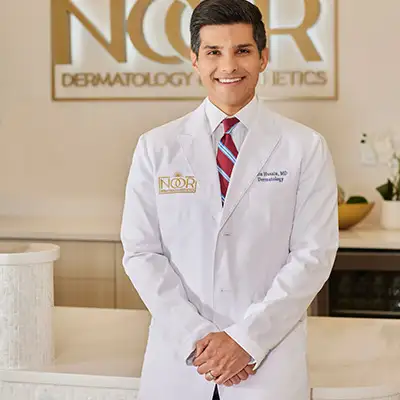
Welcome to Skinside Out, where science meets beauty, the ultimate dermatology podcast! Dive deep into the fascinating world of skin health with expert insights, evidence-based discussions, and myth-busting truths. Each episode explores the medical, cosmetic, and surgical aspects of dermatology, while keeping you informed about trending skincare topics. Whether you’re a skincare enthusiast, medical professional, or just curious about how to achieve your best skin, Skinside Out is your go-to resource for staying informed and inspired.
07 - Skinside Out
===
[00:00:00]
Dr. Zain Husain, MD: Welcome to Skin Side Out where Science Meets Beauty. I'm your host, Dr. Zane, with Heather and Courtney. So today we're talking all about microneedling.
Heather Murray, PA-C: So we'll get into what microneedling is, what the benefits are.
We'll break it down and um, kind of give you an idea of what standard microneedling is versus radio frequency. We'll talk about different topicals that you can use during and after the treatment process, and we'll walk you through what a standard treatment looks like. Yeah.
Dr. Zain Husain, MD: So let's get into it. What's microneedling?
So microneedling is this concept [00:01:00] of using . Small microneedles ,
Guest: you don't say .
Dr. Zain Husain, MD: That, um, puncture the skin, um, typically into the dermis. And what it does, it stimulates, um, you know, collagen elastin production by causing a wound response. So there's like a micro injury and your body responds by producing collagen and elastin.
There's different forms of microneedling. So there's traditional microneedling with a motorized pen. That's what we use in the office. Moving very, very quickly, poking tiny little holes into the skin causing that micro injury. I. Um, we also have radio frequency microneedling where we're using this device that also uses microneedles that go into the skin, but while the needles are in the skin, it's emitting radio frequency energy, which further stimulates collagen, elastin synthesis due to the heat that's produced.
Um, there are also those roller microneedling, , I don't even call those a microneedling. Yeah, that's like microneedling. huge. , and they're not very good, um, because they can cause [00:02:00] post-inflammatory hyperpigmentation, um, it can lead to infections if they're not properly cleaned. It's just really hard to regulate and keep it consistent.
Courtney Carroll, LE: Yeah. It's not a controlled injury where I always say the microneedling with the pens that we have, that's a true controlled injury. I mean, the, um, needles themselves are perfectly spherical, so they're gonna create, um. a very minimized injury that will heal, whereas you do run into the risk of scarring with some of those over the counters.
Dr. Zain Husain, MD: Yeah, and I just think it's a really cool concept. So I was first exposed to this when I was a resident, um, like over 10 years ago. , this was kind of gaining popularity because it's coming from a concept that we use in laser treatment. Fractional ablative and non-ablative laser is where we're using
Fractionated lasers to basically vaporize or destroy, um, either part of the surface or cause micro injury in the skin to stimulate that wound response to get those clinical outcomes. [00:03:00] Well, I. With using laser light, you run the risk of hyperpigmentation other complications such as burns. So here we're using these devices that don't use laser light or heat, and we can really get those similar responses for that collagen induction without, you know, those side effects that you may encounter with lasers.
Heather Murray, PA-C: Yeah. And kind of what happens with your body during that process is your body thinks that your skin's been injured, goes back in and heal itself and kind of smooths everything out. So, Courtney, do you wanna kind of touch on what this would be used for?
Courtney Carroll, LE: traditionally we've used it for acne scarring is one avenue, especially the more mild to moderate.
Sometimes we will pair it with things like sub precision, which um, I'm sure we'll talk about at some point, but where we basically go under the skin and kind of release that scar tissue. We use it just for photo rejuvenation, minimizing fine lines and wrinkles. I think it's a phenomenal treatment for specific, [00:04:00] specifically for people in their twenties and thirties who are beginning to lose their collagen and don't wanna jump to maybe a tox or a filler just to keep that collagen stimulated.
You know, at least a,
Guest: mm-hmm .
Courtney Carroll, LE: Yeah. At least a couple times a year, I think. It's a great procedure. So, um, it has a lot of different uses. Sometimes I hear people use it for things like hyperpigmentation. , I tend to use a little bit more on, you know, chemical peels and whatnot. Mm-hmm . Um, you can really treat a lot with the microneedling.
Heather Murray, PA-C: Let's also talk about the difference between standard micro kneeling and radio frequency. Just a little bit more in depth. Um, the different benefits. So radio frequency can, um, cause a little bit more of a tightening effect. Mm-hmm . So, um, if you've got skin laxity, I think the radio frequency is definitely the place to go.
Courtney Carroll, LE: Yeah. Yeah. And I think the deeper acne scars too, tend to fare better with the radio frequency rather than the traditional microneedling.
Dr. Zain Husain, MD: Yeah. Um, but there are some issues with RF microneedling. Mm-hmm . Specifically can lead [00:05:00] to, um, fat loss. Mm-hmm .
Guest: So
Dr. Zain Husain, MD: in certain setting that's a good thing. But if you're looking to tighten and you're getting loss of fat, which gives us a structure and lift mm-hmm
Buoyancy, um, that can actually lead to the opposite effect. Mm-hmm . Which we are seeing cases of that happening at aggressive settings, especially in the jawline area. Um, which isn't a good look.
Courtney Carroll, LE: Yeah. Although some people like myself, my father, . Oh, please. Um, you just like Ella. Yeah, I did. I did. So if I'm a little swollen, no , but um, the traditional microneedling you have the option of using that.
By itself with a device. Normally a provider will use something like a hyaluronic acid, a pure hyaluronic acid as a glide, or sometimes some other topicals, which we'll get into. , or you do have the option to do PRP, which is again, where we draw the blood, spin it in the centrifuge and separate out that plasma.
Most times we'll use that either as a glide or depending on provider. Um, you know, physicians or, um, PAs, whoever [00:06:00] might go back and inject it. Whatever's left over, but you can use it as a glide as well. ,
Heather Murray, PA-C: do you wanna touch on what PRP is?
Courtney Carroll, LE: Yeah. Um, platelet rich plasma, which by now you've probably heard us talk about eight times, but , we love it.
So ,
Heather Murray, PA-C: unless you haven't listen to those episodes, you should go listen.
Courtney Carroll, LE: They're like, oh, we're only interested in microneedling, , . Um, but, but yeah, we, we draw your blood in the office. Like I said, we'll spin it out in the centrifuge. It'll separate out into plasma. It's usually this gold color. Um, and the, the plasma has just really shown to be extremely beneficial in helping to further, um,
Heal those acne scars. Mm-hmm . And produce collagen and stimulate your own natural growth factors. So,
Dr. Zain Husain, MD: absolutely. And it also, um, improves the recovery time too. Mm-hmm .
Heather Murray, PA-C: There are other topicals you can use during the process or after. So there's, you know, exosomes, peptides, growth factors, um, vitamin C mm-hmm.
Tranexamic acid.
Dr. Zain Husain, MD: We can use that for melasma. Patients. For [00:07:00] brightening.
Courtney Carroll, LE: Yeah. Yeah. I do encourage people to be very mindful and cautious because these things are being pushed into the skin essentially. Yeah. And so you really wanna make sure that what they're using is safe to. To cross that.
Dr. Zain Husain, MD: Absolutely.
And it's hard to regulate that, right? Mm-hmm . So they were tested and intended to be for topical application. Now we're actually creating these channels that are open and active. It can lead to sometimes unintended consequences. It can lead to more inflammation. Um, it can cause irritation. I mean, some of these acids, I mean, you know, that is something that can be very irritating with the skin.
And you also have to be careful about even with hyaluronic acid. Mm-hmm . They're not all ha serums are created the same. Some have macro particles in it. They're not all homogeneous. And I have heard, um, of . Some cases of granulomas forming mm-hmm . Or these kind of bumps that form as, um, an inflammatory response to some of these particles.
Heather Murray, PA-C: Yeah. There are some case studies out with the vitamin Cs too, so I think it [00:08:00] depends on what vitamin C you're using.
Courtney Carroll, LE: Yeah. I um, I know I always jump back to this, it's just, it's a wild, wild west. You really have to check it out. It's crazy. But on the at home microneedling like Reddit page, someone literally, and I thought it was a joke, honestly, someone posted a picture of the Mario be.
What is it? Quique? Yeah. It's like the rose water and they're like, can I use this to microneedle into my skin? Girl, no , no you can't. , people just use anything and it just, yeah, it scares me. So even like you said, the hyaluronic acid, um, and the vitamin Cs, you really wanna make sure, like truly pure and, um, have been
Cleared and safe for skin.
Dr. Zain Husain, MD: You can use some of these actives to help treat the skin. Um, I have used microneedling on scars in the past and have used topical steroids. Mm-hmm . Um, such as like Kenalog, um, just the liquid solution, applying it through those channels. I just created massaging it in and I've had some great responses to that.
Heather Murray, PA-C: Yeah. There's also poly deoxy [00:09:00] ribonucleotides, which we didn't really touch on that. PD, salmon, sperm, . Yeah. Salmon, sperm RNs. They're also found in the human placenta. Um, just another active that can give you an increased or improved result with the micro. Yeah, there's like this
Dr. Zain Husain, MD: whole explosion of regenerative medicine and it's really exciting to see how they're going to be used.
Um, many of these have not been approved for injection to the skin, but topical application, I know many places are starting to use them, incorporate them, and we're seeing some really cool responses. So, you know, seeing how they pair with microneedling may be interesting to see in the future.
Courtney Carroll, LE: I. Yeah. So what should you expect, you know, during this whole process?
Because a bunch of needles going into your face might not sound super pleasant for most people, but it's surprisingly really comfortable and I think pretty minimally invasive, I would say. Um, typically, you know, we'll have a patient come in and apply a topical numbing. We'll usually let that sit anywhere from 30 minutes to an hour.
, the lidocaine really, I think [00:10:00] helps to minimize any discomfort. Most people, especially for traditional microneedling, I've even heard it's relaxing or you know, it's in the sense you hear that vibration and depending on where, and I guess it's like white noise. Yeah. It's almost, yeah. White noise. I know.
Whenever I get it done,
Dr. Zain Husain, MD: I feel ticklish. Yeah. That's, I feel my nose.
Courtney Carroll, LE: Yeah. The noses makes me sneeze. Yeah. But, um, so typically we'll do that. We'll wipe off. Um, then during the process, you know, I think the forehead gets a little tender. I normally will try to start with the forehead and knock that out.
Guest: Mm-hmm .
Courtney Carroll, LE: Cheeks I think feel pretty comfortable and sometimes we're able to get up to even that 2.5 millimeter depth for, you know, acne scarring and things like that and paper. People tolerate it well.
Dr. Zain Husain, MD: Yeah, rf that's a great point that you make, that we can adjust the depth of these needles to kind of tailor the intensity of what we're trying to do.
So if you're just looking for like, you know, a little rejuvenation and, um, you don't necessarily have to go super deep. Then more with these like [00:11:00] deeper scars, we can kind of adjust the setting so that we can penetrate into the scar tissue mm-hmm . And really get that clinical response we're looking for.
Courtney Carroll, LE: Yeah, I really love that, especially for example, the glabella lines. Um, you're able to even tailor that. So maybe on the forehead, I'm just going really light at maybe a 0.4 and then maybe, you know, when I'm treating those lines going a little bit higher and really making sure we get those, those edge lines.
Yeah. Yeah, it's very customizable. Yeah.
Dr. Zain Husain, MD: Especially also the rf. You can also customize the energy with the RF too, so not only can you adjust the depth of the needles, you can also kind of tune up or tune down that energy.
Courtney Carroll, LE: Rf, um, tends to be a little bit more painful than traditional . .
Dr. Zain Husain, MD: It could be a little, tends to be more painful.
Heather Murray, PA-C: Yeah. That's why we tend to numb a little bit longer for the rf. Micro kneeling. Yeah.
Dr. Zain Husain, MD: And then we definitely use a Zimmer distraction and other things to help make you feel more comfortable during the procedure.
Courtney Carroll, LE: Even techniques, um, you know, we find ourselves holding the skin maybe a little bit [00:12:00] mm-hmm . Um, just so it's not so taught and so, tender . Yeah.
Dr. Zain Husain, MD: And I love doing combination therapy with, um, microneedling. Um, especially with RF microneedling. I love following that up with like a non-ablative fractional laser. Um, it really does help with, you know, some of that pigment, that additional collagen, production. And I just also feel like it kind of cuts down on some of the
You know, intensity and swelling and recovery. So I really like pairing that together and patients have just gotten phenomenal results with that.
Courtney Carroll, LE: Yeah, that's, you know, I was gonna touch on after, um, aftercare, and that's one of my favorite things about microneedling is how little downtime is truly required.
I mean, mm-hmm . Typically patients that day, they can get pretty red. Um, and that's expected, but you'd be surprised by the next day it's gone down almost probably 60 to 70%. I always tell people it looks like a mild sunburn by the next day, and those micro channels are really closing up within that day, within 24 hours.
So,, you don't really have much downtime with it. It's truly something you could do on [00:13:00] a Friday and by Monday be totally good to go back to work.
Heather Murray, PA-C: Yeah, I think the biggest thing for some people who . Especially get read very easily. Mm-hmm . Tend to be very red right after the treatment. Mm-hmm . And it's kind of scary, but it goes down very quickly.
Oh,
Courtney Carroll, LE: I prep the heck. I, I'm like, you will be red. You'll be so crazy red. You won't even know what hit you. And then if you over prep them, when they look in the mirror, they're like, Hmm. It's
Dr. Zain Husain, MD: not
Courtney Carroll, LE: that bad. Yeah. ,
Dr. Zain Husain, MD: I mean, like, everyone's heard of the vampire facial. Yeah. Like pink blood. You're gonna be red. Um,
And sometimes, you know, I have patients who request to kind of leave that PRP, especially if they're doing with PRP, to leave it on, like as a mask feels tight. I don't think it really does that much. Um, you know, 'cause these channels close pretty quickly after mm-hmm . But it just kinda has a nice tightening appearance and Yeah.
It maybe it makes them feel a little bit more rejuvenated.
Courtney Carroll, LE: Yeah. Blood, um, in general with microneedling. is expected. I mean, when you're creating that injury, um, you can expect to have some blood and it [00:14:00] not necessarily will be this profuse bleeding, but sometimes when I'm wiping my patients off at the end and they see their blood, they get so shocked.
Oh my gosh. Is that my, that's mostly like just pinpoint bleeding. Pinpoint, yeah. Yeah.
Dr. Zain Husain, MD: I remember walking home one day after getting microneedling done and my daughter saw my face and she was genuinely scared for her life. Like,
Courtney Carroll, LE: dad, what happened? Are you okay ? Yeah, my, my dad is up definitely. Meanwhile,
Dr. Zain Husain, MD: my wife's just like rolling her eyes.
Yeah. Yeah. Like not again, .
Courtney Carroll, LE: My dad, especially when I first started in dermatology, same thing. I remember we went out to get a beer together one night and of course I had done microneedling earlier that day and I'm beat red. I'm like still kind of bloody. 'cause I had left my plasma on and. He's like, what the heck is wrong with you?
Like, what did you do to your face ? Now they're like alright. . Yeah.
Dr. Zain Husain, MD: Yeah. In terms of aftercare, what do you have your patients use after the procedure?
Courtney Carroll, LE: My absolute favorite thing is a good growth factor serum. So, um, you know, using a gentle [00:15:00] cleanser I think is really important because you'll be a little sensitive.
You wanna come off your, your active, so any of your glycolic acid or your salicylic acid. Your tretinoin. Yeah.
Heather Murray, PA-C: Retinoids.
Courtney Carroll, LE: Yeah, retinol, retinoids. Um, just because you will be more sensitive, but I think a good gentle cleanser. . Of course, obviously sunscreen. And then I love a good growth factor serum. So my favorite right now is the bio serum from, um, neo cuts.
Yeah, that's on,
Dr. Zain Husain, MD: I mean, moisturize, moisturize, moisturize. Mm-hmm . You're gonna feel really dry mm-hmm. As you recover. And that's normal. Mm-hmm .
Guest: So
Dr. Zain Husain, MD: a little bit of hyaluronic acid serum. I love that, that soaks in hydration. Um, a good thick moisturizer that's non-comedogenic or pork clogging, um, goes a long way.
Heather Murray, PA-C: Avoiding sun. Um, yeah, sun exposure is a big thing. A sun
Courtney Carroll, LE: and sweat, I'll tell you. Yes. Because it st stinks. It St. Stings. I, one another day I went out to play some trivia with some friends and we were sitting outside and it was a summer day and I had done my [00:16:00] microneedling that day and we're out there and I'm like, as the like minutes are passing, I'm like dying.
Like, like it's painful. It's tender. It's like the sun, the heat. And it wasn't even . Sunny. Truly it was just the heat was unbearable. So just maybe give yourself the night off. Trivia, sweating.
Dr. Zain Husain, MD: Um an interesting thing I just thought of, um, RF microneedling is also used to treat hyperhydrosis. , it's off-label of course, but you know, at those settings you can actually damage the arine glands, which produce that sweat, the rine glands, um, and it can reduce sweating, which is pretty nice.
Courtney Carroll, LE: Yeah, it sounds very painful. .
Dr. Zain Husain, MD: Oh yeah. Not like I'm gonna be doing it, but I'm saying like, you know,
Courtney Carroll, LE: if your, if you can Yeah, yeah. If you can tolerate it, . Most times, you know, we're telling patients that a series is what's gonna be best for them. So microneedling is really not a treatment that you will do a one and done.
Mm-hmm . Um, now [00:17:00] I think that one of the coolest parts about microneedling is that it does have such little downtime, but . That process is continuing to take place, sometimes even upwards of six months. Mm-hmm . That whole collagen synthesis. So even though you can't see what's going on underneath the skin, you're having that production, which I think is really great.
Dr. Zain Husain, MD: Yeah. And I also love synergizing treatments. Right. Good skincare of course, to kind of optimize results. Using other technologies simultaneously can really help to stimulate, um, tox. . Dermal fillers. Mm-hmm . All that in combination. We can get some beautiful results. Yeah. And can really turn back the hands of time.
Courtney Carroll, LE: Yeah, yeah. Yeah. I think, you know, depending on what you're looking to use microneedling for, so for example, if you are having acne scars that you wanna treat, okay, maybe we're gonna do anywhere from three to six sessions and we'll space 'em about a month apart. But maybe you're just coming in as someone who's looking for a more preventative way of just keeping their collagen and it's
You know, a very mild treatment you might need. Okay, [00:18:00] maybe let's do two or three a year space 'em out a few months and just kind of continue that collagen production, um, throughout the year. So I think it's multifaceted in that way.
Dr. Zain Husain, MD: I have some motivated patients who absolutely love microneedle and they get that glow and they just keep doing it.
They do it monthly treatments, it's just part of their lifestyle. Mm-hmm . Part of their regimen. There's nothing wrong with that, and it's with such a minimal Yeah. Downtime and recovery. It's possible to do it monthly. When
Courtney Carroll, LE: I first started doing micro. Renewing. I totally was doing it monthly. Yeah. I mean, I, you get hooked.
Yeah. I would bring the pen home with me and like in the mirror, like, you know, my cats were probably watching like, what is she doing, . But it is, it is a really great procedure. And, um, like I said, just the, the downtime is fantastic. Yeah.
Dr. Zain Husain, MD: And you know, if you do it like a week or two before, like, you know, a big event, um, you know, you don't have to really worry.
About any of those, you know, potential complications that you do with like lasers or chemical peels or whatnot. You know, it just gives you a nice rejuvenation and glow. Yeah. And [00:19:00] you just look really healthy and vibrant.
Courtney Carroll, LE: Yeah. Yeah. And it's safe throughout the summer, which is also fantastic because a lot of the things that we offer or, um, talked about or not, so it's something you can continue through the summertime.
Yeah.
Dr. Zain Husain, MD: Well that doesn't mean you don't use your sunscreen in some protection. . Yeah. True. So I think that, you know, we covered a lot about microneedling, um, what it is, what type of microneedling exist, um, what we use it for and what we can expect after microneedling treatments. So I think that this is a fantastic procedure that anyone can do all skin types, um, you know, many ages can benefit from it.
And just with the minimal risk in downtime, I think that this is an excellent procedure to start off with. Um, for that rejuvenation. So I think that if you are on the fence about seeing whether microneedling is right for you, you know, see your dermatologist, um, or your [00:20:00] skincare provider and see if it's a, it's a good, a viable option for you because there's not many patients who aren't good candidates for it.
Yeah.
Courtney Carroll, LE: Yeah. Most times by the end of the session people are like, that was it. You know? So that's a great feeling. It's really not,
Dr. Zain Husain, MD: and your skin just looks awesome afterwards. I have never had a patient who said that they didn't like their results. Yeah. It's just one of those very high satisfaction procedures.
Mm-hmm .
Guest: Sure
Dr. Zain Husain, MD: that you'll absolutely love. All right, well, that's it for today. We talked all about microneedling. Hope you like the content, please subscribe and follow us. But until next time, skin side o ouch.
Dr. Zain: Alright guys. I think that we should probably go back to the office and do some microneedling.
Guest: Yeah. What time is it? I feel like . Do you have time? We got time.
Dr. Zain: Let's do it. Let's do it. [00:21:00]