Subscribe
Share
Share
Embed



Meet the Insiders rewriting the rules of influence. Pulitzer Prize-winning journalist Brody Mullins and veteran DC strategist Lisa Camooso Miller interview the leaders who shape perception, move policy, and win when it matters. Not pundits or commentators – these are the operators driving some of the most critical strategies and outcomes in today's Washington.
Anne I sort of think of it as like that iceberg where you see the tip of the iceberg above the water and that's what everybody talks about, but below the water, there's actually a lot of things that are getting done. I mean, are we solving the national debt? No. But are we doing really important substantive things? A thousand percent.
ANNCR Behind every major policy decision, every corporate strategy, every Washington power play are the insiders shaping the game and the new rules to win it. The Deciders with Pulitzer Prize winning journalist Brody Mullins and veteran DC strategist Lisa Camooso Miller.
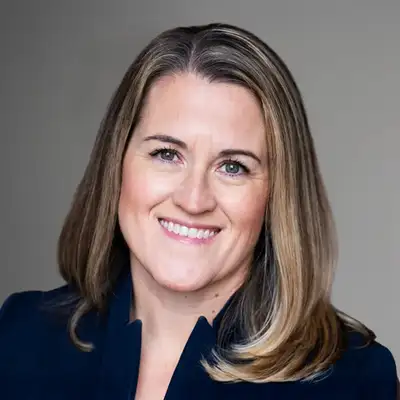
Brody Welcome to The Deciders where we speak to the insiders rewriting the rules of effective advocacy in Washington. Today we're speaking with Anne Bradbury, the president and CEO of the American Exploration and Production Council. Thanks for joining us.
Anne Great to be with you guys.
Lisa Anne, can you tell us your origin story? How did you come to Washington and to Capitol Hill?
Anne So I think my origin story actually goes back to when I was in college and my aunt was actually elected as a freshman rep when I was a freshman in college. And so I was able to come to DC and be here for her swearing in. And you guys know, go through the tunnels of the Capitol and there was all of this energy and excitement of opening day, completely caught the bug, was already thinking about a political science major that kind of sealed the deal for me, studied political science and international studies, did some internships, and then was able to work on the Bush administration in the early 2000s.
Brody Who was your aunt?
Anne My aunt was Congresswoman Anne Northup from Kentucky. Oh wow. I didn't know that. Yeah, you may remember. You remember. Of course. I sure do. It was really cool to see that and see what she was able to do and then just be a part of it and glimpse the inner workings of what happened.
Brody Any lessons you learned from her about what Washington is like?
Anne She was always so committed to her district, to the city of Louisville, to her constituency. Leadership will tell you she was a straight shooter and I think everybody appreciated that about her, but nobody worked harder for her district. She was on appropriations bills. She did a ton of great work for the city of Louisville and for her constituents. And it was inspiring to chat with her at Thanksgiving about what was going on.
Brody I want to ask about your job working as a floor aide. So you mentioned that your aunt was a straight shooter. Even if all 435 house members were straight shooters, wrangling everyone together on a vote, Republican and Democrats would be impossible. And I imagine there's not that many straight shooters when it comes to important votes. What was that job like?
Anne I think working on the floor is the best job in Washington. It was absolutely like the privilege of my life and it's a bit of an apprenticeship. I started as the deputy floor director for the majority leader and then the minority leader and then was the floor director for the speaker. And what's really interesting about the floor role is you kind of have one foot on the institutional side and one foot on the sort of political rough and tumble side. And so it was sort of a merging of how do I respect the institutional equities of the House and the Senate and the White House while getting done what we really wanted to get done as a Republican majority? I worked for incredible bosses, worked for Speaker Boehner and Speaker Ryan, and it was just such a privilege to work when you were sort of at the center of everything that was going on in the country and the world and be a little part of history. It was a ton of fun.
Lisa So you had to have been one of the first female floor directors.
Anne Yeah, for the speaker's floor director, I was the first female to hold that job. I was really also proud of the fact that at the end of my tenure there, I had an entirely female floor staff. And that wasn't intentional. I hired the best people I can find, but it was super fun. We kind of looked around one day and said, "Wow, this is crazy. Not only am I the first female floor director for the speaker, but I just built the first all female floor staff for any leadership office. It was really cool.
Lisa If you ask mainstream media or the coverage that we see about Washington, Republicans hate Democrats and Democrats hate Republicans, but we know that that's not really
Anne The
Lisa Case. So talk a little bit about that bipartisan coalition and how that comes together from your position having been in the floor.
Anne I love that question because my first job in leadership as the deputy floor director was managing the suspension calendar. So all of those bills that people don't pay a ton of attention to that have to pass by two thirds vote, so a strong bipartisan majority. But there were really important policies that got done every week in Congress that people just weren't talking about or writing about. I was joking with my colleague earlier, I bet on the communication side that you talked to your Democrat colleagues rarely. I talk to my Democrat colleagues every single day when you work on the floor. I had a one-on-one meeting with my counterpart in Hoyer's office and Pelosi's office. We had a quick huddle every morning when we opened the house. So I think that's just sort of the basic decency with which you treat each other. But it also made me way better at my job because I could go into the conversations with our leadership and have some insights into what the other side was doing and thinking and that would help inform our strategy.
Brody When you're away from Capitol Hill and you follow the media, you think they're doing nothing.
Anne Right.
Brody But there's constantly things happening and they're almost always bipartisan or they don't happen.
Anne That's exactly right. I sort of think of it as like that iceberg where you see the tip of the iceberg above the water and that's what everybody talks about. But below the water, there's actually a lot of things that are getting done. I mean, are we solving the national debt? No. But are we doing really important substantive things? A thousand percent.
Brody Tell us about your work with the Obama administration on the lifting the oil export ban.
Anne This was around 2014, 2015, I guess. It's very clear that we have an abundance of oil in this country and there's this legacy law from the 1970s that prevented the export of crude. So there was a lot of work that was going into we need to lift this legacy law, but we have a Democrat president that we're working with and how do we do that? And so the work was started under Speaker Boehner, and a lot of people thought that this was never something that President Obama would ever agree to because it was very good for the oil industry. But he saw it was also good for the American consumer because it was going to lower oil prices globally. And then Boehner retired and the entire team left except for one energy policy staffer and Speaker Ryan came in. And so we kind of had to start over and that trust that Boehner and Obama had built before was gone. I really had to help be that bridge to first go to the speaker and say, "This is a real discussion. We need to trust them. We need to follow this. This could be a huge win for us." And then help the Obama administration sort of navigate how you work with a new speaker as well and who to talk to. And we were able to do it as part of an omnibus funding bill in December right after Ryan became speaker. And I will tell you probably to this day, more Texans voted for that Omni than probably at any point in history.
Brody So let's talk about the American Exploration and Production Council. It has some of the biggest energy companies in the country. Tell us about them.
Anne So AXPC represents the leading independent producers of oil and natural gas. So first, what is an independent producer? An independent producer is an oil and natural gas company that is focused on the production segment, just the getting oil and gas out of the ground. And independents actually account for about 80% of all the oil that's produced in the US and about 90% of all the natural gas. So it's really the backbone of the US oil and gas industry. We like to say we're the authors of the American Energy Revolution. And while I think a lot of people probably have an image in their mind that looks a little bit like Billy Bob Thornton of what an oil man probably looks like, these are incredibly high tech, incredibly innovative, mostly pretty large companies. And in my membership alone, our 30 companies are responsible for about half of all the oil that's produced in the US and about 60% of all the natural gas.
Brody So why is it that we all know the names Exxon, Shell, Chevron and BP, but your companies are producing 90 and 80%. What is the difference there?
Anne Our companies are generally not public facing. So after the energy is produced, and some of my companies produce just as much as Chevron or an Exxon or Shell or a BP, sometimes more, they sell it shortly after the wellhead. And so they're not public facing companies. They don't have gas stations around the country, but they are every bit as large and consequential when it comes to production as some of those household names are.
Brody You recently did an economic study. Can you tell us about that?
Anne First, we learned that in addition to 80 to 90% of the oil and natural gas being produced by independents, around 90% of all the new wells drilled are from independent producers. So we're continuing that legacy of being the backbone of American energy production. We support about three million jobs across the US. But what I think is really probably most meaningful is there was another study recently from a Berkeley affiliate and it sort of quantified what was the impact of the shale revolution on American households. And it estimated that American families have saved $5 trillion over the last two decades because of the Shale Revolution and largely because of this abundant oil and natural gas that we were able to unlock as part of that.
Lisa We'll be right back.
Brody Welcome back to The Deciders. We're here with Anne Bradbury.
Lisa Anne, as your approach to policymaking has expanded, AXPC has now launched the American Energy Policy Center. Talk to us a little bit about what that is.
Anne You look around the world today and it's clear that an informed dialogue around energy policy is incredibly critical. And we had been doing a lot of energy education under AXPC, but we realized that we could really expand scale and do that work more flexibly under a 501 entity. So we created a American Energy Policy Center to be a 501 nonpartisan, educational only organization focused on oil and gas generally, but particularly sort of the economic, geopolitical, sustainability benefits of US oil and gas. One of the things we do that we love the most is bringing people out into the field and really showing them how oil and gas is produced, meeting the workers, understanding the role of the oil and gas industry in the community so the policymakers who are writing oil and gas legislation can really understand what the impact of what they're doing will have on the average American energy worker and what they're trying to accomplish.
Lisa Having spent time myself in the energy space, this is a change from the way the industry once was. It used to be very closed doors, information is available at the gate, not beyond that. This seems like a shift. It seems like an advancement, like an open door policy. Is that something you're seeing in the industry itself?
Anne Absolutely. We welcome people to come to our sites. We've brought EPA regulators out into the field so that they can really understand the impact of their regulations. We did that under the last administration as well as this administration. We're incredibly proud of the work we do and how we do it, and we want to showcase that for anyone who's interested in the space.
Brody What is it like when you bring a Biden administration EPA official to a drilling site? Is there any trust there? Is there any way for there to be a relationship?
Anne Absolutely. We've had really good dialogue with a lot of the career employees at EPA who are writing some of the technicalities of this regulation to help them understand the impact. A lot of it is just around workability because these are incredibly complex sites. Most of them really want to get it right. And so we found great value in having those conversations.
Lisa You also are really good at AXPC about getting information that you have about the industry, not only in the field, but also to Capitol Hill so that not only the members can understand, but their staff can understand better. We talk a lot about how comms has changed and evolved over time. Will you talk a little bit about that approach from your team's perspective?
Anne Sure. The way we think about it is you really have to meet staffers where they are, and that is usually in front of a computer or running down the hallway with very short attention spans and little bits of information. We really try to make sure that that information is accessible, informative, and interesting. One of the things we've recently launched is a podcast. So we have our own podcast called Longer Laterals. What we do is we bring a lot of our executives, our CEOs on as our guests, some other energy analysts and other folks as well. But it really allows the CEOs to speak about what is important to them, trends, what they see on the horizon, and what policy they think would be most impactful to their business. And then it's a way to get that insight and information really directly to Hill staff. So not every Hill staff is going to have the ability to talk to a Toby Rice or Kaes Van't Hof directly, but we kind of make that connection for them.
Lisa And maybe our first guest that also is the host of a podcast.
Anne That's
Brody Right That's right.
Anne It's not for the faint of heart.
Lisa It's very good. It's very good. Thank you. And you also host the members of Congress. You're really good about making sure you get a robust guest list in front of folks. It's really smart.
Brody We live in this era of wild policy fluctuations. Trump throws out a new executive order every week. Your industry is making decisions, investment decisions on a 20, 30 year horizon. How do you deal with that policy whiplash?
Anne Our members plan years out. Capital that's invested today won't come online for months or even years to come. And so we advocate very strongly for a durable and predictable policymaking environment. It's to no one's advantage when policy shifts wildly every two to four years. And so that durability and predictability is really important. One thing that a lot of people don't fully understand about how oil and gas production works is that when you drill a new well, the majority of that production is going to come online in the first year, and then it declines pretty significantly after that. And so just to maintain current production levels, we have to constantly be drilling new wells and constantly be investing in production. There's no pause button that's not an option for us. We have to really continue to maintain that very steady rate of production. That's why predictable regulation is so critical for our industry.
Brody Yeah. It seems like permitting reform could be a big step in that right direction because so much policy is made now through regulation, not through Congress, and every regulation is just changed every four years or can be changed every four years. And everything that Trump has done that's been helpful to the industry basically expires. So it's not durable. It may be better than Biden, but what you want is long-term.
Anne Right. And that's why it's so important for statutory permitting reform to get done. Permitting reform is sort of the next challenge and we're really optimistic about it. And some of it will be to lock in some of the reforms and practices that the Trump administration is doing now so that a different administration can't just overturn them. But we also want that policy certainty that every energy source is looking for so that administrations aren't picking winners and losers because we've certainly been on the other end of that.
Brody So I said everything Trump has done is temporary and I forgot about the tax bill. So the tax bill's permanent and you've got big wins in the tax bill. Tell us about those.
Anne Yeah, we were really excited about the reconciliation opportunity. We started out at the start and said, what is going to be most impactful for the upstream oil and gas industry? And we identified three big priorities. The first was fixing the treatment of intangible drilling costs. The second was reforms on federal land, and the third was repeal of the natural gas tax. And through some incredible congressional champions, Congressman Pfluger, Senator Lankford, Chairman Westerman, we were able to accomplish all of those things. But I think it really speaks to having a strategy, having clear priorities, having really great champions that are willing to make your asks their top priority when you're in an environment of there's a lot of competing priorities and a lot of people that are trying to accomplish things in one single vehicle. We'll
Lisa Be right
Anne Back.
Brody Welcome back to The Deciders.
Lisa And let's talk about America's long-term energy demand. Is there a concern for keeping up with that demand in the industry? Talk a little bit about how you think about that.
Anne Over the next three years alone, the demand for natural gas is expected to increase by 25%, and that's driven by technology, data centers, LNG exports. The good news is we have an abundance of natural gas in this country. American barrels and molecules are the most secure barrels and molecules in the world, and security of supply is incredibly important today. We are not resource constrained, but we are infrastructure constrained, and that's why permitting reform and ensuring that we can build a modern infrastructure is so critically important because while we may have all of the natural gas molecules to meet that demand, we need to make sure that it's not just about producing it, it's also about delivering it to where it's needed. We're also seeing that geopolitically energy is such a key issue, and I think that it's going to become more and more important in the coming decades. Whoever can win the energy race is going to win the future. And so if America is not producing the energy that the world needs, then Russia, Iran, others are happy to step into the breach there.
Brody You're also working on federal lands policy. Tell us about the difference between getting a drilling permit on a federal land versus a state like Texas.
Anne About 12, 13% of all the oil and natural gas that's produced in the US is produced on federal land. That doesn't sound like a huge amount, but for the world's biggest energy producer, that's as much as some single countries produce in a year. And the process of producing on federal lands is much more time-consuming and bureaucratic than it is on private or state land. For one particular segment of that process, which is the permitting process. So an APD permit to drill on federal land is actually like, there'll be 15 wells on a single pad, so you need 15 APDs. They're pretty routine permits. In Texas or New Mexico on state land, you can get that permit in about a week. From BLM, the average in 2024 was a year. One of the things that we're hoping to see in permitting reform is to streamline that process a little bit. It's a little bit less onerous to produce on federal lands and you're not shifting that sort of incentives over to private land to produce because some of our most productive lands in the country are federal lands.
Lisa We talk about Republicans and Democrats seeing eye to eye. One thing they should be pretty pleased with is the fact that the US leads the world in emissions reductions. Some of that has to do with the transition from coal to natural gas. Talk to us a little bit about that.
Anne Well, Lisa, most of it has to do with the transition from coal to natural gas, and the single biggest factor is the switch from coal to natural gas in the power sector. As a result, coal use in the US continues to decline, but around the rest of the world, the use of coal continues to go up. Countries still rely on coal. And so the biggest opportunity there is globally to reduce global emissions is to replicate what we've seen in the US in terms of that coal to gas switching in the power sector. And between LNG exports and the abundant resources we have here, it's an enormous opportunity. The world largely runs on oil and natural gas, and America does it better than anywhere in the world. So to the extent that the world is going to continue to run on fossil fuels, American oil and natural gas is probably the best we're going to do in terms of being able to maintain or reduce emissions while ensuring affordable, reliable energy.
Brody And we ask every decider the same three questions. What's a decision over the past year that you're especially proud of?
Anne I am especially proud of the team that we have assembled at AXPC. We punch above our weight, and in order to do that, we have to have really strong performers. And so I think that the team that I've assembled and hired is probably what I'm most proud of.
Lisa Is there something that you wish you could do over?
Anne So I don't know that there's anything I would do over. When I was on the Hill and thinking about leaving, there's three buckets of things that you can do. There's multi-client consulting, there is corporate, and then there's trade association. And I was very down on trade associations when I was on the Hill, and I went and did multi-client, and that was great experience for me. But what I have learned is that, especially I think for leadership staffers, that trade association is the most analogous role to what we did on the Hill in terms of principal management, setting priorities, developing strategy, counting votes, executing, and getting stuff done. And I love the trade association world, and I have rethought how I have thought about working in a trade association.
Brody What is something Washington is not thinking about right now, but should be?
Anne Obviously, there's a lot of focus right now on gasoline prices, on diesel prices, on energy prices generally because of what's going on in the Middle East, and that is appropriate. We should be thinking about that. But what I think it might not be thinking about enough is what this sort of moment in time means for our global energy system, because what we've seen is a little more fragility than I think we thought existed in terms of security of supply. And once we come out of this, countries around the world are really going to need to think about what security of supply means to them, what modern infrastructure means to them, what strategic reserve is appropriate in a world where energy infrastructure has sort of become part of global conflicts. So I think that, again, once we sort of get out of the acute phase, I think it's going to be really important to think about what this means on a broader macro level.
Lisa That's a great thought. Anne, we could go on for hours longer, but really thank you so much for joining us on The Deciders.
Anne It was a pleasure. Thank you for having me.
Brody That was Anne Bradbury. Lisa, what do you think?
Lisa I think it's remarkable to me the change that the industry has made in terms of their willingness to tell their story.
Brody My takeaway was you think of the oil and gas industry and oil drillers as so close with the Republican Party and so close with Trump, but even in this day and age, they're still looking for what you called durable and predictable policy. And if the energy industry can't get durable and predictable policy out of a Republican controlled Washington, what's coming next when Democrats take over? It's going to be wild.
Lisa It's going to be interesting to watch, and I think it's going to be an issue that we're talking about for a long time to come.
Brody That's right.
Lisa Thanks so much for joining us on The Deciders. Be sure to subscribe and share on YouTube, and we'll see you next time.
ANNCR The Deciders is hosted by Brody Mullins and Lisa Camooso Miller and produced by Dave Tobey. Subscribe wherever you get your podcasts. Find more online at deciders.show and follow The Deciders on YouTube, LinkedIn, and X.