Subscribe
Share
Share
Embed

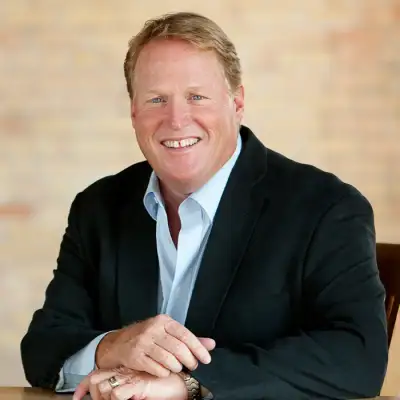

Former U.S. Senator Heidi Heitkamp and her brother, KFGO radio talk show host Joel Heitkamp, engage in animated discussions with newsmakers, elected leaders, and policymakers who are creating new opportunities for rural Americans and finding practical solutions to their challenges. Punctuated with entertaining conversations and a healthy dose of sibling rivalry, The Hot Dish, from the One Country Project, is informative, enlightening, and downright fun.
Heidi (00:04)
Welcome to The Hot Dish comfort food for rural America. I'm Heidi Heitkamp.
Joel Heitkamp (00:09)
And I'm Joel Heitkamp. Today, we're joined by a very funny guy, the liberal redneck Trae Crowder.
You're all going to love this episode. Trae grew up in a small town in rural Tennessee. That's right. Middle Tennessee. He's hugely popular on YouTube and Instagram. He co-hosts multiple podcasts, including the weekly skews, putting on airs
and well read podcast. Trae has two books. That's right. The liberal redneck manifesto Dragon Dixie out of the dark and round here and over yonder a front porch travel guide by two progressive hillbillies. Yes, that's a thing. Trae,
Joel Heitkamp (00:48)
to have you on The Hot Dish.
Trae (00:48)
yeah.
Heidi (00:49)
It's a little contrast trade to Hillbillology, huh? Yeah.
Trae (00:50)
Yeah, now, yeah, thanks for having me. just anytime it's always the titles of those two books, I always have to laugh at them whenever someone else has to read them all. They are pretty they are kind of ridiculous. I acknowledge that. I don't know if it's changed, but in my experience with publishing and I had two different publishers, they they love like a like a subtitle, like a colon and a subtitle. I don't know. They just.
It just felt like the titles just kept expanding for both of those. And I always feel kind of silly in retrospect. But anyway, yeah, glad to be here.
Heidi (01:25)
Well, you know, I want to talk a little bit about the special election in Tennessee, part of the world that you're pretty familiar with, part of the country you're pretty familiar with. And I think there's been a lot of, you know, a nine point spread from a 20 plus 22 to a plus nine, you know, pretty remarkable. But there's a lot of people who think that had we run a more moderate candidate, that would have narrowed substantially.
Trae (01:30)
Mm-hmm.
Yeah.
Right.
Heidi (01:52)
⁓ You know, when you look at the debate that's happening right now, because we know that ⁓ more progressive candidates are really energizing a big part of the base, that's critically important if we're gonna win, but also we can't alienate those folks that we might wanna win back. You know, the old Tennessee kind of coalition when Al Gore used to win there. And so, ⁓ you know, what's your take on that special election Trae?
Trae (02:19)
I don't want to. Yeah. So first of all, I, I spend every Christmas in that district. that is true, but it's also like, I'm in a very particular part of it. That district is weird the way it's shaped. Like a lot of districts in this country doesn't really make any sense. You know, they split Nashville up into three and one third of it got put into this district, which also includes one of the most rural, one of the most red counties in Tennessee.
Heidi (02:32)
Yeah.
Trae (02:45)
I think it literally is the most red County in Tennessee. It's called Wayne County and that's where my wife is from. That's where my in-laws live. So I spend every Christmas in Wayne County specifically. That's important because Wayne County is not, it doesn't mean it's like the entire rest of that district. It's probably the redneckiest part or whatever. And that's the part I'm most familiar with. but
I don't want like fence it or whatever. think it might be kind of a combination. I feel like I can make arguments in both directions for the question that you asked, because I think that, you know, you could argue that, ⁓ Aftyn's performance there, a lot of it had to do with, ⁓ people getting energized or whatever, and, ⁓ coming out in response to a lot of the flack that was getting thrown her way. And if it was a more like,
Traditional moderate candidate there might not have been as much of that It might not have got as like heated and as much eyes on it and resources behind it in the first place ⁓ it but also I think that as someone who goes to Wayne County all the time I think that if there had been a candidate who all of sudden they become aware there's a real shot at this you see what's going on all this mud flinging in this race and people start paying attention and then that candidate had been a like
You know, like a white dude, a white straight white man, ⁓ who was talking about grocery prices and that type of thing. Then, you know, maybe more people in Wayne County specifically might've voted for them. So I think it's like a combination of the two, cause it's definitely a, like the rural parts of that County, which are most of it, you know, is, ⁓ like not going to be crazy on board with a.
opinionated progressive woman, probably. yeah, I I can, you know, I feel like I said, I feel like I can sort of argue it in both directions. I think that it's hard to get people excited and energized for a more classic, moderate, democratic candidate these days. And so that makes things hard. But in some of these places, like Tennessee seven in particular, it's also a real tough road to hoe.
for someone like Aftyn too. So I think, and I know it's like, so what does that mean? It's just a, you know, a no win proposition. I'm not saying that. I'm just saying it's like difficult, complex and nuanced in my opinion. You know, it just depends on the person and the circumstances, I think.
Joel Heitkamp (05:15)
Well, Trae, let me add this, though, you know, from the rural area, which is who we talked to here on The Hot Dish it's not always easy to find candidates and then to find candidates that are as aggressive and willing to go out and work like Aftyn I mean, you know, we can talk about whether or not she was too progressive, but we can't talk about whether or not she ran a tough race. That doesn't sell.
Trae (05:25)
Right.
Right. Well, even the her being radical from my perspective on it, I feel like she went out of her way to try to focus on like on the actual campaign trail and in actual appearances. And in that context, she went out of her way to focus on sort of meat and potatoes, kitchen table type stuff about like grocery prices and affordability and everything, which I think is smart. And that's like economically progressive. I know, but it's not.
considered by most people to be like radical. And I feel like lot of the radical arguments came from, you know, things that they dug up and oppo of old like appearances and stuff where she's calling herself a radical or she's, you know, getting thrown out of an office and crying or this type of stuff. They just made her look like, you know, like a, like a, a loud shrill Harpy or whatever. Again, a lot of it comes back to like misogyny and stuff. And that as someone who's from middle, I'm not from Nashville.
But I also go to Nashville every year as a comedian and I grew up going to Nashville because I am from middle Tennessee. The whole thing that they went after for about how like this is a, you you're going to elect someone to represent Nashville who admittedly hates Nashville. The clips they played of her talking about how she hates, you know, Nashville, but everything she said about Nashville is stuff that any like legit native, not just to Nashville, but the area completely 100%.
agrees with. literally had a clip from a podcast appearance I was on less than like two months ago that I posted where I made the exact, I said the exact same things that she said about Nashville. Cause it's not like hating Nashville. It's hating the stuff that's happened to Nashville recently. Cause it's made it worse to a lot of people that so it got, a lot of it got blown out of proportion and I don't think she's as radical as people made her out to be in my opinion.
Heidi (07:28)
I want to make this point and I think, you know, I'm not just blowing smoke your direction. There are so many people now who are unabashedly talking like you, you know, come from places like we come from is saying, look, know, quit, quit demonizing our places, start talking about what we need to do for the rest of the country, but don't be afraid to be who you are. I just read a statement today that in Texas,
We're competing everywhere, which hasn't happened in a long, long time. And I really credit, ⁓ to some degree, The Hot Dish, but also all of these people talking about what you can do, what can an individual do in this very, very difficult time. And one of the things that we're saying is you can run for office. And so we're seeing...
record number of people stepping up. mean, Joel's point is it's hard to find people, but we're also now seeing a lot of candidates coming through the woodwork saying it's time to make my voice heard. What can we be doing that would be more helpful to those candidates kind of moving forward to help move hearts and minds?
Trae (08:45)
if I we you mean like people in like our position or like, you know, talk about these things. Yeah, right. I mean, I just try to like I mean, Aftyn did my political podcast the week before the election or whatever. And I just and I posted about her and that type of stuff. And now, I mean, again, I'm from Middle Tennessee and everything. So I was definitely paying more attention to that one specifically. But I try to, you know, just try to like help out.
Heidi (08:49)
podcasters, talkers, influencers.
Trae (09:12)
If I can, if it's a candidate that I like and align with, meaning like, you know, with whatever platform I have and that type of thing, I'm not sure how much more it depends. There's people with much bigger platforms that can reach further and everything, that's really, you know, beyond that, I'm not sure. Just try to support them and prop them up a little bit.
Joel Heitkamp (09:37)
So I want to ask this, it's probably a question for both of you, which is, OK, we talked about how you can find candidates, and hopefully there's ones that want to get out there and run an aggressive race, all of that. But part of what we do here on The Hot Dish and part of what others do when they have these conversations is really try to get rural America, farm country, all of that thinking.
thinking about their future, thinking about who supports them and who doesn't. So I got to ask this. What happens when you get the sense that the Republican Party, in this case, President Trump, actually buy off the rural country? $12 billion is a lot of money. so, you know,
Trae (10:22)
Right. Yeah.
Joel Heitkamp (10:27)
Trae, I want to ask you, you know, I'm sitting out there on my talk show all the time making the argument that, hey, these tariffs aren't working. You know, all we're doing is sitting there losing ⁓ market, losing market long term. And then the next thing you know, they hold a press conference, say we're Santa Claus, we're sending you money.
Trae (10:38)
Mm-hmm.
Right. Yeah. Yeah, no, I know that's upsetting because it's like, think there was a certain percentage of people that even if he hadn't done that, no matter how bad things got for them as a direct result of decisions that he made, I think there was a certain percentage that still were just going to, you know, go along with it to their own detriment because they just got their heels dug too far in. But you had to hope that there was a large enough chunk, though, who could be swayed. And it seems like going back to the Aftyn thing and a lot of things people are pointing at that, like there's
you know, maybe that's starting to happen with some of these like voting blocks or whatever that's our, it's finally, you know, things could be shifting because it's gotten, you know, clear enough at a certain point. But when you think that they would have like been by his side, no matter what happened. And then the idea that, so then when he buys them off, basically, you pretty much know that that's probably going to work. I feel like.
Heidi (11:41)
Yeah, well,
the one thing that I would say, Joel, is I don't know how the lady who's cooking the hot lunch at in a rural school is going to benefit from $12 billion. I don't know how the CNA at the local nursing home is going to benefit. And you know, and I know that at some point that the people in rural America watch this very closely and you get a lot of people calling.
Joel Heitkamp (11:52)
Well, she's not, Heidi.
Trae (11:53)
Yeah.
Right.
Heidi (12:08)
who are from rural America Joel, who don't like this, who think that it's unfair. And when the numbers come out and it shows that people who own land like Bessette and Bill Gates and those folks are people who are gonna be subsidized by this $12 billion. And it's gonna be some of the wealthiest people in rural America who are gonna be subsidized by the $12 billion. That doesn't trickle down. I mean,
Back in the day tray, our dad delivered bulk fuel and everybody bought their seed in town. They used the local implement dealership. They bought their fuel in town. And so that money trickled down into rural communities. Now they're buying in bulk. You see semis come in and basically fuel up a farm. So you aren't seeing the kind of...
you know, kind of rural economic development that comes from that money. ⁓ And so I'm really curious to see how it's going to be dispersed, Joel. And I'm really curious to see how many people are going to be getting a whole lot of money who otherwise ⁓ have had some pretty good years.
Joel Heitkamp (13:21)
Well, one other thing and I'm going to throw this at you, Trae, that there's less farmers. mean, lost in all of this is there's less farmers. And so if you have less farmers, it's helping less people. Going back to what you said, Hyde, you know, you're sitting there and in the old days, you know, you had farmers farming 500, 600 acres where I'm from now, they're farming 5000 acres. And so
Trae (13:26)
Right.
Heidi (13:45)
And that's an average farmer.
Joel Heitkamp (13:47)
Yeah,
and so you're sitting there at Trae where normally, yeah, okay, you can buy them off, but you're buying way less people off.
Trae (13:57)
Yeah. No, I mean, I'm hopeful that all that will matter. You meant you, you know, used the phrase earlier, like that's not going to trickle down or whatnot. But I feel like, you know, trickle down economics has been pretty boldly not working for most people for a very long time. And it just I'm just like jaded and cynical is all it is. I see all these things like there's so many times, so many points over the years where I've been like, well, surely this will like matter. Right. Or they'll see. And it's just I'm not.
saying I'm utterly bereft of hope. am hopeful right now that that can happen. just, guess I'm also, uh, you know, trying to temper expectations somewhat. Cause I just think it's like, I don't know what, strong propaganda is and some of the bubbles that people live in and all this stuff is insane as it might be that there, that, you know, there still will be people that will find a way to blame all of those hardships on.
Heidi (14:52)
Yeah, I.
Trae (14:52)
Even Joe
Biden or Barack Obama or whoever, know, like still like even no matter how long they've not been in power. So.
Heidi (14:54)
Yeah, Office that
the the interesting thing to me is what's happening in health care. I health care is going to have a lot bigger effect in rural America that the exchanges, a lot of people in rural America overuse the exchanges, especially in places that didn't expand the Medicaid, engage in Medicaid expansion. so those subsidies are critical.
Trae (15:20)
Right.
Heidi (15:24)
for those lower income folks. And the Republicans now have floated an idea that they're gonna do these basically HSAs, they're gonna do health savings accounts, put some money in there, and then have people have high deductibles. Every legitimate economist and healthcare expert who has studied this had said that's a formula for disaster because remember this.
Over 50 % of the people in this country could not afford a $500 hit to their budget, but they're going to give them a highly deductible plan at $2,000, $3,000. And they're going to be in medical debt. There's no doubt about it if something happens. And so I think healthcare is, if I were running in a rural district right now, I would really be talking about what's happening in healthcare.
Trae (15:56)
Right.
I mean, I completely agree using my hometown as an example, Solana, Tennessee, Clay County, the hospital there that was there my whole childhood and years before has like closed and reopened, I think three times in the past eight years or whatever, but has been closed for good now for, you know, quite some time. And then also this, you know, with the
big beautiful bill and some of the implications of that. Like it's possible that like even like the nursing home could end up closing and stuff like that. And there's been no jobs or anything there for a while. ⁓ Like absolutely just economic devastation in Clay County. up until very recently, it had still just been like, you know, very much so white. It still is mega country, I'm sure. But like it was like hardcore.
Maga country in spite of all that, which I was always like, you know, ⁓ annoyed and confused by sort of, but, I don't even know how much this means. I might've told you all this the last time I was on there. So I'll try to do a shorter version of it. But my uncle is like the co-chair of the clay county democratic party. And for years and years they had, was him and him, his co-chair, and then two other people. That was the clay county democratic party meetings, like for a long time. And he has told me it like recently, like their meetings it's.
You know, it's like close to 40 people or something. So that's, mean, a 10 fold increase and it's only 40 people, but it's still like, surely that means something. And I was talking about Wayne County earlier. My wife is from it. That's the reddest County of Tennessee and in Aftyn's race, was like an almost seven point, you know, upward swing for the dim candidate from the last time there. And, uh, so it was still like, you know,
much less than Republican candidate got, but it was much more than, you know, any Democrat usually gets there. it's like, so I feel like stuff like that. It's like, it seems like it means something, you know, hopefully like it does. I can buy the feeling that it's like, is the tide finally maybe starting to turn? Like people have finally been pushed too far and it's gotten harder and harder to like, ⁓
realistically blame it on anyone else at a certain point. So maybe that's finally starting to matter and to happen, but I guess we'll just have to see.
Joel Heitkamp (18:38)
Well, the one thing it's
doing speaking as somebody who recently went over to the Western part of Minnesota in the 7th District and spoken of fundraiser over there. I walked in the room and I had done that before. I had walked in the room and there was over 300 people there this time. They had to order more pizza. They had to go find some chairs from the Legion Hall.
⁓ There's over 300 people there. Now that doesn't sound like a lot to everybody listening to The Hot Dish, but for them it was and it was not the fact that they had a great keynote speaker. That was not it. The truth of the matter is these people, everybody there, some with money, some without, but everybody there gave some money.
Trae (19:14)
Right.
Joel Heitkamp (19:24)
Some might have been 10 bucks, some might have been 20 bucks, some might have been a thousand. I don't know. I know they had a very, very successful fundraiser. They had two candidates running against each other for the opportunity to take on an incumbent in what has been a pretty red district. ⁓ There's an energy out there, you guys. There really is.
Trae (19:44)
Right.
Heidi (19:46)
So Trae, I want to kind of switch gears a little bit and talk about your style. Because I think one of the reasons why you have such a faithful following, one of the reasons why we wanted you on the podcast is you do two things. You speak common sense and you do it with a lot of humor and a little cussing and a little cussing. But, know,
Trae (20:08)
Mm-hmm. Yes.
Joel Heitkamp (20:10)
Which Heidi, I still can't figure out why we can't cuss on here more,
but you go ahead. Yeah. Yeah.
Heidi (20:13)
You can cuss all you want, Joel. You can cuss all you want.
Trae (20:14)
Hehehehe
Heidi (20:17)
But I think I think that, you know, for so long, the Democrats have just been so afraid of political correctness or what to say and what not to say and who you're going to alienate. And I think the charm of what you're doing and a lot of other folks are doing is just let it rip. mean, you know, this is the way I see it. You don't like it. Turn it off. But I'm going to tell you how I see it. How do we get more
folks to, especially candidates to take that approach.
Trae (20:50)
I mean, don't know, you that, cause I don't know, I don't have any real like experience at all in like the world of politics. I don't know if these people, these candidates are like, in my head, I always assumed that they're going through these like, like media training and they have all these like consultants and campaign people and stuff, and they're coached on all this. And I don't know anything about it because I'm having firsthand experience with it, but I've suspected for a long time that a lot of that is pretty outdated, especially like on the Democrat.
side. mean, there were reports of like in the Harris Walls campaign, you know, at one point, like when he first came on board and for a while there, it was like real energized and stuff. And then there were reports that like these teams were brought in that had worked on like, you know, old campaigns and talks. It's like walls have been calling them all weird. And he said like, he was, you know, told like advised, maybe don't do that. When that was like working great, you know, is what you were just saying, just like letting it rip. And he was doing that. And then he got reined in some. it's like, so I feel like there's
In, the Democrat side, especially, it seems like there's this sort of old power structure that's still there in terms of how it's all supposed to work. That's like, I think even if you get a candidate that's special, those people might coach out of them what makes them special. If they don't, you you know, make it a point to be kind of a maverick or go in the other direction or something. But everything I just said, I've pulled out of my butt, you know, I said, I don't know.
Heidi (22:11)
Well, just, or just
Joel Heitkamp (22:14)
Well, but it was
right.
Heidi (22:16)
say something that means something, not blah, blah, blah, blah, blah. I mean, when the people hear blah, blah, blah, blah, blah, blah, blah, blah, blah, blah, blah, blah, they're like, what are you talking about? And, you know, the one lesson that we should all learn from Donald Trump is he may use word salad, but people think he's funny. People think he's engaging and they think that he is genuine in what he says, even though what he says is that shit crazy.
Trae (22:18)
Right. Right.
Yeah, absolutely. That was like the first big thing when people like, when he first started being taken seriously as a thing, Donald Trump in 2016, that was like the main thing that was being said is like, well, he tells it like it is. That's, know, like, what does this appeal that he's having? Well, he tells it like it is and he's different. He's an outsider and that's all that stuff, you know? So, I mean, no, I definitely think that, ⁓ I fully agree that it would
behoove candidates to take a page out of that book and be a little more authentic and like you say what they mean, stand their ground, all of that. ⁓ I'm just saying it's, feel like a lot of times when you watch politicians and candidates, it's, it's like when you see a lot of high level athletes, sometimes they give like, you just feel like the politician on them and everything like is so carefully worded and all this stuff. And it just feels like kind of artificial and manufactured and whatever it is that's
making that happen or putting that in place, like that needs to go away, my opinion, or be replaced by something else, like a new paradigm or philosophy needs to take the place of that behind the scenes in the world of like, you know, politics on the American left.
Joel Heitkamp (23:48)
Well, as
a talk show host, let me give you an example of my approach and, you know, Republican area. And I've been able to stay number one for 20 some years. I know that my audience didn't like going to school. They didn't. They went to school. They had to go to school. They use school to get where they're at, but they didn't like going to school. And so why would you talk to them as though you're teaching them constantly, constantly?
Trae (24:05)
Mm-hmm.
Right.
Joel Heitkamp (24:17)
You know, and saying 20 words when two would do and Trae, that's why you're so popular is it isn't as though they're talking to a guy they could have a beer with and that matters.
Trae (24:21)
Mm-hmm.
Yeah, no, I, yeah, I agree. mean, I, you know, I, I appreciate you saying that about me, but, ⁓ but yeah, overall I agree. ⁓ but yeah, it turns, like you said, like how to fix it. Like, I just think that there's, ⁓ something needs to happen in the world of big Democrat or the TNC or whatever, whatever system it is, these candidates tend to come up through. I think they're getting corrupt.
Joel Heitkamp (24:54)
Yeah.
Heidi (24:57)
You, you, you.
Trae (24:59)
did
in that way along the way and that needs to stop. But I don't, you know, I don't know how to achieve that. I, nothing to do with it personally, but.
Heidi (25:05)
Yeah, I
think it's so interesting because people always talk about money. Kamala Harris spent a lot more money than than Donald Trump did. A lot more. A lot a lot of money. And a lot of these Senate races, a lot of money. And it wasn't the lack of money that caused the problem. And so, you know, it was a lack of authenticity. It was a lack of an idea. It was a lack of the ability to actually sit down with people and say, hey, you got grocery problems?
Trae (25:14)
Mm-hmm.
Heidi (25:35)
You got problems doing this. This is what we're going to do. Your health care is not affordable. You can't get mental health care for your kid. This is what we're going to do. And just be straight up and be honest about what you're going to do. And I think, I think that, you know, the one thing that influencers are doing, and I don't mean to, if that's insulting to you, I don't mean to insult you, but the one thing that people who are people are listening to that are people are entertained. Number one, they're entertaining.
Trae (25:35)
Right.
So, yeah.
Heidi (26:05)
And number two, they talk truth and common sense. And if there is some kind of, number one, it's really hard to take somebody who is wonky and say, now be authentic. Yeah, now be like a real person. And so we need to let the real people of these districts, the real people of these states nominate their own candidates.
Trae (26:20)
Yeah, right.
Right.
Mm-hmm.
Heidi (26:33)
and
quit interfering because they know what resonates and what works. And that's a problem too, is this top-down management.
Joel Heitkamp (26:37)
Well, one more thing, and I know Trae, I know
you got to go Trae, but one more thing that I want to throw out there as a talk show host, there's nothing better than a guest that you don't know what they're going to say. Nothing better. And I can tell you this ⁓ with the Democratic and with the consulting and with everything that goes with it, you know what they're going to say.
Trae (26:52)
Right. Yeah.
Mm-hmm.
Right, yeah.
Joel Heitkamp (27:01)
Before you ask
the question, you know what they're going to say. And it's boring as hell. So Trae, know you. Yeah, exactly. Trae, I know you got to go. You got 100 people pulling at you. But thanks for joining us on The Hot Dish.
Heidi (27:07)
I know what they're gonna say, Joel. They're gonna say blah, blah, blah, blah, blah, blah, blah, blah, blah.
Trae (27:16)
No, thanks for having me. I appreciate it. Yeah.
Heidi (27:17)
Trae, it's always great and keep
up doing what you're doing. More people, we need more people like you speaking truth to power and revealing why it is that we need to bring common sense back to public policy. You're a great guy.
Trae (27:29)
Well, y'all are too sweet.
Joel Heitkamp (27:30)
See you back.
Trae (27:32)
appreciate it. I'll just say real quick before I go check me out. If you don't already on the internet there, it's Trae Crowder, T-R-A-E Crowder on your preferred social media platform, but also Trae Crowder.com is where all my tour dates are. So come see me live.
Heidi (27:44)
Yeah. I just,
you know, as a justified fan, Crowder's kind of a famous name. No relation, right?
Trae (27:50)
Yeah, no, yeah, my cousin Boyd, right? Yes, no, yeah, no.
Joel Heitkamp (27:50)
Ha
Trae (27:53)
No,
Joel Heitkamp (27:54)
Thank you, Trae. Thanks for joining us. Appreciate it.
Trae (27:54)
I'm big fan, too. Thank you, guys. Appreciate it. See you.
Joel Heitkamp (28:04)
So, Heidi, we've had conversations here on one country at length about rural America and what rural America thinks, does, how they operate, mostly the economy. That's an area that you know, you're very, very good at. So let me ask you this, can $12 billion buy out the hearts and souls of rural America?
Heidi (28:25)
I don't think so. think that, you know, Donald Trump has a distorted view of what rural America is. I he does very well in rural America, let's not kid ourselves, but he thinks that it's all about agriculture and he doesn't realize that small mom and pop manufacturers who are part of an incredibly important supply chain, they're part of this too, and they're hurting really bad. I talked to someone who is very knowledgeable who said,
that in the next 10 years, we may not have any mom and pop manufacturers anymore. And that is a tragedy because we need that resilience in the supply chain. He doesn't understand how significant healthcare is to rural America. He keeps talking about, wants to put the money in the pocket of people who are getting healthcare, but that totally ignores, who are buying insurance, but that totally ignores the risk pool.
You know, all of those people who are healthy are gonna do just fine. Those people who need to enter a risk pool, who may have preexisting conditions, their rates are gonna go much higher. you know, totally ignoring what's happening, both on the Medicaid side and on the ⁓ Obamacare enhanced subsidies is totally tone deaf about what is happening in rural America. And then you add on top of that,
You know, a lot of people from, you know, probably downtown Chicago go to the Target or they go to their local grocery store and man, those prices are high. I want you to think that you have to pay, you know, $5, $10 round trip gas in your car to go buy those groceries. I mean, everything is really challenging. And when you look at home heating fuel, if we have a tough winter, cutting programs like LIHEAP, which helps people afford their,
home heating fuels. mean, we, rural America uses public services at a higher rate. They're more elderly. And, and he thinks that they are just these wealthy farmers who have been knocking on his door saying, you know, we need, we need relief for our row crops when they're farming, you know, 10,000, 50,000 acres. You know, I, I just don't see it. And I don't see that money trickling down in the community.
Joel Heitkamp (30:41)
Yeah, the other thing I would add going back to what you said about health care is oftentimes with two income families, one being the farm or the ranch, the other one goes to town and works. And the reason they go to town and work is so that they can have health care. They're not as concerned about the wage is what they are about the health care because they know what that's going to cost. So let me add one more thing. And there aren't as many farmers, there aren't as many people doing that. And so
The workers and finding workers has been a problem in rural America for quite a while. Now you add in the fact that the health care is going to be through the roof. Because those small businesses are using the exchange height. They are. Which means less employees or maybe as you pointed out, less businesses.
Heidi (31:29)
Yeah, I mean, so so if you're a and you're an employer that is not required because of your size to basically provide health insurance, a lot of times, competition is tough for workers, you basically say, Hey, I will up your salary, and you can go out on the exchange and buy it now all of a sudden, that's two, three times more than what it was before. And, you know, the what what I keep asking is, how is this $12 billion going to help?
the CNA in the nursing home who's living on minimum wage? How is it going to help the school cook? How is it going to help the school janitor? How is it going to help the school teacher? ⁓ know, many of which in rural America are underpaid and a lot of them qualify for government services. And so, you know, I think that the this idea that we're going to subsidize farmers and that's going to solve our problem in rural America, I think
I think it's naive.
Joel Heitkamp (32:27)
Yeah, but the 12 billion is going to make the farmers feel better. And the 12 billion is going to make ⁓ the bankers, the farmers that I don't know that will go all the way to the implement dealers, but they're going to use this. And I can tell you this as a talk show host, because they call in a lot and make this argument that he cares. This proves he cares. And you know what?
Heidi (32:31)
Well, yeah, wouldn't it make you feel better? You know?
Ha!
Joel Heitkamp (32:52)
The Chinese deal and the reason we're in trouble on soybeans with China is because of Joe Biden and his trade policies. I point out that the last trade agreement that we had with China, Donald Trump made. I point out that it's the tariffs. The tariffs are a huge part of the problem and that we're losing this market long term. That more investment by China is being made in Brazil and Argentina, for example. And a lot of them get it.
Heidi (32:59)
my God.
Joel Heitkamp (33:21)
But a lot of them don't. And I don't know how we turn that corner, Heidi. I really don't.
Heidi (33:22)
Yeah, well, I mean, yeah,
I think that my question then I say, well, when Joe Biden was president, then you didn't sell any soybeans to China. Is that right? Yeah, yeah, you didn't sell any soybeans to China. So it's Joe Biden's fault because, you know, this has been going on a long time. This is the result of an ill-advised trade war. And I don't know if you saw Joel, ⁓
Joel Heitkamp (33:34)
at $14 a bushel.
Heidi (33:49)
the numbers, but China's not trading with us to the same level, but they have a trade surplus of billions of dollars because they're trading with the rest of the world. The United States of America is less than 3 % of Chinese exports to the United States, less than 3 % of Chinese GDP. And absolutely, absolutely missing the boat in terms of leverage there. And the Chinese are playing the long game and
Donald Trump, it's like, you hurt my feelings, so I'm not gonna talk to you this week. There's no real plan here. know, Joel, the one, the other thing I wanna bring up is explain to me how anyone can justify bombing boats in the Caribbean. You know, I'm not gonna dispute whether they're running cocaine or not, but then turning around and pardoning somebody who was a drug kingpin.
in his own country. mean, and he has pardoned a lot of drug dealers. And so, I mean, I just want to ask people what like, like, how do you explain that to me? How do you explain two guys, you know, floating on some flopsum in in the middle of the Caribbean, we're going to take them out. But by the way, you know, unlock the key of the jail to people who are actually peddling this stuff in our country.
Joel Heitkamp (35:09)
Well, I can explain it to you. There's a whole group of people out there who love the machoism. They do. They absolutely love it. ⁓ man, look at how that look at that. ⁓ look at the technology we use. You know, that type of attitude. Now, what they don't want to do is show you the after.
They don't want to show you the survivors. They don't want to show you all of that because now it becomes human. That could be you. You're no longer this vicious drug dealer as much as what you are this person that's struggling to stay alive. ⁓ And it humanizes things a little bit. You know, I think it's I think it's really, really interesting.
that you can be Pete Hagseth, you can be Donald Trump, you can go ahead and criticize reporters, call the women reporters piggy or ugly or whatever you want, ⁓ and usually people of color and get by with that crap. But if people see somebody hanging on to a boat trying to live, and then America going back and blowing them up, that isn't going to sell, Heidi. That isn't going to sell.
Heidi (36:12)
It's hard to imagine that it would, but I think we've all now looked at that first, the second strike and there's been a lot of attention. There's not enough attention to the first strike. And the only one who is really speaking eloquently about it is Rand Paul saying, we're not at war. I think George Will had the best line.
is Pete Hagseth might be the only person guilty of a war crime when there was no war.
Joel Heitkamp (36:42)
Well, there's a lot of truth to that, you know, and thank God he said it. Hopefully more Americans will hear it. ⁓ I just think I just think personally.
Heidi (36:43)
You
Joel Heitkamp (36:51)
It's all about those guys that for the first time ever have a connection to politics. They stayed away from it. They thought leaders on both sides of the aisle, it kissed way too much, but we're too big a wimps. And all of a sudden they've got that guy that lives his life the way they live theirs, not caring about anybody else. ⁓ You know, they want they want it because of that, because they they hope he gets four wives, Heidi.
Heidi (37:19)
So think about this, Joel, think about this. They accused the Democrats of being the nanny state, but we have a secretary of transportation that says, don't wear your jammies when you get on airplanes. Don't eat sugar, don't do this. They are the government of big government. And you know, it...
Joel Heitkamp (37:38)
Yeah.
Heidi (37:40)
that all the conservative people in the world, all of those people that we grew up with who say, I just want the government out of my business. That's the last thing that this government is doing, this administration is doing.
Joel Heitkamp (37:51)
Do you
think Marjorie Taylor Greene told the truth when she said behind that closed door, all Republican Congress members laugh at him?
Heidi (37:56)
⁓ absolutely.
Yeah, well, I mean, I was I was in the Senate during the first term and I mean, he he his favorabilities. I mean, if people are honest, are very, very low. There's only just a few people, probably including ⁓ Congressman Senator Kramer and Tuberville and people like that who really respect him. think that there is a clear lack of respect for him. But I think he has been so successful.
in imposing fear, fear of their jobs. And I'm like, why would you, why would you want the job if somebody can intimidate you like that?
Joel Heitkamp (38:35)
Yeah,
what? How did you grow up being that person that's so afraid of your own shadow that you're truly a chicken shit? I mean, I don't get it. I these that job wouldn't be that important to me that I'm going to kiss his butt hide, but apparently to a lot of them it is now for Christmas. Would you get me?
Heidi (38:52)
Well.
Nothing, absolutely nothing, because you told me I could not, but I was expecting some deer sausage.
Joel Heitkamp (38:56)
That's our deal.
Yeah, what's it worth? Yeah, because you know, nothing's free. I yeah, that's true. And you work really hard on that. Everybody you need to know that Heidi works on a calendar that keeps his huge family's birthdays and anniversaries and fun pictures and all of that on there. So okay, the answer then is deer sausage and pepper sticks. How's that?
Heidi (39:03)
You get a calendar. You get a calendar. ⁓
Okay,
just your sausage.
Joel Heitkamp (39:25)
You chicken. Alright, Merry Christmas everybody. Merry Christmas.
Heidi (39:27)
Merry Christmas,
you take care, Joel.
Thanks for joining us today on The Hot Dish brought to you by One Country Project, making sure the voices of the rest of us are heard in Washington, D.C.
Joel Heitkamp (39:43)
Learn more at onecountryproject.org. That's onecountryproject.org. Follow us on Substack, Facebook, and Blue Sky. You can also find the One Country Project on YouTube. Be sure to like and subscribe to us there.
We'll be back next week with more hot dish comfort food for rural America.