Subscribe
Share
Share
Embed

The World Cement podcast: a podcast series for professionals in the cement industry.
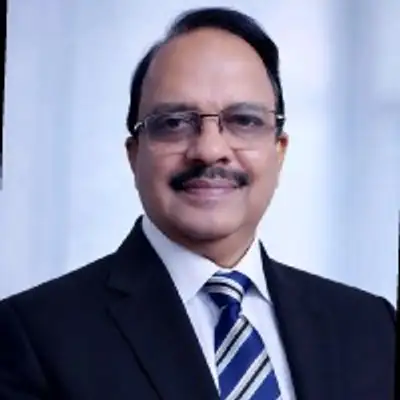
Hello and welcome to the World Cement Podcast with me, David Bisley, Senior Editor of World Cement. The Indian cement industry is one of the world's largest, second only to China in terms of production capacity, and all indicators point to it continuing to grow over the coming years. To talk me through how Indian producers are going to manage that rapid growth whilst overcoming supply chain and resource issues, all while decarbonizing their operations, is Doctor. S. B.
David Bizley:Hegde, who has also produced the India focused Regional Report for our February issue. Doctor. Hegde has also published over two fifty technical articles, holds multiple patents, and is Professor of Civil Engineering at Jain College of Engineering and Technology India, and visiting professor at Pennsylvania State University USA. I just wanted to take a moment to remind you to register for WorldCement. It's free of charge and gives you access to the latest issues of WorldCement, both in print and online.
David Bizley:Every issue comes packed full of regional analysis, technical articles, project case studies, and the latest news. Simply head over to worldcement.com, click the magazine tab, and register today. It's as simple as that. Happy reading! So, Doctor.
David Bizley:Hegde, welcome to the World Cement Podcast. Delighted to have you with us and looking forward to hearing your thoughts on the state of the Indian cement sector.
Dr S. B. Hegde:Thank you very much, Mr. David, for inviting me to this global podcast. It is a privilege to share insights with the international cement community. I have spent more than three decades in the global cement and construction materials industry working across Asia, Africa and Southeast Asia in leadership roles covering manufacturing, quality assurance, R and D, sustainability and digital transformation. Along my side industrial career, I am a professor in the Department of Civil Engineering in Jain College of Engineering and Technology, Hubli, Karnataka, India and also a visiting professor at Pennsylvania State University in The USA.
Dr S. B. Hegde:This combination of industry leadership and academic research allows me to integrate operational experience with policy insights and forward looking innovation. This holistic perspective shifts my recent analysis for world cement and informs my views on India's evolving cement industry.
David Bizley:Okay. Excellent. Thank you. Now, as I mentioned in my opening comments, you've recently produced a report for the February issue of World Cement that provides a forecast for the Indian cement industry over the coming years. You begin this report by mentioning that Indian production capacity is set to rise from around six fifty, six seventy million tons per year to as much as eight fifty and nine twenty million tons per year by 2030.
David Bizley:That's a significant increase. So what would you say are the biggest practical constraints to achieving that kind of growth?
Dr S. B. Hegde:Yeah. Well, it's a very good question. You know, India's planned expansion from about 700,000,000 tons as of today to eight fifty-nine 20,000,000 tonnes by 2030 marks an important phase in national industrial development. However, achieving this scale requires overcoming several constraints. The one major challenge is the regional imbalance in resources.
Dr S. B. Hegde:The Northern And Western India face tightening limestone reserves and rising water stress, while the South has surplus clinker with utilization often around fifty-fifty 5%. That means the kiln run hours. The logistics is another constraint. The flood prone rail routes and limited wagon availability in the East push freight costs to fifteen-twenty percent higher. The fuel volatility also impacts the margins.
Dr S. B. Hegde:India imports around twelve-fourteen million tonnes of pet coke, and price spikes in 2025 reduced profitability by twenty-three percent. Regulatory clearances can add twelve-eighteen months to project timelines showing capacity deployment. Based on my experience with AI integrated supply chains in Africa and Asia Pacific, India will need around 1,200,000,000,000.0 INR in targeted capex and stronger policy alignment through Prime Minister Gathisakti Yojana to overcome these structural constraints.
David Bizley:Okay, thank you. The report also mentioned three main drivers of demand, primarily housing, infrastructure, and commercialindustrial construction. What trends are you expecting to see in these areas over the coming years, and which of them do you expect to be the biggest driver of demand growth?
Dr S. B. Hegde:India's cement demand is expected to grow around six-seven percent annually through 2030. Housing remains the largest contributor (about 65% of total demand), driven by PMAY's target of one crore urban homes, rising incomes, and strong rural construction momentum. The second one is the infrastructure. This is the cost. This is the most powerful growth engine with INR 11.21 lakh crore in capital outlay.
Dr S. B. Hegde:India is seeing one of the largest infrastructure expansions globally after China in 2000. The projects like Bharat Mala, Gratisakti, dedicated freight corridors and Mumbai Ahmedabad bullet train projects which alone consumes 20,000 cubic meters of concrete per day are propelling demand. The commercial and industrial demand is rising too driven by warehousing, renewable energy and logistics parks. Overall, India's forecast to add 30 to 40,000,000 tons of annual demand between 2026 to 2028, with infrastructure clearly emerging as the dominant force. This is the scenario.
David Bizley:One of the many issues facing producers around the world is overcapacity. And your report forecasts utilization rates in India rising to 80 or even 85%, up from around 70% today, which quite high levels. What are the assumptions behind that forecast?
Dr S. B. Hegde:Our expectation that utilization will rise to 80 to 85% by 2030, which is based on strong alignment of supply and demand. You know the demand is growing by thirty-forty million tons annually, while new capacity additions of 100 sixty-one 170,000,000 tons will roll out in calibrated phases. The Northern and Eastern regions may soon operate at eighty-ninety percent capacity utilization while the South will benefit from inter regional clinker movement. Industry consolidation with the top five players in India controlling around 60% of the capacity improves pricing discipline and asset utilization. The digital transformation is equally significant.
Dr S. B. Hegde:The AI based clean control and predictive maintenance have reduced downtime by thirty-forty percent, pushing efficiency higher. With FY 2025, the dispatch is reaching around four fifty three million tonnes. The utilization trend is firmly positive. Is the situation.
David Bizley:Thank you. You've touched on this a little bit earlier and it also comes up in your report. One of the weak points in the Indian cement sector is primarily fuel price instability and shortages of raw materials.
Dr S. B. Hegde:Yes.
David Bizley:Can you tell us a bit more about that and what are specifically the key challenges facing Indian producers in this regard?
Dr S. B. Hegde:The fuel price, which I mentioned earlier, is highly unstable, remains a critical risk. Volatility in imported coal and pet coke has reduced margins by three-five percent in recent quarters. The raw material challenges are intensifying: Limestone scarcity in the West, inconsistent play ash from thermopower plants, slack demand on steel cycles, and water shortages in arid regions are the main problematic areas. These factors create five-ten operational inefficiencies and could push annual CO2 emissions towards 177,000,000 tonnes as demand reaches six seventy million tonnes by decade's end. Similar trends in Latin America show that diversification and predictive planning are essential.
David Bizley:So following on that chain of thought then, how are Indian producers navigating these supply chain issues?
Dr S. B. Hegde:You know, the Indian producers have demonstrated remarkable resilience. Alternate fuel usage has expanded rapidly. Many plants operate at sixty-twenty percent TSR. The best performers reach around 45%. The waste heat recovery systems now supply 20 five-thirty 5% of internal electricity.
Dr S. B. Hegde:The renewable energy capacity currently stands at 1.8 GW and is expected to reach 6.8 GW by 2030. The AI driven optimization is reducing energy use by five-ten percent and stabilizing kiln performance. India is also reprocessing 45,000,000 tonnes of alternate fuels each year, strengthening circularity and reducing resource pressure. These innovations place India in the forefront of sustainable cement production. Okay.
David Bizley:Excellent. And, of course, we can't talk about the future of the cement industry without discussing the issue of decarbonization. Let's start with something of an overview then. In in broad terms, what does the Indian cement industry's path to net zero look like? What are the highlights on the road map, if you will?
Dr S. B. Hegde:India is, you know, fully aligned with the commitment to achieve net zero by 2070. The GCCA and TERI roadmap outlines a clear eight lever abatement strategy. The most impactful is reducing clinker factor expected to fall to 0.56 through PPC Portland pozzolana cement Portland slag cement (PSC, LC3), and calcined clays. The thermal substitution is projected to reach around 35%. I am talking about the average of India in the cement industry.
Dr S. B. Hegde:Renewables will be around fifty-sixty percent by 2035 and WHRS will continue expanding. The carbon capture will contribute twenty-twenty 5% of total reductions. India already has five ccCUS testbeds, and thermal efficiency is improving towards seven zero five kcalkg. The roadmap positions India as a global leader in low carbon cement innovation.
David Bizley:One of the issues facing cement producers around the world when they're rolling out new greener cement products is generating market demand and consumer interest because there can sometimes be reluctance to try new products. How are Indian producers getting their customers to adopt these greener products?
Dr S. B. Hegde:India has a natural advantage in green cement adoption. The PPC and PSC already account for nearly 80% of the market reducing emissions by 20 five-forty percent per tonne. LC3 is being commercialized with early production around two lakh tonnes and BIS is expected in 2026. The green procurement policies, carbon pricing, and technical outreach to contractors and ready mix producers are accelerating adoption. Sustainable cements are also growing at seven-eight percent annually, showing strong market acceptance.
David Bizley:And whilst there are many ways to reduce a cement plant's emissions, carbon capture is often cited as the ultimate technology, the final stepping stone for reaching net zero emissions cement production. Recent projects in Europe, like the Brevik facility in Norway, have required significant investment from government as well as from industry. What do you think will be necessary for carbon capture to become viable in India, and when do you expect this
Dr S. B. Hegde:to be? TCUS becomes viable in India when three enablers align. The first is the policy support. India's carbon market launching in 2026 will set a price that improves CCUS economies. Two.
Dr S. B. Hegde:Cost reduction Capture cost today stands at Rs. 2,500 to Rs. 4,000 per tonne and it needs to fall to Rs. 1,500 to 2,000 in the coming months. Three.
Dr S. B. Hegde:Infrastructure. The CO2 pipelines, industrial clusters, and utilization pathways like enhanced oil recovery which yields US1.26-one $175 per tonne. India is making strong progress if you see. The DST has commissioned five pilot plants in India, and Dalmia Cement at IIT Bombay, which has got around 100 TPD CCUS unit, is expected in 2027. By 2030, we will see the first commercial scale CCUS project in India with major scaling after 2035.
Dr S. B. Hegde:Right.
David Bizley:Excellent. So not too far off then. That's excellent news.
Dr S. B. Hegde:It's going on very well.
David Bizley:Excellent. So to wrap things up then as we bring this podcast to a close, what highlights from the Indian cement sector should we be looking out for over the coming years?
Dr S. B. Hegde:Yeah. According to me, the next decade will redefine India's cement sector. Okay? The capacity is set to expand by 100 sixty-one 170,000,000 tonnes by FY twenty twenty eight. Infrastructure will continue driving seven-eight percent sales growth.
Dr S. B. Hegde:LC3 will become mainstream as large commercial plants start up. Hydrogen firing trials currently at seven-ten percent will expand. The CCUS will move from pilots to commercial deployment. The digital twins will become standard across major groups. And with strengthened trade agreements, India could account for 5% of global cement exports by decade's end.
Dr S. B. Hegde:India is emerging as one of the world's most resilient, innovative, and sustainable cement markets with lessons that can guide the global transition towards low carbon construction.
David Bizley:K. Excellent. Thank you so much, doctor Hekte. Thank you for your time today and for sharing your insights into the Indian cement sector.
Dr S. B. Hegde:Yeah. Thank you very much, mister David, for giving me an opportunity to share my views with the international cement producers and the leadership team. Thank you very much.
David Bizley:Thank you. And, of course, thank you as always to everyone in the World Cement podcast audience. If you enjoyed this episode and want more, please make sure to like, review, and subscribe. We're now in our second year with many more great episodes due to come up over the coming months, and if this is your first time catching an episode, then make sure to check out our back catalog of episodes from 2025, featuring leading cement producers, academics, and other industry stakeholders. They're all well worth a listen.
David Bizley:That's all for now. Goodbye, and see you in the next episode. I just wanted to take a moment to remind you to register for WorldCement. It's free of charge and gives you access to the latest issues of WorldCement, both in print and online. Every issue comes packed full of regional analysis, technical articles, project case studies, and the latest industry news.
David Bizley:Simply head over to worldcement.com, click the Magazine tab, and register today. It's as simple as that. Happy reading!