Subscribe
Share
Share
Embed
Speak to an Agent explores what it really takes to bring AI into large organizations, why AI can't fix a problem you haven't already solved, why real understanding matters more than a polished voice, and why the domain expert who knows how to use AI is becoming the most valuable person in the business. Featuring the people and ideas shaping the future of CX AI, the innovators, the thought leaders, and those making the decisions. They get candid about what's working, what isn't, and what changes now that machines can reason, plan, and act at a human level, and sometimes beyond it. If you're responsible for putting AI to work inside your organization, this is a conversation you won't want to miss.
It's a gorilla in the room, but AI agents running amok in a customer's ecosystem Right. Is a big, big problem. Welcome to Speak to an Agent.
Neeraj:Those words used to mean one thing, get me a human. Now the agent people actually want is AI. It's faster, sharper, and never puts you on hold. If that surprises you, you're exactly who this show is for. The builders, the decision makers, the implementers.
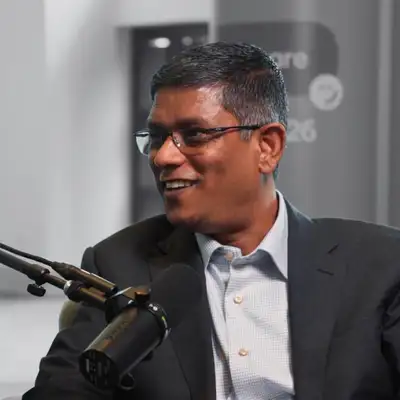
Neeraj:Comparing notes while the next generation of technology gets built. You're not just listening. You're in the room. I'm your host, Neeraj Verma. Joining me today is Sarup Paul, senior director of product management at ServiceNow, leading the team behind ServiceNow's AI control tower.
Neeraj:Let's get into it. It's an interesting world. Right? Models are coming out every day. When we talk about Agentic AI as a sort of thing in the future, it's clear that it's here now.
Neeraj:And you being the leader at ServiceNow for the CRM product is is actually really interesting. When you think about the market today, CRMs are viewed as almost like a core system layer, right, almost like a database layer. Mhmm. And people think that's going to be commoditized very fast when AI can write software that's customized to every use case. What do you what do you think about that?
Sarup:Yeah. A lot of the CRM market has been characterized by a single vendor. Right. And where we as ServiceNow, when we started building our customer service product, which is now involved evolved into a CRM product.
Neeraj:Right.
Sarup:We had a clear differentiation is like, we are not the engagement layer. We are the resolution layer. This is where the workflow and the data that's resides within ServiceNow or executes within ServiceNow is what is getting
Neeraj:And you're referring to Salesforce, It's probably characterized. Mean, that's the big gorilla in the room.
Sarup:It's a gorilla in the room, but one whom we compete in the enterprise segment and ServiceNow entirely operates in the enterprise segment versus the SMB business. And where we have clearly seen our differentiation is in the resolution layer. So it's not about just the account contacts and the data, it's about what resolves the customer's issue, the workflow orchestration that helps resolve the customer issue. So when it comes to AI, AI is not just operating as a self-service layer, which is the conversational AI. AI has to operate at the workflow layer to the resolution, which is where we shine.
Sarup:And that's how differentiation that has persisted not only in the pre AI layer, but in the current AI layer as well. So things like
Neeraj:What do you define as like a workflow even? Like, does that what does that even mean? Right? Because it's it's workflow can mean, I don't know, 50 different things and you've got, I don't know, chat GPTs, voice to voice models can can do amazing workflows. Right?
Neeraj:Yeah. What's the difference in what you guys got?
Sarup:So we have we do more than a billion workflow transactions a month. Right. And these workflows are orchestrating across different entities that a customer would interact with. So for example, even our integration with Visa, we integrate deep into Visa for dispute processes. We are the vendor that integrates with Visa.
Sarup:So any and every customer, a banking customer, financial services customer would file a dispute with Visa actually goes through the ServiceNow platform. Now that's workflow to resolve a dispute that normally an engagement layer CRM product would not be able to do. Because think of the hundreds and hundreds of regulations that a dispute would have to deal with.
Neeraj:Are you managing the dispute workflow itself or is are you integrating with Visa's systems that manage the workflow? It's both. Interesting.
Sarup:Lot of Visa's dispute workflows are embedded within ServiceNow as already pre canned workflows to match with Visa's requirements. And not only Visa, we are extending it to the other financial networks as well. So this is just one example. Right. Right?
Sarup:If you take the customer service examples of, let's say one of the largest global logistics, I think they're the third largest logistics vendor in the world. When a parcel is being sent DHL, I'm assuming. From, let's say, from the receiver to the sender, things can go wrong at multiple levels. Right. So the entire AI orchestration of whether it was customs that held it up or whether the package was broken that led to the package not being received on time.
Sarup:These are workflows that are already there on our customers instances. Some of these are built by customers, some of these leverage the six or seven industries, we talked about financial services.
Neeraj:Right. Differentiation there happens to be that that you've got all these really, I guess, really sort of complex workflows that are already built within your database and and structures. Yes. That AI agents can then orchestrate. Right.
Neeraj:But really, is that you know, when you think about that sort of in its place and, you know, it's a weird market out there. Right?
Sarup:When you
Neeraj:think about it, the winners right now are primarily the infrastructure players. Right? The people that cannot be their software just can't be you can't replace NVIDIA's hard and chips.
Sarup:Sure.
Neeraj:You have to have physical hardware from AWS and Google and Microsoft and others to do things. Sure. And SaaS players, right, even us included, were sort of viewed as this sort of either we're gonna be a benefactor or a non benefactor. And I think, you know, one of the interesting things Salesforce is doing is sort of making their system completely headless, which I think is a horrible idea because it just relegates them to be essentially a database. Right?
Neeraj:You can I could do the same thing with Postgres? What do you what do you think about that? Like, how do you when you when you have these really complex workflows, is your expectation that you're sort of interface layer just maybe goes away and you kind of expose everything to MCP or ATA and sort of have AI agents orchestrate all the workflows?
Sarup:Yeah. So before we go beyond AI agents, like we don't believe just AI agents as single, you know, single purpose jobs that normally they would do. We have evolved a lot into what we call as AI specialists, right? So AI specialist orchestrates across multiple complex workflows to solve the customer's problem almost hand in hand with actual human agent sometimes. But those AI specialists are also exposed to self-service, which can be asynchronous in nature.
Sarup:A lot of people don't think about AI agents working in an asynchronous fashion across multiple channels, which is where some of these things are really, really beneficial. But we purposefully are not making a big deal out of headless as ServiceNow. Right. We are headless. We can be.
Sarup:We support a two way. We partnered very, very closely with Google on a two way MCP. And the things are evolving, for sure. But there are certain things where a human agent is in evolve involved. You will see that a desktop is required by the human agent and bringing communication and conversational AI coming from partners such as you combined with the workflow and the resolution AI that comes from ServiceNow helps him resolve things faster.
Sarup:But the AI specialist concept that I talked about helps in asynchronous conversations on the the self-service side and as a copilot kind of experience on the assisted service side. What happens? One final note before we move on. Like AI agents running amok in a customer's ecosystem is a big, big problem. I'm not to use profanities, but most customers are ignoring that.
Sarup:Where ServiceNow comes in is not just as an AI platform for either an orchestrator or content, but your governance platform, which is where we are uniquely differentiated. All AI agents within the ecosystem of a customer are registered on ServiceNow and any rogue things that an AI agent, a self spawning AI agent would do are held by a strict governance and a security platform that is on ServiceNow. So we are making a different play. It's like we are not just content and orchestration, but we are the governance layer for AI for our customers across other AI that they might be using. So that's where we are going beyond just that.
Neeraj:So are you registering customers like don't know. Let's pretend they've got an AI agent with I don't know. Decagon. How are you registering that?
Sarup:So an AI agent from Decagon, even if it is not using ServiceNow, can be sort of registered as to what the ingress and egress of that AI agent is happening via a ServiceNow endpoint. So whatever that agent is doing in accessing data within the organization So or accessing data
Neeraj:it's true sort of web hook sort of base registry?
Sarup:Yes. Okay. Yes. So that allows our customers to know that the agent is not going rogue. It is operating within certain policies.
Sarup:Right. So that's where I think we are a step ahead of the market, at least from a service nurse point of view. Our earlier, know, differentiation still holds good because of the complex workflow and the resolution AI or the workflow AI that we call it. And then we are adding this governance layer, which no other competition in the market is actually looking at. Right.
Sarup:Right? So sorry, that was a long answer to your short question, But the AI control tower along with the resolution AI that we have is where ServiceNow is standing apart.
Neeraj:So so, you know, you kinda sold this sort of concept to the desktop. What happens when, you know, I think, you know, my prediction is probably 80 ish percent reduction in human agents over the next eight to ten years. Yeah. What happens when you get that 80% reduction? Are you are you relying on and sort of assuming that your revenue shifts from a human agent to purchasing AI agents?
Neeraj:How does that how does that sort of revenue
Sarup:sort of shift? Sure. ServiceNow's model has always been to not nickel and dino time our customers. So we have always had seed based pricing, but over the last twenty four months or so, we have moved on to assist consumption. So we have a token called as Now Assist.
Sarup:Everything within ServiceNow is called as Now, if you didn't get that. So it's Now Assist. So regardless whether it's it's a summarization, a simple summarization or a workflow execution or a voice AI call running on ServiceNow platform. They consume now assist. So customers are charged based upon that.
Sarup:Seat compression as it will happen is also with the analysis consumption is growing. Actually, that business is growing much, much faster. I'm not at liberty to share how much part of our businesses, but that is growing much faster in terms of analysis consumption compared to our other businesses. So we are already on that.
Neeraj:And you're good margins on that? Because I mean, if you're if you're sort of packaging out the assist, I'm sure there's token costs and other things
Sarup:sort of involved in that. I'm not involved in all of those details, so I cannot share and don't have the liberty to share all of the margins and all that. But what I would say is to your question about when you talked about human agents, the reduction in human agents, the things that I talked about like as AI specialists. Right. We actually model those AI specialists like how we model a human agent.
Sarup:In fact, they have a username in our system and they go through the same WFO capabilities of scheduling forecasting. How many people do you want? Do you want to throttle the capacity? All kinds of Interesting. So we do it in that way.
Sarup:So and those are AI specialists. They're still consuming AI tokens, but you can monitor their performance vis a vis humans. So, yeah, I think there is a path in the future where we do see a reduction in human force. But at the same time, most of our customers who are dealing with customer engagement, they tend to want to manage loyalty use cases like refunds with humans. One of our largest customers will not use NICE at this point of time.
Sarup:They are in help in gambling sort of use cases. And for all sorts of use cases, somebody might have actually spent too much over an evening. And if they want to get a refund, those kind of use cases actually always go back to a human. So I do think that customers will prioritize mundane engagement level items for AI, but where human touch and loyalty is required, the desk worker is not really going away. And for that desk worker, it is evolving from a very static desk with looking at A static UI, looking at specific things to a very dynamic UI, which is evolving based upon that customer's loyalty, their level, suggesting workflow recommendations of what to do to resolve a customer's issue, which might be based upon how we have dealt with other customers.
Sarup:So sort of the AI around how other humans have handled issues. So, yeah, there are quite a few interesting paradigms that are evolving right now.
Neeraj:So so I guess, you know, when you when you really come down to it, what what do you say that your largest differentiator I I don't know. Let's say a customer comes to you and says, look, I you know, I've got a team that's cloud coded something like a CRM. Seems like it works for our use cases. Why do I need to keep you? Happens all the time, I'm sure.
Sarup:Yeah. Yeah. It doesn't happen to us that much. I think there is a little bit of analyst type versus what is reality, specifically in the enterprise segment, which is where we solely deal with as ServiceNow. So customers are looking for compliance, are looking for traceability.
Sarup:So yes, some of the players in the market, the Sierra's and Decagon's, they come with bus loads of people. They are there, they set it up, but then they're gone. Right? Who upgrades that software? Who maintains that software?
Sarup:Right? That's interesting. That's where I think part of the hype fades away and enterprises that need reliability, need security, need compliance tend to always realize that they need a SaaS player, an enterprise software trusted player to drive their business outcomes. Yes, you can use AI within that SaaS layer to optimize and parts of the AI that these other players are offering can be embedded within it, but it does not replace it.
Neeraj:And, you know, enterprise, I guess, you know, when I when I look at enterprise companies, software, SaaS, including us, it's the 80% now is really easy. I mean, it's always been easy. You can hire a bunch of teams of engineers. It's always been easy, but now the 80% is really easy. But, you know, enterprise software is always, always, always built with edge cases.
Neeraj:Right? Dozens and dozens of years of edge cases that you failed at large enterprises and banks and built software around that. I think in in general, that's really hard to replicate.
Sarup:Yeah. It's it's hard to replicate and and you need a trusted player in the worst of scenarios like the example that was given in the keynote today. Right. Would it have been possible on a Sierra software? Probably not.
Neeraj:Yeah. You know, I think I think the difference in Sierra Decagon is that they're not even software companies. They are they are service companies disguised as software companies. I mean, that that's just the reality of these sort of new players. Yeah.
Neeraj:Great marketing hype, but they're, I don't know, 80 FTEs per account. Yeah. They build custom software and then they're They're gone.
Sarup:They're out. They're out. They're gone. So who maintains a software? But more than that, who builds you net new use cases?
Sarup:Right? Right. If you're on the crutch of that, of what they built on a platform that is not exposed. And there's no product. Right?
Sarup:What you what
Neeraj:do you build against? Right? I mean, you can custom code something obviously. Right?
Sarup:And you know, I'm certain But at the same time, we are not discounting cloud cloud. I mean, all of us are now intrinsically building AI native products on AI native methods. So most of my product development right now is built on top of cloud at ServiceNow. So yes, we are leveraging the productivity gains that we would get. We are shipping software now in days and weeks instead of six monthly cycles that ServiceNow was known for, all because of AI.
Sarup:We partnered with the hyperscalers like ServiceNow for the longest period of time, we would have our data centers in colos that we would own. Now, we are distributed across the globe on hyperscalers as well. We work very closely with those hyperscalers AI capabilities at the platform level as well.
Neeraj:Right.
Sarup:So but that's why it's like when when it comes to a customer, the trust layer that a software would SaaS player would bring with the security and the compliance. I think that that is not going anywhere. Right?
Neeraj:I mean, like FedRAMP, how long does it take at FedRAMP? I guess I think ServiceNow is FedRAMP certified.
Sarup:Yeah. FedRAMP high certified.
Neeraj:I mean, that's like a six year project probably. For a new player, mean, it's impossible to get FedRAMP.
Sarup:Yeah. It's hard. Like, we are working smartly, like, even our voice AI capabilities, native voice AI capabilities. We are in the market, we are GA, FedRAMP is coming very soon, but it takes time. We need to be very, very thorough.
Neeraj:That's one thing I can't help with. Yeah.
Sarup:Yeah. So, yep. I think that's sort of the answer of your question where a SaaS player still has a role to play.
Neeraj:Yeah. So you guys mentioned you've already moved on to sort of the world of Claude code. Yeah. How are you guys managing costs? It's big topic.
Neeraj:Right?
Sarup:It's a it's a big topic, but in certain cases, like one of my colleagues here is visiting, what would cost me a thousand dollars is probably saving me three to four weeks of research work. Right? So ROI is there in certain use cases, like every enterprise company in the world right now, there is some clawback of how much of AI we are supposed to use. But in the development organization, the ROI is the multiple is much bigger than compared to How
Neeraj:are you sort of justifying, know, when you when you think about, yeah, obviously the ROI is there, right? It's it's clearly a big ROI, but I don't know, you got a 100 people, you give them all cloud code, it's unless you and you've got a fixed budget for those 100 people typically. Right?
Sarup:Yeah. So it's not directly cloud code in our world. Cloud is under the layer for us when it comes to our development platforms.
Neeraj:You're using a customized development platform, not necessarily the harness from Plot?
Sarup:There is some layer on top of it that is unique to ServiceNow.
Neeraj:Oh, really?
Sarup:Yeah. So our AI development layer would have a bunch of MCP into some sort of best practices on our side of UI design. It's not just
Neeraj:Of course.
Sarup:Vanilla and But all of yes, the ServiceNow's own AI platform has some harness to use cloud a little bit better than how somebody sitting in a garage would do. Right? So that is one. But the ROI comes in shipping more products faster versus what we were not able able to do.
Neeraj:You guys are able to bear that cost in general. I mean, Microsoft's pulled back a bunch of licenses even, you know, when you think about our own internal use cases, right, are we we initially started off with Yeah. Here you go. Everybody gets unlimited budget. Yeah.
Neeraj:And then slowly you figure out, well, unlimited budget for 4,000 people, probably not a great idea. Right? So you start scaling back, looking at optimizations for different models. And and, you know, here, we're actually looking at providing Mac, right, the the 48 gigabyte Mac Pros. Actually hosting local models
Sarup:Yeah.
Neeraj:Right, with open code because it's very very cost effective in using something like an Opus Yeah. To only plan. How are you guys thinking about that?
Sarup:So we we have something like that and I'm probably not in the right place to mention every detail, but it's not for everybody and your 4,000 compares to our 25,000 people at ServiceNow. So it's based upon rules for sure, on the persona of the job, but development is one thing that I don't think we are we need the most productivity. But then we have guidelines. We have our own AI capabilities within the platform as well. We have our own AI products that we sell.
Sarup:So that is definitely a tiered layer of guidance that we would have as to what to use for what. And only for the the most complex of things you would use our Opus or my thoughts if it comes up.
Neeraj:And what's your what's your sort of governance layer outside of sort of the model structure? Right? I mean, obviously, you check-in a bunch of code. How do you make sure it's the right code? Do have humans reviewing all PRs or do have like an AI review system?
Sarup:I don't have all the details, Neeraj. I'm more on the product side, not
Neeraj:on the engineering's upside. It's always interesting.
Sarup:It's always interesting for sure. And I do think that we are always cautious. Right. We don't want to be on the bleeding edge just to be on the bleeding edge for the sake of PR. Right.
Sarup:We want to make very conscious decisions. So some of these things are already factored in, some of this could be IP that I may not be able to share as well. But yes, there are things that help us optimize AI for efficiencies in our R and D organization and all that for sure.
Neeraj:Yeah. Cool. So I guess, you know, one of my last big topics is sort of you are a product leader.
Sarup:Mhmm.
Neeraj:I in my I guess, fundamentally, I think engineering has changed, but I I believe that product has changed even more.
Sarup:Mhmm.
Neeraj:Right? That the creative sort of gate has been opened. Right? I mean, product people are creative. Yeah.
Neeraj:And it's always been gated behind UX and engineering and all these layers. Yeah. And now that sort of creative gate's open, how are you guys restructuring the product organization or at least thinking about restructuring the product organization to to to take advantage of that?
Sarup:I don't think a restructuring is on the horizon per se, but some of the creative capabilities which were tied to processes and roles and all of that, they have definitely faded away a lot. PMs in my team and my peers are definitely going much, much further with prototypes that they can showcase their ideas with. And that has helped us actually do validation much, much faster with customers. So that has definitely helped reduce the time it takes for us to get to an idea that we're ready to execute on. And then engineering basically takes it in with their own AI productivity, gets it to market faster.
Sarup:But we operate in pods much like any other organization. So a PM and a designer over the shoulder of a engineering person, we are churning out products within weeks, which would normally take us And think of us because we are first of all a platform, then a product. Sometimes our platform capabilities are coming out in weeks, which would normally takes months That's pretty cool. In the pre AI era. And then once we build it that way, we are moving much faster.
Sarup:So sometimes it's meta, right? So setup experience for a UI platform or UI stack is built on the same AI and the UI stack. So we are moving much, much faster because once we do that, we unlock the building of the next set of capabilities and Create
Neeraj:the UX system instead of sort of creating entire Yeah. Yeah. Perfect sense.
Sarup:So that is an example of an area where we are using AI with the harness layer, integrating with let's say a Figma make, those kinds of capabilities. Interesting. Yeah. Very interesting world for sure as a product leader gets busier and busier, which I don't know is a good thing or a bad thing.
Neeraj:You almost get FOMO. Right? Yeah. I'm always on my phone trying to figure out what what to do next. Right?
Neeraj:Yeah. I feel like I have FOMO at all times.
Sarup:Even the democratization of knowledge, right, as we are exploring our voice AI stack and building it out, things that we would normally be hidden under tons and tons of you know, telephony related capabilities that only a few people in the world would know or companies like yourselves and Genesis and others would know, I'm able to find it at my fingertips, right? May not be the deep deep operational knowledge of running a voice stack, but what do I need to get started in a very structured fashion over a weekend I could learn and then bring it to my team. Right? Things that I would normally rely as a product leader for my PMs to research, market research, competitive research. Yourself?
Sarup:I do it myself. Right. Right? So I'm empowered and that helps move things faster.
Neeraj:I agree. Right? You gotta lead by example. I think that's that's the biggest Yes. Biggest key
Sarup:in this That
Neeraj:brings us to the end of this episode of Speak to an Agent. Thanks so much to Sarup for the view from the control tower. If you found the conversation valuable, subscribe wherever you listen and leave us a rating or review. It helps more listeners discover the show. We'll be back soon with more of the people making the AI agent the one you actually wanna talk to.
Neeraj:Thanks for listening.