Subscribe
Share
Share
Embed
Economic Vitality Unplugged takes a deep dive into people, policies, and projects, shaping Tallahassee-Leon County’s economy.
Keith Bowers
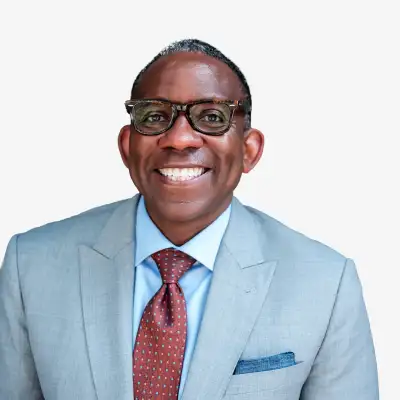
Well, hello, everyone. Welcome to another episode of Economic Vitality Unplugged, the podcast of the Tallahassee-Leon County Office of Economic Vitality. I'm your host, Keith Bowers. On this podcast, we explore the people, projects, and the ideas that are shaping the economic future of our community.
Today, we're discussing a topic that is sometimes overlooked in economic development conversations, but one that has a profound impact on talent attraction, business investment, entrepreneurship, and community identity. We're going to be talking about arts, culture, and placemaking.
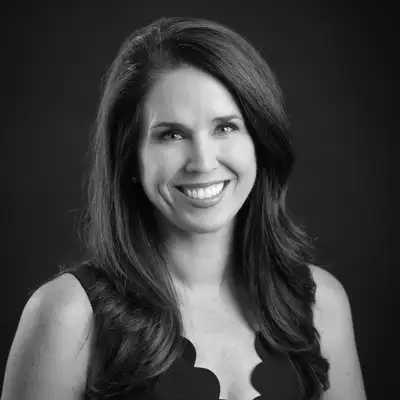
Joining us today is Betsy Couch, Executive Director of the Knight Creative Communities Institute, or better known as KCCI. Through innovative projects, public art initiatives, and community engagement efforts, KCCI has helped transform spaces throughout Leon County while demonstrating that creativity can be a powerful economic development tool. Betsy, welcome to Economic Vitality Unplugged!
Betsy Couch
Hi, Keith. Thank you so much for having me on today. I'm really looking forward to our discussion.
Keith Bowers
Me too. So, let's just jump right into it. Many of our listeners probably have seen KCCI projects throughout the community, but they may not know the full story. So, do you mind telling us about KCCI, its mission, and what inspired the organization to focus on creative placemaking as a strategy for community development?
Betsy Couch
Sure! So, the short answer of what is KCCI, which is what most people call us instead of the Knight Creative Communities Institute, which is a mouthful. *Keith laughs* But, the short answer is KCCI focuses on helping make Tallahassee be the best version of itself. And we look at kind of how to make us be a little bit cooler. And we do that because we want Tallahassee to grow in the right way. And we know that when communities have strong sense of place-and strategic placemaking-those communities fare better economically. And then they also have very strong economic development and economic vitality. And they're able to be these very thriving, strong communities while having their own unique identities, which is ultimately sense of place.
And there's two kind of key factors that we always consider. One is economic development. So that's what you think of as growth and new buildings. But then there's also economic vitality, which is just as equally important. And those are cities where people tend to want to stay, where they really want to raise families, or they want to come back to. And so economic vitality is the power of your community. So, everything from the strength of your public park systems, to your transportation systems, to your public schools, to "are there different experiences and arts and cultural opportunities?" That's economic vitality.
And so, the long answer of what KCCI does, we are a nonprofit, and we are focused on citizen-driven placemaking projects. And what we do is our projects bring together each year a very diverse group of volunteers that we call "Community Catalysts." And what's exciting to see is our past projects, they have had a trackable economic impact of nearly one billion dollars-and that's billion with a B, not million with an M. But what we're able to do through our projects is we unite a very diverse group of citizens, and also leaders, to get behind big ideas and get unified behind those so that within a one-year timeframe, we can work to bring those ideas to fruition and to implement these real projects. And we do those projects every year.
It's different, but we're ultimately enhancing our public spaces and we're helping grow our community in the right way. And we do all of this because it comes back to, "We want to be the best version of Tallahassee so that we can attract and retain the right talent and so that we can be this community that everybody envisions."
Keith Bowers
Well, that's an excellent explanation of what your organization's mission is and its purpose. And we're going to unpack some of the economic impact. So, I appreciate that thorough explanation. And one of the things that you mentioned a few times in your in your statement: placemaking. For those unfamiliar with the term, what exactly is placemaking?
Betsy Couch
So, strategic and creative placemaking is basically the intentional use of things like arts and culture and your local flavor to kind of build those all together to strengthen an area or a community. So basically, to improve a place. And that can look very different in depending on the part of town that you're in, but also year-to-year based on what the trends are.
I think Blueprint in our community is a great example of a governmental leader that is implementing very well thought out and projects at work that enhance placemaking. And so, what Blueprint is doing is taking infrastructure projects, but instead of just building a roadway, they're making sure that that roadway supports a connected community. That it's going to be aesthetically pleasing to a wide variety of audiences, that it has a different usage. So that, "Is it not just a road, but does it have sidewalks? Are there bike paths?" You know, "Does it have flowering medians, you know, based on the area that it's placed in?"
And then you have groups like KCCI that are a nonprofit and we're privately-funded, so we're able to work sometimes a lot faster and quicker, but in a much smaller scale. So, that's how we're able to do these strategic placemaking projects, but within a tighter timeframe. And so, where art tends to come in is because art as medium and a placemaking tool can be a very cost-effective tool to enhance that place. So, not only to take a block, make an area look a lot better, but then to create trackable economic impact. And so ultimately, creative placemaking, it helps communities become, and to be, more economically competitive and more livable.
And I'll give you an example, so a couple years ago, I hope everybody has seen the giant TLH letters. Those were a KCCI project.
Keith Bowers
Yes, they're iconic.
Betsy Couch
Yes, they've been featured in Super Bowl ads within a month of having them built. They were one of the top 10 most Instagrammable sites in the city, but that didn't happen accidentally. That was a very strategic thought-out process. So that year, KCCI picked to kind of create an iconic something that we wanted people to rally around on social media to share their positive stories of Tallahassee.
But we also were very strategic when we picked the location because, we wanted to go into an area of town that we felt if we could give attention and raise awareness of, that we would see that economic positive impact trickle out. And that's exactly what you have seen with the TLH letters. Not only were they visually appealing and something that drew people to them to want to, not only just come be by them, but it drew people to them in a way where people took pictures with them and shared it out on social media.
But then I think what's even more important, because it ties back to our KCCI mission, is the location where we put them was this bridge between downtown and the South Side, and FAMU, and Cascades Park. So, we were very strategic of why we wanted to place them right there. And what has happened since we built them is exactly what we knew would happen. Is we have seen more, we've seen growth in that area. We've seen more mixed-use development come in. We've seen more small businesses pop up and thrive. That's led to increased jobs. We've seen more people walking in the area. And that was all what could look like very simple placemaking.
"Oh, it's an art project, these big giant artistic TLH letters," but the strategy and the thought behind that is what made them so strategically successful. And when you think about the TLH letters and what they cost-and what was paid for mainly by private partners-that is a huge ROI (return-on-investment) in terms of long-term economic growth for Tallahassee and economic vibrancy.
Keith Bowers
Yeah, that is that, like you stated, that is the perfect location for it. And we have seen a number of different investments, SoMo Walls being probably the most significant that the South Side has seen-ever. And the artwork that is taking place in and around SoMo Walls, too, is very intentional. Is that The Stacks project that KCCI is now leading?
Betsy Couch
Yes, and so that's a great segue. That is part of this year's KCCI project. So, this year's 2026 team, KCCI is working on bringing art into 9 neighborhoods all throughout our community and implementing strategic art projects that will help drive economic vibrancy in those areas. One of the schools, Bond Elementary School, which isn't directly next to South Monroe and the location of The Stacks. But that was one reason we really wanted to go in and do this iconic, what is now Leon County's largest outdoor mural system, at that property right there. Which is now called our art installation is called "The Stacks."
And I would encourage everybody to go out and look at them, if they haven't. Because it is a block-long mural system that only not only complements what private landowners were doing right around it, but it builds upon that. And so now what we're already seeing from the artists that have been painting these is they're so giant, they have been drawing people in. Well, what happens is when people are drawn into that area, especially while our artists were painting them. They're coming out, they're talking to the artist. People were then going out and walking in the South Side area to go see some other artworks that those artists have done. They were also going and buying coffee at the coffee shop, or going to have lunch or drinks at The Monroe restaurant.
And then they're walking up, "Oh, I didn't realize, you know, Cascades Park was so close," or "The TLH letters were so close." So, they were then going and walking up to see the TLH letters and then coming back and actually telling our artists about it. So, we've been living in the last couple of months that, you know, directly impact that. What sounds small or people might say, "That's a waste of money, why are you investing in murals?" But it's a huge economic impact for the area.
And we were able to not only take in that project, a private investment from private businesses who wanted to see this happen, but then we were also able to leverage some public South Side CRA (Community Redevelopment Area) dollars. And if people aren't aware of CRAs, the way CRAs work is only those businesses kind of in those CRA districts-which are really kind of small little neighborhoods-they kind of fund their own CRA pockets of money.
And then neighborhood plans kind of draw how those CRA funds can be spent. Well, in our Downtown CRA and also our Southside and Frenchtown CRA, something that comes up over and over in a lot of different neighborhood plans is people want to see murals. And the beauty of murals is they are a very cost-effective way to create an instant economic impact. And then what happens is there's kind of this short term instant economic impact that benefits those businesses right near those murals. But then that trickles out and provides additional growth and additional vibrancy in those areas. And it's been a lot of fun with The Stacks kind of getting to live that in the last couple of months.
Because what we're able to do is say, okay, we're taking private investment and even private in-kind from our volunteers. And then with this project, we were able to match it with a little bit of public dollars. And then now we're able to see it like instantly start impacting those in that neighborhood.
Keith Bowers
Yeah, and for our listeners, a CRA is the Community Revitalization Areas, and they are certain areas within Tallahassee-Leon County that have been designated as such. And Betsy, you bring up a great point. I mean, our whole conversation today is about the intersection of art, placemaking, and economic development. How has that conversation evolved over the years? And are more businesses and civic leaders beginning to see that connection?
Betsy Couch
Slowly and surely, definitely over the years, you know. KCCI has been doing this since 2007, I've been working with KCCI since 2011. And in the beginning, community leaders weren't even aware really of placemaking. And we helped make placemaking and quality of life kind of key terms that are even now top of mind for business leaders, but also our governmental leaders. So that's a huge move in the right direction. I do also think we're seeing a great movement in the right direction in terms of private businesses understanding the impact that strategic art projects can have in a community. And so when you look at the economic impact of say, Le Moyne's Chain of Parks Art Festival, or you look at the economic impact of some of KCCI's past projects, like the TLH letters or now with what we're doing with The Stacks. You know, that is a huge economic impact that can be derived basically from a really kind of small economic investment. And I think that's exciting in terms of placemaking. But then I want people to think, when you think creatively in placemaking, it's not just murals on walls. You know, it's much more beyond murals and festivals.
You know, community development and economic outcomes, there are ways to get those through other tools as well. And that could be everything from, you know, things like the amphitheater in Cascades Park-which KCCI, one of our teams, we pushed for that. But then it can also be a lot of different kinds of placemaking tools.
I mean, sometimes-and this is where I think Blueprint's so good at it-you know, we've seen it in Cascades Park. Even how you think through the creation of landscaping in a public space, you know. How plants that are planted and how landscaping can improve safety, but then also can be more aesthetically pleasing. And even you look at KCCI's project we just did with Bicentennial Square and then the new city hall lighting we recommended that's up now. The city hall lighting was a project we were able to look at, "Okay, just with lighting enhancements, how can we make City Hall now, when it's illuminated at night, look very beautiful and be its own draw, but then also use that lighting to improve safety in the area?" So that, because when people feel safer in an area, they're more likely to go to that area and to linger in that area. And when people linger in areas, they're oftentimes spending more money in those areas.
Keith Bowers
Right, that's a great example.
Betsy Couch
We know that, you know, with every dollar invested in public arts, that typically generates at least $5 back in tax revenue.
Keith Bowers
Wow.
Betsy Couch
And there's just so much research that shows when you invest in things like this, there's a huge direct return on investment and improved economic impact.
Betsy Couch
And then for Tallahassee as a whole, I think it's so important because we talk a lot about talent pipelines and talent retention, but what talent is looking for today, and there's tons of research that shows people are deciding where they want to live before they even decide what they want to do in that area.
And so that's where we have to stay aggressive in what we're doing in terms of creating these public places and maintaining them and doing things in Tallahassee that keep us hip and vibrant, but while also maintaining our quality of life. So, for an example, you know, lots of people think of our beautiful canopy roads and our trees. So, I know when we are working in any park space, we always look at, "Well, what can we do to kind of maintain the existing landscaping or an iconic oak tree so that you kind of design around that to complement it?" Because, again, a lot of times these historic oaks and this greenery of these trees, that is something Tallahassee is known for. And I used to work in the tourism sector with Visit Florida, and that is something that people travel from around the United States or Europe and the world
to come see some of our canopy roads. So, as we're growing, you want to maintain what we're also known for and already attracting people for.
Keith Bowers
That's true. I mean, you want to be able to preserve that charm that has kept people here but also leverage those opportunities to attract more people here. So, let's switch gears just a little bit. You mentioned earlier about the Community Catalyst program, that's one of your signature initiatives. Tell us about the program and why empowering local residents is so important to creating lasting change.
Betsy Couch
Our Community Catalysts are, I would say, one of the most things I'm most proud of that KCCI is doing. Because anyone can apply to be a Community Catalyst. And what I just love looking out and seeing how we have helped develop community leaders.
And ultimately, what I love about Catalysts is they are all individuals who are willing to come together, they want to listen to different viewpoints, and they are willing to roll up their sleeves and do something to create positive change for Tallahassee. And all of our Catalysts are very different, but one thing they always have in common is their love and passion for Tallahassee.
And you can tell our Catalysts are just typically so proud of Tallahassee, but they also have this desire to really do whatever it takes to make Tallahassee and Leon County be a regional and United States leader in many different ways. And the way our Catalyst program works is once someone applies to be a community catalyst, and that application opens up typically each September. And once they're selected, is we bring those leaders together, and then we train them all. We spend a couple days training those community catalysts on everything from placemaking and economic development to positive trends we're seeing in Tallahassee and in this region to also challenges and opportunities. And then we bring in typically more than 30 different thought leaders from all kinds of places around Tallahassee to kind of meet them, to start discussing with them the project, and talk to them how you successfully lead collaborative projects. And I love watching the light bulbs go off each year with our Catalysts because, you know, we do try to bring a very diverse group of people together. And, you know, sometimes you have people that have been so involved in Tallahassee, but then you get in there and you realize, "Wow, they didn't even realize that we had a different city government and a different county government," you know?
Keith Bowers
*laughs* Right, yeah.
Betsy Couch
And so, I'm kind of educating them all on even the basics of like, "This is how our local community is set up," and I learn something every year as well. But what I love seeing is you leave each year where not only have we typically created tangible places or tangible projects that have long-term sustainability, but you see the Catalysts come together-and some have even gone on to be in [their cohort's] weddings. But, many of them leave our program-which is just one year long-and then they're out in the community working together and collaborating more with even more people. And so, it's also this snowball effect of so many people that have already been Community Catalysts and how they're out like doing all these other great things in our community. That's really changing the trajectory of our town in a positive way.
And so, I think our Community Catalysts really are one of our KCCI major success points is because strong communities need strong leadership. And so, when we invest in our own residents and we invest in training people to be the best type of leader there is to be, that positively contributes to our economic development and our economic vitality and our long-term success of our community.
Keith Bowers
Yeah, I couldn't agree more. I couldn't agree more. So-
Betsy Couch
And it also helps people listen. You know, that's one thing I think we do very well is all of our projects start with community engagement. And, depending on the project, that looks very different each year. But we have become masters in listening and hearing those top themes that bubble up out of that. Now, does that mean we do exactly what each person wants us to do? No. But what it means is we have created typically something or done something that is a great compromise of all those different viewpoints and all those different opinions. And because of those listening skills, that is why I think our KCCI projects that we launch tend to be such instant successes. And you see these kind of really almost instant economic impacts in the projects that we work on.
Keith Bowers
Yeah, and Betsy, as someone who works every day to tell Tallahassee story, what do you believe are our greatest cultural and creative assets?
Betsy Couch
Oh, that's a tough question, Keith! How much time do I have? *both laugh* I mean, I would say our number one asset is our people. We have a very educated workforce. We typically have a resident and a population, and even a student population, that does have that ability to really listen and try to come together and want to collaborate and work to solve problems together. I've had an opportunity to work in different communities on different aspects. And, you know, our people are really one of our best assets that we have here.
I also would say too, I think our Chambers [of Commerce]. I know we have a lot of Chambers, but I think our Chambers are a big asset because they're all looking to kind of come together to create a collective vision and then work toward that. And
really, I mean, that's kind of my vision for Tallahassee and Leon County, is that we are nationally and internationally recognized as a community where innovation, creativity, and economic opportunity and economic uplift are able to all work hand in hand and thrive.
And I think what we're all doing together, I know it's not, I think. I know what we are all doing is working. I mean, when KCCI started in 2007, we talked a lot about talent attraction and talent retention. And since we have started, Tallahassee and Leon County are now the youngest county in the state of Florida. And that's according to the latest census data.
So, we're all working together collectively, because what I think of with KCCI is we are one piece of the big puzzle of success that is working to make this community be the best version of itself. And I think even community discussions, you know, our community sometimes tends to not want to change or change tends to scare people. I mean, even when we did the TLH letters, I mean, you would be shocked at the negativity I got about them or some of our Catalysts got about them. It's like, "Look, we're just looking at a piece of art in a very strategic way." But it's because a lot of times people maybe didn't understand it or they were a little scared to see that amount of money invested in something like that. But then as soon as those things are built or created, everyone's like, "Ah!" You know, and then even people that maybe didn't sponsor it or weren't supportive, all of a sudden, they're the ones out there like touting the successes of it the most. But I think there's a lot of opportunity for Tallahassee and I do think we're really moving in the right way to have this micro ecosystem that really supports talent and supports thriving businesses and entrepreneurship, but in a way that doesn't allow us to lose that brand of what we are and also what we want to be.
Keith Bowers
That's awesome. All right, so we're going to wrap up here. So, we got a few lightning round questions for you. What is the most underrated place in our community?
Betsy Couch
I would say Cascades Park. I love it down there. And if anyone hasn't been there, it's just, it's so amazing. And if you just walk a mile in any direction, it's very different.
Keith Bowers
Yeah.
Betsy Couch
And you know, a lot of times we travel to Paris or to New York and we walk a mile without even thinking twice about it. And I think Cascades Park really is such a great draw and place for Tallahassee and a good place to bring people that are out of town because there's so many wonderful restaurants all within walking distance of Cascades Park.
Keith Bowers
Yeah, I love Cascades Park. You see so many different generations represented there at Cascades Park, too. It's just become, you know, the gathering place for a lot of different folks throughout our community.
Betsy Couch
Absolutely. And I'd say even my favorite shopping destination is the Market District. You know, right there on Market Street is the highest concentration of locally owned restaurants and shops.
Keith Bowers
Yeah.
Betsy Couch
And they're all very different. And what I love about the Market District, too, it has kind of a Tallahassee vibe and feel. It has good placemaking, but then also it's right next to I-10. And so, it would be easy for visitors to just pop off and experience the Market District. And now that area of town is going to become even better as soon as the park that's getting built in that area is finished.
Keith Bowers
The Northeast Park, yeah, yeah. That park is going to be a game-changer.
Betsy Couch
It really is.
Keith Bowers
So, yeah. One thing that, in your opinion, Tallahassee should never lose.
Betsy Couch
I would say the universities and then also our trees. I do think these iconic, majestic oak trees are, you know, I've seen it when I worked at Visit Florida. People travel from Germany, and wherever, just to come drive down our canopy roads.
Keith Bowers
Yeah.
Betsy Couch
And we as residents sometimes forget that. And sometimes, even with growth, I think it's easier and cheaper to just bulldoze a lot. But when you maybe could just look and go, "Okay, could we save a couple of these beautiful oak trees that are over 100 years old?" and, "How do we maintain them and make sure they stay healthy?" Because that is part of that kind of deep-seated fabric of our community.
Keith Bowers
Right. So, our closing question, Betsy. The time has just flown by so quickly, and this is a great conversation. And I hope our listeners are taking notes because Betsy has just unpacked a lot of information that is just invaluable. So Betsy, before we wrap up, I'd like to leave our listeners with one final thought. If they remember only one thing from today's conversation, what would you want them to understand about the connection between arts, placemaking, and economic vitality?
Betsy Couch
Well, I think number one is that arts and placemaking are key tools for economic development and economic vitality. And I really believe that arts and culture are going to continue to play such a critical role in the future of Tallahassee. And not just something as kind of, "Oh, that's separate, that's arts and culture." But I really think they're kind of, they have to be woven in to the essence of how we build strong communities and how we remain competitive, not only in a regional economy, but then how we remain competitive in Florida and then in the United States and in the world.
Because we have all the tools, some of the most innovative companies, we have the [National] MagLab. We have all the key tools for success already here. We just need to continue packaging them together so that we're attracting the right people that want to live here and stay here. And I really believe that if we invest in people and in partnerships and collaborations and in placemaking, that we're going to have the Tallahassee-Leon County that is incredibly bright-and is that not only a thought leader, but also an economic leader.
Keith Bowers
Very, very well said. Well, Betsy, thank you for joining us today and for your work that you and your team at KCCI continue to do to strengthen our community. And thank you to our listeners for tuning in to another episode of Economic Vitality Unplugged. If you enjoyed today's conversation, be sure to subscribe, share the podcast and follow the Tallahassee Leon County Office of Economic Vitality for more conversations about the people, the projects, and the opportunities that are driving our community. Until next time, I'm Keith Bowers, and this has been Economic Vitality Unplugged. Take care, everyone.