Subscribe
Share
Share
Embed
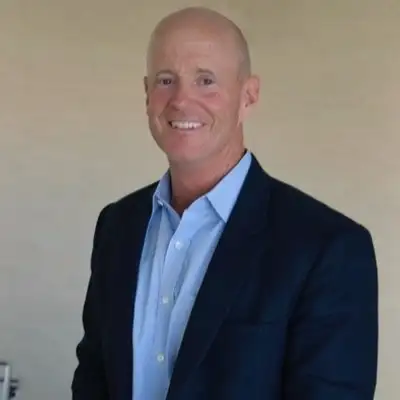
Hot Takes with Jim Baker is where real-world business experience meets honest conversation with Host, Bill LuMaye.
Hosted by entrepreneur, advisor, investor, and CEO Jim Baker, this podcast explores the challenges leaders face every day—from raising capital and managing growth to hiring, firing, sales, culture, leadership, acquisitions, and long-term value creation.
Through the Hot Takes series, Jim sits down with business owners, executives, investors, and industry leaders to discuss timely issues shaping today’s business landscape. These candid conversations offer practical insights, hard-earned lessons, and perspectives you won’t find in a textbook.
The podcast also features the Wisdom Series, in which Jim and Bill interview accomplished guests whose decades of experience offer timeless lessons on business, leadership, success, failure, and life.
Whether you’re a CEO, entrepreneur, business owner, executive, or aspiring leader, Hot Takes with Jim Baker delivers actionable insights to help you build stronger organizations, create greater value, and lead with confidence.
Presented by Sumus Development Group, LLC. Helping organizations enhance value, strengthen leadership, and prepare for what’s next.
34 - Hot Takes - Indie Consulting
===
Bill: [00:00:00] . Hello everyone, and welcome to a, a brand new podcast with my good friend Jim Baker. It's called Summus, and he'll explain more about that. But he is, as you know, a very smart man. He's an entrepreneur, an author, and so many other things. And Jim, it's good to see you.
Thank you for doing this. And why don't you tell us what we're doing differently now than we were doing, other than the fact there is no tea here. Sounds good. That-
Jim Baker: Yeah ... that's pretty much it. Um- That's it ... so before 50 Cups-
Bill: Yeah ...
Jim Baker: I had a company called Summus, and I started it after I [00:01:00] sold my business- Yes
in 2014. And basically, it's an advisory group where we go out and work with other companies to help them create value in their business, recognize that value, and then eventually, if they wanna have a successful exit for the owners, I won't sell them, but I will prepare them so they can go out and get a high value for their business.
Bill: Well, and, and that is the goal of most, you would think, wanting to have a, a, an upside when you exit the business. So we're gonna get into that. But-
Jim Baker: True. You know, I th- But I think the whole point of, of what we try to do is there's a lot of owners out there that aren't thinking necessarily about selling or if they do, it's 20, 30 years away.
Right. So they create all these bad habits in their company. Oh, sure. And then when it comes time to have an exit, and the goal for my clients is to make sure they have a voluntary exit, 'cause some exits, as we just discussed, could be involuntary- It can ... where you no longer are in, on the earth, and it's gone.
Yeah. Right? [00:02:00] Now, what have you then passed on to your heirs that potentially could be of value down the road? So no matter what, you will always exit. It's inevitable. And the goal really is to make sure that you have a successful exit, and that's what Summus does. So with that said, and because of my love for retail, as you know- Yes
and my love for the online retail sales, um, we've decided to eliminate or dissolve 50 Cups. And as such, you no longer are forced to drink tea on the podcast. Oh, I always enjoyed it, though. Um, and I thought I'd just go back to my roots, which is obviously Summus, but maintain the same theme of this hot takes concept, but make...
but now focus more on business and obviously continue to, to promote and allow for our wisdom series, wisdom series to grow as well.
Bill: Yeah, I think it's fascinating. And for those who have businesses, it's valuable information you would have to normally pay for. You can [00:03:00] get it right here. And you know what?
It's interesting. You have kind of a family connection here. There's somebody sitting across from me who looks a hell of a lot nicer than you, Jim. She's nicer. She's better looking. Yes, she treats me better. And she's smarter. She does. She's everything. Yes. And
Jim Baker: I'm very honored today to introduce my daughter, Molly Baker Schwartz, to the podcast.
We've had her on before. Mm-hmm. Um, but she has a wildly successful company called Indie Consulting. Um, she is the founder and owner of a company that's grown significantly over the last seven or eight years, and I thought today we would focus on what's unique about Indie, amongst many things, is the fact that they've...
have been able to, as a small company, um, build strong relationships with large Fortune 500 companies.
Bill: Wow. That's tough to do. And in my
Jim Baker: past, right, in... with my company, we work- tried to work with big pharma for years, and it was... We were very unsuccessful. I'll leave it at that. Yes. So I thought one of [00:04:00] the, one of the things that I think a lot of small companies try to do is they rightfully so, if they have a value proposition for big companies, is to hopefully work with them.
Um, but it's a gauntlet. It's hard to- Sure ... you know, get on the approved vendor list. It's hard to... And then once you're, once you're on there, it's hard to stay on there. And I thought Molly's got some great experience at Indie. Um, and on top of that, in this AI world, I thought we would get her wisdom, advice, and knowledge on AI today and how she uses it as a tool in her company and where she thinks it's going in the in the industry today.
Bill: Well, Molly, it's good to see you.
Molly Baker: Good to see you too.
Bill: Um, anytime you're a small company, you're swimming upstream, it seems to me. It's very difficult to succeed period, much less get involved in a, in a situation where you're, you're dealing with Fortune 500 companies. That's pretty tough. I don't know, where would you like to start, but maybe at the beginning.
Would you mind just what exactly is it is you do, and then you can share some of your [00:05:00] secrets, how, how others can enjoy the success you're, you're experiencing.
Molly Baker: Sure. Yeah. Um, so yes. Indie Consulting is a marketing agency. Um, we do primarily digital marketing, and we're a full service partner working on everything from strategy through execution across paid, earned, and owned channels, working a lot in the consumer goods space.
So we do work in food and beverage, beauty. Um, big brands, major brands that you would find at Target, Walmart, et cetera, is our sweet spot.
Bill: We, have you noticed, and I it, you know more about this than I do, Jim, but how it seems to have trans- See, I, I, I grew up in radio. That was my business, and it's, it's dying.
It's just absolutely dying, but so is all of that kind of media. When did it kick in where social media and the, I'll call it the new media, really took off as a kind of the, the, the, the bedrock for growing companies? Because at, at the time when I [00:06:00] was around, it was an afterthought. If you had a few extra bucks, you'd throw it at it.
Right. But it's not true today, is it?
Molly Baker: No, no. I mean, my first job was in social media in 2013, and at that time, it was, that was the new frontier. So you know, that, those were early adopters who were participating, I think, still in the 20-teens, we'll call it. And this really, in the past 10 years, has become the primary mode of marketing.
Bill: Well, and Jim, you've experienced that growth, too. I mean i- in the social media, the, the new media, I'll call it, for lack of a better way of describing it, your businesses when you, you had Summus originally or your first company that you had, you weren't as dependent on that kind of output. No,
Jim Baker: we weren't, and also we were a, more of a B2B play.
Right. Um, in our sense, where we're doing clinical trials for a pharmaceutical firm. Right. So we would have to then try to market to other pharmaceutical firms. But at the end of the... But during that timeframe, there wasn't a lot of [00:07:00] digital media, and on top of that, um, it was hard. We couldn't figure out, even if there was a, a platform for it, how do we post socially to be able to attract these potential pharmaceutical clients?
And we ended up using it more for a platform to promote our culture, our business, and hopefully attract good employees to come to our company. Because we could do that, then the good employees had a following in the pharmaceutical world, and they could help us get other potential business from other pharmaceutical clients.
What's funny about Molly's background, and maybe you should go on the talk, ta- tell the audience a little bit about your background, but I believe when you first started your job, the digital marketing piece was kind of an afterthought and an add-on In your job and it wasn't, they weren't charging for it at that point in time, right?
And now it's, like, totally flipped. Is that fair?
Molly Baker: Um people were charging for it, but it was just new. It, they didn't, I don't think the agency I was working at in my first [00:08:00] role knew how to charge for it per se. So my first job was at, I was a paid social media coordinator, which meant that I bought ads on Facebook and Twitter and YouTube, and it was these offerings and products were all in betas at that time, and we were charging clients for the service, but it, there was so much learning.
I mean, it's like what AI is today. No one really knew how it functioned or how to best use it to drive performance, so, so much of it was, was just testing and learning together. And now, I mean, running advertisements on Instagram is, is table stakes for almost all consumer-facing brands at least. So, um, it's come a long way.
Bill: If you don't mind just to get inside the numbers. See, again, in the old media, you would have ratings, and people would judge, you know, your rate based on that. Sure. How do you judge social media and Instagram and Facebook and, and, and how do you place it so that you [00:09:00] actually are getting the, the views that you need in the group that you need?
Molly Baker: Yeah. So the back end of the system is an auction-style buying mechanism where you're inputting things such as target audience, placement, you know, do you want these ads to show up in feed or in a story or even outside of platform? Um, you're choosing creative, you're choosing copy, you're choosing all of these different levers.
Dayparting. There are some things that are similar to how traditional media has been bought. And then you're placing bids against those placements, and you're competing with other advertisers. So it's a gamified system in many ways. And then the data that you're getting back is some, again, similar things such as impressions and frequency.
Um, but you're also getting click-through rates, and you're getting, um, engagement rates, and you're getting how long did a viewer watch the video for- per se. And then you can [00:10:00] calculate cost pers based off of all these quality metrics in addition to standard reach and frequency numbers. So the output that comes back from the buy is way more extensive than what a traditional buy used to give you in terms of ratings.
Bill: I don't know if I turned my phone off, so I'm pretty sure Summa's is gonna come up in an ad- ... when I leave here, but-
Molly Baker: It might. It might.
Bill: It's amazing what they do. What...
Jim Baker: Here's your... So- Go ahead. Well, from a client perspective, what do they value most, though? Is it if they run a, um, an ad or they run a, um, a video, um, do, can...
Are they able to translate that into product buys right away, or is it more if I know if I get one million views, that's gonna translate to 50,000 buys? Yeah. Like, how do they do the math on that?
Molly Baker: Well, it depends on where the sale's taking place. So if we're looking to drive sales at Target, for example, our correlation to track sales would be more of a reach and [00:11:00] frequency metric.
So we know based off of research that we've done, if we expose someone to a f- Instagram ad once a week for 12 weeks, and we know that that person has seen it, we typically see a correlation in sales, and how we'll track that is by monitoring sales data in a controlled environment when medias offer on, typically at the geo, at the market level.
However, that's this art side of things. If you're driving to, um, you know, liquidiv.com, for example, there's a direct way for us to track if we served you an ad on Instagram, you clicked that ad, you went to liquidiv.com, you bought a variety pack of their newest flavors, I know exactly how much I paid to get you to click through to purchase, how much you paid, and then what my return on investment is.
So if it's all happening, the purchase is happening in a digital ecosystem, it has trackability, and therefore we're able to then [00:12:00] optimize on that. But it really depends on what the client's looking to do and where they're looking for that sale to take place.
Jim Baker: So when you're working with big CPGs, you're competing obviously with the big marketing companies that have been embedded with them as, quote-unquote, "partners forever."
Um, how do you get in, and then what is the value proposition that you bring compared to others? 'Cause a lot of companies out there, like I said earlier, when they start, they don't want the little mini company that's gonna give them a little project here and there. They wanna all go to the big guys, and the big guys, I think, are built to weed out a lot of vendors.
And then on top of that, they don't really wanna pay you. So if you don't have the financial wherewithal to deal with the long-term payment process, then you get weeded out again. So kind of walk us through if you were giving advice to some other companies that, you know, potentially wanna do work with some of these big companies [00:13:00] How would you do it?
Molly Baker: Yeah. I think if you're a small business trying to work with a big business, you should never try to compete with the big agencies or partners that they're already working with. You're never gonna win that battle. So that's something that we very actively do not do. We're not trying to be an agency of record.
We're not trying to kick WPP out. That, I mean, that's just not going to happen. So what we have done when we have worked with and work today with Fortune 500 companies is found a very specific thing internally that we know that is a problem area for them, and then instead of saying, "Okay, we're gonna- we wanna be your agency partner for this," we try to solve that problem just in a small project-based scope to start, and then build and expand from there.
But usually, this has come in form of instead of you hiring a full-time person for that, hire us. Less risk, less overhead, you don't have to fight for a position internally. At big corporate, that's very [00:14:00] hard to do, and let's see how it goes, and if it doesn't work, you can kick us to the curb. And that approach has been very successful for us because we come in, we do the job that they were maybe thinking of hiring in-house for, we become an extension of the team, and then we're able to expand from there.
Um, all with still within playing our lane because we're, again, we don't wanna be a threat. That's not the goal, and there's enough to go around at the big companies.
Jim Baker: But you also don't wanna get into the body shop business too because then you'll be put into a different bucket-
Molly Baker: True ...
Jim Baker: which decreases margin, and you're up for review pretty much every single year.
Molly Baker: True.
Jim Baker: So how does one avoid that pitfall?
Molly Baker: You have to offer a premium service. It's not about just putting somebody in the role or in a role or filling a gap in terms of a full-time resource. It's a specific offering that you have with deliverables associated with that offering and KPIs that you will hit, and you're promising those things in the same [00:15:00] sense that a traditional agency model would work.
So you're still applying that logic, but you're not trying to, um, out-kick your coverage by suggesting that you could replace one of the big agency partners that they work with. And quite frankly, I wouldn't wanna be one of those partners because y- they are getting squeezed. Talk about getting squeezed by procurement.
I mean, that's what's getting really pressure tested on a regular basis. If we can fill the cracks outside of that, I think that's a great pl- place to play.
Bill: How receptive are individuals? Are ... Do they reach out to you? And I mentioned going back, 'cause I'm old, you know, you go back in my day, people didn't really understand it.
So are ... Is there a, um, understanding of what it is you do? You talk a lot of things that quite honestly go over my head a bit. So for somebody who has a business, do they understand the value that you bring right off the bat, or do [00:16:00] they need that convincing?
Molly Baker: I think today people understand way more than they have in years past.
Um, I think the biggest hurdle today is, how do you prioritize all of these different options that are available to you? And people know that they have to do ... I mean, it's funny because we live in a world right now where, oh, AI is here, and it's going to replace the job of marketing. That's one of the headlines, right?
But the reality is not that, in my opinion right now. And today more than ever, the volume of activity that you need to be having as a brand to capture consumer interest and attention is massive. So the biggest hurdle for us right now is getting a, a p- prospective client to have enough focus to say, "Okay, yeah, we think we agree with you.
We should prioritize this first or that first," um, versus them trying to bite off more than they can chew and try to be everywhere. [00:17:00]
Jim Baker: I would think too, you're kind of in a tough spot, like my business was in the past, where you have companies that, "Well, I'll just do my own posts and I'll get a million followers.
Um, I'll run my own ad and do this. Um, or now I have AI and I'll just do this." So some of the mark- these marketing firms, you're g- you're kind of getting hit by, from three or four different sides, and how do you fight that?
Molly Baker: Well, one of the things that's working in our favor to fight that today is that, again, the volume of content and the volume of posting that you have to do on these platforms to just keep up is so massive.
I mean, right now on TikTok, if you want to build a following there, you need to post once a day So we're talking seven days a week, at least, if not multiple times a day. A lot of people, brands in-house have a hard time keeping up with that pace. I mean, that's a pretty insane pace of content production, community management, interacting with people that are commenting, following, et cetera.
Um, so that is [00:18:00] helpful. And then on the other side, I think with a lot of the tools in tech, the, the quality is not there. I mean, the quality that you get, the output that you get is only as good as the input. So if you don't have someone who's really strong at prompting and briefing, you're not going to get a good piece of content.
So if, you know, that's something we're spending a lot of time on right now, is how do we best brief these tools so that we have really strong output, and then that to me is I still need a really strong team to be able to pull that off. So I think, you know, marketing agencies have been around for a really long time.
All of the things that, to your question before of like, "Well, aren't you becoming just a body shop?" No, because people could in-house marketing or use a partner for years, right? It's where is the best talent, and a- are you better off working with an agency that finds the best talent and has the best team to support, or do you want to try to build it out internally?
Jim Baker: Yeah. And [00:19:00] with the body shop comment, I was actually referring to my old company, where we're doing pharma, and we're pricing as if we're a body shop, but they want us to price as if we were a contract research organization- Yeah ... would, would, and handling the entire project turn-key, right? So they threw us into a different bucket, and then we were marginalized because of that.
And I think what I'm just trying to get you to talk a little bit about is the, the introduction into the company where the big company says, "Hey, look, you're not... don't have the bandwidth to do a project, but why don't you give me a resource, a body- Mm-hmm ... you know, for three or six months." And I think the minute that happens, you're labeled forever, so to speak.
Yeah. And, and so you avoided that, right? Yes. Um, by being able to, even though you were, didn't have the resources, you had some resources, but not a lot, but you avoided that, um, simply by you probably saying, "No, I can't do that. I won't do that, but when this problem arises and you need it solved, [00:20:00] then my team can help you."
Molly Baker: Yeah Correct. And, I mean, I think to your point, it's, it is, goes back to how you're first engaging with the prospective client. Like, when I started working with Unilever, I was the only person in the business, so it was just me. So I signed up for... I, I was able to land a project that I... They tried to say, "Well, why don't you just, since it's just you, we'll put you through, you know, Workday or whatever, some resourcing, fractional resourcing program, and you'll just bill through them, then you don't have to go through the vendor setup process."
And I said, "No. I'll wait six months and go through the vendor setup process because this is an agency, and we provide strategic services and full, a full suite of services. Maybe my engagement on this looks a certain way, but that's not the type, how I wanna be classified." And that has been... And now we still do a ton of work with Unilever.
Super helpful that that decision was made early on.
Jim Baker: And I think it also helps that, you know, you've obviously [00:21:00] had past relationships with some of the people at Unilever, and I think some of these new startups or younger companies tend not to value those relationships as much, and they think it, they just, "Hey, I got a great idea.
I have smart people, and I can't believe you won't work with us." But, you know, it makes sense obviously in a bigger company to be able to capitalize on those relationships.
Molly Baker: 100%. I mean, the relationships are everything, and every o- opportunity that you have to either strengthen the relationship or deepen the relationship needs to be taken seriously.
I mean, even this week, or a couple weeks ago, but we're going through the process right now, we were fired by a client, and my team was very, you know, sad, sad, sad about this. And something I'm very serious about is how we end something is just as important as how we finish something. We never know if this person's, where they're gonna go next.
Maybe they hire us again. Maybe they work for us. Who... We have no idea. And even those [00:22:00] types of moments that are hard or that are rejection, that's actually an opportunity for us to show what type of people we are, and those are the relationships that end up usually being fruitful down the line as well.
That is so
Bill: true. It really is true. What would you say to clients who might be listening right now, or potential clients that might be listening right now, what are some of the things they should be looking at at their business and, and the services that you offer [00:23:00] that might just kinda go, well, put the light bulb over their head and say, "I, I should call you"?
I mean, what is it that they should look at that maybe they're not looking at?
Molly Baker: Well, I mean, I think two things that are very top of mind right now. One, which we can talk a little bit more about this, is the role that AI is playing in discoverability for brands. So I will go as far as to say Google is dead.
I don't think that Google is going to be a thing 10 years from now, mark my words. You heard it here today. Right. This is not how people are going to be finding- I
Joe Woolworth: gotta sell that stock. Wow ... are
Molly Baker: going to be finding brands, and going to be finding answers, and going to be finding businesses. People are going to be asking their AI engines the questions that we ask Google today, and that's where the searches are going to start.
We're gonna be shopping within Claude soon and ChatGPT. That, the discoverability component is either going to be I found your brand on social media, or I found it via an AI search engine. So we're [00:24:00] offering services, new services right now on training the engines to suggest brands that we work with instead of other brands.
So the whole SEO, the organic search landscape is shifting away from Google, and now we're playing by the rules of Claude and ChatGPT and Gemini.
Bill: How do you train?
Molly Baker: It's actually fascinating. We are learning more and more about this literally every day. Um, there's three components that, that the systems, that the i- AI engines are reading off of Brand websites have to be reworked, and this is the
This is a techy, nerdy thing, but a lot of brand websites have been built with JavaScript over the past decade because so many were image based. The more visuals, the better. AI engines can't read JavaScript, and they can't read visuals unless there's script on the back end. So we're ... Blogging is now back.
Get excited. [00:25:00] We're pr- we're working with a client right now who we're producing 10 blogs a month for them just to burn and churn content because the systems want new content to be reading off of. Um, how your FAQ pages are structured, that typically engines are crawling FAQ pages, so that section of the site has, is becoming more important now than it has in a long time.
Wow. Second piece for CPG brands are retailer sites, so walmart.com, target.com. The product detail pages on those websites have to be optimized. So there needs to be certain text there, certain copy there. That's all being crawled by AI engines. And then again, the pendulum always swings, digital PR is the third piece.
So if you're being written about on Reddit or quoted by, you know, I don't even know if BuzzFeed's a thing anymore, but by an online publication, that adds as a credibility source that then you're being cited, um, as a brand that should be recommended by the [00:26:00] engine. So those are the three touch points that we're focusing on to then train these engines to pick up our clients.
So let me
Jim Baker: just clarify one thing. When you say Google-
Molly Baker: Mm-hmm ...
Jim Baker: you're talking about the Google search engine of Googling- Yes ... so to speak, not the company.
Molly Baker: Correct.
Jim Baker: Yes, 'cause you're gonna be using Gemini- Correct ... in the future as opposed to Google search engine. Well, if, yeah,
Molly Baker: if they can keep up.
Jim Baker: I'm sure they will, or they'll just buy one of these-
Molly Baker: Yes
big tech companies. Which is more likely. So Google itself- But I'm saying- ... isn't dead ... no, no, I'm saying- You can still own the stock ... Google- Yes ... Google- But I was teasing about that. Of course, yes ... Googling is going to be dead. We will not be Googling.
Jim Baker: Down the road. Yeah. Yeah.
Bill: So if I, if I understand you correctly, then the AI only sees
AI is only as smart as what it can see. Correct.
Jim Baker: All right. Can it see video though? No.
Molly Baker: Mm-mm.
Jim Baker: So it hasn't the, doesn't have the ability to listen. Mm-mm.
Molly Baker: Not right now.
Jim Baker: Well, it's going to.
Molly Baker: It's going to. Yes. And right now, if you want it to be reading a video, you have to have alt text.
Jim Baker: Subtitles, basically.
Molly Baker: Yes.[00:27:00]
And, and/or alt text that's attached in the JavaScript of your website that has the transcript of the video.
Jim Baker: Okay. Yeah. 'Cause I, I've noticed that with some of the sports and news publications that I read online. Mm-hmm. Well, they'll have the video, but they'll have the entire transcript underneath.
That's why. Yes. Okay.
Bill: I did not know that. That's amazing. Yes. That really is amazing. So
Molly Baker: that is, that's number one. Number two is TikTok.
Joe Woolworth: Yes.
Molly Baker: The, they have found a way to connect the commerce content ecosystem in a way that I don't think a platform has to date. So their influencer and affiliate components, plus the live shopping, I don't know if you've seen this, but you, there's a live shopping component that was hugely popular in Asia that's now making its way west, where people are selling products like QVC on TikTok.
I did not know this. And you go live, and you give discounts, and [00:28:00] there's merchandising strategies, and it's gamified. So, like, you send a rose and you get 15% off, and you tap this sticker and you get a giveaway. And brands that are selling a lot of products there are going live regularly. People are hiring hosts.
Maybe this is, maybe this is what's next for you. Yeah. You're going live on TikTok Shop, and you're the host. I could do that. Sure, I could do that. I think you would be amazing at this. Yes. But people are literally hiring hosts to go live for 10 hours a day.
Jim Baker: Wow. Mm-hmm. So when cable TV dies, all those people can go become live hosts.
Yeah.
Molly Baker: It's fascinating.
Jim Baker: It is. My buddy owns a, kind of a QVC-like company. I wonder if he's doing that right now. I'll have to ask him.
Molly Baker: You have to ask him. I mean, we, we did a test with a client a couple weeks ago. We went live with them for eight hours, and someone from our team hosted. And part of our plan was if we do this more regularly, we need to hire hosts who can talk ongoing or rotate in and out with someone for [00:29:00] long periods of time and make it interesting.
Um, so it's funny. It's like these older things are coming back, but in a new and different way. And, um the, the content commerce ecosystem is, is fascinating. So tho- those would be my two areas where if those are not things that brands are thinking about today, it, those are good places to
Bill: be. I'm sure they're not.
I'm sure they're not. Um- Do I send my resume to you? Can I just give it to you, Tim? But do you... Overall, how do you feel about AI and businesses incorporating them? I know, I don't know if you deal with AI, but I, all, with businesses, it drives me crazy because it seems as though that person element is, is not there.
And maybe it'll get there, but I mean, is it a good thing? Can you be too dependent on AI in the business? Absolutely. Or do you need somebody like you to actually be the overseer?
Molly Baker: I, I think you can definitely be too dependent. Yeah. I mean, I'm sure we all have seen it. You, we know, humans are starting to realize exactly when something's been [00:30:00] developed by AI.
You can tell. Oh, sure.
Joe Woolworth: Yeah.
Molly Baker: And the, usually the quality's not there. So I am a big believer in adoption internally at our company and figuring out how we provide AI-leaned services to our clients. However, quality assurance and quality leadership is, has to be a focus because I never want something being sent to a client where the client thinks, "Hmm, this is just, I can tell this was just downloaded from AI."
So when I see that, I'm like the AI police I'm sure people love. I'm like, "I can tell you downloaded that. Go redo it," because it's not, the, the quality's not always there. So I think what AI's doing in marketing is just exposing gaps that we have from a talent perspective. If someone's really great, they're gonna be able to use AI and have, make great content and make great strategies.
But if they're not, they're going to, they can't hide as much as I think maybe you used to be able to
Bill: I think if it's not real, you think immediately it's a scam [00:31:00] of some sort. Yeah. The credibility of whoever's trying to push that is, is lost. Um, I, I just think that all of what you're doing is, it's gotta be exciting getting up and doing this because it's a whole new, whole new world of helping individuals grow their businesses in a way that I never thought even possible, um, even 10 years ago, quite honestly.
Where do you go from here? I mean, what do you... It sounds like you're constantly learning and, and that means you gotta constantly teach.
Molly Baker: Yes. Yes. How's that
Bill: going for you?
Molly Baker: That's a great question. Um, it's good. I, I do love this space, and I am excited by it, so it's something that keeps me energized in the business.
Um, but I mean, that, that transparently, it's really hard sometimes. I mean, coming back from my maternity leave, I took a few months away, and when I came back, I felt really behind because things had been moving so quickly. I mean, the AI [00:32:00] world had changed drastically in 12 weeks, and I found myself really wondering, like, "Do I wanna try to figure this out?
Or, I don't know, maybe, maybe this is the end of the road for me." Um, and- All washed up. Yeah, you know? I, I... Do I have it in me to really, like, navigate this new world? Wow. And, and yes, I do. Um, I have come to that conclusion. But it just requires... There's no... You have to... You can't be leaned back ever. You have to be leaned in, and that's can be really tiring sometimes.
Bill: Well, Jim, how about you? I mean, um, you're advising individuals. How much i- of this is now part of- What you do I primarily
Jim Baker: use it to understand what the competition looks like with some of the companies that we're working with. Mm-hmm. And then we're gonna interview another guest later on this week who has an AI evaluation tool that you plug in certain parameters of your, KPIs of your business, and it can then do this market analysis and tell you what you th- [00:33:00] what your business is worth.
Um, so it's being used. Yeah ... I think the, I think the thing that I think all of us were concerned about, which I don't think is a big, as big of a concern, although there are some companies out there that are still trying to do it, is, um, buying, you know, X amount of AI products and basically saying, "I'll just put in all this input into this AI, and I don't have to do any work, and it's gonna run my business, and I'll have 100%-" Oh, sure
you know, gross margin on my business. And that's just not reality.
Bill: Well, I've seen headlines, and a lot of people lose their job based on that, but there's a downside to that, isn't there? Again, I'll come back to the personal aspect. Well, I think it's- But you were saying you can't do 100%.
Jim Baker: Right. I think if you're gonna...
It's almost like if you hire a robot to vacuum your house, they're gonna miss the corners, but if you're a human, you're gonna get the corners. Right. Unless you're lazy, of course.
Bill: I, I could do with not getting the corners.
Jim Baker: Yeah. So I think f- in the marketing world, though, how do you battle the naivety around, "Molly, I don't need you guys to do a, a reel for us [00:34:00] anymore.
Um, we'll just have AI do it"?
Molly Baker: Eh, the simplicity in, that people believe in that statement is just false.
Jim Baker: So do you let them try to do it?
Molly Baker: Sure. Yeah. My gosh, if you can do it faster, better, cheaper, by all means. They can't. So people have to learn that themselves.
Jim Baker: Yeah, there's this whole talk, a year ago I think I was listening to an All In podcast where AI will be able to make movies, so you don't have to pay the actors anymore.
Right. You don't have to do the special effects or anything like that, AI will just do it. Well, obviously that hasn't happened yet either.
Joe Woolworth: No. I'm
Jim Baker: sure there's parts of- Sure ...
Molly Baker: a
Jim Baker: production that are now AI- Yes ... centric, but in general, it's the, the, the movie still needs to be made the, the old-fashioned way, so to speak.
Molly Baker: Yes. And I think there will be scenarios where consumers are comfortable knowing, "Okay, that was obviously generated with AI," and, "Ha ha, funny," or like, "That's cool." And then there will be things that, let's say, like [00:35:00] we're working or pitching a client right now that has these like probiotic bars that are made with real ingredients and real food and whole organic, and they are, feel very strongly that they need s- at least 50% of their content to be real ingredients, real food, because that's what, that's what they believe in the brand and the product that they're building.
And you will be able to tell if... I just think our, our ability to read what's, what's real and what's not will continue to be refined as humans, and where do you draw that line? What do you feel comfortable with? Um, it's just gonna be a evolving question.
Bill: I was gonna ask you that question. Do you know the answer to that?
Where do you draw the line? Or is that- I
Molly Baker: don't. I don't. I mean, I think it's g- going to vary by what you're marketing.
Bill: Individuals and- Mm-hmm ... what they're, what they're selling.
Molly Baker: Mm-hmm
Bill: Wow.
Molly Baker: I mean, we have, we have a client who's about to start selling their products at, um, Walmart, and they... We made a video with AI for them of, like, this giant [00:36:00] truck pulling up into a Walmart, and the back opens, and all this product spills out.
It's clearly that was made with AI, right? Mm. Even though it looks real. It looks very realistic. And a s- br- brand actually just did something similar. I saw it over the weekend, so I guess this is an original idea that we had. Um, and everyone was commenting, like, "Oh my God, this is so cool. Wow, wouldn't this be crazy?"
People know it's AI, but no one's giving negative feedback. Right. They're like, "Yeah, I get it. Your product's now available at Walmart, and you did something weird to catch my attention and feed, sure." Um, but if, I don't know, the founder got in front of the store and that was all AI digitized and not... Then maybe would there be backlash.
So I think you just have to determine as a brand where do you stand on the pieces that you want to feel authentic versus maybe some of these low-hanging fruit communications that are more for shock factor than they are for authenticity.
Jim Baker: What about the tools that you use, which ones do you... are more favorable, let's say, to the marketing world?
Um, and then [00:37:00] the second part of it is who's actually gonna make it at the end?
Molly Baker: Yeah. Who's
Jim Baker: gonna be the MySpace? Who's gonna be the Facebook?
Molly Baker: Yeah.
Jim Baker: Who's gonna be the Google, you know?
Molly Baker: Right now we have enterprise accounts with ChatGPT and with Claude. I do think that Claude is a stronger tool for what we need it for, for what the business needs it for, just in terms of day-to-day usage, um, brainstorming, thought partnership, strategy development project management, et cetera, even some, like, website work.
Um, but- T- TBD. I feel like they're hopscotching each other regularly. But if you're thinking about, like, an enterprise solution that you work across all functions of the business, that has been taking lead in front of ChatGPT for us right now. Um, there are specific subject matter tools that we are testing, so it is, like, tools galore currently.
So, like, NanoBanana is Google. Google created a video tool called NanoBanana, and [00:38:00] it's wonderful. Mm-hmm. Like, it's definitely a standout. So Google's not... I think they bought NanoBanana. Um, and it's been great to use. So I think those smaller tools that are for very specific use cases, some of them won't be around, and most of them will be bought by bigger conglomerates.
So I would bet on either Anthropic or OpenAI, though, as some of the, y- one of the two foundational tools that maybe will make it. Someone's gonna end up being a standalone.
Jim Baker: Right. Right.
Molly Baker: But we'll see.
Jim Baker: Um, the question for you of when you have the free AI in your search engine, um, it's prompted me a couple times saying, "Hey, you've used up your allotment- Mm-hmm
go, go Google," basically.
Molly Baker: Mm-hmm.
Jim Baker: Mm-hmm. What's that all about?
Molly Baker: Well, I mean, there's some major financial constraints on these companies right now because they basically opened the floodgates to get people to use them, and now they have a bunch of users, [00:39:00] and they're not making any money, so they're starting to gate.
I mean, this is, this is a story that was written by social media platforms. Democratize the platform, get everybody in, low barrier to entry, and then we're gonna start charging. Charge 'em. I mean, they've all done it. M- Facebook did it. Instagram did it. Twitter did it. TikTok just did it, and now these AI platforms are following suit.
So they want you to become a paid member. They're, they hook you with the free stuff, and then see ya. You're in.
Jim Baker: And are... When you get the free stuff too, are you getting the first and second cut of the artificial intelligence, or are you getting as much as if you paid? Getting the AE on the bench- Yeah
or AI on the bench? You're getting a- I never thought about that ... you're getting AI on the
Molly Baker: bench. You're not getting the newest model.
Jim Baker: So they're going out to, like, one billion sites as opposed to 10 billion sites. Mm-hmm. Yeah. Okay. Um, yeah, it's very frustrating. Mm-hmm. S- if you were gonna recommend AI to a s- [00:40:00] services provider, um, obviously you talked about Claude and ChatGPT, but from a pure price perspective, how would you...
Would you tell them to go buy 10 licenses, one? Like how would you a- how would you advise them to purchase?
Molly Baker: I think if you're serious about using it, everybody needs to have a license on the team, and you need to operate in an enterprise account so that you have a shared knowledge base that's private to you.
So when you do go to an enterprise account, I mean, they say they're keeping that information confidential. I don't know if I fully believe that, but at least you're operating off of the same foundation, whereas if you're all on free licenses, there's no history building over time. So we do have that benefit of we're building knowledge for Indy on both platforms right now, on both Claude and ChatGPT, that makes the system smarter for us over time.
Jim Baker: And if you end up not renewing 'cause you wanna go in a different direction, do you... [00:41:00] They send you the data that you've already built, or is that disappearing?
Molly Baker: There's a way to migrate, but it's very scrappy and ad hoc. I mean, we tried to migrate some of our structures from OpenAI into Anthropic recently, and it's a manual process and a lot's gonna be lost between the two, so it's kind of a sunk.
You're sunk.
Jim Baker: So in essence, the IT people still have a career 'cause they could figure out a way to transfer that data onto a server someplace where you get to keep it. If you decide to move on, your history isn't lost.
Molly Baker: Yes, but only if the IT people understand how to detract the knowledge that the system has built Over time.
Jim Baker: Right
Molly Baker: Which means knowing how to use AI, right? Right. Like, you're gonna need to ask AI how to transfer the AI knowledge to another AI platform, and then re-prompt your system and give it the foundational materials to be as successful as the previous system [00:42:00] was.
Jim Baker: Or does the government step in and regulate and force these companies to, if you're gonna switch from one to another, you get the data transfer
Molly Baker: Ugh. Woof.
Bill: We don't want government getting involved. You know, I'm not generally good at reading faces, but I'm pretty good at reading her face- ... where she stands on these issues. Yeah, but
Molly Baker: if you- I mean, if the government gets involved, everything slows down, and you and I both know that. Yeah, but I'll- I
Jim Baker: guess it'll become more of an Apple iPhone situation.
So if you go from Verizon to T-Mobile, all your data is still there, right? Same thing with AI down the road.
Molly Baker: But, but if you m- okay, that comparison is one, but if you compare Twitter to Facebook, those are walled gardens- Right ... and there's no transfer of information. Right.
Jim Baker: But they're two different platforms, so they're not-
Molly Baker: Well, you could make the d- you could make the case that OpenAI and Claude are two different platforms too.
Jim Baker: Okay. Well, I don't know. One's a hammer and the other one's a hammer. They just hammer different things.
Molly Baker: But they're structured differently.
Jim Baker: We're getting into a family
Bill: debate right here. Must be, must, must be [00:43:00] interesting around the dinner table. I do wanna ask, how do you trust the information that you receive?
If you're using AI to strategize for your business, how do you know it's the correct path to go?
Molly Baker: I ask it to fact-checked, fact-check itself. So I'll ask to fact-check and/or give me references of everything that it's pulling. Sometimes it won't be able to, and then you know you have something you have to poke into, and you have to look, be really, pay attention to detail.
Like, I've had a few occasions where something's not right and I will say, "Wait a minute, that math is wrong." And it says, "Oh my gosh, you're right, Molly. Sorry for the oversight." And it's li- so it's not always right, so you have to pay attention and know what you're talking about and briefing it on.
Bill: Wow.
Knows you by your first name. Mine doesn't yet. It's hey, you. You're not paying enough. I'm not paying anything. That's probably right. Right.
Jim Baker: I love fact-checking yourself. Yeah. That is good. Yeah.
Bill: Yeah. You know, I did do that, and it was glowing, [00:44:00] so I was, that's why I asked because- There you go ... there's no way I get a glowing, Yeah
review on, on any of the search engines. But, for the businesses who are planning on doing this and incorporate, I guess there really won't be a choice, will there?
Molly Baker: No.
Bill: At some point, you're gonna have to be in the game or, or you're gonna be out of the game, correct? Yes. How do they know how to budge...
How, a- again, I, I, they, it seems to me they need somebody like you to kinda guide them unless they've graduated some kinda program on AI, and I don't know if they do that now. So how do they take what is a powerful tool and could really grow their business and use it wisely? Only for good, Molly.
Molly Baker: Only for good.
Bill: Only for good. How do they do that?
Molly Baker: I mean, I think you have to start small. So there, figure out what a couple use cases are where you're going to test and- Get the basic license or a s- a small group of enterprise license seats and try testing and using it and implementing it in ways that hopefully makes your business easier [00:45:00] to operate and are smarter to operate.
There's so many people right now, this is like one of my AI ex, who are like, "I'm starting a company. I'm an AI consultant." And they have... No one's an AI consultant today. Like, it's j- h- there's no expertise in this space. Right, right. It's too new. It's too t- t- everly cha- a- always on changing. And the people that are always saying that they're AI consultants also wanna help small businesses operationalize using AI, even though they've never operated a small business.
So that is, like, the hot, new entrepreneurial- Sure ... dream right now. Um, and I don't think it's that complicated or that deep. I think you just have to get in there and start using it.
Bill: It's your business, right? Yeah. You know it better- Correct ... or should know it better than anybody else. Correct.
Molly Baker: And you'll have your own aha moments, and then start to think, "Oh, wait, it worked for this.
Maybe we should try it for this." And I think that just has to be human trial.
Bill: Now, from your p- your business perspective, you're also promoting the business in other ways, other than... AI is separate from what you do. Um [00:46:00] how successful... Obviously, it's been successful for you. You've been in business for a while, and it sounds like you have lost employees as well as gained employees, so you're growing.
Mm-hmm. I mean, where do you see y- yourself going, even 5, 10 years from now? Who could predict, I guess. Yeah. But where, where do you think it might b- go for you?
Molly Baker: I don't know. That's f- and that's part of the fun, I think. I, I mean, hopefully we're a bigger, better version of what we're doing today. And we have changed a lot with a world that's changing a lot, and we're working with interesting, smart people, and I have no idea what it's gonna look like
Bill: She's honest too.
Wow. Very so. Wonder where she got it from. You d- well, I- I think it was from you. You know, you should be very proud. My wife might have
Jim Baker: something to do with it. Um, I think one ba- might be at that stage. Oh, yes Where- Yes. Where- Where guess it was the five- Takeaways ... wisdom takeaways- Yes ... that everybody can take and then- Yeah
increase their production by [00:47:00] tenfold in the future.
Bill: This is the TikTok moment, I guess- Okay ... for you. Mm-hmm. It's the, If you didn't watch the whole podcast, all you gotta do is watch this little segment- Watch this little piece ... and you'll get it all. So top five takeaways.
Molly Baker: Top five takeaways. Five's a lot.
Could
Jim Baker: be business, life, experiences- Anything ... whatever.
Molly Baker: Um, okay. Well, I think, one, to be just in line with this conversation, it's worth exploring if you ask AI about your business today, how does it respond? It's worth exploring that and understanding where AI is playing a role in discoverability for you currently.
Um, I think, you know, not every week, I've been thinking about this a lot recently, not every week or every day is gonna be a home run, and that's okay. It, it, the, the, it's about the long game, so how do you focus on the bigger picture and, and the bigger objectives versus trying to make every day perfect?
Um, if you have a consumer brand, [00:48:00] unfortunately I think TikTok is a necessary evil, so I'll go back to a marketing thing. And it's a wild world on there, so you have to figure out what's gonna work best for you and how much you want to invest, but I think it's here to stay. I think there's been so much back and forth of, you know, is the government gonna allow us to have it, and it seems like a lot of that's over, so it's here.
Um, and f- someone asked me recently if I wanted to be a CEO that manages or recruits, and I think recruiting has been undervalued or in my mind was undervalued as I've thought about my business journey. So that's something that's very top of mind for me right now is, how do I get the best talent in the door?
Um, and my fifth takeaway Gosh, I don't know. What do I say? I mean, my dad's, one of his favorite quotes is, "Structure dictates behavior." Yes. And [00:49:00] I have taken that seriously in how I've built my company, and it, it's something I think about a lot, and I think it's a, it's a huge driver of if you can build a company that's successful or not.
Jim Baker: That's good. So getting back to the Googling.
Molly Baker: Mm-hmm.
Jim Baker: Um, if you're looking to see how well a company is doing from a marketing and brand perspective, where, "Hey, let me Google you," and if you pop on the first page, that means you're- Mm-hmm ... unpaid. You're doing great. Mm-hmm. Is that day over?
Molly Baker: It's about to be, yes '
Jim Baker: Cause one of the clients I'm working with, I just did the old-fashioned Google, and crickets, nowhere to be found.
Yeah. I even put in the, their main tagline as their service. I mean,
Molly Baker: I think today you still wanna be there.
Jim Baker: Right.
Molly Baker: But I think it's going to be less and less important.
Jim Baker: Right. But I'm wondering if I did it in the ChatGPT, what would happen?
Molly Baker: You have to ask.
Jim Baker: I will do it.
Molly Baker: Mm-hmm.
Jim Baker: Lesson learned. Lesson learned.
You just always learn something every day.
Bill: I've learned a lot today. I [00:50:00] really have. I'm, um, gonna go get a camera. AI Bill.
Molly Baker: You, TikTok Shop live.
Bill: Yep. That's it. That's ... I love it. You can peddle the vacuum cleaners. That's right. I could ... Listen, I'll peddle anything. So well, it, it really has been fascinating.
It's amazing too how the market has shifted so quickly, and it's gonna go even quicker I'm s- I'm assuming. So if you're in business of any kind, to ignore it or to depend on the old media that we used to depend on, it just, you're out of the game it sounds like to me. Yeah. You should call her.
Jim Baker: Absolutely. That's what I would do. Well, what I love too about Mollye and about the business in general is I remember this. I was in a, I made an Inc. 500 years ago. And so back then they, you, they gave you a free membership to their conference. So you'd go to the conference, and I remember this guy Norm Bronsky was speaking.
And he was an old New Yorker messenger guy. So he had all the guys on the bikes, and they would fly down 5th Avenue delivering stuff. [00:51:00] Oh, yeah. It was kind of before FedEx and all that stuff. And he goes, "I lost my entire business." And somebody said, "Why?" And he goes, "This thing called the fax." "And I didn't see it coming, and within days I was finished."
Yes.
Bill: I do remember my first fax machine. And this is- What a-
Jim Baker: AI's the fax ...
Bill: oh, mail's
Jim Baker: over
Bill: with. But they're
Jim Baker: still hanging in there. Yeah. Yeah. Yeah. So anyhow, but then he, like a phoenix, he rose from the ashes and did fine- That's good ... for the rest of his life. But he, He adapted ... he failed to see what was coming down the road.
And I think if you have your eyes wide open all the time and you're always willing to learn, then you'll be better prepared. Right. You won't get run over by the, I agree ... by the fax machine.
Bill: Yes. Which I threw away, like, 10 years ago. I didn't wanna get rid of it, but I, I, I still have it. I
Jim Baker: think that's good.
The insurance companies and the doctor's office ask you to fax still. I'm like- They do. Yeah. Yeah. They, they do that on purpose 'cause they don't want you to send them anything- ... 'cause they don't wanna send you anything.
Bill: Always a conspiracy with you, Jim. It is.
Jim Baker: Always. [00:52:00]
Bill: Well, this has been fascinating, Mollye.
I mean, truly. And, um, it seems like you kinda hit the stride exactly, timed this out perfectly as everything w- but of course you have the knowledge and the ... I mean, I would like to have someone advise me who cares, you know? And I, I generally believe that's a big part of you as well.
Molly Baker: Thank you
Bill: So how do we get a hold of her?
Thank you. Yeah. Tell us how you- You wanna plug it? You wanna plug it? They can find you.
Molly Baker: Sure. Well, you can find more about us at indy-consulting.com, and I'm Molly Baker on LinkedIn.
Jim Baker: All right, Molly, thank you. Jim, as always. Yeah, don't Google indy-consulting.com. Make sure you put in the AI- ... name there first.
Yes. Okay. I'm gonna go home and do me now. I, I can't wait to see. Thank you all very much. Thank you. Thank you [00:53:00]