Subscribe
Share
Share
Embed
This podcast explores the future of sales performance, giving Chief Revenue Officers and other growth leaders the insights, tools, and stories they need to lead with confidence. Through candid conversations with top executives, analysts, and tech innovators, we uncover how to harness data, optimize talent, and build tech-enabled sales teams that win. Listeners will walk away with actionable strategies to drive growth, outpace change, and future-proof their revenue engine.
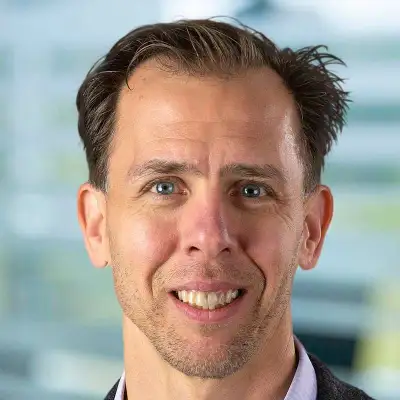
IRL - Robert Clarkson
===
Speaker: [00:00:00] Welcome to the Innovative Revenue Leader Podcast. I'm your host, Seth Mars. Join me as we deliver practical insights to help B2B CROs Find new and innovative ways to grow in this fast changing environment. The Innovative Revenue Leader is sponsored by Sandler, a triad company, empowering sales professionals and leaders to master the craft of selling at all levels.
squadcaster-jf2a_6_08-26-2026_123848: Welcome back everybody. I'm really excited to have today's guest. He is someone that's been in the payment-- he's a payments industry veteran, global revenue leader and fintech executive with nearly four decades of experience. He spent 14 years at, at GE Capital. I'm also a GE alumni which makes this even more exciting.
And then followed that with five years at American Express. He spent time with Stripe helped PayPal go, go public has done a ton around this industry and the Fintech industry. Um, [00:01:00] he is ... Also holds Global Responsibi- help held global responsibility for Braintree Revenue across all markets and since served as CRO of Payoneer Americas at Stripe Chief, chief commercial officer at Norton LifeLock and cemented himself as one of the most sought after revenue executives in FinTech.
He's the Chief Revenue Officer for SMB and Clover at Fiserv. Robert it's amazing to have you on the show welcome
robert-clarkson_1_08-26-2026_093848: Having me. And thank you for the introduction. Although 40 years, uh, you know, that, that's tough to hear sometimes. Like, yeah, that apparently I have some time in the saddle
squadcaster-jf2a_6_08-26-2026_123848: You're, you- you're... It's vintage. Uh, it's vintage.
robert-clarkson_1_08-26-2026_093848: you know,
squadcaster-jf2a_6_08-26-2026_123848: Yeah. But th- those things are actually more valuable than ever these days because yeah, it's, yeah, it's amazing. Uh, I'm looking forward to digging in with it. So just starting out, as, as a CRO, big company, what is, what are the, the most innovative-- What's the most innovative thing that you're seeing right now as a, a- as a CRO?
robert-clarkson_1_08-26-2026_093848: So it's interesting that you actually [00:02:00] phrased it as a big company, because I always feel like, uh, the job of a big company is to f- is to feel small to its merchants. In other words, th- that time and attention, uh, that, that, that s- you know, small customers, consumers, even l- enterprise customers want to have that, that real connection. And it is, um, very easy with, uh, you know, today's tools and remote workforce and, and, uh, whether it's, it's, it's AI driven insights, it's easy to kind of distance yourself, uh, from clients and because it becomes more of a, uh, in... There are too many interfaces between y- you know, w- the, the role that you're playing and, and, and, and the customer's needs. So I think shrinking that distance is really something that we're working on. So i- in a big company, it's about getting out and seeing customers. It's picking up the phone and calling customers. It's, it's not just [00:03:00] kind of programmatic discussions, but really understanding what the needs and the outcomes necessary for c- for customers to be or feel successful.
And so, as you and I had, uh, talked in the past, I spend a lot of time on the road
'cause ultimately that's where the customers are. Uh, and, and for me, while there are a l- a, a great number of efficiency tools, it doesn't replace the fact that customers wanna be heard, wanna be understood, and f- and frankly, it makes me accountable to the things that they hold dear to their business model
squadcaster-jf2a_6_08-26-2026_123848: Yeah, and I mean it's, it's a, it's a really interesting point. A really valid point. So yeah all the tools, all the efficiencies, all this stuff but it's almost like... But I think if I understand it right, it's like that's all there to make time for me to be front and center and present for my customer. And we also talked about the other side of it too.
One thing that you were saying before we, before we went on was it also allows you to be present for your team. Like being in person with your team matters in [00:04:00] terms of tying them together making sure the vision works. So it's a great point. I
robert-clarkson_1_08-26-2026_093848: agree.
no I think like you know coming out of, of COVID and obviously we all had to kind of do the best with, with what we had and everybody went remote really quickly. Uh, but that wasn't the ideal. I think it was making the best of a bad situation, uh,
whi- which was COVID and the lockdown. But that wasn't optimized for the
best outcome. It was the best outcome given the circumstances. And, and you're exactly right, like I, I, always feel like especially in sales, uh, and, and revenue side of the house, I really have two constituencies. I have three if you talk about investors if it's a public
trade company. But
obviously customers, uh, or you know the customers that we serve around the world are, are, are primary and, and typically in the front of everybody's mind. But it's also the colleagues in the business. A- and in a remote environment motivating people, making people feel like they're, they're part of something bigger, [00:05:00] uh, feeling like they wanna contribute to the center, I think it's very easy.
They, they talk about a hub and spoke model. The problem is spokes point out.
Um, You want those folks to point in towards the hub. And
spend a lot of time like you know tomorrow I'm gonna be in Southern California. Uh, I'm working with a, a customer, uh, event first thing, but the rest of the day will be spent with, with, with colleagues, uh, at, at Clover to make sure that they feel connected to the business.
And I think it's very easy through, through other means, uh, you know whether it's video or Zoom calls or
whatever. But, uh, the, the, the, the warmth of, of seeing people in person is, is tough to replace
squadcaster-jf2a_6_08-26-2026_123848: Yeah. It's a, it's almost like a competitive advantage to a certain degree if you're willing to go out and take the time... Time is-- I mean, we were also talking about just like running on the edge. It's just making life as fast, and y- the willingness to be able to take the time [00:06:00] to go out, sit in front of a person, really understand both internal and external just is...
It, it almost seems like as we go along that's gonna become a premium where in many cases people have said in the past like, "Oh, we don't wanna talk to, to salespeople." But it's like, if I value you, I'm gonna go talk to you in person versus yeah
robert-clarkson_1_08-26-2026_093848: Well, and I also think you really, uh, y- you really kind of framed it interestingly because I do think the, the, the, the mantra of, "Well, I don't want to talk to a salesperson," or, "Yeah, I'll get the sales pitch but, you know, I, I really w- I want somebody to help me with my business." is more true now than ever.
Which is... I, I tell this to, to my teams all the time. Um, people don't buy products, they buy outcomes.
They buy what does it, what does this thing, service, product, whatever, do for their customer or their business? And so i- it's not about selling, it's really about evaluating potential ways to get to the, to the desired outcome for our [00:07:00] customers.
And, and in many cases that's not a linear discussion on a video. Because, you know, i- inherently video is you talk, I talk, you talk, I talk, you talk, I
talk. But if we're in person, it tends to be fluid, and that's where the ideas come out. So for me, I think that's, that's a real differentiator in being in front of customers versus, you know, video
squadcaster-jf2a_6_08-26-2026_123848: Yeah, it makes total sense. So let's dig in a little bit because, I mean, you have significant not just experience in fintech but experience in like all the points of fintech. So what I mean by that is like you've been at Stripe massive like rocket ship of a company. You've been at PayPal and y-- And you were telling me before you helped take a lot of these companies public, but you were also in a stalwart Fintech in GE where GE Capital for fifteen years.
So you've, you've got this massive ex set of expertise on how these companies run and how to run them well. For, for the audience can you talk to like what's the [00:08:00] sale like in? Because I think a lot of people think about you know a consumption sale versus a SaaS sale or it's a contract versus an equipment sale.
What's the typical sales process that you deal with in a, in a fintech environment
robert-clarkson_1_08-26-2026_093848: So it, it's typically very long term. So the... This is in some cases, this is the way that the, the, the companies that I deal with with their customers. So it's almost the most sensitive relationship they have, right? I always tell people, "It's not the sell to motion what we sell to a customer, it's the sell with motion that that customer uses our products to sell to their, their,
consumers or B2B if they s-sell to other businesses." And I think that's, that's becoming more important, um, in, in the sales process to recognize the end user of the transaction, not just the person you're selling to. And so for me, uh, you know, [00:09:00] I, I need to understand in f- in the FinTech space, are the longer term goals? Yes, there's a short term goal of whether it's saving efficiency engagement, you know, opening up a new geography, whatever it is.
There can be
20 different things. But, you know, is the three-year goal that you wanna be able to sell more to your customers, so you want those customers to be able to become subscription customers as opposed to, uh, you know, uh, ad hoc customers.
And, and getting that, fintech is able to lay the appropriate groundwork to make that outcome happen.
We're, we're not selling the thing that they're selling to their customers, but we're, we're selling the ability for them to make it kind of an automated process. And I'll gi- give you an example of that. Like over the years I've, I've worked with, uh, Uber as a customer many times. Very innovative company.
squadcaster-jf2a_6_08-26-2026_123848: Yep
robert-clarkson_1_08-26-2026_093848: every... Like, it's like Kleenex and Clorox now. It becomes the
squadcaster-jf2a_6_08-26-2026_123848: Yeah.
robert-clarkson_1_08-26-2026_093848: That
for [00:10:00] getting... Although, you know, Lyft is a great organization as well. Um, uh Uber essentially said, "What we're trying to solve for is moving a person from point A to point B." That, that's the outcome that customers
are looking for. Payments embedded in it is a facilitator of, of, of, of clarifying the mission which is I don't want people thinking about payments. I don't want them to tell ... have to tell somebody where they're going. I wanna be able to hail 'em in the rain. You know, all that kind of stuff that they solved for. But really what we did Somebody's in point A and they wanna get to point B. So for m- in the fintech space, that's about enabling what can I do in the background that occurs just automatically? And when you decide that you wanna go from point A to point B, I'll take care of the payments. And so I think th- that's my goal with every customer interaction whether it's a card present i- uh, interaction where you're actually literally swiping the card or [00:11:00] tapping it,
or it's some billing or online purchase. Like the payment should just facilitate shrinking the distance between want and ha- And I do that, I've done my job for my customers
squadcaster-jf2a_6_08-26-2026_123848: So, uh, let me read that back to you. Like, the way that I read that is it's basically how do I give, h- put as little friction between the sale as humanly possible? So I just facilitate it and it happens. They don't have to think about it, and the less they have to think about it, the more they could focus on what they want, not about how do I pay for it
robert-clarkson_1_08-26-2026_093848: Absolutely. And, and I think friction is something... I think that is, is I maybe six or seven years ago, the talk was all about friction. It was o- you know, friction points and, you know, in my PayPal days and, and, and certainly over here it's how do you reduce friction? I actually think the goal is bigger than just reducing
friction.
Friction is, is something that you want to avoid in a transaction. Now there are, there are good points of [00:12:00] friction too like proof points. I know I wanna make sure you're you and
two factor authentication and things like that. Even there are, there are pieces of friction that consumer understands that they know that you're protecting them.
That, uh, that's, that's a little bit different. But I think it's gone beyond just reducing friction. It's now actually about making transactions either more enjoyable, more effective, or
more intuitive Towards, uh ... A subscription is a perfect example. Uh, you know, could be Netflix, it could be your cellphone bill, whatever
it is.
Like is it running in the background? Is it billed by usage? So maybe, you know, it's, it's billing me by the number of minutes used, or maybe it's a flat fee. Like all that can be facilitated in the background. It's not really the re- the f- the friction's already gone.
Now it's almost flexibility in addition to the reduction of friction, and I wanna be able to facilitate that for my customers as well
squadcaster-jf2a_6_08-26-2026_123848: Yeah. So it's almost more things like, are you talking about like capping [00:13:00] and saying, "Hey, I, I bought a Claude seat and I'm buying it on consumption. I want to be triggered if spending hits here or spending goes..." So you're facilitating even that point for them to make sure that they're not over or under spending?
robert-clarkson_1_08-26-2026_093848: Absolutely. And, and, and interesting enough, so if you wanna open your business in Brazil, you have a, you have a wildly successful business in North America, now you want to go down to South America. Well, in Brazil, uh, the, the preferred way to pay is Pix, right? It's called, it's called Pix. It's essentially a bank-to-bank transfer. Everybody uses it. Four years ago nobody used it. So my job as your partner in, in helping you grow your business is giving you the advice and counsel, not just in reducing friction, but if you wanna sell in Brazil, you need this tool to be able to get that because this is the way the consumers do, do business down there.
So again, it's more... It, it's, it's, it's more about how do I grow your business than how do I just make your business less painful [00:14:00] which,
squadcaster-jf2a_6_08-26-2026_123848: Yeah.
robert-clarkson_1_08-26-2026_093848: Of
squadcaster-jf2a_6_08-26-2026_123848: Yeah, that's fan-- That's fantastic. It's fascinating. So like one thing I want to also ask you about this, like you've succeeded in, in sp- In, in... The definition of what I'd say is success to me, I mean, in reading through kind of your, your body of work is most of the companies you took public and left and then y-you've been at, at these really big blue chip companies for sustained periods of time where you've delivered like...
What do you like-- W-what are some of the things that you've done to kind of deliver value in all of these different areas? Yes, they're all blue chip. They're all successful companies. And, and when you work at companies like that, the bar is really, really high. Like how have you stood out as a CRO and in sales across all these companies over such a long period t- for such a sustained period of time?
robert-clarkson_1_08-26-2026_093848: w- when I think of my primary role as CRO and, and I was literally talking to our CEO about this the other day. I have, I have primary functions in, [00:15:00] in my role. uh, so, you know, typically it's, it's chief revenue officer. You sort of think of it as, you know, it's either new sales, it's existing sales, it's, it's cross sell, upsell, it's all that kind of stuff.
And then obviously in some cases involves marketing. I've run marketing for, you know, parts of PayPal and, and
squadcaster-jf2a_6_08-26-2026_123848: Mm-hmm.
robert-clarkson_1_08-26-2026_093848: For LifeLock. Uh, so th- that can be either awareness or lead gen. But, but I think the two primary roles of a, of a CRO are what I call numbers and narrative. The numbers are fairly obvious like,
um, you know, are you growing business?
Are you retaining customers? Are you adding new logos? Are you doing more with the customers that you have? Are you taking those customers to p- to new opportunities for them? Right. So tha- that's, that's reasonably apparent, um, and, and, and, and pretty well understood, and I think a lot of CROs have that, that mindset. The second part of the job though is the narrative. Um, and the narrative for me is where are you taking the business? What new customers are you talking about? [00:16:00] What new products and services do you need? Or the partners, it buy versus build? Is it a new geography that you need to open? Is it an ancillary product or service that helps your primary product and services become more effective?
So y- you know, in, in many cases, um, you know, i- it's, it's what else can I do for my customers they're getting from somebody f- else today or that they need and they're not getting from anyone, and is there an avenue for me to be able to do that? So that's the narrative component. In other words, the, like the narr- the narrative between the customer and me and me and the customer is always this kind of two, two directional, um, interface where m- trying to translate their needs into something I might be able to do and I'm also trying to translate the things that I can do into something that they, they could use.
And, and I do think you want a sustainable [00:17:00] business model, and, and again I've, I've, I've run companies for a long time with, with accelerating growth. You have to do... have to have more customers, have to do more with the customers that you have, and then you have to redefine the, the, the, the scope of work that you can do for those customers.
And y- you and I grew up in, uh, in GE with Jack Welch, and he used to say, "You have to be number one or number two in your business or you're
squadcaster-jf2a_6_08-26-2026_123848: Yep. Yep
robert-clarkson_1_08-26-2026_093848: If you are number one and number two in your business, you should redefine your business wider so that you have something to work for.
So, and I've always kind of kept that in the back of my mind. Like yes, I can be successful in payments but how about in, or in, in, in instant payments? In other words, you know, like in, i- in paying with a credit card or paying with bank to bank. But now you have buy now pay later. You might have subscriptions.
You might have usage billing. You might have all these other instances where there's a need by my customer and I can fulfill that need but today, you know, I need to either do some additional programming, I need [00:18:00] another partnership. Maybe I need to note another, um, uh, types of payments that are made 'cause
there's all kinds of world.
So those are things I think about when being a CRO. It's the numbers and the narrative. And the narrative is where else does this business need to go
squadcaster-jf2a_6_08-26-2026_123848: So, okay. I'm gonna d-- I think, I think listening to that it resonates and I would bet it resonates with any CRO that's listening to this. What I see often is it's very easy for CROs to be dragged into the numbers and ne- and almost like it's a cage that they're trapped into. And, and I've also seen like they, they get trapped in that cage for the numbers but then also they also have a sort of like...
Uh, th- they don't feel they can impact the narrative. They-- I, I've even heard it, "Oh well, that's marketing's job." I mean you've run marketing at some of these companies or that's product's job. But the way you're talking about narrative and it, it makes total sense but it also, it makes [00:19:00] me think that you're in an organization that is listening to the sales organization, building products for the sales organization, working side by side with the sales org where you have a seat at the table on what's going on in the business how?
Like how do you do that? Because in a lot of cases it's coin operated, I'm pushing the CRO go deliver my numbers. But you found a way to, to build that credibility and get seats at the table at some of the biggest companies in fintech where you're shaping the narrative rather than just having it thrown at you is what it feels like
robert-clarkson_1_08-26-2026_093848: Yep. Yeah, I, I completely agree and I think that is a position at the table that is earned through, uh, valid voice of customer in other words. So I'm the one... My team and I are talking to customers all day long so we get a sense of what's going on. We also get a sense of what the competition is doing because we know what we're up against in some cases if there's some kind of head-to-head match up or we're trying to displace a, a, a competitor. But it's also, it's the personal relationships. Like I, [00:20:00] I... Later on today I'll be sitting with, with our product teams, and we are literally doing the long range planning of w-what products and services do we need to build for this business in the next 6, 12 and 18 months? And so i- you know, in fintech it's not like you're building a car where it takes, you know, a year to design it or something like that.
In fintech y-you do have the, the advantage of being able to build a little bit quicker, so you can build 6, 12, and, and 18 months out. But, you know, I am responsible. I, I feel responsibility and I am responsible for the voice of the customer inside the business. So it-- I'm not just doing it because I need to tell product what they do for me. My responsibility is to, to echo and amplify the needs of my customers inside the building, and there aren't, there aren't a lot of avenues for that. We just had our, our big, um, uh, [00:21:00] customer meeting called Fiserv Forum, and it was 4500, uh, participants. It was an enormous, enormous, uh, um, uh, meeting for three days. And a lot of the content was based on conversations that my team had had over the year about what customers were looking for, where they saw opportunities, where they saw that we could do something better. Like, and so my job is to bring that to product risk finance to say, "If we did these following things we could get more business," or, "if
we could do this we could..." So I'm, I'm not bringing it as a, a- as, as like a, almost like voice of customer. It's really advocacy for where those customers wanna take their business and I, I'm the ch- internal champion for my external customers
squadcaster-jf2a_6_08-26-2026_123848: Is, is there anything to that in that you bring it to them rather than trying to stuff it down their throat to win a [00:22:00] deal, you're bringing it to them in a wider context?
robert-clarkson_1_08-26-2026_093848: Absolutely. So m- my job is to understand the, the swim lane of product and product development as well. So in many cases, and I've been in organizations in the past where sales complaints their product isn't fast enough and product complains that they oversell stuff. And, and so both sides need to understand what success looks like for the other.
So I spend a lot of time with my engineering leads to say, "Tell me the constraints on the business. Tell me how many hours you have to be able to solve for problems. Tell me what kind of outsourcing we do for various projects and services. Tell me where AI is helping offset maybe some of the demands on your time," so then I can be realistic in my asks.
What I don't wanna be is just a fly in the ear of, of product saying, "Need, need, need, need, need." That's not helpful. I really have to come with... And I always tell people this [00:23:00] in my own meetings, if you're gonna come with a problem, come with a proposed solution. Might not be the one we use, but it tells me that you have thought about the problem from my perspective, not just from your perspective if you come with a solution
squadcaster-jf2a_6_08-26-2026_123848: Makes sense. Makes total sense. That's fantastic, and I-- And I think like the narrative side of things is just one of those things that's really hard to do. It takes skill and expertise to do it, so thanks for, for sharing that part of it. Now I'm gonna... I wanna dive a little bit into the number side of things.
So compensation, like this is one of those things that we, we kind of cha-chatted about it be-before we went on. Like when, when you, when you think about compensation devi- design and motivating your sales team, it's hugely important. Like what, what's something that you do in helping construct the compensation plans to make sure that it is aligned and motivating?
Uh, I mean, well one, the numbers side of things but do you also put a narrative side into the comp plan too? Like how, how do you think about making a successful compensation plan
robert-clarkson_1_08-26-2026_093848: Uh, I actually do. And [00:24:00] here's what I did, um, and I try to do everywhere I go, which is, um, I want the compensation to plan for the sales folks and sales leadership to reflect success of the program from the customer standpoint, not just what we sold to the customer but actually the benefit that the customer got out of the, that product or service.
And I think it's in many cases that is understanding exactly what the They're trying to save money. They're trying to open up another market. They're trying to, uh, create a loyalty program with their customers. Like [00:25:00] [00:26:00] CFO or the CEO that our customers are more comfortable wus- with us than I think unless I'm measuring their satisfaction and their, their, um, outcomes relative to their needs
squadcaster-jf2a_6_08-26-2026_123848: Yeah, that's, that's really interesting too because y- you're tying that to growth and you're doing an extra step that a lot of [00:27:00] people won't do. They're trying to make it simple by revenue equals money, and there's merit to that, but it sounds like you're going a step further and saying, "Yeah, we need the simplicity, but I need the simplicity to resonate with the customer because if you're making customers happy and doing what they want, revenue's coming."
robert-clarkson_1_08-26-2026_093848: Yep. And, you know, th- the whole, the whole move to, you know, ARR or, you know, annual r- r- recurrent revenue i- i- is, is, is gives ... You know, I'll also say that the other, as a tangent to that, I talked about, um, numbers and narrative when the other external component to a CRO's job, um, is creating trust and trajectory for investors.
And I, and I, I try to push that, uh,
the, the, the, that notion throughout the organization as well. Our jo- The trust is you said you were gonna make X, or you said you were going to deliver Y in terms of volume, revenues, whatever it is, OI. And [00:28:00] the trajectory is what confidence do I have that either that's, that's gonna increase over time or, or expand over time in some way?
So a- again, from my IR, my in- investor relations hat, the two jobs I have are trust and trajectory. Trust that I, I'm gonna do what I said I was gonna do, and trajectory that I can do more over time. And so w- you know, when you, when you talk about, um, aligning with the business, I'm always trying to make sure that, that I'm building not just the trust that I'm gonna make the numbers but I'm supplying the trajectory on where that curve is supposed to bend towards so I can accelerate growth, not just linearly, but actually maybe even exponentially
squadcaster-jf2a_6_08-26-2026_123848: Ah, absolutely. That's awesome. Okay, so I, I know we're running up on time, so I want to ... I, I wanna shift a little-- like shift gears a little bit with you and, and talk some just a little bit about kind of personally, like when, when you were a kid, like w-were there any signs [00:29:00] that, that, that would indicate that you would end up in fintech and that you would be like in this industry for this long?
Like did you save a lot? Like where you like open... Like what, what, what what was it when you-- is there anything that you could call to to say as a kid, "Yeah, I can kinda see this one coming looking back"?
robert-clarkson_1_08-26-2026_093848: I, um... So as a kid I wanted to be a race car driver. So I, I, I haven't, you know,
maybe it's, maybe It's No. Um, but I will say this, um, I, I was always f-... I was a swimmer, uh, growing up, so I was a swimmer from five to 18 and I was a pretty good swimmer. And the interesting thing about swimming is, it is very self-motivating.
And, and by that I mean sports if you're in track or you're, you're in, you know, soccer or football or whatever, the competition's right in front of you. You know exactly how you're
doing all the time because either you can see the person next to you in the other lane is running, or y- you got the ball or they got the ball [00:30:00] and somebody's trying to do something different with it, right?
I mean, it's, it's
real. But swimming 'cause in many cases you don't know where the competition is. You can't see them. Like, you can kind of see them sometimes. So actually motivated to go faster because you imagine, I always imagined "Oh my God, I can't see them, they must be ahead of me." Uh, as opposed to, you know, like in other sports where you can actually see your relative position all the time.
So, so I think in, if I were gonna look back early, that self-motivation that was kind of that panic that I could be doing better, um, has always been with me. Because in, like in swimming, I assumed that they m- might be ahead of me because I can't see them even if I was winning. And so I, I try to instill that here as well, which is what, what else can I be doing today?
I, I am much more motivated by what I'm not hearing in the business than what I'm d- hearing. Uh, [00:31:00] so in other words, I... There's a good idea out there on that floor somewhere or one of the
other offices that we have that I haven't heard yet. So I, I have a lot of conversations all day long, and even as a kid, I was always absorbing more and more data because I thought that, without it I would start to fall behind.
So I, I've been... I, I, I always talk about, um, uh, curiosity and empathy. Like I, I was curious about everything
and I was empathe- the needs of others, and those two things kind of cemented it. The, the i- Interesting story though. So I'm in the fintech space. My wife was also in the fintech space.
So
squadcaster-jf2a_6_08-26-2026_123848: Oh, really?
robert-clarkson_1_08-26-2026_093848: our our son who's in college doesn't know it yet, but he'll probably be in the fintech space
squadcaster-jf2a_6_08-26-2026_123848: Yeah. It's the family business. The, the swimming thing is so true. You, you have to clock your time and run your race. Uh, you, there, you're, you're trying... 'Cause you have no idea what's happening around you. Maybe, yeah
robert-clarkson_1_08-26-2026_093848: Maybe on the turns you get a little sense [00:32:00] of it, but if you don't see anybody, you're either way ahead or way behind, and I always imagined I was behind, so I swam harder and harder and harder. So it was one of those... It's definitely a sport that drives this, um, uh, sense of, of faster, faster, faster because I don't actually know what I'm up against.
It'd be like, um, planning all your moves in chess before the other person did their first move.
squadcaster-jf2a_6_08-26-2026_123848: Uh-huh
robert-clarkson_1_08-26-2026_093848: because i- it's, it's like I I can't see what you're doing, but I, I assume you're just about ready to, to, to, to, uh, checkmate me. And, and, and, and matter of fact is I don't really know in swimming and in, in business it's the same thing.
I could have a new competitor come in, and in fa- in fact we in this, in the, in the, now in the age of AI and, and, and shortly with quant- quantum computing, ability is to build, stand up, and scale a [00:33:00] business is almost democratized to anybody now.
Like, before I know, we were at GE GE was 300,000 people, GE didn't really worry about companies that had 27 people in it, right?
Maybe we're worried about Honeywell or maybe we're worried about, you know, a, a, an Inram or some kind of big
head-to-head business. Now our biggest competition could be literally five people sitting around a, a, a, a, a, a table thinking of an idea with, with a, a Claude model in front of them and a bottle of Mountain Dew, and six weeks later they're Anthropic.
Like,
squadcaster-jf2a_6_08-26-2026_123848: Yeah, it's insane. It's ins- it's so true. So final question. What is one thing that, that if you could go back to when you graduated college and p- what piece of advice would you give to yourself that you think that would've been most valuable to you at that time in kind of setting off in your career?
robert-clarkson_1_08-26-2026_093848: Without getting too introspective, I, I, I always feel like [00:34:00] I never really celebrated any successes because I was always about the next thing. And, I didn't... I don't wake up in a panic every day, but I wake up thinking, "What could I have done yesterday to make today more successful?" Or, "What can I do today to make tomorrow more successful?" And I think it's, in a way it's very motivating, but also in a way it's, it's tiring.
squadcaster-jf2a_6_08-26-2026_123848: Yes
robert-clarkson_1_08-26-2026_093848: Um, and, and by the way, as a leader, I really need to, to address that. So personally, yeah, I can, you know, fight that, that, that, that sentiment, but I wanna make sure my teams always know where they're doing well and where we can do better.
And it's easy, and I've had, you know, sales leaders that worked for me over the years really emphasize o- uh, uh, on, on the gaps, but also let's celebrate the, the, the, the, the extraordinary nature of people as [00:35:00] well. And I think people can do incredible work if they feel like they're valued
squadcaster-jf2a_6_08-26-2026_123848: Yep.
robert-clarkson_1_08-26-2026_093848: I've seen organizations could be much more effective be held down by the fact that you're never quite as good as you should be.
And, and, and that's, that's a tough balance to make. But I think, um, I think growing up I probably would've been a little easier on myself, um, I always felt like I was 80% of the way there and never higher
squadcaster-jf2a_6_08-26-2026_123848: Yeah. Always striving forward, not taking a s- a chance to regroup and say, "Oh, look what I've done."
robert-clarkson_1_08-26-2026_093848: Yeah, exactly. Exactly. And I really try to emphasize, uh, obviously that with my, my teams, but also our own son. Like
I, I, I, let him know where, you know, he, I'm, he might do something a little bit differently, I go out of my way to make sure he knows how awesome he is
[00:36:00] because he's pretty awesome.
squadcaster-jf2a_6_08-26-2026_123848: Yeah.
robert-clarkson_1_08-26-2026_093848: Know?
squadcaster-jf2a_6_08-26-2026_123848: So true. That is, that's great advice. Robert, it's been so great talking to you. Really enjoyed the conversation. Thank you. Thank you for joining
robert-clarkson_1_08-26-2026_093848: Absolutely. Thank you very much for having me
Speaker 2: And that wraps up another episode. Thank you for joining. For show notes and other episodes, visit us@innovativerevenueleader.ai. The Innovative Revenue Leader is sponsored by Sandler, a Trilia company. Sandler provides top corporate sales and business development training while empowering sales professionals and leaders to master the graph of selling at all levels.