Subscribe
Share
Share
Embed
Ducks Unlimited Podcast is a constant discussion of all things waterfowl; from in-depth hunting tips and tactics, to waterfowl biology, research, science, and habitat updates. The DU Podcast is the go-to resource for waterfowl hunters and conservationists. Ducks Unlimited is the world's leader in wetlands conservation.
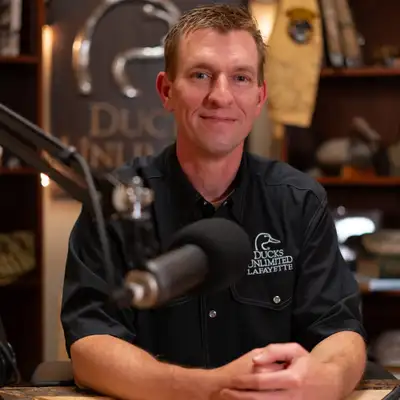
Hey everyone, join us on today's episode as we sit down with Dr Scott Stephens, Ducks Unlimited's senior director of conservation strategy for a quick update on prairie habitat conditions and some optimism from Doctor. Scott about the potential for improved duck breeding habitat conditions. We also discuss differences in arrival times, migration chronologies of different species of ducks as they are heading back to breed.
VO:Can we do a mic check, please? Everybody, welcome back to the Ducks Unlimited Podcast. I'm your host, doctor Mike Brasher. I'm your host, Katie Burke. I'm your host, doctor Jerad Henson. And I'm your host, Matt Harrison. Welcome to the Ducks Unlimited Podcast, the only podcast about all things waterfowl. From hunting insights to science based discussions about ducks, geese, and issues affecting waterfowl and wetlands conservation in North America. The DU Podcast, sponsored by Purina Pro Plan, the official performance dog food of Ducks Unlimited. Purina Pro Plan, always advancing. Also proudly sponsored by Bird Dog Whiskey and Cocktails. Whether you're winding down with your best friend or celebrating with your favorite crew, Bird Dog brings award winning flavor to every moment. Enjoy responsibly.
Mike Brasher:Hey, everyone. Welcome back. I'm gonna be your host on today's episode, Doctor. Mike Brasher, and I've got another doctor in the studio joining me. Not like an official doctor though, just like a duck doctor.
Mike Brasher:Dr Scott Stevens, Senior Director of Conservation Strategy from all the way up in South Dakota. He flew down here yesterday, got a few meetings to take care of. He's joining us for some other kind of high powered intellectual conversations going on with some of our partners, and so it's great to have you here, Scott. Welcome back to the podcast.
Scott Stephens:Yeah, great to be here. I'm gonna listen and learn. I'm not sure I will be contributing to the high powered discussions.
Mike Brasher:I didn't mean to imply that you that you would have been. So apologies that no. I'm I'm largely a listener and observer and appreciator of the dramatic incredible intellect among that group talking about a lot of things related to waterfowl ecology, emerging issues in the waterfowl space, in the waterfowl field, and we're gonna be talking with some of those folks here over the coming weeks, months, years. It's an exciting time from a science perspective in waterfowl management. It's an anxiety field time also in some respects because of some of what is driving discussions that are being had about, you know, the constrained resources that have always been an issue.
Mike Brasher:You always want more resources, you always want more people, more capacity to answer the big questions. We know a lot of people know the the situation in in all the different state federal agencies, constrained budgets, the e the Fish and Wildlife Service, Canadian Wildlife Service, state agencies. Lot of the states are now dialing back even on some of their midwinter surveys. I'm not sure how much you're aware of that, but No. Yeah.
Mike Brasher:So all of that relates to just the increased competition for limited resources with which to to manage the entire suite of natural resources that we have, and so whenever those things come about, the smart people get together and say, well, what do we need to do and how can we understand the best way to go forward? And so some of what is being discussed here today relates to that, some of it also just relates to sort of emerging issues and understanding of population ecology. So probably enough about that. I kinda got on Sidetracked. Sidetracked because it's really cool cool conversations.
Mike Brasher:We're here to talk with you today about a quick prairie update.
Scott Stephens:Mhmm. Habitat conditions.
Mike Brasher:Habitat conditions in the prairies, we are recording this on, like, what, March 19, something like that.
Scott Stephens:March 19.
Mike Brasher:March 19. Yeah. 2026. As the official time stamp, today is the first day of March madness if you're basketball fan. Yep.
Mike Brasher:I
Scott Stephens:filled it up my bracket.
Mike Brasher:And it will go up in flames by
Scott Stephens:Yes.
Mike Brasher:By the end of the day. So like so many other people. But I I I did wanna start, I guess, by talking a little about, if you can recall it, how'd your hunting season go?
Scott Stephens:It was pretty good. Spent made a few trips to Canada. Those were good. Although, I would say my observation was you could find good concentrations of birds. They were not everywhere.
Mike Brasher:Was it how easy was it to find good habitat across the prairies?
Scott Stephens:Oh, yeah. Habitat was challenging. Like, there's not much shallow water out there. Fortunately, there's still what we would call semi permanent wetlands that are holding birds in the fall. And then, you know, across the prairies, they're field feeding most of the time, feeding in wheat fields, pea fields.
Mike Brasher:Are you a are are you a field hunt specialist, wetland specialist, or or opportunistic specialist?
Scott Stephens:Go wherever the ducks tell me to go. I always say, don't argue with the ducks.
Mike Brasher:That's wise. Wise counsel from doctor Scott Stephens, don't argue with the ducks. Okay. Well, I guess let's just do a little hard transition here to talk about what we think we might be dealing with here in a few months, maybe a few weeks as birds get closer to the time when they're gonna settle on the breeding grounds, some of what you observed, some of what I actually had the opportunity to observe when I was up in Saskatchewan in October, I believe it was for a conference. A friend of mine and I drove across one of the areas of Saskatchewan that I'm familiar with, Allen Hills region, and it was pretty dry going into the fall, and that sort of that mirrors what you were talking about with regard to it being difficult to find wetlands to hunt, finding concentrations of ducks to hunt.
Mike Brasher:There have been some, I I guess, some improvements or some development. Let's say some potentially positive developments.
Scott Stephens:Potential for improvement.
Mike Brasher:Potential for improvement in in terms of wetland in some areas, in wetland conditions over there, as we've talked about often, there are a lot of variables that play into that. One of those is the conditional wetlands going into the fall, which also is variable across the Prairie Pothole region. I think we'll probably avoid touching on the boreal in any of those other areas for today, but what's your 30,000 foot view of prairie habitat conditions or the potential for good breeding breeding duck habitat conditions across the prairies?
Scott Stephens:Yeah. Well, you know, 30,000 foot view is appropriate because I got on a plane yesterday, and I flew across Eastern South Dakota. And the good news was over the weekend, over Saturday and Sunday, we got snow. I got snow in Western South Dakota. That doesn't mean as much for ducks, but the eastern part of the state got snow too.
Scott Stephens:So, you know, kind of the the marker where you start duck country is the Missouri River. There was some snow there, but not much. But as I got further east in South Dakota, the landscape was covered with snow. I think they got maybe close to a foot in, you know, places like Brookings, South Dakota. Oh, okay.
Mike Brasher:Yeah. This is that same storm that that dropped twenty, thirty inches across Wisconsin, Michigan?
Scott Stephens:Think so. Yeah. Yeah. So we didn't get as much. That was probably sucked in some moisture from the Great Lakes there before it dumped that.
Scott Stephens:But yeah. So Eastern South Dakota, I think that extended into North Dakota a little bit. I know Bismarck got some snow. I don't know how much. So we picked up some moisture that we're probably three weeks from ducks showing up on the prairies, you know?
Scott Stephens:Early April, early to mid April.
Mike Brasher:Yep. Sounds about right.
Scott Stephens:Ducks will be showing up. So, yeah. There is snow out there with the potential to run off. Now, that brings into questions, you know, what was soil moisture when we went in? I was in Eastern Eastern South Dakota in January.
Scott Stephens:It was cold, but it was pretty dry too. Things were dry. So there will be some of that snow that will just go into the ground and won't run into the wetlands. But there's enough snow that there should be some runoff, so we should have some shallow water.
Mike Brasher:And that's in mostly you're talking about South Dakota? Eastern South Dakota.
Scott Stephens:What I don't know, I I didn't see sort of a track of that storm and snowfall totals into Eastern North I know Bismarck got some, so there was some snow in North Dakota. If we think about further North in Canada, was piece of information came out for Saskatchewan where they try and think about what might flooding potential be. You know, they call it runoff potential, which is one of the ingredients to to create duck habitat.
Mike Brasher:That report is is generated is is it an ag related interest? Is it community related? A little bit of all of Right? It's not duck related. They don't put it out for ducks.
Scott Stephens:No. It's done by water security agency who who's also responsible for help people helping producers move water off of their
Mike Brasher:property and Move it, AKA draining it off their property. Call it what it is.
Scott Stephens:Not duck friendly. But yeah, they put out this report to kind of think about where might we have flooding issues. And so they're talking about runoff potential. And I would say the Parkland areas, you know, kind of from East Of Saskatoon going into the diagonal down towards Yorkton, Saskatchewan, those had above normal potential. So they have some snow.
Scott Stephens:There will be some runoff in those areas now further west and in the South Of Saskatchewan. Pretty dry. Yeah. Below normal runoff potential. And what I've seen for Alberta would be the same thing, below normal.
Scott Stephens:Manitoba has some snow and we'll probably have some water runoff, but they soil moisture was low there, too. So we'll see what that amounts to. So, you know, I made a social media post and one one of my friends listens to this, I think, and was like, are you actually is that optimism that I
Mike Brasher:hear from you? I did notice that. I saw that comment.
Scott Stephens:And it's like
Mike Brasher:You slipped up there for a moment.
Scott Stephens:I know. Yeah. It's like cautiously optimistic there will be some water.
Mike Brasher:Opt optimism is kind of a relative scale too. Right? You know, when you look at the way things were last year, maybe be a little a little bit optimistic now.
Scott Stephens:Be a little bit better, but still, I wouldn't be too excited, or I wouldn't call this recovery. I wouldn't call this the prairies wet again. Yeah. You know, we'll we'll let you know when that happens. This group will hear about that.
Mike Brasher:Yeah. And one of the reasons why that is, why it's we've talked about soil moisture, we've talked about runoff potential, but I also referenced how dry it was, how there were there was no water in those basins. A lot of a lot of the basins that I saw, the ephemeral temporary, the highly productive seasonal, highly productive basins for breeding ducks, they had very little water in them, and so it's gonna take a a fair bit Right. To to fill them up. And and then you gotta keep them filled as well.
Scott Stephens:So Which is okay, I think, from a duck standpoint. So, you know, at least some of our current hypotheses tell us in the years where we get that new water filling up seasonal and ephemeral basins, Things are pretty productive, right? Like those wetlands bloom right away with insects, ducks take advantage and eat those bugs and coming off of dry periods, you know, from a nesting success and brood production standpoint, they can be pretty productive. So, you know, if we get some water, ducks will probably take advantage and do pretty well. It's just we're not gonna have the whole landscape filled with water
Mike Brasher:like we'd like to have. Yeah. You know, it's it's one of those things where you need a number of ingredients to get a lot of new ducks on the at the end of the summer. Right? You need conditions that are right for birds to to prompt birds to settle and nest in that area, and that can be in the form of these real shallow mudflat or little sheet water wetlands all across the agricultural landscape.
Mike Brasher:It's not quite good enough for ducklings though. You have to have wetlands of a different type with good vegetation cover, and that will produce and sustain aquatic invertebrates for those ducklings to to consume and and allow them to grow throughout the summer. So it's more than just water on the landscape right now, if what we're talking about on the back end is more ducks in the fall flight, which is that's what we're concerned about. So this is just one part of the equation. Do and it's been a while since I've studied wetland ecology from like a duck production standpoint, but all those things matter, right?
Mike Brasher:And we talk often about what we really need are improved wetland conditions for multiple years. Like, we can get good runoff in one single year that puts a lot of water on the landscape, but then if it dries up, number one, that doesn't help the ducklings as much later that year. What it also doesn't do is give those wetlands that had been so dry for multiple years and had been farmed time to regrow some vegetation and then function as brood rearing wetlands in subsequent years. Right?
Scott Stephens:Yeah. Yeah. And, you know, we're for some of that brood water that you talked about, which is bang on, we're usually dependent not so much on the snow melt, but then rains throughout the summer to replenish those. And I would say the best conditions we get are when we have good runoff from snow melt, we get seasonal wetlands flooded, there's vegetation there, and then rains maintain that because I would argue that ducklings have some of the best survival when they have flooded seasonals to beyond as broods and I mean, they will use semi permanent and there's cover there. Those are less productive than the flooded seasonal.
Scott Stephens:So, you know, but seasonals typically dry up by late summer. So if you have rains that sustain those, that's really good conditions. We'll see if we get that kind of thing. I think the other thing to keep in mind is probably the population of ducks that we have coming back to the breeding areas is some of the lowest that we've seen in a couple decades. Yeah.
Scott Stephens:So, you know, good production will be for the you know, on a per capita basis for the number of birds that we have coming back and returning to areas that do have water, which won't be all of them.
Mike Brasher:Scott, I wanna take a break, and then when we come back, I wanna ask you a question about the migration chronology of ducks as they arrive back on on the spring. Just to kinda a real a real course overview of the timing of when different species typically head back. We often talk about early migrants and then some of the later arriving species, and I just wanna unpack that a little bit for our listeners that may not be as familiar with that, and maybe that kinda relates to what we see in terms of settling patterns and how they differ among different species of ducks, as driven by the timing of some of the precipitation and snowfall that we're talking So that's a little bit of advanced notice, maybe a few minutes of advanced notice to be prepared. Stay with us folks, we'll be right back to continue our discussion with doctor Scott Stevens.
VO:Stay tuned to the Ducks Unlimited Podcast sponsored by Purina Pro Plan and Bird Dog Whiskey after these messages.
Mike Brasher:Everybody, welcome back. We are here with doctor Scott Stevens getting an overview of prairie habitat conditions, but what I wanna talk about right now is is something that like, what happens next when birds are are flying back north. The not all ducks are the same in terms of the timing of their spring migration, the pace of their spring migration. Their ultimate breeding habitat, breeding region destinations are not all the same, and I wanted to get Scott to help us understand that a little bit in terms of the early migrants, the of the ones that come next and then the ones that are latest arriving and and just sort of help us help help people get a get a feel for how all of that works. So, yeah, early, middle, late migrants, what are the and breeders as well.
Mike Brasher:What do we know about that?
Scott Stephens:Right. So the first ducks to show up in the prairies are mallards and pintails, and they are pushing you know, they'll get sent back south by snowstorms that we have happened at this time of
Mike Brasher:the year. The ones that are kind of following the ice line, is what we kinda like to say.
Scott Stephens:So, you know, mid April, could be early April depending on the years. They will be showing up on those breeding locations. And, you know, mallards and pintails could have nests on the ground by late April. So they're the first. And then usually by early May, we start to see shovelers and blue wing teal and species like that would be next.
Scott Stephens:Camusbacks will be there, redheads. And then a little later would be things like gadwall and scup or sort of some of the latest birds to
Mike Brasher:start with. Blue wings are even earlier than gadwall typically on average.
Scott Stephens:Yep.
Mike Brasher:That's a that'll surprise folks. They they think of what's what do what do we why what what allows blue wings to be able to do that? Or is it just is it a it a a dietary element associated with some of that? We think of of Gadwal being a bit more vegetarian. And and it's not as though there's overlap.
Mike Brasher:Right? Let's be clear. There's overlap in the arrival of some of these species for sure.
Scott Stephens:But remember, this time of the year, even Gadwell are mostly focused on aquatic insects. K. Right? But yeah. It's a good question.
Scott Stephens:Why why do they why is there a strategy to be a late nester? You know, we could probably speculate and say, well, there could be differences in how successful they might be, you know, if they let the other birds get going first. Maybe that buffers some of the predation and, you know, for a long time, gadwall populations did really well.
Mike Brasher:That's right. They had higher brood survival, I think, was one of the things that was that that came out of some of that research to try to answer why why are gadwall just going through the roof at this time? And and I think if I might be remembering that correctly.
Scott Stephens:Yeah. Yeah. And, yeah, when when the prairies are really wet and you've got lots of vegetate or lots of wetlands filled with that aquatic vegetation and that's, you know, after they're done breeding, that's a primary food source.
Mike Brasher:The other thing that we wanna it it's tempting to talk about ducks and different individual ducks or different species of ducks as though they're actively making decisions. They're evaluating the landscape and evaluating their alternative strategies and making one decision or the other. That's not exactly how it works. We're talking about in terms of the early migrants, late migrants, and these are things that have been fine tuned over thousands of years based on That's right. The strategies that have beneficial for them for one reason or another.
Mike Brasher:So you have to you have to look through a sort of historical, like truly historical lens when you're trying to evaluate and what that landscape and what those conditions may have been like over over hundreds and thousands of years to figure those things out.
Scott Stephens:Yeah. Well, and then think about the fact that we're having earlier springs. You know, things are warming up sooner. So, you know, will we see mallards and pintails continue to nest earlier? Or, you know, is there some trade off that early is good, but too early, there may be disadvantages?
Scott Stephens:And and we know that things like late snowstorms can happen and could, you know, cause a female to have to abandon the nest if she's covered in snow, things like that. Yeah.
Mike Brasher:And if we see see changes in the frequency of those behaviors occurring, it could be because if if it's genetically controlled and if there's a certain segment of the population that is genetically wired to do that, and then all of a sudden if or gradually, whatever the case may be, if that genetically controlled strategy becomes no longer advantageous, then they're not gonna reproduce or survive as well, and then you're gonna reduce you're gonna see a decline in the the the number of birds in the population that are choosing that. That's kinda how that works. Right?
Scott Stephens:Yeah. I think the good news for waterfowl is for most species, generations are pretty quick. Yeah. Right? You know?
Scott Stephens:A year and a half or two years for most of the ducks. So we see we could see those changes happen quicker than if we were talking about elephants.
Mike Brasher:That's true. That's true. I don't know enough about elephants to talk about them other than just the basics of of what you just said. Diving ducks, what are some of the latest arriving species? About the scallop, the latest arrivers?
Mike Brasher:And there's not a whole lot of those that breed in the prairies, right, they'll head on to the boreal forest. Are the boreal nesters generally later, like Widgeon, Greenwings, SCOP?
Scott Stephens:We will well, at least in the Prairies, we will see those in May. But, you know, even even if they're gonna be an early nester in the boreal, that could be that's probably late May or early June. Right? You know, those areas are Ice is coming off, you know, late. Like, a good example is, next week, I will be going back to Manitoba to go ice fishing, and there's probably 40 inches of ice on
Mike Brasher:the lake. Wow. It'll take a while for that to melt.
Scott Stephens:That's right.
Mike Brasher:Do you get a do you get situations where, like, the green wings and the widgeon start to stack up in the prairies as they're waiting on the boreal to open up? Yeah. You see that. And and that's that relates to some of the conversations that we're having today in terms of the waterfowl surveys and how well are they capturing some of these, and what are some of the decision rules that are made to try to account for some of these observations of birds that may just be migrating through. So, yeah, the intersection of biology and our attempts to to count them and and estimate population size has always come into play in these type of discussions.
Mike Brasher:And what else? I mean, Canada geese, we haven't talked about them. They're they're already
Scott Stephens:They're early. Yep. Yeah. I mean, it's usually this time of the year, you know, while I was at Okamik Marsh, you know, geese would you'd start to see geese in February or March. I'm sure they've seen the first goose Yeah.
Scott Stephens:For this year. And they're showing up before things have melted. Right? Yeah. They're using reserves that they picked up previously on the migration to sort of hold them off because it will be a while before things green up and they are able to graze again.
Mike Brasher:Is the is the resident Canada goose season open in Manitoba right now? This is late March. Yeah.
Scott Stephens:Need to ask that guy, Frank Baldwin. Frank. Yep. Will be with on the
Mike Brasher:That's right.
Scott Stephens:Same call here. But yeah. I believe so.
Mike Brasher:Man, it's hard to think for us down here, it's hard to think there's people still up there. But, I mean, snow geese as well. The conservation order is still in full swing. We're talking to Jennings. He's got something planned for for April.
Mike Brasher:Right. So, yeah, still got a little while of Yeah. Of pulling the trigger on on the geese.
Scott Stephens:So I'm starting to think about turkeys now too.
Mike Brasher:I am too. I'm actually gonna be going, I think, Saturday. Okay. Yeah. Wish me luck.
Mike Brasher:Yeah. Good luck. K.
Scott Stephens:Don't need it.
Mike Brasher:Yeah. I know. I sure will. I sure will. Well, Scott, I I wanna I don't wanna don't wanna take too much of your time.
Mike Brasher:We've gotta get to a meeting, but I wanted to just get a quick update. What are we seeing and hearing, you know, about potential for habitat for good habitat conditions, improved habitat conditions, let me say, for ducks in the prairies, and it sounds like there is some reason to be relatively optimistic. The one thing that we know we're gonna be dealing with though, as you pointed out, is a breeding population size that is fairly, you know, small below average that will be returning, and so that is gonna play an important role in how the productivity over the course of the summer turns out and what the fall flight is, like we do every year, we hope for the best,
Scott Stephens:Take what we get.
Mike Brasher:We take what we get, we keep an eye on the weather, and we'll report back to you as things develop. One of these years, one of these days, we're gonna get in a stretch where where favorable moisture conditions over a, you know, relatively sustained period of time will return to the prairies. You say that enough, one of the times you're gonna be right.
Scott Stephens:If you live long enough.
Mike Brasher:If you live long enough.
Scott Stephens:Yeah. But I'd probably be remiss if I didn't say, you know, what what most of our colleagues spend their time on is making sure that that habitat base
Mike Brasher:is
Scott Stephens:there for when it comes back. You know?
Scott Stephens:That's the long term focus of our organization is maintaining that habitat base. We know environmental conditions wax and wane, but if we don't have the habitat base there when the wetland conditions, you know, are favorable, you know. If the wetlands are drained, if the grassland's gone, then the birds won't have the reproductive the success that they need to have to grow populations. So that's what we're all about.
Mike Brasher:Absolutely, 100% appreciate you reminding us of that. Thank you, Scott. Very quick update, useful information. People are already thinking about next fall. I mean, it'll it'll be here before you know it.
Scott Stephens:And we should put a marker, but I'm not always a pessimist.
Mike Brasher:That that's probably fair. For a
Scott Stephens:little bit
Mike Brasher:of optimism.
Scott Stephens:It's fair. A little bit.
Mike Brasher:Alright. We'll take it. We will take it. Thank you, Scott. Appreciate you being here with us.
Scott Stephens:Yep. Happy to be here.
Mike Brasher:Special thanks to our guest on today's episode, Doctor. Scott Stephens, Ducks Unlimited's senior director of conservation strategy. We also thank our producer, Chris Isaac, for the great work that he does on these episodes, and thank you to the listeners for for sharing your time with us and for your support of wetlands and waterfowl conservation.
Mike Brasher:Thank you for listening to the DU Podcast, sponsored by Purina Pro Plan, the official performance dog food of Ducks Unlimited. Purina Pro Plan, always advancing. Also proudly sponsored by Bird Dog Whiskey and Cocktails. Whether you're winding down with your best friend or celebrating with your favorite crew, Bird Dog brings award winning flavor to every moment. Enjoy responsibly. Be sure to rate, review, and subscribe to the show and visit ducks.org/dupodcast. Opinions expressed by guests do not necessarily reflect those of Ducks Unlimited. Until next time, stay tuned to the Ducks.