Subscribe
Share
Share
Embed
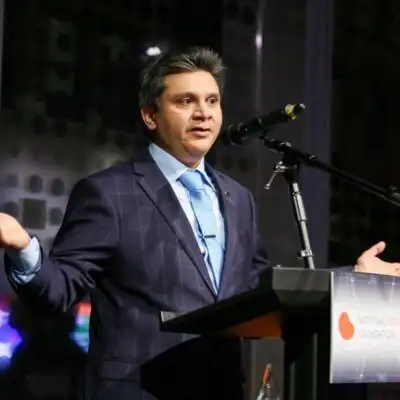

A bite-size podcast brought to you by the International Society of Glomerular Disease. Nephrologists and glomerular disease experts Dr. Kenar Jhaveri (Northwell Health/Hofstra University) and Dr. Koyal Jain (UNC Chapel Hill) take a lighthearted look at the latest research, discuss clinical practice, and interview leaders in glomerular medicine — all in a short enough time to listen on your coffee break.
BRB 8 | Secondary FSGS
===
Barbara Gillespie: [00:00:00] Hi, everyone. This is Dr. Barbara Gillespie. I'm the chief medical and strategy officer at ISGD. We're thrilled to invite you to attend our inaugural clinical trial summit meeting that takes place on November 13th to the 15th in Galveston, Texas.[00:00:15]
If you've ever thought about glomerular disease trials at all, this is the meeting you've been waiting for. It's the first meeting completely dedicated to our passions, both glomerular health and the critical tools to ensure the success of glomerular disease clinical trials. [00:00:30] Still wondering what the best endpoints and trial designs should be for glomerular disease trials?
Are you tired of settling for enrolling only one GD patient per site? These are just some of the questions that we're gonna answer when we're all under one roof together. Please register at [00:00:45] is-gd.org. Your voice matters
Laurel Damashek: Welcome to GN in Ten, a bite sized podcast brought to you by the International Society of Glomerular Disease. Our hosts are [00:01:00] nephrologists and glomerular disease experts Dr. Kenar Jhaveri of Northwell Health and Hofstra University on Long Island, New York, and Dr. Koyal Jain from the University of North Carolina Chapel Hill.
Kenar Jhaveri: All right, [00:01:15] welcome everybody to GN in Ten with Koyal and myself. We are here to talk about the next BRB, be right back. No
Koyal Jain: Board Review Bonus
Kenar Jhaveri: review bonus. Okay. This continues our Board Review Bonus series! We have already done IgA [00:01:30] nephropathy so far, minimal change, lupus nephritis, ANCA vasculitis, renal amyloidosis, Alport syndrome, and membranous.
I said that without a breath. We'll be doing a very common entity that a lot of us GN experts [00:01:45] see, and this is FSGS We'll be doing secondary FSGS today, and primary FSGS is coming soon
so Koyal, let me throw a case at you. This 34-year-old female comes to your office. She has, pretty [00:02:00] normal vital signs, maybe 130 systolic blood pressure. BMI is maybe 34. Creatinine is completely normal, maybe five grams of protein. Albumin is normal. And you do a kidney biopsy after all the serologies come back negative, and you [00:02:15] find what the pathologist reads as FSGS.
And then you look and the immunofixation is completely negative. They do say there's some glomerular megaly and they do talk about the EM showing [00:02:30] maybe foot process effacement 30 to 40%.
Koyal Jain: So let me start off by saying why we're talking about secondary FSGS, and this sounds like secondary FSGS to me. And I think it's really important that unless you can identify [00:02:45] secondary FSGS, it is very hard to then recognize primary FSGS, right? You really wanna know what's secondary, because the immunosuppressive treatments don't really work for most of these patients, and so figuring out that class is really important.
So the [00:03:00] way I approach these patients, especially this patient that you've just mentioned to me, that although she may have nephrotic range proteinuria, she did not present with nephrotic syndrome. It seemed like this has been going on an indolent course. Creatinine's normal at this point in time.[00:03:15]
And then most importantly, on NephPath, the kidney biopsy, that she's got this FSGS perihilar variant, first of all, right? Let's start with light microscopy. perihilar variant with some glomerulomegaly. Or did you say glomerulomegaly and no [00:03:30] perihilar variant?
Kenar Jhaveri: No, I didn't even talk about the variant.
Koyal Jain: Okay, perfect
Kenar Jhaveri: The glomerulomegaly is definitely there
Koyal Jain: Glomerulomegaly, I'm already thinking that this is a stressed glomerulus.
This is a glomerulus where there's a mismatch between the number of nephrons and the body mass and what needs to be [00:03:45] filtered, and there's some sort of like glomerular hypertension, glomerular hyperfiltration sort of injury that's happening, and I'm already thinking that's secondary in my mind at this point in time, or something adaptive in my mind.
And then immunofixation often times [00:04:00] is negative for your FSGS patients. And now you tell me the electron microscopy shows that there's not a diffuse foot process effacement, which for by definition would be greater than 80% foot process effacement. So this is much less than that. I, by all means, I'm thinking this is not [00:04:15] primary.
This is not happening due to an autoimmune process where I need to give them, immunosuppressive medications. And this is a change from where everything that you and I talk about, that we're now going to be focusing on non-immunosuppressive management and diagnosis of these patients. So I would [00:04:30] say this is secondary and not necessarily primary, or something adaptive in nature.
Kenar Jhaveri: I think you also brought up a interesting point about the different variants, the histologic variants of Columbia classification, and it really does not help you differentiate primary versus secondary, [00:04:45] right, or genetics. There are these, classic four variants, the perihyalar variant, the tip variant, the FSGS non-otherwise specified, and the collapsing variant.
But those don't help you decide if it's primary versus secondary. Am I correct on that?
Koyal Jain: No, I [00:05:00] completely agree with you. I think of these things as adding value in addition, but not necessarily diagnostic. think of it, so the not otherwise specified is the most common. That's the one that we all see. But every time I see collapsing, my brain is saying, "Hey, [00:05:15] is there a drug that's causing this?
Is there an infection that's causing this? " And whenever I hear perihilar, I'm saying what's the BMI?" is there some maladaptive changes? So I'm thinking more secondary. It doesn't mean that it can't happen otherwise, but those are some [00:05:30] buzzwords that sort of go around in my brain at that time.
Not diagnostic could be helpful, but not always differentiating, especially the genetic. Some people include genetic variants under secondary. They divide FSGS as primary and secondary, and some people say it's primary, secondary, [00:05:45] and genetic.
And they say APOL1 is simply completely different. So how do you define FSGS? How do you break it down?
Kenar Jhaveri: To me the pathology is very important. So if the patient is presenting with a nephrotic syndrome it's very [00:06:00] possible this is primary or genetic because you can still have nephrotic syndrome in genetics. But if the patient's presenting with just nephrotic range proteinuria and no hyperalbuminemia , they don't have edema, usually that's secondary in nature.
But you do have to still look at the [00:06:15] biopsy, and you could still have that with genetics. So genetics can fit in both of those pictures. But you really have to look at the EM. The EM like you said, over eighty percent foot process basement is usually primary, but then genetics can fall in that as well.
So genetic can [00:06:30] actually goes in both categories in my opinion
Koyal Jain: Exactly. And so I think that's why some people say primary, secondary, and genetic as a separate one, because genetic can present with both what the features are for primary that we typically think of primary, and then the features of [00:06:45] secondary.
Kenar Jhaveri: The one part I wanna emphasize, though, sometimes a pathologist will write FSGS, and you really have to make sure you distinguish FSGS from just the focal global glomerular sclerosis that any kidney disease can happen. So everything [00:07:00] eventually, hypertension, diabetic, membranous, everything will lead to focal glomerular sclerosis, which can also be called FSGS, and that's just like end-stage kidney.
And that's not an FSGS disease. That's just end organ happenings of the [00:07:15] kidney disease. So I think it's important that people look at that and differentiate those two. Usually you have more IFTA with that. You won't have these EM findings of diffuse foot process effacement.
So that is very important because you don't wanna give these patients [00:07:30] immunosuppression
Koyal Jain: And just I, and this is going to sound a little bit basic, but I just wanna clarify for our listeners, when we say focal, you're really talking about less than 50% of the glomeruli, of all the glomeruli that are biopsied, and diffuse is greater than [00:07:45] 50%. And then when we talk about segmental versus global, we're talking about a segment of the glomerulus versus the entire glomerulus.
Global would be the entire glomerulus. And so completely agree with you, and this is why I think, having a [00:08:00] diagnosis of FSGS which is not primary and should not be treated as primary is really important to identify these patients because then you know how not to cause damage.
No harm first
Kenar Jhaveri: So you have a patient that has this, [00:08:15] maladaptive response, right? You have the glomerular hypertrophy, hyperfiltration and that can happen from reduced kidney mass. It could be from, donation. It could be from drugs and toxins like bumetanide, infections like COVID, HIV.
How do [00:08:30] we differentiate what is actually ... Can the kidney biopsy help you figure out the cause of the secondary FSGS?
Koyal Jain: I typically find myself not being able to always figure out the cause of FSGS from a [00:08:45] kidney biopsy. I think FSGS is one case where unless it's telling me, the amount of foot process effacement and helping me differentiate between primary and potentially secondary FSGS I don't find it as helpful in figuring out what the cause of secondary FSGS [00:09:00] is. But I will say, again, going back to the variants, not diagnostic, but if I hear collapsing, I'm making an extra effort to make sure that there's not an infection, right? Not just COVID, HIV. Is there some other viral infection? If I'm seeing [00:09:15] some interferon type signal, like tubular reticular inclusion bodies, then I'm thinking about is there some viral infection, something
going on.
And then I will also say one other thing that the biopsy helps me is the TIP variant, because I know TIP variants responds very well to steroids. So while it may not be [00:09:30] helping me, I do think that it still helps me in some ways. And I'll be very honest, I do end up reading the entire biopsy.
So I don't only look at the diagnosis. I will read the biopsy myself, and that gives me an idea for treatment.
Kenar Jhaveri: you said something very important, the TIP [00:09:45] variant FSGS on the biopsy, usually to me, they'll end up having a lot of foot process effacement. So they behave more like minimal change and a immune-mediated FSGS. So but the FSGS NOS, FSGS perihiler collapsing can have a most [00:10:00] likely a secondary cause.
Koyal Jain: Absolutely. I think tip variant is the one where you're like, "Okay, this is tip variant. Let's go ahead and treat them with immunosuppressant right off the bat."
Kenar Jhaveri: I usually have this concept map that I always show fellows with FSGS being the [00:10:15] center of everything, and it can be caused by... We talked about the familial, which is the mutations of podocyte genes and various different genes. That's one. You have the adaptive, which is a big category.
So it could be from reduced renal mass, from low birth weight, [00:10:30] reflux, renal allograft, aging, any advanced renal diseases, the end pathway, reduced nephrons. Then there is the normal renal mass, which can be people who are obese, bodybuilding. We all have had patients with that, and glomerulomegaly. [00:10:45] The hypertension, you know how many times we think hypertension is not a big player?
I think a lot of the end organ endothelial injury can eventually lead to FSGS and atheroembolism. Then the viruses you mentioned is another big category, HIV, HTLV, [00:11:00] CMV, Parvo, COVID. All of them have the collapsing variant most of the time because of high interferon presence.
And then you have the hypoxia induced. It's a big category, like renal artery stenosis, sickle cell, cyanotic heart [00:11:15] disease can lead to low, oxygen state causing FSGS. And finally, the drug induced is a big category. Interferons, pamidronate, lithium, calcineurins, steroids, heroin. And a lot of the drug induced and viral, to [00:11:30] me, sometimes can present as a primary.
So they will have full-blown nephrotic syndrome, but you can still link it to pamidronate or a chemo or something, or a virus. So it's confusing sometimes clinically, but if you find, in my opinion, a [00:11:45] cause that triggers it, treat the cause
Koyal Jain: And then I just wanna highlight something that you've said for all our trainees who might be taking the boards, is everything that Dr. Jhaveri went through in terms of the causes for FSGS, and especially the linkage with the collapsing variant, those are [00:12:00] all board review questions. People love to ask that question.
They just give you a case, and they'll give you a collapsing variant, and then, you have to figure out what's the cause. So all of those are really buzzwords, essentially, for collapsing variant. Now, if you were to think about pathogenesis for [00:12:15] secondary FSGS, and especially these maladaptive FSGSs, really think about-- And I tell my fellows this, is I'm thinking of this as a mismatch again between the nephron mass, whether this was reduced nephron mass to begin with, or this [00:12:30] was normal nephron mass and the body mass is more.
And so there's a mismatch between nephron mass and body mass such that the glomeruli are hyperfiltering, they're hypertrophy, just trying to catch up and ma-match up with the body's demands, such that with that increased [00:12:45] intraglomerular pressure, they will actually lose podocytes. There's pressure under the podocytes, and you lose, and you have these dropouts of podocytes in the urinary space such that you have fewer podocytes.
Again, there's a mismatch of podocytes. So the rest of the podocytes that are left will then have their [00:13:00] cytoskeleton getting damaged as a result, and that causes the flattening of the foot process. So the effacement that we talk about in terms of foot process is basically flattening of foot processes that we are seeing on electron microscopy.
And once that happens, and losing the [00:13:15] slit diaphragms, and you're damaging your podocytes and losing the podocytes, you start now spilling over everything into the urine. So you've Kenar, started talking about how to treat these patients. And so before we [00:13:30] go in there, let's talk about nephrotic syndrome, what do I expect there to be a problem with, and what am I treating?
So how do you really approach the treatment for these patients?
Kenar Jhaveri: I think it's just to decrease the hyperfiltration in most of these cases. So it's, the best is your [00:13:45] classic ACEs and ARBs if they're tolerated. In some patients they don't tolerate it. Based on some of the SGLT2 inhibitor trials, you can use in the non-diabetic CKD proteinuria, most of these are FSGS secondary, [00:14:00] you can give SGLT2 inhibitors.
In the right patient, I think the GLP-1 receptor agonists are, also very good drugs because the weight loss I've seen and the anti-inflammatory effects of that can decrease the [00:14:15] proteinuria. Again, that is not FDA approved yet except for diabetics with proteinuria, but eventually I think that's coming down the road.
And then most recently, I have been using Sparsentan, which is a combined, endothelin receptor antagonist with an ARB. So [00:14:30] that has been approved for FSGS, and it does decrease the proteinuria. Again, all these drugs are decreasing the workload of the kidney.
Koyal Jain: Just for our listeners so the Sparsentan that you were talking about, there was a Duplex trial, where they did [00:14:45] see I believe at the 108-week mark, they did see decrease in the protein with patients who were treated with Sparsentan as opposed to a placebo.
But the difference that they did not see was in eGFR slopes. It is still approved, so you can use it, and you might see [00:15:00] improvement in your proteinuria. We just haven't seen the eGFR improvement. But I do think that it's important, that any way you can reduce proteinuria, that you might be helping your patient.
So what we've named so far are RAAS inhibitors, SGLT2 inhibitors, GLP-1As, [00:15:15] and then endothelin antagonist
Kenar Jhaveri: This is your basically your CKD bucket. I would also add MRAs to it based on the recent trial that was presented at the ERA on the glomerular disease arm of finerenone. And actually, a fair amount of those [00:15:30] patients were both FSGS and IgA. And I think it makes sense.
You control the blood pressure, again acting on the same RAAS mechanism, you will get some proteinuria reduction. So it is your cardiac patient with the five pillars with FSGS secondary. You have to [00:15:45] treat with all, eventually most of these patients, all five if you really wanna decrease the proteinuria and improve the GFR.
But we'll see. Time will tell on that. Right now, the only approved medications are Sparsentan, and we use ACE and ARBs and SGLT2 [00:16:00] inhibitors.
Koyal Jain: So basically our GDMT version of FSGS. So for our listeners, one thing that we didn't really talk about and get into is APOL1, because we've actually done a separate whole podcast on APOL1, so we decided not to focus there. But there are [00:16:15] drugs in the pipeline and in clinical trials like baricitinib and then inaxaplin.
And so there are drugs that are being used for APOL1 channels to ensure that they can reduce proteinuria, and there's been some benefit that's been seen with these drugs, so they're in the [00:16:30] pipeline. I will say that, and correct me if you feel differently, Kenar, I feel like APOL1 is not necessarily causative as much as it's a risk variant.
So you could see a primary FSGS and an APOL1 patient, and in that case, I [00:16:45] would still treat them like primary. And in the secondary FSGS patient with APOL1, I would treat them like secondary. I just know that this is a risk variant, but I would use these drugs once they're available and, commercially available for everybody to use outside of clinical trials.
Although we still have [00:17:00] the inaxaplin trial here, so we can use that
Kenar Jhaveri: No, I think that's the wrap up for secondary FSGS. We'll be having sessions on primary FSGS soon
Koyal Jain: Thank you so much everybody for listening, and please let us know if you have any [00:17:15] requests on certain topics which are glomerular in nature. And this is Kennar and Koyal signing off from BRB and GN in Ten. Thank you
Laurel Damashek: This has been GN in 10 from the International Society of Glomerular Disease. You can listen and subscribe [00:17:30] wherever podcasts are found and tweet at us at ISGDtweets. Thank you for joining us.
Koyal Jain: Dr. Jhaveri. I don't know why I keep saying Dr. Jhaveri. Whenever I'm going to say your name, I pause because I'm like, "Do I call him Kennar? Do I call him Dr. [00:17:45] Jhaveri?" And I pause.
Kenar Jhaveri: my God
Koyal Jain: I've known you for years, and I can't decide.