Subscribe
Share
Share
Embed
Barry Malone talks to the international journalists covering the stories we rarely hear about. Strictly non-Western news.
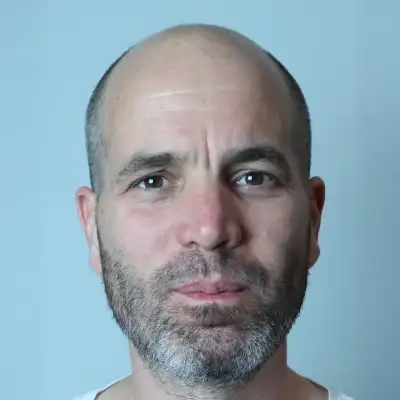
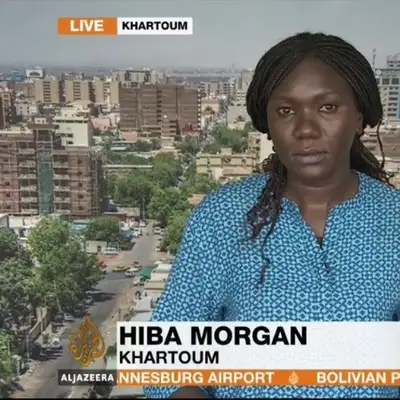
Hello. I'm Barry Malone, and welcome to the first episode of the Proximities podcast. If you're here, you probably already subscribed to our newsletter in which every weekday, we highlight three non Western news stories you should know. If you're not subscribed, you can do so at proximities.news. I could not be happier to say that the inaugural guest on the podcast is the Al Jazeera English correspondent in Sudan, Hiba Morgan.
Barry Malone:Hiba spoke to me from Sudan's capital Khartoum, where she has spent the last three years covering a civil war in her own country. She began by giving some really useful background on the war, what started it, what's maintaining it, and where it might be going. And then later in the conversation, we had some quite moving exchanges about Hiba's experiences covering the war as a Sudanese person, all while much of the world remains indifferent. I spoke to Hiba just before the war hit its three year mark, which has now passed. I hope you find the conversation useful.
Barry Malone:Hiba, welcome.
Hiba Morgan:Thank you.
Barry Malone:Hiba, I'm just gonna start by asking you, for for people who might not know, can you give us a brief explainer of the conflict? How did it start? Who are the two main sides involved? Why are they at war?
Hiba Morgan:So the conflict started in April 2023 between the Sudanese Army and the paramilitary rapid support forces. Up until April 2023, the Sudanese Army and the RSF as it's known, they were allies. They were partners in the government together with a civilian component that formed a transitional government in 2019. Then in 2021, both the RSF and the Sudanese Army pushed the civilian components out of the transitional government, and effectively, it was a military government that was in charge of running the day to day affairs of the country. Now fast forward to December 2022, the political parties in Sudan together with the RSF and the Sudanese army had talks on how to restore Sudan's transition to democracy once again because that was derailed when the army and the RSF organized the coup in 2021.
Hiba Morgan:So part of those talks included trying to integrate the RSF into the Sudanese army. Now the RSF is a very powerful paramilitary. They have their forces. They have their heavy weapons. They have their own bases all around the country.
Hiba Morgan:And its leader, Mohammed Hamdan Zigalow or Hemaeti as he's known, was the vice president of the sovereignty council, which was effectively the presidency. He did not want to integrate his forces easily. He believed that he had rights to keep his forces, that not all of them should be integrated into the army. And the army, on the other hand, wanted to make sure that the RSF integrated into it so that there's one single national unified army. And, basically, they wanted to do away with the RSF in the shortest period of time possible.
Hiba Morgan:And the RSF said if that was going to happen, it should take at least a minimum of ten years. The army wanted that to happen in less than two years. So that obviously created tension between two sides that were heavily armed with bases around the country. Now in April, on the April 15 specifically, those tensions reached new heights. Talks to try to mediate between the two sides completely collapsed and people in Khartoum, the capital, woke up on the April 15 to the sounds of gunfire, to fighter jets flying overhead, and to fighters from the RSF roaming the streets in various parts of the capital.
Hiba Morgan:And we knew that those tensions between the Sudanese army and the RSF has reached a point where bullets were now being exchanged. Artillery were now being exchanged. And that's how the conflict started because the RSF did not want to integrate into the army immediately, and the army had a different and wanted the RSF to integrate into it within the shortest time frame possible. So that led us to where we are right now. It's been three years now, nearly three years, going on to its fourth year.
Hiba Morgan:Both the RSF and the Sudanese army are still at war with each other, And the result of that is the world's worst humanitarian crisis, resulting in half the population, more than half actually in desperate need of assistance and more than 9,000,000 people displaced because of the conflict.
Barry Malone:Hiba, do the sites have sort of regional power bases in the country?
Hiba Morgan:Well, yes. So you have the RSF that is now in control of the entirety of the Western region of Darfur with the exception of very small areas along the border with Chad, very tiny areas in the region of Darfur. And they control a lot of areas in the Kurdistan region that's in the South and Southwest of the country. Now the army has control of the capital. They were able to regain control of it from the RSF last year.
Hiba Morgan:They have control of the Northern East and Eastern and parts of the Southern Southeastern parts of the country. So both sides have their areas of control, I would say, and it's split the country into this, you know, north sorry, east and west kind of divide and north and south kind of divide with the South and, west under RSF mostly, and then you've got the North, center, and the East under the Sudanese army.
Barry Malone:I've seen some analysts say that there's a chance that the country could break apart. Is that is that realistic?
Hiba Morgan:When we're looking at it politically, it's already happened. The RSF and its allies, they have a government of their own even if it's not internationally recognized. They have a government they formed in Nyana in South Darfur. They have appointed officials. They have their own police force.
Hiba Morgan:You know? So it's in a way, they have kind of split the country by having their alternative government, their alternative educational system, controlling their borders between Chad and Sudan, between CAR and Sudan, parts of South Sudan and Sudan. So to a large degree, that split or that division has already happened. It may not be recognized, And the fear from international bodies like the UN is that, you know, this division and the split would become official because there is precedent to that. You know, South Sudan, what is the world's youngest country, was at war with the central government in Sudan for twenty one years before they signed a deal, and that eventually led to the creation of South Sudan.
Hiba Morgan:So there are fears that now that the RSF has its own alternative government and doesn't recognize this government and doesn't want to deal with it and are trying to get humanitarian actors and the international community to recognize their government, that they've laid the foundation for a split eventually that even if a peace deal comes, you already have officials, you already have a territory under your control, and all that will be left is some kind of process like a referendum such as what happened in South Sudan for that split to become official.
Barry Malone:If if there was a split, how would that impact the people of Sudan?
Hiba Morgan:Well, here's the thing. When the South seceded, it affected both sides economically, first of all, because South Sudan succeeded with 75% of the oil fields. This is in terms of economy. Politically, it created a lot of tension because then they had to demarcate the borders and identify which part of the border is under whose control and who controls what resources historically
Barry Malone:Mhmm.
Hiba Morgan:And based on the new country's formation. So the same thing would likely happen when it to the separation of Darfur and and, you know, areas of Khutifan should that happen. But more than that is that, you know, this is a country historically that's that was the largest in Africa. There has been a lot of intermingling. There are people from Darfur and from Khrutifan who don't know anything about those areas and have been living in the East or in the central parts of the country such as the capital Khartoum.
Hiba Morgan:And there are people from Khartoum and from the East and from the North who have stayed in Darfur who married into people from Darfur. So, basically, there's some there are ties there. They're like blood ties. But what's likely to happen when we're talking at it from a human perspective is the same thing that happened, you know, with South Sudan is when you split when the if if a split happens, there would be people who don't know where to go. Are they going to identify as, you know, Darfurians and and, you know, from the western parts of what would be a new Sudan?
Hiba Morgan:Would they be part of the old Sudan? You know, you've got fighters, soldiers who have been who are in the army and they're from the West. Where do they go? Because if they do go back to the West after a separation, their integration would be quite hard. They may not be accepted.
Hiba Morgan:And you have fighters from the North and people from the North, leaders from the North who are in the RSF and its current government. Where do they go when they come back if there is a split? So it's not just in terms of economy because the Western region, Darfur, is very rich in agricultural lands and in gold mines. Most of Sudan's gold is actually in the Western Darfur region, and there are oil fields in the Kurdistan region, especially in West Kurdistan, which is under the control of the RSF. In fact, Sudan's largest oil fields, Hidlij, is actually in West Kurdistan, and that is now under RSF control.
Hiba Morgan:So economically, there will be an impact for the the rest of Sudan effectively if there is a split. But then there's also the human aspects of it, the human consequences. If a split happens where people would be divided, they would be torn apart. You know, you're talking about Darfur. Yes.
Hiba Morgan:It joined Sagan around, you know, 1916. It was previously its own kingdom. But for more than a century, they've been parts of Sudan. It's people of intermingled, and that is going to have a very, very grave consequence even bigger than the political and the economic consequence.
Barry Malone:I just wanna circle back to what you said about the involvement of other countries in the region. I know one big thing that's being reported is that The United Arab Emirates has been key in supporting the rapid support forces group. Could you touch on how significant The UAE support for the RSF is? And and then also, you know you know, go into a little bit more detail about these other players who are involved.
Hiba Morgan:Well, it is quite significant because, it's what's empowering the RSF. The fact that they're able to have supply routes of their own, fighters, of their own ammunition, of their own weapons, that has led the RSF to continue fighting the Sudanese army. It's not small in size either. The United Arab Emirates is alleged, and there are reports verified reports that they have set up bases in Chad and in Ethiopia, training camps, hospitals to help with the injured fighters, that they have dozens and dozens of flights weekly or monthly, I would say, to bring in ammunition and the cargo flights, no less. So they're definitely not bringing in passengers.
Hiba Morgan:And it's not like at a time of war and conflict, you would find people traveling from The UAE into Darfur or into the border bordering state cities in Chad. So there are allegations and they've been video reports and and UN verified reports that, you know, dozens and dozens of cargo planes monthly have been coming in since the start of the war to the rapid support forces. And that has helped it sustain and take control of many parts of the, of of the country, especially the Western region. Now the RSF was able to, first of all, take control of west, of of Nyana in South Darfur. That was their first state that they were able to fully control.
Hiba Morgan:And then they went on to take the rest of Darfur because, historically, that's where the RSF originates from, from the Darfur region and from parts of Kutufan. So they were able to gather fighters from their bases and they were able to fight the army bases there after besieging it for, months and months at times and, you know, the latest being Al Fasher, the capital of North Darfur. And all of that, the reason why they were able to sustain stages to army bases and to human population in these cities in Darfur is because they were able to continue getting support from The United Arab Emirates in the form of ammunition, in the form of mercenaries such as, you know, Colombian hired mercenaries with the help coming in through The UAE and Somaliland into, into Darfur, ammunition as well, as well as The UAE support for the Libyan warlord Khalifa Hefzer that opened also a supply route for the RSF through the Libyan Desert that brings it into Darfur. All of that has played a very big role in sustaining the rapid support forces. Now that's not to say the Sudanese army is not getting any support.
Hiba Morgan:They have their allies. They have countries that have been supporting it even before the war. That's that includes Egypt, obviously, which has been a historical partner of the Sudanese army and continue to support throughout the war. But I would say covering the conflict and looking at the support given to both sides, I would say The UAE support to the RSF has def definitely been much bigger, much greater, to the point that they were able to gain control of territories in Darfur and West Kutufan because of that assistance that every day or or I would say every now and then, you know, it seems like there's a new route that keeps opening of supplies just so that the RSF continues fighting.
Barry Malone:You know, when I've written about Sudan in Proximities and I've mentioned The UAE support for the RSF, I always get asked by the readers, why does The UAE why is The UAE investing so much in this conflict? Can you help me to explain that?
Hiba Morgan:Well, The UAE and The RSF's relations go way back. You know, you have to look at it. It didn't start in April twenty twenty three or in the months and years leading to this war. No. It started during the Yemeni conflict actually when The UAE was part of the Arab coalition that was fighting in Yemen.
Hiba Morgan:What they did was they contacted the Sudanese government that they needed fighters, and the Sudanese government offered the RSF fighters. But at that time, it was Omar al Bashir, who's quite known an autocrat who was leading Sudan, who was in in charge. And he made it very clear that the RSF had to have a specific number of fighters, no more. Some of them were in Khartoum. Some of them were in Darfur because they were fighting rebel groups and in the Kurdistan region.
Hiba Morgan:But many of them were sent to Yemen to fight alongside The UAE's consorted coalition there. And that's how the relations between the, RSF and The UAE was created. So the head of the RSF, Mohammed Hamdan Develo or Hema Di, he traveled frequently to The UAE. He gave them fighters. In return of that, they gave the Sudanese government and the RSF fighters money.
Hiba Morgan:So what ended up happening was that, you know, these fighters were also being trained. They were given weaponry. They were armed. Some of them were allowed to come back into Sudan with their weapons and obviously their training and their skills that they kept. That's how their relationships, were their relation was established.
Hiba Morgan:But the reason why The UAE is so invested in Sudan and is trying and is backing the RSF is because they want control of the gold mines. Now The UAE doesn't have any gold mine, but it's the world's largest gold producer. And where does that come from? It usually comes from countries of conflict like Sudan. Sudan is the third or fourth largest gold producer in Africa.
Hiba Morgan:And like I said, most of the gold mines are in the Darfur region now effectively under the control of the RSF, is allied to The United Arab Emirates. So The UAE has a lot a lot of financial benefits in terms of providing support to the RSF. There's also the issue of agricultural lands. Now even before the war, The UAE had lands that it had granted for years and years, for decades actually in Sudan. And they want to maintain those the control of that.
Hiba Morgan:They don't want a government that would come and end those contracts. That's how they sustain their their agriculture and their food in The UAE and their exports. They have, agricultural farms, you know, like dairy farms here in in Sudan that is leased out to them and that all the produce and the dairy coming from it goes directly to The UAE. Then there's the issue of the ports. Now if you take a look at The UAE, over the past decade or so or or more, they've been trying to gain control of all the ports and the Red Sea around the Red Sea specifically.
Hiba Morgan:So they've been teaming up and allying with and and and providing support to countries which are around the Red Sea, but they've also been trying to give or giving support actually to countries that want access to the Red Sea and would not be able to do it without support from The UAE such as Ethiopia. And when it comes to Sudan, Port Sudan is right along the Red Sea and that's a strategic port that The UAE wants control of. And so by backing the RSF, they ensure that they continue getting their flow of gold, that they keep the agricultural lands and potentially get more, and they want control of the ports as well. So all of that is quite enough incentive. Not to mention the Nile, of course, and what they can do and the resources and the benefits that they can get from that.
Hiba Morgan:So all of that is financial incentive enough for The UAE to say, yes. We will try as much as we can to make sure that our people, the RSF in this case, are in charge.
Barry Malone:Yeah. A lot of incentives. Incentive incentives enough though to perhaps be involved in war crimes because I wanna move on to the impact on the civilian population, which, as you said at the beginning, is absolutely huge. Both sides have been accused of committing war crimes. Right?
Barry Malone:And I remember when the RSF took control of El Fasher a couple of months ago, there was lots of reporting that they had carried out acts of genocide when they took control of that city. Can you talk to us a bit about those you know, the allegations of war crimes and and, you know, the impact of those on the population?
Hiba Morgan:Well, we've seen the reports. We've seen how when the RSF took control of the capital, first of all, or large parts of the capital, They targeted civilians. They pushed them out of their homes and took over residential areas and facilities such as water plants and power plants. And that's enough to get people to leave their homes. When you don't have access to power and water and you're told to leave your home or you're living around fighters, the sense of insecurity is enough to get people to leave and a lot of people left.
Hiba Morgan:Khartoum's population was around 8,000,000. Now I would say more than half of that fled in the first few days of the conflict when where they were able to. Then the conflict expanded. You had the Darfur region, is very heavily populated. You have the, obviously, the Khutifan region and then the northern parts of the country.
Hiba Morgan:So as the conflict was expanding from the capital Khartoum into Jazira state, in in the central part of the country and in Darfur at the same time and into Sinar, people were just leaving their homes and mosques because they could not stay. It was for it was too dangerous. You know, they were afraid of being hit by artillery, of being targeted by air strikes. Now because most of the fighting happened in urban populated areas in in in in cities and in towns, people lost their lives. The army would try to target RSF territory.
Hiba Morgan:As a result, there would be residential buildings hit. People lost their lives. There would be hospitals hit. There would be schools hit. And so people couldn't stay, you know.
Hiba Morgan:They they didn't want to stay where the RSF were because they were afraid that then the army would come in and target them, using airstrikes to target the RSF, but then there would be collateral damage for lack of better words. Or they could stay where the RSF is even if it's not the airstrike, the RSF would presume that they're allied to the army and then they would be killed. And then there was the fear of sexual violence because the RSF has been accused of committing most of the sexual violence in this conflict. So all of those together prompted people to leave. Now Sudan was already facing a displacement crisis even before the war.
Hiba Morgan:3,000,000 people were displaced from the previous war of Darfur in 2003 up until 2015, 16, people were living in camps. There were about 3,000,000. Add on top of that, about nine to 10,000,000 people being displaced because of the conflict. Now you have the world's largest displacement prices. Farmers have been displaced.
Hiba Morgan:People were not able to farm. Airports have been struck, know. Routes to deliver aid assistance have been cut off and violence were happening everywhere so aid could not be delivered. So what happened was we saw the human population civilian population getting increasingly in need of humanitarian assistance, but delivering it was hard and trying to sustain yourself of growing your own food was hard because farmers kept getting displaced and displaced. Now because of the idea that if you stay in a place, you are allied to that side, The RSF had this idea that if you stay in Al Fasher, in North Darfur, then you're allied to the government.
Hiba Morgan:So for eighteen months, from May 2024 up until October 2025, they laid siege on the city of Al Fasher, is the capital of North Darfur. And people tried to leave because there was hunger, food was not coming in, medical assistance was not coming in, humanitarian assistance was not coming in, and there was daily bombardment and shelling. And so people were getting injured. People were not able access markets. And all of that was affecting the population creating, as the UN said, the circumstances and weakening the people to the point that when the RSF finally launched an attack on the city of Al Fasher in in October, late October, people were not able to resist.
Hiba Morgan:And so according to the UN and reports of people who were able to leave, more than 6,000 people we're looking at 6,000. You know, we're talking about 600 or 60. 6,000 people at least were killed in the first three days. So think about it. First seventy two hours, at least 6,000 people were killed.
Hiba Morgan:You can imagine the scale of what happened after that because since then, the RSF has been in control. People have been detained. There are people who are reported missing, who are presumed to have died along the road trying to reach safety because they've been injured or because they've been starved for so long. And all of that is there were crimes when you're cutting population of food and aid, that's a work crime. If you're targeting civilians, that's a work crime.
Hiba Morgan:It was so severe that pools of blood can be seen on satellite imageries. That's how bad it was. And again, targeting civilians, it's a work crime. Hospitals have been targeted. Sick people in hospitals have been killed because they've been presumed to be fighters.
Hiba Morgan:Women and children have been killed. So it it has been really, really tough for the civilian population, especially in the Darfur region.
Barry Malone:There's that's crazy. I mean, if if 6,000 people were killed in three days, I think I've seen figures from the UN that say that, you know, officially, they've recorded 40,000 people killed, but then aid workers and experts say that's, you know, a massive undercount. Is it is it just difficult to get an accurate count as to how many people have been killed in the war?
Hiba Morgan:It is because, here's the thing. Most of these areas where fighting happens, the first thing that happens is that there's a communications blackout. So you don't hear from people. It's very hard to get in touch with sources. It's very hard to get in touch with people you know, with friends, with family, with relatives.
Hiba Morgan:A lot of people don't know whether their loved ones are alive or dead. I'm talking about Darfur right now. There are people who just find their relatives in displacement camps, you know, coincidentally, and it's a very it it's it's a bittersweet thing, but it's still not the way to know that your relative or loved one is alive. The figures when it comes to this conflict is that it's anywhere between a 150,000 to 200,000. But think about it this way, in Ginena, when the RSF took over, it's presumed that at least 15,000 people were killed and buried in mass graves, you know.
Hiba Morgan:A lot of people fled. That's the at at least 15,000. And then you have a fair share where it's estimated that the population was around a quarter of a million. Only about 50 to 60,000 were actually accounted for when the RSF took over were able to get to safety. So others were detained by the RSF.
Hiba Morgan:Some have died, like I said, on the way, and some have been killed. The thing is, for people who can't verify that their loved ones are alive, they're presumed to be dead because they don't think, that they would be able to survive under the RSF. Either they're detained or because of their ethnicity because that has played a big role, they've been killed. And so the figure of Al Fasher being, you know, 40,000 killed, that's why it's assumed to be or believed to be an undercount. I believe it's an undercount because, again, looking at the population, a quarter of a million, and that's about sixty sixty thousand have been, you know, recorded or reportedly reached safety, and the others are unaccounted for.
Hiba Morgan:40,000 is very, very low.
Barry Malone:I mean, I I was saying I've seen 40,000 reported in the media as for the entire country, which, you know, obviously is an insane undercount if yeah. That's that's what I meant, not even in Al Fasher, but in the entirety of Sudan.
Hiba Morgan:No. I mean, in the capital Khatoum, it's 30,000 graves, random graves, not even proper graves. There are people who got proper burials. There are people who were able to be taken out of the country, out of the state, and buried in the East or in the North. So you're talking about 30,000 random graves on the streets, in playgrounds, in schools, and in hospitals.
Hiba Morgan:So if you're talking 40,000 in the entire country, that is a very, very massive undercount. It's nowhere near close to what's to the actual death toll. The London School of Hygiene and Tropical Diseases said that they were more than sixty thousand in the first fourteen months. More than 60,000. And I'm not sure if they actually counted the graves because what they they made it very clear.
Hiba Morgan:They were going by the the reports that they were able to confirm, you know, looking at Facebook posts, looking at, you know, confirmation from relatives and and obits. That's how they were able to reach the number sixty thousand in the first fourteen months. There are people who died without anybody remembering them, you know. And so, yeah, that forty thousand figure throughout the country and the since the start of the conflict is just very, low. It's nowhere near the actual figure, unfortunately.
Barry Malone:Mhmm. And for those who survived, there's a massive humanitarian crisis. You know, you were talking at at the beginning of some of the numbers. The numbers are crazy. I think I read that there's more than 11,000,000 people who've been forced from their homes.
Barry Malone:There are, twenty million people who are, acutely short of hunger according to the World Health Organization. Is there any way those people are getting the support that they need or can get the support that they need?
Hiba Morgan:The thing is they can get the support they need if we were living in a different world. We're living in a world where it's just so many crisis happening at the same time, you know, and this the response has to happen at the same time. They can't put one ahead of the other because the needs are huge. Not to sound like a UN person here, but I'm just looking at what's happening around the world. And the thing is there's fatigue when it comes to Sudan.
Hiba Morgan:Sudan's conflict may be three years old going on to its fourth year. But then before that, there was the Darfur Conflict. And before that, there was the Southern Sudan Sudan conflict. So one way or another, it's always been embroiled in some kind of conflict. And for countries that usually support the UN with humanitarian assistance and funds, It's kind of become a very tiring thing.
Hiba Morgan:You know? It's like, oh, Sudan again. You know? What are they up to this time? And, oh, it's Sudan.
Hiba Morgan:They need more assistance. And when are they ever gonna learn? And when are they gonna ever stop? There is fatigue. I've spoken to, like, aid workers and aid organizations and and directors at aid organizations, and they say that there is fatigue in trying to get donors to care about Sudan because it's just been going on for so long.
Hiba Morgan:And when they say so long, they mean beyond the three years that this conflict has been happening. Then you have the fact that, you know, as Sudan's conflict just keeps going on and on from one region to another, there are other crisis happening in the world. There was Ukraine. There is Yemen. There is Syria.
Hiba Morgan:There's Afghanistan. All of that is happening, you know, and then Sudan just again once again in the headline, you know, or barely in the headline, but it's there and again it needs assistance. So people are not able to get the sufficient amount of assistance they need. And then there's the issue of access. Now even if the aid organizations are able to get the materials and the relief supplies that they need, trying to get them to the people is super hard.
Barry Malone:You know, you said they're barely in the headlines, which leads me to a question that I really, really wanted to ask you, which is why do you think that this conflict gets so little coverage in the Western media? I think that for me, I I remember maybe two spikes. In the beginning, when the conflict broke out, we had loads of coverage in the western media because there were westerners trapped in Sudan, and there was this story about them getting out and them fleeing and how are the British gonna get out and how are the Americans gonna get out. And, you know, when I looked around at the western media, they were running live blogs, you know, about the escape from Sudan, and then everything went really quiet. And then there was maybe another little spike around El Fashir.
Barry Malone:But other than that, I feel like it's just been so quiet and so little coverage. And, you know, for me, honestly, it's the most egregiously underreported conflict, you know, in the in in the last few years. Why do you think that is?
Hiba Morgan:I mean, to be blunt, racism could play a part. It's for a lot of organizations, it's another African country at war with itself. You know? It's not like it's even being invaded or another country attacking. It's another African country fighting with itself.
Hiba Morgan:So it gets you know, it it it's in the news every now and then, but not sufficient because they're like, oh, it's another civil war. Not to mention the fact that, like I said, it's not Sudan's first conflict within itself. You know, it's not like the first time Sudan is fighting its internal enemy. So when you look at it that way, then you can understand why it's not getting enough coverage. There's also the issue of access for journalists and funding.
Hiba Morgan:For a lot of news organizations, it just doesn't merit. It's too far away, you know. Sudan, well, it's not affecting us in The US, is it? We're not seeing displaced people crossing into the Mediterranean, you know. They're not they're not crossing to the Mediterranean and trying to get to Europe.
Hiba Morgan:That's not happening. Not like Syria where people were fleeing and then, you know, it was like, they crossed the Mediterranean and they're trying to get into, like, Europe and it it created this massive refugee crisis. That's not happening with Sudan. What's happening is that Sudanese, when they flee, they tend to go to neighboring countries, you know, and they stay within the region. And the fact that it's not reaching European shores and, you know, American shores is one of the reasons why it's not getting enough headlines.
Hiba Morgan:If I would say the 9,000,000 people displaced or the 11,000,000 people displaced throughout this conflict and the ones before, if they all crossed the ocean and made their ways to The US and to The to Europe, trust me, you would see Sudan on the news every single day nonstop.
Barry Malone:Can I ask you, as a Sudanese journalist who reports on this day in, day out, I mean, how does it feel to be a Sudanese journalist reporting on a war in your own country?
Hiba Morgan:It's heartbreaking. I mean, I remember the first days of the conflict when you meet people and you talk to them because in Khartoum especially, it's quite new. Khartoum is a country that hasn't seen fighting for over a century. There are no bomb shelters. In fact, Khartoum was the city that people came to escaping conflict in Southern Sudan and which became South Sudan, escaping conflict from the Darfur region, from the Kurdistan region.
Hiba Morgan:People came to Khartoum. So Khartoum was this safe haven. Now when the conflict happened, you know, a lot of them did not know where to go. So during the first few days, you meet people and you can see that they're all choked up, you know. They didn't know how to speak.
Hiba Morgan:And the first thing you do when you ask them, like, how are you? People just break down and start crying, you know, and you start breaking down and crying with them because you you understand, you know, that every single drop of tear is something you can relate to even if they're not words. You understand what they're trying to say, what they're going through. My family was displaced, you know, when the war happened. I had to while I was working, I had to figure out how to evacuate them.
Hiba Morgan:And I think I'm, you know, from the lucky ones where I was able to, like, get them on a bus, take them out of the state, and then eventually out of the country. But, again, I'm one of the lucky ones. There are people who didn't have that luxury where, you know, you give they didn't have that time to to get into a bus. You know, they just fled with what they were wearing and on their feet, you know, and just ran to wherever they think is safe. And even that sometimes, it's not safe.
Hiba Morgan:They get killed on the road. Girls get abducted and sexually assaulted. It was chaotic. You know? So seeing all of that, hearing from friends that, you know, I was trapped in this place for three days or four days or for a week, I didn't have any food and I didn't have any water, it has been nerve wracking, first of all.
Hiba Morgan:It's been heartbreaking. And there were times where, you know, you just absolutely break down and cry for no reason whatsoever. But eventually, you know, there's there comes a point where you have to put your emotions aside and then deal with it later and just get on with the work to report because then we realized like you said, initially, was all the westerners were there. It was getting covered. But once the westerners left, you know, we realized the coverage was reducing and and it's barely making news.
Hiba Morgan:So it was our job to make sure that it stayed, whether it's through our reporting, through our posts on social media, just to remind people that the conflict is still ongoing. And we try to well, I try to make sure that my psychological impact of this conflict was put on the side. The emotional aspect was all put on the side until the end of the day, and then continue working. And then at the end of the day, you know, you just sit back and when you take this breath, there are days where you feel absolutely numb. You know, you can't cry.
Hiba Morgan:You can't there's nothing you can do. You just your brain goes numb. And then there are days where all of a sudden, you know, it just it's like a wall that is broken and then you find yourself breaking down.
Barry Malone:What did you say?
Hiba Morgan:So the first three weeks, we were trapped in the bureau. We couldn't leave. The bureau is in a hotel and so because No. No.
Barry Malone:Why why did you stay?
Hiba Morgan:Why did I stay? Somebody had to. I stayed, first of all, because a, I was trapped in the bureau and the fighters were just all over and the airstrikes the bureau is not far from the Presidential Palace. And I'm not kidding you because you can actually see the Presidential Palace. It was about 300 meters away.
Hiba Morgan:And so all the airstrikes, the ground would actually shake with it. And you could hear all the artillery and then you couldn't sleep. And then we realized, you know, I realized that you have a mission. You have to report what's happening. And then I would hear relatives saying, you know, that that they don't have power, that the fighters are surrounding their homes, that some of them have been asked to leave.
Hiba Morgan:So when you hear that, you know, you want to get their story out, you want to try to report as much as possible to get people to relate to what's happening, to understand how bad it is, to try to get some kind of empathy and some kind of support, whatever kind of support you can get, especially during the first months and years of a conflict where people were trying to set up GoFundMe so that they can escape, so that they can try to get their families to safety. And I felt reporting on the conflicts, especially from a humanitarian aspect, that people were losing all their life savings, that they lost lost their homes and clothes and properties and memories, and they really have nowhere to go. I thought by reporting, you get people to relate and you can keep the story alive. And as it's as time went on and and as I saw what's happening, I realized it's getting less and less headlines. And if I abandon it now, you know, if we're making about if we give Sudan, maybe I would say, percent of the coverage, that 2% dies.
Hiba Morgan:The very little coverage that Sudan gets now dies. I'm not saying that there wouldn't be another reporter, but not one, you know, for the time being that would stick around, especially if they're not part of this conflict. Because as a Sudanese, I am part of this conflict. It does affect me. But then if you have somebody who's not from the country who's coming to report, it doesn't affect them as much.
Hiba Morgan:So it became you know, you have to stay. You you want to ensure that the story is being reported. You want to make sure that people understand. You want to make sure that people's stories are told, that they're not forgotten. Even if nobody watches the stories and the reports that we put out, the fact that we gave the people the sense that they're being heard and listened to and seen, I think that's quite enough.
Barry Malone:What are the prospects for peace?
Hiba Morgan:Zero. And for the time being, it's just both of them are just worlds apart, you know. The RSF wants to maintain control of the areas that they have. They want to maintain their government, and the army wants to ensure that the RSF completely withdraws from all these areas they're under their under their in control of. They want the RSF to disarm and, you know, regrouping camps and then completely disintegrate.
Hiba Morgan:So that's obviously not going to happen by will because, hey, before the the whole reason this conflict started is because the RSF does not want to integrate with the inside the army. So after being in control of places like our foreign parts of Fortifyne, they're definitely not going to integrate just happily right now. So it's going to take a fight to for that to happen. And because they're just worlds apart, you know, it's going to be very hard to try to get them to reach some middle ground. The chances of this happening is, like, the if the army or the Sudanese government on one side, which backs the army and is backed by the army, agrees to a scenario just like South Sudan, where you have a semi autonomous government in the western parts of the country that would eventually, again, take us back to what we started with, which is a split in the country, making that possibility, obviously, more and more likely.
Hiba Morgan:If they're open to that kind of deal, then, yeah, there's a potential there is potentially a scope that, you know, that there could be a deal. But the thing is, the government doesn't want Sudan divided. They don't want to lose the Sudan they have now. They felt like losing South Sudan was enough. They don't want another secession.
Hiba Morgan:And the RSF is very adamant. They don't want to give up control of the territory. So with what we have right now, it's just so hard to see both sides agreeing to a deal. Then there's the issue of what if we do reach a deal, you know. What comes next?
Hiba Morgan:Both sides have different visions. The RSF wants its politicians. The army wants its politicians. You know, it's just so hard to see them on the same page. And the thing is when you have the RSF on one side and the army on the other, it's the people in the middle, you know, even if they're invisible to both sides or to those mediating.
Hiba Morgan:You know, when you look at the table, I just want you to imagine the RSF on one side, the army on the other, Then that space between the table, I want you to imagine the Sudanese population because they're the ones who are going to be affected. But then when these talks happen, they're not being taken into account and that is the sad part. However, if a deal is reached, whatever shape or form it is in, it may provide some kind of respite because, again, this conflict is now in its third year and you're seeing, like, nine million displays, thirty five million in need of aid, twenty million facing acute hunger. This is just three years. I just want you to imagine what would happen if this goes on for a few more years.
Hiba Morgan:I
Barry Malone:have one final question. What is the one thing that you would want people to take away about this story about the war in Sudan?
Hiba Morgan:That those affected are human beings. They're not statistics. You know, I have been giving numbers in terms of figures of how many people are displaced, how many people are facing food insecurity, but those are not just numbers. Those are people who, once upon a time, had their lives, they had their homes, they had their sources of income, they had their families, and they were happy. And in seconds and in minutes, everything was taken from them or most of their precious belongings and livelihood have been taken from them.
Hiba Morgan:And I think that's one thing I want people to take away from this is that it's not just numbers and it's not just another Sudanese conflict or African conflict. It's a it's a conflict that has a humanitarian or a human aspect to it, and that's how people should look into it that these are human beings, that these are people who have lost what they have. And in some cases, they don't even know where to go or how to rebuild. And if we can't give them support, moral support, if we can't give them, you know, financial support, if we can't give them anything at all, the least we can do is listen. The least we can do is read the reports about them.
Hiba Morgan:The least we can do I don't think that's too much for them. I don't think that's it's not gonna take much of people's times really to just see and know what's going on, and maybe maybe eventually there is a role that someone somewhere can play. Even if helping just one single person, that is enough. So I think it's not too much for people here asking attention. I don't think that attention is too much.
Hiba Morgan:I think they deserve it. I think they deserve more.
Barry Malone:Hiba, thanks very much for joining me today. Can I ask where can people find your work?
Hiba Morgan:Well, I am with Alge Zero. So if they go to alge0.com, they'll be able to find our work there, also on YouTube. And I'm also on Twitter as Morgan, on x actually as Hiba Morgan. So, yeah, they'll find us there.
Barry Malone:Alright. Thank you very much, Hiba.
Hiba Morgan:Thank you.
Barry Malone:If you stayed with us until the end of that conversation, thank you very much. Just a reminder that you can subscribe to the newsletter at proximities.news. Today's episode was produced by David Tarbox. We'll be back next week with another one, and I really hope you can join us.