Subscribe
Share
Share
Embed
This is Impactful Breakthroughs, the podcast where we highlight top leaders driving breakthroughs in clinical research and life sciences.
Each episode features candid and inspiring conversations with the people who have dedicated their lives to shaping the future of healthcare. You'll hear stories from the physicians who've run hundreds of clinical trials, biotech founders chasing the next cure, surgeons pioneering new techniques, and patient advocates who turned their own diagnoses into a mission to help others.
Hosted by Zach Gobst, who has spent his career working alongside clinical trial teams and patient communities, be sure to subscribe on Apple Podcasts, Spotify, or wherever else you listen.
It's a great story. We had a pharmaceutical company that wanted to investigate a drug in pulmonary fibrosis, a disease that is not curable, that currently there are only two FDA approved drugs for the treatment of pulmonary fibrosis, and neither of those drugs stop the disease. They slow down the progression of the disease, but they don't stop the disease. So this particular pharmaceutical company had come up with a drug that they felt could potentially arrest the progression of the disease and they had not done a lot of phase three clinical trials in the past. They chose to partner with Leapcure for this particular trial and we're very hopeful that the trial could have a one to two year recruitment period to reach the maximum number of participants in the trial.
Dr. Milstone:We have a very large pulmonary clinic at our facility with six providers and I initially went in and thought, well, this will be easy. I'll be able to recruit directly from the clinic, but I also had competing trials for the same patient population, patients with pulmonary fibrosis. And within the first thirty, sixty days, we realized that recruiting for the trial was going to be competitive and, you know, some of our patients had already committed to other trials and we needed assistance. That's when Leapcure came on board and Leapcure offered initially a radius around our site to help recruit subjects for the study. And then quickly we realized that we offered something that a lot of sites didn't.
Dr. Milstone:We offered a lot of hands on, we had a very well trained staff, we had a nurse who was expressly interested in pulmonary fibrosis and I began to think that it would be very unique to open up the trial not just to our Middle Tennessee radius but to expand to the Southern states, our surrounding states. And LEED Cure started to look for subjects that were interested in a trial in Kentucky and in Arkansas and in the Carolinas and in Florida and Georgia, the states that surround us or are near to us. And these patients were very interested in becoming subjects as long as they could get travel cover. And the pharmaceutical company quickly realized that they could reach their enrollment goals by offering travel support, lodging support, care provider support, and the pharmaceutical company quickly realized that with Leapcure's help that our recruitment standards could really be enhanced by offering the trial to surrounding states. That was so successful that the final phase was LabCorp said, well, look, if you can get patients from these surrounding states, why not fly patients in from even further away that are interested in coming to your site?
Dr. Milstone:And then the next thing I know, were getting patients from Michigan and we were getting patients from Oklahoma and Southern Florida. And in the end, for that particular trial, our site, became the lead site in The United States.
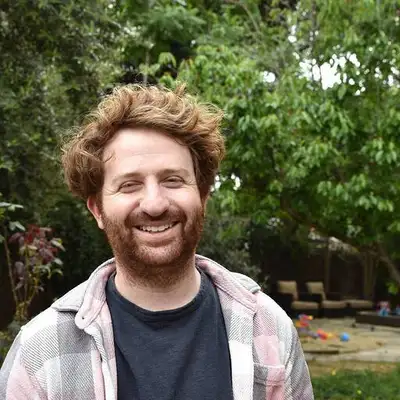
Leapcure:Today on Leap Together, we're joined by a physician whose career spans some of the most complex and critical areas of medicine. Doctor. Aaron Milstone is board certified in pulmonary disease, internal medicine, sleep medicine, and critical care, bringing deep expertise to every stage of patient care. Join us as we discuss doctor Milstone's own experience with clinical research trials over the course of his career.
Zach:Doctor Milstone, welcome to the show.
Dr. Milstone:Thank you.
Zach:Yeah. I thought I'd start by learning a little bit more about, how you got into clinical research in the first place. Like where where did that start for you?
Dr. Milstone:Yeah. So my interest in research began a long time ago, probably twelve, fifteen years ago. I was at Vanderbilt University Medical Center in Nashville. And at that time, I was actually directing a lung transplant program. In those days, lung transplant was still very novel and relatively new.
Dr. Milstone:And so there was a big need for clinical research. And so there was a big effort in those days to do clinical trials among transplant populations. And so initially, some of that focus was the government. So some of it was r o ones from the from the National Institutes of Health. Some of it was pharmaceutical research, sponsored by pharmaceutical companies.
Dr. Milstone:But that's really where my interest in research began is when I was at Vanderbilt. I had done both some clinical research with patient subjects, and then I'd also done some bench research as well. And even before I came to Vanderbilt, I had done quite a bit of bench research, we call it, and really had worked in a lab for a number of years even before that. So I've had a long standing interest in research and then as the years have passed, I've moved further away from bench you know, sort of chemistry research into much more clinical research looking at human subjects.
Zach:Yeah. Yeah. Cool to hear. One of the things about kind of clinical trials and research that, you know, maybe you didn't expect once you got into it. You know, I think people go into this space, you know, you know, thinking and I guess you had the bench, you know, experience prior.
Zach:So I I think you had some understanding. But, yeah, what are the things that that maybe surprised you or were different than what you expected, you know, jumping into clinical trials and research?
Dr. Milstone:I think one of the biggest surprises is the difference between how each patient looks at becoming a subject in a clinical trial. You know, when I first started I thought I had this these rose colored glasses that well everybody would want to do research. You know, why would you not want to do research? And I quickly learned that there were many obstacles. Some of it was time obstacles where patients were concerned about the time commitment if they became a subject in a research study.
Dr. Milstone:Some of it was transportation issues where certain patients, older patients, might not have adequate transportation to get to the research center. And then thirdly, there was definitely a layer of adversity where some patients would give the argument, well I don't want to be a guinea pig, or I don't want to take a medicine that hasn't been tested or is not FDA approved. And so I quickly realized the daunting task of recruitment, and even to this day I still find recruitment to be one of the biggest obstacles in clinical research today.
Zach:Yeah. Agreed. That's well, on on my end, it's it's it's why we we do what we do. And, yeah, it's it's interesting that that that was kind of the insight that came. In terms of, like, you know, dealing with these patients, which is kind of a it's a different type of challenge, you know, like like you mentioned.
Zach:You know, what from, you know, the investigator side are are kind of the skills or the approaches that have worked best for you to kind of adapt to to meeting each patient's needs? Because like you said, you know, it's quite different where, you know, patients are all gonna kinda have a different starting point and a different understanding, different education level in the context of research that that kind of changes how you need to have that interaction. You know, interested in, you know, how how things have evolved for you.
Dr. Milstone:Yeah. I think, you know, things were really sailing along relatively fairly well until the pandemic. And and, you know, the pandemic brought out the worst for us in terms of research recruitment because all of a sudden, we you know, as health care providers, we started off great. You know, everybody loved us. You know, we were we were taking care of this virus and patients with this virus that had not been seen before, and we were putting ourselves on the front line and and really in an area where we had very little clinical knowledge of how the virus spread and who got the virus and and what was the best way to treat the virus.
Dr. Milstone:And so when the pandemic end, I realized that it had done major damage to recruitment, which was already difficult. And so after the pandemic, the adversity patients felt towards research was manifested tenfold. And and whether it was politics that did that or whether it was just fear that did that, I don't know. But but recruitment has been even harder post pandemic than it was pre pandemic with the same philosophy, well, don't wanna be a guinea pig. I I don't wanna take anything that the government is doing.
Dr. Milstone:I don't wanna I don't wanna participate in a drug trial where the drug hasn't been tested before. And so one of the ways I try to get over that with patients is I will sit with the patient for a while and go through a little of the history of research and make them realize that if they're taking five or 10 medications, prescription medications, that all of those drugs came to market through clinical research. Whether it's an acid blocker for acid reflux or whether it's a medication for blood pressure or medication to control cholesterol, all these medications are here today because somebody in the past committed to a trial, committed to research to take a drug that had not been well tested before. And so I really go about it in that way and that has helped recruitment significantly within my practice. I also use an altruistic approach as well and I try to convince the patient to become a subject by saying that this is a really good way of giving back.
Dr. Milstone:So for instance, if it's somebody with a rare disease like say pulmonary fibrosis or pulmonary hypertension, those non curable diseases, and so I really, from an altruistic standpoint, try to convince the patient that by participating in research that gets us even closer to not just medications to treat the illness, but potentially to a clinical cure. And so the final avenue that I take is that I express to the patient that if they become a subject in a trial, they are going to get the very best focus. They're going to be seeing a doctor or a provider very frequently, they're going to have blood work done sometimes on a monthly basis, They may have frequent breathing tests. They may have scans. And so it's not just the incentive of participating, but the potential to give back and the potential to really be under a microscope and have even better care as part of a clinical trial than you were getting just seeing me in the clinic as a physician.
Zach:Yeah. I I love that response. Well, there's there's parts about it that that are kind of fascinating, the role that you play with research. And there's is almost like institutional education gaps that you're helping kind of prepare yourself to to feel like you're the subject matter expert and domain expert from a from a medical perspective. You know, the lab side as well.
Zach:You kind of understand how to connect dots with, you know, sponsors and and how each treatment has come to market. But what I'd describe your responses is demonstrating is is actually help helping advocate for patients and, you know, meeting them where they are with whatever level of education that they have and helping them kind of get a full picture and, you know, of what clinical trials are, you know, what what their situation is and and kind of how how this kind of, you know, how how their decision kind of fits into the history of clinical research. And so kudos to you for doing that. You know, I I think a lot of investigators kind of get into this work, you know, thinking and and maybe it was more like this pre pandemic, maybe not that, you know, it's it's just a rational thing for for patients to, you know, choose a clinical trial if they meet all of the kind of criteria that they're faced with something, you know, this is a better option than, you know, what's available standard care perhaps. But
Dr. Milstone:I agree with I agree with that. Yes.
Zach:You know, I my company, we meet with a lot of investigators. We we work on mostly central campaigns recruiting. We've had a lot of success work working with you and your staff. And I think it comes comes down to kind of what you're describing in many ways, which is, you know, you're you're really there to kind of help prepare the patients to make the best decision for themselves. Well they're not gonna show up on your your doorstep that way.
Zach:And sometimes they have these other notions. So yeah, I just really loved what you said.
Dr. Milstone:And Zach, even, you know, today even more so than in the past, it is critical to consider participating in a clinical trial. There's a lot of pressure right now on the National Institutes of Health, on pharmaceutical companies Yep. On government funding for research. Yep. And so in the future, I anticipate there will be substantial decreases in funding for research.
Zach:Yep.
Dr. Milstone:And so now is the time to participate. Now is the time to really push forward patients to become subjects because, again, the future is unclear, the future is cloudy and you can imagine if there's a lot of government pay cut for research, that tends to carry over to the pharmaceutical industry and so we may be looking at significant pullback in terms of pharmaceutical sponsored drug trials. That there may be less drugs coming to market in the future, less money to go around for clinical research. So I think it's a very golden moment to consider becoming a participant in a subject in a trial.
Zach:Yeah. That's a fantastic point. And I think what your answer for illustrates is like, you know, education can be a bigger part of this puzzle. You know, educating patients
Dr. Milstone:Sure.
Zach:On on how they can make what what could be their best choice, which is to join a clinical trial and make that more accessible so that we don't kind of see these gaps in where, you know, global health can go versus what what's being invested in to kind of make sure that, you know, we're kind of driving the the level of investment that can help people that otherwise wouldn't get help. So, yeah, that's that's great. Also, you know, interested in, you know, you you run one of the finer research sites that that we've worked with. You know, when when we work with your staff, we find ways to send patients your way. Like, there there's, you know, sometimes, like, we're working with a research site and we stick to, like, I don't know, call it a a 10 mile radius around the site.
Zach:We'll just kind of try to find as many patients there, do as much hand holding as we can to help make sure that we're building trust with patients and sites. With you, I think we might have started there, but it it grew into, like, wherever we can find a patient, like, your staff is gonna do everything they can to kind of support. You know, I I we've heard a little bit about, you know, how much you care and what what what drives your patients, but getting an organization to buy into that, you know, curious about, you know, any reflections on how how that's come to be because it's it's quite special from from my experience.
Dr. Milstone:It's a great it's a great story. And and, you know, obviously, I'm not going to give the name of the pharmaceutical company, but we had a pharmaceutical company that wanted to investigate a drug in pulmonary fibrosis, a disease that is not curable, that currently there are only two FDA approved drugs for the treatment of pulmonary fibrosis and neither of those drugs stop the disease. They slow down the progression of disease, but they don't stop the disease. So this particular pharmaceutical company had come up with a drug that they felt could potentially arrest the progression of the disease and they not done a lot of phase three clinical trials in the past. They chose to partner with Leapcure for this particular trial and we're very hopeful that the trial could have a one to two year recruitment period to reach the maximum number of participants in the trial.
Dr. Milstone:We have a very large pulmonary clinic at our facility with six providers and I initially went in and thought, well this will be easy, I'll be able to recruit directly from the clinic, but I also had competing trials for the same patient population, patients with pulmonary fibrosis. And within the first thirty, sixty days we realized that recruiting for the trial was going to be competitive and some of our patients had already committed to other trials and we needed assistance. And that's when Leapcure came on board and Leapcure offered initially a radius around our site to help recruit subjects for the study and then quickly we realized that we offered something that a lot of sites didn't. We offered a lot of hands on, we had a very well trained staff, we had a nurse who was expressly interested in pulmonary fibrosis. And I began to think that it would be very unique to open up the trial not just to our Middle Tennessee radius, but to expand to the Southern states, our surrounding states.
Dr. Milstone:And Leapcure started to look for subjects that were interested in a trial in Kentucky and in Arkansas and in the Carolinas and in Florida and Georgia, the states that surround us or are near to us. And these patients were very interested in becoming subjects as long as they could get travel covered. And the pharmaceutical company quickly realized that they could reach their enrollment goals by offering travel support, lodging support, care provider support, and the pharmaceutical company quickly realized that with Leapcure's help that our recruitment standards could really be enhanced by offering the trial to surrounding states. And that was so successful that the final phase was LabCorp said, well, look, if you can get patients from these surrounding states, why not fly patients in from even further away that are interested in coming to your site? And then the next thing I know, were getting patients from Michigan and we were getting patients from Oklahoma and Southern Florida.
Dr. Milstone:And in the end, for that particular trial, our site became the lead site in The United States for enrollment. And and and clearly, Leapcure had an enormous hand in the success of that trial and the success for clinical trial center in Middle Tennessee, our site, to be number one in the country for enrollment.
Zach:Yeah. And I those those stories, I I'm just so grateful for for your kind of openness and partnership through that. Because it's not always simple. And and Yeah. What's going on at the site level, there's a lot of competing interests.
Zach:I I imagine another investigator listening to this is thinking like, there's no way I could take that on. And that's right for most sites. But but what you were able to embrace was an opportunity to to really, you know, work with underserved communities across the country with with your ability to handle that and speed up research that that wouldn't have been done on time if not for us being able to do that. And so Yeah. Really grateful.
Zach:Yeah. We we can always kinda help with these things. Well, we can usually help with these things. We'll let you know if we can't. But it it takes partners like you to kind of figure out how we find the win win and include the patients in that.
Zach:And, you know, it's it's some of the work we're most proud of when we're able to kind of be creative about providing support to to those who who otherwise wouldn't be able to get it.
Dr. Milstone:Oh, and I think your your listeners probably are aware of this, but, know, obviously, are different phases for a clinical trial. This particular company was very interested in seeing if the drug worked, and so this particular trial was what was called a phase two b. And then in December year, just six months ago, the company provided what are known as top line results, sort of the end result of the trial. The end result of the trial was that the drug was successful and now that particular company will take the drug and do what's called a phase three trial, which will be a much more robust trial in terms of enrollment. And again, I think we were so successful with Leapcure that I'm quite certain that the pharmaceutical company will again partner with us and partner with Leapcure as we enter a third phase for this particular product.
Dr. Milstone:And so again, this is very exciting for all of us that participated in the trial because not only were we successful in engagement and recruitment, but the drug itself turned out to be a success at least in this particular phase of analysis, and now we'll go on to a much bigger evaluation and and a much larger enrollment sometime at the end of this year or into the 2026.
Zach:Yeah. Yeah. Exactly. It the ability to kind of, you know, have cascading impacts that we're able to kind of take things from the to be, you know, to being able to build on the successful, you know, readout and and and be further a part of the story of trying to get, you know, what what what could be a great treatment to market, I think, yeah. It's it's what we're here to do when we're involved in in research.
Zach:And so to to play kind of that pivotal role is, yeah, really fulfilling to to do. And, you know, I think it has the ability to impact global health if if it if it comes together the way we want. So
Dr. Milstone:Well and, Zach, you know, think of it for the patients. You know? Some of these patients were on oxygen. Some of them were limited. They needed a care provider to come with them to participate in the clinical trial.
Dr. Milstone:So not only did we offer engagement, enrollment, success in the clinical trial, but we gave all of these individuals that participated something that is rare with pulmonary fibrosis and that is we gave them hope. And so hope in a disease that has no cure, in a disease that has the same mortality as most cancers, is really an incredible opportunity for us as a research site, for you as a recruitment site, and for the pharmaceutical company to to give these individuals hope when historically there has not been a lot of hope for patients diagnosed with idiopathic pulmonary fibrosis.
Zach:Yeah, I like you calling that out. Because there's something going on at a human level when you're dealing with these conditions.
Dr. Milstone:For sure. Yeah, and it was really, there's so many incredible stories behind it, just two that stick out in my mind. I had an architect from Michigan who could have gone to a site in Michigan to do this trial, but he said, was so impressed with the Leapcure recruiter and they talked up your site so much that I told the company that I wanna fly to Tennessee, and that's the site I want to go to.
Zach:Yeah.
Dr. Milstone:The the the second story, which is to me just as unique is I had a lady who found us on the Internet, was recruited. She was not somebody who liked to fly, and she drove for her study visits from Northern Florida, which is probably a ten hour one way. Again, those type of touch points are are rare in medicine and and even rarer in research.
Zach:Yeah. And a lot of that is, you know, the reason why we decided to take on a podcast. It's not that the world needs more podcasts. Right. It's it's that, like, when when this works, when, like, the impactful work of running clinical trials in a way that kind of thinks about advocating for patients in a deep way, the these kind of, like, transformational stories or these ability like, our ability to kind of help patients kind of make a progression and find support that they're comfortable with and give them a different outlook on their quality of life.
Zach:I think that's that's what ends up kind of being the real special sauce in in the work. Like, at first, I might have kind of explored clinical research because like, oh, I I have the ability to kind of like make this high level impact. But when you kind of roll up your sleeves and see like how to make it work, the fuel actually comes more from kind of those those types of patient stories. The ability to kind of help people find a better outlook on on their life and what they're able to take on and and doing it through advocacy and education. So
Dr. Milstone:Well, and and and I will also just add as an aside, Leapcure saved us an incredible amount of work on the front end. So not everybody is an ideal candidate for a clinical trial. There are what are known as criteria, inclusion exclusion criteria, things that you can have in your medical history to participate and things that are in your medical history that exclude you from participating such as an active cancer or uncontrolled high blood pressure. Leapcure saved us a tremendous amount of effort as well because not only did they recruit, but they screened candidates to become subjects. And by that I mean they were able to phone screen these individuals, interview these individuals, conduct their background evaluation, and make sure that they were suitable candidates for the trial.
Dr. Milstone:And we've worked with many third party recruiting companies and and many just don't have it. They don't have the ability to really sift through all the weeds and find the golden flower that can participate in the study. And and I think this is another part of our success with Leapcure is Leapcure found quality subject candidates and helped onboard those candidates into the trial. Not all third party recruiting companies are created equal, and for us, this made an incredible impact. It made our job much easier because Leapcure weeded out subjects or patients that were not going to be good subjects for the study or not or or couldn't get into the study because they had some exclusion criteria.
Zach:Thanks for sharing that. And, yeah, I love hearing when, you know, that that impact is felt. I think what we're doing is very similar to kind of where we we started with what what, you know, was going on with you at the site level where that sure. There's kind of you can figure out, you know, in your case, you've got, like, six centers that can find eligible patients. But but next comes this element of kind of meeting patients where they are and helping contextualize.
Zach:Because a lot of patients, while they're eligible and there's not, you know, a lot of great options available, There there needs to be some level of trust building, some level of education, some level of advocating. And in our seat, we can only do it to a certain degree. I I think at the site level coming coming from from you and your staff, I I think you play an important role of it. But I I think that what makes us kind of, like, stand out and more successful is is actually quite similar to what you described earlier. Yeah.
Zach:You know, as as we kind of move more and more into this world of AI, which moves very quickly to kind of help people make rational decisions. What I what I think is gonna be really important for research is not to kind of overlook, you know, what what's working well, you know, in in our situation here, which is help helping patients get the right context to make their decision. And and doing that in a way that starts with with trust and you you need to make sure that there's kind of quality measures in place that you're putting people in a position to, you know, the right people and in the right position to evaluate joining clinical trial. But, yeah, a lot of it really has to do with kind of, you know, working with each patient, their story, and and and then, you know, it it's it's we're we're fortunate we're work with sites like yours because there's there's so much more that we can kind of adapt to to make things work for patients. So
Dr. Milstone:Well well, and, Zach, I think, you know, you and I could have a podcast just on the nuances of recruitment. Yeah. You know, clinical research, you know, we've we've tried all the methodology. We've done direct to consumer marketing. We've done newspaper ads.
Dr. Milstone:We've taken out ads on radio. We even went through a six month period where we had billboards around Nashville advertising for clinical research trials. We went to We went to support group meetings, we've tried all of these methodologies, none of them, none of them are as successful as having a third party recruiter to help with that candidate pipeline as you increase your volume and and and the number of studies you're doing. And so I can tell you from personal success and failure that none of the other methodologies I've tried have been as successful as having a good third party recruiting partner like like Leapcure. We we just have not found the special sauce in these other modalities.
Zach:Thank you so much. Yeah. That's to hear it from you means a lot. So, yeah, I really appreciate the words.
Dr. Milstone:Absolutely.
Zach:Yeah, I think this this is a a great conversation, insight into kind of one of our favorite partnerships that that we've had in research, one that we're excited about continuing before
Dr. Milstone:we We advocate we advocate you with every new company that comes through. Every every company that has a new study or wants to do another trial, we encourage them to reach out to Leapcure to use Leapcure as a recruiting company. And again, each company has their own view on how to be successful with recruitment. I'm going to give you the opposite story real quick. I had another pharmaceutical company doing another trial in the same space, pulmonary fibrosis, and despite our best efforts, they simply refused to spend the money to do third party recruitment.
Dr. Milstone:They felt that their advertising campaign, which was basically leaflets to hand out to patients or subjects, would suffice. And and the difference between the two companies, one that used Leapcure for recruiting purposes and one that just used paper recruiting materials. The difference was the first pharmaceutical company that partnered with Leapcure was done in twelve months. Second company is still trying to complete enrollment two and a half years later.
Zach:Yep. Yeah.
Dr. Milstone:And I don't I don't think there's a better example than that.
Zach:Yeah.
Dr. Milstone:Third party recruiting, partnering with Leapcure shortens your time that you're gonna need to adequately recruit to that that final last patient in. If you recruit with a third party likely carrier, last patient in is going to occur a whole lot quicker than if you use some of the other modalities I mentioned earlier, like radio, TV, print. Those media are great, but they they tend not to be where patients are looking for clinical trials.
Zach:Yeah. Thanks for calling that out. And, yeah, we we've gone head to head with few tactics and seen that there's few things that kind of are as effective that that we've seen up close. But, yeah, I appreciate you kind of calling out the difference. And, yeah, we're looking to kind of, you know, continue to get better and grow into the difference and improve as much as we can.
Zach:So thanks. That's it. I don't know if you have any thoughts or questions or anything else to add.
Dr. Milstone:I I I think just to end, I think that from a physician clinician researcher standpoint, I think that again, just to reiterate that volunteering for a clinical trial helps future generations. It helps you, it helps your family, but it really helps future generations. Maybe your children, maybe your grandchildren. And and, you know, it it's it's interesting. In The United States, most clinical research trials fail because of lack of enrollment.
Dr. Milstone:And so with that statistic in mind, I just wanna end today by just reiterating how important recruitment is and enrollment is. And the messaging here today is very strong that partnering with a partner like Leapcure can really help decrease that seventy five percent failure statistic, that we've gotta get better in recruitment. We've gotta be able to meet clinical trial outcomes through enrollment, and Leapcure can help get you there.
Zach:Thanks, doctor Milstone. I think it's a great way to end it and grateful for all the work you do on your end to to propel your research with us. You know, it it takes both sides and so I love being able to have this conversation and yeah, would look forward to kind of maybe coming back and chatting again in a year and and kind of reflecting on what progress we can make.
Leapcure:Thank you for joining us on Leap Together. We hope you enjoyed this insightful conversation with doctor Aaron Milstone, an experienced investigator and physician who spent years on the front lines of pulmonary clinical research and patient care. If today's episode sparked your curiosity or inspired you, be sure to follow Leap Together for more conversations with leaders driving progress in medicine and patient care. Thanks for listening. And until next time, stay informed, stay engaged, and keep pushing for better health outcomes for all.