Subscribe
Share
Share
Embed
The World Cement podcast: a podcast series for professionals in the cement industry.
Hello everyone and welcome back to the World Cement Podcast. The cement industry continues to make strides towards reaching net zero with new projects including fully operational carbon capture facilities springing up around the world. World. But are we going far enough, fast enough? Thankfully, today I'm joined by Tom Agio, Chief Executive of the Global Cement and Concrete Association, or GCCA, to answer those questions and talk about the contents of their recently released Net Zero Action and Progress
Advert:and machine learning offerings by providing a new process optimization solution CEM AI Process Optimizer. Combining the power of AI and machine learning with cement specific expertise, CEM AI Process Optimizer enables a step change in production volumes, energy efficiency, and consistent quality output. Predict Predictive maintenance and real time optimization are now in your hands. Find out more at semai.com.
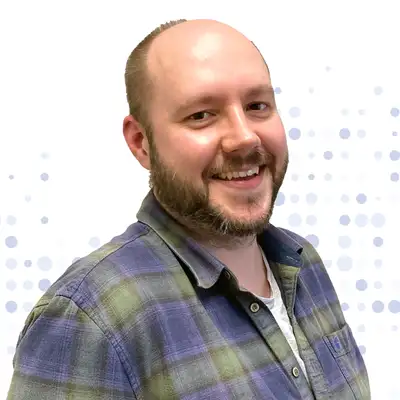
David Bizley:Thomas, thank you for joining me. Delighted to have you with us on the World Cement podcast. I know our audience will be keen to hear more about your report.
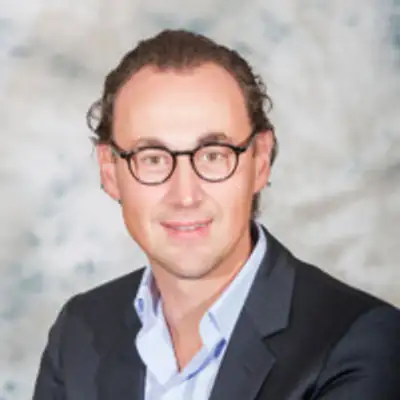
Thomas Guillot:Thank you, David. It's a pleasure to be with you for the World Cement podcast. Thank you for having me here.
David Bizley:K. Excellent. So before we get into some of the questions about the content of the report, and there's a lot to cover, could you briefly just go over the purpose behind it? What's the aim of the report?
Thomas Guillot:In 2021, the Global Cement Corporate Association has published a little bit before the COP26. Glasgow, we have published this roadmap. That was the first of a kind, right? Probably even across industry. We were the first industry to actually set out the ways or the options for how to get to net zero at sectorial level.
Thomas Guillot:Right? We presented this roadmap with seven levels. It's a full value chain roadmap. I think by now most of the people that probably listen to this podcast would know about it. You can refer to our website.
Thomas Guillot:But anyway, I think it's important to actually come back and to say, how are we doing this roadmap and to understand what progress we are making. Okay. We have to understand that on the number side, can only publish numbers that are a little bit older from 2023 versus 1990. So that's the progress we are giving and the 25% reduction of carbon intensity in cement. But it's important to give a reference and to show how we are moving forward, how can we actually do better, where do we have things that could be done better?
Thomas Guillot:All across the report, are actually giving good examples. So it's very, very tangible. It's action driven. It's really about making sure that the industry is having impact wherever it's possible. But as I said at the same time to say, okay, let's acknowledge the challenge.
Thomas Guillot:Let's see what can be done better from the buyer side, the different ways to accelerate further working on the NW environment, working on the policy environment, etcetera. So I think it's important that we are moving this way and that we are showing progress made, but yes, I think also reflection on how good are this progress and how can we get better and faster.
David Bizley:Okay, excellent. Now, speaking of progress made, the headline figure that came with the report was that the global cement industry had achieved a 25% reduction in CO2 intensity since 1990, over a span of thirty or so years. In broad terms, is that where we need to be right now? And with most net zero targets slated for 2050, are we currently on track to remove that remaining 75% over the next twenty five years?
Thomas Guillot:Well, that's a very good question, right? So first of all, let's reflect on what we are doing and how we are going ahead. So 25%, this is 2023 versus 1990, as I said. And in fact, yes, it illustrates the progress that is being made on that level. Now, what we are trying to do is basically to implement a sectorial transition that the sector is doing.
Thomas Guillot:That's what all the people involved in that endeavor are doing, a sectoral transition. And for that, we have following a model that was actually set forward by the United Nations of industrial development organization and they call that the chain reaction. So how do we want to achieve that? So what is progress about? First progress is we are in an industry that has a long term planning cycle.
Thomas Guillot:Suddenly we need to have a vision, a strategy. So these are the roadmaps. So we have a global roadmap and we are trying to implement the roadmaps locally. So we are partnering with actually what we call national and regional segment partner to say, okay, how do you take on appropriate from the roadmap in terms of lever and how these levers can be implemented and translated into the reality of your country? So having your own map everywhere, this is the first challenge that we have saying, how do we make sure that at country level, industry is a local industry at country level, they are also taking the lift and they are moving forward with the implementation of this transformation.
Thomas Guillot:And there we have made tremendous progress. We have about 60% of the world capacity covered by a roadmap currently. If you include the 50% that China represents knowing that we are in position with China to get this exercise done as well. But that's really the first thing of important thing. How do you really get the people to start moving collectively on this endeavor?
Thomas Guillot:The second part is really moving on the enabling environment. That's how it is described in this concept. Enabling environment is fundamentally the regulation, the regulatory context. How do we enable, how do we change the regulations so that your actions are facilitated on the field? These are very simple things like secularity, for example.
Thomas Guillot:One of the important levels of our roadmap is the secularity with the fuel, the waste to energy discussions. If you don't have a legislation on waste, if you don't have a legislation on circularity, whether it's for organic waste or for mineral waste, there is very little chance to have a positive business, a positive circular business, very profitable circular business. So it's the same thing when you talk about carbon capture, carbon capture, carbon management. Do we have legislation? Do we have systems in place?
Thomas Guillot:It's the same thing with green procurement. Do we have a low carbon rating? Do we have a definition for low carbon rating at the first place? Do we have a definition in the country that is no coherent of what is a low carbon cement? What is a low carbon concrete?
Thomas Guillot:And does the country take this system to actually segregate and purchase on mega procurement philosophy following the quantity of embedded carbon or the quantity of carbon that is not today, this is most of the country. This is not the case. Right? So the key issue on that is really to work with the countries and to say, okay, how do we facilitate, accelerate and move forward with these individual laws, these individual things that will help our industry to actually move forward? We are in an isolation from that sense.
Thomas Guillot:That's a variable. The last part of the equation is basically the financing. How do we, as I said earlier, have profitable transition. We always say we are committed. We are committed to make it move, but we also say that this transition needs to be profitable.
Thomas Guillot:If the is not profitable and investing into a single lever is not profitable. And we will talk later on whether it is actually profitable or not to invest in all the levers. You will have only one person that will invest in that. He will go bankrupt and then he's finished. Nobody else will invest.
Thomas Guillot:So there is no, and I think this is understood by the community globally. But the question is how do you set the context so that you can actually progress from the regulation and from getting the finance. On there, there is a lot of work done on the financing to work on the catalytic finance and to make sure that these billions of euros that are promised from north to south are actually reaching the actions, the projects that we have in mind and that are actually bringing impact across the board and in the specific geographies. I have a few example of that. We made this project sponsored by the government of Canada that has helped the industry, the cement industry in Thailand to work on these different levels.
Thomas Guillot:So there was $10,000,000 that was given to the industry there with the government of Thailand to actually work on all these chain reaction discussions, the roadmap, this was already available, but appropriating it with other people understanding what type of circular model you could develop around the waste, understanding the potential for calcined clays and for clinker factor reduction in the country, understanding what could be done in terms of carbon capture, carbon management, etcetera. So this is a big project and these are the type of things that catalyze the transformation on the jet. So I think to your answer, yes, we still have a lot of things to be done. Are we done enough? Are we not enough?
Thomas Guillot:I mean, I can imagine, everybody will have an opinion on that. Suddenly people will say, well, it's certainly not too bad. And some people will say, it's certainly not enough. So it's the story of the graph half full, half empty. Hopefully we say it's half full.
Thomas Guillot:Fundamentally what is important is all the fundamental work that has been done in order to advance and to progress. So the discussion started in countries around the world, 60% of the capacity covered by a roadmap currently on many more being upcoming on working in Latin America. Great progress with our colleagues from Filsame. We are colleagues from the national industry there. In Africa, we have a great partnership with a local polytechnique, Federal de Lausanne and also ClimateWorks as a philanthropy that finance us to do roadmap in Africa, in countries where the GCC members are not too present, but where we also want to have a discussion on how we progress.
Thomas Guillot:We have close to 10 countries that had either done for a roadmap or on the way for a roadmap where all these elements of discussion are actually brought forward where we discuss green legislation, etcetera, etcetera. In Asia, you might have seen very recently the AFCM, Asia Federation of Cement Manufacturers, they have also a roadmap and they are also putting the framework. So these are great projects and great initiatives. I'm not sure how much we're going to talk later on about legislation. How do we leverage the multilateral government organization systems like IDDI, like the breakthrough cement, and how do we use this platform to the benefit of the country, making sure that the local countries have a safe space and feel safe on that they feel comfortable with the proposition that we are making.
Thomas Guillot:Very often in the regions, people may think, these are industrial, these are not necessarily their only interest by money, etcetera. Is what they propose to me correct, fair and honest. And I think it's good to have this multilateral platform because they give us the possibility to discuss that. And you have question country to country peer at peer level, and you can actually translate on give examples, say, look, we did that on yes, it works. On yes, it was positive.
Thomas Guillot:So typically there are discussion at governmental level between Thailand and Canada. What was good? What did you do to foster this type of development? What did you do to empower secularity, etcetera? And these are also part of the mission.
Thomas Guillot:And that's also, I think one of the success of our industry is to have built such constructive and trustful dialogue at a global level, but also at local level to empower this type of discussion to again, foster the development of this legislation so that things are transformed and can be actually developed on managed.
David Bizley:Okay, excellent. We're going to touch more on the policy side of things a little bit later on, but we're going to cover a bit of the technology side of things first, before moving into that. So the report provides an update on the main decarbonization technology levers, things like alternative fuels, linker substitution, energy efficiency, and so on. In your opinion then, which of the various levers available to producers currently deliver the most immediate and effective impact when it comes to decarbonizing operations? What are the low hanging fruit as it were?
Thomas Guillot:I think these are the obvious ones. The the two one that comes to top of mind is really the clinker factor reduction in general, but this is really blended cement in general. And the second one is probably the circularity on the impact of circularity in general, the possibility to reuse waste, decarbonate raw material, this type of solutions. If I had the third one, it's all the discussion on the industrialization of ready mix. Right.
Thomas Guillot:So there is really a big potential in terms of development, even short term. I was myself a ready mix operator, right? Managing a ready mix business. The first thing that any business leader comes in ready mix, it's mix optimization. So you have to look at your mixes and say, okay, how do I know optimize the system so that I actually reduce?
Thomas Guillot:And you do it just from a cost point of view, course, but de facto, you also do it with a spirit of reducing the CO2 content of the formulation. These are the three things. So I think in terms of clinker reduction, if we take a little bit on drill down of them, I think we have some interesting development all over. Could we do more? Maybe.
Thomas Guillot:What we see is that most of the majors in most of the market, in fact, there was really a leadership in bringing forward the low carbon formulations. They all have come with their brand, low carbon brands, which reflect initiative to actually really push the type of market. So make low carbon material fancy and main market. So I think this has been really developed. You see also the development of technologies or solutions on SCNs.
Thomas Guillot:The one that is the most popular probably today is the calcium clay cement, the LC3. Projects, development projects everywhere. We are tracking the development of these in our tracker, which we share with LEADIT, which is also taken by the ITA, industrial transition accelerator. They are all using our numbers that we developed with Lead IT, with LeadDit. Of course, Reclaimed FlyAsh project are also multiplying.
Thomas Guillot:We could actually put the tracker on that. Probably the slag, I think today, most of the slag is in the market. I am not aware of slag that is not already into the market or that is not actually regulated properly to be used in the cement sector. So these are things that have to multiply and are actually bringing the fruit on the benefits. Also in most market today, there are discussions extending the standard or using the European or the American standards to make sure that we are moving forward with these things.
Thomas Guillot:We also talk about performance standard in many cases, it takes time suddenly, but this is something that is moving on easy motions. And depending on countries, you see some really big progress. If you look in particular on the regional level, you can look at what was done all over the world. The security on the waste, this is also something that is being progressed. We see in our reports also that we are at a fairly high level.
Thomas Guillot:The people that report through the gene are the, I would say the one that are already quite advanced in that. So you probably, the percentage of substitution is probably higher with the GCC member than within the rest of the world, but still this is something that is also progressing. We see the impact on short term. It's important. It's important because you get a fair proportion of biomass through the waste.
Thomas Guillot:Has to be said also that many of this biomass is biomass that is already polluted, that is potentially toxic and that should not return to the fields. But certainly also from the waste point of view, we see the possibility. We have fairly good development, including in new territories in global south where the legislation is sometimes not the best adapted to this thing. It took what, twenty years in Europe to get a good legislation. We certainly need to work on that in the future.
David Bizley:While we're looking at technology specifically for a moment, there's one we can't ignore, which of course is carbon capture. It is widely regarded as the the keystone technology that will complete the cement industry's decarbonization process. With your own roadmap expecting it to ultimately account for, I think it was like 36% of all cement related CO two emissions. But of course, it's not without its challenges, things like cost and infrastructure issues. What would you say are the key roadblocks today when it comes to implementing carbon capture and what needs to be done to ensure that we have adequate carbon capture provision for the cement industry?
David Bizley:It's quite a broad question again, I realize.
Thomas Guillot:No, no. Okay. I think there was a lot of progress on the carbon capture. To be frank, some people told us, are you only talking about carbon capture, which is not true. It's not fair.
Thomas Guillot:When you come to the public in 2021 and say 46% of my solution is carbon capture, you better be sure that you have actually a solution or that you know what you're cooking about. There is a moment where this carbon capture you store needed to be demystified a little bit. And demystify it from the point of view of technology, but also from the point of view of what do you do and what is the value chain from the point of view of the economics on the financial that goes with it. And of course also all the legislative aspects that goes around me. What are the key block point today?
Thomas Guillot:First of all, there is a very large amount of projects that are in the pipeline. We have actually also the tracker of In the tracker of Liddit, have 70 projects of which a good third of that, think it's 43, the number are actually full scale projects that on this project are public projects that have to come in the horizon of 2030 and after. That's a significant amount of projects that is now being prepared. We have two projects that are FID and one that is actually in operational, that's project in Brevik in Norway. Today, you have to differentiate the North, what's happened in the North in regulated environment and in the South.
Thomas Guillot:And I think we have to make these distinctions because probably they are, we need to have a phased approach and to understand how this works. But fundamentally there, what we are missing is the connection. So the truth, if I may say, is that the cement industry has progressed faster than the rest of the value chain in terms of carbon management. So today we have discussions, The industry is having discussions in terms of what type of carbon needs to go through the pipeline. First of all, where are the pipelines?
Thomas Guillot:We organize that. How can we use them for carbon? Do we need to invest? Do we need to transform? Do we need to change the purpose?
Thomas Guillot:What type of regulation on transport should exist? Some people are talking about train as well. So all the transport is the discussion. Also the storage is a discussion where do you store, how this is actually organized, hubs, the real storage solutions that are physically available, etcetera. And today, is blocking a lot of this FID is the actually putting together the carbon management value chain.
Thomas Guillot:So we make that work. And you've seen actually in The UK, it was very interesting because they have signed FID, not one project, but they have signed actually the whole package of projects. So they signed a range at the same time, they signed the electrical system. It's a gas power plant that got the carbon capture and they signed with the electrical company that say, I will buy your electricity at cost whenever it is produced. It truly they have signed the full value chain at once.
Thomas Guillot:This was a very interesting development there. And I think this is something that we have to learn from, okay, look, how does it work also in the cement? And how can we learn from that experience? And I think we have to comment on government today on the European union in particular has proposed a lot of money to sponsor the development of this carbon capture project. The next discussion is possibly, I leave that to cement Europe colleagues, but the next question is probably to make sure that we actually have this network organized and also government accepts to buy the cement with the carbon capture, at the cost of the carbon capture, and that the transport on storage system are actually at an acceptable price as well.
Thomas Guillot:It's not just at any condition. So you have also a commercial discussion that needs to take place there in terms of what do you do with the product and how do we do that? Now, quick word on the self, for sure today, let's be honest, there is not many opportunities or many profitable opportunities for global South in terms of carbon capture. When we see the difficulty, the complexity of this project and the costs of this project, The question is, what will you do in the global South with this technology and this project? There you have a clear question mark that is posed to actually the world, the government of the world, the United Nations XTAR is how do we handle that reality?
Thomas Guillot:So for sure we are working on all what is the traditional levels you say, these are things that we are going to push blast. There are also solutions that could be considered intermediary. The nature based solution is one thing, typically in Latin America, there is a lot of forest. No, that in Latin America, percent, if I get the number right, 60% of the CO2 footprint in the continent is due to deforestation or land use. The cement sector is only 3% of the carbon footprint.
Thomas Guillot:When the guys are saying for a certain period of time, we could work on recreativation. We could work on forest providing that all the safeguard systems are in place. We suddenly don't want to have problems like we had in the past. Some people investing in forest that did not exist, but I think this can be prevented from happening. These are solutions that might be attractive also as a temporary basis or as an intermediate solution to actually also avoid that the forest health problem remains Avenue Pact.
Thomas Guillot:So why not looking at these things as well? So credit, carbon certificate. There is a big difference between the two concept. One big more on scope one exchange of carbon credit. The other one being more on scope one to scope three on covering the value chain and making sure that you have actually reconciled the buyers that are globally spread with the single projects that are in a single geography.
Thomas Guillot:These types of things are solutions that needs to be thought of or be further deployed. And I think it's important when you talk about emerging and developing countries, because that's where the construction is, right? That's where the new infrastructure will be. Our industry, 80% of the cement is actually produced in the global South. So we need to bring solutions for these countries, these geographies, and it has to be profitable there as well with the notion of particular social situation that this country have in terms of housing, in terms of poverty, in terms of needs for development.
Thomas Guillot:Right?
David Bizley:Okay. So we will get onto the kind of how the global North and the South and industry can work together on this in a bit more. But in the meantime then, moving that question back from carbon capture, what are the key things broadly speaking? I realize you could go into minutiae about this, that you want from policymakers for the cement industry's decarbonization process. You know, if you had to write a policy wishlist, what would be on it?
David Bizley:Christmas is coming up. What can father Christmas get you with a policy?
Thomas Guillot:I think these are set out in our action on progress report. For each levels, you see actually the example of solutions and the requirement in terms of policy that needs to be there. But if we summarize, I think the first one is all related to the SCN, To the blended of cement onto the blending of cement. So making sure that these materials are accessible, eventually fast track the permitting of clay deposit, making sure that the ashes can be properly reclaimed, that you have all the slag made available. There is a lot of things there that can really work.
Thomas Guillot:Think in line with that is all the discussion on the low carbon procurement. So having a clear definition of what is low carbon concrete, we have actually made a proposition on that to say on this actually is being quite successful and being reused across the world, being able to compare in concrete the actually the carbon intensity of the material, but we need also to translate that into procurement guidelines. So when a country purchase, what do they prescribe? You could have mandate, you could have prescription, you could have different ways of doing it, but making sure that you actually embed that into your procurement regulation, be it public or private. I think the next one is really about the waste on circularity.
Thomas Guillot:This is all the regulation around the use of waste, a landfill ban, eventually avoiding all this garbage that goes into the rivers, goes into the sea, addressing the problem of the legacy also of the plastic waste, because the plastic waste is not only what is currently in the ocean, but it's all the legacy that you have in the landfill. Mean, we have seen also in Latin America, the amount of illegal landfill that is existing many places on, and we can address part of this issue with our alternative fuels solutions and with the solutions of the usage of waste in the cementing. So these are fundamentally things that are no brainer in my view on that the government should. Then the next part is more related to the carbon pricing in general, and I should have had carbon pricing on carbon leakage. We need to avoid that a country unilaterally set taxes without addressing the problem of carbon leakage.
Thomas Guillot:So that's really one problem that we see also in emerging countries. You just penalize your national local industry by putting the tax on, you are not putting them from illegal competition from abroad. That's a situation that needs to be addressed, but carbon pricing. Yes. How do we do it?
Thomas Guillot:How do we give an incentive to invest in lower carbon solutions and to get a return in investment? If the transition is not profitable, the transition will not happen. Right. And last, I would put all the things that relates to the carbon capture use on store, particularly on storage. Yes.
Thomas Guillot:We need to be demystified at technology. We need to authorize onshore storage. We need to have, I was about to say force, we need to force oil and gas companies to, you know, I mean, that's what is happening in Europe currently and having obligation to use the system that depleted field as a storage solutions. So maybe it's not the right word, but that is really to incentivize this development. And also, as I said earlier, the transition in terms of transport and the incentive in investing into the carbon capture technologies innovation.
Thomas Guillot:About innovation, I'm always very strike. I mean, talked a little bit earlier about carbon capture. Everybody said, oh, it's very expensive, very expensive. Yeah, it is expensive. But it's funny because some of the solutions with new material, the real material is equally expensive, but people see always a progression on the reduction of the price in anything but carbon capture.
Thomas Guillot:So, I mean, somehow carbon capture will also become less or less expensive as tenders. I mean, we are working and you know that GCCA has some very interesting innovation platform. We are working in this platform, be it with startups or with universities on solutions that will reduce by four times a factor four, the energy consumptions in carbon capture. So what we believe is that the cost of carbon capture will also reduce down the road. That these are important things.
Thomas Guillot:Nations, the government should help us in enriching these things and in developing these technologies as well.
David Bizley:Excellent. Okay. Now we did also touch on a bit earlier the difference between sort of the global North and the global South in approaches to decarbonization. There definitely is an element of disparity in terms of how we go about decarbonizing the industry. Wealthier parts of the world like Europe, for example, can afford to provide millions of euros in research grants and funding projects.
David Bizley:And that's simply not feasible everywhere. I don't if you could just go over again, how industry and policymakers can enable cement producers from, I suppose you'd call it the global South to actually decarbonize their operations? What's the best way of promoting equal distribution of the burden as it were?
Thomas Guillot:First, first, of course, on all the traditional levels, being a circularity, the reduction of clinker factor. I mean, today things are happening and we'll talk a bit, probably a bit of the content of the report a bit more later, but you have examples on excellent example everywhere. The question really happens more for what we call deep decarbonization, which is the heavy invested, heavy investment on the one that let's say probably will require a price premium. It's difficult to think that you could do capture without an additional cost as you require additional activities, additional energy, and this will be difficult to recoup on cement. So if you look at the cost of carbon capture for cement, when you transfer that across the value chain, every time you make a step in the value chain, reduce actually the impact of cement up to the point where there was a report from the led transition committee that was talking about a few percentage points of additional costs into a traditional building.
Thomas Guillot:So for sure, this is true. This is not the case when you make your own house, typically when it's low income housing, for example. So that's a problem because they buy directly the cement. So for them, the cost is an issue. There are things that are possible in the development of infrastructure, the development of major city of urban context infrastructure.
Thomas Guillot:Now for sure, there is the need to consider the holistic view and always the question is who's paying for that transition. And this is not just the problem of the cement sector. This is true for every industry, every heavy industry. And at the end of the day, the people are telling you on that remark that is audible. You guys have already, you're building stock.
Thomas Guillot:I saw a report somewhere that was saying that enough enough you have a I think it's 30 square meter, 30 square cube of concrete for the equivalent per person. In Latin America, you had only 10,000 or 35, but it was a robust one to three or one to four in terms of building. The question is, do we help this country to develop green like India, for example, or do we let them build with the impact of carbon? That's a fundamental question. We need to have the discussions in terms of how do we make a fair transition.
Thomas Guillot:Even just transition, I think this is the debate that we have in all COP in general, and this is true in the context of the mitigation action. So how do we abate? But also in terms of adaptation, helping these countries to actually adapt to the transitions while they are suffering from the effect of climate change. Fundamentally here, one of the solution that is goes forward, I mean, course these are the money that is being pointed out from MorphServe that what it is so important that we cooperate with the organism that have the duty to spend that money. So we need to make sure that, look, guys, we have good project here, invest into the reality of the transformation, not just in consulting, in studies, in high level views, but really into projects that will materialize or that will have an impact on the country.
Thomas Guillot:And that's really our mission in GCCA. And we are working with many organization on that and we start to have more and more some some successes to be followed up. I will make some announcement hopefully, but also the carbon market. Carbon market is also a solution. The this to an article, article six, the the change of of what you call it most.
Thomas Guillot:Right? Is the carbon credit that I exchanged traded between the countries. For example, we are working with climate works, again, a philanthropic organization that is helping us to actually develop Cal Sanke project and to have in parallel of this, in the context of the roadmap that we're learning in Africa. So it's Kalsanke project in Africa and to understand how we could actually build it most on in addition on as a way to actually make this project profitable, to make the first investment in this country. So this is really interesting development and these are fundamental and these are mechanisms that will help the industry to actually advance some progress on these needs.
Thomas Guillot:And this could be translated in discussion on carbon capture down the road. There is a few pilot that have been done. There are a few feasibility studies that are being done, but today there is no, not yet mainstream investment, but we are working on that and we are trying to see how through this carbon market you could actually finance down the road this type of development, but this is probably more in the second term.
David Bizley:Okay. Excellent. Now I wanted to briefly talk about some of the case studies in the report, and there's pages and pages of them showcasing decarbonization projects from GCCA members from around the world. Are there any in particular that you'd like to give a shout out to that you really think stand out as examples for the rest of the industry to follow?
Thomas Guillot:You want you want to get me in trouble with my mondos. Right?
David Bizley:An entirely pro industry neutral way. Yeah.
Thomas Guillot:No, no. I mean, I think it's difficult for me to see, okay, which one is the better or not the better. I mean, I think what is remarkable on what we try to do really is to show that here are examples on each of the levels and on every geography of the world. So everybody is moving forward and everybody has understood the importance on these working on specific cases that makes things move into the right direction. Now, if you really want me to say something, I cannot say that the first carbon capture plant, I mean, in Brevik in a way provided by Matteo, that's certainly a highlight.
Thomas Guillot:This really make a difference. We are organizing on Aidedbank themselves, organize a lot of visits around the project with their credit, obviously, because it's an endeavor to have all these visitors all the time, but that makes a mind change on the project. The reality is that when you see the plant, when you see what is there, you say, ah, it's possible. It exists. There are also the projects, some pilot projects in China that are also very interesting, a little bit lower in terms of capacity, but equally interesting to visit on on to see.
Thomas Guillot:So I think this is certainly the one. On the circularity, I think there is these projects that we have with the first habitat that was done a 100% with everything recycled, recycled water, recycled raw aggregates, recycled cement, everything recycled. That's in France actually. So that's good example that actually you can also do things when you are not in the norm. Mean, none of this material is actually in any of the one nine seven of Europe or the ready mixed norm.
Thomas Guillot:When you want to do things you can, and you can demonstrate that these things are possible, but I think kudos to all my members, big or small, European or from Africa or Asia or Latin America, they are doing an excellent job in making things progress.
David Bizley:Okay. Fantastic. So to wrap things up then, we've talked a lot about the progress we've made, what needs to be done. So let's look ahead, say in ten years time, what do you want the headline of your 2035 progress report to be saying?
Thomas Guillot:2035. No. It's difficult to say. I mean, the headline, I'm I'm not sure I want to have a headline. No.
Thomas Guillot:I think we are on a good way. I think it's important to, of course I want this to continue and to amplify. We have said it earlier, are we doing good? Yes. Are we doing enough?
Thomas Guillot:No, we need to continue to keep accelerating, to keep doing more. So that's certainly the result of this that we would like to see in 2035 saying, okay, how do we, how are we doing in terms of an ending alignment? How many countries have roadmap? How many countries have changed legislation? How many countries have a secular model in place?
Thomas Guillot:How many countries have a carbon management value chain integrated on forward? How many countries have worked in an intelligent carbon pricing model so that you can actually only reward the people that invest in decarbonization? So these are the fundamental questions. Showing also that investing in the transition is profitable. That it is not just a loose thing, but it's actually a win win model.
Thomas Guillot:And that's also very important is to demonstrate that you can make business there and that it is an area where actually you can also really expand, have some growth or meet success as simple as that. This is really what I'm looking forward.
David Bizley:Okay. Excellent. Well, Thomas, I think that's all we have time for. So thank you so much for your time today and keeping us up to speed with the industry's progress towards net zero.
Thomas Guillot:Our pleasure. Our pleasure. We will do that, and see you next year for our next action and progress report.
David Bizley:Fantastic. And as always, thank you to everyone listening. If you enjoyed this episode, please make sure to rate, review, and subscribe if you've still not got around to it. And if you want more World Cement podcasts but can't wait for the next episode, then check out some of our back catalog as well. We're racking up quite a few episodes now.
David Bizley:That's all from me. Goodbye for now.
Advert:SEM AI presents the expansion of its AI and machine learning offerings by providing a new process optimization solution SemAI Process Optimizer. Combining the power of AI and machine learning with cement specific expertise, CEM AI Process Optimizer enables a step change in production volumes, energy efficiency, and consistent quality output. Predictive maintenance and real time optimization are now in your hands. Find out more at semai.com.