Subscribe
Share
Share
Embed
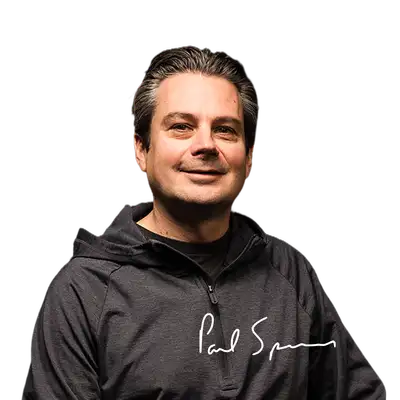
From Paul Spencer of Second Nature Solutions, a conversation about the complexities and nuances of building resilient family enterprises, especially in the face of economic and political uncertainties that loom on the horizon. See more at secondnature.solutions.
Welcome to Resilience Talk hosted by
Paul Spencer of Second Nature Solutions.
Let's dive in.
Brandon Giella: Paul thanks for having
me back on the show Excited to be back
I was talking to you last week and I
thought we'd have a great conversation
around sales because you have a additional
business in your portfolio and it is
uh a new way for you to discover how
the sales process can get a lot more
focused And so you told this great
story last week and I would love for
our listeners to hear from that So tell
us what was going on last week with
your business and what you found out
Paul Spencer: Uh, yeah.
So, um, I guess the learning is that
the more targeted, more specific you
can get, does take some some trial and
error, some, uh, additional learnings,
the more specific you can get around the
pain point, then, uh, obviously the more
traction you get on your sales and the,
the types of customers that you can get.
Um, so it's, uh, the business is
about not quite six months old.
Um, it's a new business
from my perspective.
It's a different...
It's a low-cost, high-volume
business as opposed to more of a
consultative services business.
Um, and so it's a different model for me.
It's a different paradigm.
Um, and it's not an industry that I'm
particularly super familiar with, right?
Which I, is what I enjoy, right?
I like the idea of, uh, taking
the frameworks that I know about
running a business applying them.
So that's fun for me.
And so, yeah, so over the last
five months or so, we've been,
um, generating some sales.
Um, it's not big sales, I would call them.
Um, but recently over the last week, I've
been able to, because of the iterations
with different, uh, prospective customers,
still trying to find my ideal customer.
I have that in my head, right, of
who the ideal customer is, but like
what we've always known and talked
about is what I think and what is
reality is two different things.
and so I've learned that what I
initially thought was the ideal
customer isn't exactly that.
It's maybe a variation of that.
And then there's a pocket of customers
that I didn't even know existed.
Um, so the more I get to talk to
them more that we're doing work,
um, just in general, more I get to
hone in on, "Oh, that's what it is."
And the cool thing about that is
I get to listen to them, and I
get to reuse the words that they
tell me, which is, which is fun.
So the space is around hotels, right?
So doing maintenance work, um Uh,
craftsmanship work is what I would call
it, um, for hotel general managers,
and then also hotel owners, which are
essentially property managers that
own a portfolio of several hotels.
what I've learned is, at least for
me, uh, my value going in was, uh,
we're 10% of replacement, right?
We can repair, we can fix, we can restore,
um, and it'll save you money, right?
It'll s- uh, that's how I was it.
And sometimes that made sense and--
but most of the time it's like, "Well,
yeah, but we do all that already."
so what I found is that, they,
they were talking about budget.
me more about your budget process."
"Oh, well, I have a certain amount
of budget that I have to spend or
I have to save order to spend."
Um, which then got into, uh,
a CapEx discussion, capital
expenditure discussion.
"Oh, tell me more about
what does that mean?"
And so from an owner's perspective,
capital expenditure meant something
different a operating budget,
basically a maintenance budget, right?
And were...
And obviously that means two different
things if you're, uh, if you're an owner.
But from a hotel perspective and how
it's managed and ran is one is a capital
expenditure which manages the asset value.
It's a, it's a sheet, financial
sheet that I can give to a bank, an
investor, or I could sell it if I
wanna sell my, my hotel, my business.
I sell it and that tells
the value of my asset.
And so I'm very critical about
what that side of the balance sheet
looks like from a CapEx standpoint
because it tells the, somebody out-
outside the value of my asset, right?
As opposed to the maintenance
budget, is essentially the P&L
of the, the hotel itself, and
they call it, uh, room revenue.
So every room that's, that's
booked has $100 or $200, right?
That's room revenue and
that flows through the P&L.
then, uh, they also have what they
call, what-- Again, I just learned
this a couple weeks ago, the FF&E,
is the furniture, fixtures, um,
and expenses line item in the P&L,
and that's their operating budget.
And so they're, um, told, basically the
GM is told that they have to 3% to 5% of
their room revenue into that line item,
and it's basically a rainy day fund.
when they wanna be able to replace
furniture um, maybe flooring,
redo something, that's more of a
maintenance thing, not a capital
expenditure type item, it has to
come from that operating budget.
They call it the operating budget.
and if they don't have enough money,
then it goes back to the owner and says,
"Hey, I need to replace these things."
And the owner says, "I'm not
gonna do that 'cause it's gonna
ruin my side of the sheet."
there's this kind of tension
between the GM and the owner.
Um, where now instead of being 10%
of replacement, I get to say, is, uh,
uh, an inversion of that, it's the
same, it's saying the same thing, it's
just speaking more their language,
which is, you can spend to 30 cents
on the dollar replacement, on, uh,
repairing, sorry, on restoring over
replacement in your FF&E budget.
And what that means is that your
FF&E will last two to three to maybe
even four years longer than it was
before, and that resonates with them.
So when I say that, they
say, "Tell me more."
And so I think it's, it's, one, it's
fun for me because that leads to more
sales, more, more revenue for us, right?
Um, but it's also part of the fun
part learning the new business and
learning the, the language that your
customers use and translating that
language into something that's valuable
for me as a business owner, but also
that's has to be valuable for them.
Otherwise, it doesn't matter,
If it's valuable to me.
So that's fun.
I think it's fun.
And it's, it's not something that
you're necessarily just gonna snap
your fingers and say, "I get this."
Or the customer ha- is, uh, right,
we say this a lot in development
world, The customer is too
dumb to know what's going on.
Like, we created this awesome and this
awesome app, but they don't get it, right?
Well, it's actually the opposite way.
You don't get it.
so in sales, it's the same thing.
You don't get it.
If you can't get the sales, if
you can't get the, interest, the
interest from your customer, then
you're doing it wrong, right?
And you need to navigate that.
It doesn't change what we do, doesn't
change the service that we provide,
doesn't s- change the products that we
use, the cost structure that we have.
None of that changes.
It's just the language that
we're using back our customer.
Brandon Giella: I love this story
because just that point Same business
same costs same service same buyer
Paul Spencer: Yeah.
Brandon Giella: but by framing
it differently with different
language you're able to unlock value
Paul Spencer: Yes,
Brandon Giella: It's already
there and all you're doing is
unlocking it with a different key
Paul Spencer: Yeah, right.
uh, uh, because before, again, I'll
just use the phrases I was using,
10% of replacement, they, they under-
they hear what I'm saying, but they
already have maintenance teams.
They already have different vendors
that, that do things, right?
Um, but what wasn't translating is
the actual type of replacement, repair
versus replacement work that we do,
um, and where that fits in their own
world, So they m- uh, they're, they're
approached all the time by different
vendors doing this, asking about this.
So they're, they're very, um, um...
I don't know if they're, they're--
It's hard to say that their, their
tendency is to, to keep you at arm's
length, uh, but that is kinda what it
is, and they'll listen to you, but at
some point they're like, "I get it.
I don't need any of that."
Right?
Um, it's almost like the guy showing up
at your door, um, at your house saying,
"Hey, we're in the neighborhood and
your neighbor just signed up for bugs.
We're gonna spray bugs.
You want some?"
"No, thank you."
"Well, here, let me tell you about this."
Right?
You don't wanna be that guy.
You don't wanna be that guy.
Brandon Giella: So uh it sounds
like um a lot of discovery around
something very specific that
you may not even know is there
Paul Spencer: Yes.
Brandon Giella: And so for our listeners
that are running businesses involved in
sales trying to unlock value of course
for themselves in the terms of sales but
also to better understand their customers
and how they could serve them better
Paul Spencer: Mm-hmm.
Brandon Giella: how do you go about
finding this key Like you said listening
Obviously it's active listening You've
gotta follow up You've gotta figure out
their language But what what in your
mind like going through this process
and running businesses for many years
how do you how do you find that key
Paul Spencer: Um, well, I, uh,
there's a couple of pieces.
So it's a process, um, and like
what we know, we tend to think about
processes as step one, two, three, and
four, and you just follow those steps.
on top of our processes is
the mindset and maybe, uh, our
behavior while we run the process.
in sales, at least for me in this
case, is in discovery, right?
And maybe a lot of you listening
are saying, "I already have s-" And
actually, you know- Probably easily
nine out of 10 times with any of my
customers, really good at sales, right?
'Cause sales drives everything.
Brandon Giella: Yeah
Paul Spencer: and when you're in
business for, for decades and decades,
you tend to be really good at sales.
Um, so it's not, it's not to
say that, uh, this doesn't mean
anything if you've already your
sales team or your sales process.
The difference is, is that, uh, in this
case, I-- it was discovery process.
And so I have to be accepting
that I'm gonna get a lot of nos.
And this is, uh, I mean, you read
any kind of sales stuff, right?
You have to be okay to-- with the
no and with, uh, the, the straight
arm, the stiff arm that says, "Get
out of here," or, "Don't talk to
me," or, "Don't call me again."
Um, and those are uncomfortable,
and it's not fun, but, uh,
that's, that is it, right?
Uh, I've realized that they're
not my customer, which is okay.
But I have to know that.
In sales, I have to have a yes or a no.
I can't have a maybe.
Um, and so, uh, for me, it's been a lot
of door-to-door walking in the hotel,
talking, "Hey, can I speak with the GM?
Can I speak with the chief engineer
who's the maintenance side of the house?"
and I wanna have a conversation with them.
And sometimes that's easy to do,
and they're very friendly, and
sometimes they're not, and sometimes
they're kinda in the maybe world.
And the maybe world, in my opinion,
and especially you guys have all heard
this before when I on any of the sales
stuff anyway, maybe doesn't work.
So you either want a yes or a no.
A maybe only sucks the life out of you
and potentially out of them, right?
Maybe, uh, here's an example of maybe.
"Oh, yeah, that would be great."
okay.
Um, how, how would you
see this working for you?"
"Oh, yeah.
This, this would work great.
This would be...
This would fit here, here, and here."
"Oh, um, about if I was to...
You-- Would you, would you, you
wanna do that," whatever it is.
"You wanna take this service?
How about if I come on
Monday and, and we're good?"
"Well, Monday's not gonna work very well.
Why don't I reach out to you, um, uh, in a
month when I, when I have a better idea?"
"Okay.
Yeah, that would be great."
So then you leave either that call or
that, that in-person meeting feeling good.
Like, that was a great conversation.
and then what, what happens is I take
that back with my, my crew, right?
And I say, "Hey, I just
talked to so and so.
They say that they're,
they like what we're doing.
I'm gonna hear back from
them in a month," right?
And I don't hear back
from them in a month.
Or I call them three more times
and they're kinda not answering.
Or maybe I do get a hold of them in
a month and they say, "Well, not,
it's not exactly the right time,
but I really love what you're doing.
This is great.
Really gonna be really good for us.
I gotta, I gotta talk to these so and so.
Let me call you back."
Right?
That is a drain because now I got...
And if somebody, uh, uh, above
me or even myself said on my
dashboard, my sales pipeline says,
"Well, what, what's that account?"
"Well, that's a, that's
a maybe an account."
Like, "Are we gonna
get business for them?"
"Well, maybe."
Right?
Um, "How long have we
been talking to them?"
"I don't know, three or four months."
"When's the last time you talked to them?"
"Probably two months ago."
"What was, what did they say?"
"They said they wanted to do it."
"Well, if they wanted to do it,
they would've done it by now."
Right?
or you would've had different
conversations to move it forward.
And so my point is the maybes
draw you out forever, and it's
just exhausting now I've got...
Now you, you add that up, right?
And now I've got 10 maybes.
I got 13 maybes in the pipeline,
and I got one yes and like a handful
of nos, but I'm hanging on to those
maybes 'cause that's gonna be great.
And it's like turn those
into a yes or a no, right?
And move on with your life.
that's really important when we're,
when we're thinking about the discovery.
You ask what...
That's my long-winded way, right?
how do we-- What's the
process around that?
Is I have to know whether they're in or
out, and if they're out, doesn't mean I
can't follow up with them at some point.
But I know in my head, right,
my mentality is they're out.
I'm not gonna waste a bunch of mental
space and emotional time trying to think
that, "Oh yeah, when that one comes
in, I'm gonna love that, and they're
gonna add to my P&L," and all of that.
And, uh, they're a no.
Um, so with that mindset in
place, then I'm able to just go
in, get a bunch of yeses or nos.
I'm able to listen the words that
they say, and if they don't react to
what I say, I ask them, "What did,
what did, what did you hear me say?
What, what is valuable to you?
Where are..."
Uh, like I just had a call today.
They, they said, uh, she's like, and this
is, this is awesome sales stuff, right?
Is she says, um, "It's really hard to
get into our, our business, our company."
I say, "Oh, why is that?"
Um, "Vendors can...
Uh, the vendor process
is nearly impossible.
It's really hard.
Um, I would recommend you
don't even bother with it."
"Oh, that's interesting."
Right?
I could take that and say, "Oh, okay.
Well, thank you for that."
Hang up, right?
I'm on a call with her.
And I say, "Why is it really
hard?"
So this is the process.
This is what you...
This answers your question.
Uh, just hear what she says
and I repeat back to her.
"Why is it really hard?"
"Oh, well, you don't know
this, but you have to actually
pay be on the vendor list.
And so if we don't call you, if you
don't get calls from us than two or three
times a month, you actually lose money."
"Oh, that's interesting.
How much does it cost?"
And then so she goes through that,
um- And then, but really what she
was getting at is as I go through, I
get to ask her at some point, "Well,
what-- Do you do a lot of this work
internally or do you already have a
bunch of vendors that do this work?"
And so in my head, if I-- if you were to
stop the call right there, I would've said
they have an internal team that does a lot
of this work they're, and they have a high
barrier to get in vendors in, and that
way they can protect their internal team.
It's actually the opposite.
So she said, "Oh yeah,
we have lots of vendors."
"And those vendors have been with us
for a long time they get all the work.
And so even if you pay, you
will probably not get any work."
Oh, that's interesting, right?
So, uh, it's just another example
talking through it, right?
That doesn't matter if I'm in
discovery mode or not, 'cause
customers are gonna do that.
She's doing that because she
likes me seemingly, and she's
do me, doing me a favor,
Brandon Giella: Hmm
Paul Spencer: right?
But really what she's doing
is she's, whatever reason,
she's saying it's not worth it.
But for me it's worth it, right?
It's definitely worth it.
Brandon Giella: Yeah
Paul Spencer: So, um, so anyway,
I don't know if that answered your
question,
Brandon Giella: is that d-does that person
go on your maybe list or your yes l Like
what are you listening to that's a yes
You told us all the nos What's what's
like a yes where you're like Okay yeah
I'm following This is good This is good
This is progress I should keep going
Paul Spencer: Yeah.
So with her, uh, she's a yes
Brandon Giella: Okay
Paul Spencer: I say, is really good.
I, I love the information.
I really value that you are-- I
really value that you are thinking
of us and me and my time value that
it, that it could or could not be.
But I wanna get on the vendor list.
What does that look like?"
then she said, "I can do that," "This
Brandon Giella: Okay Yeah
Paul Spencer: So
Brandon Giella: Okay
Paul Spencer: be right at some
point, but I'm gonna keep going
because I don't know enough to
know whether she's right or wrong, right?
Brandon Giella: Hmm
Paul Spencer: Um, so that's, that's that.
The, uh, a yes looks like, um,
Brandon Giella: Mm-hmm
Paul Spencer: walk in and I'm
just gonna use my examples, right?
I walk in, I ask for the general manager.
The general manager comes out.
I say five words and he says, and this
actually happened with one of our first
customers, like right when we started.
He says, "Oh," starts walking
me around the, the building.
"Okay, what about this?"
"Yeah, we can do that."
"What about this?"
"Nope, that's not what we do.
We don't do that.
That's mechanical.
That's a more of a elevator,
right, or whatever."
"Uh, what about this?"
"Yes, for sure."
"This?"
"Yes, yes."
And then
he's getting a sense.
He already kinda knew me just
saying those five things That's a
yes, right?
I don't even have to do anything.
I don't have to convince him.
I already-- Like he, I wrote up a
thing, told him how much it might
be, even know if it would be that
much or how much it would exactly be,
and he's like, "Yeah, that's fine.
Just send me, send me the thing
and you can come next week."
Right?
Brandon Giella: I-I've had that experience
where yeah it's a 20-minute conversation
Yes good to go send me the bill
Paul Spencer: Yeah.
Brandon Giella: And then I've also had
it where yeah it's four five six months
sometimes years of building a relationship
and you know it just takes Yeah so
Paul Spencer: And
Brandon Giella: so the
Paul Spencer: so, uh, um, there's,
just as a distinction, a maybe, when
I was going back to a maybe, right?
maybe doesn't mean, um, I don't
nurture the relationship and,
Brandon Giella: yeah
Paul Spencer: um, think
about the long-term
sale,
Brandon Giella: Hmm
Paul Spencer: The maybe, though, is super
important that I'm not thinking that
my relationship that's still necessary,
my 12 months still to go, gonna lead
to a sale next quarter or next month.
That's a maybe, and
that's what wears us out.
A lot of salespeople do
that, actually, sales
teams, and then owners do that as well.
And it's like, let's get rid of that junk,
Brandon Giella: yeah
Paul Spencer: on the yeses or
bring more yeses in, 'cause we're
wasting a ton of time on those...
Like just using my example, if
you've got 13 maybes in there, we're
spending a lot of time talking about
it, we're spending a lot of time
preparing for it, we're spending a
lot of time reaching out and, and, and
it's not even doing anything, right?
Go get to the yeses.
Brandon Giella: That's where I was
going next was so w cause one thing
you mentioned in our conversation
last week was you turn that into some
sales assets some one-pagers you know
some some some print guides you know
things to kind of send out to folks to
find more yeses And so talk to us about
that So okay we've we've you've got
You've understood this insight You've
unlocked this thing You've got this key
Paul Spencer: Mm-hmm.
Brandon Giella: You've found this
this kind of yes pitch and now you
need to go find more yeses to pitch to
Paul Spencer: Yes.
Brandon Giella: do you do that
Paul Spencer: So, uh, so yeah, I, I was
able, I was able to uncover some nuggets
and just
Brandon Giella: Yeah
Paul Spencer: I'm able to understand
what they're talking about what they're
telling me, but I don't get it yet, right?
So I, I kinda just run through it, run
through it, and then, um, this is great.
They're, they're a yes.
Like they're, they're telling
me they want in, right?
I'm just learning more about how they
get things approved and all of that.
so we schedule a time
to talk in three weeks.
That call's booked, right?
That's my sales process.
I know that I got my yes I got a two
week, in two weeks we've got a call.
I'll talk with her again, right?
Um, I can clear that out, meaning
I don't have to worry about it now.
I'll, I'll just see what, what
happens the next time we chat.
Um, but in the meantime, I've got
these nuggets and I gotta s- figure
out what do they actually mean.
So then I get to go to my friend
Claude, and to talk with him
Brandon Giella: Yes
Paul Spencer: bit, and I say: "Hey,
Claude, you know my business, right?"
And he's like: "Yeah, I know.
I know what this is."
And I say, "Well, I just talked with a
hotel GM, and they were mentioning FF&E.
Tell me more about that, and
then put together, um, a, um..."
I didn't call it a marketing campaign,
but, "Put together three one-pagers that
have a perspective of the hotel GM, the
hotel owner, and then the chief engineer,
who's the, the maintenance person.
And, with what you've told me about
FF&E and CapEx, um, those, put
those one-pagers together," right?
And so it goes through and it makes
that, and then I say, me a couple of,
um, social media posts based on what
we're talking about," and it does that.
And so by doing that, one, it's fast,
super fast, and I wouldn't have been
able to create those things 'cause I get
these nice little branded things, right?
It would've taken me forever to do that
because that's Paul's kryptonite actually,
is creating documents that are pretty
and well-formed and have nice and color.
Like, that could take me months to do that
Brandon Giella: Yes
Paul Spencer: am terrible at it, and
I'm too detailed, and I can't get away
from this thing being off by a pixel
and this thing not, and Word won't let
me get that one pixel in there, and I
can't stop thinking about it, right?
Claude is able to help me do all that.
But then what it's able to really
do is connect the dots for me, which
g- really goes back to the last,
uh, podcast about AI, where we was
talking about, um, the inference
between gaps of information goes up.
Um, so now instead of having lots of data
that we can think about as a human, just
kind of repeat what that was about, right?
We have lots of data today...
Well, maybe if you said three years ago.
Three years ago before AI,
Before we had these, uh, LLMs
that we could interact with.
we had lots of data,
and we had data mining.
We, we still had AI, but it was
more machine learning and wasn't--
I couldn't talk to it, right?
Um, and it's vail- vaib- able to
do about the data and tell you
this and that and this and that.
Well, now we have this huge advantage
that as AI gets stronger and stronger,
it's able to look at even more data
and more data and more data across
lots of different data sets and really
disparate data sets, meaning we could
look at climate And, um, and I don't
know, something, uh, furniture, right?
Climate change and furniture.
And it could make some inferences
about the two things, and then we
could say, "Hmm, that's interesting,"
what do I wanna do with that?
Uh, so in this case, Claude's
able to take FF&E, right?
fixtures, and expenditures,
just, or, or expenses, right?
And then CapEx, and then the three
contexts that I gave it, the roles,
and then be able to give me a lot of
inference about what all that means.
Brandon Giella: Hmm
Paul Spencer: and then also put that
into some three, three-page things.
Um, and now I'm also learning
from what Claude's telling me
about it's actually connected.
Like, all the things that I just told
you bef- is because of that process.
I learned through that, not solely
through my customer, but I was
able to take what came from my
customer and then go research it.
And now with Claude, with AI, so
much easier to research it, right?
Before, you would have to do a
Google search and then probably
go read a lot of blog posts
Brandon Giella: Yep
Paul Spencer: or news articles
Brandon Giella: Yep
Paul Spencer: That doesn't have to be
news articles, just different articles
in Forbes or whatever comes up, right?
And I'd have to try to make that inference
on my own, which isn't impossible, but
here it's doing it all for me, and it's
condensing it down into blurb, blurb.
blurb.
And then, like, my, my conception,
conceptual, integrity of what's
going on goes way up, right?
Because now I can, "Oh, yeah, that's that.
That's how that's connected.
Oh, now I get it.
Now I know why she's saying those things,"
And now I understand why she mentioned,
uh, corporate and the way that they think
about the budget isn't exactly the same,
because I wasn't understanding that.
Um, but now I do, right?
And so it's not really as
important with her because she's
telling me, and she's a yes.
She wants to, she wants
to spend money on it.
She wants to fix up her hotel, right?
but it's going to help me with my
other prospecting calls, right?
And so now I can go to some of my
maybes or maybe even some of my nos
Brandon Giella: Yeah
Paul Spencer: them a couple things
and see what happens, right?
Brandon Giella: Hmm
Paul Spencer: So, uh, go ahead.
You had...
Did you have something?
Brandon Giella: No no Conti
I do but continue yeah
Paul Spencer: so one other thing too
is this morning I had a conversation
with one of my customers, and we were
talking about, and n- maybe not to get
too sidetracked, but the whole S curve.
Have we ever talked about the S curve
from, like, going from zero to, say, a
million, and then, say, from a million
to, say, 8 million, and then from 8
million up to maybe 20 million, and how
Brandon Giella: Yeah
Paul Spencer: each, Yeah.
Uh-huh.
You
Brandon Giella: Yeah I think it it I
think it's called a sigmoid curve when
you kinda come up and you kinda plateau
for a bit before you hit that next growth
lever Is that what you're talking about
Paul Spencer: exactly.
And so what happens with that is, the
things that you do at zero, meaning
I'm starting a business, I don't have
any revenue, um, and I get to say
500 to a million inside there, um,
much different than at zero, right?
Brandon Giella: Yeah
Paul Spencer: and the structure of your
business, who's involved, the things
you will accept or not accept.
Um, but you can't run a million-dollar
business, uh, uh, with the
structure of a zero-dollar business.
That's pretty obvious, right?
Brandon Giella: Mm-hmm
Paul Spencer: not as obvious is when
you get up to $8 million and now
you're, you're getting up and y-
you're an $8 million structure, right?
Business.
now you're 10, and now you're 12,
and you're approaching 20, but you
still have $8 million mentality and
structure, both in processes and, and
people and everything else, right?
And so it's very natural that
you'll get k- kinda up to that
curve and you'll get to 12,
uh, 15, 16, maybe even 18, and then
you may back down to maybe 12, right?
Or 10.
And that...
And you settle there, and y- you're able
to do that, but then you're frustrated
because get up there and something bad
happened or that client did, right?
We have stories around that happening,
but it's because you didn't have
momentum as to mature as a, as an
organization to be a $20 million business.
You weren't built, right?
It's the, it's the thing
we've always talked about.
I can ride a bicycle and I can go
20 miles an hour, Brandon says,
"Hey, the owner and I'm awesome,
and we're gonna go 50 miles an hour.
Go."
But we didn't change the system
and our bike is falling apart and
Brandon Giella: Yeah
Paul Spencer: falling off, getting skinned
up knees and l- arms and legs, right?
Brandon Giella: Yep
Paul Spencer: going like,
"What's the matter?"
Like, "Why can't we get to 20 million?"
That's right.
C- you can't go 50 miles an
hour on a bicycle, right?
You have to change the system.
Maybe you just put an
electric motor on it, right?
Brandon Giella: You need a car probably
You should get a totally different vehicle
Paul Spencer: you've
gotta change your system.
Um, so anyway, uh, these are things
that are important, um, what we were
just talking about, and I'll get
back to the sales piece, is when
you're in that S-curve, the things
you sell today, even if you're...
Let's say you're, let's say you're $8
million business and you're doing really
well with that, and you have a sales
team around it, and you're able to sell
your services, you're able to deliver,
um, and now you're 12 million and things
are going well, and you can very easily
see we're gonna get to 20 million.
We can see that.
We don't know how exactly, but we
can feel that that doesn't feel out
of, out of bounds at all, right?
a sales perspective, uh, the things you
sell, the things you say, maybe even your
products start to shift as well, because
what I sold when I was $1 million, um,
it's highly unlikely that you're $20
million you're selling the same thing
and you have the same sales process.
make sense?
Brandon Giella: Mm-hmm Mm-hmm
Paul Spencer: And
Brandon Giella: Mm-hmm
Paul Spencer: um, the whole thing that
we just talked about, about what's
the value, um, what's the language,
what are you, what are you telling me?
How do I repurpose that?
How do I research it?
How do I push it back into my
no's and my maybes to test it?
And maybe now I'm turning some
yes-- um, some maybes and no's
into some hot yeses, right?
And I'm proving, ooh,
that's working, right?
when I'm going into that and I'm going
from 20 and I'm, I'm sitting at 12 and
I think I'm gonna get to 20, we have
to be thinking, again, this goes back
to the sales process, that, um, maybe
instead of selling a bunch of $20,000
or products, I sell one or two million
dollar projects or products, right?
Which is a totally different sale.
It's a different value proposition.
It's a different pitch.
You're probably talking to different
people in the business, different roles.
You might even be talking to
different companies, The ones that
were important to me now and my, my
key, uh, customers may change, right?
Because of the value
and the size that I am.
Um, important to understand.
Brandon Giella: Yeah I like that
it's it's it's a game and it's
fun to you in the sense that these
things are always changing So
you have your different audiences
Paul Spencer: Hmm?
Brandon Giella: and you have your
different customers your different
processes but as they mature and/or
you mature that changes again
Paul Spencer: Yes,
Brandon Giella: you've always gotta be
finding that value So w uh my my last
question for you is is this related to w
uh product market fit That you're always
looking for product market fit in this way
Paul Spencer: Yes.
Brandon Giella: is that maybe too much
of a cross to another industry But
Paul Spencer: no,
Brandon Giella: Okay yeah
Paul Spencer: Yes.
So
I, the, I think the reason why I
brought that up is because, uh,
we've been talking about from zero
to something, right?
Uh, I'm discovering and, uh,
some of you may be thinking,
"I'm not discovering, Paul.
I discovered that 50
years ago, so why is this
valuable," right?
So the product market fit
is always happening to your
Brandon Giella: Yeah
Paul Spencer: It's always happening.
So,
Brandon Giella: Mm
Paul Spencer: uh, even if I'm mature
and I've been in business and I
have a reputation, I'm still capable
of discovering different product
market fits my existing or something
that doesn't exist, meaning of
my own products and services.
And
that's how-- That, that's the way you
gain momentum through the S-curves.
Brandon Giella: Yeah
Paul Spencer: the m- the more S-curves
you go through, the m- more difficult
it gets to be able to momentum to
stay up there, right?
Brandon Giella: Mm
Paul Spencer: Um, so m- most of
you, um, most of my customers, sec-
from Second Nature perspective,
are in that 10 million, right?
And then we get up to 20,
and we get up to 30, 40.
That, me, from Paul's perspective,
that's kinda my sweet spot where
I can see how all that fits.
At some point, when you get up
to 50, 60, 100 million, that
is, again, it's a, it's...
In order to have structure to be
able to support that is way different
than a $20 million business.
Way different.
But the cool thing is, is you can,
you can start to have values, which
is, "I don't want corporate structure.
want of, um, authoritative responsibility,
command and control types of things."
It's not th- who we are, and it's
not how we grew our business, right?
So then we start to think, "Well, how
do we, how do we, um, how do we generate
more revenue, uh, over less sales?"
Brandon Giella: Yeah
Paul Spencer: Right?
Brandon Giella: Right
Paul Spencer: was my 20 versus
Brandon Giella: Yeah
Paul Spencer: example.
And so in that case, then I can
start thinking about million-dollar
deals instead of of thousand dollar
deals, and potentially I can deliver
those things with less structure,
Brandon Giella: Mm-hmm.
Paul Spencer: less kinda
corporate governance.
It doesn't mean you, you will
still need some of that, is
Brandon Giella: Which
Paul Spencer: maybe what you're
used to at the 20 million range.
but there's ways to be constantly
thinking about product market fit
and, um, how do I, how do I expand
my own thinking about what we do?
Um,
Brandon Giella: changes your
culture, your team, all that.
But then there's, there's outside,
uh, pressures as well, like
AI for a lot of industries is
changing the value proposition.
It's changing the way that we're
doing things and how we pitch.
Yeah.
Paul Spencer: Yeah, I think, um, the
other thing too is, this is the, also the
fun part, is to sell before you can do.
Um
Brandon Giella: The scary
part or the fun part?
I forget.
I-- What'd you say?
Yeah.
Paul Spencer: Um, for me, I
would say 10 years ago, that,
that would be very scary, right?
'Cause I was more the operator, the
one who had to deliver everything.
And if
Brandon Giella: Yeah,
Paul Spencer: back and said, "No,
what we got-- We're doing what?
think that's possible."
so still need to be connected between our
sales team and our operations team and how
Brandon Giella: of course.
Paul Spencer: work.
Brandon Giella: Mm-hmm.
Paul Spencer: but we
Brandon Giella: Yep.
Paul Spencer: experiment with,
selling something that doesn't
quite exist that we're not even
capable of, um, delivering.
Brandon Giella: Never
Paul Spencer: that in a different way.
Brandon Giella: that before.
Paul Spencer: it's...
Well, let's, let's think of it,
uh, kind of in a physical place.
So if we were, um, uh, let's say, uh,
like what would be a good example?
Let's say we're doing construction
and, um, we're gonna rebuild, we're
gonna, uh, remodel something, right?
Let's-- We're gonna remodel a clubhouse
for some, uh, golf, country club thing.
uh, and I know that I need
a crew to do that, right?
So I might need 10 people.
I might need 10 people who know how to...
One person who needs to...
carpentry and framing and flooring, and I
need, I need people to do all this work.
that's a big expense, right?
Um, so before I actually do any of
that, uh, the sell before you do, right?
I could, I could actually go out
of business or I could, say I
have a bunch of money to invest.
I could waste a ton of money by
bringing those people on and then
going and selling and having it take
me five months, six months, eight
months for that to happen, right?
opposed to going to all the
country clubs around town and
saying, "Hey, I got this idea.
I'm thinking about, uh, country
clubs could look like this,
like, like this," right?
And then they get to say,
"Nope, that doesn't work for me.
That doesn't..."
"Oh, why?"
And I get to go into that discovery
phase, and then maybe by the fifth
or sixth country club, they're
telling me that I didn't know.
And then now I get to go to talk to
Claude and say, "Tell me more about that."
Right?
And then Claude's like, "Oh yeah, that's
well known in the golfing industry."
And, uh, everybody claps right
before, uh, before the, the first
siren to tee off on number one.
And, uh, and then I'm like,
"Oh, I didn't know that."
And then so now I get to go to the
next country club say, use their
words, and they're like, "Yeah.
Yeah, that's what we like."
And then, "Would you do that?"
"Here, I'll give you, I'll give
you a, um, an estimate, a quote."
"Okay."
And then we negotiate through that,
and now I've got a $300,000 budget to
go remodel their country club, right?
And then now I can go, uh, figure
out how I'm gonna do that, right?
uh, the reason why I'm saying
this is we're an existing
business, we can use that process.
We can use that process to learn.
The, the, the worst thing that could
happen out of it is that we learn more
than we ever knew about our industry,
what, what our product, uh, market
fit is, what ours is and what others
are or are not, where the industry
is going and how they're thinking.
I never have to sell
anything, but I'm approaching
it from a sell, right?
And I'm learning and I'm
learning and I'm learning.
And maybe if I do sell something that I'm
not capable of, uh, or at least I'm not
built for, um, then I can build it, And
then I can start having more intelligent
conversations about my process, about
what we do, how we remodel, what that
looks like, what the timeline is, right?
And it, and it matures, and now I've
got a different line that I can sell.
Brandon Giella: It sounds like to
me that you're very comfortable
with failure, 'cause all of this
is just like kinda failing upwards.
You know, you're kinda learning and,
and you, you seem to treat it as
like this kind of learning adventure,
Paul Spencer: Yes.
Brandon Giella: going out and, and
you're, you're experimenting and trying
new things, and you're gonna fail.
You're gonna get a lot of nos.
You're gonna get the cost overruns or
the budget overruns, or you didn't plan
this effectively 'cause you didn't know.
Paul Spencer: Yeah, that's
Brandon Giella: But that's
part of the learning.
That's the OODA loop, you know?
That's the
Paul Spencer: the OODA loop.
It's what we've
talked about, right?
Yeah.
Um, um, it's, um, like
what, what do, what...
It, it's not about just the
failure for the sake of failure.
It's failure so that I can learn
something because I'm, I have an aim.
Brandon Giella: of course,
Paul Spencer: to go there,
Brandon Giella: Yeah.
Yeah.
Paul Spencer: but I don't
know how to get there.
I have to engage.
I have to, I have to, observe,
observe, I have to orient, right?
And then I have to decide,
and then I have to act.
And I have to do that in a series.
That's the, I, that's the engagement part.
That's the OODA loop, right?
Um, that's PDSA.
I have to engage so that I can
learn, so that I can go from here to
here to here to here, and then I'm
like, "Oh, that's what that means."
Um, and then I can decide
what I wanna do with it.
Um, as opposed to, saying that's never
gonna work or too risky for me, or
I don't know where I'd get started
with that, or, mm, too hard for
Brandon Giella: Yeah.
Paul Spencer: right?
That's never-- You're never
gonna go anywhere doing that.
Brandon Giella: I'm so
glad that we did this.
I just thought this was
such a great conversation.
Thank you.
Um, where does-- where
do you go from here?
Paul Spencer: Um, well, I think
if, as far as the topic goes from
a sales perspective, I'll just
kinda reiterate what I said before.
Brandon Giella: Yeah.
Paul Spencer: pretty much everybody
listening to this, I would say
is really, really good at sales.
Can you get
better at sales?
Of course.
Brandon Giella: Sure.
Paul Spencer: you
get frustrated that maybe,
Brandon Giella: Yeah.
Paul Spencer: going the way you
Brandon Giella: You have to
Paul Spencer: But sales is the
engine to make things run, right?
And, s- and what we know is that sales
only works based on our delivery.
what I was just describing of let's sell
it and do it later, um, I still have to
have the know-how and the confidence.
You have to be
Brandon Giella: Yep.
Paul Spencer: to be able to
Brandon Giella: Yep.
Paul Spencer: pull a crew
together of 10 people and
Brandon Giella: Yeah.
Paul Spencer: them and have
good customer experience, right?
If I don't have that as a core
capability, I have no business
selling it and then trying to do it,
Brandon Giella: Yeah.
That's right.
Paul Spencer: it's not gonna
Brandon Giella: Yeah.
That's right.
Paul Spencer: Um, so, uh, so it's,
it, it is all intertwined and
it's, it's all linked together.
but we can always get better with
sales and we can always, um, mess
around and experiment with it.
What do you think about that?
Brandon Giella: it.
I love it.
I think that's the attitude I,
I, um, I'm excited that we ended
there, uh, with, with listeners, is
to experiment, to try new things.
You will fail, but you will
learn, and that's a success.
Paul Spencer: Yeah.
Yeah.
Yeah, and with, with sales you want,
um, predictable, consistent sales.
That's what we want, right?
Brandon Giella: right.
Paul Spencer: that's
Brandon Giella: That's right.
Paul Spencer: processes
around everything, but
Brandon Giella: Yeah.
Paul Spencer: sales.
Brandon Giella: Yep.
Paul Spencer: and we're constantly
improving them, which is
Brandon Giella: Yep.
Paul Spencer: what we just talked about.
How are we
Brandon Giella: That's right.
Paul Spencer: our sales?
Yeah.
Brandon Giella: That's right.
Well, Paul, thanks for that insight.
Thanks for your story.
And I know it's, it's hard won, it's
hard fought, um, but that insight was, is
super helpful to help develop that process
and help people improve their sales.
So thank you.
Paul Spencer: Yeah.
Brandon Giella: And, uh, we'll
talk more about it next time.
Paul Spencer: Awesome.
Brandon Giella: See you.
Okay.
Paul Spencer: All right.
Bye.