Subscribe
Share
Share
Embed
Featuring interviews, analysis, and discussions covering leading issues of the day related to electromagnetic spectrum operations (EMSO). Topics include current events and news worldwide, US Congress and the annual defense budget, and military news from the US and allied countries. We also bring you closer to Association of Old Crow events and provide a forum to dive deeper into policy issues impacting our community.
Katy Nazaretova (00:01)
Even though this is something new and something a little bit maybe scary for some folks, I think it has a lot more benefits than...
Ken Miller (00:11)
Yeah, that's a good point. think fear of the unknown drives a lot of opposition across the board and a lot of things, you know, people don't know what they don't know. And so when you have to be the advocate in front of an audience of senior military officials saying, convince us that your proposal is what we need, you've got to be on point.
Katy Nazaretova (00:32)
Yeah.
Ken Miller (00:42)
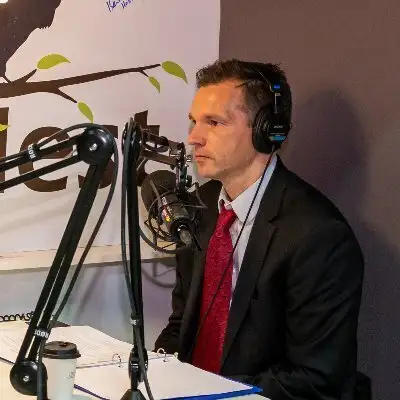
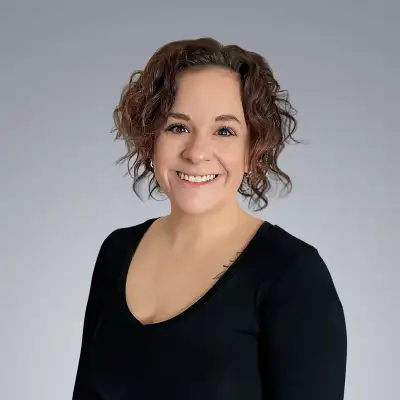
Welcome to From the Crow's Nest. I'm your host, Ken Miller from the Association of Old Crows. Thanks for listening. All right, well, it's great to be back with everyone. We are recording this in mid February and you'll be hearing this on February 19th. Always great to be back with you. I am very pleased to have with me on this episode, Katie Nazaratova, our congressional outreach consultant. Katie, thanks for joining me here on From the Crow's Nest. It's great to have you back on the show.
Katy Nazaretova (01:09)
Yeah, of course. Happy to be back.
Ken Miller (01:11)
So I want to have you on the show just to kind of help me a little bit along with this discussion. Today's we're going to discuss Capitol Hill, but it's going to look a little bit different from our previous Capitol Hill sessions. Usually I have you on to talk a little bit about process and what to expect and the National Defense Authorization Bill, defense approaches, so forth. That process is just getting started this year, but we've been on the Hill together here this week.
talking to Armed Services Committee and various members from the EW Working Group to talk a major policy proposal that AOC is sponsoring. And we've taken it to Capitol Hill this week, and it'll be the first of many trips to Capitol Hill pushing for this. And I wanted to talk a little bit about what this proposal is, what it does, kind of what are some of the questions we still need to answer here as an association, as a community.
So thought it would be great to have you on since you've been my partner in crime here this week on Capitol Hill. So just to begin, know, before we get to the language, because that's gonna be the bulk of the conversation. Katie, if you don't mind, give us a little bit of insight into where we're at right now in February and why today and this week is an important week to be on Capitol Hill.
Katy Nazaretova (02:28)
Sure. we just wrapped up. So basically to rewind, usually the congressional cycle is pretty cyclical. And that means that at the beginning of the year is when members and staff and all of that starts churning on ideas for the next bill. Specifically, we're, at least we've been focused on the NDA or the National Defense Authorization Act.
⁓ versus appropriations, which is a whole other beast that we're not really dealing with as much this year, at least for our proposal. And so the defense bill and the defense committees ⁓ all have their deadlines for their internal member submissions, which is at the end of this month. And then member offices, which these are the members that sit on the House Armed Services Committee. And typically the House Armed Services Committee goes before the Senate.
Armed Services Committee in terms of deadlines and all that sort of stuff. They have their own internal deadlines for like folks like us, like outside organizations and companies to submit ideas and proposals of either like a change in law or a change in an addition or whatever in funding. And so typically we submit those, you know, virtually, but also
Sometimes it's a good idea, especially if it's a brand new proposal to go in and brief the staff and kind of answer any questions in person that they may have. ⁓ So that's what we've been doing this.
Ken Miller (04:04)
Yeah, it is a cycle. It's a loose cycle and it's always a surprise because what makes it so funny is that you they need the ideas they need them submitted and so forth and they start to rack and stack priorities and everything but no one has an idea of what the budget even is or what the You know that the goals are what the schedule is like beyond this So it always feels a little bit too early to be doing this But if you if you don't that you're going to be too late ⁓ and so, you know
with associations like the AOC, with the old crows, any association, we thrive on turning a racehorse into a camel. And so trying to get proposals together and out the door, when all of a sudden you're like, by the way, congressional deadlines are next week. So you have to get it together really quickly and get it to Capitol Hill. So we've been doing that this week. We've had some really good meetings. We'll get into some of the feedback that we've gotten on this. But as I mentioned at the top of show,
episode is going to air on February 18th or 19th. So those who listen regularly, our previous episode earlier this month featured the panel discussion that we held live at AOC 2025 featuring retired US Air Force General Kevin Kennedy, retired Air Force Colonel Jeff Fisher and Eric Bamford on stage. the topic of that conversation, the topic of the episode, and I would encourage everyone to go back and listen to it if you haven't.
was the topic was, it time to establish an EMSO force? And the idea behind this topic was, you know, it's now at the time of the panel discussion, of 2025, heading into this year. You know, the 2020 DoD EMSO strategy was out in 2020, obviously, and then we've had five years of implementation. And when you step back and look at the progress, there has been good progress, however,
the persistent gaps still remain. And so coming out of that panel discussion, we had more conversation about what is the next right step. And looking at 2026, we felt that this is a pretty good year to take a big swing for a number of reasons, which we'll get into. And so we crafted a proposal to take that big swing and really step out and
identify a problem owner for MSO, for joint MSO, as well as a major organizational change. And so our proposal is to establish a Joint Electromagnetic Spectrum Operations Combat Support Agency, or CSA. Now, for those of you in the DoD world, you might be familiar with combat support agencies. There's a number of them out there. The most notable ones would be
the Missile Defense Agency, more in line with who we are as an association with as a community would be DISA, which is the Defense Information Systems Agency. I spoke to General Stanton at AOC 2025 this past year in December. He leads that CSA. And then there's also DITRA, which is the, help me out, Kerry, Defense Threat Reduction Agency? That's correct. And then you also have
⁓ NSA and some others. And so these combat support agencies are really meant to be chartered to help bridge those gaps between the operational elements, the enterprise elements, and the services for their area specialty. The problem is we just don't have that type of organization for Joint EMSO. And so we believe that coming out of that panel discussion, one of the best proposals that we could put together
would be to establish a similar organization with the responsibility to coordinate the joint functions of EMSO that are already being carried out but are too desegregated across DoD to really have, ⁓ to provide you the confidence that you can actually achieve and sustain an EMSO advantage in combat. So, I wanted to go into a little bit about this, just to kind of...
You know, what I found interesting, Katie, with some of our meetings and as we kind of talk about our experience this week, we'll get into some of the details of the proposal. But it was very interesting talking with a lot of members of the EW Working Group. And Katie, you used to work for Congressman Rick Larson, who is a co-chair, who is still the co-chair of the EW Working Group. ⁓ So we have the Working Group is led by Congressman Rick Larson from Washington.
⁓ Congressman Don Bacon from Nebraska, ⁓ Congressman Austin Scott from Georgia, and then Congresswoman Chrissy Hulahan from Pennsylvania. There are also other members involved in the working group and we are actively having new members come in. But this was a really interesting couple weeks because we came to the Hill with a new proposal. It's a big swing, a big ask. We didn't really exactly know what we were going to step into. The first takeaway
is that, crap, are a lot, there's a lot of MSO expertise on Capitol Hill these days, particularly in the staff, which is something we've never had for decades. Katie, wanted to ask you kind of like, give us kind of your impression on just generally the audiences we encountered on Capitol Hill. And then we'll talk a little bit about some of the feedback that they had and through that we'll be able to get into some of the...
the nuts and bolts of the CSA proposal.
Katy Nazaretova (09:51)
Yeah, so I think the important thing to know for folks that aren't familiar with, you know, like staff on Capitol Hill is a lot of times there's a very, very decent turnover just because it's a hard job, you know, and so like usually like folks are around on average for like a couple of years to get the experience to get, you know, that like under their belt and stuff. So that for us means we have to brief.
and re-brief and reintroduce issues or organization a lot of times to brand new people all the time. And that can be very difficult when we meet with and in the past a lot, especially when it comes to EW, which is generally a relatively niche issue when it comes to the defense world. And these are staffers, especially on the House side, that are handling not only like the entire DOD or DOW or however you want to say it, but the entire
Pentagon world for their member, but also maybe handling telecommunications issues at large. And the VA is kind what my portfolio used to be as well. So for them to be an expert on this issue is not usual. But the folks that we've met with this week, aside from the professional staff who have been there for years and generally have breadth of knowledge about all of this sort of stuff.
are surprisingly either have expertise in just like electrical engineering or something like that, or have worked within the department in some way or shape or form doing EW. And they have an awareness of who we are, what AOC is, what the functions are. So we don't have to go in and spend most of the meeting just giving a 101 on what EW is and why it's important. But we can launch into this
proposal and they get it. They say, yeah, I know, I've worked in this role, I've been in this form, I know how kind of disaggregated and disorganized it is and how much leadership would really help. And so that makes our lives infinitely easier.
Ken Miller (12:02)
Yeah, and you know, when you say like, hey, here's a gap, and here's something we need to address, here's what's been done. And then you have the staff responding, yeah, in my operational experience, encountered this. huge. And it absolutely is a showcase of the exact problem. It changes the conversation immediately. So I remember like when I was on the Hill, obviously, like 20 years ago, and I'm sure all of our listeners like here he goes again, talking about 20 years ago, but...
You know, there was a period of time after I left and until you arrived on the hill, there was, it was hard to find anybody that could even spell EW. And it made it really difficult to identify.
policy proposals that we could put forth before the committee because we didn't have any members that really understood it to begin with. So to find that advocate that could really guide it through a very complicated process, as you mentioned at beginning, we're starting to collect proposals now and it's gonna be an entire year of negotiation. You need the members and the staff to pick up the mantle on those. We couldn't do it. So this year we have it and it's been a tremendous surprise to
to me, but this is, you can see it over the last couple of years starting to increase, which is good. ⁓ So with that, what we talked to a lot of different members committee on this, the thrust of this proposal is for those in our community, you'll recognize a lot about what I'm gonna say. For those who aren't familiar with MSO as much, the number one,
For those who aren't in the MSO community as much, I think the major takeaway is these persistent problems and gaps that we're addressing are not new gaps. They didn't just appear to us in the last few years, or they're not an outgrowth of the strategy, the DOD-wide MSO strategy we have or the implementation. These are gaps that we've talked about for decades. And even when I was on the Hill, my former boss, he was a Vietnam...
Vietnam veteran, Ewo on B-52s. And even he said that we had the same problems in the 60s, the 70s, the 80s, so forth. And now we're in 2026 and we still have them. And the major gap is really in governance and leadership. The operational assessments that we've been conducting over the last number of decades, it shows that these gaps are caused by organizational and governance shortcomings.
So you have the enterprise functions of EMSO, which are like software reprogramming, thread analysis, requirements generation, things of that nature. And then you have the operational ⁓ aspects of EMSO, which is training and making sure that the war fighting concepts and capabilities that we put into the field. And you have to have an organizational, not just a strategy, but an organization to.
tie all that together and coordinate it because EMSO is inherently joint. It is across all services, it is across all domains, and we've even had this conversation at the panel discussion, is EMS even a domain? And it's a view of me, the host, and show that yes, the electromagnetic spectrum, electromagnetism is a fundamental force of the universe. The electromagnetic spectrum is a physical domain, should be treated as such.
And if it is, then that's why some of the conversation was on, do we even need an EMSO service? Because services are aligned with the domain. So if EMS is a domain, maybe we should do that. That's even a heavier lift. And I think, Katie, what we saw with the Hill was they get it, but that lift aspect is really hard because it requires that first step. And that first step is always going to be to rock the boat.
⁓ What is it? So talk to, can you share a little bit about from a congressional perspective, your former staffer?
there's a lot of big swings out there across the policy channel. So from a staffer perspective, what are some of the challenges of really kind of stepping in and being an advocate for something that's a major big swing like this?
Katy Nazaretova (16:30)
Sure, I mean, especially when it comes to, you know, like NDAA or changing something or especially here, you're generally creating something. ⁓ And especially within the department, there's always going to be pushback and you're gonna, as a staffer and as a staffer for your member, you have to be prepared to get that pushback and to push back on the pushback. And for that, that requires a lot of...
institutional knowledge and a lot of just like being sure about all the nooks and crannies of all of the things that are involved with this and especially with this that's so big like then that really helps when we do have staff or members that are very well versed in the history and the nuances and all that sort of stuff and kind of the biggest issues with creating something and especially an agency and think the questions that we've gotten from staff as well is
what does it cost or what will it cost because that's a main pushback that they're gonna get and gonna have to figure out eventually. And then what does it mean with people? Like do we have to create new jobs? Do we have to pull people from other places? And those are kind of the main two points that a lot of folks brought up during our meetings. But you kind of wanna as a staffer be prepared.
for all of the questions that you're gonna get in order to push a big proposal across. And so it makes it to the finish line versus just being killed by people telling you no, because it's different.
Ken Miller (18:04)
Yeah, and this proposal is really challenging in that, you know, in the past, you know, anytime that there's a proposal, the first question I always would ask is like, who opposes it? And it's surprising how many people come, you know, how many people propose language and their response to that question is nobody, or nobody should, you know, and they give a rosy picture. And that's usually a flag to be like, yeah, this is not going to go well. We did not do that. We were
we were, think, very honest about the fact that, you know what, there's going to be a lot of opposition to this. And I think that, you know, AOC and, you know, we're in a position to lead on this. But at the end of the day, we're going to have to rock the boat because we have always established organizations and policy changes to address the problem, but we haven't found the right answer to solve the problem.
And the purpose of the CSA is to finally solve the problem. I joked with one of our meetings, the question was, what happens once you solve it? You kind of bring yourself into obsolescence in that way. And my response is, absolutely. I would love for an organization that we set up to solve a problem to have solved it and therefore not even need to exist. mean, so what a novel concept for that to
you know, for that to be the case. So this proposal, so this, you when we look at spectrum operations, like I said, you know, they're inherently joined, ⁓ you know, the current combat support agencies that are there, DISA, DITRA, NSA, as long as some of the combatant commands, Cybercom, and so forth, they all deal with small pieces of MSO, but they're not resourced or chartered
to meet service needs. They're not chartered to step outside of a very narrow slice of EMSO that they need to deliver an effect. But as we see, EMSO is, when you look at the depth and breadth of EMSO from kinetic and non-kinetic perspective, from whether you're talking radio communications, targeting to traditional EW, electronic protection,
support, attack, things of that nature. And then also you have directed energy and a lot of other capabilities coming online down the road through cognitive systems, AI, possibly, know, quantum's on the horizon. These future challenges, we need to make sure that we have the organization to bring those changes in and effectively
get the capabilities and technology into the hands of our warfighters quickly. One of the topics that came up in the meetings, Kate, was ⁓ the operation over Venezuela. And we talked about this in a previous episode. The Venezuela operation was a tremendous and very recent showcase of our ability to conduct the episode. And I think that resonated very well with a lot of the staff, didn't it?
Katy Nazaretova (21:26)
I so. mean, I think with this cadre of people that we met with, but also folks that generally have less awareness of EW anytime that you connected to real world examples. mean, especially now, because it comes up in every operation that has happened. And the fact that we can point to like, hey, this is the thing that came up that you might have not known what all these words meant, but this is EW, then...
It gets like, it's a real world thing that's happening that people want to pay attention to and want to know more about.
Ken Miller (22:03)
Yeah, and so with Venezuela, what we talked about was, you know, it was tremendous success ⁓ and used some exquisite capabilities. However, it was also against a target, an adversary that was not modern. Yeah, they had some Russian systems, they had, you know, maybe some Chinese systems, but they were not, they're not considered a peer competitor by any stretch.
⁓ so we had an adva- a decisive advantage even going into any sort of potential con- operation. And then you look at the planning, the timeline, the ta- the planning tail for that. Now, we don't know exactly everything that had to go into that, that- into that planning cycle, but it took a considerable amount of time of planning and training and making sure everything was working right.
So we successfully had an MSO advantage for a very short period of time against ⁓ a threat that was not very modern. If you extrapolate that to the next conflict against a peer competitor, I don't think you can be as confident that we can achieve and sustain an advantage for drawn out conflict. And we're only going to have weeks.
of notice. We don't have, we won't have months of planning or months of time to plan for, to achieve the advantage. So the idea is coming out of Venezuela, let's learn the lesson of Venezuela. Yes, it was a success, but you don't rest on your laurels. You get better. And I think Venezuela, I think what you're seeing in Ukraine, all the exquisite capabilities that are being shown day to day over in Ukraine, you're also seeing a lot of technology out there that when you move it from the lab to the field,
It's not operationally relevant. It does not do what you need it to do when you need it to do it. Again, all these case studies point to the fact that we need more joint senior leadership in DoD to ensure that we have the force and the capabilities at the ready when we need them for however long we need them. So the...
The CSA, one of the things that we did, I used a lot of the DITRA-DISA language to kind of come up with, ⁓ to spell out some of the specific steps ⁓ for setting up the CSA. So you can find a lot of this under 10 US code, I think it's section 193. But it's basically to language to unify and oversee electromagnetic spectrum activities across DOD components.
to ensure readiness, operational support, governance, and enterprise management. I think the core purpose of this is to establish, to make sure that the CSA serves as DOD's principal joint combat support organization in the electromagnetic environment. So right now, who do you go to?
talk about specific effects. Well, it's going to be different agencies depending on the effect. That's not the joint coordination that we need. ⁓ So the CSA is going to help solve that. I think they're also going to be the primary authority on spectrum policy. They would be the new enterprise lead for spectrum. And that will ruffle up a lot of feathers because you're affecting authorities and resources. But at the end of the day,
We need the enterprise lead to have an operational imperative as well to developing spectrum policy for DoD. If we're gonna ever have a process for spectrum policy for spectrum sell-off or spectrum sharing, you cannot do that simply looking at it from an academic perspective. You have to have the operational element at the table.
And then furthermore, as you move on, you're seeing a lot more requirement to coordinate across agencies. So DHS, FAA, Department of Transportation, other agencies that represent critical infrastructure have to work with DOD because the spectrum is not just joint, but it's across every domain, across every mission, across every aspect of our lives. We can't address those challenges
through piece-mealed organizations that only have small slivers. So we need that coordinating body. ⁓ What was some of your takeaway in terms of, Katie, like, you know, we met with the committee, we met with some members. What do you think...
On a scale of one to 10, I'm putting you on the spot on this one. am sorry. should have, I should have coordinated on a scale of one to 10, like in terms of yes, this is absolutely the right path to, know we have to do something different. Where do you think the, land and we don't have to give an actual number, but where do you think it lands and where do you think the key challenges that we need to keep addressing and hitting on when we have future meetings? What are the, some of the key challenges that
might cause ⁓ this type of proposal to either accelerate to passage or hold it up indefinitely.
Katy Nazaretova (27:51)
Yeah, I mean, I think it's going to be a hard push just because any time that you change anything bureaucracy wise within the department, it gets a pushback and staff are very hesitant and especially I think after the battles that they've had with Space Force and Cyber Force and all of that. Like that's definitely something that's in the back of their mind. Granted, we're not asking for a force, but this is still something that
you know, is kind of fresh on their minds that ⁓ they're framing their kind of thinking and pushback when it comes to this. But I do think the fact, like everyone recognizes that this is an issue, everyone recognizes that this has been an issue for 20 plus years that hasn't been solved. So I think there is the appetite to do it. I think a big issue also is just, ⁓
having that like knowledge base and that certainty of every little nook and cranny of this issue in order to be kind of the figurehead of fighting the fight because someone's really gonna have to get in front of it and do it. And so I think there's an appetite to do it. Unfortunately, you know, like with how getting anything big done in law usually is, unless a member is just like fully pushing for it, it might take a while. And so like that's...
you know, our job to help both professional staff and personal staff in members' offices to be certain about all of the different bits and pieces in this so they're able to take the big bold.
Ken Miller (29:31)
One of the questions that we had there was ⁓ based on where we're at now what you want to do, there's a lot of intermediate steps in between. it is a good question because it opened up that discussion about what are the options that we do have on the table. And some of these options we discussed at that panel discussion that we aired in the last episode of our show, which is why it's very good if you haven't heard it to go back and listen to it. ⁓
You know, so there's a number of different options. There's some options that are even a bigger swing, such as establishing a GEMSO service similar to the Space Force and that was created in 2019. ⁓ Others are like making it a chairman's controlled activity or moving it to having to establish another COCOM, Combatant Command for MSO. All of these proposals and what we told the staff that we met with, all of these proposals
have good elements to it. However, each of those intermediate steps, each of those proposals still leaves way too many gaps unaddressed. And those gaps, especially when it comes to the leadership to have authority and resources necessary to drive change in DOD. Even things like making it a chairman's controlled activity.
It would go into the chairman's portfolio, but it would probably run run by a one star. We have a tremendous two star general in charge of the joint So center, the Jack out of out in strat com, ⁓ general and Marie Anthony. She's a phenomenal, she's done a phenomenal job. We still lack though the three and four star advocate for So, so her boss is the commander of strat com.
who has his primary responsibility is of course nuclear deterrence. His primary portfolio is not MSO. He has a slice of MSO and he's been directed to be the point on MSO, but he's not chartered for the enterprise piece of MSO. So we don't want to try to address leadership by going less than a two-star. So we want to get that three, four-star advocate. So each of these.
proposals, whether it's a hedge force or whether it's a combatant command, they all leave too many of the gaps still unaddressed. But the CSA, the Combat Support Agency concept, actually does check all those boxes. And so that's why I think that there was a lot of interest in this from members of the EW working group in Congress. And we'll look forward to sharing it with in the Senate here coming up shortly as well. But
As you mentioned, Katie, yeah, for a member to get out in front of us, they're going to face some tough questions. I think that the next steps for us is to look at really the cost and the size of the agency, ⁓ whether or not, you you have an organization like Missile Defense Agency, which has started from scratch with nothing, but then you have other CSAs such as DISA and NNSA.
They were more spin-offs. You already had those existing functions going. The CSA just kind of brought them all together. ⁓ We had some discussion about whether or not this would be a start, a start from scratch or a spin-off. I think, me personally, I believe it's a spin-off, but I could be wrong. There's a lot of elements to this I don't understand yet. But it seemed to me that it is a spin-off. do have these components already in place. We just don't have the coordinating body and the leadership.
I actually think that the CSA is not as heavy of a lift as maybe some fear it is based on how other CSAs were created, but it is going to be a challenge. The other major changes of this, and the CSA would replace the CIO's role as the principal advisor to the secretary ⁓ on all matters of spectrum. That is a huge change. The CIO has done a good job.
The CIO, know, there's nothing, this is not about people failing to do a good job. This is about not having the organizational relevance and the charter relevance to address the problems. We need a problem owner. We need someone to step in and say, this is my problem. I'm going to solve it. And that has not been the case with the CIO because that's not, again, similar to the strikeout. It's not their charter. So.
And then finally, also, the CSA would also identify and advocate for future key operational problems, KOPs, to the requirements and resourcing alignment board, which is kind the new organization replacing the JROC. So you have that senior level advocacy in that process, which we do not have right now, whether it be it from CIO or from STRATCOM. So while...
It's our view is it's not a, this is not about people doing a bad job, organizations doing a bad job or not doing their job. It's that they're not chartered to actually be the problem owner that they need to be. So with that, you know, obviously, you know, just to kind of close out kind of the pieces of it and there'll be more information we're going to check back with AOC. We're going to be doing articles and other information on this that spells these things out lot more, but
the CSA would have seniority to work with the undersecretary of defense for intelligence, the OSD component heads, the joint chiefs, the military departments, the combatant commanders, Air Force is still going to do great things on the 350th and the Navy and the army. All the services are still going to have the man training equip responsibilities. You know, but this CSA is going to give you that one stop shop, which I think will help.
the centralization of MSO is something that is sorely lacking. I think our next steps, quite frankly, are to figure out, to kind of look across all the CSAs and find out, how much does each of these cost? I believe personally, I'd be interested in your perspective. My view is that it's not going to cost as much as we think it is because once you have an organization that can really look into duplications and operational relevance of technology and where things are at,
I think you're going to find some savings that is going to actually help with the establishment of the CSA. But I've never created a government agency. I don't know, Katie. don't know. Maybe you've had more success in it than I have.
Katy Nazaretova (36:08)
Yeah, I mean, I haven't either. So I think this is new for a lot of folks. But I mean, yeah, if we can reduce redundancies and save money and create coordination, I mean, I think even though this is something new and something a little bit maybe scary for some folks, I think it has a lot more benefits than drawbacks.
Ken Miller (36:30)
Yeah, that's a good point. think fear of the unknown drives a lot of opposition across the board and a lot of things. know, people don't know what they don't know. And so when you have to be the advocate in front of an audience of senior military officials saying, convince us that your proposal is what we need, you've got to be on point. And there's very few members of Congress, even though they support it, there's very few members of Congress with the level of expertise of a
of a Congressman Don Bacon, for example, who is an EO and Compass call and so forth. ⁓ There's not many of them. I think Don Bacon is the only one. But the fact that we have so many staff that have experience, I think, is a positive because some of them, know, no, they may become members of Congress down the road. ⁓ But they also are the ones that are going to ⁓ carry on these initiatives when their member is focused on some other priorities.
We'll see what happens. mean, what do you think in terms of process? What do you think are some of the next steps that we have to do from a process standpoint to make sure that we don't lose momentum in our efforts to build support for this?
Katy Nazaretova (37:43)
Yeah, mean, continuing, you know, like the NDA submissions and stuff, like the Senate's coming up next, so we're going to meet with the Senate, like Ken said, and then your future. ⁓ And like kind of talking to them about all of this whole proposal, too. The hard thing with the Senate is that there is no EW working group on that side, so there's not an established group of people. But we have had good engagements in the past year or so with ⁓ folks there. So.
that's been great. But then also, like, during this season and around the time that the administration releases their budget proposal, the HASC and the SASC both, or the House Armed Services and the Senate Armed Services, both do posture hearings where they have differing components of the ⁓ Pentagon to come and brief them on the budget and what their ask is and stuff like that.
And a lot of organizations such as ours then are able to provide members with either questions to ask during the hearing or more than likely on this to give questions for the record or QFRs for members to submit to the department to then get an official answer back, which might help us further craft this proposal as well. So there's a lot of bites at the apple. after that, you know, with ⁓
with the committee hearings and committee markups and stuff like that, there's always options for amendments or if members want to stand this up or write this as a standalone bill to then reintroduce next Congress if this becomes hopefully not, but maybe a multi-year process.
then there are a lot of bites at the apple, but I think now it's our job to continue educating, to continue answering questions, and to continue giving questions to staff to ask the department.
Ken Miller (39:40)
It's gonna be a long process. Hopefully we can get it done in a year. would love to get it done in a year. That rare though, let's be honest. Like regardless of the policy, the topic, getting a major initiative like this through in one year is really unusual. So to kind of level set expectations too, it could take more than one year. However, with the right advocacy, both from AOC, from EW Working Group,
Katy Nazaretova (39:44)
Have a
Ken Miller (40:09)
from the committee and also from the old crows out there that are, you know, belong to our chapters, particularly in the U.S. Hey, contact your congressman. Help us out by talking about it as well. ⁓ We will have a lot more information on this as we go on, but it could be an amendment. It could be in the base text. It could be a standalone bill. It could be voted on and passed. It could be withdrawn. And then you have to have it in the House and the Senate.
and the conference. Or if you have it in one but not the other, you have to make sure that it is in the conference at the end of the day, or it doesn't get signed by the president, it doesn't become law. So a lot of different ⁓ potential outcomes that we have to follow. So there'll be more conversations. But just to wrap up on this, I promised a short conversation, but obviously whenever I start talking, it's really hard, Katie, to stop talking.
Katy Nazaretova (41:03)
You're excited about it. It's not a bad thing. ⁓
Ken Miller (41:06)
I
really am, because I think that this has been over the last 20 plus years. were actually, Kate, we were just talking at our meetings. The EW working group back in 2007 did a future of EW report. I wrote it with AOC and working with the working group on that. It's still relevant today. And Congressman Larson in the past made comments like, we're still asking the same questions. The needle has not moved enough from a congressional perspective.
Very excited about this. And I think that, you know, like I mentioned, the centralized spectrum operations under one joint authority, you know, it strengthens the governance enterprise management and keeps it in line with what the 2020 strategy envisioned. You have, you would have guaranteed consistent support to combatant commands and the military services so that the services can continue some of the great work that they're doing. And then of course, it just,
enhances your joint war fighting effectiveness in the electromagnetic environment or domain. It's a joint fight. We ought to be organized for a joint fight. So I think that the CSA checks all those boxes. And now we're at the point where we have to figure out how to get it into, how to take it from concept into paper and into bureaucracy, because we can't just create another bureaucracy to address a problem.
We need to create a solution to solve the problem. And that's what this is. And I really hope that we have our community behind this. I hope we can find people that do support this in DoD that are willing to say, hey, yeah, this is a huge problem. We're going to be working on it. But please direct any questions to AOC. More information will be coming out in form of articles and so forth. And we'll probably touch base on the show again here in a bit.
With that I have no more to add. Kate, do you have any parting words of hope for the defense budget coming up this year? I mean, who knows what's gonna happen?
Katy Nazaretova (43:09)
Yeah, we'll see. We'll see. So no more, you know, huge words. But we have a lot of work ahead of us, but it's good work.
Ken Miller (43:18)
do.
Midterm elections this year, it's going to be another one of those years where we're just kind of kicking the can down the road a little bit with the budget to after the election. So we'll see how things materialize. It's going to be a long year, but a fun year. That will conclude this episode of From the Crow's Nest. I want to thank my guest, Katie Nezatsova, for joining me here and also helping me on Capitol Hill this week. It's been a great experience once again to be here with her, taking the message of MSO to Congress.
As always, please take a moment to review, share, and subscribe to the podcast. We always enjoy hearing from our listeners, so please take a moment to let us know how we're doing. That's it for today. Thanks for listening.
Last topic