Subscribe
Share
Share
Embed
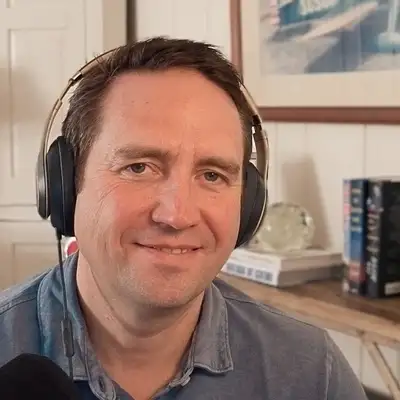
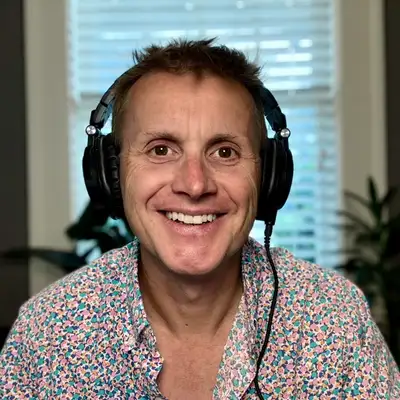
Space Insiders is your bi-weekly deep dive into the intersection of space, cloud technologies, and entrepreneurship. Hosted by Tony Sewell and Rob Ruyak, both seasoned space-tech executives, this podcast features candid conversations with founders, investors, and entrepreneurs shaping the future beyond Earth. Whether you're launching a startup, investing in innovation, or just space-curious, Space Insiders gives you the behind-the-scenes insights you won’t hear anywhere else.
New episodes drop every two weeks. Subscribe now and join the orbit!
Disclaimer: The views and opinions expressed in this podcast are those of the hosts and guests and do not necessarily reflect the official policy or position of any organization or employer.
Welcome to Space Insiders. My name is Tony Sewell, I'm here with my fellow space nerd, Rob Reyak.
Rob Ruyak:Hey, Tony. How are doing, buddy?
Tony Sewell:Good, mate. How are you?
Rob Ruyak:Great. How's it working? Great. Summer's around the corner. Weather's better.
Tony Sewell:It's great. Yeah. Kids finishing school down here in Georgia today. So, yeah, not long till some holidays.
Rob Ruyak:Exactly. Looking forward to the summer.
Tony Sewell:I've had a pretty interesting week. If you follow me on LinkedIn, you'll see I've just started a new job. So I'm joining the Amazon Kuiper team. So I'm pretty excited about that.
Rob Ruyak:You should be excited, Tony. You deserve the new challenge. It's really exciting for you and for me to see you grow and get challenged, you're such a good leader. Really excited to see what you do over there.
Tony Sewell:Appreciate it. It's going to be really good. It's like two goals. Amazon's a great company to work for, and this is a massive ambitious program, so getting to take part in that. And I also get to relocate to Australia at the end of the year, and it's something I've been dreaming about and trying to convince my wife to do for some time.
Tony Sewell:I finally won that argument, so it's going to be a good adventure.
Rob Ruyak:It's going be a lot easier to find your favorite food, the Vegemite down there, Yeah,
Tony Sewell:meat pies.
Rob Ruyak:I like meat pies,
Tony Sewell:Yeah, good. Good. Awesome. All right. Well, we've got a great guest coming on today, Brett Alexander.
Tony Sewell:Do you want to just tell us a little bit about Brett before we get into the news, Rob?
Rob Ruyak:Brett is incredible. I don't know how to even intro him.
Tony Sewell:This is going be really fun. Yeah.
Rob Ruyak:Not only I would consider him a good friend of mine, but he has been probably my number one mentor in this industry going back only about five or six years ago. But this is someone who currently has his own consulting firm, having just served in the role of Chief Revenue Officer at Firefly Aerospace, which we'll talk a lot about. He was one of the early employees at Blue Origin, so lots to talk about there. Very excited about that. He's also been pretty influential in his career around policy.
Rob Ruyak:You know, he authored Vision for Space Exploration following the Columbia accident. Oh, wow. Very trying time. They're very emotional.
Tony Sewell:He worked at the White House too.
Rob Ruyak:He did. He worked for the White House. And he was also the president of the Commercial Space Flight Federation. We can talk a little bit about that a little bit about that for those that don't know about it. But but, you know, nonprofit organizations that bring industry together, and he's been a leader there as well.
Rob Ruyak:And he also you know, he started his career at FAA, Office of Commercial Space Transportation. So everything from the beginning to where he is now, I don't know if we've talked to anyone yet that has such a-
Tony Sewell:Government policy, startups-
Rob Ruyak:Yeah. Round trip.
Tony Sewell:Big enterprise. Yeah. It's going to be
Rob Ruyak:really good. So when you and I were talking about doing this podcast, I think I remember telling you, I said, there's just one person we really, if we can get to talk to him, it's Brett. Very excited to talk to him.
Tony Sewell:Yeah, cool. I got to meet him late last year, I think, when we were in LA. He's a fun guy. This would be a good one. All right.
Tony Sewell:A couple of new stories that we wanted to talk about today. We'll talk about the NRO budget cuts or potential budget cuts second. But I wanted to just quickly touch on this one, which I thought was pretty interesting. So there was an article in Space News yesterday about Endurosat. They're a Bulgarian satellite manufacturer.
Tony Sewell:They just raised €44,000,000 in a round led by the Founders Fund, which is the VC that was founded by Peter Thiel. I saw a quote also yesterday from a small sat conference going on in Europe, and there was an exec from a European small sat manufacturer who was on a panel, and he said that Trump is the best business developer in our team. This is an interesting story because it kind of overlays this new sort of optimism, I think, amongst defence and space companies in Europe, and the opportunity that they're getting from this increased focus on local spending on defence. But it is interesting, I think, that such a prominent American VC investing in a European company. Obviously, they see optimism in the European market and perhaps confidence that tariffs aren't going to be as big a barrier to The US market as what we see every day.
Tony Sewell:I think you've also got to see there's got to be connection to some of their other portfolio companies. They talk about Vata Space. But anyway, I thought that was a pretty interesting investment.
Rob Ruyak:Yeah. And I think we've talked about this a little bit in the past. I think the if, again, if people haven't skimmed or read in detail the rearm strategy coming out of Europe around their defense and national security investments that they wanna plan over the next I can't remember how many years, maybe it's ten years, is is pretty exciting. And I think for anybody that's, you know, building a space company, a defense company, a defense tech, or an investor has to be global. I mean, this is a great example of that because there's going to be investment dollars in places in the world that you've never seen.
Rob Ruyak:And I think especially in the market where you're about to participate, Tony, on these global constellations, trying to serve the remaining 70% of those that are not connected on the Internet, there's going to be a whole host of new businesses that spawn out of that, I
Tony Sewell:think. Yeah. Yeah.
Rob Ruyak:And so what I loved about this article was, how companies now are actually making those investments, And there's companies in Europe that are raising enough money from investors, global investors from other countries that see opportunity for a lot of these firms. That's a
Tony Sewell:big chunk of change, 49,000,000.
Rob Ruyak:Yeah, it is.
Tony Sewell:Right. Quickly moving on to the second story. There was an announcement about NRO potentially cutting the commercial inventory budget by a third. And this was with the background of GEOINT going on, was it this week or last week? This week.
Tony Sewell:Week. And how the NRO was conspicuously absent from that conference. Obviously a lot of companies, commercial companies, really rely on these contracts. I know you had a few thoughts on this one.
Rob Ruyak:I did not go to the G1 conference this year, but I had a lot of colleagues that did. And I I think a lot of people weren't necessarily they they weren't really surprised by the thin attendance. I think we've been seeing that since the beginning of the year, mostly due to some actions from Doge. But what at first, when I read this article, was pretty troubling because when you think about, how important satellite imagery is now for national security intelligence, taking pictures, trying to identify and track the bad guys or whatever that might be, is something that the government's been doing for quite a quite some time now, acquiring actually the data from from various defense contractors that operate satellites. But over the last five to ten years, more commercial companies that are actually now taking pictures and they're selling to government.
Rob Ruyak:But to be able to, you know, to read this and see that there's a confirmed 30% reduction, for commercial imagery spending in the f y twenty six budget was to me a little bit troubling. But then, you know, I don't know, I kind of thought about it a little bit. And I just I don't know. Maybe this is the optimist in me. Maybe what this might be doing is trying to incentivize a different type of behavior on the government side, which is maybe it's not just buying all raw data from satellite operators and manufacturers, payload designers and operators, but maybe it's actually trying to influence the market to build capabilities that deliver the insights.
Tony Sewell:The downstream stuff.
Rob Ruyak:Yeah. So what what about buy what what about just buying the insights or the intelligence versus all the raw data? Because if you think about it, you know, if you are a, let's say you're a commercial real estate developer, you're trying to figure out where to build a, you know, a new multifamily housing facility, you know, you might want the satellite imagery for various things. What are the flood lines? You know, are they on a fault line?
Rob Ruyak:All all these different things that they do to make a good investment. They'd have to hire people that would have to build systems to process the data and make sense of it. So maybe this is the optimist in me is thinking that maybe this is about potentially changing behavior and the markets should pay attention to You know, if you're going to start a company, if you're going to work for a company, I I I feel like a geospatial analytic type firm or one that builds the algorithms might be a nice place to to to kind of focus on, especially given the sense that government is huge funder for this.
Tony Sewell:Yeah. Well, definitely for the commercial applications.
Rob Ruyak:Yeah.
Tony Sewell:Yeah. The analytics piece is important.
Rob Ruyak:The one thing too, was gonna say, Tony, because, you know, again, we we talk about how, you know, we also wanna educate people that listen to us. When you do read this article, and, again, we'll we'll provide the link in there, there's there's two specific terms that that might be confusing to people. One is the electro optical commercial layer, which is basically a satellites that take pictures or, like, they take photos. And then there's this concept of synthetic aperture radar, SAR based satellites, and they, they use, different types of waveforms to actually look through clouds and and and and can actually take not take pictures, but they can actually get in information from, you know, you know, of the surface even during the nighttime. So if you look at these these types of technologies, it's really interesting to read about how the combination of both can actually help with various types of use cases.
Rob Ruyak:Don't get scared by the terms, but it's very interesting to learn about and it'll be helpful when you understand why certain types of companies are doing certain types of things.
Tony Sewell:Yeah, it's cool if you haven't seen these types of images before, to go to a few of the websites of companies like Capella and BlackSky and Maxar just to see the different profiles and the level of detail they provide. It's pretty interesting stuff. All right. Well, I think this is probably a good point for us to get to our interview with Brett. What do you reckon?
Rob Ruyak:Sounds great. I can't wait to talk to him.
Tony Sewell:All right. See you in a minute. All right. Welcome back to the show, and welcome, Brett Alexander. Thanks for joining us, and good to see you again.
Bretton Alexander:Thank you. It's great to be here.
Rob Ruyak:Hey, Brett. So good to see you. Thanks for doing this with us. Really appreciate it.
Bretton Alexander:Absolutely.
Rob Ruyak:So I just want to tell you, and we talked a little bit about this in our intro, is that when Tony and I were discussing even the idea of doing this podcast, the first person that came to mind for me was you. So to be honest with you, we're very grateful you're taking the time to talk to us because of your background, the history, you being such a mentor for me, means a lot that you're doing this. So thank you so much.
Bretton Alexander:That's very kind of you to say, thank you.
Rob Ruyak:Well, it's true. So let's get started with this. So you had such a diverse background, everything from working in government policy, you know, and working in commercial space. The first question we have is how did you take that journey? Why did you take that journey?
Rob Ruyak:How did it, why did it stick? Why have you gone done this whole thing from soup to nuts in this industry across so many different roles? It's very unique. So just love to understand how that happened. You
Bretton Alexander:bet. So I really have thirty plus years in the space industry, but space has been a thing for me from the very beginning. So I grew up in Miami, Florida. I was a space fan. I don't think I remember the Apollo landings.
Bretton Alexander:I would have been maybe four and a half or five by the last landing. But I was a space fan when they were building the space shuttle. My mom took me up to Cape Canaveral to see the very first shuttle launch. So I was there in 04/12/1981. By coincidence or later, was able to be at the very last shuttle launch and landing.
Bretton Alexander:So I got wheels up and wheels down of thirty year programs of the space shuttle. But space has always had a hold on me, and I think that is true for a lot of people in the space industry. They get bit at a younger age and stick with it. So I'm not sure it was by choice or by design. It was just by the way it was gonna be.
Bretton Alexander:So when I went to college, I went to the University of Virginia. I majored in aerospace engineering. I got a bachelor's and master's. I didn't come out of that wanting to be a strict engineer and design parts. This was early nineties.
Bretton Alexander:So I came to Washington and started doing programmatics for Air Force Space and SDI, which was the Strategic Defense Initiative Organization, and NASA and stuff like that. That brought me into the Washington space community, and I've been here ever since.
Rob Ruyak:That's great. I think what would be really interesting for people to understand and for us to really learn from is, how would you summarize the change in how the space market, like, what what kind of changes it made from from that whole period? Because it's made a lot of different pivots and and and and alterations over the years. I think from the early two thousand, I think that's when the the space shuttle program was decommissioned, right? That's when the space shuttle was decommissioned.
Bretton Alexander:Last flight in 2011, yeah.
Rob Ruyak:In 2011, sorry, yeah, 2011. So there's just been a lot of different changes. So what is that, how would you summarize that throughout your career?
Bretton Alexander:Yeah, I mean, first I'd say there is a very dynamic space community or space industry now. The ecosystem of companies that are entrepreneurial, that are building spacecraft, that are doing things in space, building rockets, etcetera. That dynamic environment did not exist thirty years ago when I got to this town. It was government Now a lot of what's happening today is still government driven. Government's in the background, but there is a legitimate ecosystem around that, that's bringing private sector money and new approaches and proliferation of companies, not all of which will be successful, but many of them will.
Bretton Alexander:And it's a much more dynamic situation than it was before. And I think the the the thing that I've tried to be involved in through that is the commercial side and helping to get government to jump start that. Because if you go back and you really look at what caused this dynamic situation, the government changing its acquisition strategies, particularly NASA, in the mid two thousands with the COTS program and then later with commercial crew, that really jump started something that has led to a lot of this. It would not be the same without that. I think of them as a prime mover in commercial space, even though they are the government still.
Tony Sewell:That's super interesting. It's made me think of, I'd never really thought of the fact that thirty years ago, the path to a career in space was through engineering. There wasn't really path or an entrepreneurship path. There's got to be a massive difference to where we are today.
Bretton Alexander:Right. In the late nineties, there were a number of companies trying to do launch vehicles that were private, that were raising money, and all of that went away after the spacecraft side, after Iridium and Globalstar, and then Teledesic, came up in the late nineties or were developed over a ten year period of the nineties, actually launched spacecraft. So Iridium and Globalstar launched into orbit in 'ninety eight, 'ninety nine, February, and promptly went bankrupt. They each spent about $6,000,000,000.1000000000 of that was on launches, but they spent about $6,000,000,000, and they ended up with, you know, a a phone that was the size of a brick that was $8 a minute. And in that ten year period it took to develop all that, you know, cell service had had had rolled out across the country and across the world, and nobody needed this one heavy brick phone that only worked inside or outside.
Bretton Alexander:You know? And so they've had to change their business models. They're still around, but they've been through bankruptcies to still be here and change their business models. And so the business side of things really stopped for a while. And then you had billionaires get in the game or multimillionaires like Elon Musk and Jeff Bezos and Richard Branson get into the space business in the early 2000s.
Bretton Alexander:Then you had NASA try to do some commercial things through COTS and later commercial crew, and together that ecosystem develops that is much more, you know, what we see today.
Rob Ruyak:Yeah. What what was equity coming in too. What was COTS again, Brett? Because I and, you know, because because there is that that element too during that time where NASA was trying to be more, I don't know, maybe more of an anchor tenant to some of these programs versus kind of the owner operator. So is that an example?
Rob Ruyak:What really is COTS again?
Bretton Alexander:So COTS was a commercial orbital transportation services program.
Rob Ruyak:Mhmm.
Bretton Alexander:And it was started by Mike Griffin when he was administrator. So in the 02/2005 time he announced it, 02/2006, first, contract awards to SpaceX and the company called Rocket Plane Kissler, which later failed, then, Orbital Sciences came in as the second company that's now north of Grumman. And those two still provide the services today, which is cargo to the space station. Right? So recognizing and understanding that the shuttle would be going away at some point.
Bretton Alexander:So this is after the Columbia accident in 02/2003. The vision for space exploration, came out in 02/2004, I was at the White House for all of this and was involved in helping to craft that, said we're going go back to the moon and we're going to do that after we finish the space station, make it operational, and then retire the space shuttle. Knowing that the shuttle was going be going away, there was no way to get cargo to and from the station other than the Russians or the Europeans, the Japanese, but we needed our own capabilities. Administrator Griffin looked at that as a market that he could provide from the government with some seed money to help develop the capabilities, but do it in a commercial way where those capabilities could also be used for other things besides what NASA needed. And that led to Falcon nine.
Bretton Alexander:That led to Antares. That led to both Cygnus and Dragon and a lot of the other activity that we came from, or that we see now, was sparked by all of that.
Tony Sewell:Yeah, that's cool. So that's a good segue to kind of a discussion on launch. Two weeks ago, we interviewed Chris Capon, founder of a software company in Australia called Zendia. And towards the end of the interview, we were talking about the Australian space industry, and he had some views on a lot of the attention that launch was getting in Australia, and did Australia really need a sovereign launch capability, and it was sucking up a lot of investment? I was sort of interested to get your perspective on someone that's had so much experience working with launch companies The US.
Tony Sewell:How much room is there for these new launch companies? What's really gonna separate the winners from the losers, do you think?
Bretton Alexander:Yeah. I have been involved in launch from the very beginning of my career. Air Force Space Launch was sort of the first thing that I worked on, writing up thirty day forecasts of Delta two launches, Atlas two launches, and it was largely driven by government. And of course, now what we see with large numbers of Falcon nine launches each year, where a large number of those are Starlink related, which is commercial, and then the rest of their manifest is divided between some commercial satellites, but also government NASA type activities, national security as well. So when you look across, launch has gone from something that was a dozen times a year and half a dozen for a vehicle was a good year, to over a hundred for a particular launch vehicle now, and a whole bunch of other activities and other companies as well launching things.
Bretton Alexander:So the amount of satellites getting into space, the amount of launches, the number of these activities has grown exponentially. I think it's going to continue to grow in terms of mass to orbit. New launch vehicles are coming in, but is there room for everybody? I think the answer is yes, as long as they're not all the same. The automotive industry or the aviation industry, you have differentiated niches where there are vehicles that people will pay for because they need that.
Bretton Alexander:If you are a small spacecraft company and you're building a spacecraft and you want to demonstrate on orbit, you can fly on a Falcon nine transporter mission along with a hundred other spacecraft, and you can do it for a very low price point.
Rob Ruyak:Mhmm.
Bretton Alexander:But if you want that satellite to go to a very specific orbit that not everybody else is going to and transporters not going to, then you need your own ride.
Rob Ruyak:Right.
Bretton Alexander:And so there is a market for that class of a small launch vehicle that will continue. And then you have these large LEO constellations that are also, you can put 10 satellites on one launch vehicle, you can put 50 on another, and you want a mix of providers to get you there, a mix of capabilities. And so there is market for a number of providers there. So I think the launch market remains dynamic just as the satellite market remains dynamic and will continue to evolve over time. But I think there's room for many players.
Tony Sewell:It is pretty interesting, I think, how some of these companies like SpaceX, and I think about Rocket Lab, how they've really kind of taken that launch heritage and turned themselves into Rocket Lab is an alternative aerospace integrator that's going to be competing with the big guys. It's amazing how they're operating in a whole range of different segments now.
Rob Ruyak:Yeah. They're diversifying a small
Tony Sewell:Launch is just a small part of their business.
Rob Ruyak:And they're diversifying, right? Hypersonics and all Yeah.
Bretton Alexander:Yeah. So there are very few, what we think of as space companies, that have the full value chain. The launch, the spacecraft, the in orbit services, the data services, and all sorts of other things, ground segment as well. And so those companies, whether they're small right now, are looking at it much more holistically than someone who says, I'm going to do very well in one niche, and I'm going to provide either comms or imagery or whatever it is from space you know, where they have a niche. But there are companies, I think Rocket Lab, Firefly, SpaceX are companies that have much broader perspective on things, on what they're doing.
Bretton Alexander:Companies like Blue Origin can jump into that, although they don't currently right now have, you know, spacecraft that they are providing services with or something. But they there there is a a number of companies out there that are looking at it from that perspective, and then there are plenty more that are not. They're saying, nope. I'm gonna do this one thing. I'm gonna do it well.
Rob Ruyak:Just speaking of Blue Origin, Brett, one of the things that we definitely wanna talk to you about was your time there because you were there for, I think, over twelve years or close to twelve years.
Bretton Alexander:Yeah, almost fifteen with consulting, yeah.
Rob Ruyak:Yeah, so we'd love to hear more about what was that like in the early years and you operate as a team, as a leader? How did you interface with government? How did you interface with Jeff Bezos and his vision? It's a pretty open question, but I think a lot of people really are curious as to, there were a number of years where people kind of heard of Blue Origin, but it wasn't until many years later, there was actually a vehicle where it was public and you can actually see it work, specifically New Shepard obviously. But yeah, what was that like being there, especially in the early years?
Bretton Alexander:Well, I will say great company, great people, great leadership, and I really think they're going to be a juggernaut in the industry in the future. When I started as a consultant for them, there were 75 people. And when I left a couple of years ago, it was 11,000 people. So in my mind, there's a lot of different blue origins and a lot of different aspects or phases that it went through. Early on, I would say the things that came through, which was it was about achieving the end goal of millions of people living and working in space incrementally, step by step, ferociously.
Bretton Alexander:That's the motto of, graditum ferocitor, and it really wasn't about, the business of a space company, meaning it was about building a space company, building a company that builds rockets and spacecraft, etcetera, rather than the business around it in terms of trying to get financing or making a profit. That's because the founder, Jeff Bezos, had enough money and said, don't worry about that part. This is a long term endeavor, twenty, thirty years. I'm in it for the long haul. We don't need to do that.
Bretton Alexander:That did change after we engaged with government, which is what I was brought in to do. Hey. Go talk to NASA, but don't tell them anything. You know? But but start engaging with with NASA as it was opening the doors to commercial programs, etcetera.
Bretton Alexander:And then let's use that interaction to help Blue Origin develop New Shepard and then New Glenn, etcetera.
Tony Sewell:Your experience working with him and interacting with him directly is obviously pretty unique. Rob and I consider us Amazon veterans. We're products of his vision and the way that he thinks about customers and running a company, but I've never met the guy. Can you tell us a little bit about his leadership style as opposed Obviously, he has his public persona, but obviously very different to work with. Can you tell us a little Just give us a few sort of insights into that sort of relationship you had with him.
Bretton Alexander:I would say from the beginning, he is, if not the smartest person I've ever met, then at least in the top two. Mhmm. Very quick, very analytical, and very attentive to what you are saying, which does mean you need to have your Across your brief. Right. You need to know what you're talking about and be able to defend it, stand behind it, or say, well, my knowledge only goes so far.
Bretton Alexander:I've had him say, well, you know more about this than I do, so we'll go with your view on something. Surprising to me. I've also had him tell me, you know, clearly, you have no idea what you're doing. He was right because that was about building a website and not my expertise. I think he's done, one or two of those before.
Bretton Alexander:A very demanding leader and a very tough leader, but a very, I thought, fair leader as well. And after some of the toughest moments, a couple hours later, it's, hey, we're going over to this place. Let's go get a drink together. Right? So no hard feelings left after that.
Bretton Alexander:And so those interactions were always in general positive for me even when I didn't live up to my, let's say, potential in those. Leadership of the company, I think the company can use more of his attention and time. And I think it's getting that more now than it did certainly during the COVID time when he really had to focus on Amazon. And before that, when there was a pattern of him being there on Wednesdays, one day a week, and then Saturdays, once a month, when we had those sort of interactions. But the more time he spends with with Blue, I think the better off Blue is.
Rob Ruyak:Yes. And how would you describe the culture over there, Brett? And did you take anything away from Blue Origin as a commercial space company to your next endeavor, your next role?
Bretton Alexander:I certainly took a lot away personally. In terms of culture, the culture was of engineering excellence, and it was you know, I would say that could be painstakingly slow. And I think a lot of the criticism that people have said about Blue Origin, and I think that I would agree with, is that it has been very slow. And I think Jeff would agree with that too. It's been very slow to develop the capabilities that it has.
Bretton Alexander:But the engineering excellence part of it is that the people really understand what they're doing and the design of it and all of the nuances. And so that culture of caring about the end product, caring about space, being passionate about it, being willing to argue technically back and forth about decision making and then disagree but commit to the to the path that's chosen. Right? That was one of the leadership principles called disagree and commit That's that, you know, I think very much taken to heart there.
Tony Sewell:Yeah. That's
Rob Ruyak:good. I mean, one of the things that we've talked about with a couple folks in our first few episodes was like, you know, our our I think Tony and I have this interest in what does it take to lead a company in this market, you know, and and trying to tease out, you know, you know, how different is it, Because most people I think that are in this industry do have engineering backgrounds or they worked at NASA or some other space company or maybe a defense contractor. And there might not be as many business people that have background in this industry because it's kind of new in that sense it is, right? How do you really make money? I mean, you and I even talked about that last summer when we were thinking through, is there a digital business that can be built within a launch provider?
Rob Ruyak:What does that look like? We're talking about moving up the value chain, is that one of them? And I think trying to convince engineers that there's an opportunity there is difficult, but also I think there's a bit of learning that needs to be done on the investor side as well about what that could look like. Just because you have this kind of disconnect, you got the engineers that maybe there's not as many that are lacking or that have the business experience and you have a lot of the investors with business experience and not enough industry domain expertise. So being able to kind of meet in the middle is difficult, right?
Rob Ruyak:So yeah, I find that interesting in this particular market. Maybe here's a question I do have for you along those lines is when you were a chief revenue officer, did you have that challenge too? I mean, what was it like to try to be a Chief Revenue Officer at a launch company? I mean, that must have been really, that must have been a challenge in trying to break new ground.
Bretton Alexander:Yeah, so I was Chief Revenue Officer at Firefly Aerospace for under two years, about eighteen months, and Firefly is majority owned by a private equity firm, And so the attention to revenue, and to, the the the balance sheet, is very different there from where I had come from, Blue Origin, which had a single owner who had often said, don't worry about the profit part of it. So what I thought I understood was only a part of what I needed to make that work. Very much focused on the the the dollars coming in, the phasing of that money, you know, the the return on long term investment, etcetera. Companies like that have to be much more focused on getting the product to market so that the revenue comes in. Right?
Bretton Alexander:You don't book the revenue for a launch vehicle until you launch it, or for a spacecraft until that spacecraft is up and operating. Whereas when you're doing, let's say, the the lunar lander program, which they have Blue Ghost or or other things where you're working directly with the government, you know, you're getting milestone payments that that maybe, you know, look different on a balance sheet. And so there's different ways of doing it. So, you know but you are always focused on the health of the company and the run rate that you have and how long can you, continue like that. And so you are much more focused on the immediate products and and getting them to to to market.
Bretton Alexander:Whereas other companies like at Blue Origin, you know, we had diversified into 30 different activities before, let's say, New Shepard was was flying people or, New Glenn had its first flight kind of thing. So that diversification came before, you know, the the the business became, let's say, profitable or self sustaining or, you know, going concern. So it it it it certainly taught me a lot. And as chief revenue officer, I because government is a large part of that the revenue side, I also did government relations. I had government relations for it.
Bretton Alexander:So you're also working with congress and and the administration on a regular basis as well. And so you're balancing all that looking out at, you know, signing commercial deals for launches, signing government deals for contracts for spacecraft, lunar landers, as well as in in space capabilities, and then working on policy with Congress as well.
Tony Sewell:Cool. Last serious question before we get to the fun stuff at the end with Rob. Beyond launch, looking five to ten years ahead, what sectors excite you the most in space? What are some of the ones that you reckon might be overhyped?
Bretton Alexander:Yeah. You know, I'm a big fan of the lunar economy and the push to open up the moon and cislunar space to the economic sphere. That was a quote from the science advisor, John Marburger, back in 02/2004, when President Bush announced the vision for space exploration about going back to the moon, and really about bringing the moon into the Earth economic sphere, you know, for the first time, really. And I think we're not there yet, but we're on that path. And so the next five, ten years, I think it's incredibly important that in that, that NASA still have the Artemis program and still take, you know, American, astronauts and and international astronauts back to the surface of the moon.
Bretton Alexander:But all of the things that go with that, lunar resources in terms of ISRU as well as, let's say, helium three extraction and bringing that back, position navigation, timing on the moon, around the moon, comm services, power services, you know, all of the things that you need there to have a thriving ecosystem ecosystem and to have activity there. I think there's a lot of potential, potential businesses as well as potential there's science benefit, but it's the business side of it that I think brings it into the economic sphere of Earth, if you will. I'm very bullish on that. I do think that with this administration and future administrations, just as we've had in the last five years, that the push on the national security space side, now with Space Force being its own service, but just the push for new capabilities because of the threat environment, because of peer competitors, I think that the Space Force budget is going to increase substantially. I think those capabilities I don't think we understand exactly what capabilities are going to be needed.
Bretton Alexander:What is Golden Dome? Is it interceptors in space? Is it lasers in space? Is it ground based? Is it We don't actually know that, but the effort that goes into that will drive a lot of the economic opportunity in the space industry as well.
Bretton Alexander:So those are the two things that I think I'm gonna be bullish on. In terms of things that I think are overhyped, don't have too many that come to mind. There are a lot of launch companies in the world. I think the ones that are launching today are going to be successful or in general. I don't see a lot of space for new companies to be getting into that business, you know, five or ten years from now.
Bretton Alexander:But you just you just don't know that either. You really don't.
Rob Ruyak:Real quick. Is the national security concern in SIS LUNAR, in your opinion?
Bretton Alexander:It's really about being able to hide something out there and come back without anybody knowing you're coming back. So coming back unwarned, and then you can come back to geostationary orbit and do something nefarious without being tracked. So I think that's part of it. Then there's also the geopolitical concern of, let's say, China getting to the South pole of the moon with people and saying, This is our exclusive economic zone, and you can't come within a couple hundred kilometers of where we are, and that happens to include all the lunar ice that could be used for hydrogen or something like that. So there are that's a more geopolitical concern than a national security concern, but I think it's a valid one.
Bretton Alexander:And so I do think that it's not the same sort of space races we had in the sixties, but it is a very important competition in terms of the next hundred years of which economic and political system is going you know, governance rule of law, you know, is gonna govern space activity beyond Earth.
Rob Ruyak:Yeah. I asked because that that's the I I I can't seem to wrap my head around, like, what what what is the national security concern with sizzling, but, obviously, there's a good reason. And it sounds like as simple as, you know, having the higher ground is, like, really, really important. Right? Especially in new frontiers.
Bretton Alexander:Yeah.
Rob Ruyak:So Brett, thank you so much. We have one last question. Is the fun question, hopefully. We're trying to do this because we want listeners to try to get to know you a little bit more personally. Hopefully this kind of helps there.
Rob Ruyak:So with your background, I'm sure you've had a lot of these, but what is the dumbest question that someone has asked you that involves space? A dumb space question that and it could be something you laugh at, or something that really drives you crazy.
Bretton Alexander:Well, it's not really a dumb question, but people often ask why satellites aren't just sitting overhead all the time. Right? And that's an orbital dynamics question. Right? You can sit over a spot on the on the Equator, you know, twenty four hours a day, but, you know, only if you're out at a certain, you know, altitude, 22,300 miles, right, kind of thing.
Bretton Alexander:But people genuinely don't understand why can't, know, why the satellite isn't right above them all the time. Like a cell tower could be there and the satellite's just above you. And so why they're moving and all of that. So it's not really a dumb question. It's just something that, you know, people haven't really thought of in that way.
Rob Ruyak:No. I'm glad you're saying it was not a dumb question because I pretty sure that probably was one of my first questions. Yeah. Absolutely.
Bretton Alexander:I will tell you back back in one in my first job, we had a bunch of folks, so I was a support for the Air Force, but we had a bunch of folks from the government, interagency, State Department, Commerce Department, Transportation, others come over, and we taught orbital dynamics one zero one using a beach ball and a hula hoop. And you can say, okay, if you have to if you're in orbit and you are a hula hoop, you cannot be above the North Pole. You cannot be above the South Pole. You have to be you know, the axis has to go through the center of the Earth. And that made people go, oh, okay.
Bretton Alexander:I get it. That's why you're always moving around.
Rob Ruyak:We definitely have to do a video of you doing that in part two of this session.
Bretton Alexander:That was a long time ago.
Tony Sewell:Something for the flat earthers out there.
Rob Ruyak:That's right. That's right.
Bretton Alexander:Right, exactly.
Tony Sewell:Awesome. Well, Brett, thanks again for joining us. It's been super interesting. I appreciate you sharing some of those stories. And for our listeners out there, if people want to get in touch with you, Brett, where is the best place to find you?
Bretton Alexander:Yeah. Gmail, brettton. Alexandergmail dot com. That's B R E T T O N dot alexander.
Tony Sewell:Alright. Awesome. We'll make sure we put a copy of that into the show notes. And for our listeners, thanks again for joining us. If you like what you're hearing, we'd love for you to recommend us to a friend and write a review.
Tony Sewell:That'd really, really help us. We're not it's not a full time job for us yet, despite what you might think podcasting doesn't pay, but it's a lot we're having a lot of fun doing it. So we appreciate everyone following. So
Rob Ruyak:Thanks, Brett. Thanks, Brett.
Bretton Alexander:Great great
Tony Sewell:to meet you, Rob.
Bretton Alexander:Guys. Thanks, Rob. Thanks, Tom.
Rob Ruyak:See you, guys.