Subscribe
Share
Share
Embed
The Risky Science Podcast features conversations with scientists, insurers, investors, portfolio managers, and others about the evolving science of predicting and modeling risk across both natural and man-made perils.
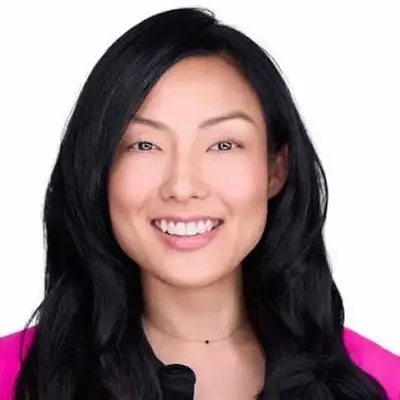
Hi, this is Christopher Westfall, and this is the Risky Science Podcast. Two weeks ago, state senator Ben Allen came on the Risky Science Podcast and made his case for California's insurance future. Keep catastrophe risk in the private market, fix what's broken, and in his words, don't gamble the state's solvency on an untested idea. Today, you're gonna hear a very forceful argument in the other direction. Jane Kim just finished first in the race to become California's next insurance commissioner.
Chris Westfall:She's a former San Francisco supervisor and worked for Bernie Sanders. And where Alan wants to draw private capital back into the market, Kim wants to build a public one, a nonprofit disaster insurer funded by premiums the state would claw back and reinvest, plus a single catastrophe model built by California itself. So this is the same problem, an unaffordable, retreating wildfire market seen through two completely different lenses. Alan's answer is a better run private system. Kim's answer is a public alternative.
Chris Westfall:For private market risk, Pasadie, that choice could define one of the single largest markets in insurance for years to come. Hope you enjoy the conversation. Miss Kim, thanks so much for joining today. I know you're incredibly busy. There's a lot going on, especially in the race.
Chris Westfall:And I know we have a certain amount of time. So I want to sort of dive right into it, but maybe you could just give a short version of your background. I have an understanding of but it'd be nice for the audience to get a sense of it.
Jane Kim:Sure. Well, my name is Jane Kim. I'm running to be our California Insurance Commissioner in office which oversees a $3,300,000,000,000 industry, an industry that is actually doing quite well despite what the mainstream media narrative might be out there. And we in California are required to have insurance to drive to work or to school, to qualify for a mortgage, to buy a first home, to open a business or even a nonprofit of any kind. And so we have to make insurance affordable and available because otherwise we're going shut everyday Californians out of our economy.
Jane Kim:A bit about me. I spent twelve years as an elected official here in the city and county of San Francisco as a member of the San Francisco Board of Supervisors and School Board, where I'm really proud to have worked on landmark legislation such as the first $15 minimum wage ordinance in the state and a revenue measure that has now made San Francisco the only city to make community college tuition free. I'm also really proud to have negotiated the most affordable middle income housing of any California legislator during my time. After my period as elected, I worked for Senator Bernie Sanders as his political director and also spent four years as the California director of Working Families Party, where we're working to build a corporate free electoral infrastructure to elect candidates from school board to US Congress.
Chris Westfall:That's great. And it's really interesting, and I think it's incredible and interesting sort of have a progressive perspective on what's going on in the insurance market, and especially in the California insurance market, because there's so many forces at play, you know, and particularly in property insurance, you know, it's sort of like a, almost like a laboratory for what's going on in the larger, you know, US economy and global economy. There's, you know, you have wildfire risk, you have a public plan that's struggling. And then you have the whole issue of AI and data centers and demand from there. So and that all circles back into the possibility of wildfire risk given the utility issue.
Chris Westfall:So, from that perspective, you know, what's the fundamental issue that you want to solve when it comes to the insurance market in California?
Jane Kim:Well, this office is incredibly interesting to me. It's one of the most important jobs that you may not have heard of because it sits at the very interesting intersection of the most important challenges facing California during this time: wealth inequality, economic fairness, and climate disaster. And we can kind of go into all the different ways that insurance plays this interwoven role in our lives. But I mentioned it earlier. We are required to have insurance to participate in the economy in any type of meaningful way.
Jane Kim:Insurance has this outsized say on who gets to build wealth and how much it's going to cost them. So again, we have to make insurance affordable and available. Otherwise, we're shutting everyday people out of our economy and we're not building an economy that works for all of us. This office has been incredibly underleveraged and is very under the radar but could be a powerful platform for working families and another ally in this movement to make this economy work for everyday people. And so I've been running on one of the more unique platforms of the 11 candidates that ran for this office.
Jane Kim:I'm really excited that we came in first place, that we're leading plus eight statewide. We won in counties that Hilton and Trump won in, Republican candidates. We also won every Southern California county as well as the Bay Area where I am from. And I think what this showed was that our message of running on affordability and making government a champion for everyday people resonated. And everyone knows that the current framework is a systematic failure.
Jane Kim:The premiums are too high. They're raising our rates. They're canceling our coverage. And even if we have insurance, they fight our claims every step of the way. I've talked to claim adjusters that estimate that anywhere from 1,700,000,000 to $3,000,000,000 are stolen every year from Californians in the form of claims that are denied, delayed, and underpaid.
Jane Kim:So there's huge issues around economic fairness that this office is set up to enforce the good laws of California. And there's a lot of work that we can do to combat immense wealth inequality. Insurance is actually considered one of the greatest transfers of wealth from everyday people to big corporations. And as we mentioned, climate disaster. Climate disaster has probably been one of the single largest factor that has changed the insurance framework in this country.
Jane Kim:We used to have a billion dollar storm every three to four months. We now have one every three weeks. And the current insurance framework isn't designed for modern conditions of the catastrophic disasters that are happening across the world. And so I am proposing to not just be the candidate Well, let me take a step back. Many of the candidates that run for this office historically and also this year are arguing that they're going to be the best driver for this broken car, that they're going to drive it carefully and slowly and take this car that's falling apart to its destination.
Jane Kim:I want to fix it. So I'm running on a platform with three priorities. One is to introduce a public nonprofit insurance for disaster. This is not my idea. It exists in France and Spain and New Zealand.
Jane Kim:Japan has a version of it. Second, I want to expand our already existing low cost nonprofit auto insurance to more Californians. And finally, I want to guarantee health care for every child in California. But more than anything, I want to make sure that this industry actually works for us, that this office is a watchdog for consumers and not just a lapdog for corporations.
Chris Westfall:I want to dig a little bit into that. You know, when you talk about, you know, getting into the role and what your priorities were. And I'm just going to focus on the role of homeowners and catastrophe insurance. You know, and you mentioned it claims is seems to be a big issue, the speed of claims. What are your thoughts on, is that the first thing you're going to try and address as an insurance commissioner when you join in?
Chris Westfall:And what are your solutions for that?
Jane Kim:Well, let's start with claims. I want to make sure claims are fast and fair. It's the business that we are paying into. Insurance industry, though, they're more institutional investors than they are insurers. Their primary business is getting capital that they then invest in the market, right?
Jane Kim:That's our premium dollars. Insurance is almost a secondary part of their business. And one of the ways that they are so profitable, besides raising our rates and canceling coverage on the folks that they view as their sickest or people with preexisting conditions, whether they're patients or homes or cars, is that they also fight our claims every step of the way. And so again, we see insurance companies deny, delay, underpay claims that they're contractually obligated to pay when you purchase that policy from that company. And so one of the major aspects of this office as the regulatory oversight of this trillion dollar industry is to make sure that the insurance industry plays by the rules in the state of California, and that means paying out claims quickly and fairly.
Jane Kim:So, one, I want to freeze your coverage when you file a claim. You shouldn't be penalized for using the business that you've been paying decades into. None of us want to be the victim of an illness, a collision, a fire. But when that day comes, we want insurance to be there for us. So I want to freeze your rates when you file a claim.
Jane Kim:And two, I want them to pay you interest every day they deny, delay, or underpay a valid claim. We have to pay a late fee or coverage gets canceled on when we're late on our payments. We should equal the playing field or level the playing field.
Chris Westfall:So how would you sort of deal with the sort of issues around that? Because, you know, as you sure understand that that insurance is in as you mentioned, it's institutional investors, it's large sums of money, it's capital coming into California, and they have the ability to pull out. They can withdraw from the market if they feel that, you know, the process isn't, according to their calculation, fair. How do you overcome that when you're trying to fix the claims issue?
Jane Kim:So that's situation. We either let them raise rates or they exit California. And that's not a healthy market. That's a hostage situation. And that is why I'm proposing a public nonprofit insurance program, because we need to alter game.
Jane Kim:And if we don't figure out how to raise and increase our leverage and change the factors that are operating, we're never going to have a level playing field for consumers. So a disaster for all insurance program, nonprofit and publicly run, and expanding our already existing low cost nonprofit auto insurance program. Those are the big ideas. But, you know, there are other things that we can do as a state. We're a state of 40,000,000 residents.
Jane Kim:I don't believe that insurance truly wants to completely exit out of California's market. I think we need to start acting like the most populous state in this country that we are. One example that I'll give is that insurers actually do want to continue to provide auto insurance. It's incredibly lucrative for this industry. One of the rules that I want to set is that we don't allow insurers to cherry pick which in which business that they provide.
Jane Kim:If you provide auto insurance to a zip code, you have to provide home insurance as well.
Chris Westfall:Great. So maybe beyond that, that one aspect of it, maybe you could walk me through, you know, obviously your disaster insurance for all is sort of like a corollary to Senator Sanders' Medicare for Medicaid for all. Practically, what how do you see that being implemented?
Jane Kim:Yeah, so we luckily we have models that we can look at around the world. And I talk a lot about New Zealand's model. So New Zealand operates what is considered a single payer, nonprofit, publicly run disaster insurance program guaranteed for homeowners. And so insurance still exists. So there's insurance for the garden variety of risks.
Jane Kim:So burglary, the pipes bursting in your home, the fire caused by the gas stove would still be insurance that you can buy on the for profit private market. But public disaster, like fires and floods, this would be risk that you would pay towards the state. And so in New Zealand, you get your insurance on the multi payer market. The insurer then pay that line item of disaster to the state. So from the consumer's aspect, there's no change from experience.
Jane Kim:And then when a disaster strikes and it's been declared by the state, the state pays out the claims. But you still file your claim with your insurer, whether it's AAA, State Farm, or Farmers. But a key aspect of it is this: we claw back a portion of the premiums that we're already spending, and we steward it in public hands. We invest those dollars so the dollars that we're spending stays with us. We keep the returns.
Jane Kim:And instead of our returns going to shareholders and CEOs, we actually use a portion of it to plow back into our communities to invest in resiliency and infrastructure and fireproofing and flood proofing. There's only two ways to lower the risk of a portfolio. One is what happens currently. Currently, we cancel coverage on the homes that we view the riskiest, the sick homes, the homes with preexisting condition, like what we see in healthcare. The other way to reduce the risk of portfolio is to actually invest in prevention, and that's what New Zealand is doing.
Jane Kim:They're actually using a portion of the revenue and investing it in fireproofing and flood proofing, things that actually prevent a fire from taking place. You know, individual homeowners can do all the home hardening that they can invest in, whatever they can afford, But it's not going to stand up to a wildfire if we're not going to do community wide resiliency infrastructure work. And I'm the only candidate that is proposing a new revenue stream to help us get there.
Chris Westfall:I want to get back to that because I have lots of questions. But one thing I wanted to ask, so broadly, like how would this be funded? You know, what's the funding structure for a disaster?
Jane Kim:The premiums. Exactly the way it works for the private for profit insurance industry models. They charge premiums that policyholders pay, but instead those premiums would come to the state. It would just be a different entity that would hold our dollars.
Chris Westfall:Would there be any role for, let's say, the private reinsurance market or the private market in sort of offsetting that risk?
Jane Kim:It's possible that the state would buy reinsurance from the private market to share some of that risk exactly as the private insurance industry does today. I mean, this would all have to be studied to make it a framework that actually works for the state of California. But the idea is that we claw back some of the money we're already spending. And instead of it going to this trillion dollar industry, we keep some of it in public hands. We invest those dollars.
Jane Kim:And then the returns from those dollars don't just go to the shareholders, they actually get plowed back into the community in forms of prevention infrastructure spending. We're already spending this money currently. And I'll just give you an example of how much capital the insurance industry accumulates. Travelers Insurance, which is one of the top 10 insurance industries in the country, announced that it made so much money just in the first quarter of twenty twenty six, that they had $2,200,000,000 in excess capital. What did they do with it?
Jane Kim:Did they provide discounts to their policyholders or refunds? No. They gave 100 out to their shareholders. Imagine if we could claw back a portion of that and invest it back in our communities in the form of prevention and resiliency. Canada, interestingly, has single payer auto insurance, publicly run and nonprofit.
Jane Kim:They're also not allowed to keep excess capital in their reserves. So during COVID, when collisions went down, they provided discounts or refunds, rather, to all of their policyholders. My friends in Vancouver got hundreds of dollars during COVID. And they use a portion, again, of this revenue to invest in improving roads and filling potholes because they know if they make the roads safer, that there are less claims to pay out. The for profit private industry is not incentivized to do this.
Jane Kim:The incentives are all misaligned. Their incentives are to make as much money as possible. A public nonprofit insurance program would actually be incentivized in investing in prevention, things that make us collectively safer, and it'd be funded by premiums.
Chris Westfall:So, you you talk to a lot of insurance executives who'll argue that, you know, the reason they're, you know, withdrawing capacity or that the rate is not adequate to the risk, especially when it comes around wildfire. So how does and I've seen other states tackle this as well. I mean, I know there are several states that have publicly backed pools, but they're not really charging adequate rate to keep it, you know, somewhat affordable for consumers. How do you address that issue?
Jane Kim:Address which issue?
Chris Westfall:Keeping it affordable, but also having actual lease, actuarial release.
Jane Kim:The only way to make insurance affordable and available is to invest in prevention. We have to reduce our collective risk. And the current industry is not incentivized to do that. That's why our rates keep going up. Because it is true, risk has risen.
Jane Kim:I mentioned we used to have a billion dollar storm every three to four months. We now have one every three weeks, Right? And so the only tool that the for profit private market has is to raise rates. That's what's happening right now. Our premiums have become so expensive that hundreds of thousands of Californians can't afford it anymore.
Jane Kim:And I've talked to countless Californians from Tuolumne down to Imperial in California that simply cannot afford home insurance. The only way to make insurance more affordable and more available is to drive down the risk. So we need to create a revenue stream that actually invests in risk prevention, flood proofing, fireproofing, community wide resiliency infrastructure. That is why I'm proposing a public nonprofit disaster for all program. I actually think that this is the only solution to creating a more stable marketplace.
Jane Kim:Would that Yeah, it will stabilize the economy industry as well, who will continue to provide home insurance coverage for all other things.
Chris Westfall:Right. Where would the, I mean, Fair Plan has been its own issue and it's grown dramatically over the past, where does the Fair Plan fit into this?
Jane Kim:Yeah. So the FAIR Plan was initiated in 1968 as a civil rights initiative. It was meant to address redlining in Black and Brown communities in California that insurers used to refuse to insure. It was meant to be at the insurance of last resort. Now you fast forward forty, fifty years, and it's become the Wildfire Fund.
Jane Kim:And it has grown 3x just in the last five years. It's grown to over $700,000,000,000 And it was never meant to hold this many homes and properties as you're probably the direction that we're headed in this question. Quite contrary to the perception, this is not a public program. It's a public mandate, but it's privately run by the insurance industry. It is one of the most secret fare plans in the nation.
Jane Kim:It has a nine person governing board. We don't know who sits on it. We don't know when they meet. We don't have access to their agenda. Unlike states like even Florida that's Republican, it is for profit.
Jane Kim:And so we have a lot of work that we need to do to reform depopulate the Fair Plan from being the wildfire fund. And that's why I'm proposing a nonprofit, public disaster for all insurance program.
Chris Westfall:Great. I know we're running on time, but I wanted to a lot of our listeners of the podcasts are very interested in the sort of the modeling aspect of risk and how to use models into to fairly price risk and understand it. And one of the issues that California's dealing with is wildfire models and is developing its own public catastrophe wildfire monitor. What role should that model play in private models play in your vision for the California market?
Jane Kim:Well, we should have one catastrophe model, and we should use it as a guide of where to invest dollars for prevention. So one of the current issues is that multiple models, they're proprietary to each individual private insurer. But I think we should have one map, and it should be created by the state of California. And then we should use to guide us in where we invest public dollars to drive down risk. One of the major challenges with growing risk, risk, though, that we just have to address at some point is that risk, as I mentioned, has grown.
Jane Kim:So the percentage of homeowners that live in wildfire zone has grown by 168% since 2011. So this is just going to continue to grow. You may live in a safe zone today, but you may not in five or ten years. And so at some point, we're going to have to deal with climate disaster, and we're going to have to actually address our dependence on fossil fuel and also the damage and harm that fossil fuel companies have caused to the world. In large part, that is seen now in damage to property.
Jane Kim:One of the great ironies of this industry today is that the private insurance industry are huge institutional investors of fossil fuel, meaning they invest our dollars in the fossil fuel industry. They're also huge underwriters of the fossil fuel industry that is driving climate disaster, and then they cancel coverage on the homes destroyed by it. In a public nonprofit disaster for all program, we would take premiums and we wouldn't invest in fossil fuel. And we have to figure out what is the role that fossil fuels need to play the form of remediation to property owners that have had in the last decades. But we also have to reduce our costs and roll out fossil fuel because the direction that we're moving it is untenable.
Jane Kim:Again, what I'm excited about this is this very interesting intersection of being able to address wealth inequality, economic fairness, and climate disaster. And I want this office to sit at the table and play a huge role in helping California figure out how we are going to combat these three things that are harming our economy and harming our future ability to be a thriving, healthy place for California.
Chris Westfall:Given all that, and I just mentioned at the beginning, one of the issues California is dealing with, and it seems to be an issue that's coming up in a lot of areas of the country, as artificial intelligence is developed, and that capacity for data centers and electricity becomes more important. And especially in California, the interaction of the utilities with risk and wildfire. So we spend a, you know, I myself spend a great deal of time, you know, writing about this. So how do you think about that sort of interplay and the push and pull of wanting to support wildfire risk, but also not, you know, in a way, keeping data center development without killing it altogether? How do you figure that?
Chris Westfall:How do you plan that?
Jane Kim:How do I well, first of all
Chris Westfall:Do you think it's an insurance issue at all? I mean, what role does insurance issue?
Jane Kim:Absolutely. First, they are wildfire multipliers. There's a higher risk of wildfires as these data centers put even more stress on an aging grid. But they also introduce other categories of risk as well. Pollution, water shortages have significant liability risks not to manage damaging communities and disrupting local economies.
Jane Kim:And they can make commercial insurance unstable since clusters of data centers become potentially massive single loss events. So we do have to modernize the current insurance framework to be able to address these different set of conditions.
Chris Westfall:How practically, what does that look like? I mean, how do you I mean, is it a utility issue into modernizing and hardening the utility companies? Or is it curbing AI development, data center development? So it doesn't outrun the risk of wildfire?
Jane Kim:I think we have to look at all of that. One, we have to develop an infrastructure that is set up for the wildfire disasters of today, not forty years ago. Winds have increased, meaning that so a spark that starts in a neighborhood today that wouldn't have become a wildfire forty years ago has a tremendous risk of becoming a fire today because winds have grown and also our summers are lasting longer across the state of California. So we have to both look at modernizing our infrastructure for the conditions of today. And I think we have to ask some very big questions about whether we can handle an increase of data centers and the types of risk that they carry for our communities and whether we can afford it.
Chris Westfall:Is there an interplay between like, as utilities and data centers and AI companies develop more, is there a role where they support insurance or offset the risk of insurance in some way in your mind? Or is that not something that's on the table right now?
Jane Kim:Offset the risk of insurance?
Chris Westfall:Subsidizing Well, in some
Jane Kim:I'm not sure how it would subsidize or offset the risk of insurance. I think that AI as a tool can certainly be used to better price risk, to calculate huge amounts of data more quickly. That's one of the tools that we're seeing or benefits that we see with AI today. Certainly in the field of science and medicine and research, we see the benefits of AI. And I'm sure there are ways that we can harness some of that power to help improve risk calculation outcomes.
Jane Kim:But again, you know, I don't just want to price risk, I actually want to reduce the likelihood of harm actually happening in our communities. And I think that's a big piece that we're missing in today's modern insurance infrastructure. And that is what government is designed to actually address, is to address public risk and to reduce it, to make us all collectively safer. And I just believe that this office should be leveraged to be a thought leader in how we can make our communities safer. That is ultimately what is going to make insurance more affordable and more available, and to make this a thriving economy for all of us.
Chris Westfall:How do you address, and this is something that's actually come up several times in the past when discussing particularly wildfire, there's like almost a collective action issue comes when talking of mitigation where one property will be hardened, but there's another property that will not. And but that that the unhardened property will increase the fire wildfire risk of the entire community or section. How do you address those sort of like collective action issue of all homes hardening? And is that an insurance issue for you?
Jane Kim:A public revenue stream, which would come from a publicly run nonprofit disaster insurance program. One of the reasons why I'm proposing this is that it would create a public revenue stream of premium dollars that we're already spending, except that we would claw some of that back and invest it back in community wide resiliency infrastructure. You said it exactly right. A single homeowner in a community doing hardening is not going to stop a wildfire. One, you need a collective action of all homers.
Jane Kim:But two, you have to do defensible space and other types of infrastructure that actually exist outside of the line, the perimeters of a single property owner. So a public program is the only solution to addressing collective action. We need to invest and pool our resources together to combat risk. And so that is why I'm proposing, again, a public nonprofit disaster for all program. We're clawing back some of the money we're already spending and investing it back in us and sorting it in public hands.
Jane Kim:But second, we're spending a lot of time talking about how we can pay for the massive harmful consequences of climate change driven by the fossil fuel industry. And we never ask, what can we ask the fossil fuel industry to do? Or what can we do to actually prevent the future devolution of climate disaster, which is really reducing our dependence and reliance on fossil fuel. That is ultimately what is going to make us all safer, and we have to have that conversation. I want the insurance commissioner's office to be at the table to discuss how we reduce our reliance on fossil fuel, how we ask the fossil fuel industry to pay into the harm and damage that they cause the state of California, and then, in the meantime, figure out how we, in the meantime, build infrastructure that will help reduce our risk overall with the current factors that are in place.
Chris Westfall:Great. Last question for you. You've been really gracious with your time. So everybody's gonna ask, and this is, I just know the way investors and insurers think, it's like, so what's the, what are the metrics that you look for? What do you see are metrics for success in the first six months, three months, year of being insurance commissioner?
Chris Westfall:What do you want to accomplish?
Jane Kim:Well, one, I want claims to be paid more quickly and more fairly. I want to make sure that this business, that this department gets to license, who gets to do business in the state of California, placed by the rules and placed fairly. And a big part of that is making sure that they are doing the business that they're in, which is paying out claims fairly and faster when disaster strikes. Two, I really want to build a big stakeholder table with state legislatures, with consumers, with industry, to figure out how we can modernize the current insurance framework to actually work in today's condition of climate disaster and increased risk, and moving us towards a solution that makes insurance more affordable and more available for
Chris Westfall:all. Great. Thanks so much for your time. It's been really helpful. Thank you.
Jane Kim:Thank you, Chris. Thank you for having me.