Subscribe
Share
Share
Embed
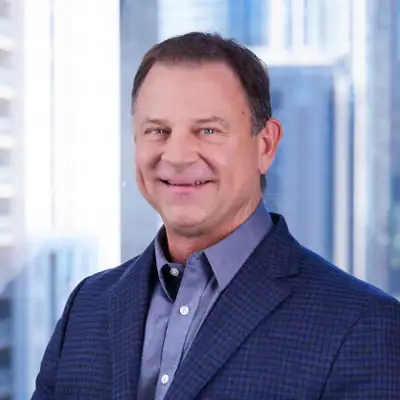
Some Goodness is hosted by Richard Ellis, a seasoned sales leader passionate about inviting top business minds to share their wisdom. Each episode is only 15-20 minutes, perfect for your commute or workout.
[00:00:00] Richard Ellis: In 1909, a man named Ben T. Epps built an airplane in Athens, Georgia, and flew it. He was the first person in the state to get off the ground. He was running several businesses at the time to feed a wife and ten kids, so the airplane was a side project. Two generations later, his grandson is sitting across from me telling me the Internet is in the middle of the same kind of moment.
[00:00:23] Richard Ellis: Welcome to Some Goodness, where we engage seasoned business leaders and experts to share practical guidance and tips to help new and future C-level leaders maximize their impact. My guest today is Michael Epps Utley. He runs GoEpps, a digital marketing agency he's led for fourteen years. He's been doing this work for twenty-five years, which covers the browser, broadband, the mobile web, social, and every algorithm update Google ever shipped.
[00:00:48] Richard Ellis: Last time he was on, we talked about how AI changed the way brands get discovered Michael, welcome back.
[00:00:56] Michael Epps Utley: Yeah, yeah. Good to see you again, Richard.
[00:00:58] Richard Ellis: So we had such a good [00:01:00] time talking about AEO, GEO, and, uh, how that fits and compares to SEO and all that good stuff around discovery and findability. But one of the things that, you know, you touched on that I thought would be worthy of its own episode is this Google idea and some of your perspectives there.
[00:01:18] Richard Ellis: You even told me, what was the phrase, the provocative phrase that I think we're gonna end up using for the episode title?
[00:01:24] Michael Epps Utley: Oh, "Y'all, Google is being totally weird."
[00:01:27] Richard Ellis: What gave you that idea in the first place? And l- let's talk about how they're being weird, and let's talk about Google a little bit.
[00:01:32] Michael Epps Utley: Yeah, yeah.
[00:01:33] Michael Epps Utley: Absolutely. I'm a, I don't know, big fan of Google over the years historically. But lately I've been getting that ick feeling. And so, you know, what's the middle ground? I don't know, but I'm trying to figure it out. I, I grew up around a lot of innovation and Netscape before Google, but the first graphic browser just sort of changed things for me.
[00:01:51] Michael Epps Utley: I was a kid who grew up with computers, and so seeing that the internet was becoming connected, I was sort of there for that. That was the beginning of my [00:02:00] professional career. And so we were using Gopher Net before Google and before Chrome, using, you know, of course other browsers. But for me it's always been about watching who are the big players and what are the things they're rolling out that are changing the world, and Google has definitely been one of those in my lifetime.
[00:02:18] Michael Epps Utley: My grandfather was into transportation. That was sort of the internet of his era. Transportation was, if you could shorten the distance between A and B using magic, that was compelling at a certain time in our history. And now if you can do things to gather data sets and gain insights that nobody else could get, that's the possibility of some of these AI tools.
[00:02:41] Michael Epps Utley: And so, yeah, I see this history of aviation and then my dad working in the space program, uh, with the moon missions, with Boeing. That was sort of a, you know, a political thing to a degree, but it was also sort of a continuation of my experience. But yeah, I grew up around a lot of innovation and engineering.
[00:02:57] Michael Epps Utley: And so in my career working in [00:03:00] marketing and always kind of being around computers- It's been interesting to see Google emerge and rise and become dominant, and then be in a different phase now. You know, they have new competitors in a way they never have. And so yeah, I think we've been in kind of a Pax Googleana that's been so big that we equate it with the internet.
[00:03:19] Michael Epps Utley: But really what it's been, it's been the internet with a period of Google being dominant that I think now we're moving out of. There are gonna be other players. I think it's gonna change marketing for everybody, from CEOs of big corporations all the way down to practitioners who just wanna gain followers so they can ha- have an audience.
[00:03:36] Michael Epps Utley: And so I think we're in a period where everything's different. But Google is in the midst of this change happening to them from the outside, and it's creating kind of a unique, strange period for us that I don't think reflects what's really happening.
[00:03:50] Richard Ellis: Well, and I think it leads to some fascinating observations on what's go- going on in the market with technology innovation, et cetera.
[00:03:57] Richard Ellis: And, and just so there's no confusion, we laugh at [00:04:00] the Google's Being Weird title, not disparaging Google in any way. You know, they've certainly been a, a dominating force in innovation and changed many lives, and we're a Google shop. I love Google. But they, they sit in an interesting spot here. A- and I think you shared with me that you were on another podcast a couple years ago where you were asked if AI was gonna be an SEO killer, and you said, "No, it's gonna be a Google killer."
[00:04:23] Richard Ellis: Two years on, how did that prediction hold up?
[00:04:26] Michael Epps Utley: Yeah, yeah. JJ Rosen once asked me, "Is this gonna be the end of SEO?" And I said, "No, but it could be the end of Google." And I think of Microsoft when they were sort of- The go-to solution, and they kinda missed out on the internet. They were a little slow to respond to what was happening, and then they came out with Explorer, and yeah, it was part of their suite or whatever, but they really kinda missed the boat.
[00:04:48] Michael Epps Utley: And then Xbox sorta got them back in to business in a, in a way that was kinda different, innovative, and they said, "Hey, if we're gonna lead, let's lead. Let's not try to follow what we missed." And they actually did it with [00:05:00] Xbox, just kinda watching that as an outsider. But yeah, what I see happening with Google is they've gotta take everybody through the Gemini experience.
[00:05:06] Michael Epps Utley: They're eating a lot of their brand recognition value to buy the data they need to make Gemini usable, and so they're learning at the expense of the user base, so to speak. And this isn't a criticism, this is an observation, but think about it from Google's point of view. There's this new star that's come up on the horizon they've never seen before, and then they've gotta figure it out.
[00:05:29] Michael Epps Utley: And that's not true they've never seen it before. Yeah, th- Google's been doing AI since they started. Google is AI. But it came out and it was articulating it had a value prop in a way that was different than Google's- Mm ... core business of organize the world's information. And so suddenly we're in a world that's dictated a little bit more by the LLMs than Google.
[00:05:48] Michael Epps Utley: Google's original message, I think, was organize the world's information. Well, now we're at a point where we're saying, hey, Google's not even indexing all pages if those pages don't help them in their mission to be the [00:06:00] answering unit. And so Google a few weeks ago said, "We're going AI first," and they haven't taken those blue links off the page yet.
[00:06:08] Michael Epps Utley: They're finding that search and AI are two different things, and that they still have a lot of value in search, and AI has a lot of value. And so we're watching Google negotiate that, but they're also using Gemini and that front and center real estate in a way that's a one-way trip for Google, and it ends in one of two places.
[00:06:29] Michael Epps Utley: Either Gemini makes it over the hump and is the industry standard because of their massive install base and their ability to protect that install base through a real low period and then have something usable again, or they're gonna just say, "You know, actually we think search is pretty cool and we're pretty good at it and we're gonna do that well."
[00:06:47] Michael Epps Utley: Or, I don't know, somebody else is gonna come out and I think become the player that grants full autonomy to the user and offers 10 blue links and says- Right ... "Hey, this is actually, there's actually a need for this." And I think [00:07:00] everybody's misreading it because you can't tell you're in the water when you're a fish, and right now we're all equating Google with the internet, and that's just not the way it's gonna play out.
[00:07:09] Michael Epps Utley: Right. These things can be separate. So I, I think we're in a real time of transition that nobody's articulating the starting point the way I think we should be. I am. I, I think this is a massive shift, and we're gonna see it play out over the next few years.
[00:07:22] Richard Ellis: Right. Right. Well, a- and certainly if we're not equating Google to the internet, we're equating Google to search.
[00:07:27] Richard Ellis: Say I'm a business that spent the last decade optimizing for Google, right? Keeping up with the latest changes in their algorithms, and the back links, and this, that, and the other. What does my traffic chart look like now? And i- is it even valuable, and what do I do about it?
[00:07:41] Michael Epps Utley: Yeah. If your traffic's good, that's great.
[00:07:44] Michael Epps Utley: What we've seen is we've seen rankings continue to be a direct, a directional- indicator versus competition on who's more findable. Okay. So SEO metrics are still good and useful. The new metrics that are coming online are AI traction metrics. That's [00:08:00] an immature set of metrics that are gonna evolve and grow, and Google's rolling out some aspects of that in their back end.
[00:08:06] Michael Epps Utley: And so it's been a choppy road recently. At a high level for a CEO, for any CEO listening or anybody who's kind of got to be a step removed from the day-to-day of this stuff, what we're seeing at a high level, to summarize it all into one simple thing, is companies are getting less traffic from SEO, but the traffic that comes in is more valuable.
[00:08:27] Michael Epps Utley: And so it's ending up being kind of a, a net-net. The problem is we used to earn brand exposure by serving our audiences with content and answering questions they have. And so now if I'm not going to the website to read the article about best colors for a baby's room, I'm just getting it from the answer engine which is using my content that I created and made available free for my client to Google for 20 years.
[00:08:53] Michael Epps Utley: That's a change in the dynamics. Yeah. So what I think it plays with is it makes SEO part of branding [00:09:00] and it makes branding part of SEO. Right. Uh, but it also means we've got this confederated or divided new discovery locations happening. And so if I had a short answer for CEOs it would be don't be too hard on your team that's telling you traffic's down, because that traffic's probably worth more than it was.
[00:09:19] Michael Epps Utley: Understand that any DIY content or educational-oriented content, you probably don't need to do it unless you've got something unique to say. Instead, focus on commercial content, supplier near me, or things people search when they're trying to buy something or find a solution as opposed to learn about something.
[00:09:37] Michael Epps Utley: And so these are the changes that are happening. And at the end of the day, to summarize it for a CEO, go to the internet and Google yourself more in other places. Not just Google, but ChatGPT yourself. Grok yourself. Sorry, y'all. Uh, but everyone needs to do this, "I'm a step removed from it as a CEO, but I'm just gonna do [00:10:00] the, the simplest thing I can and then let you defend it."
[00:10:03] Michael Epps Utley: Keep doing that with your team, but let them learn and take them up their learning curve. But people need to Google themselves more, but they gotta start Groking themselves too.
[00:10:11] Richard Ellis: Interesting. That's good. Well, i- in my simple brain, I, I'm kind of like thinking you have two major, you know, titans out there now, or two ecosystems.
[00:10:21] Richard Ellis: You got Google over here and then you've got all the LLMs over here. Is that too simplistic of a way of thinking it, and does that mean we need, like, two strategies for optimizing for both? Or help bring some clarity around how, how do we, you know, deal with this, and what are the implications that maybe we're not considering?
[00:10:40] Michael Epps Utley: Yeah. There is a lot that's different about these two groups. Google is like the car that's built on a car chassis, and then the trucks are built on a truck chassis, and everybody's trying to figure out what the heck is a minivan. A minivan's a car built on a truck chassis often. [00:11:00] The reason this matters is because we have to understand what curves are we preparing for.
[00:11:05] Michael Epps Utley: And so the curves that CEOs need to be prepared to handle, they need a vehicle that can do it all going forward. The vehicle that can do it all is gonna have enough to extend the metaphor, enough wheel base to handle a windy day getting down that other side of the Rockies from where I live in Nashville.
[00:11:22] Michael Epps Utley: Man, if you've ever, you know, come from Tennessee and driven out of the Rockies, and you're not used to it, and you got a van load of kids- ... you understand that, with that wind coming in, it really changes your choices in selecting a van. Because I'm not a van guy. I've had, had a bunch of SUVs, and so, you know, you learn real quick what being in a lightweight vehicle is like.
[00:11:41] Michael Epps Utley: Right. If you've had a content strategy that was about more is better, that's not the case anymore. Unique is better. So that's headline number one, and a lot of people are getting that. But I think the other big headlines that are easy to miss here are there's no replacing a good reputation. That just became the [00:12:00] central most important thing across all these platforms, and so being ready for that, having a robust process to manage that up.
[00:12:07] Michael Epps Utley: Light customer life cycle is another thing that you need to be prepared for. If SEO was what we were doing before, that was really more just about keeping the inbox full of sales leads by gaining and earning organic traction and traffic on the internet. Well now, my friend Bill Seavey used to say, "The deer have guns now."
[00:12:24] Michael Epps Utley: You know, this was kind of our introducing reputation management as a service, what, 15 years ago? Wow. And so in a world where reputation, the deer have guns now, reputation's real time, that reputation becomes the dominant factor in the search experience. So there's no short-circuiting any of this. And so I think this Google world with their reputation base built into their maps information, very much a big factor for GEO and AEO, but it's, you know, it's just not the only thing.
[00:12:55] Michael Epps Utley: You can't ignore the list of best practices. So yeah, I think it is one [00:13:00] vehicle at the end of the day. I think AEO, SEO, GEO should be considered one thing tactically, strategically, and it has to let go of some bad practices in SEO to be good at those things, but those bad things were just where, you know, we could sort of gain the front end a little bit, but still at the end of the day, the core value of this entire thing depends on good reputation, due diligence to make sure your website is working, and fast pages still continue to be a big thing.
[00:13:33] Michael Epps Utley: That's something we've talked about since mobile first indexing with Google, and now, you know, fast pages never could have mattered more than they matter now. Right. And so all these things are still there, but I think it's one thing. The thing that gets left behind, the, the features of our vehicle that we lose are things it's, it's okay to lose.
[00:13:51] Michael Epps Utley: And so, but I think it's one vehicle that's able to do- High wind from the side, steep curves, and handle all of it. But it's gonna be more [00:14:00] robust and it's, it's gonna be more challenging, and it has different implications.
[00:14:04] Richard Ellis: I wanna ask you a couple of tactical questions. One is just double-clicking on the relationship side of things.
[00:14:09] Richard Ellis: You know, when I hear that, I start to think customer stories, case studies, things like that, which, you know, traditionally we, we wanna put those on our website. Is there any difference or nuance or changes just around establishing proof points and sharing and developing those relationships and showing the impact that you've made with real businesses and real people?
[00:14:32] Michael Epps Utley: Yeah. Yeah, this, this is really going to push us into a direction of getting our customers to talk about us. One of the sort of summary quotes that I heard that I thought was really good was SEO was about what we say about ourselves GEO and AEO are what other people say about us.
[00:14:52] Richard Ellis: Hmm.
[00:14:52] Michael Epps Utley: And so if we take that simple dividing line and sort of treat SEO as one part of the twin [00:15:00] and AEO/GEO as another part of the, the twin group, they're gonna go together, they're gonna do a lot of things in life, but they're two different people, and so they behave a little differently.
[00:15:10] Michael Epps Utley: The new stuff, it forces us to go in that direction of more deep, unique content, more video content, and also more, you know, more testimonials, more reviews on more locations. Not just focusing on Google Maps, but saying, "Hey, has anybody dusted off our Yelp page and made sure that we post a few pictures there?"
[00:15:30] Michael Epps Utley: Yeah. So it creates some different tactics to create this foundation that we maybe didn't treat as valuable before, as much as we could. So now those offsite signals become that much more important. So having a team and a set of resources that can streamline all that and cut through that learning curve is valuable.
[00:15:50] Michael Epps Utley: But yeah, it absolutely changes things in that way.
[00:15:53] Richard Ellis: That's good. Really good. Well, and this is kind of an extension of that, you know, talking about how others see you [00:16:00] versus how you see yourself and things of that nature. Traditionally, again, when we build a website, we think about real people reviewing our website and browsing our website, and you think about things of, you know, prioritizing the content above the fold and have provocative, catchy stuff so that you, you capture your audience.
[00:16:16] Richard Ellis: Do we need to now rethink and think about our website content for AI agents that they can read, you know, I don't know how many hundreds of times faster than we can, right? The whole website, so there's no above the fold concept anymore for them and, you know, maybe there's other types of content that we need to put on our website that would be boring or not engaging for a user, but an AI agent needs that.
[00:16:39] Richard Ellis: Tell me a little bit about how we might rethink content strategy.
[00:16:42] Michael Epps Utley: Yeah. This is actually gonna play out in a way that's good. We do need to put content on our website that is for the bots. However, this is not going to look like 20 years ago when someone would put white text on a white background- ... just to [00:17:00] insert the keywords into Google.
[00:17:01] Michael Epps Utley: It's not gonna look like that. In this era of the pendulum swinging to the other end, the tech giants, so to speak, are already anticipating some of those behaviors and getting ahead of them with standards to make doing those things more useful and valuable. So what we're doing right now is, so if I have a tourism client here in Nashville who offers some things that they want anybody in the world to know about if they're planning a trip to Nashville, they can go to a chat tool and say, "Hey, show me a sample itinerary for a family visit to- to Nashville for three days.
[00:17:37] Michael Epps Utley: You know, we're looking for this and this for the kids, this and this for the parents. It's two families, and here's what's happening. Write me an agenda. And so we're actually able to take things like offers and events and add something called schema to tag it and make it available to the bots and say, "This is a thing that can be bought.
[00:17:54] Michael Epps Utley: It's this. It includes these pieces. And for this type of object, you [00:18:00] expect to see content for these variables. Here's that content for these variables for this instance of that object." And this is essentially using programmer types of thinking in a real-world way to implement something. Basically, what it means is just presenting content to a computer that a computer can read the format so it knows how to take it in.
[00:18:19] Michael Epps Utley: The answer is yes. All that's gonna be valuable. We're gonna be doing it. It should not ever take away from the experience of a human, because the tech giants are not setting it up to be goofy in that way. They're a little bit ahead this time on anticipating things, and they're actually setting some stuff up that's actually useful and good.
[00:18:37] Michael Epps Utley: So the answer is yes. I used to say the internet is a cell phone to be shocking to people who were having a hard time getting their heads around mobile first indexing and mobile-friendly websites because Everybody's on a phone first. The day that the internet became used by more cell phones than people was a big moment in history.
[00:18:59] Michael Epps Utley: Well- Right ... a [00:19:00] week or a few weeks ago, bots were the biggest user of the internet for the first time. On average- Right ... more than 50%. And so that just means internet sessions being generated, or just, you know, some metric that's apples to apples. So my goodness, that was fast. Uh, so re- revolutions are different, right?
[00:19:17] Michael Epps Utley: And, you know, we'll be okay. This is just another revolution. But mobile first indexing, mobile devices, that was a revolution. This is a revolution. And so, yeah, but this one's moving faster, and tagging all that content with schema is good. And there are other things and other pieces, but we're still seeing new tools emerge.
[00:19:35] Michael Epps Utley: This, you know, hey, make this website rank better in AI results. That's essentially a user vote on a website. We don't know those new mechanisms that are coming, but there are more mechanisms coming.
[00:19:46] Richard Ellis: Well, that's a great point to wrap the discussion, 'cause we could, we could go on forever. I love to geek out on this stuff, as I know you do as well.
[00:19:53] Richard Ellis: But, uh, let's close with a little extra goodness. Last time you gave us a bit of message from hope. This time, what's [00:20:00] bringing you goodness this week?
[00:20:00] Michael Epps Utley: All right, I'll tell you what it is. This is a bookend to the last time we talked. Said my kids were out of the house. It was my first, my wife and I, our first empty nest summer.
[00:20:08] Michael Epps Utley: Well, I am officially an old man. I've become very aware of all the wildlife in my yard. All right. And so we have had an owl, whose name is Shakes the Bard. Uh, he's a barred owl. A fox last week. A few weeks ago, my wife saw, I think, we saw one driving recently, a coyote, go in front of our house, and, uh, we have a deer.
[00:20:26] Michael Epps Utley: A fawn was born in our yard this year. We've been watching two, uh, fawns grow up. And yeah, I don't know. We, we gotta get away from these c- computers. Watch outside. Sure. And, uh, that's my something good. I'm thrilled about the wildlife in East Nashville. It's great to be near the river, even with the whole city blowing up, getting huge next to us.
[00:20:44] Michael Epps Utley: It's good to live in a neighborhood and, and see the animals. And that's, that's my reminder. It's okay, y'all. We're all still people. Let's stay human.
[00:20:51] Richard Ellis: I love it. I love it. And that sounds like I need to, uh, come see your place next time I'm in Nashville. That sounds delightful.
[00:20:58] Michael Epps Utley: We can send a guest here.
[00:20:59] Michael Epps Utley: We're gonna Airbnb a [00:21:00] room. Uh, it's gonna be the Wayne Porter House. So our cross, uh, side street is Wayne, so it's been a fun project for my wife and I to wipe away the tears- ... of being empty nesters, and lots of fun stuff there.
[00:21:10] Richard Ellis: Very good. Well, once again, thank you for being on the show and for sharing all your insights and wisdom.
[00:21:16] Richard Ellis: It was a blast.
[00:21:17] Michael Epps Utley: Super enjoyed it. Always enjoy time with you, Richard. It was so good to spend time together today.
[00:21:23] Announcer: Some Goodness is a creation of Revenue Innovations. Visit us at revenueinnovations.com and subscribe to our newsletter